REVIEW · ATHENS
Athens Heart Walking Private Tour
Book on GetYourGuide →Operated by Be a Greek · Bookable on GetYourGuide
One walk, and Athens starts to make sense fast. This private, 4-hour Athens Heart walking tour strings together the big sights and the quieter corners, with an Athenian guide who connects ancient landmarks to daily city life. You also cover the area of the longest pedestrian archaeological park in Europe, so the route feels like a living map of the city.
I especially liked two things: the chance to get top-tier orientation around the Acropolis area, and the way the tour mixes classic ruins with everyday Athens neighborhoods like Plaka, Anafiotika, and Monastiraki. In particular, I found the viewpoint moments and the stop at Anafiotika particularly memorable, because they show Athens’ layers without needing a ticketed museum crawl.
One consideration: it’s mostly a walking experience and it’s not suitable for mobility impairments, so you’ll need to be comfortable on foot. Also, entrance fees for archaeological sites aren’t included, so if you decide you want to go inside anything, you’ll pay extra.
In This Review
- Key highlights to look forward to
- Why this Athens Heart walk is such a smart first-day choice
- Meeting point, pace, and what to wear
- Acropolis Museum area to Odeon of Herodes Atticus: the walk begins with scale
- The Areopagus and the Acropolis view: where Athens clicks into focus
- Plaka energy, Anafiotika’s Cycladic feel, and the best kind of contrast
- Roman Agora to Monastiraki: from ancient power to today’s market rhythm
- A brief coffee break and the Cathedral moment you might skip on your own
- Ermou Street and Syntagma Square: the changing of the Presidential Guard
- National Garden and the Panathenaic Stadium: a calmer second act
- Zappeion, Temple of Olympian Zeus, and the Arch of Hadrian finish
- Price and value: what $149 gets you (and what it doesn’t)
- Guide quality can be the difference-maker
- Who should book this tour, and who should skip it
- Should you book the Athens Heart Walking Private Tour?
- FAQ
- Where does the Athens Heart Walking Private Tour start?
- How long is the tour, and is it private?
- What’s included in the price?
- Are entrance fees to archaeological sites included?
- Is there food during the tour?
- Is this tour suitable for people with mobility impairments?
Key highlights to look forward to
- Acropolis viewpoints plus Anafiotika’s white-stone streets right downhill from the hill
- Roman Agora sights including the Tower of Winds, then straight into Monastiraki’s flea-market energy
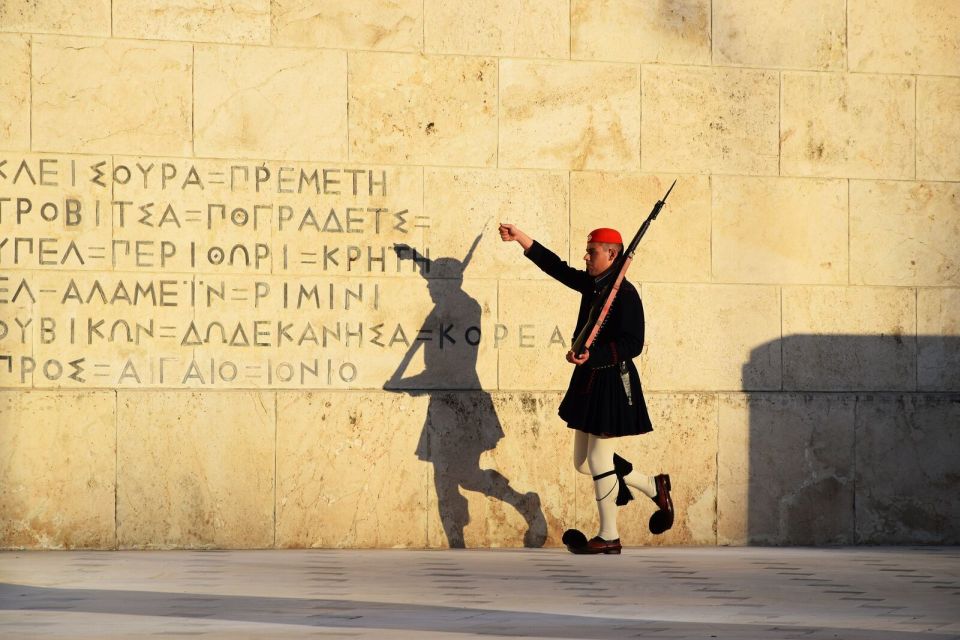
- Syntagma Square changing of the Presidential Guard plus a stop at the Syntagma metro underground exhibition
- A built-in break with a traditional Greek coffee or tea, included per person
- Big-ticket ancient landmarks near the end: Temple of Olympian Zeus and the Arch of Hadrian
- Private pacing with an English-speaking guide from Be a Greek
Why this Athens Heart walk is such a smart first-day choice

Athens can feel like two cities glued together: one where you’re surrounded by ruins, and another where people are in motion—shopping, sipping coffee, heading to work. What makes this tour work is that it guides you across both worlds without turning Athens into a checklist.
You’re not just collecting photos. You’re learning how the neighborhoods relate to the monuments. That changes everything on day two, because you stop seeing separate sites and start seeing a whole system: where power sat, where markets grew, and why certain views matter.
This is also a private tour, so you can ask questions in real time and set the pace to your group. When you’re walking through ancient Athens, you’ll notice details you’d miss alone.
You can also read our reviews of more walking tours in Athens

Meeting point, pace, and what to wear
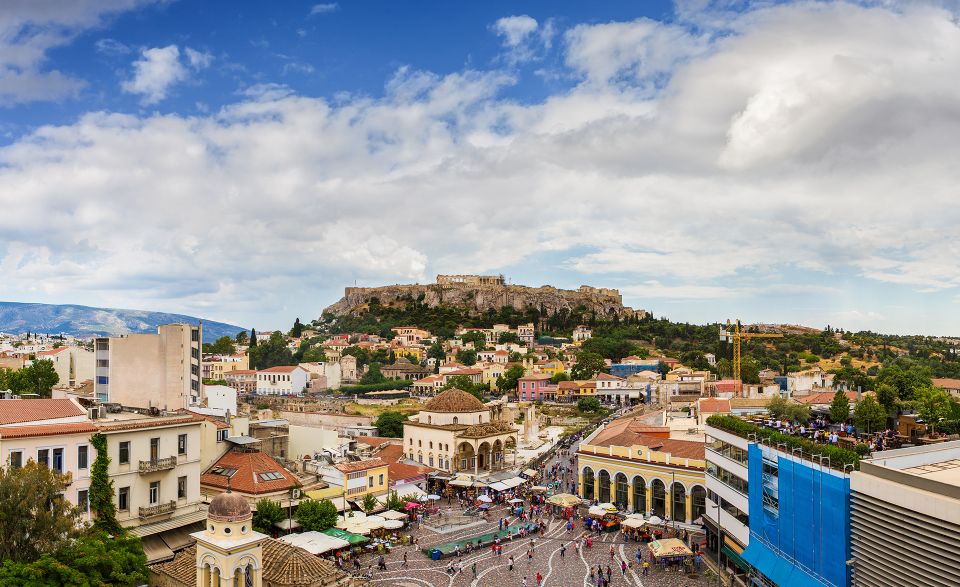
You meet outside the Acropolis Metro station area, on Makrigianni Street (near Makrigianni 13). The tour runs for 4 hours, and the route is structured for a steady walking rhythm rather than lots of long sit-down stops.
You’ll want comfortable shoes. That might sound obvious, but the key point is that you’re moving through areas with slopes and uneven stone, especially around the Acropolis approach and the Anafiotika descent. If your feet aren’t happy, your mind will shut down early.
One more practical note: entrance fees are not included for any archaeological site. So even though the guide can point out what you’re seeing, you’ll likely treat this as a strong “see from outside and understand” tour rather than a “go inside everything” plan.
Acropolis Museum area to Odeon of Herodes Atticus: the walk begins with scale

The route starts near the modern world of Athens, in front of the new Acropolis Museum. That’s not just a convenient starting point. It sets the tone: Athens doesn’t hide its modern life behind the ancient past. You’re right where the city’s stories overlap.
From there, you walk toward the Odeon of Herodes Atticus, a stone theater on the southwest slope of the Acropolis. Even if you’ve seen photos of theaters before, seeing this one in context hits different. It helps you picture how performance, politics, and civic life used to share the same spaces.
Expect your guide to put this in a larger story right away: where crowds would gather, how the slope shapes sightlines, and why the Acropolis area kept returning as a power center for centuries.
The Areopagus and the Acropolis view: where Athens clicks into focus
The next big shift is the Areopagus, which you reach after a short walk. The point here is not only the viewpoint—it’s what the viewpoint teaches you. With Athens spread out beneath you, the city looks like a series of intentional choices: hills for defenses, neighborhoods for living, and roads for connection.
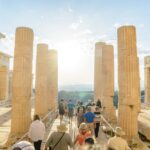
From the area around the Areopagus, you’re set up for one of the tour’s best moments: a view where you can see the whole city at your feet, with the Temple of Athena above you. This is the kind of scene that makes you stop rushing and start noticing.
Then the tour flows downhill into Plaka’s deeper character, and that’s where the experience turns from dramatic views to surprisingly intimate streets.
Plaka energy, Anafiotika’s Cycladic feel, and the best kind of contrast
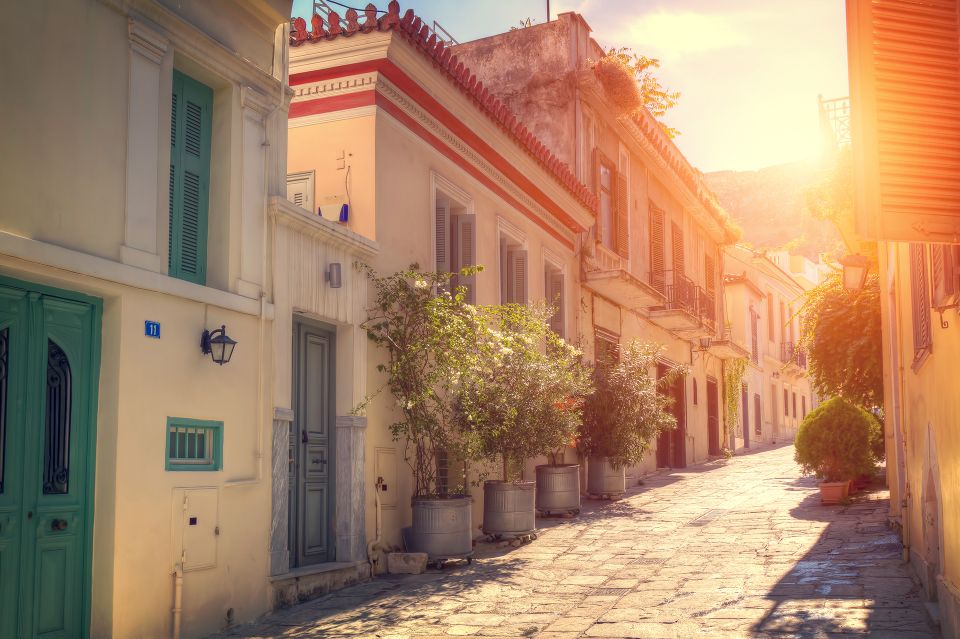
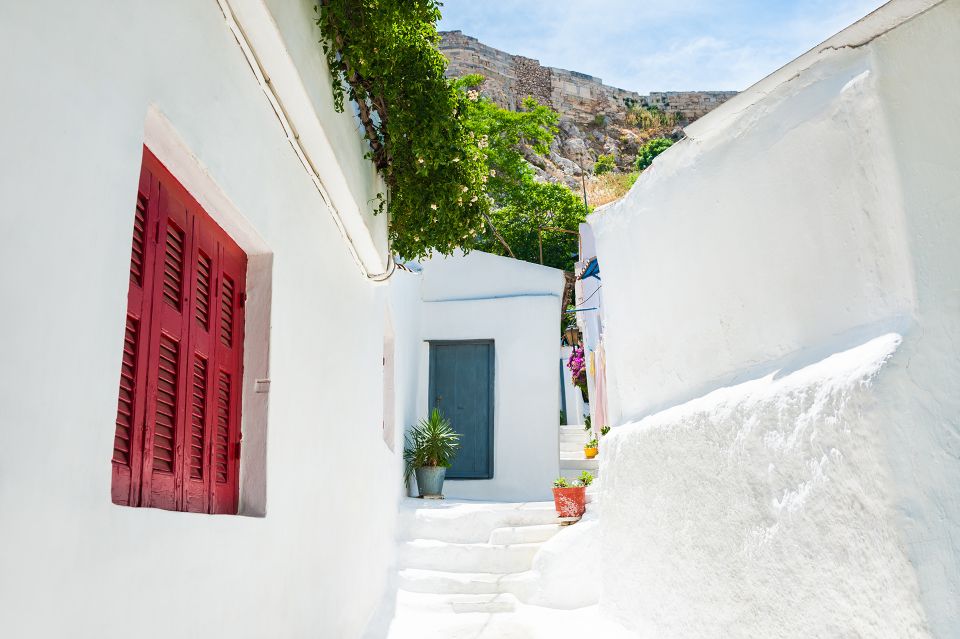
You spend time in Plaka, then head into Anafiotika, described as the most folkloristic neighborhood in Athens and part of the historical Plaka area. Anafiotika is famous for its look—white, Aegean-feeling streets that feel like a pocket of the Greek islands tucked under the Acropolis.
That contrast is the magic. One moment you’re thinking in centuries, the next you’re walking through a neighborhood that feels lived-in and small-scale. It’s the kind of stop that works even if you don’t usually care about architectural styles, because you can literally feel the difference in your body as you move.
This stretch is also a good time to ask your guide about how these areas evolved. Athens keeps layering new identities on top of old ones, and Anafiotika is an example you can walk through, not just read about.
You can also read our reviews of more private tours in Athens





Roman Agora to Monastiraki: from ancient power to today’s market rhythm
Next up is the Ancient Roman Agora, followed by the chance to admire the Tower of Winds. These stops are valuable because they move you beyond the standard “Acropolis only” framing. The Roman Agora area helps explain how Athens remained active long after the classical peak.
Then the tour heads toward Monastiraki, with its famous flea-market vibe. This is one of those parts of Athens where the guide’s storytelling matters. The market isn’t random. It’s part of how people historically accessed goods and gathered in central spaces.
Even if you just browse for a few minutes, you’ll feel the city shift from monument-focused viewing to street-level Athens—shops, chatter, and that constant motion that makes you want to slow down and pay attention.
A brief coffee break and the Cathedral moment you might skip on your own
After time in Monastiraki, you get a short break—about 30 minutes—to enjoy a traditional Greek coffee, tea, or another beverage you prefer. This is included per person, so you’re not scrambling for a drink midway through the walk.
Next, you visit the Athens Metropolitan Cathedral. It’s not the same style of attraction as a temple ruin, but it matters. Athens isn’t only ancient and archaeological. It’s also a working city with living institutions, and the cathedral gives you that reminder in a way that’s easy to fit into a walking route.
If you’re the type who loves to understand how cities function, the cathedral stop is a good palate cleanser before you step into the formal ceremonial core.
Ermou Street and Syntagma Square: the changing of the Presidential Guard
Walking along Ermou Street, you’re on Athens’ key commercial road, named for Hermes, protector of commerce. This is where your guide can connect the dots between movement, trade, and city layout—how central roads keep getting used and reshaped across time.
Then you arrive at Syntagma Square, in front of the Hellenic Parliament. This is where you’ll witness one of Greece’s older traditions: the Changing of the Presidential Guard. It’s theatrical, but it also functions like living civic choreography.
You’ll then pass through the underground archaeological exhibition at the Syntagma metro station. That’s one of those Athens “only-in-Athens” moments: you get archaeology right alongside transit, which makes the past feel close rather than sealed off.
National Garden and the Panathenaic Stadium: a calmer second act
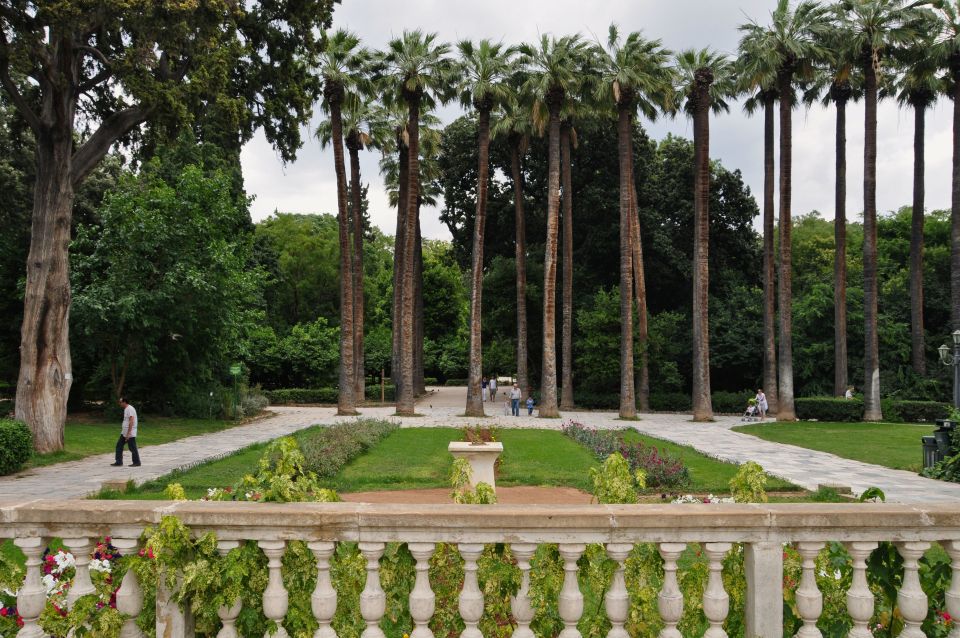
After the ceremonial square and the underground archaeology stop, Athens gets quieter. You head to the National Garden, where you can relax and even feed the animals on display. The tour description frames this as a family-friendly break, and it works well if you’re trying to pace your day and not let the monuments run all the energy out of you.
Then you move to the Panathenaic Stadium, also known as Kallimarmaron. This stadium is built exclusively from marble, and seeing it after the calmer garden stop creates a nice emotional rhythm: green reset, then a return to something awe-inducing.
If you love sports history or architecture, the marble detail will make you pay attention. If you don’t, the setting still gives you a sense of how Athens likes to stage big moments.
Zappeion, Temple of Olympian Zeus, and the Arch of Hadrian finish
The tour rounds out with Zappeion Megaron, then heads to the grand finale: the Temple of Olympian Zeus and the Arch of Hadrian. These are major anchors in Athens’ ancient landscape, and the guide’s job here is to connect them to what you already learned earlier—viewpoints, theaters, agora life, and how the city’s center of gravity shifted over time.
By the end, you arrive near the Acropolis metro station, where the tour concludes. It’s a convenient ending point because you’re already near one of the easiest ways to keep moving through the city after your walk.
Price and value: what $149 gets you (and what it doesn’t)
At $149 per person for 4 hours, this tour is priced like a serious guided experience rather than a basic walking loop. The value piece isn’t only the route length; it’s the fact that you get a private guide and an Athenian perspective across multiple districts.
What’s included: the guide from Be a Greek (English), all taxes and fees, and a Greek coffee or similar traditional refreshment per person. That coffee break alone helps the schedule feel human, not rushed.
What’s not included: entrance fees to archaeological sites, plus food and other drinks beyond that included refreshment. So if you know you want to go inside temples or museums, plan for additional spending. If you don’t, that’s fine—the tour is strong at helping you understand what you’re seeing from the outside.
Guide quality can be the difference-maker
This is where private tours can shine. In the guide feedback you provided, certain names come up with real emphasis.
John is praised for giving a clear Athens storyline from ancient times to the present, with humor and a pacing that doesn’t overwhelm. Bianca is highlighted for being fun and knowledgeable, which matters because Athens history can get heavy if the guide loses the thread. Dimitrios is mentioned as studying in Italy (Bologna) and speaking Italian perfectly, with four hours feeling like a smooth conversation with a friend who truly respects the sites.
Then there’s also at least one weaker experience where the guide didn’t deliver history well and had trouble with language fit. That doesn’t mean the tour is bad. It does mean your guide assignment matters.
Practical advice: if you’re booking and you see a guide name you trust from examples like John or Bianca, it’s worth favoring that option.
Who should book this tour, and who should skip it
This tour is a great match if:
- You’re visiting Athens for the first time and want orientation across major areas without hopping between disconnected stops.
- You like a mix of monuments and real neighborhoods, not just ruins behind fences.
- You enjoy short breaks and a guide who can explain connections between sites.
You might want to skip it if:
- You need mobility support, because it’s not suitable for people with mobility impairments.
- You only want ticketed archaeological interiors. Entrance fees aren’t part of the experience, so you’d have to add those separately.
It also fits well for couples and small groups, since the private format keeps the route comfortable and responsive.
Should you book the Athens Heart Walking Private Tour?
If you want to understand Athens as a single city—ancient viewpoints, Roman-era spaces, busy markets, ceremonial squares, and a calmer garden pause—this is a smart buy. The included refreshment and the Athenian-guided pacing make it feel less like a march and more like a guided walk with context.
I’d especially recommend it for first-timers who want their second day to go smoother. You’ll learn where you are, why things are placed where they are, and how the neighborhoods connect.
Just be honest about one thing: if you’re dreaming of lots of paid entrances, budget extra. If you’re happy to see and understand the sites around you, then the route—and the guide—should deliver strong value for your time.
FAQ
Where does the Athens Heart Walking Private Tour start?
It meets outside the Acropolis Metro station on Makrigianni Street (near Makrigianni 13).
How long is the tour, and is it private?
The tour lasts 4 hours and it’s a private group experience.
What’s included in the price?
The price includes an English live guide from Be a Greek, a Greek coffee or other traditional refreshment per person, and all taxes and fees.
Are entrance fees to archaeological sites included?
No. Entrance fees to any point of interest are not included.
Is there food during the tour?
Food is not included. You do get a break with a traditional Greek coffee or another beverage, but meals and extra drinks aren’t included.
Is this tour suitable for people with mobility impairments?
No. It’s listed as not suitable for people with mobility impairments, and you should wear comfortable shoes since it’s a walking-focused route.



More Walking Tours in Athens


More Tours in Athens



More Tour Reviews in Athens
- All Day Cruise -3 Islands to Agistri,Moni, Aegina with lunch and drinks included
★ 5.0 · 4,958 reviews