REVIEW · ATHENS
St. Paul’s Footsteps: Biblical Ancient Corinth & Daphni Monastery
Book on Viator →Operated by Athens Taxi Travel · Bookable on Viator
One tight schedule can ruin a good day. This one cuts the stress with private pacing through ancient Corinth and the Daphni Monastery, plus a driver who keeps the story moving between stops. I especially like the freedom to look around at your own speed at major ruins, and I love that the day is built around the places tied to early Christianity, not just a checklist of monuments. One thing to consider: this tour includes a driver with fluent English and site context, but it does not automatically include a licensed guide inside the archaeological sites.
You’ll spend your time outdoors and on your feet, with photo breaks at the Corinth Canal and viewpoints from Acrocorinth. The other plus I can’t ignore is the practical setup: pickup from your Athens address or the Piraeus port and onboard Wi‑Fi so you can send photos and check maps without roaming charges.
In This Review
- Key reasons you’ll like this St. Paul’s Footsteps day
- A private 8-hour route from Athens to Corinth and Daphni
- Corinth Canal: the engineering marvel that sets the mood
- Ancient Corinth on your schedule: ruins, temples, and Paul’s footsteps
- Temple of Apollo: quick, iconic Doric columns
- Archaeological Museum of Corinth: the context you’ll wish you had earlier
- Acrocorinth viewpoint: fortress views that cover centuries
- Kechries port area: a quiet link to Paul’s departures
- The Monastery of Daphni: Byzantine mosaics you can actually see well
- Price and value: what $425.85 per group really buys
- Who should book this and who might want a different style
- Should you book St. Paul’s Footsteps to Ancient Corinth and Daphni?
- FAQ
- Is hotel pickup included for this tour?
- Do I need to buy entrance tickets for Ancient Corinth and the museum?
- Does the tour provide a licensed guide?
- How long is the tour and how much time is spent at each stop?
- Is Wi‑Fi available during the ride?
- Is this a private experience?
Key reasons you’ll like this St. Paul’s Footsteps day
- Private group feel: Only your group rides together, so you control the pace instead of following a large herd.
- Built-in photo moments: You get time at the Corinth Canal, Temple of Apollo area, Acrocorinth views, and Kechries.
- Driver-led context between stops: Fluent-English commentary comes from the vehicle while you explore each site on your own.
- Art stop that isn’t a time-sink: Daphni’s mosaics and church are worth slowing down for, and the timing gives you a real look.
- Entrance fees stay visible: Ancient Corinth and the Corinth museum cost extra, and you can plan for them early.
A private 8-hour route from Athens to Corinth and Daphni
This tour is designed for a full day without feeling like a long sprint. You start with convenient pickup (from Athens addresses or the Piraeus port) and you return to the same pickup point. The ride is in an air-conditioned vehicle with onboard Wi‑Fi, bottled water, and professional transportation.
The big idea is pacing. Instead of “watch me and move,” you get a series of stops where you can pause, frame photos, and spend the time you want at the ruins and viewpoints. In at least one recent group experience, the driver behind the day was Spiro, and the approach was hands-on in the vehicle and practical on the ground—like pointing you toward how to see key areas at Ancient Corinth, including the Bema seat.
One more value note: the tour is priced per group (listed as up to 4), but real private bookings can vary. If you’re traveling with more people, confirm group size when you book.
You can also read our reviews of more tours and experiences in Athens.


Corinth Canal: the engineering marvel that sets the mood
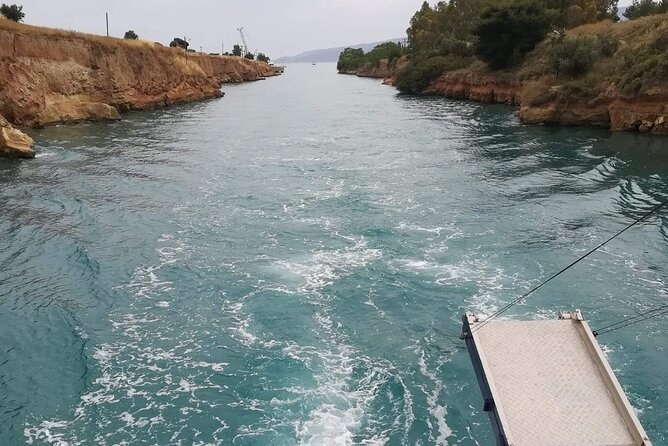
The day begins at the Corinth Canal, a narrow waterway that links the Aegean Sea with the Ionian Sea. It’s a short stop, about 30 minutes, but it’s the kind of place that makes you immediately understand why Corinth mattered. Standing here, you can picture the ancient and modern logic of trade and travel squeezing through a narrow strip of land.
For photos, you’ll likely want to spend a little extra time finding angles before you move on. This stop is also a nice mental warm-up: before ruins and mosaics, you get scenery that feels dramatic and modern at the same time.
Admission is free for this stop. So even if you arrive at a slightly rushed pace, you won’t lose money if you just need a quick look and a few photos.
Ancient Corinth on your schedule: ruins, temples, and Paul’s footsteps
At Ancient Corinth (Archaia Korinthos) you get about 1 hour on-site. This is the heart of the “St. Paul’s Footsteps” theme, built around Corinth’s role as a powerful city-state and its connection to early Christianity. You’ll move among the remains of what once functioned like a working city—market spaces, temples, and architectural fragments that help you “read” how people lived and worshipped.
Here’s how I’d use the time if it were my day:
- Start by picking a clear direction of travel, so you don’t wander in circles.
- Pause at major temple areas long enough to notice column spacing and layout lines.
- When you see an explanatory area, slow down for the context, then keep walking.
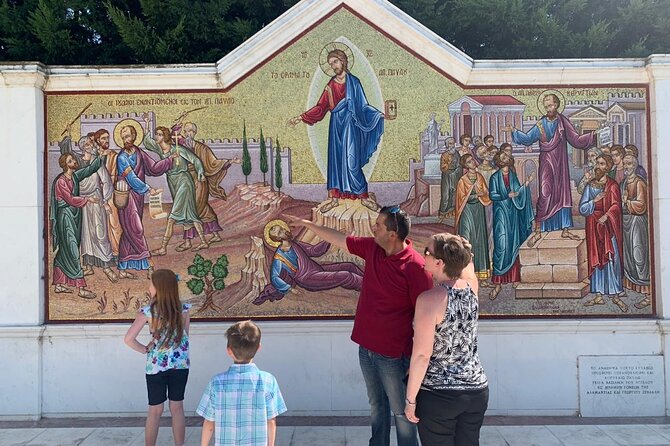
A key practical point from recent feedback: the driver Spiro gave clear guidance on the best way to view the ruins, including the Bema seat area. That’s useful because Ancient Corinth can feel like a lot of stones unless you know where to look first. Since the tour includes a driver (not a licensed site guide) who does not enter the sites with you, you’ll get the story in the vehicle and you’ll explore on your own—but you can still benefit from the orientation your driver gives right before you start walking.
This stop does require an entrance fee (plan on paying €15 per person, which covers Ancient Corinth and the Archaeological Museum of Corinth).
Temple of Apollo: quick, iconic Doric columns
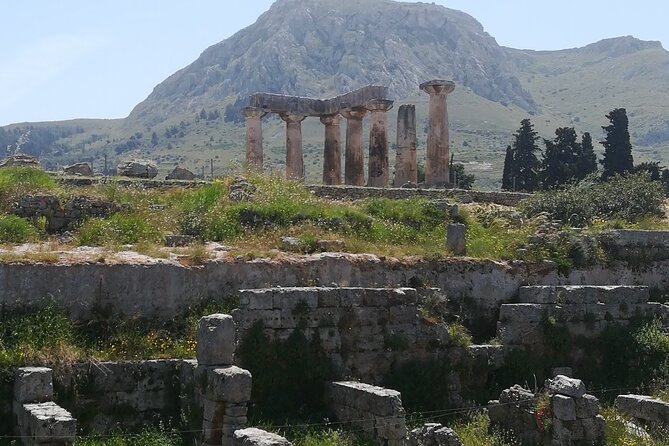
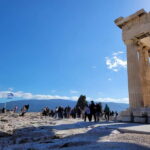
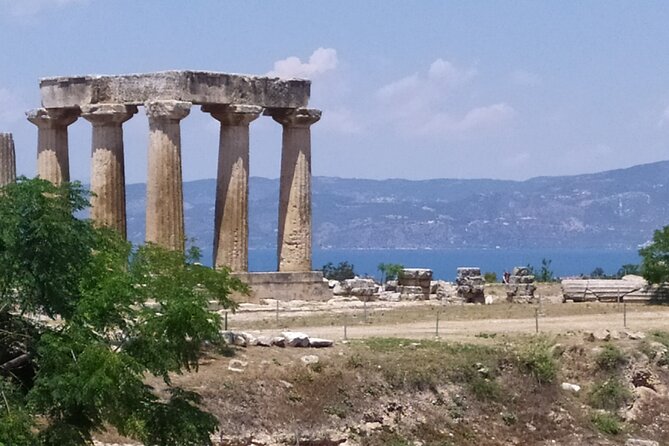
Next is the Temple of Apollo area, about 30 minutes. The standout is the Doric architecture—those sturdy, classic columns and the feel of a major religious center from the 6th century BC. Even when you’re looking at remains instead of a fully intact temple, the structure gives you a real sense of scale.
This is a good stop for photos because the layout encourages you to shoot from a few different positions: close for the column details, farther back for the overall rhythm of the site. It also works well as a “breather” between bigger walking blocks, so you’re not exhausted before the museum and the higher viewpoints.
Admission is free for this stop, so treat it like a high-impact pause.
Archaeological Museum of Corinth: the context you’ll wish you had earlier
After you’ve walked among the stones, you’ll want the explanations that explain what you just saw. The Archaeological Museum of Corinth gives you about 1 hour to do exactly that.
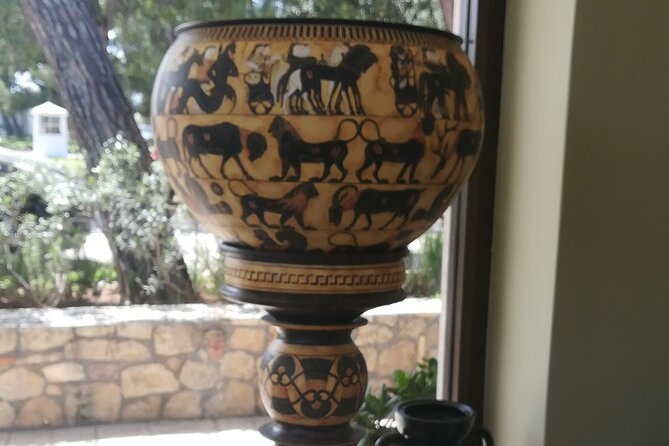
This museum covers the city across centuries, from everyday objects to artwork and Roman-era pieces like mosaics. For the “Paul connection” theme, this is where the city becomes less abstract. Artifacts and items tied to different eras help you connect the dots between the ancient city you walked through and the later layers that shaped the region.
Your time here matters because it turns ruins into a story you can hold. Without the museum, many visitors leave Ancient Corinth with great photos but only a partial feeling for what the finds mean. With the museum included, you’re more likely to walk away saying, I understand why this spot mattered.
Entrance here is also included in the €15 per person fee bundle mentioned above.
- All Day Cruise -3 Islands to Agistri,Moni, Aegina with lunch and drinks included
★ 5.0 · 4,958 reviews



Acrocorinth viewpoint: fortress views that cover centuries
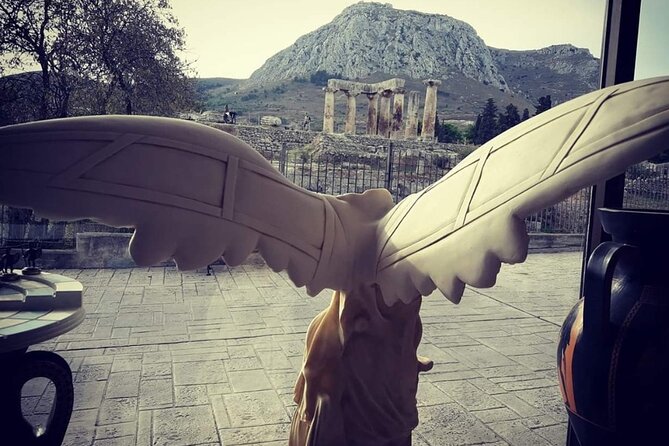
Then it’s up to Acrocorinth, with about 1 hour to explore. Acrocorinth is the towering fortress above Ancient Corinth, used as a defensive stronghold across major historical periods. What you’re really buying with this stop is perspective: you see how a city controls its surroundings when it has the height and the walls.
Expect massive walls, gates, and remains of older temple areas. The walk can feel like a time machine, moving from Greek-era fortification logic into Byzantine and later Ottoman-era layers. Even if you’re not a history buff, the place does its job fast: it shows you why people fought over control of this region.
This stop is free for admission. I’d use the time to slow down at overlooks and not just speed through. The views are part of the museum effect—your brain needs a “wide-angle” after the close-up details of ruins and objects.
Kechries port area: a quiet link to Paul’s departures
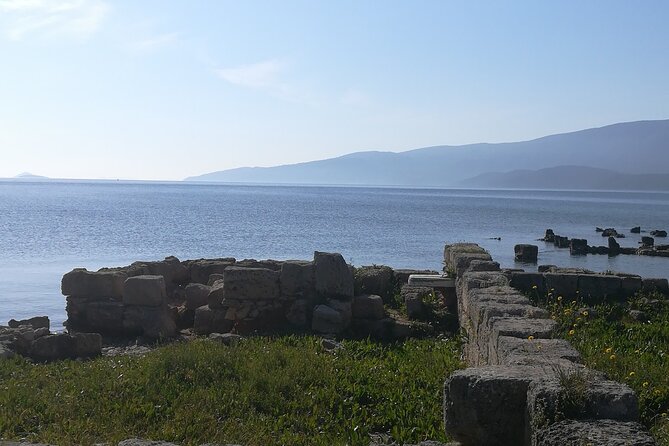
After the big height at Acrocorinth, you drop back down to Kechries, the ancient port area. It’s about 30 minutes, and it’s a calmer, more reflective stop than the fortress. Kechries was a bustling harbor during Roman times, tied to trade and commerce.
For the spiritual theme, Kechries is also identified with a place connected to the Apostle Paul’s departures on missionary journeys. That matters because it turns your understanding of Paul’s travels from a distant idea into a physical geography. You’re not just reading about journeys—you’re standing in the type of place ships left from.
Admission is free. I’d treat it as your reset before the final cultural stop, since Daphni asks you to focus again.
The Monastery of Daphni: Byzantine mosaics you can actually see well
The day ends at the Monastery of Daphni, about 1 hour. This is a UNESCO World Heritage site and one of the standout art-and-faith stops in the Athens area.
The main reason people remember Daphni is the mosaics. The monastery’s Byzantine church and preserved mosaics are the kind of artwork that looks different in person than it does in books or on a screen. You get religious scenes rendered with careful detail and strong color—enough to make you pause and really look rather than just photograph and move.
It’s also a good match for the day’s theme. After Corinth’s ruins and historical layers, you shift into a living religious art tradition tied to Greek Orthodox practice. Even if you don’t lean religious, the craftsmanship is the draw.
Admission is listed as free for this stop, so this is a strong “value finish” to the day.
Price and value: what $425.85 per group really buys
At $425.85 per group (up to 4, as listed), you’re paying for a private day that strings together major sites with efficient transport and a flexible feel. For couples, this can be good value compared to piecing together separate transfers and paid guide time.
What you get that helps your day run smoother:
- Pickup and return from Athens addresses or the Piraeus port
- Air-conditioned vehicle and private transportation
- Onboard Wi‑Fi plus bottled water
- Driver commentary in fluent English, with history context (the driver does not enter sites)
What you don’t get automatically:
- A licensed guide who enters the archaeological sites with you
- Site entrance tickets (Ancient Corinth and the museum are extra)
So here’s the balanced way to think about it: if you want a driver who sets the stage, points out what to watch for, and then gives you space to explore, this format fits well. If you want a licensed guide leading you inside every stop, you should check whether a licensed guide can be requested and available, since the standard listed setup is driver-guided in the vehicle.
Who should book this and who might want a different style
This tour is a strong match for:
- People who want private pacing and hate the feeling of being rushed
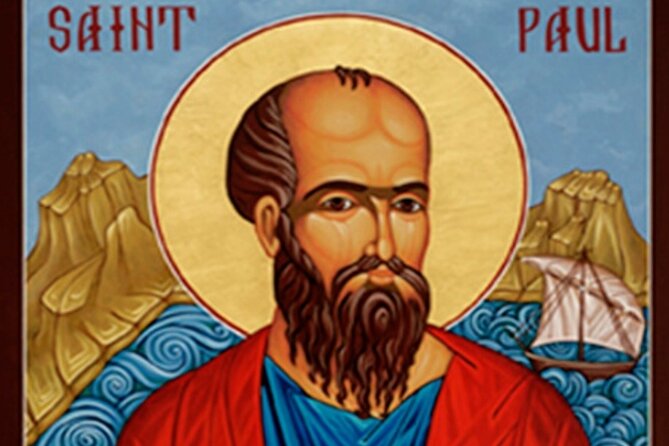
- Visitors interested in the biblical and early-Christian geography of Corinth
- Travelers who like art stops, especially because Daphni is scheduled for real viewing time
It might be less ideal if:
- You expect a licensed guide inside each archaeological site
- You prefer a tight script and constant narration at every moment (this one gives you breathing room)
Should you book St. Paul’s Footsteps to Ancient Corinth and Daphni?
I’d book it if your goal is a meaningful route with less crowd pressure and better time control. The combination of Corinth Canal photos, Ancient Corinth ruins, the Corinth museum context, Acrocorinth views, and the Daphni mosaics gives you a full arc—from trade routes to fortress logic to Byzantine art.
Before you decide, consider two practical questions:
- Are you okay exploring Ancient Corinth and the museum mostly on your own, with the driver providing guidance and background from the vehicle?
- Can you plan for the €15 per person entrance fees for Ancient Corinth and the museum?
If you say yes to both, this is the kind of day that feels coherent, not just busy.
FAQ
Is hotel pickup included for this tour?
Yes. Pickup and return are included from your Athens hotel or residence, and pickup is also offered from the Piraeus port.
Do I need to buy entrance tickets for Ancient Corinth and the museum?
Yes. Entrance tickets for Ancient Corinth and the Archaeological Museum of Corinth are not included. You can purchase them on-site for €15.00 per person.
Does the tour provide a licensed guide?
Not as part of the standard inclusions. The tour includes professional drivers with fluent English history commentary, but they are not licensed to accompany you inside the sites. A licensed tour guide may be available upon request, depending on availability.
How long is the tour and how much time is spent at each stop?
The tour is about 8 hours. Time on-site includes: 30 minutes at Corinth Canal, 1 hour at Ancient Corinth, 30 minutes at the Temple of Apollo, 1 hour at the Archaeological Museum of Corinth, 1 hour at Acrocorinth, 30 minutes at Kechries, and 1 hour at the Monastery of Daphni.
Is Wi‑Fi available during the ride?
Yes. Wi‑Fi is available on board.
Is this a private experience?
Yes. It’s a private tour/activity with only your group participating.



More Tour Reviews in Athens
- All Day Cruise -3 Islands to Agistri,Moni, Aegina with lunch and drinks included
★ 5.0 · 4,958 reviews