REVIEW · ATHENS
Private Biblical Tour Ancient Corinth & Isthmus Canal from Athens
Book on Viator →Operated by Ancient Greece Tours & Transfers · Bookable on Viator
Corinth makes the Bible feel close. This private Ancient Corinth & Isthmus Canal tour uses a car-first route and Bible-sited storytelling, so the story of St. Paul lands on real ground. From the A/C, Wi‑Fi vehicle to the stop-by-stop connections, you get a day that mixes faith, engineering, and big views.
I especially love the focus on St. Paul’s geography—walking from the Roman civic spaces tied to his trial into the port area of Kenchreai. I also like that pickup and drop-off from your Athens hotel (or Corinth) keeps your day from turning into a transit headache. One possible drawback: you’ll still need to plan for the paid entrance at the Ancient Corinth site and museum (€15 at the site), and Acrocorinth is steep, so sturdy shoes matter.
In This Review
- Key highlights to know before you go
- Corinth and the Isthmus Canal in one private day
- Price and logistics: what you should budget beyond $301.72
- What’s included in the base price
- What costs extra
- Pickup and pacing: why the private format matters
- Stop 1: The approach to Corinth through the Isthmus gateway
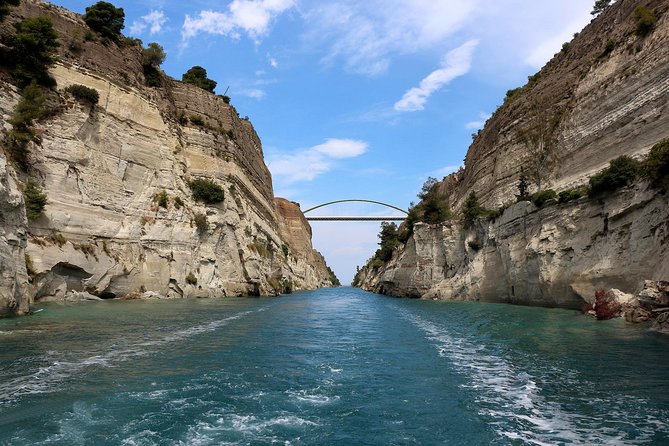
- Stop 2: Corinth Canal time—seeing the modern choke point
- Stop 3: Ancient Diolkos—the road that hauled ships
- Stop 4: Acrocorinth and Hadgimoustafa Spring—views plus myths
- Stop 5: Ancient Corinth churches and the Paul story you can actually point to
- Stop 6: Museum and archaeological site—Greek, Roman, Byzantine, Ottoman layers
- Museum/site entry fees
- Optional licensed guide inside
- Lunch in Corinth: timing, place choices, and what to do with it
- Stop 8: Kenchreai port—closing the Paul journey loop
- Who this tour fits best
- Should you book this Private Biblical Tour of Ancient Corinth & Isthmus Canal?
- FAQ
- Is pickup in Athens included?
- How long is the tour?
- Is this tour private?
- What language is the tour in?
- Is the vehicle air-conditioned and does it have Wi‑Fi?
- Are entrance fees included for Ancient Corinth and the museum?
- Is there an option for a licensed tour guide inside the museum and site?
- Is lunch included?
- Can I book airport or port transfers?
- What’s the cancellation policy?
Key highlights to know before you go
- St. Paul, tied to location: your driver links major scenes to the city’s streets, meeting places, and the Bema area.
- Engineering spectacle at the canal: you get time to actually look at how the Isthmus Canal shapes trade.
- Acrocorinth views with a workout factor: a tough climb for some people, but the payoff is huge.
- Ancient Diolkos and ship-overland logic: you’ll learn why Corinth mattered to sea routes before the canal.
- Museum and site are partly pay-at-the-door: entrance to the museum/site is not included (€15 each at the location).
- Private pace with real comfort: bottled water, A/C, and Wi‑Fi in a private vehicle, with room to slow down.
Corinth and the Isthmus Canal in one private day
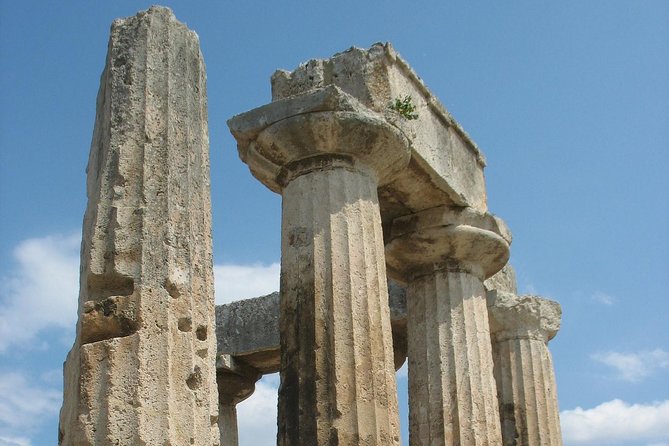
This is the kind of day that works because it’s not trying to do everything. It’s built around a clear arc: start at the Corinth Canal area, move into the ancient Corinth power center, then finish at the port of Kenchreai where Paul’s travel story continues. Even if you know the Bible well, the setting helps you “see” what the texts only describe.
Price-wise, you’re paying for three big things: private door-to-door transportation, a driver who connects biblical references to what you’re seeing, and time. At about $301.72 per person for an 8-hour day, it can be good value if you’re traveling as a couple, a small family group, or with friends who want flexibility. If you’re traveling solo, it can still be worth it when you factor in convenience and fewer schedule headaches than joining public buses and timed entry lines.
You can also read our reviews of more private tours in Athens

Price and logistics: what you should budget beyond $301.72
Let’s break down the money so there are no surprises.
What’s included in the base price
You get a private, air-conditioned vehicle with Wi‑Fi and bottled water. You also get hotel or port pickup and drop-off in Athens or Corinth, plus the driver who brings both historical and biblical context into the route.
What costs extra
You should budget for:
- Ancient Corinth site and the museum entrance: €15 per person, bought at the site.
- Optional licensed tour guide inside the site and museum: €190 per booking (paid directly).
- Food and drinks: lunch is built into the day as a time slot, but you pay for what you order.
If you’re the type who wants to read carefully, stop often, and ask lots of questions, the optional licensed guide can be a smart upgrade because it’s specifically for inside the museum and archaeological area. If you’re mainly looking for the big-picture biblical geography and the outside walk-through, you may feel fine with just the driver-guide.
Pickup and pacing: why the private format matters
This tour starts with pickup from your Athens hotel, Airbnb, or apartment. That detail is more important than it sounds. Public transport can be cheap, but it turns your day into a schedule puzzle. Here, you’re in a private vehicle from the moment you’re ready to go, which means you can:
- take breaks without feeling like you’re holding up strangers,
- adjust the day if someone needs a restroom stop,
- spend your time where you care most.
In multiple real-day experiences, guides handled small disruptions smoothly, including rain plans and quick restroom needs. That’s not a guarantee on every departure, but it’s a good sign that the tour is operated by people who think in terms of comfort, not just clock time.
- All Day Cruise -3 Islands to Agistri,Moni, Aegina with lunch and drinks included
★ 5.0 · 4,958 reviews




Stop 1: The approach to Corinth through the Isthmus gateway
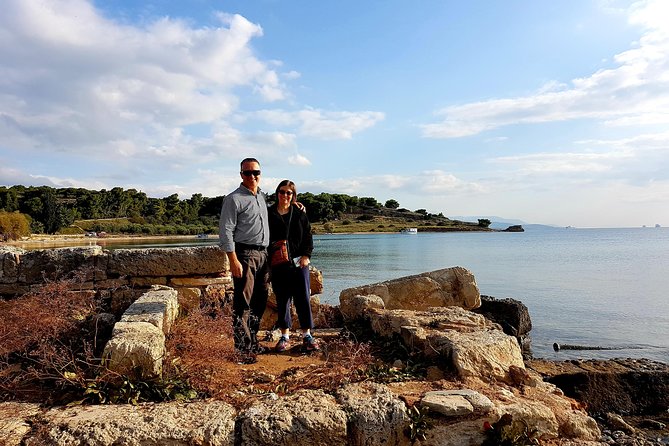
Your day starts in Athens with pickup, then you drive out toward the Isthmus of Corinth, the narrow gateway between the Peloponnese and the rest of Greece. The canal area is the first strong visual signal that this is more than an ancient ruins day—it’s a place where geography controls history.
This first stop is short (around 10 minutes) and typically serves two purposes:
- get you oriented on where the canal sits in the wider map,
- set up what you’re about to see with context before you park.
Tip: when you first arrive, take 2 minutes to look around before you start photographing. You’ll catch how the terrain frames the later views from Acrocorinth.
Stop 2: Corinth Canal time—seeing the modern choke point
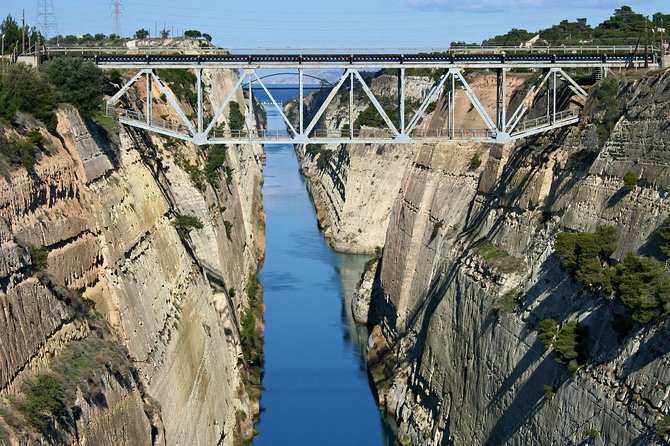
Next up is the Corinth Canal area itself (about 50 minutes). The canal is one of those “how did they build that?” projects. It slices through a critical junction between the Mediterranean basins, turning long sea routes into shorter passages.
The practical value of this stop is simple: you’ll understand why later stories about movement, trade, and travel mattered. Corinth wasn’t only a religious center; it sat on routes people used to move goods and ideas. Even if you don’t care about engineering, watching the canal gives you a tangible sense of scale and direction.
If you’re thinking spiritually, this is also a reminder that the early Christian world was not static. People traveled. Ships moved. Cities connected.
Stop 3: Ancient Diolkos—the road that hauled ships
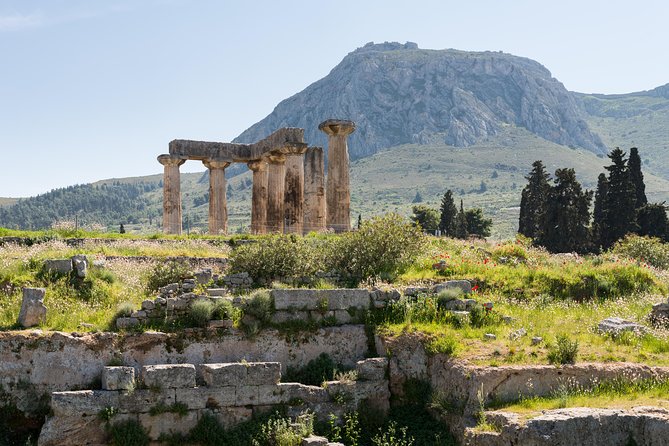
Here’s where the day gets truly interesting. You visit the Ancient Diolkos, the stone-built dragway where boats were moved across the isthmus. Instead of going around the long way by sea, ships could be heaved over land—using labor and animals—so the distance and travel time dropped dramatically.
This stop also helps you grasp why Corinth rose so high in ancient trade and power. The Diolkos effectively controlled a major shortcut, which meant the city gained advantage from the traffic flowing through it.
For biblical travelers, this matters because Paul’s world was shaped by routes. When you understand the mechanics of movement between sea zones, Paul’s journeys feel less abstract. The text says where he went; Diolkos helps explain why those places mattered.
This is a short stop (about 30 minutes), but it’s the kind of place where a driver’s explanation can make all the difference. Go in curious and you’ll come out with a clear mental picture.
Stop 4: Acrocorinth and Hadgimoustafa Spring—views plus myths
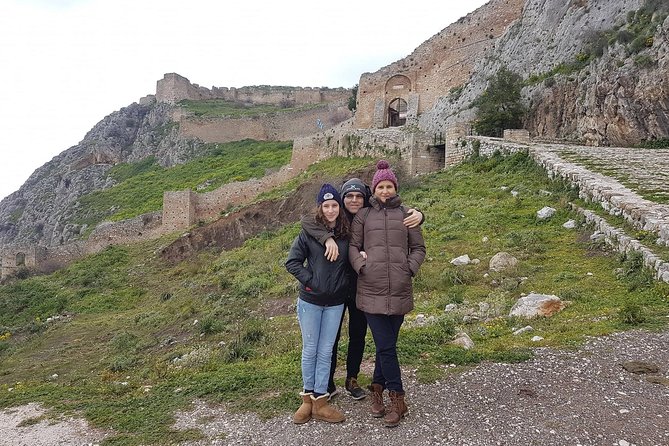
Acrocorinth is the acropolis above Corinth, and visiting it is a big part of why this tour feels like more than a quick hit. It’s high—around 1,886 feet—and it has long walls and major defensive features. Even if you don’t climb deep into every corner, the scale of the place lands.
You’ll also connect the area to local myth and story. Acrocorinth is tied to the Pegasus story in local tradition, and you’ll hear about how that myth and the spring are part of the cultural layer layered over the ancient site.
A key practical stop here is Hadgimoustafa Spring, a fountain built during the Ottoman period (1555 AD). It’s still flowing today, which makes it a memorable “real water” moment during a day of ruins and history.
Drawback to consider: Acrocorinth is steep and rocky. Wear shoes with grip. There may be no handrails where you’d want them. Plan for slower walking, especially if you’re traveling with older relatives or anyone who has mobility limits.
If you’re only choosing one “must do” climb, make it this one—Acrocorinth’s views put the whole region into context.
Stop 5: Ancient Corinth churches and the Paul story you can actually point to
Then you move into Ancient Corinth proper for the church sites that connect strongly to Paul’s era and later memory of Paul. This part of the tour is less about huge excavation remains and more about how later communities kept Paul’s story alive in stone, mosaics, and verse.
Expect stops at:
- a Neo-Byzantine church dedicated to the Virgin Mary, with Bible-text inspired plaques tied to the message of love (1 Corinthians 13),
- a church dedicated to the apostle Paul, where you can analyze elements tied to Paul’s vision and life in Corinth,
- a mosaic artwork connected with Saul’s journey on the road to Damascus (34 AD).
This is a good section if you care about how faith traditions interpret scripture and keep it present in places. It also works well for anyone who likes the “human timeline” angle: not just Paul in the first century, but how generations after him continued telling the story.
Time here is short (about 40 minutes), so if you’re the type who wants to read every plaque, slow down a bit and ask questions so you don’t rush through what you came to see.
Stop 6: Museum and archaeological site—Greek, Roman, Byzantine, Ottoman layers
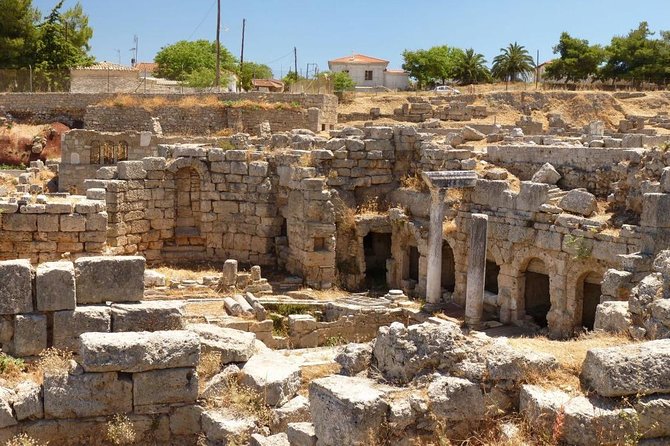
This is the largest content block on the day: the Archaeological Museum of Corinth and the archaeological area together (about 1 hour 40 minutes on the ground).
You’ll see artifacts spanning:
- Greek,
- Roman,
- Byzantine,
- Ottoman.
And you’ll connect those layers to key architectural and civic points, including:
- the Temple of Apollo area (including Doric monolithic columns),
- the Roman Agora with shops and altars,
- Roman civic buildings like the amphitheatre and Odeon,
- fountains and baths,
- the Lechaion road,
- and the Roman civic platform known as the Bema, where Paul was presented officially.
The Bema connection is one of the most powerful parts for Bible-focused visitors. It turns Acts into a setting you can stand in.
Museum/site entry fees
Plan for the fact that entrance is not included. You’ll purchase the site and museum entrance on location for €15 per person. If you’re budgeting carefully, this is the one item to account for in addition to the tour price.
Optional licensed guide inside
If you want deeper explanation inside the museum and within the archaeological area, there’s an option to add a licensed tour guide paid directly (€190 per booking). In practice, this is where you might get extra attention to verse connections and specific exhibits, since the driver-guide format is more “story and navigation” across the day, while a licensed guide supports the slow reading inside.
Lunch in Corinth: timing, place choices, and what to do with it
Your schedule includes an actual lunch block (about 1 hour 20 minutes). You’ll choose between a village-style lunch in Ancient Corinth or a seaside-style lunch at the Baths of Helen of Troy.
Two reasons I like this structure:
- you’re not stuck eating fast food between major stops,
- and you can match your lunch choice to your mood—quiet village feel versus coastal views.
Food isn’t included, so bring cash or card as needed. Also, since Acrocorinth can work your legs, this lunch break is the moment to slow down, drink water, and let the day settle.
Practical tip: if you have dietary needs, tell your driver early. Private format helps here, even if the exact restaurant details vary by day.
Stop 8: Kenchreai port—closing the Paul journey loop
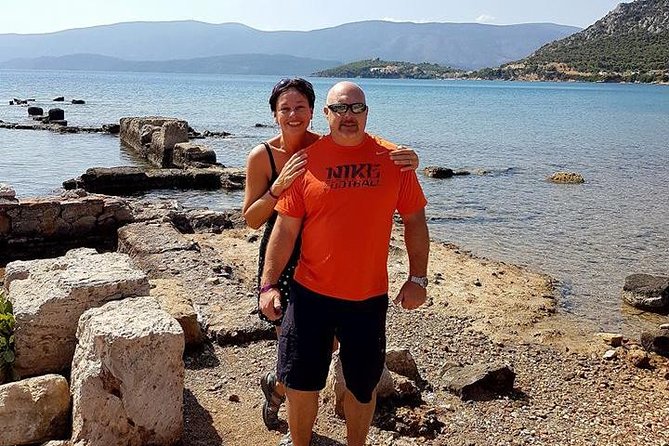
The day ends at Ancient Port of Kenchreai (Cenchreae) by the Saronic Sea (about 30 minutes). This is the port story side of Corinth. It’s tied to Paul’s departure from Corinth around 53 AD with Aquila and Priscilla, sailing toward Ephesus.
This stop adds something important: travel is not just about cities inland. It’s also about harbors, timing, vows, and the personal routines that travel changes.
You’ll also connect the port setting to the Nazarite vow theme, including hair-cutting as part of the story referenced in Acts.
Then you head back to Athens (around 70 minutes driving). The return time is built in, which helps you avoid the last-minute panic of trying to catch your own transport.
Who this tour fits best
This works best if you:
- want biblical geography (where events happened, not just when),
- like a driver-guide who can link scripture references to specific points on the ground,
- prefer private pacing with pickup and drop-off so your day feels calm,
- care about both ancient Corinth and the modern world’s canal-engineering impact.
It’s less ideal if you only want a short, flat walking tour. The Acrocorinth stop includes real climbing on rough ground.
If you’re a history buff, you’ll still enjoy it because the Roman civic spaces, Greek temple remains, and multi-era artifacts give you plenty to look at. If you’re purely religious and want theological debate, you may want to consider the optional licensed guide for the museum and archaeological area so you can slow down inside.
Should you book this Private Biblical Tour of Ancient Corinth & Isthmus Canal?
Yes, if you want a full, structured day that ties St. Paul’s story to the geography of Corinth—and you’re happy to plan for the €15 site/museum entrance plus optional upgrades. The private vehicle, A/C comfort, and A-to-B pickup are the big practical wins, and Acrocorinth plus the Bema connection are the big emotional wins.
If you’re price sensitive, do quick math: the base tour plus €15 per person is the main extra. If you think you’ll want more inside-the-museum interpretation, budget the optional licensed guide (€190 per booking) rather than hoping the day will feel fully “guided” inside every room.
If you want one Bible-and-ancient-ruins day that also explains how Corinth mattered to travel and trade, this is a strong match.
FAQ
Is pickup in Athens included?
Yes. The tour includes pickup and drop-off from your Athens hotel, Airbnb, or apartment, with the driver meeting you at your lobby or entrance.
How long is the tour?
It runs about 8 hours (approx.).
Is this tour private?
Yes. It’s a private tour/activity, so only your group participates.
What language is the tour in?
The tour is offered in English.
Is the vehicle air-conditioned and does it have Wi‑Fi?
Yes. You travel in an air-conditioned private vehicle with Wi‑Fi and bottled water.
Are entrance fees included for Ancient Corinth and the museum?
No. Entrance to the Ancient Corinth site and Museum is not included. You purchase it at the site for €15 per person.
Is there an option for a licensed tour guide inside the museum and site?
Yes. An optional licensed tour guide can accompany you inside the site and museum. The fee is €190 per booking, paid directly.
Is lunch included?
Lunch time is included, but food and drinks are not. You choose between options during the lunch window.
Can I book airport or port transfers?
Airport or port pick-up and drop-off can be arranged for an additional cost, depending on the vehicle type.
What’s the cancellation policy?
Free cancellation is available up to 24 hours in advance for a full refund. If you cancel less than 24 hours before the start time, the amount paid is not refunded.

More Private Tours in Athens


More Tours in Athens


More Tour Reviews in Athens
- All Day Cruise -3 Islands to Agistri,Moni, Aegina with lunch and drinks included
★ 5.0 · 4,958 reviews