REVIEW · ATHENS
Greek Mythology Storytelling Walk
Book on Viator →Operated by Alternative Athens · Bookable on Viator
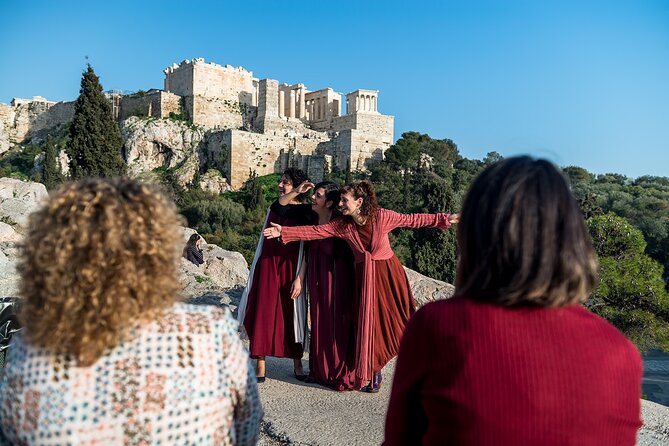
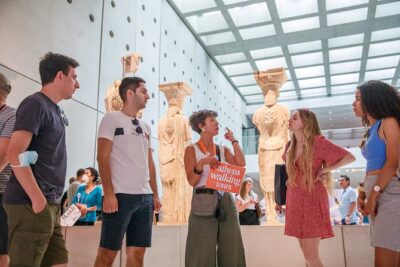
Zeus, Athena, and Dionysus take over the walk. In Athens, this 2-hour Greek mythology storytelling stroll turns the streets near the Acropolis into a living stage, with professional performers guiding you through Plaka’s lanes and ending at the historic Pnyx.
I like how this tour gives you two things at once: storytelling that makes the myths easy to follow, and a walk that doubles as a quick orientation to the most important corners of ancient Athens. One possible drawback: it’s weather-dependent, and you’ll be outside for the full experience, so plan for a bit of sun or cool air and wear shoes that handle uneven paving.
In This Review
- Key highlights worth knowing
- Why a 2-Hour Myth Walk Beats a Straight Sightseeing Loop
- Starting in Plaka: Where the Stones Feel Closest to the Myths
- Passing the Acropolis Museum Area and an Ancient Theater Spot
- Pnyx: Ending at the Place Where Athenian Citizens Decided
- What the Storytelling Brings to Zeus, Athena, and Dionysus
- Group Size, Timing, and How to Plan Your Walk in Athens
- Price and Value: Paying for Performance in Real Streets
- Who Should Book This Mythology Walk (and Who Might Skip It)
- Should You Book This Greek Mythology Storytelling Walk?
- FAQ
- What’s the duration of the Greek Mythology Storytelling Walk?
- Where does the tour start and end?
- Is the ticket mobile, and do I need to buy entry tickets for the stops?
- What’s included in the price?
- How big is the group?
- What happens if the weather is bad?
Key highlights worth knowing
- Live professional storytelling focused on foundational Greek myths and famous gods and heroes.
- Small group size (max 20), which helps keep the performance feeling personal on the street.
- Plaka to Pnyx route that links cozy old alleys with a major civic site for Athenian democracy.
- Stops outside key landmarks like the Acropolis Museum area and an ancient theater near the Acropolis base.
- Mobile ticket for a smoother start, plus an on-time 9:30 am departure.
Why a 2-Hour Myth Walk Beats a Straight Sightseeing Loop
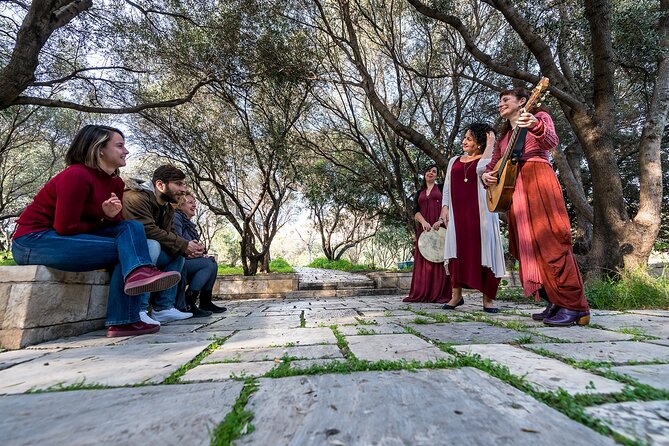
If you’ve ever looked at the Acropolis from down the street and felt you were missing half the story, this is a smart fix. Instead of treating Greek mythology like trivia, you hear it performed while you walk through places connected to Athens’ myth-making world.
The format matters. Two hours is long enough to settle in, but short enough that you’re not spending your entire day trudging between sites. You’ll get a focused walk that connects the vibe of Plaka—narrow lanes, old stone, and everyday Athens energy—with two big anchors: the Acropolis area and the civic space of the Pnyx. That mix helps your brain hold onto what you learn, because you’re not just reading plaques.
Also, this is performance-led. The tour leans on live storytellers to keep the pacing fun. You’ll hear myths in a way that feels built for the street, not for a classroom. That makes it a good choice when you want culture without feeling like homework.
You can also read our reviews of more walking tours in Athens

Starting in Plaka: Where the Stones Feel Closest to the Myths
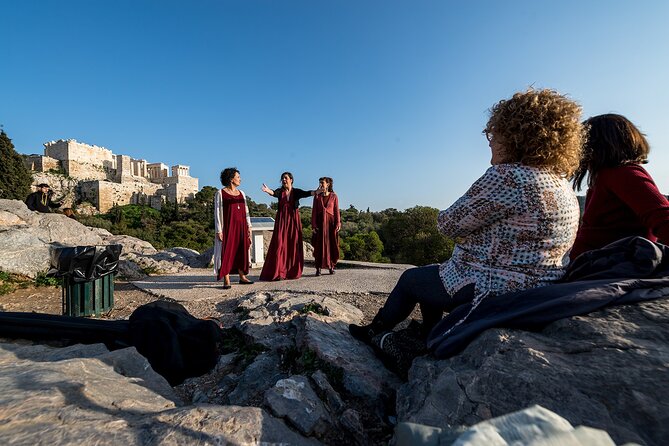
The walk begins in Plaka, Athens’ famous older neighborhood right below the Acropolis. This area is packed with souvenir shops and little streets that curve around older structures—great for wandering, but often chaotic on your own. Here, you’re moving with a plan and a guide, so the lanes feel like part of an experience rather than just places to get lost.
The time at this first segment is about an hour. During it, you’ll work through that cluster of narrow alleys and pass visible ancient monuments along the way. Plaka is touristy, yes—but it’s also the easiest area in Athens to understand on foot because so many things are close together and the scenery stays dramatic. When the myths get told while you’re looking at the “this is how Athens used to look” backdrop, the stories land faster.
A practical thought: Plaka’s streets can be uneven and a little tight. If you prefer wide sidewalks, you may find the sidewalks here feel narrow. If you’re okay with a bit of old-city walking, you’ll enjoy the atmosphere.
Passing the Acropolis Museum Area and an Ancient Theater Spot
Between Plaka and the next storytelling stop, you’ll be out on the streets near the Acropolis Museum. The tour doesn’t ask you to spend time inside—this is more about using the outside setting to set up what’s coming next.
Along the route, you’ll also pass by an ancient Greek theater located at the base of the Acropolis. Even if you don’t go into anything, the sight of a theater tied to ancient civic life adds a nice layer. Greek myths weren’t just told around dinner tables; they were part of how people framed the world, and performance was one of the ways culture got shared.
What you’ll get from this section is momentum. It’s the bridge from “old neighborhood walking” into “major ancient Athens ground,” without making you stop for long museum detours.
Pnyx: Ending at the Place Where Athenian Citizens Decided
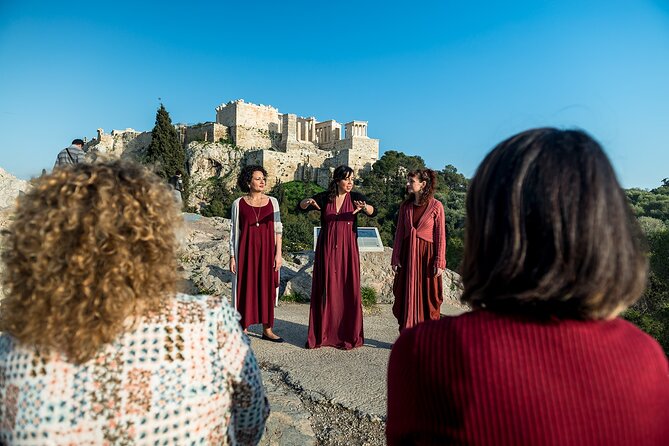
Your walk concludes at the Pnyx, the historic meeting area where citizens gathered for the democratic assembly. This is a strong ending because it reframes the mythology you heard earlier. Greek myths might involve gods and heroes, but they also reflect the values and imagination of real communities—communities that argued, voted, and made decisions.
The time here is about an hour. That gives you space to listen and absorb without feeling rushed at the finish line. And ending at the Pnyx feels appropriate after you spend time near the Acropolis zone. You go from sacred heights to civic ground, from mythic power to human governance.
If you’re the type who likes context—who wants to know why a place matters beyond photos—this ending lands well. Even if your Greek mythology knowledge is basic, connecting the stories to a civic site makes the whole day feel more anchored.
What the Storytelling Brings to Zeus, Athena, and Dionysus
This tour starts with the energy implied in the description: Zeus is madly in love, Athena is bearing gifts, and Dionysus is drunk again. Even if you already know the names, hearing them woven into a live performance helps you remember the characters as “people in stories,” not just labels.
The key promise here is foundational Greek myths plus famous gods and heroes. You’re not just picking up random facts; you’re getting a framework. And because the myths are performed by professional storytellers, the “why it matters” comes through in the pacing and emphasis.
One thing I love about myth storytelling done well is how it teaches you to listen differently. You stop focusing on exact dates and start noticing relationships: jealousies, loyalties, bargains, and lessons. That’s the kind of understanding you can carry with you even after you leave Athens.
And because the tour walks through classic Athens areas instead of staying in one fenced spot, the myths feel more connected to place. You’re not learning myths in a vacuum—you’re hearing them where the city’s ancient world is still visible.
- All Day Cruise -3 Islands to Agistri,Moni, Aegina with lunch and drinks included
★ 5.0 · 4,958 reviews





Group Size, Timing, and How to Plan Your Walk in Athens
This is a small-group experience with a maximum of 20 people. That matters more than it sounds. Larger tours can feel like you’re trying to listen through motion and noise. Here, you should feel closer to the storytelling experience, which helps if you want to actually follow the thread of the myths.
The tour runs about 2 hours, starting at 9:30 am. Morning can be great in Athens because your walk starts before the city fully heats up. Even so, you’ll still want to dress for sun and carry a layer if the morning is cool.
You’ll use a mobile ticket, and the meeting point is Nikis & Kidathineon (Athina 105 57, Greece). It ends at Pnyx (Athens 117 41, Greece). Since it’s a point-to-point walk, plan your onward transportation based on the end location, not the starting neighborhood.
A few practical notes from what’s explicitly provided:
- It’s near public transportation.
- Service animals are allowed.
- Most people can participate.
- Good weather is required, and if it’s canceled due to poor weather you’ll be offered another date or a full refund.
If you’re the kind of traveler who hates being outside for long stretches, this might feel like a lot. But if you’re happy with an outdoor morning walk, it’s a friendly length.
Price and Value: Paying for Performance in Real Streets
The price is $53.52 per person for about 2 hours. That’s not a “budget only” cost, but it’s also not the kind of price that makes you wonder if you just paid for a route map.
Here’s where the value comes from. You’re paying for:
- Professional storytelling performance
- A professional tour leader
- A focused walk between Plaka and Pnyx, near the Acropolis zone
If you’ve ever done a standard walking tour where the guide talks while you stare at scenery, you know the difference. This tour is structured around performance, and performance takes skill. That’s why the small group size matters too—it keeps the storytelling from turning into background noise.
One more value signal: it’s commonly booked about 75 days in advance. That usually means the experience has an audience and a steady schedule. In practical terms, it’s smart to book ahead if your dates are fixed.
Food and drinks aren’t included, so treat this as a walking-and-listening event. If you want breakfast beforehand, do it near your hotel or at the start area, then come ready to focus.
Who Should Book This Mythology Walk (and Who Might Skip It)
You’ll likely love this tour if:
- Greek mythology is your thing, or you want an enjoyable entry point.
- You prefer short walks with a story-led structure.
- You’d rather hear myths performed than read them from a guidebook.
- You want a quick sense of Athens’ ancient spaces without doing a museum-heavy day.
You might skip it if:
- You want lots of inside-site time (this is mainly about street-based stops).
- You dislike outdoor activities or weather risk.
- You only care about hardcore archaeology and long explanations at specific monuments. This is myth and place, not a deep excavation-style lecture.
Families can often enjoy it since it’s described as something most travelers can participate in, and it’s capped at 20 people. Still, keep in mind that it’s a walking tour through older street surfaces, so choose footwear accordingly.
Should You Book This Greek Mythology Storytelling Walk?
If you want Athens in a single, memorable thread, I’d book it. The combination is the point: myths told live while you move through the neighborhoods and ancient-adjacent spaces that make those stories feel real.
Book it especially if:
- You’re doing Athens for the first time and want quick orientation.
- You like performances and storytelling more than museum reading.
- You want your visit to the Acropolis area to feel connected to culture, not just stone.
Skip or plan carefully if weather could be a problem for you. Since it’s outdoors and depends on good conditions, have a flexible mindset for your day.
FAQ
What’s the duration of the Greek Mythology Storytelling Walk?
It takes about 2 hours.
Where does the tour start and end?
It starts at Nikis & Kidathineon in Athens and ends at Pnyx.
Is the ticket mobile, and do I need to buy entry tickets for the stops?
The tour uses a mobile ticket, and the stops listed do not require paid admission as part of the tour segments.
What’s included in the price?
You get the storytelling performance, a professional tour leader, and the storytellers. Food and drinks are not included.
How big is the group?
The group is limited to a maximum of 20 travelers.
What happens if the weather is bad?
The experience requires good weather. If it’s canceled due to poor weather, you’ll be offered a different date or a full refund.

More Walking Tours in Athens


More Tour Reviews in Athens
- All Day Cruise -3 Islands to Agistri,Moni, Aegina with lunch and drinks included
★ 5.0 · 4,958 reviews