REVIEW · ATHENS
Acropolis monuments & Parthenon Walking Tour with Optional Acropolis Museum
Book on Viator →Operated by Athens Walks Tour Company · Bookable on Viator
The Acropolis hits you hard, then a guide helps it click. You get skip-the-line entry support and a whisper-style headset system for clearer listening, which matters when you’re climbing and standing among tourists and stone.
I also love the way the route keeps you moving from one major monument to the next with real context, from the Theatre of Dionysus to the Parthenon. The optional stop at the Acropolis Museum is a smart add-on because you see artifacts right after you’ve stared at the ruins outside.
One drawback to plan for: you’ll do a lot of standing and steep walking on hill paths, and the big ticket items (Acropolis and museum admissions) depend on whether you select the upgrade with entry.
In This Review
- Key highlights to watch for
- Where this Acropolis tour fits in your Athens plan
- Meeting point and the route start: Porinou 5
- The first monuments: Theatre of Dionysus and Herod Atticus Odeon
- Theatre of Dionysus Eleuthereus
- Herod Atticus Odeon
- Temples and gateways: Propylaea and Athena Nike
- Propylaea: the monumental entrance
- Temple of Athena Nike (the Victory Temple)
- The Parthenon hour: how to look like you know what you’re seeing
- Erechtheion and the caryatids: the sculpture stop you’ll remember
- Acropolis time: the big-picture hour on the hilltop
- Optional Acropolis Museum: where the ruins turn into objects
- How the guide experience really works: audio, pacing, and stories
- Skip-the-line support and entrance options: what you should choose
- Price check: is $42.33 worth it?
- Fitness level and comfort: what to plan for
- Who this tour suits best (and who should reconsider)
- Should you book the Acropolis Monuments and Parthenon Walk with museum?
- FAQ
- How long is the Acropolis monuments and Parthenon walking tour?
- Does the tour include Acropolis Museum admission?
- What’s included in the ticket cost?
- How much are the Acropolis and Acropolis Museum tickets?
- Where do we meet for the tour?
- Is the tour suitable for kids or teens?
Key highlights to watch for

- Skip-the-line support plus professional licensed guidance through the hilltop site
- Headset audio (whisper system) for groups over 5, so the story stays easy to follow
- Caryatid focus at the Erechtheion, where the sculpture does the talking
- The Parthenon explained as you walk the space, not as a vague lecture from afar
- Optional Acropolis Museum add-on to match what you saw on the hill with artifacts
- Small groups (max 20) to keep the pace friendly and photo stops realistic
Where this Acropolis tour fits in your Athens plan
If you’re visiting Athens for the first time, the Acropolis is the obvious priority. The tricky part is that it can feel like a pile of famous buildings unless someone connects the dots. This tour is built to do that connection fast, while you’re still excited and your feet can still handle the climb.
At roughly 4 hours, it’s a half-day format that works well with everything else you want to do in Athens. You’ll meet up near the Acropolis area, walk over early in the day, and then spend concentrated time on the monuments before (or without) the museum option.
The small-group size is a big practical win. With fewer than 20 people per guide, your group isn’t split into a dot of strangers walking in a straight line. Guides can slow down for photos, regroup if someone falls behind, and keep the story coherent.
You can also read our reviews of more walking tours in Athens
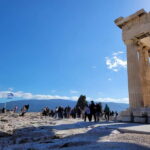

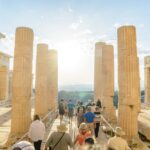
Meeting point and the route start: Porinou 5

You’ll check in at Porinou 5, Athina 117 42, Greece. It’s close enough to the Acropolis that you’re not wasting your time on long transfers. There’s also Wi‑Fi available near the meeting area, which is handy if you need to sort tickets on your phone or confirm details right before you go.
The tour ends at the Acropolis Museum only if you choose that option. If you skip the museum upgrade, you finish around the Acropolis monuments area instead, which is useful if you’d rather head straight to lunch afterward.
One small tip: wear comfortable shoes and plan for real uphill walking. Even when the pace is manageable, the hilltop terrain is not flat, and there are lots of stops where you’ll be listening for stretches of time.
The first monuments: Theatre of Dionysus and Herod Atticus Odeon
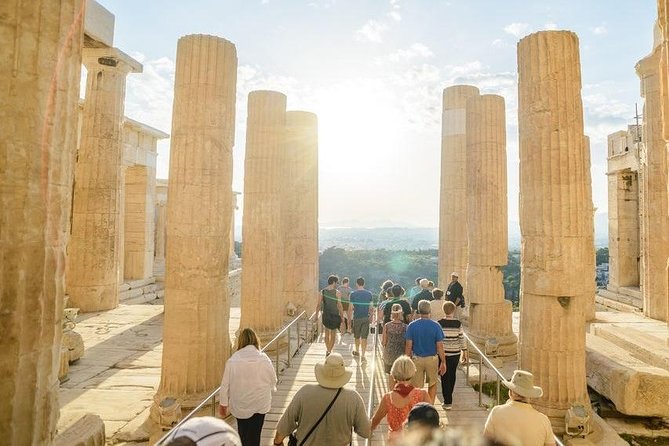
The tour starts with a short walk to the Acropolis hill and then moves into the surrounding ancient theater landscape.
Theatre of Dionysus Eleuthereus
You’ll stop at the Theatre of Dionysus Eleuthereus, built on the south slope of the Acropolis hill. The site connects to the City Dionysia, an important festival connected to theater culture in classical Athens. It’s also a good warm-up stop because it sets the tone: this isn’t just architecture; it’s where public life happened.
Herod Atticus Odeon
Next comes the Odeon of Herod Atticus, a stone Roman theater completed in 161 AD and renovated in 1950. This is one of those places where you’ll quickly understand why Athens keeps reusing and adapting earlier sacred spaces. The geometry and setting help you feel how sound and performance would have worked here.
These two stops are short (about 15 minutes each), but they do important work. They give you the cultural frame before the tour shifts into temples and civic power symbols.
You can also read our reviews of more museum experiences in Athens





Temples and gateways: Propylaea and Athena Nike
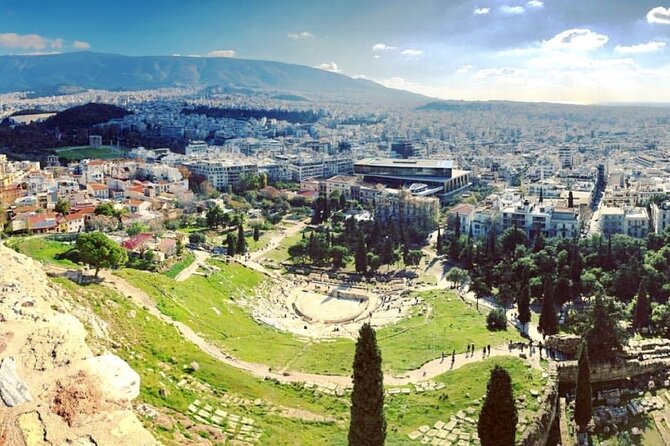
Once you’re up on the main complex, you’ll focus on structures that feel like they were made for both religion and politics.
Propylaea: the monumental entrance
The Propylaea is your entrance zone. It’s described as the entrance to the Acropolis, with monuments designed around 2,500 years ago. Treat it like a transition: you’re crossing from the everyday city-world into the sacred, high-stakes world of the Acropolis.
Temple of Athena Nike (the Victory Temple)
You’ll also spend time at the Temple of Athena Nike, commonly called the Temple of Victory. It’s dedicated to Athena Nike and was built around 420 BC. The tour timing is set so you can take in the structure and then move on without feeling rushed.
This temple matters because it’s one of the earliest fully Ionic temples on the Acropolis, and Ionic details are easier to spot when your guide points out what to look for in the moment. If you’re the type who likes architecture details, this is a great early payoff.
Practical note: the tour includes more than one Temple of Athena Nike entry in the listed stops, but in real terms you can think of this as part of your Athena-themed portion near the approach to the main temple areas.
The Parthenon hour: how to look like you know what you’re seeing
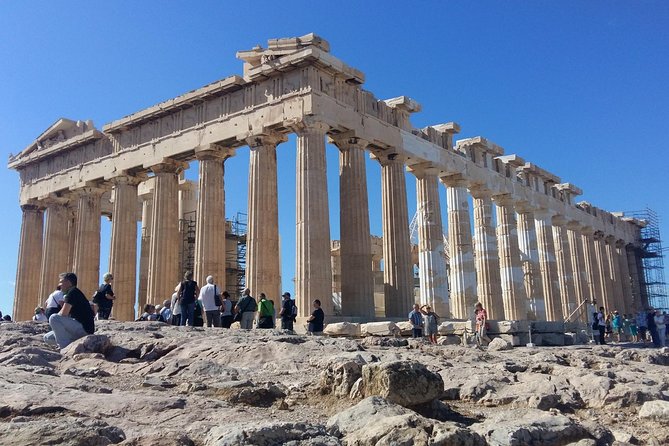
The Parthenon is the star, and the guide role is to keep it from turning into just a photo background. You’ll spend around 30 minutes on the Parthenon area.
Here’s what you’ll get more clearly with a guide:
- How the Parthenon fits into the larger Acropolis plan, not just as a standalone postcard
- Why certain views and angles matter (stone lines look different depending on where you stand)
- Stories about why it was built and what it represented to Athenians of the time
Even if you’ve read about it before, the payoff comes from physical orientation. On the ground, you start noticing relationships between buildings, sight lines, and where the design would have guided worship and ceremony.
This is also where you’ll likely notice how much standing is involved. There’s no avoiding it at the Acropolis. The good news is that the tour pace is set for group flow, not a sprint, so you can keep up without feeling like you’re running behind the guide.
Erechtheion and the caryatids: the sculpture stop you’ll remember
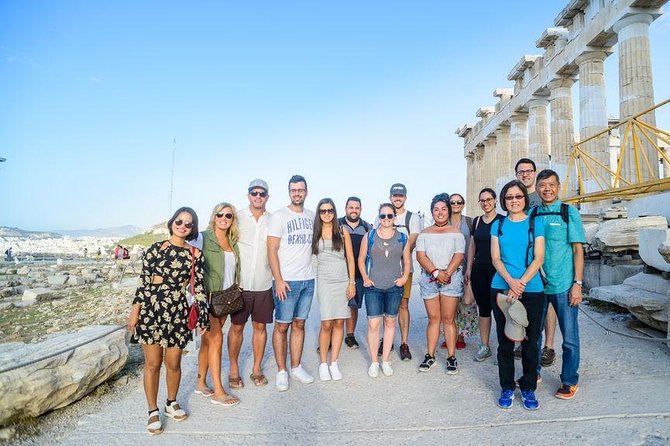
After the Parthenon focus, the tour moves to the Erechtheion (around 10 minutes).
This is your chance to see the caryatid statues, the famous sculpted female figures used as architectural supports. Even people who think they’re not “into sculptures” tend to get pulled in here because the forms are up close and tied directly to the building’s function.
The Erechtheion is one of those monuments where photographs can be misleading. A guide helps you notice how the statues sit in the structure and how the design uses the human figure as part of a temple’s identity. It’s a short stop, but it’s the kind of short that sticks.
Acropolis time: the big-picture hour on the hilltop
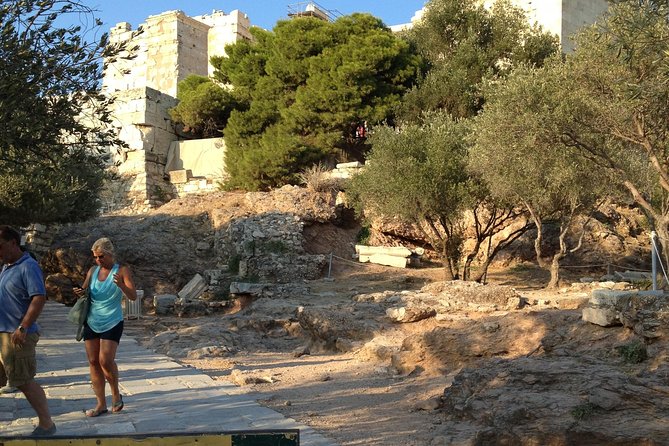
You’ll then get about one hour labeled simply as Acropolis time. In practice, this is where the tour helps you connect the full hilltop as a single space.
Think of it like this: temples and theaters are individual highlights, but the Acropolis works because everything is organized around a sacred topography. This is when you start feeling the site as a whole, not a checklist.
If you’re thinking about buying souvenirs, this is usually when you’re most alert to what you’ve just learned. If you want to pause for a longer look at one monument you love, you’ll have a better shot asking your guide here than at the start when everyone is still gathering.
Optional Acropolis Museum: where the ruins turn into objects

If you choose the museum option, you’ll head to the Acropolis Museum for about one hour.
This is where the story becomes physical. On the hill, you’re looking at architecture and ruined structures. In the museum, you see artifacts that clarify what those buildings meant and how the culture expressed itself through objects, carvings, and fragments tied to the Acropolis.
The museum visit is especially valuable if you want to understand the Parthenon more deeply. The guided element helps you focus on the most meaningful pieces without getting lost in the sheer number of things to see.
A smart extra detail: there’s an area under the museum that lets you see unearthed remains of Athens. That portion can be accessed from outside the museum without needing a ticket, so even if you end up wanting to spend time there on your own, it’s possible.
How the guide experience really works: audio, pacing, and stories
This tour is led by a professional licensed tour guide. For group sizes larger than 5, you’ll use a whisper tour guide system, essentially a headset setup that makes it easier to hear above the site noise and wind.
That matters on the Acropolis. The terrain forces you to stop, stand, and shift positions constantly. Without clear audio, you lose the thread of what you’re seeing.
You’ll also benefit from the way guides bring the site to life with practical storytelling. The names you might encounter in this experience include guides such as Lisa, Anna, Aidli, Dorina, Dionysios, John D, Helen, and Afroditi/Aphrodite. Across those different people, the theme is consistent: they connect mythology, architecture, and the physical layout in a way that feels like a walkthrough rather than a lecture.
If you’re the type who likes to ask questions, this tour is built for that. The pacing is set for people to keep up, and guides often help with practical moments like photos while keeping everyone safe and grouped.
Skip-the-line support and entrance options: what you should choose
Your base price is $42.33 per person for the guided tour experience (about 4 hours).
You can upgrade in two main ways:
- Add Acropolis admission tickets
- Add Acropolis Museum admission
If you don’t choose the ticket upgrade, you’ll need to buy tickets online in advance through the official website. The listed admission amounts are:
- Acropolis: €30 per adult from April 2025 and €10 per adult from November to March
- Acropolis Museum: €20 per adult from April 2025
Here’s how I think about value. The tour isn’t only selling a guide. It’s also saving time through skip-the-line support and reducing the effort of ticket handling on the spot. If you can’t (or don’t want to) lock tickets in advance, choosing the option that includes admissions can be the easier route.
Price check: is $42.33 worth it?
For an Athens first-timer, the money you spend here often becomes less about “paying for ruins” and more about paying for interpretation.
At $42.33, you’re covering:
- Licensed guide time
- Small-group logistics (max 20)
- Audio support for listening
- Skip-the-line help
- The overall structure that keeps you from wandering aimlessly
Then you decide whether to add ticket costs. If you’re already planning to buy entry for the Acropolis anyway, this tour can reduce your uncertainty and help you spend your one limited morning or afternoon in a smarter way.
If you’re traveling in peak season and want the easiest entry experience, the skip-the-line plus guide setup is the practical value part. If you’re on a tight budget and you’re comfortable navigating tickets on your own, you might still enjoy it—just make sure you’re ready to handle the online admissions step.
Fitness level and comfort: what to plan for
The tour asks for moderate physical fitness level. Even with a manageable pace, the Acropolis involves a lot of standing and uphill movement, and some paths are steep.
A few comfort rules keep you from turning the day into a sore-foot saga:
- Wear comfortable shoes
- Bring a hat and sun cream
- Keep water in mind (the tour doesn’t list drinks, so plan to carry what you need outside the guided stops)
If you’re traveling with someone who hates climbing, this is one of the tours where you’ll feel that challenge. The good part is that it’s only about four hours, not a full day.
Who this tour suits best (and who should reconsider)
This tour is a great fit if:
- You’re in Athens for the first time and want an organized, story-led visit
- You like history, but you want it explained with real ties to what you’re seeing in front of you
- You value clarity and good listening, not just walking through famous ruins
- You’re curious about the Parthenon and want help “reading” it
Consider a different plan if:
- You have limited tolerance for uphill walking and long standing periods
- You prefer total freedom over a set route and timeboxed stops
- You want to spend more hours lingering slowly without guide pacing
For most people, the optional museum upgrade is the part that turns a strong morning into a fuller understanding. Seeing artifacts right after you view the architecture tends to make the time feel more complete.
Should you book the Acropolis Monuments and Parthenon Walk with museum?
I’d book it if you want your Acropolis visit to feel meaningful and not just photo-driven. The combination of small-group pacing, headset audio, and a route that hits the big monuments in a logical order is exactly what makes this kind of tour worth paying for.
Choose the museum option if you care about the Parthenon details and want the story backed up by objects. If you’re short on time or you already planned extra museum time elsewhere, you can still do well with the monuments-only version.
Two final practical notes. You need good weather, since this is an outdoor, walking-heavy experience. And while you’re reading this, check your ticket choice early so you don’t get stuck trying to figure out admissions at the last minute.
If your goal is to leave Athens knowing what you actually looked at, this is one of the cleanest, most organized ways to do it.
FAQ
How long is the Acropolis monuments and Parthenon walking tour?
It runs about 4 hours (approx.).
Does the tour include Acropolis Museum admission?
It’s optional. If you book the option with the museum, you’ll visit the Acropolis Museum after the hilltop sites. If you don’t, the tour ends at the Acropolis monuments.
What’s included in the ticket cost?
The tour includes a guide, small-group handling, and skip-the-line support. Entrance tickets are included only if you select the option that includes admission tickets. Otherwise, entrance fees must be purchased online in advance.
How much are the Acropolis and Acropolis Museum tickets?
The provided amounts are: Acropolis admission is listed as €30 per adult from April 2025 and €10 per adult from November to March. Acropolis Museum is listed as €20 per adult from April 2025.
Where do we meet for the tour?
The start point is Porinou 5, Athina 117 42, Greece. The end point is the Acropolis Museum if you selected the museum option.
Is the tour suitable for kids or teens?
People under 18 should bring passports or IDs to help with entrance price rules. EU citizens under 25 can qualify for free or discounted entry based on ID or passport, and the guide info says birth date proof is required at the entrance gates.



More Walking Tours in Athens



More Tours in Athens


More Tour Reviews in Athens
- All Day Cruise -3 Islands to Agistri,Moni, Aegina with lunch and drinks included
★ 5.0 · 4,958 reviews