REVIEW · ATHENS
Acropolis: Acropolis and Parthenon Guided Walking Tour
Book on GetYourGuide →Operated by Athens Walks Tour Company · Bookable on GetYourGuide
Athens’ skyline makes more sense up close. This Acropolis and Parthenon guided walking tour turns big ruins into a clear story, from drama at the Theatre of Dionysus to views from the Parthenon. I especially like the pacing with real stops for context, and I like that you get help finding your footing in a crowded site.
Two things I like a lot: the guide-led stops are built around what you’re actually seeing, and the tour includes wireless hearing devices so your guide stays easy to follow even when it’s busy. One consideration: it’s not wheelchair-suitable, and comfortable shoes matter because you’ll be walking and climbing on uneven ancient stone.
In This Review
- Key points to know before you go
- Meeting at Porinou 5: where your tour actually begins
- Theatre of Dionysus and Asklepieion: Athens before the Parthenon
- Odeon of Herodes Atticus: the place where crowds mattered
- Temple of Athena Nike and the approach to Propylaea
- Erechtheion and the Caryatids: where myths become sculpture
- Parthenon: what to focus on while you have the moment
- Acropolis Museum option: a second act for your brain
- Price and value: why $36-ish can make sense
- Pace and group dynamics: manageable, but plan your comfort
- Who should book this Acropolis and Parthenon walking tour
- Should you book it?
- FAQ
- FAQ
- How long is the Acropolis and Parthenon guided walking tour?
- Where do I meet the guide?
- Does this tour include skip-the-line entry?
- Is the Acropolis Museum included?
- What language is the tour offered in?
- Are wireless hearing devices included?
- What should I bring?
- Are pets or large bags allowed?
- Is the tour wheelchair accessible?
- Can I cancel and get a full refund?
Key points to know before you go

- Licensed expert guide guiding you through the main monuments, not just pointing at them
- Wireless hearing devices included so the narration stays clear
- Skip-the-line options for the Acropolis Museum and/or the Acropolis entry, depending on your chosen ticket type
- Parthenon viewpoints plus stops at places like the Odeon of Herodes Atticus and the Erechtheion
- Strong story stops at the Theatre of Dionysus, Propylaea, and Caryatids at the Erechtheion
Meeting at Porinou 5: where your tour actually begins

The meeting point is simple: Porinou 5 (11742), at the Athens Walks tour office. You’re about a two-minute walk from the Acropolis metro area, so you can get there without wrestling with taxis or long transfers.
From the start, the tour is set up to get you moving quickly. That matters because the Acropolis is one of those places where arriving late can mean worse crowds and less time with your guide’s explanations. If you’re there early in the day, you’ll typically feel the difference as the site fills in.
You can also read our reviews of more walking tours in Athens


Theatre of Dionysus and Asklepieion: Athens before the Parthenon
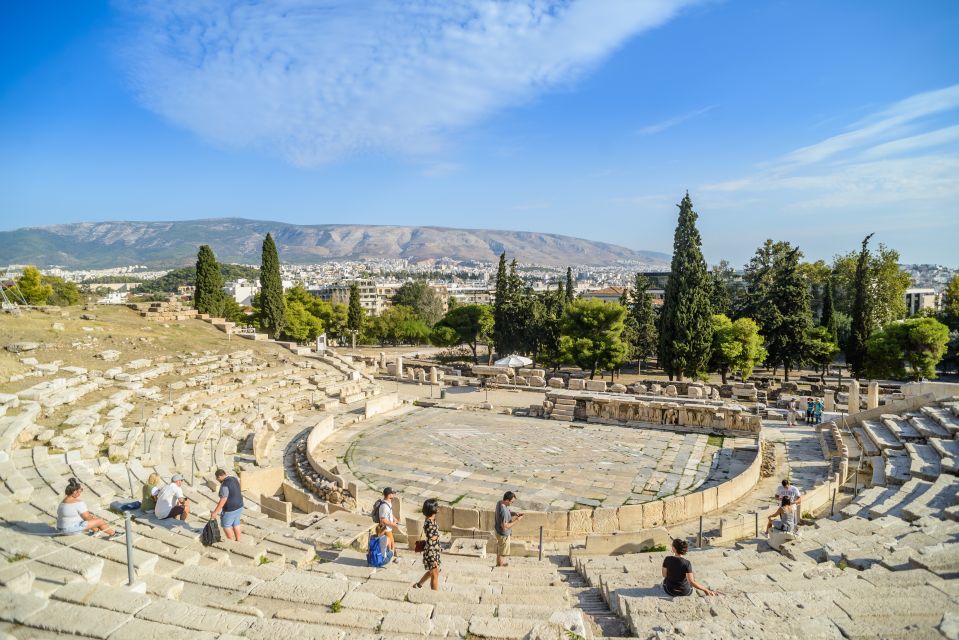
You begin at the Ancient Theatre of Dionysus, described as the birthplace of drama and one of the oldest Greek theatres still in existence. Even if you’ve seen other theatres around the world, this one hits differently because you’re standing inside the original idea: performances as civic life, not just entertainment.
A short walk later, you’re at the Asklepieion of Athens for a guided stop. It’s a reminder that ancient Athens wasn’t only temples and politics—it also had a world of healing and sacred practice, all tied to myth and religion.
What I like here is the contrast. You’re not jumping straight to the “photo spots.” You’re getting the cultural frame first, which makes the later monuments feel less like isolated buildings and more like parts of one city-wide belief system.
Odeon of Herodes Atticus: the place where crowds mattered

Next up is the Odeon of Herodes Atticus, one of those ruin spaces that instantly makes you picture an audience. The guide’s job here is to help you see beyond the broken stone: what the structure likely meant for performances and public life, and why the Athenians cared so much about events that drew people together.
A real practical bonus: this stop usually helps you “slow down” inside the flow of the climb. It’s not a long detour, but it gives your legs and your brain a break before the heavier landmarks ahead.
If you prefer tours led by guides who mix facts with humor, you may be in good hands. Names like John and Dionysus show up as examples of guides who keep people engaged and moving without turning it into a lecture.
Temple of Athena Nike and the approach to Propylaea
The Temple of Athena Nike is a shorter guided stop, but it’s an important one because it points you toward how religion and power show up in architecture. You’ll also get a sense of the location’s role—this isn’t a temple shoved into the background. It’s part of a sequence of spaces that feel planned.
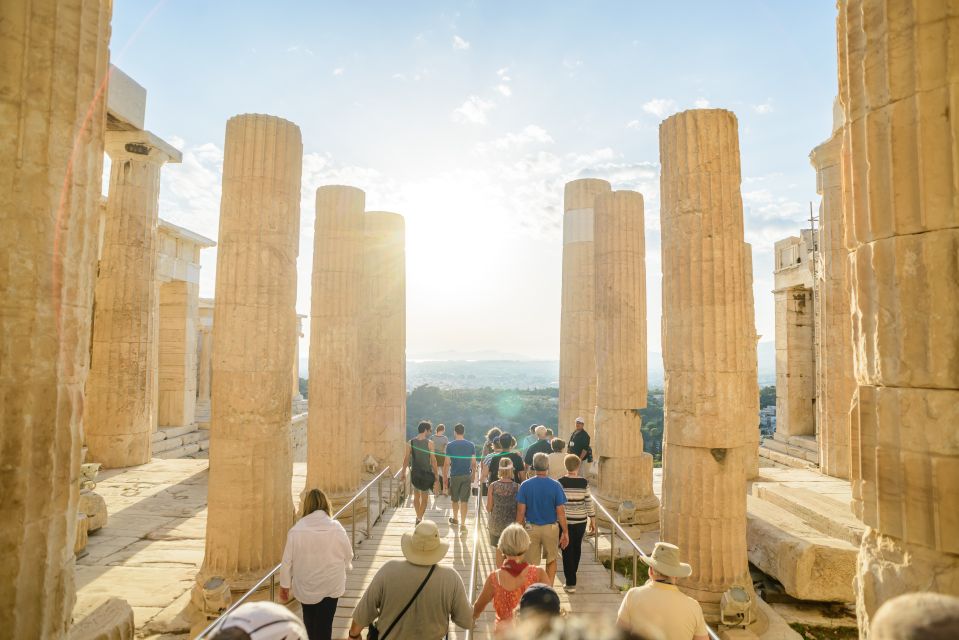
Then comes Propylaea, the imposing entrance gateway. This is where you’ll appreciate the symmetry and the “arrive like royalty” feeling—because the entry design is meant to do that. Your guide’s commentary helps you understand why an entrance gate isn’t only functional; in ancient Athens, it was also symbolic.
From here, the walk becomes more about momentum. You’re climbing and moving through zones where the crowds can stack up, so your wireless hearing devices are genuinely useful. When your guide is standing a bit ahead, the narration stays with you instead of fading into chaos.
Erechtheion and the Caryatids: where myths become sculpture
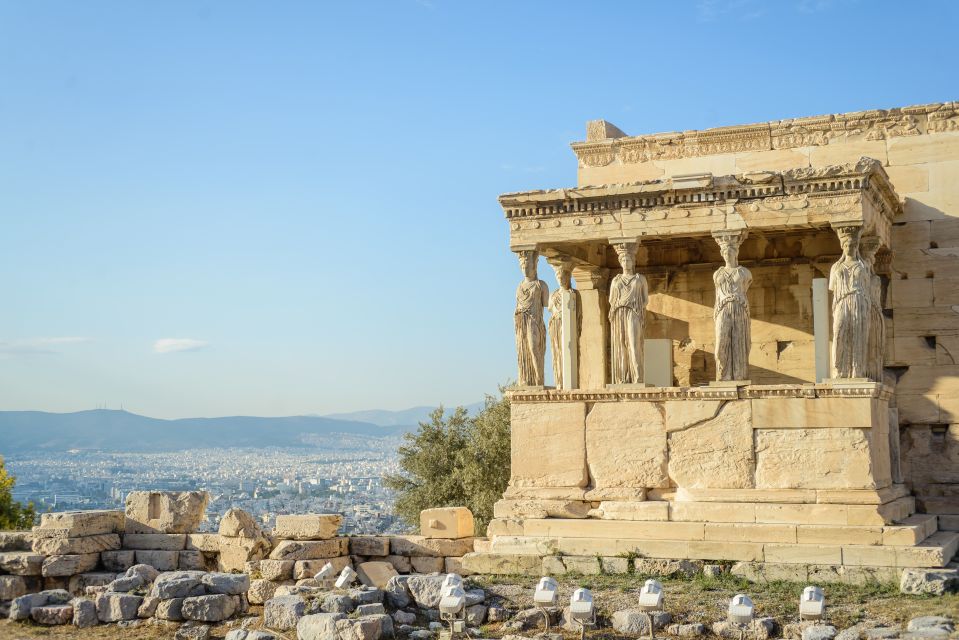
The Erechtheion stop is one of the most memorable parts of the tour. This is where the guide turns “cool statues” into meaning. The highlight is the Caryatids—those famous female figures used as supporting columns. Each one has its own pose, and once you start looking closely, the design feels more like a set of characters than generic decoration.
You’ll also get the myth context tied to this sanctuary, including the contest between Athena and Poseidon for the city’s patronage. That kind of story matters because it changes how you interpret the space. Suddenly the architecture isn’t just old—it’s connected to a reason Athens told itself about identity and power.
Practical tip: take your time here. The site can feel tightly packed, so if your guide gives you a moment to look, use it. The Caryatids are the sort of detail that rewards a slow look, even if the overall tour keeps a lively pace.
You can also read our reviews of more guided tours in Athens



Parthenon: what to focus on while you have the moment
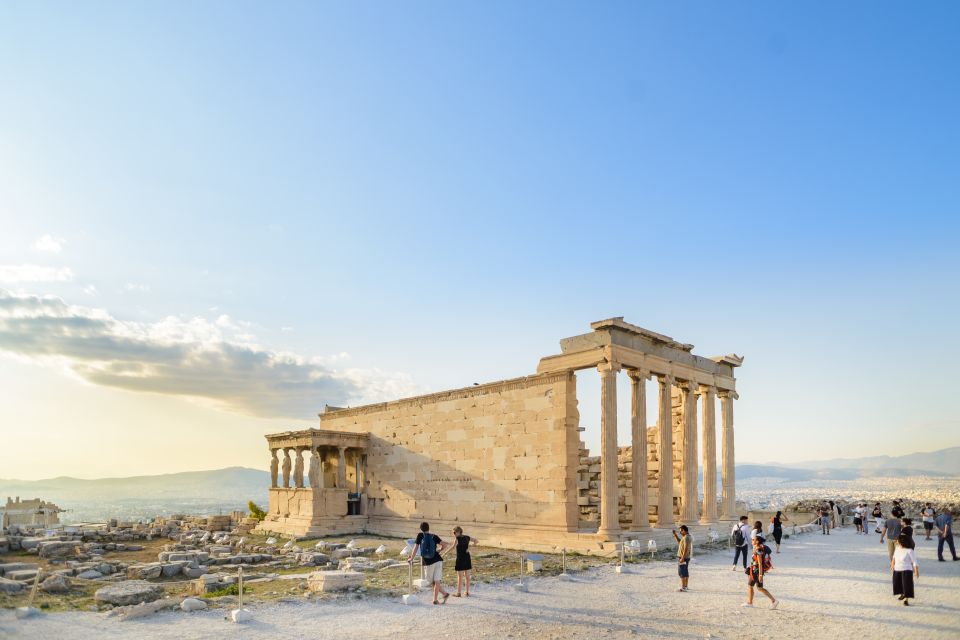
Then you reach the main event: the Parthenon, the summit’s crown jewel and the most recognizable symbol of ancient Athens. Your guide should help you notice details that your eye might skip on a quick self-guided pass—especially how the Parthenon functioned as a sanctuary for Athena and how it reflected Athenian influence.
The tour includes around a 30-minute guided focus here, which is a smart length of time. Too short, and you only grab photos. Too long, and you start to feel burned out. This balance helps you absorb the stories while you’re still able to look at what the guide is pointing out.
And yes, you’ll also get those panoramic views. Even if you’ve seen Athens from photos, the visual contrast hits harder in person: the ancient structure above you, modern city life spreading below. If you care about how old and new layers overlap, this viewpoint is one of the best payoffs of the whole walk.
Acropolis Museum option: a second act for your brain
Depending on what option you choose, you may also get a guided visit to the Acropolis Museum, with skip-the-line entry if that option is selected. If you’ve ever left a site feeling like you saw the buildings but missed the story objects, the museum is where that frustration usually goes away.
The museum add-on also helps you connect the dots between myths, craftsmanship, and what survived. You’re not only standing in front of ruins—you’re seeing material culture tied to the same monumental world.
A small heads-up: the museum option can change how your afternoon works, because you’ll spend additional time inside. If you’re trying to fit other Athens plans the same day, consider whether you want the museum as a bonus or as your main second stop.
Price and value: why $36-ish can make sense

The price listed is $36.14 per person, with 2 to 4 hours depending on your start time and chosen options. On paper, that can look like a simple add-on. In practice, the value comes from the bundle of essentials:
- You get a licensed guide (not a random “meet and greet”).
- You get wireless hearing devices, which reduce the friction of crowds.
- You get skip-the-line access options (either for the museum and/or Acropolis entry, based on your selected ticket type).
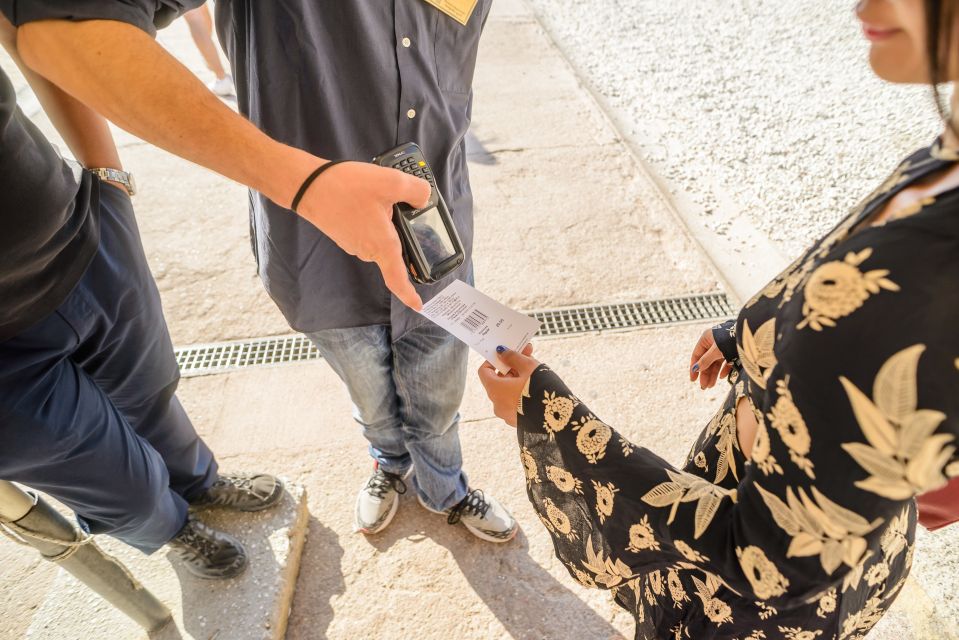
- If you pick the entry-ticket option, you also avoid the common headache of trying to find available entrance tickets on the day.
That ticket part matters in Athens. The Acropolis can sell out or run into timed entry realities, so choosing a package that includes the entrance ticket option is often the difference between a smooth start and a stressful scramble.
If you’re visiting for just 1–2 days, this tour is also a smart “time insurance” choice. You concentrate your key sights into one guided sequence, instead of trying to stitch together the sites yourself while crowds and time slots fight you.
Pace and group dynamics: manageable, but plan your comfort
This is a walking tour, and even if the climbing doesn’t feel extreme, you still need comfortable shoes. You’ll move from stop to stop, including areas with stairs and uneven surfaces. Bring a sun hat and sunscreen—the hill and open-air feel can build quickly on a sunny day.
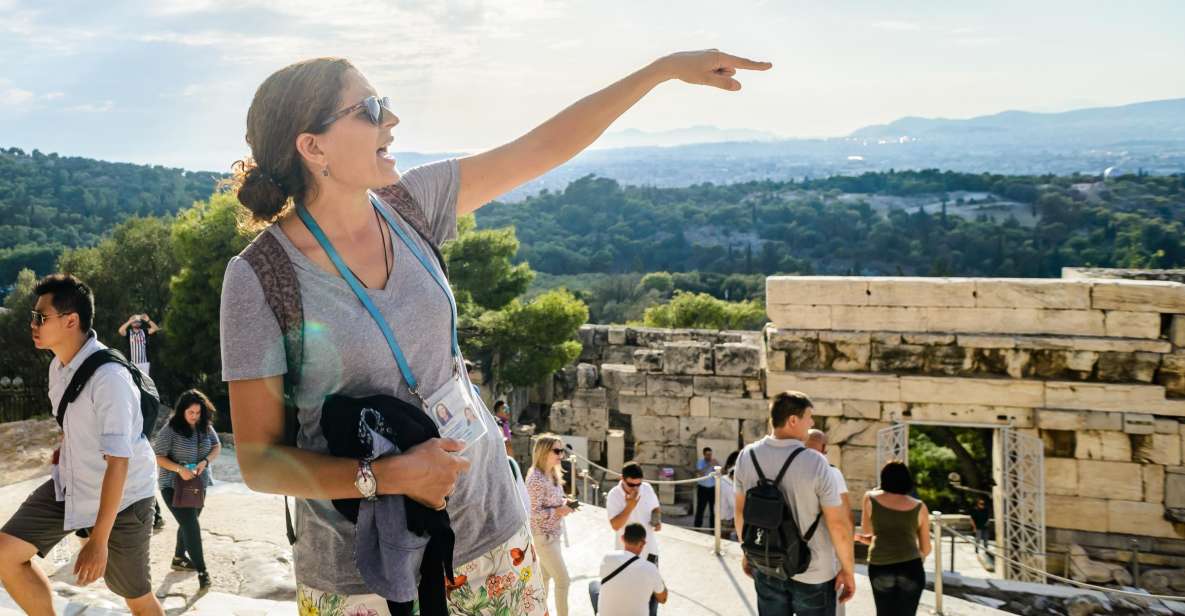
You should also expect that the Acropolis is crowded. The good news is the tour structure helps: you’ll be guided through a set route that keeps you from wandering and losing your place. Your guide will also help with the flow across landmarks, which reduces the “where do we go now” stress.
In the reviews, guides like Hermes, Alexia, and Artemis show up as examples of people who manage groups well, keep a steady pace, and make sure no one is left behind. I can’t guarantee which guide you’ll get, but the pattern is clear: the tour works best when your guide is actively controlling the group movement and the story.
Who should book this Acropolis and Parthenon walking tour
This is a great fit if:
- You want the main Acropolis sights explained in a logical order
- You’d rather spend your time looking and learning than figuring out logistics
- You’re okay doing a walking and climbing tour for a few hours
- You like guided storytelling, not just signage and silent ruins
It’s not a great fit if you need wheelchair access, because it’s listed as not suitable for wheelchair users. It also isn’t the right match if you’re traveling with pets (pets aren’t allowed) or if you need to carry large bags or luggage (those are not allowed).
If you’re the type who loves myths and how they connect to architecture, you’ll likely enjoy the stops around the Caryatids and the Athena–Poseidon story. If you’re more practical—figuring out what to look at while you’re there—you’ll also be happy with the Parthenon focus and the structured climb.
Should you book it?
I’d book it if you value clear guidance, manageable stops, and better use of limited time. For the price, you’re not only paying for the guide—you’re paying for skip-the-line flexibility (when you choose that option), wireless audio, and a route that keeps you from losing time in crowds.
If you’re comfortable navigating the Acropolis solo and you already have tickets locked in, you could do it independently. But if you want your day to run smoothly and to come away understanding what the Parthenon and the other monuments were doing in ancient Athens, this tour is a strong bet.
FAQ
FAQ
How long is the Acropolis and Parthenon guided walking tour?
The tour duration is listed as 2 to 4 hours. You’ll need to check availability to see the specific starting times.
Where do I meet the guide?
Meet at the Athens Walks tour office at Porinou 5, 11742. The meeting point is about a two-minute walk from the Acropolis metro station.
Does this tour include skip-the-line entry?
Skip-the-line access is included through a separate entrance, and skip-the-line tickets can also be included depending on the option you select.
Is the Acropolis Museum included?
A guided tour of the Acropolis Museum is included only if you choose the option that includes it. Skip-the-line entry to the museum is also included only with the museum option.
What language is the tour offered in?
The live tour guide is available in English, French, and German.
Are wireless hearing devices included?
Yes. Wireless hearing devices are included so you can hear your guide clearly at all times.
What should I bring?
Bring a passport or ID card, wear comfortable shoes, and consider bringing a sun hat and sunscreen.
Are pets or large bags allowed?
No pets are allowed. Smoking is also not allowed, and luggage or large bags are not permitted.
Is the tour wheelchair accessible?
No. It’s listed as not suitable for wheelchair users.
Can I cancel and get a full refund?
The activity offers free cancellation up to 24 hours in advance for a full refund.
If you want, tell me when you’re going (morning vs afternoon) and whether you’re planning to add the museum. I can help you pick the option that’s most likely to feel smooth that day.




More Walking Tours in Athens




More Tours in Athens


More Tour Reviews in Athens
- All Day Cruise -3 Islands to Agistri,Moni, Aegina with lunch and drinks included
★ 5.0 · 4,958 reviews