REVIEW · ATHENS
Full day Christian tour following Paul In Athens and Corinth
Book on Viator →Operated by Splendid Greece Tours · Bookable on Viator
Paul’s story runs right through Athens and Corinth. This full-day route connects the key places linked to St. Paul’s preaching with practical time on the ground. I especially liked the private pacing and the way the English-speaking driver ties each stop to the Christian thread; the main catch is that site entrance fees aren’t included, so you’ll want tickets ready for the big ruins.
Two things I like a lot: you get major highlights without the stress of transit, and you’re not stuck listening to a script—your driver can steer the day’s priorities within the schedule. The other consideration is that the driver guides you up to the archaeological sites, but doesn’t accompany you inside the museums and temples.
In the real world, that guide component matters. In one group I read about, Spyros was on time and gave clear direction for timing; in another, Dimitris mixed history with smart photo suggestions; and there was also a great learning experience with Natalie and Nathaniel. Either way, the value here is that you’re not guessing what you’re looking at while you walk.
In This Review
- Key highlights worth your attention
- Entering Paul’s Athens: the 8:00 am start that pays off
- Pickup and the Piraeus coastal drive: how the day begins
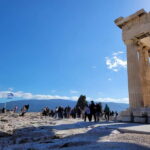
- Acropolis area: the main payoff for most people
- Propylaea, Athena Nike, and why the details matter
- Areopagus and the Unknown God: the Christian link on Hill of Ares
- Parthenon and Erechtheion: big monuments with strict time limits
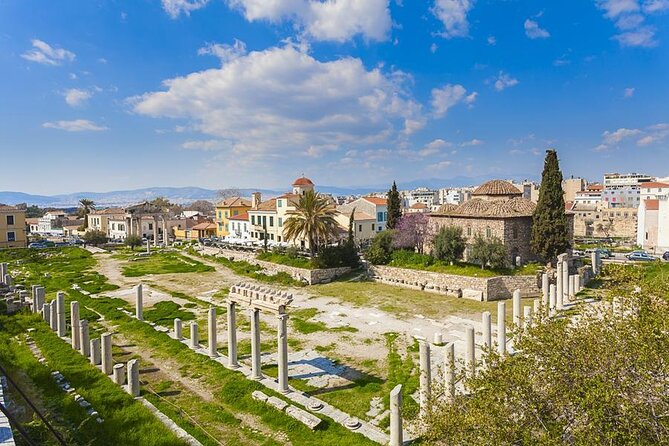
- Ancient Agora of Athens: the city’s center, not just the stage
- Off the hill: driving to Corinth via the Peloponnese
- Lunch in Ancient Corinth: plan your appetite
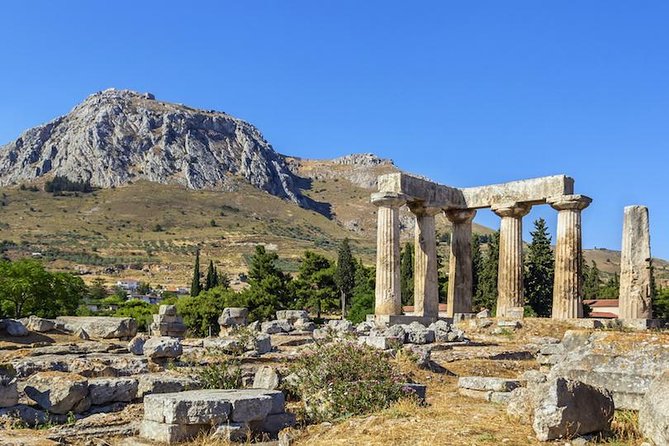
- Ancient Corinth (Archaia Korinthos): where the story meets stone
- The driver role: history in the car, and a smart note about inside access
- Price and value: when $508.66 makes sense
- Practical tips that keep your day from getting messy
- Should you book this Paul’s footsteps Athens to Corinth tour?
- FAQ
- How long is the full-day tour from Athens to Corinth?
- Where can I get picked up?
- What’s included in the tour price?
- Are entrance fees included for the sites?
- Does the driver enter the archaeological sites with me?
- Can the tour arrange a licensed guide inside the sites?
- Is lunch included?
- Is the tour private?
Key highlights worth your attention
- A day built around St. Paul: you hit the same Athens landmarks tied to his famous preaching.
- English-speaking driver with context: history and culture explanations before you enter the sites.
- Acropolis stops in one tight block: a practical way to see the big monuments without backtracking.
- Corinth Canal photo time: a short, memorable break on the way to the ruins.
- Flexible priorities inside the timeline: you can often adjust where you spend time once you’re on the ground.
- Private group for up to 3: easier logistics, less waiting around.
Entering Paul’s Athens: the 8:00 am start that pays off
This is an 8-hour day trip built around an early start, meeting you at 8:00 am either at your hotel in Athens or at the Piraeus cruise pier. The private format matters early in the day: you travel together, move as a group, and don’t waste time coordinating with strangers.
You’ll ride in an air-conditioned vehicle with your driver handling the route planning and the cultural explanations. That’s not a small thing in Athens—traffic, parking, and finding the right entrances can chew up hours fast, especially if you’re trying to do Paul’s footsteps on your own.
You also get a mobile ticket, which is handy for quick check-ins. And you’ll have bottled water during the day, so you’re not hunting for it between uphill stops.
You can also read our reviews of more tours and experiences in Athens
- All Day Cruise -3 Islands to Agistri,Moni, Aegina with lunch and drinks included
★ 5.0 · 4,958 reviews

Pickup and the Piraeus coastal drive: how the day begins
You can start from two places: your Athens hotel or the cruise ship pier at Piraeus. Meeting is straightforward: at hotels, you meet at the main entrance and let the porter know; at Piraeus, you step outside the terminal exit where the driver holds a sign with your name.
Before the main sites, the itinerary includes a drive along the coastal road of the Saronic Gulf—it’s an easy way to ease into the day and get your bearings. The stop in Piraeus is short (about 20 minutes) and listed as admission free, so think of it as a reset and a photo chance rather than a full attraction.
If your cruise timing is tight, make sure you give the required ship details at booking—docking and re-boarding times matter here. A smooth pickup is the difference between enjoying the sights and rushing through them.
Acropolis area: the main payoff for most people
The heart of the Athens portion is the Acropolis. This isn’t just one viewpoint—it’s the sacred precinct where ancient Athens placed major religious life and big civic moments. The tour’s narrative centers on why the Acropolis mattered: myths, religious festivals, and the city’s “golden age” identity.
Time is built in for multiple stops on the hill:
- Acropolis (about 45 minutes) for the core monuments
- Short add-ons around it (like Propylaea and Temple of Athena Nike) where you’ll get the visual cues that help everything make sense
Admission fees are not included for key Acropolis monuments listed in the tour, including stops like Propylaea, Temple of Athena Nike, Parthenon, and Erechtheion. So when planning your budget, treat the day as two parts: transportation + guidance are included, but site entry is on you.
One reason this block works is that it’s organized logically. You don’t bounce randomly around. You’re moving around the same high area, which cuts down walking back and forth.
Propylaea, Athena Nike, and why the details matter
You’ll see Propylaea, the grand gateway area, with a quick look at how it evolved across periods (built, destroyed, repaired, and then developed as part of Periclean building programs). Even with short time (about 5 minutes), it helps you understand that the Acropolis wasn’t static—it changed over centuries.
Then comes Temple of Athena Nike (also about 5 minutes). This is small, but it’s packed with meaning. The relief themes tied to war—Greeks vs. Persians, and even the victory at Marathon—make the temple feel like a political statement, not just a pretty structure.
If you like to read the carvings with your eyes, bring patience. The driver can point you toward what to look for, but the physical time is tight. This is where a private group format helps: you can usually slow down for the parts that catch your attention.
Areopagus and the Unknown God: the Christian link on Hill of Ares
Right near the Acropolis exit, you’ll reach the Areopagus, also called the Hill of Ares. In classical times, it connected to the Council of Nobles and judicial matters, including homicide-related trials in myth. The tour also connects it to the story most people come for: St. Paul’s sermon on an Unknown God.
Here’s the concrete thing to look for: the itinerary notes that this sermon is commemorated with a bronze plaque at the foot of the rock. When you see it, you’re not just standing near ruins—you’re standing near a moment the Christian tradition remembers.
The Areopagus stop is about 20 minutes, and it’s listed as admission free. That makes it a great use of time. You can take in the view, understand why this spot mattered, and still have energy for the Parthenon area right after.
- All Day Cruise -3 Islands to Agistri,Moni, Aegina with lunch and drinks included
★ 5.0 · 4,958 reviews




Parthenon and Erechtheion: big monuments with strict time limits
The Parthenon gets the longest single stop on the Acropolis portion (about 45 minutes). The tour frames it as the culmination of the Doric order—built under the rebuilding program led by Pericles after the Greco-Persian Wars, and tied both to worship of Athena and to the treasury of the Delian League.
That combination is useful. It means you’ll be less likely to treat it like a standalone photo stop. Instead, you can see it as both religious symbol and political infrastructure.
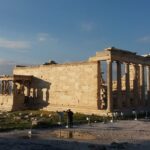
Then you’ll move to Erechtheion (about 5 minutes). This is the area famous for the caryatids—the “maidens” used like columns. The tour also includes the modern story behind the figures: parts were removed for protection, replicas were installed, and some of the originals ended up in major museums abroad.
If you care about that controversy and conservation history, this stop gives you a clear thread to follow. If you don’t, still pay attention to the shapes and proportions—this is where the architecture feels human.
Ancient Agora of Athens: the city’s center, not just the stage
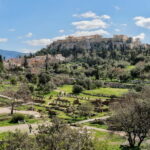
After the Acropolis block, the tour heads to the Ancient Agora (about 1 hour 20 minutes). This place worked as an assembly area and later as a marketplace—an important reminder that cities run on everyday functions, not just big monuments.
The Agora is described as continuously used across about 5000 years, which is a polite way of saying the ground is layered with time. In practice, that means you’ll see the results of excavations that distill how the area functioned from archaic through Greco-Roman and Byzantine periods.
There’s no need to rush this stop. Even if the ruins look less dramatic than the Acropolis, the Agora gives you context for what Paul’s audience might have experienced—public spaces where people gathered, traded, and argued.
Off the hill: driving to Corinth via the Peloponnese
Once Athens is done, the day shifts gears with a drive through the Peloponnese region. The itinerary includes about 1 hour of travel, using the coastal road of the Saronic Gulf with views that give you a sense of how the route connects.
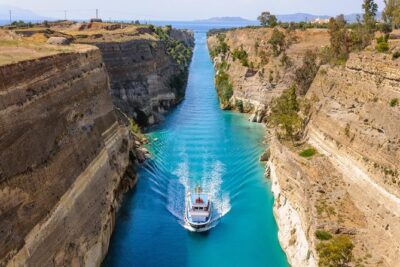
A key stop on this in-between stretch is Corinth Canal. You get about 15 minutes, and it’s listed as admission free—perfect for a quick photo and a mental break before the longer ruins portion.
Why the canal matters on this route: it cuts across the narrow isthmus, linking the Gulf of Corinth to the Saronic Gulf. The canal’s modern construction is late 19th century, but the dream behind it goes back about 2000 years. The itinerary even points to Periander and earlier ship-transfer ideas like the diolkós, so the canal becomes part of the story of movement—exactly what made Corinth such a hub.
Lunch in Ancient Corinth: plan your appetite
The tour includes 1 hour for lunch with free time at a traditional restaurant in the Corinth area. Lunch itself is not included, so you’ll need to pay for food and drinks.
The best practical advice: treat lunch as part of your “energy management” for the ruins after. Ancient Corinth requires walking, uneven ground, and sunlight depending on the season. If you want a calmer day, choose a slower, fuller meal and stay hydrated.
The time is enough for a proper sit-down, and you’ll be in the Corinth area rather than rushing to a random stop. I’d call this a decent setup because it keeps the day’s focus intact.
Ancient Corinth (Archaia Korinthos): where the story meets stone
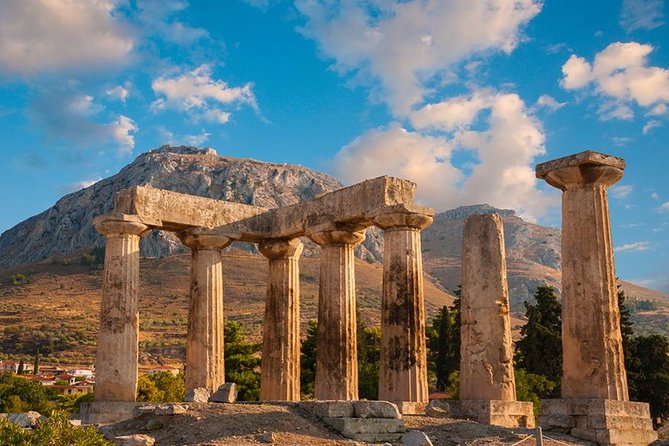
Next comes Ancient Corinth (about 1 hour 20 minutes). This stop is listed as not included for admission fees, so again: budget for site entry.
The tour explains why Corinth mattered so much long before Paul: the city benefited from fertile land and, even more, from its strategic location at the crossroads of routes between mainland Greece, the Peloponnese, the western Mediterranean, and beyond toward Asia Minor and the Syro-Palestine region.
For Paul’s footsteps, this is the payoff zone. You’re seeing the kind of place that connected ideas and people. Corinth isn’t only about archaeology—it’s about why a mission trip could work in the first place: trade routes create crowds, and crowds create conversations.
You’ll likely also get at least some perspective from vantage points along the way. In at least one version of this day, the driver arranged additional photo time at Acrocorinth Castle for sweeping views. You can’t count on optional stops, but it’s worth asking your driver if time allows.
The driver role: history in the car, and a smart note about inside access
The tour includes a professional English-speaking driver with strong background in Greek history and culture. They guide you until you enter archaeological sites and museums, then they step back because they are not licensed to accompany you inside.
That’s important if you care about guided commentary inside major sites. The tour offers an option to arrange a licensed state guide for an extra cost, subject to availability on booking day. If you want someone to point out details inside the museums and guide you through the galleries, ask early—don’t wait until you’re already there.
In other words, the day gives you excellent narration and logistics, but it isn’t the same thing as having an officially licensed guide inside every structure.
Price and value: when $508.66 makes sense
The price is $508.66 per group, up to 3 people. That can look steep if you’re comparing per-person costs to big group tours—but private format changes the math quickly.
If you fill all three seats, you’re effectively splitting the cost three ways. If you’re traveling as a couple, you’ll pay more per person than a three-person group, but you gain privacy and a smoother schedule. Add to that included hotel or cruise pickup, air-conditioned transport, and bottled water, and the day stops feeling like you’re paying extra just to avoid walking.
The biggest hidden variable is still the same one you face on any major Athens-and-Corinth day: entrance fees. The tour clearly states entrances aren’t included, and several of the key stops list admission as not included—especially the Acropolis monuments and Ancient Agora/Ancient Corinth.
So I’d judge value like this:
- Best value when you want a meaningful route with guided context and you’re okay managing site tickets.
- Less value if you already plan to self-guide every ruin with no driver narration and you can handle logistics on your own.
Practical tips that keep your day from getting messy
This itinerary involves real walking and some stairs, so the tour asks for a moderate physical fitness level. The Acropolis portion is the toughest segment; the Agora and Ancient Corinth follow with their own uneven ground.
Plan for the formal dress code. It may feel odd for ruins sightseeing, but it’s a stated requirement—so choose something neat and modest.
Tickets: the tour suggests pre-purchasing admission tickets because availability can be limited. If you want, the operator can buy tickets in advance for a small service fee.
Bring patience for the inside-access rule. If you want the driver’s commentary to continue inside museums and archaeological areas, you’ll need to arrange the licensed guide option ahead of time (if available).
If you’re flying in and need airport transfer coordination, the tour can arrange Athens International Airport transfers on request for an extra cost.
Should you book this Paul’s footsteps Athens to Corinth tour?
Book it if you want a structured, Christian-themed route that connects Athens and Corinth without you having to piece together transport, timing, and context. The private group format (up to 3) and the English-speaking narration are the real strengths—especially at places like Areopagus where the Christian meaning is easy to miss if you only look at stones.
Skip it—or plan differently—if you dislike managing multiple site admissions or you want a fully licensed guide walking with you inside every stop. This day is built for meaningful guidance up to the entrances, then self-paced viewing inside.
If you’re the kind of person who likes to understand what you’re looking at before you look, this tour is a solid choice.
FAQ
How long is the full-day tour from Athens to Corinth?
It runs for about 8 hours (approx.), starting at 8:00 am and finishing with a drop-off at the same pickup location.
Where can I get picked up?
You can be picked up from your hotel in Athens or from your cruise ship pier at Piraeus port.
What’s included in the tour price?
The tour includes fuel surcharge, transport by air-conditioned vehicle, hotel pickup/drop-off in Athens (and Piraeus port pickup), bottled water, and an English-speaking driver with cultural and historical guidance up to the archaeological sites.
Are entrance fees included for the sites?
No. Entrance fees to archaeological sites and museums are not included. Some stops are listed as admission free, but key monuments and sites are listed as not included.
Does the driver enter the archaeological sites with me?
No. The driver guides you until you enter. Tour drivers are not licensed to accompany you inside the archaeological sites and museums.
Can the tour arrange a licensed guide inside the sites?
Yes, you can arrange a licensed state tour guide for an additional cost, subject to availability on the booking day.
Is lunch included?
Lunch isn’t included. There is about 1 hour of free time for lunch at a traditional restaurant in Ancient Corinth.
Is the tour private?
Yes. It’s a private tour/activity, and only your group participates (up to 3 people per group).

More Full-Day in Athens
- All Day Cruise -3 Islands to Agistri,Moni, Aegina with lunch and drinks included
★ 5.0 · 4,958 reviews

More Tours in Athens


More Tour Reviews in Athens
- All Day Cruise -3 Islands to Agistri,Moni, Aegina with lunch and drinks included
★ 5.0 · 4,958 reviews