REVIEW · ATHENS
Athens: Acropolis, Parthenon & Acropolis Museum Guided Tour
Book on GetYourGuide →Operated by Athens Walks Tour Company · Bookable on GetYourGuide
Acropolis feels different when an archaeologist leads. This tour turns Athens into a walkable story, from the south slope up to the Parthenon, with excavation details and clear myths tied to real stone. I especially like that the guide is a licensed archaeologist who explains what you’re actually looking at, not just dates on a sign.
The second thing I love is the pairing: the hilltop monuments and the New Acropolis Museum right after. In the museum, you get guided context for statues and everyday relics, plus stand-out features like the glass floor and the Parthenon temple glass gallery. The pace usually keeps you moving, but stops long enough for photos and questions.
One possible drawback: this is a physically demanding walk and it’s not suitable for wheelchair users or people with mobility impairments. Also, you get some break time, but it’s not a free-for-all to wander on your own for long stretches.
In This Review
- Key Takeaways
- Meeting at Porinou 5 and Getting Into the Acropolis Flow Fast
- Theatre of Dionysus: Where Greek Drama Hits Home
- Odeon of Herodes Atticus and the Athens Festival Connection
- Propylaea to Temple of Athena Nike: First Big Views, Real Structure
- Parthenon Time: How to See More Than the Icon
- Erechtheion and the Acropolis Break: Make Space for the Details
- New Acropolis Museum: Where the Stones Start Explaining Themselves
- Wireless Hearing Devices and Group Size: The Comfort Factor
- How Long Each Part Feels: Practical Expectations for a Half-Day
- Skip-the-Line Entrance and the Online Ticket Nudge
- Price and Value: What $41 Really Buys You
- What to Bring (and What to Leave Behind)
- Who This Tour Suits Best (and Who Should Rethink It)
- Should You Book the Athens Acropolis + Museum Guided Tour?
- FAQ
- Where is the meeting point?
- How long is the tour?
- Is the tour guided in English?
- Are skip-the-line tickets included?
- Does the tour include the Acropolis Museum?
- How long is the Acropolis Museum portion?
- Are wireless hearing devices provided?
- What should I bring?
- Is this tour suitable for wheelchair users or mobility impairments?
- Are there restrictions on bags or strollers?
Key Takeaways
- Archaeologist-led storytelling that links myths, architecture, and excavation finds as you walk
- South-slope entry for a smoother route onto the hill and a strong first angle on the skyline
- Theatre of Dionysus + Odeon of Herodes Atticus for a performing-arts history lesson you can see in person
- Wireless hearing devices so you can hear the guide even in crowds and on uneven steps
- Museum guidance is included so the Parthenon artifacts make more sense than photos alone
- Limited independent free time compared with doing it fully on your own
Meeting at Porinou 5 and Getting Into the Acropolis Flow Fast
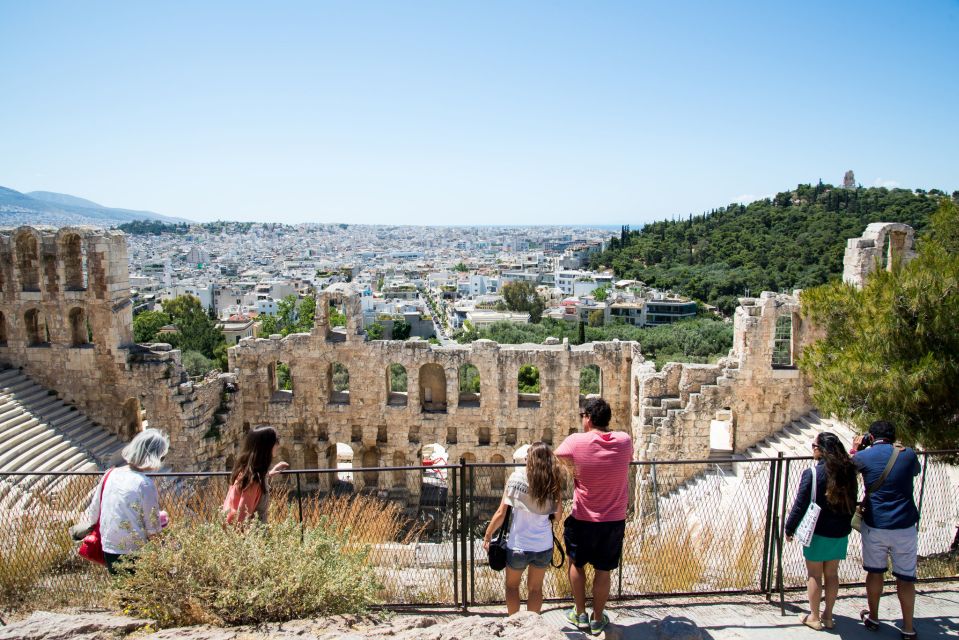
Your tour starts at the Athens Walks office on Porinou 5 (ground floor). Plan to arrive a few minutes early so you can check in and get your bearings without rushing through the busy streets near the hill.
From there, you head into the Acropolis area via a route that starts from the south slope. That matters because it shapes what you see first and how the monuments unfold in your mind. You’re not just ticking off sights—you’re building a mental map while the guide points out how the ruins fit together.
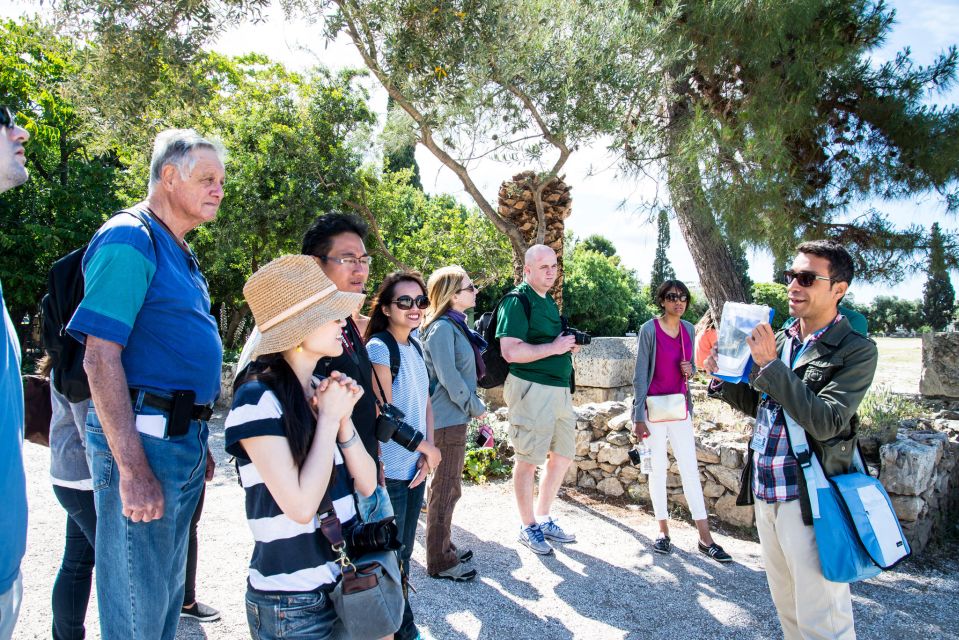
The tour uses wireless hearing devices, which is a big deal on the Acropolis hill. You’ll be surrounded by people, stone echoes, and sudden crowd clusters. Having the audio system makes it easier to follow the story without constantly straining.
You can also read our reviews of more guided tours in Athens



Theatre of Dionysus: Where Greek Drama Hits Home
The first major stop is the Theatre of Dionysus, an amphitheater often described as a birthplace of performing arts. Even if you’ve read about ancient drama, seeing the seating area and the structure gives you a sense of scale that a book can’t.
What makes this stop work on a guided tour is the bridge from architecture to culture. The guide ties the theatre to Greek writers like Aeschylus, Sophocles, and Euripides, so you’re not watching stone in silence. It’s the kind of place where you can almost picture the crowd energy—then immediately understand what you’re looking at.
A practical tip: this section is close enough to feel the hill’s climb, but it’s still early in the tour. If you’re pacing yourself, it’s a good moment to settle into your rhythm before the Parthenon section gets more intense.
Odeon of Herodes Atticus and the Athens Festival Connection

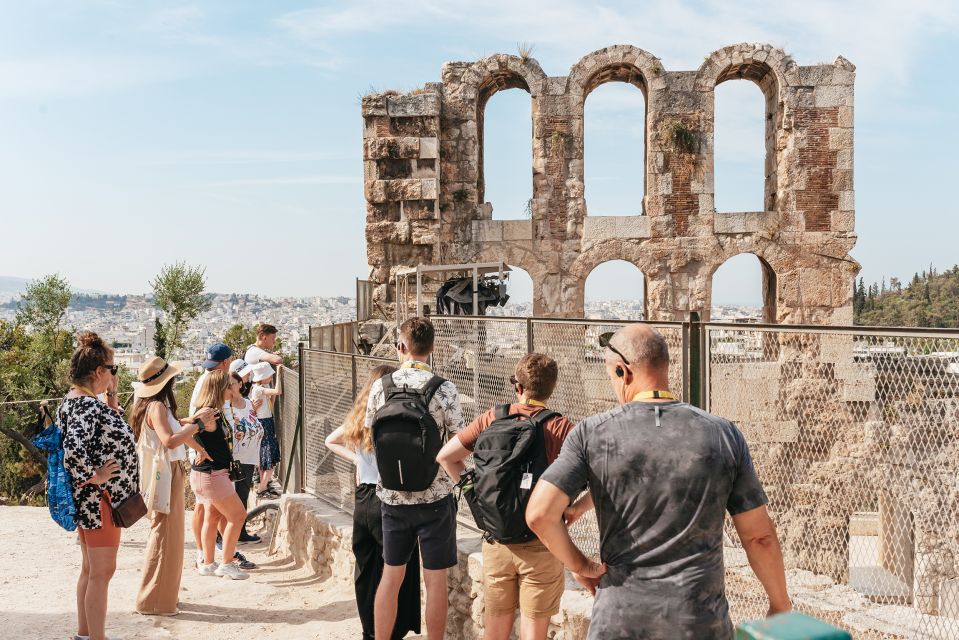
Next you’ll pass the Odeon of Herodes Atticus. This stop is special because it’s not only ancient—it’s still used. During the Athens Festival (May to October), performances happen here, so you’re seeing a continuity that makes the ruins feel less distant.
The guide also helps you understand how the theatre spaces functioned. You’ll get more than a quick photo stop; you’ll learn what kind of crowd flow and stage orientation this area supported. It’s one of those stops where your brain clicks: ancient entertainment wasn’t just myth. It was a civic event.
If you’re the type who likes when history overlaps with today, this is a highlight. Even a short stop feels meaningful because the guide gives you a reason to look closely.
Propylaea to Temple of Athena Nike: First Big Views, Real Structure
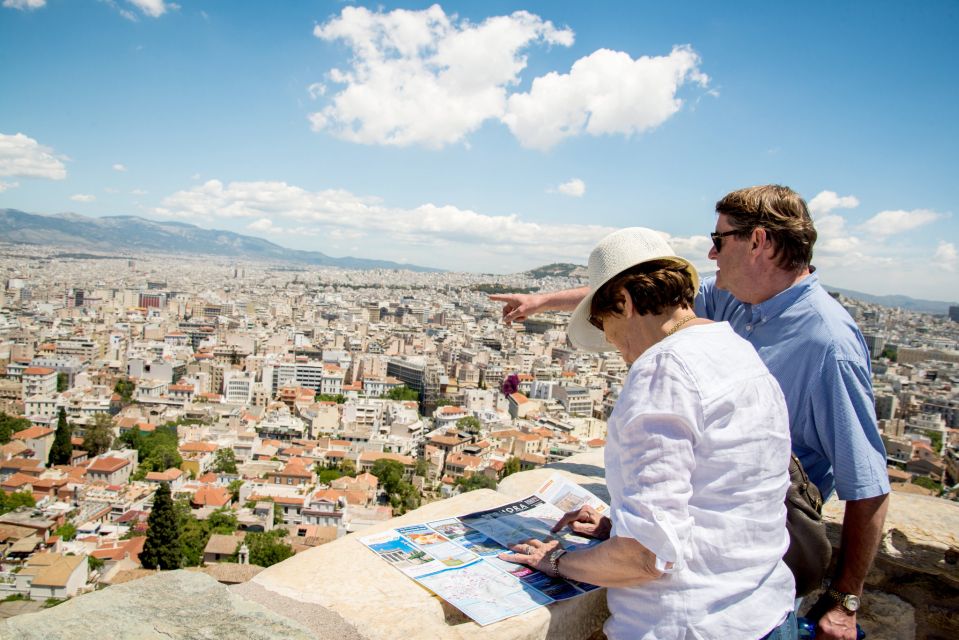
From the theatre area, the tour moves toward Propylaea, with a photo stop as you go. Propylaea is the grand gateway concept for the Acropolis, and it sets expectations for what’s ahead. You start to notice how the Acropolis is designed as a sequence: approach, frame, reveal.
Then comes the Temple of Athena Nike. Even in a quick walkthrough, it’s a useful architectural lesson because you learn how small details and design choices communicate power and devotion. It’s not just a pretty temple; it’s a piece of the Acropolis argument.
By this point, you’ll likely feel the altitude and the stone steps. Wear shoes that grip. Take short pauses if you need them. The guide typically keeps the group together while also giving you those moments to look up and soak in the views across Athens.
Parthenon Time: How to See More Than the Icon
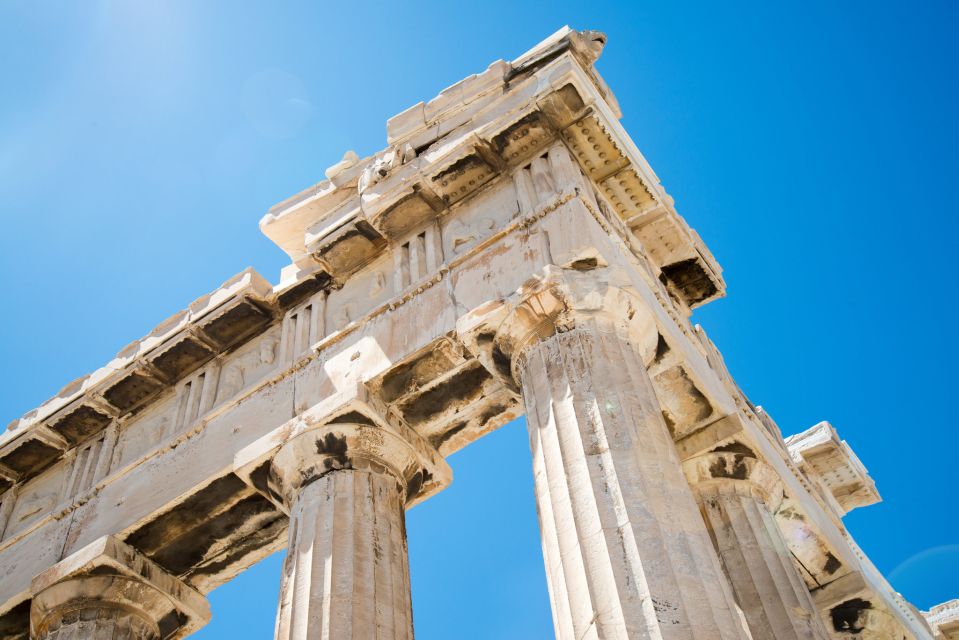
Yes, you’re going to see the Parthenon. But the value here is how the guide gets you ready to see it more intelligently.
You’ll get guided time at the Parthenon area (about 30 minutes for this portion). That’s long enough to notice the lines, alignments, and the way the temple sits on the rock. It’s also enough time to ask questions and not feel like you’re being herded through.
A key point the guide usually emphasizes is that the Parthenon isn’t just a single building. It’s part of a bigger plan, shaped by religious purpose, politics, and craftsmanship. You’ll hear how construction methods and later damage shaped what you see today.
You may also pass or discuss a healing temple to Asclepius before reaching the Parthenon. That’s a fascinating contrast: medicine, ritual, and worship on the same hill that screams art and empire.
If you only have a limited day in Athens, this is the moment where a guided visit pays off hardest. Without guidance, it’s easy to see the Parthenon as a single postcard. With guidance, it becomes a map of ideas.
You can also read our reviews of more museum experiences in Athens




Erechtheion and the Acropolis Break: Make Space for the Details
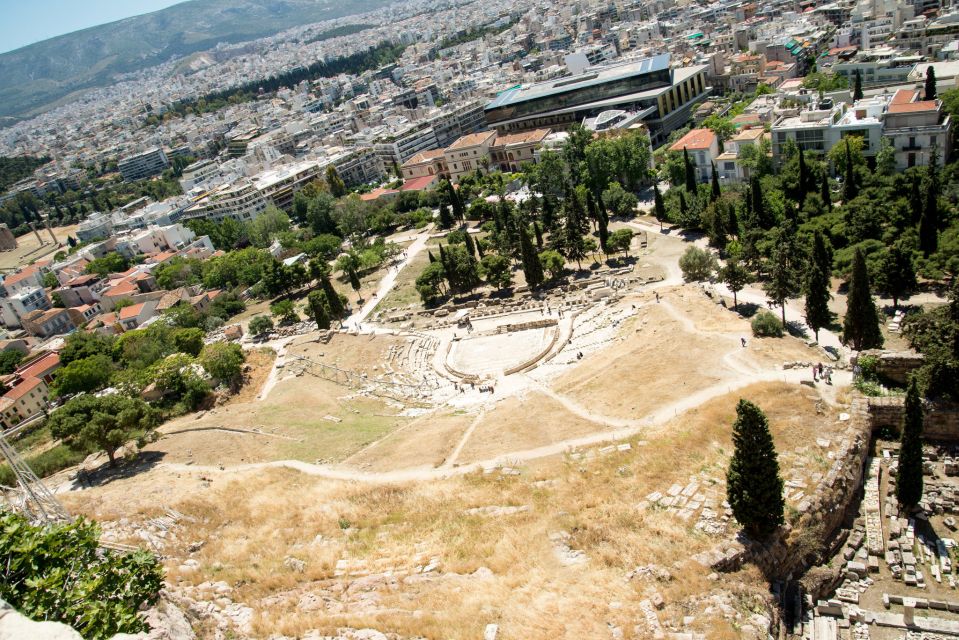
After the Parthenon, the tour continues to the Erechtheion. This stop gets around the common problem of focusing only on the most famous monument. Erechtheion is where the tour nudges you to look at variations in design and sacred space.
Then there’s an Acropolis break / photo stop / free time window. You get around 15 minutes here to step back, take pictures, and reset your eyes. Use that time smartly: grab wide skyline shots first, then come back for close views of carvings and columns if you still have energy.
Later in the route, there’s a sightseeing/walking segment near Dionysiou Areopagitou. It helps round out the hilltop feeling, so you don’t just arrive at the top and leave right away. Instead, the experience feels like a connected route across the Acropolis area.
One important consideration: reviewers and guides consistently praise the storytelling, but some visitors also note that independent exploration time is limited. So if you love lingering for an extra 45 minutes alone, plan to add separate self-guided time after the tour ends.
New Acropolis Museum: Where the Stones Start Explaining Themselves
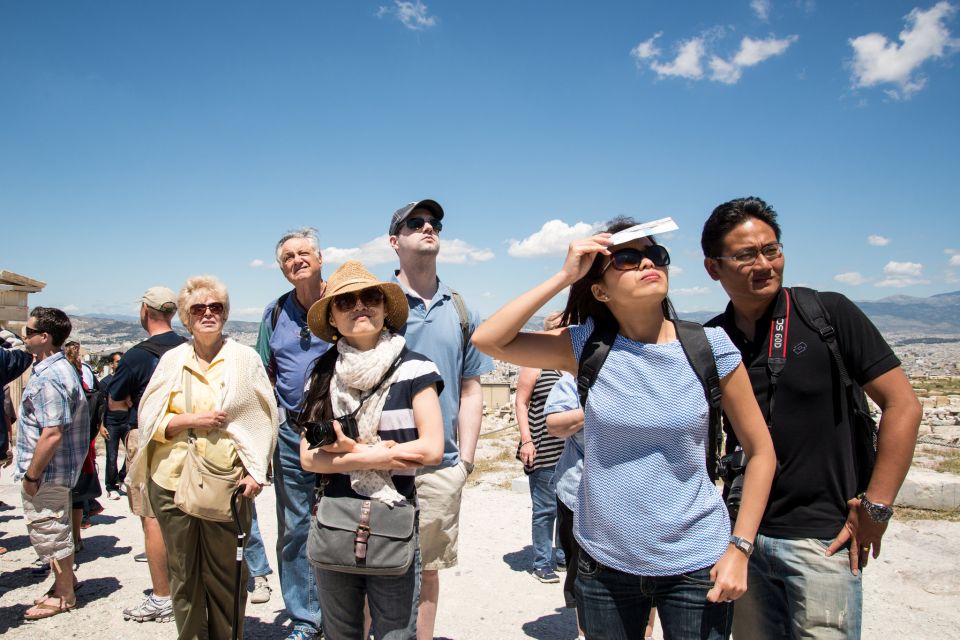
The tour’s second half is the Acropolis Museum, with a guided visit of about 1.5 hours. This is where a lot of the mental puzzle pieces click together.
The museum is especially useful because it treats the Acropolis as a living place—connected to daily life, not only to monumental “greatest hits.” You’ll see collections of statues and relics that reflect how regular people interacted with this sacred space.
Two museum features are worth centering in your expectations:
- The Gallery of the Slopes of the Acropolis, where a glass floor can reveal excavations below.
- The Parthenon temple glass gallery, which lets you view key elements in a very direct way.
This is also a strong place for context on craftsmanship. The guide’s museum work tends to go beyond describing objects. They help you understand why the design choices matter and how repairs, changes, and time have shaped what survives.
There’s a cafe in the museum. Refreshments are at your own expense, so you’ll want to factor in a simple snack plan if you’re taking the tour mid-day.
Wireless Hearing Devices and Group Size: The Comfort Factor
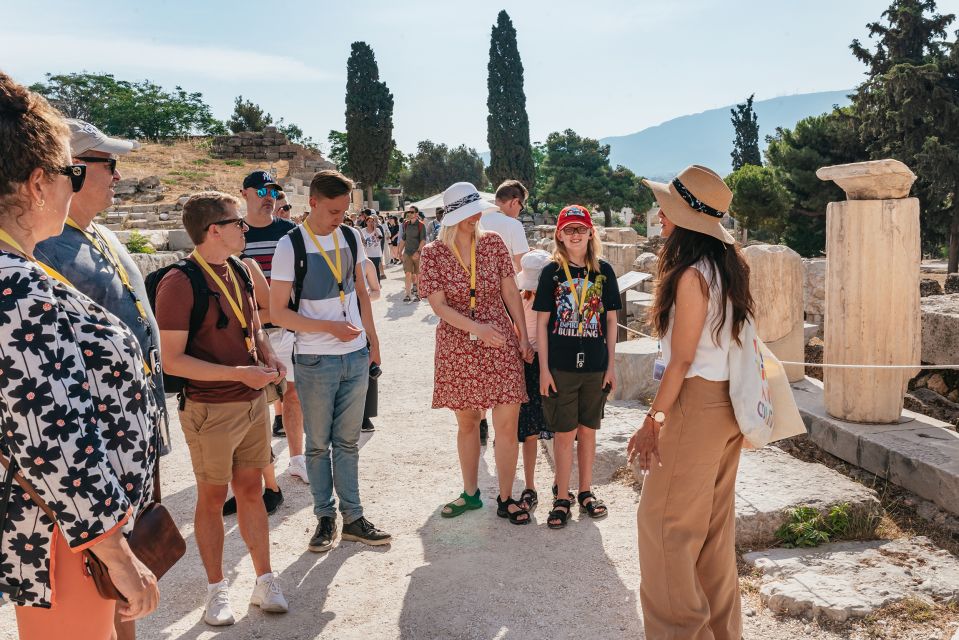
This tour often runs with groups in the teens to low twenties. Keeping that in mind, hearing clearly becomes the difference between a tour you remember and one you half-missed.
The wireless hearing devices help you follow explanations even when crowds thicken or when you’re standing in places with lots of ambient sound. It also reduces the pressure of reading lips or leaning into the guide.
On the guide side, names like Petros, Dionissos, Anna, Demos, Artemis, Lisa, and Aphrodite show up repeatedly in feedback—usually tied to pacing and clarity. Even without a specific guide name in mind, you’re choosing a company model that relies on people who can handle a group and keep it moving without turning the day into a sprint.
How Long Each Part Feels: Practical Expectations for a Half-Day
The tour is listed at 2 to 4 hours, and the route includes multiple stops plus the museum. Time feels different depending on crowd levels, how many questions pop up, and how quickly the group moves through security and entry points.
Here’s the practical reality of the flow:
- Early hill stops (theatre and gateway areas) move you into position and teach you how to look.
- The Parthenon block is the emotional center, so it tends to feel like the “big moment,” even if it’s not the longest stop.
- The museum portion is where your understanding tightens, so it can feel more valuable than you expected.
If your main goal is photos, you’ll get chances. But if your main goal is learning, plan to treat each stop like part of one continuous explanation.
Skip-the-Line Entrance and the Online Ticket Nudge

This tour offers skip-the-line entry through a separate entrance when you select the ticketed option. It’s a time saver on a site that can be painfully crowded.
There’s also an important note if you book an option without entrance tickets: you’re told to order your entrance tickets online before you arrive at the meeting point. That’s not a detail you should ignore. The Acropolis can be slow to deal with last-minute ticketing, especially if you show up right at the scheduled start time.
Translation: pick the option that matches your comfort level. If you like a smoother start and fewer decision points, the ticketed model is the easiest.
Price and Value: What $41 Really Buys You
At $41 per person, this is one of those deals that looks modest until you break down what’s included. You’re not just paying for entry. You’re paying for:
- a guided walk of the Acropolis monuments, including the Parthenon
- a guided museum visit inside the New Acropolis Museum
- wireless hearing devices
- skip-the-line access (when the ticket option is selected)
Compare that to doing the Acropolis and museum on your own: you’ll save money only if you’re truly comfortable with self-guided archaeology and you don’t mind spending time figuring out what matters most.
What you get here is a guided path that helps you see beyond the icon views. For first-timers, that typically means fewer moments of thinking, I wish I knew what I was looking at.
What to Bring (and What to Leave Behind)
This is an outdoor walking tour with indoor museum time. Pack like you’re mixing hill steps with a museum visit.
Bring:
- a passport or ID card
- comfortable shoes with good grip
- a sun hat
Leave behind:
- pets
- oversize luggage and large bags
- baby strollers
- anything that falls under their restricted luggage rules
- smoking
Also, be prepared for a lot of walking on stone and uneven paths. Even if you’re in decent shape, take it seriously.
Who This Tour Suits Best (and Who Should Rethink It)
This tour is best for people who want a guided structure and a clear learning path, especially if it’s your first time with the Acropolis.
It’s also a smart pick if you like mythology and want it tied to the actual building shapes—temple, theatre, civic spaces—rather than treated like trivia.
It’s not suitable for:
- wheelchair users
- people with mobility impairments
If you’re in the gray area physically, it’s worth asking yourself a straight question: can you handle a steep, stone-step climb and the uneven surfaces for multiple stops? If the answer is no, you may have a better day with a different format.
Should You Book the Athens Acropolis + Museum Guided Tour?
If you want the fastest route to understanding Athens’ most important monuments, I’d book this. You’re getting an archaeologist-led route, guided time at the Parthenon, and a museum visit that explains what the ruins left behind.
I’d think twice only if you strongly prefer long unstructured time on your own, or if the physical demands of the Acropolis hill would be stressful for you. And if you’re sensitive to crowds, start times matter—getting in early can help you feel less rushed and more able to actually look.
Bottom line: for most first-timers, this is the kind of tour that makes the Acropolis feel real instead of just famous.
FAQ
Where is the meeting point?
Meet your guide at the Athens Walks tour office on Porinou 5, ground floor.
How long is the tour?
The duration is listed as 2 to 4 hours.
Is the tour guided in English?
Yes, the live tour guide is English-speaking.
Are skip-the-line tickets included?
Skip-the-line entrance tickets are included if you select the option with tickets. Skip-the-line entry to the Acropolis Museum is included.
Does the tour include the Acropolis Museum?
Yes. The tour includes a guided visit to the Acropolis Museum.
How long is the Acropolis Museum portion?
The Acropolis Museum guided tour is listed as about 1.5 hours.
Are wireless hearing devices provided?
Yes, wireless hearing devices are included.
What should I bring?
Bring your passport or ID card, comfortable shoes, and a sun hat.
Is this tour suitable for wheelchair users or mobility impairments?
No. It is not suitable for people with mobility impairments or wheelchair users.
Are there restrictions on bags or strollers?
Pets are not allowed, and oversize luggage, baby strollers, and large bags are not allowed. Smoking is also not allowed.




More Guided Tours in Athens


More Tours in Athens



More Tour Reviews in Athens
- All Day Cruise -3 Islands to Agistri,Moni, Aegina with lunch and drinks included
★ 5.0 · 4,958 reviews