REVIEW · ATHENS
Exploring Corinth: In the Footsteps of the Apostle Paul
Book on Viator →Operated by Colours of Greece · Bookable on Viator
Corinth and Paul in one packed day sounds like a lot. It’s actually a smart mix of famous engineering stops and faith sites tied to Acts 18. You’ll move at a comfortable pace in an air-conditioned vehicle with onboard Wi‑Fi, so you can plan your next steps while you travel.
What I like most is how easy it is to ask questions—this is set up as a private tour with your driver guiding you through the bigger story behind the places. I also appreciate the convenience: pickup and drop-off across Athens means you spend less time figuring out logistics and more time looking at the evidence.
The only drawback to plan around: you’re not paying for a licensed guide inside the archaeological sites, and most entrance fees are not included, so your total day cost can creep up if you add museum time and ticketed entrances.
In This Review
- Key Highlights Worth Marking on Your Day
- A Paul-Focused Corinth Day Trip That Thinks Beyond the Basics
- Price and Logistics: What You’re Paying For (and What You Aren’t)
- Pickup That Actually Saves Time in Athens
- Isthmus of Corinth: The Shortcut That Changed the Maritime Story
- Diolkos Trackway: How Ships Once Traveled Over Land
- Kenchreai’s Ancient Port: Where Paul’s Journey Fits the Map
- Archaia Korinthos: Fountains, Temples, Theatre, and the Bema
- Archaeological Museum of Corinth: Pottery and Jewelry as Real Evidence
- Acrocorinth: The Citadel Views That Reframe the City
- Apostolos Pavlos Church: A Moving End with a Paul Mosaic
- What Makes This Tour Work for You (Not Just for the Checklist)
- Who Should Book This Paul in Corinth Tour
- Should You Book It?
- FAQ
- How long is the tour?
- What’s the meeting and pickup setup in Athens?
- Is this a private tour?
- What’s included in the price?
- What’s not included?
- Is the Archaeological Museum of Corinth entrance ticket included?
- Will I have a licensed tour guide inside archaeological sites?
- What stops are included in the visit?
- Is Wi‑Fi available during the ride?
- What about cancellation?
Key Highlights Worth Marking on Your Day
- Private tour format so you can ask questions and go at your pace
- Hotel or port pickup with your driver waiting at the right spot
- Onboard Wi‑Fi to map the rest of your trip while you ride
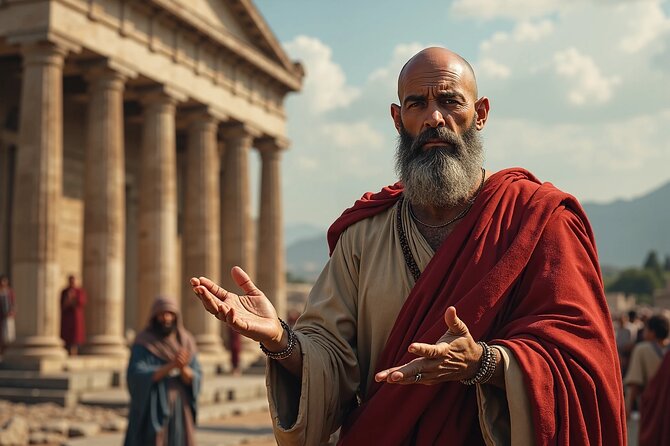
- Paul-focused context tied to the places connected with Acts 18 and the Corinthians letters
- Acrocorinth citadel views that change how you understand the city below
- A church mosaic dedicated to Saint Paul that gives you a reflective ending
A Paul-Focused Corinth Day Trip That Thinks Beyond the Basics
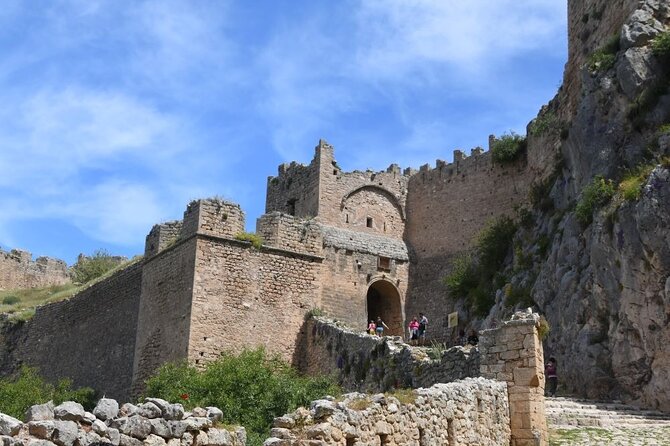
This isn’t a tour that only points at ruins. You’ll get the context behind why Corinth mattered to early Christianity and how Paul’s presence fit into a busy port-and-trade world. That matters, because Corinth can feel like a pile of stones until someone connects the dots for you.
You’ll also notice that the route is built around variety. You start with the engineering story of the Isthmus, then shift to the port world of Kenchreai, then climb to Corinth’s high ground at Acrocorinth. That mix keeps the day from turning into one long history lecture.
If you like tours where you can react in real time—asking why a place mattered or how a city worked—this setup is a good match. Guides on this experience (including English-speaking drivers noted in past groups) tend to answer questions clearly, including the kind of details that standard guidebooks often skip.
You can also read our reviews of more tours and experiences in Athens.


Price and Logistics: What You’re Paying For (and What You Aren’t)
At $171.52 per person for about 6 to 7 hours, you’re paying for a private, door-friendly service: air-conditioned transport, bottled water, and Athens pickup/drop-off. You also get onboard Wi‑Fi, which sounds small until you’re trying to coordinate the rest of your trip without hunting for a signal.
Here’s the part to budget carefully: entrance fees and museum tickets are not included, and there isn’t a licensed guide accompanying you into archaeological sites. In practice, that means you’ll still get guiding and context during the ride and at stops, but you should expect to buy tickets directly where required—especially if you plan to enter the museum.
Food also isn’t included. This route spans multiple sites, so I’d plan to eat before or after and bring a simple snack plan if you’re the type who gets hungry before the car ride ends.
Pickup That Actually Saves Time in Athens
This tour is designed for the reality of Athens: traffic and timing can turn sightseeing into a scheduling puzzle. Pickup is offered across Athens, and your driver waits where you can actually find them—either at your hotel/apartment entrance or at the port gate holding a sign with your name.
That “wait-for-you” detail matters more than it sounds. It reduces stress at the start of the day, and it helps you avoid the classic scenario where you’re wandering around with no clear meeting point.
You’ll also have a driver who stays with your group via an air-conditioned vehicle, so you’re not stuck bouncing between distant points on your own.
Isthmus of Corinth: The Shortcut That Changed the Maritime Story
Your day starts at the Isthmus of Corinth, the narrow strip connecting the Peloponnese peninsula to mainland Greece. The main star here is the Corinth Canal—engineering that slices through the isthmus and creates a shortcut between the Ionian and Aegean Seas.
Even if you’re not an engineering nerd, this stop gives you a key mental picture: geography drives economics, and economics shapes the kinds of people who end up in cities like Corinth. In other words, you can’t understand Corinth’s role without understanding how ships and goods moved around it.
One practical note: this stop is short, so treat it like a quick orientation moment. Take photos, look for the canal perspective, then move on while the day is still fresh.
Diolkos Trackway: How Ships Once Traveled Over Land
Next comes the Diolkos, an ancient paved trackway dating back to the 6th century BC. The Diolkos crossed the Isthmus in a way that let ships be transported over land, avoiding the long and dangerous sea route around the Peloponnese.
I love this stop because it’s an “aha” moment. You see how people solved problems with the tools they had, not with modern convenience. It’s also a reminder that the Corinth region has long been about movement—goods, people, and ideas.
This is another brief stop, so aim for focused attention. Look at the general route idea, then think about what it would mean to load a ship and move it along a track.
- All Day Cruise -3 Islands to Agistri,Moni, Aegina with lunch and drinks included
★ 5.0 · 4,958 reviews



Kenchreai’s Ancient Port: Where Paul’s Journey Fits the Map
At the ancient port of Kenchreai (Cenchreae), you’re in the world of harbors and routes. This was one of Corinth’s two main harbors, and it served as a trade and transportation hub on the Saronic Gulf.
What makes this stop feel more than just scenic is the New Testament connection. Kenchreai is mentioned as the place where the Apostle Paul began what’s described as his final journey to Ephesus. That gives the location a specific narrative weight: it’s not only a commercial port, it’s a launch point in Paul’s story.
This stop is timed to about a half hour, so don’t rush past the meaning. When a place has a route-story behind it, I find it helps to slow down for a few minutes and picture the departure point role—how a journey starts, not just how it ends.
Archaia Korinthos: Fountains, Temples, Theatre, and the Bema
At Archaia Korinthos, you’ll pass several major landmarks associated with ancient Corinth, including the Glauke fountain and the Temple of Apollo. You’ll also see areas tied to the ancient theatre, the Roman odeon, Temple E, the Bema, and the Peirene fountain.
This is one of the most important stops for understanding how Corinth functioned as a city. You’re not just seeing religious buildings—you’re seeing public space and civic structure. Temples, theatres, fountains, and civic platforms all point to a society that gathered, argued, worshiped, and traded.
Paul’s time in Corinth is tied to Acts 18:1-18, and you’ll get that context while you’re in the area. It helps you connect the feeling of a real city to the letters Paul wrote to the Corinthians. Those letters aren’t written in a vacuum. They’re responding to real tensions within a community inside a busy trade center.
Since this stop is about 90 minutes and includes pass-by viewing, plan to ask questions while you’re moving. This is where a good driver can connect what you’re seeing (public spaces, civic structures, sacred areas) to why a message would land the way it did.
Archaeological Museum of Corinth: Pottery and Jewelry as Real Evidence
The Archaeological Museum of Corinth is a smart add-on because it anchors the day in objects. The museum collection includes pottery, jewelry, and other artifacts that show Corinth’s cultural and economic significance.
In a lot of places, ruins alone make it hard to imagine daily life. Museum pieces do that work. You can see how people decorated themselves, what kinds of goods circulated, and what “ordinary” objects looked like in a city known for exchange.
This stop lasts about 40 minutes. That’s enough time to hit the highlights without feeling trapped inside. Just remember the museum ticket is not included, so treat it as a choice: if you want the object-based context, budget for it.
Acrocorinth: The Citadel Views That Reframe the City
Then you go up to Acrocorinth, a towering citadel overlooking ancient Corinth. This is where you start to understand why high ground mattered—fortifications, control, and visibility all come into play when you look down from the top.
Expect this stop to feel more expansive than the earlier ones. From here, the city below becomes something you can interpret. You’ll likely notice how geography supports defense and how a power center at the top influences the rest of the settlement.
This stop is about an hour. I’d use the time to step back and take a breath. Places like this make it easier to understand why people competed for control in the first place.
Apostolos Pavlos Church: A Moving End with a Paul Mosaic
To close the day, you’ll visit Apostolos Pavlos Church, dedicated to Saint Paul within ancient Corinth. The standout here is a mosaic tied to Paul’s journey, created by Pastorutti and Tsotsonis, which invites reflection and connects scripture to a physical sacred space.
I like ending on something that doesn’t require decoding ruins. After hours of architecture and site context, the mosaic gives you an emotional landing spot. It also helps you remember that this wasn’t only a Roman city with trade routes—it became part of the story that shaped communities long after the ancient era.
This stop is brief, around 20 minutes. Treat it like a quiet pause before your ride back to Athens.
What Makes This Tour Work for You (Not Just for the Checklist)
A lot of tours cover stops. This one aims to connect stops to meaning.
You’ll get Paul-linked context during the ride and at the key viewpoints, including the broader outline of how Paul’s presence and letters shaped early Christian life in Corinth. When you’re walking among sites connected to civic life, religious activity, and maritime movement, that framing helps you keep your bearings.
You’ll also enjoy the private format. It’s just your group, which tends to make questions easier and time less rigid. If you’re the type who likes to ask why something is positioned where it is, you’ll get more out of the day.
And the onboard Wi‑Fi is genuinely practical. While you head back toward Athens, you can plan your next meals, map your next site, and reduce the post-tour scramble.
Who Should Book This Paul in Corinth Tour
You’ll probably love this tour if you:
- Want Paul-focused context without needing to be a specialist
- Appreciate a private pace and the chance to ask questions
- Prefer transport convenience from Athens over piecing together your own itinerary
- Enjoy both engineering/port history and faith-related stops
You might reconsider if:
- You hate buying entrance tickets day-of (museum and archaeological site fees are not included)
- You want a licensed guide inside every archaeological site (this experience does not include that)
- You prefer a longer museum time or guided deep detail inside buildings
Should You Book It?
If your goal is a well-timed Corinth day that connects geography, city life, and Paul’s story, I think this is a strong value for the service level. The pickup/drop-off, private format, and onboard Wi‑Fi make it easier than DIY—and the Paul-centered framing turns “seeing ruins” into a clearer narrative.
Just go in with one mindset: entrance fees are on you, and you’ll be relying on your driver for guiding context rather than a licensed site guide inside every structure. If that fits your style, book it and use the question time. Corinth is easier to understand when you can ask what you actually want to know.
FAQ
How long is the tour?
It runs for about 6 to 7 hours, approximately.
What’s the meeting and pickup setup in Athens?
You can get hotel or Airbnb pickup. The driver waits at the entrance. For port pickups, the driver waits at the gate holding a sign with your name.
Is this a private tour?
Yes. It’s private, and only your group participates.
What’s included in the price?
The tour includes an air-conditioned vehicle, onboard Wi‑Fi, bottled water, hotel/Airbnb pickup, and an English-speaking tour driver.
What’s not included?
Entrance fees to archaeological sites and museums are not included. Food and snacks are also not included. Airport pickup/drop-off costs extra.
Is the Archaeological Museum of Corinth entrance ticket included?
No. The museum ticket is not included.
Will I have a licensed tour guide inside archaeological sites?
No. The experience does not include a licensed guide to accompany you into archaeological sites.
What stops are included in the visit?
You’ll visit the Isthmus of Corinth, the Diolkos, the ancient port of Kenchreai, Archaia Korinthos (pass-by viewing of key landmarks), the Archaeological Museum of Corinth, Acrocorinth, and Apostolos Pavlos Church.
Is Wi‑Fi available during the ride?
Yes. Wi‑Fi is available onboard.
What about cancellation?
You can cancel for a full refund up to 24 hours in advance of the experience start time. Free cancellation is available, and the cutoff is based on the local experience time.


More Tour Reviews in Athens
- All Day Cruise -3 Islands to Agistri,Moni, Aegina with lunch and drinks included
★ 5.0 · 4,958 reviews