REVIEW · ATHENS
Ancient Corinth, Epidaurus, Nafplio private tour from Athens
Book on Viator →Operated by My Athens Transfers · Bookable on Viator
A day that links three major ancient sites is rare. This private tour strings together Corinth Canal, Ancient Corinth, Epidaurus, and Nafplio in one smooth day from Athens. You get a comfortable, air-conditioned ride, plus pickup that keeps your morning from turning into logistics soup.
What I like most is the pace for a long day: you’re not rushing in a big group, and you have time for real stops like the Ancient Theatre of Epidaurus and the Nafplio waterfront. I also like that the driver provides fluent English commentary from the car and at each main stop, so you still get context even without a licensed guide walking inside sites.
The one drawback to keep in mind is that this is a driver-led experience, not a guided museum-by-museum tour. The driver won’t enter the archaeological sites with you, and several admissions (including Ancient Corinth’s archaeological museum and the Epidaurus complex) are extra.
In This Review
- Corinth Canal, Ancient Corinth, Epidaurus, Nafplio: The Highlights That Matter
- Price and Value for a Private Group From Athens
- Pickup That Keeps Your Day From Starting Late
- Corinth Canal: The Isthmus View You Don’t Have to Chase
- Ancient Corinth and the Museum Area: Paul’s Corinth Meets Roman Layers
- Apollo’s Temple and Acrocorinth: The Views Are the Payoff
- Epidaurus Museum and the Sacred Complex: Artifacts to Asclepius
- The Ancient Theatre of Epidaurus: Why Acoustics Still Ruin Your Day (In a Good Way)
- Sanctuary of Asklepios: A Short Stop With Big Meaning
- Nafplio: Time for Lunch, Castles, and the Harbor Castle Shot (Bourtzi)
- Acronauplia and Palamidi Steps: Choose Your Effort Level
- What the Driver Actually Does (and What You Handle Yourself)
- Timing Reality: How to Make This Packed Day Feel Relaxed
- Should You Book This Private Corinth, Epidaurus, and Nafplio Tour?
- FAQ
- How long is the Ancient Corinth, Epidaurus, and Nafplio private tour?
- What’s included in the price?
- Are entrance fees included?
- Do I need a guided tour inside the archaeological sites?
- Where will the driver pick me up in Athens?
- How many people can this private tour accommodate?
Corinth Canal, Ancient Corinth, Epidaurus, Nafplio: The Highlights That Matter
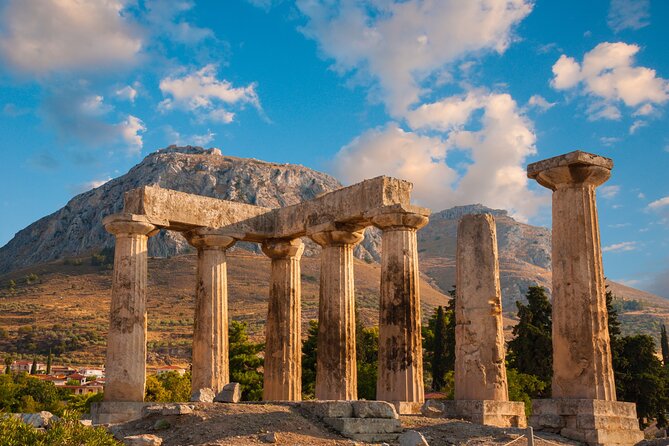
- One private vehicle for big variety: canal views, city ruins, a healing sanctuary, and a gorgeous harbor town.
- A/C + Wi-Fi for an 8 to 9-hour day: you’re comfortable while you cover a lot of ground.
- Short but meaningful site stops: you’ll see major highlights without a full-day slog at each location.
- Driver commentary, not a roaming guide: great for framing the day, but you’ll explore inside on your own.
- Mix of paid and free sights: some stops have free entry, while key museums/areas cost extra on-site.
- Nafplio includes the fun stuff: castle viewpoints and harbor scenery, plus time to grab lunch where you want.
Price and Value for a Private Group From Athens
This tour is priced per group, listed at $558.71 per group (up to 3), and it runs about 8 to 9 hours. That pricing works best when you travel as a small group of friends or family. If you’re solo, it may feel pricey versus joining a bus tour. If you’re two or three, the private vehicle can start to feel like good value because you’re paying for comfort, timing control, and not getting herded.
One note from the tour features: it’s described as ideal for groups, with one price per vehicle for up to 15 passengers. Practically, that means if you have a bigger party, it’s worth asking how pricing is structured for your specific group size. The main value signal here is still the same: one vehicle, one day plan, and you move on your schedule instead of a fixed bus timetable.
You can also read our reviews of more private tours in Athens

Pickup That Keeps Your Day From Starting Late
The biggest day-trip comfort upgrade is pickup and drop-off. You’re met by your personal driver at your hotel lobby, apartment entrance, airport arrival hall with a name sign, or port gate after disembarkation. Pickup time is adjustable based on your request, and the driver returns you to the same place (or another preferred point).
For me, that’s where private tours win. You don’t waste time locating meeting points, coordinating with strangers, or dragging luggage across town. It also reduces stress when you’re stacking multiple ancient stops across the Peloponnese.
Corinth Canal: The Isthmus View You Don’t Have to Chase
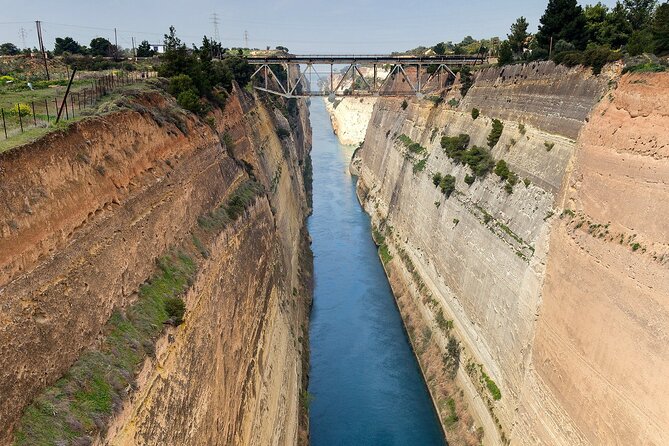
Your first stop is the Corinth Canal, a cut through the narrow Isthmus of Corinth connecting the Ionian Sea and the Aegean Sea. It’s about 6.4 kilometers long and very narrow at the base, so lots of modern ships can’t pass. You’ll park in the right kind of place for views, because from up above you can look down on the canal walls and watch vessels thread their way through.
This stop is quick—about 15 minutes—and that’s a good thing. It’s not trying to be a long museum detour. Instead, it works like a dramatic opening scene: you get a sense of how geography shaped Greek history, and why people treated this stretch of land like a choke point worth defending.
Ancient Corinth and the Museum Area: Paul’s Corinth Meets Roman Layers
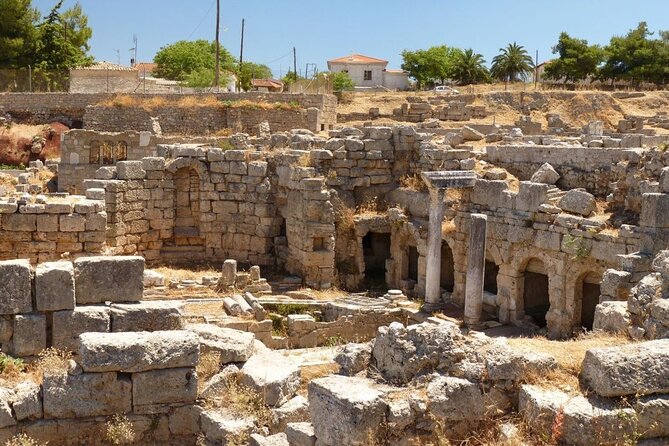
Ancient Corinth is the anchor of the day, and the stop structure makes sense. You start with Ancient Corinth (Archaia Korinthos) for about 1 hour, then add the Archaeological Museum of Corinth for around 30 minutes.
Corinth mattered because it sat on the isthmus route between major parts of Greece. It grew into one of the most important city-states, and later the Romans rebuilt and reshaped it. If you’re coming with biblical context, Corinth is also central to the New Testament letters attributed to Saint Paul and is mentioned in Acts as part of his missionary travels. Even if you’re not focused on religious history, you still get that layered feeling: city, conflict, destruction, rebuilding, and long continuity in the landscape.
Practical reality: the museum admission isn’t included, and you’ll likely purchase tickets on-site (the tour lists €15.00 per person for Ancient Corinth and the Archaeological Museum of Corinth). That cost isn’t huge, but it’s good to budget, especially if you’re traveling as a larger group.
Apollo’s Temple and Acrocorinth: The Views Are the Payoff
After Ancient Corinth’s street-level ruins and museum artifacts, you shift upward—to two classic highlights that are mostly about panorama and strategic importance.
First is the Temple of Apollo. It’s a short stop (about 15 minutes) and listed as free. Built around 550 BC, it’s not the longest stay, but it gives you a direct sense of the kind of monumental sacred architecture Corinth had.
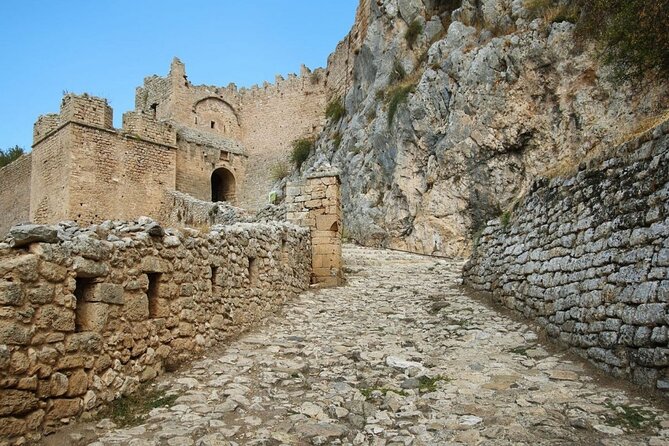
Then comes the bigger dramatic stop: Akrokorinthos (Acrocorinth), also free, with about 30 minutes. Acrocorinth is described as a monolithic rock acropolis overlooking the ancient city, and its fortress use makes sense once you understand the geography. With its secure water supply, it could hold out as a last defense and command access along the isthmus into the Peloponnese.
If you love viewpoints where you can actually connect the dots—ruins below, geography around, and the logic of defense—you’ll get a lot from this stop. If you hate stairs and uneven paths, plan for it. Your time is limited, but your footing should be steady.
- All Day Cruise -3 Islands to Agistri,Moni, Aegina with lunch and drinks included
★ 5.0 · 4,958 reviews





Epidaurus Museum and the Sacred Complex: Artifacts to Asclepius
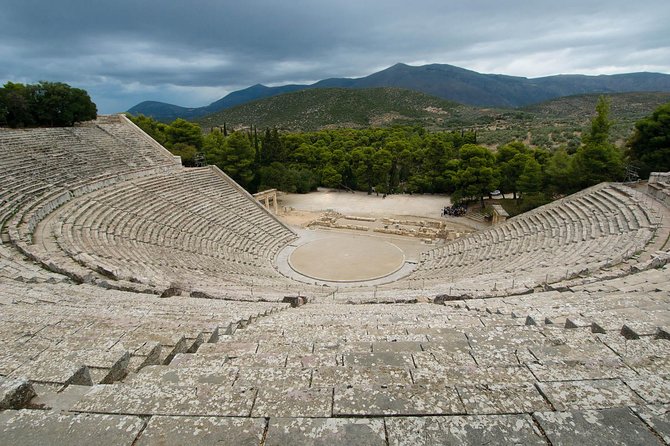
Epidaurus is where the day shifts from city power to healing mythology and sanctuary life. You’ll visit the Archaeological Museum of Epidaurus for about 30 minutes, then continue into the sanctuary area.
The museum is noted for reconstructions of temples and its columns and inscriptions, created to display artifacts unearthed in the surrounding ancient site area. Tickets are not included, listed as €20.00 per person for Epidaurus and the Epidaurus Archaeological Museum, purchased on-site.
Even in a short visit, the museum matters because it gives you a mental map before you go outside. When you later see the theatre and sanctuary spaces, you’ll have more context for what you’re looking at instead of just admiring the setting.
The Ancient Theatre of Epidaurus: Why Acoustics Still Ruin Your Day (In a Good Way)
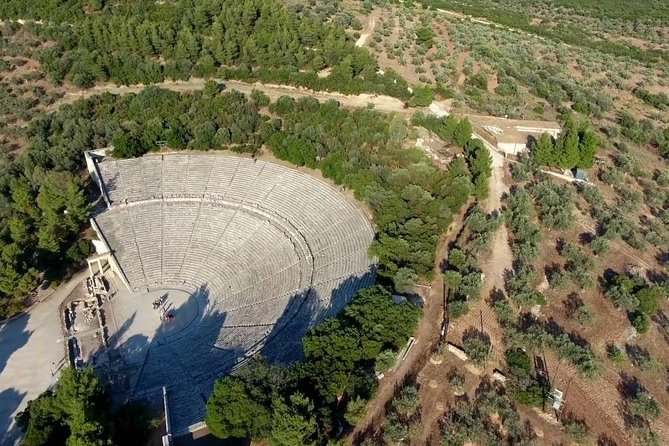
Next is the Ancient Theatre of Epidaurus, about 30 minutes. It’s described as the most perfect ancient Greek theatre for acoustics and aesthetics, and it keeps the Hellenistic layout with a clear division into theatron, orchestra, and skene.
The fact that it stayed largely unmodified during Roman times helps too, because you’re seeing a structure that’s still close to what the original builders intended. The theatre sits near the sanctuary dedicated to Asclepius, which is part of why this stop feels cohesive. It’s not just a theatre visit; it’s a piece of a larger ritual landscape.
If you’re even mildly curious about how ancient engineering performed, this stop pays off. If you’re only there for quick photos, you might feel tempted to rush. I’d still give it your full 30 minutes, because the shape and the sound story are the whole point.
Sanctuary of Asklepios: A Short Stop With Big Meaning
You also visit the Sanctuary of Asklepios for about 10 minutes, and entry is free. This sanctuary is described as the main holy site dedicated to Asclepius and a major cult rival to other famous Greek sanctuaries like Olympia and Delphi.
The temple dates are described as early 4th century BC, and the site’s later history includes the idea that if it were still used into the late Roman era, it could have been closed during the persecution of pagans when non-Christian worship was restricted.
The reason this short stop works is that it places everything in context. You’ve just been in a theatre shaped for ancient audiences, and now you step into the religious setting that framed healing, rituals, and expectations. Even with only ten minutes, it helps the day feel like a story rather than a checklist.
Nafplio: Time for Lunch, Castles, and the Harbor Castle Shot (Bourtzi)
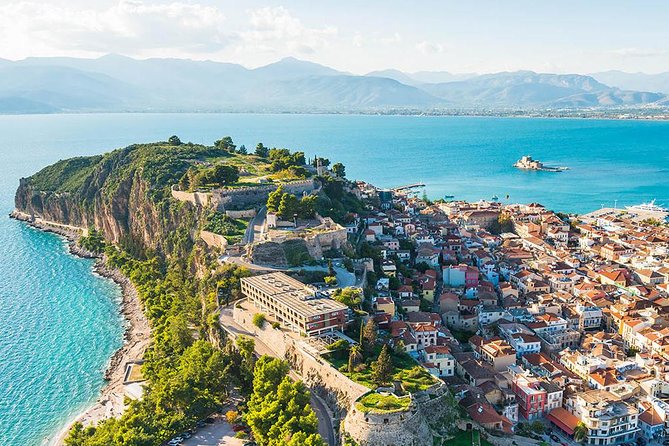
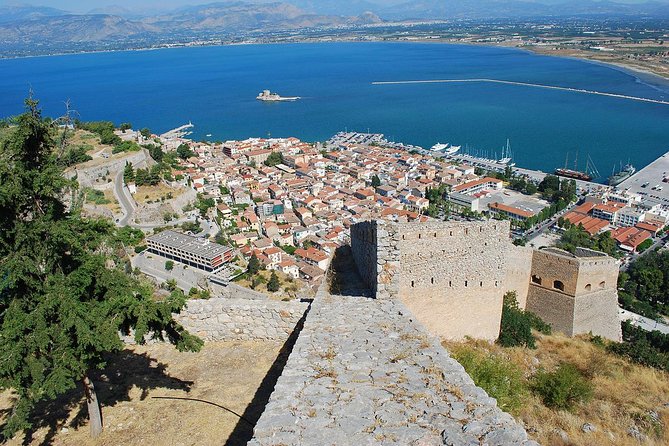
Then you roll into Nafplio, about 1 hour 30 minutes of free time for lunch, coffee, shopping, and strolling. Nafplio is often called the Naples of the East, and it’s easy to see why once you’re there: Venetian architecture, cobbled squares, and towering castles that give you commanding views over the Argolic Gulf.
Here’s how I’d use your time: don’t try to sprint through everything. Nafplio rewards slower movement. Get something simple to eat, then walk toward the water and let the streets pull you along.
You’ll also have a separate short stop for Bourtzi, the Venetian castle located in the middle of the harbor. It’s a 10-minute photo moment, and since it’s free, it’s a low-cost, high-satisfaction stop—especially if the light is kind.
Acronauplia and Palamidi Steps: Choose Your Effort Level
Nafplio also includes fortification highlights that tell you how the town protected itself over centuries.
You’ll see Acronauplia, described as the oldest part of Nafplion and its fortified hill area. The text notes that until the 13th century it was its own town, then the Venetians and Franks transformed it into fortifications. Part of it was used as a prison, and later a hotel complex was built where tourism could take advantage of the view.
Then there’s Palamidi Castle, on a hill east of Acronauplia. It’s described as built by the Venetians during their second occupation (1686–1715), sitting about 216 meters high. Entry is free and the stop is about 30 minutes. You’ll see the key challenge up front: the climb is 913 steps (with a locals’ saying that it’s 999 steps), so your shoes and energy matter.
If you want the classic Nafplio payoff—big gulf views and a sense of scale—you’ll enjoy Palamidi. If you’re not up for stairs, still consider going for a partial climb or focusing on what you can reach comfortably. The tour’s time window is tight enough that pacing yourself is smart.
What the Driver Actually Does (and What You Handle Yourself)
This tour gives you professional drivers with deep history commentary, but they’re not licensed tour guides who enter archaeological sites with you. They can explain what you’re seeing in fluent English and answer questions, but you’ll do the on-site exploration at your own pace inside ruins, museums, and the theatre area.
Also possible: a licensed tour guide can be requested, depending on availability. That’s useful if you want someone to handle interpretation inside every complex. Without the licensed guide, you’ll still get context, but you may want to read a bit of signage once you’re there.
One more practical detail: the tour includes bottled water, and the vehicle has Wi-Fi. For a long day, those small comforts count.
Timing Reality: How to Make This Packed Day Feel Relaxed
Even though it’s private, you’re still covering a lot of distance in one day. The stop durations help: Corinth Canal (15), Temple of Apollo (15), museum plus main sites at Ancient Corinth, then Epidaurus theatre/museum/sanctuary, and finally Nafplio with a longer lunch block.
So the best strategy is simple:
- Wear comfortable walking shoes for Acrocorinth and especially Palamidi’s steps.
- Bring sunscreen and a hat, because you’ll be outdoors at scenic points and the theatre.
- Use your Nafplio time for one real meal, not five quick snacks. It’s nicer when the day ends with a full stomach.
If you’re the type who loves reading every plaque, you might need to slow down and accept that you won’t see everything at max depth. This tour is built for highlights with enough context to make those highlights meaningful.
Should You Book This Private Corinth, Epidaurus, and Nafplio Tour?
Book it if you want a single-day route that hits the big anchors: Corinth Canal, Ancient Corinth, Epidaurus Theatre, and the feel-good town of Nafplio. It’s a smart choice for couples, small groups, and families who value comfort and want to control timing more than they want a full licensed-guide lecture.
Don’t book it if you’re expecting someone to physically guide you through every museum and ruin. This is driver-led interpretation with you doing most of the inside exploring. Also, if you hate ticket surprises, budget for paid admissions: €15.00 per person for Ancient Corinth plus the Corinth museum, and €20.00 per person for Epidaurus plus its museum.
FAQ
How long is the Ancient Corinth, Epidaurus, and Nafplio private tour?
The tour runs about 8 to 9 hours.
What’s included in the price?
Your private transportation includes pickup and drop-off, an air-conditioned vehicle with Wi-Fi, a professional driver with English commentary, and bottled water.
Are entrance fees included?
No. Entrance fees are listed as not included for Ancient Corinth & the Archaeological Museum of Corinth (€15 per person) and for Epidaurus & the Epidaurus Archaeological Museum (€20 per person). Some stops are free.
Do I need a guided tour inside the archaeological sites?
The driver is knowledgeable and can explain things, but they are not licensed to accompany you into the archaeological sites. A licensed tour guide may be available upon request, depending on availability.
Where will the driver pick me up in Athens?
Pick-up is offered from hotels, apartments, the airport arrival hall (with a sign and name), or the port gate. Your driver will meet you at the agreed location and return you to the same place or your preferred point.
How many people can this private tour accommodate?
The booking price is listed as up to 3 per group, and the tour is described as ideal for groups with one vehicle price for up to 15 passengers. If you have a larger group, it’s worth checking how the vehicle and pricing work for your party size.


More Private Tours in Athens


More Tours in Athens


More Tour Reviews in Athens
- All Day Cruise -3 Islands to Agistri,Moni, Aegina with lunch and drinks included
★ 5.0 · 4,958 reviews