REVIEW · ATHENS
Athens: Acropolis and Mythology Highlights Small Group Tour
Book on GetYourGuide →Operated by Alternative Athens · Bookable on GetYourGuide
Greek myths stop feeling like bedtime stories here. This small-group walk turns major ruins into living context, tying gods, politics, and daily life to the stones you see around the Acropolis and the Ancient Agora.
I like the way the tour keeps a tight route with a licensed guide, so you’re not just looking at rocks—you’re getting the stories behind Parthenon-era Athens, including Temple of Athena Nike and Erechtheion. I also like the focus on mythology as a way to understand real historic choices, not just names and dates. One thing to plan for: you’ll be on your feet a lot, and backpacks and strollers aren’t allowed, so pack light and wear comfortable shoes.
In This Review
- Key Things You’ll Notice on This Athens Mythology Walk
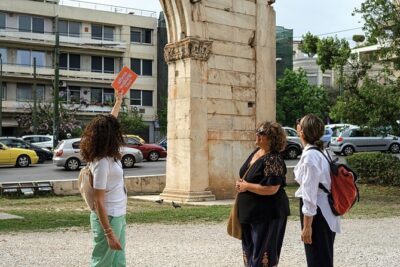
- Starting Under Hadrian’s Gate: Get Oriented Fast
- Temple of Olympian Zeus From the Outside: A Powerful Opening Context
- The Walk Up to the Acropolis: Where the Stories Start Making Sense
- Temple of Athena Nike and the Erechtheion: Myths Tied to Details
- Temple of Athena Nike
- Erechtheion
- The Parthenon: The One You Came For, Plus the Meaning Behind It
- Ancient Agora: Athens Beyond the Mythic Spotlight
- Temple of Hephaestus: A Calm Finish With Real Gravitas
- What Makes the Guides Here Matter So Much
- Price and Tickets: Is $53 Good Value?
- What You Should Bring (and What You Must Leave Behind)
- Should You Book This Athens Acropolis and Mythology Tour?
- FAQ
- Where do I meet the guide?
- What’s the closest metro station?
- How long is the tour?
- Are Acropolis tickets included?
- Is it free for some visitors?
- What items are not allowed during the tour?
Key Things You’ll Notice on This Athens Mythology Walk
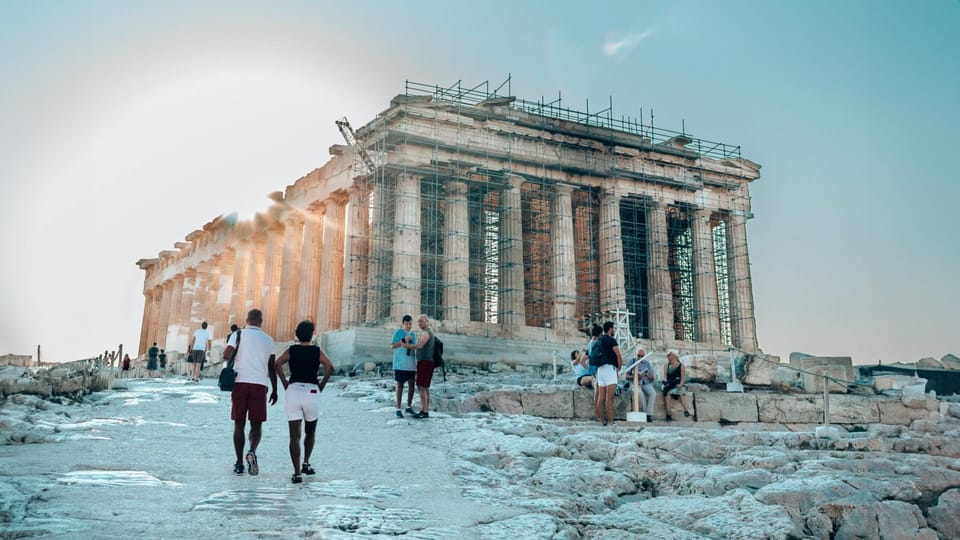
- Meeting point that’s easy to find: under the Arch of Hadrian (Hadrian’s Gate), with your guide holding an Alternative Athens sign.
- Myth + architecture in the same explanation: you’ll connect stories to buildings, not treat them as separate lectures.
- A smooth rhythm across top sites: Temple of Olympian Zeus (from outside), then up to the Acropolis core, then down to the Agora and Temple of Hephaestus.
- Built for hearing the guide: many groups are issued earpieces, which helps when crowds or distance make voices harder to catch.
- Optional ticket coverage included: you’ll either get Acropolis entry or Acropolis + Ancient Agora entry depending on the option you choose.
Starting Under Hadrian’s Gate: Get Oriented Fast
Your tour begins under the Arch of Hadrian (Hadrian’s Gate), next to the Acropolis area. The meeting spot is on Leof. Vasilisis Amalias 50, and the guide waits there holding a sign for Alternative Athens. If you’re using public transit, the closest metro station is ACROPOLIS, followed by about a 5-minute walk.
This first moment matters more than it sounds. Athens ruins are close together, but they’re also layered and confusing if you show up cold. Starting at Hadrian’s Gate gives you a practical orientation: where the city shifted over time, and how later rulers, earlier myths, and the everyday lives of Athenians all share the same ground.
Also, a quick heads-up from the rules: you should bring a passport or ID card, and it’s a walking tour—so comfy clothes and shoes beat trendy sandals.
You can also read our reviews of more tours and experiences in Athens.



Temple of Olympian Zeus From the Outside: A Powerful Opening Context

From the meeting area, the group heads to the Temple of Olympian Zeus. The time here is short, around 15 minutes, and it’s primarily a guided look from outside.
Why this stop is worth your attention: the Temple of Olympian Zeus sets the scale of ambition in Athens. Even in partial ruin, it signals how grand temple-building could be—and how that ambition fits into the city’s broader story of power, patronage, and identity. It also helps you transition smoothly into the Acropolis, because you’re already thinking in terms of why monumental spaces were built.
If you’re the type who likes to understand what came before the headline sites, this is a smart warm-up. If you want only the Acropolis views, you may feel it’s a “prelude,” but it pays off once you start seeing recurring themes in the next stops.
The Walk Up to the Acropolis: Where the Stories Start Making Sense
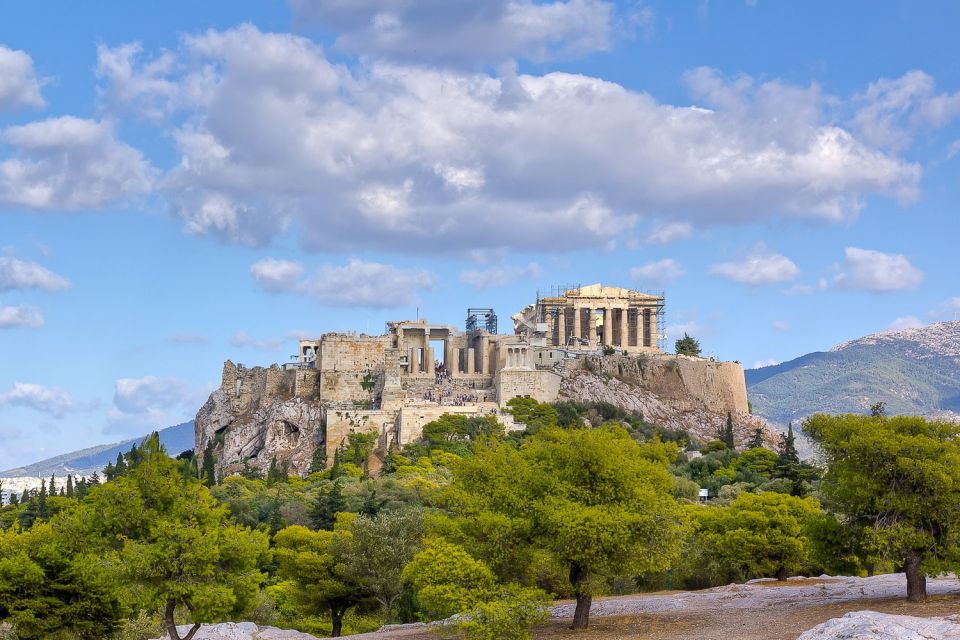
Next comes a walk toward the Acropolis, with about 15 minutes of moving between areas and positioning you for the main climb and viewing spots.
This is where good guidance changes everything. The Acropolis isn’t just one landmark. It’s a cluster of buildings that were designed with specific meanings in mind—religious, civic, and political. When a guide connects each viewpoint to the myths and the city’s Golden Age, you start noticing patterns: why certain gods were honored in certain places, how architecture communicates authority, and how legends reflect human fears and hopes.
You then get a guided portion on the Acropolis of about 1.5 hours. That’s enough time to cover the big elements without feeling rushed through everything. It’s also long enough that the explanation can move past names and actually explain why those stories were important to Athenians.
Temple of Athena Nike and the Erechtheion: Myths Tied to Details
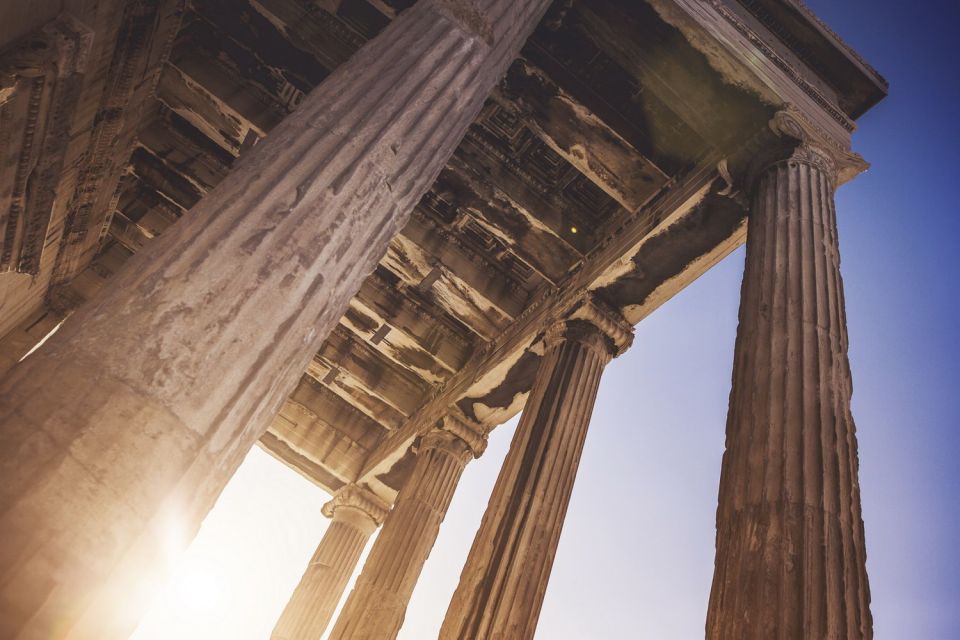
The tour continues with key Acropolis stops that many first-time visitors only photograph. Here, you get the explanation side by side with the viewing.
Temple of Athena Nike
You’ll spend around 15 minutes at the Temple of Athena Nike. This stop is a great example of what makes this tour different from a basic sightseeing loop: you’re not only told who Athena is. You learn why her worship is tied to the identity and confidence of Athens.
- All Day Cruise -3 Islands to Agistri,Moni, Aegina with lunch and drinks included
★ 5.0 · 4,958 reviews




Erechtheion
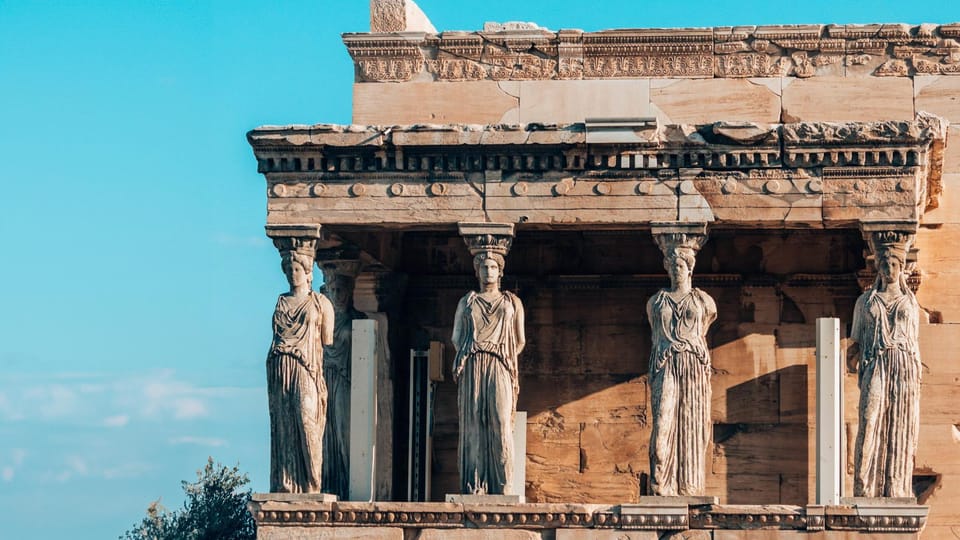
Then comes Erechtheion, again with about 15 minutes of guided time. The Erechtheion can feel like another ruin until someone helps you read it. With this tour, the myths and the historic facts get braided together—so you’re more likely to understand why the site mattered and what people may have been thinking when they used these spaces.
A practical consideration here: the Acropolis areas can be crowded. The tour structure helps, but you’ll still want to be ready for close-quarter viewing. If you’re sensitive to noise or you struggle hearing in groups, it’s worth paying attention to the earpiece setup your guide provides, since some groups note it makes a big difference.
The Parthenon: The One You Came For, Plus the Meaning Behind It
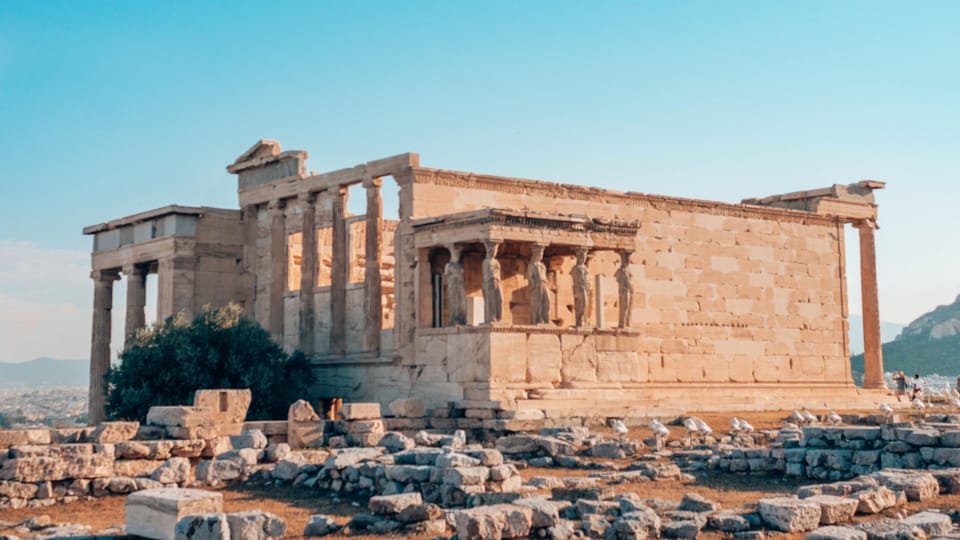
No Athens Acropolis walk is complete without the Parthenon. You’ll have about 30 minutes of guided time at this centerpiece.
The Parthenon is often treated like a checklist item. On this tour, it gets more useful treatment: you hear how mythology connects to civic pride, and how the city’s leaders presented Athens to the world. The guide’s job is to help you see the building as a message—one that uses religion and myth to support political reality.
Here’s the best part for first-timers: once you understand how the guide frames the stories, you stop asking what you’re looking at and start asking why it was built that way. That shift is the whole payoff.
In terms of photos: you’ll likely want to pause on your own for a few minutes. The structure of the tour generally leaves moments where you’re not constantly being pulled forward, which makes it easier to take pictures without feeling like you’re in a conveyor belt.
Ancient Agora: Athens Beyond the Mythic Spotlight
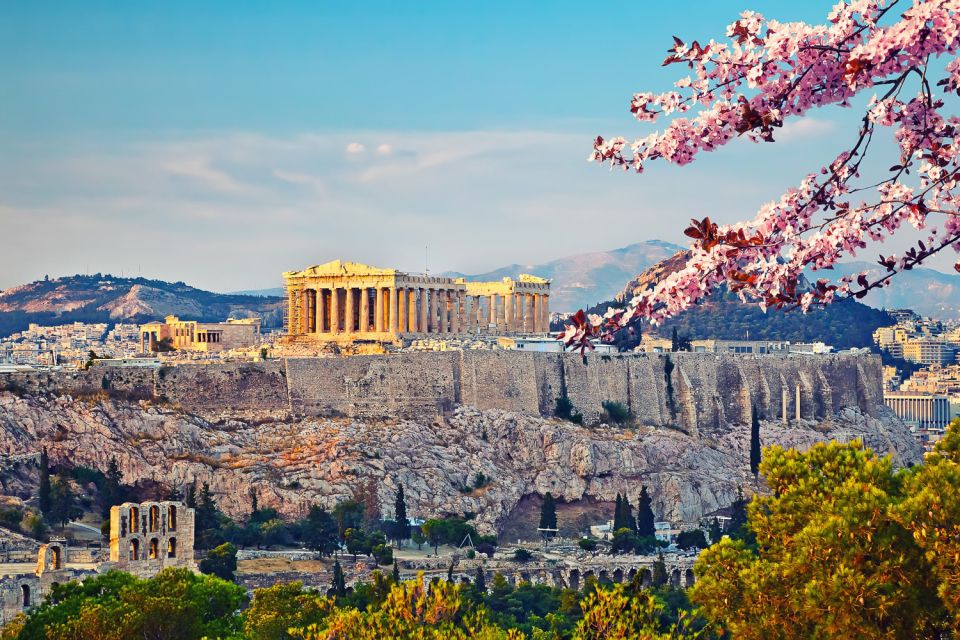
After the Acropolis, the tour moves into the Ancient Agora of Athens with about a 30-minute walking/area time.
This is one of the smartest pivots in the itinerary. The Acropolis tells a big story about gods and civic image. The Agora helps you understand the city as something lived in: debate, commerce, public gatherings, and the social glue that held Athens together.
If you only see the Acropolis, you get the myth. If you also see the Agora, you get the human scale. This is where the tour’s approach works especially well: you’re not just hearing about legends. You’re learning how Athenians used shared belief systems to shape social life and civic values.
Temple of Hephaestus: A Calm Finish With Real Gravitas
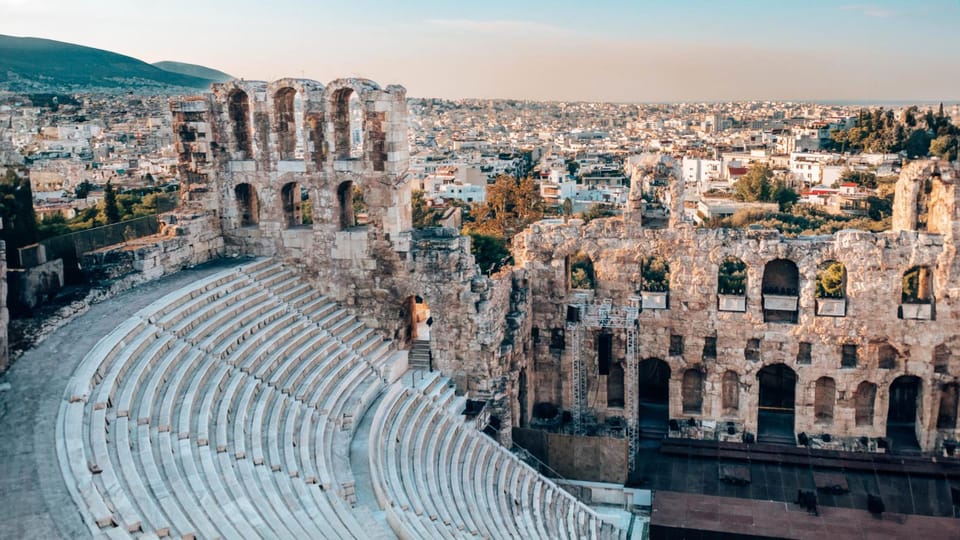
The final archaeological highlight is the Temple of Hephaestus, with around 30 minutes of guided time.
This stop tends to feel less frantic than the Acropolis core. That matters, because by the end of the walk your brain is full, and you’ll appreciate a slower, more reflective moment. Hephaestus brings the day’s myth-and-meaning theme into focus again, but in a way that feels grounded.
If you want one final takeaway, it’s this: Athens isn’t only grand temples on a hill. It’s also work, craft, public life, and the everyday systems that myths helped people make sense of.
What Makes the Guides Here Matter So Much

A lot of Athens tours can sound the same. The difference with this one is the storytelling approach and how consistently guides connect myths to place.
You’ll see familiar guide names in recent groups, including Angelica, Irene, Stellios, Athina, Danae Kousouri, Alex, Demi, Vicky, Chrysa, Maria, Antonia, Evan, Michael, Christina, Voula, and Soph ia (among others). A few guides are described as archaeologists—like Maria and Chrysa—and that scientific grounding shows up in the way they explain architecture and context, not just characters.
Also pay attention to pacing. Many groups note guides stop for shaded spots, manage heat, and keep the tour moving at a pace that still lets you ask questions. If you’re traveling with kids, this setup can be especially helpful. One recurring theme: guides can adjust the myth stories to different age levels without treating children like an afterthought.
Finally, hearing support helps. Some groups report earpieces are provided, which is a big win in noisy, crowded spaces where guides can otherwise get swallowed by the environment.
Price and Tickets: Is $53 Good Value?

At $53 per person, this tour sits in the value zone for what you’re getting—if you want both interpretation and time savings.
Here’s what makes the price work:
- You’re paying for a licensed guide who connects multiple major sites into one storyline.
- You get walking time plus guided stops across the Acropolis core and into the Agora.
- You get Acropolis tickets or Acropolis + Ancient Agora entry depending on the option you pick. That can remove a headache on arrival.
What’s not included: entrance fees to archaeological sites unless the option you choose includes them. Food and drinks aren’t included either.
One money-smart detail: Acropolis & Ancient Agora access is free for EU citizens under 25 and non-EU citizens under 18 with valid ID or passport. If you qualify, you may want to compare the ticket option carefully so you’re not paying for entry you already don’t need.
My practical advice: if you’re going in peak season or you hate lines, the skip-the-ticket-line style of entry is part of the value. If your main goal is photos and you don’t care about meaning, you might find cheaper DIY options. But if you want to leave with a framework for how myths and Athens politics connect, the guided format is where this price earns its keep.
What You Should Bring (and What You Must Leave Behind)
This is an outdoor walking tour through archaeological areas, so you need basic comfort gear.
Bring:
- Passport or ID card
- Comfortable shoes
- Comfortable clothes
Plan around the restrictions:
- No strollers
- No pets (assistance dogs allowed)
- No backpacks (important for the Acropolis rules)
It’s easy to overpack in Athens. Don’t. If you can carry what you need in a small day bag that fits whatever the site requires, you’ll move faster and feel less stressed.
Since food and drinks aren’t included, bring a water plan. Even if you find shops nearby, your tour time is fixed, so it’s smart to carry what keeps you comfortable between stops.
Should You Book This Athens Acropolis and Mythology Tour?
Book it if you want Athens to make sense fast. This tour is best for people who like explanations more than isolated ruins—especially if you’re interested in Greek mythology, ancient society, and how the city’s identity gets expressed through architecture.
I’d also lean toward booking if you’re short on time. In a few hours, you get Hadrian’s Gate area context, the Temple of Olympian Zeus overview, the Acropolis highlights tied to Athena and Erechtheion-era stories, then the Ancient Agora and Temple of Hephaestus.
Skip it only if you want a quiet self-guided wander, have the patience to research every stop yourself, and don’t care about the myth-to-place connections. Also, if you’re uncomfortable with standing/walking and you can’t manage the no-backpack/no-stroller rules, you’ll be happier with a different format.
FAQ
Where do I meet the guide?
You meet under the Arch of Hadrian (Hadrian’s Gate), on Leof. Vasilisis Amalias 50. Your guide will be holding a sign for Alternative Athens.
What’s the closest metro station?
The closest metro station is ACROPOLIS, followed by about a 5-minute walk to the Arch of Hadrian area.
How long is the tour?
The duration is 2 to 4 hours, depending on the available starting time.
Are Acropolis tickets included?
Acropolis tickets are included as part of the tour option you select. Some options also include Acropolis & Ancient Agora entry tickets.
Is it free for some visitors?
Yes. EU citizens under 25 and non-EU citizens under 18 can access Acropolis & Ancient Agora for free with a valid ID or passport.
What items are not allowed during the tour?
Baby strollers and pets are not allowed (assistance dogs are allowed). Backpacks are also not allowed at the Acropolis and should not be taken on the tour.


More Tours in Athens


More Tour Reviews in Athens
- All Day Cruise -3 Islands to Agistri,Moni, Aegina with lunch and drinks included
★ 5.0 · 4,958 reviews