REVIEW · ATHENS
Private Walking Tour: Ancient Agora, Plaka and Monastiraki monuments
Book on Viator →Operated by Athens Walking Tours · Bookable on Viator
A stone toss from Syntagma, Athens layers its past fast. This private walking tour strings together Roman and Ottoman monuments with the Ancient Agora, then finishes in the spice-and-food lanes around Avyssinias Square. I love how you get personal attention (it actually changes what you notice), and I also love the way the route moves from big monuments to the everyday textures of Monastiraki and Plaka.
One thing to plan for: the Ancient Agora entrance ticket is not included (listed at €20 per person). Also, it’s about 3 hours of walking, so comfy shoes matter.
In This Review
- Key things I’d prioritize before you book
- Getting oriented at Syntagma Metro’s small museum
- Metropolis Cathedral: a 19th-century anchor in an older city
- Monastiraki lanes, Ottoman mosques, and the flea market rhythm
- Plaka’s Old Town maze: Medrese doorway and Hadrian’s Library columns
- Ancient Agora: Athens’s commercial, political, and social heart
- Temple of Hephaestus: a stop that steadies the whole route
- Stoa of Attalos and the Agora Museum: daily life, not just big politics
- Avyssinias Square and Athinas Street: aromas close out the story
- Price and value: what $319.39 buys you (and what it doesn’t)
- Who should book this tour, and who might skip it
- A quick checklist to make your walk smoother
- Should you book this private Athens walk?
- FAQ
- Where do I meet the guide?
- How long is the tour?
- Is this tour private?
- What language is the tour offered in?
- What’s included in the price?
- Is the Ancient Agora entrance fee included?
- Does the tour include food and drinks?
- Where does the tour end?
- Can I cancel for a refund?
Key things I’d prioritize before you book
- A guide who can slow the story down: the route makes it easier to connect Roman sites, Ottoman-era buildings, and classical Athens in one thread.
- Ancient Agora + Stoa of Attalos: you don’t just see ruins; you also get time at the museum inside the reconstructed Stoa.
- Old Town atmosphere on purpose: Monastiraki flea-market lanes and Plaka side streets are built into the pacing, not tacked on at the end.
- Monastiraki Ottoman landmarks: you’ll spot places like Tzistarakis Mosque and Fethiye Mosque while you wander.
- Family-friendly teaching style: one guide name that came up often is Kostas, praised for making the sites easy to enjoy even for teens.
Getting oriented at Syntagma Metro’s small museum
Most Athens tours start cold, but this one starts with context. You meet near Syntagma Metro station, and the first stop is the station’s small museum. It sounds modest, but that’s the point: it gives you a quick snapshot of what archaeologists found around the area and why Athens keeps resurfacing.
You’ll see burial-tomb remains, including a 2,000-year-old beehive, plus fragments of Roman mosaics (thought to date to the 5th century). Even if you’re not a hardcore ruins person, this works because it trains your eye before you start walking. You begin noticing how the city’s street grid and buildings sit on top of earlier layers.
Practical tip: since you start in central Athens, you’ll likely be able to join the tour using public transit. And because there’s a museum at the start, you get a smooth warm-up instead of jumping straight into long outdoor stretches.
You can also read our reviews of more walking tours in Athens

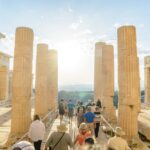
Metropolis Cathedral: a 19th-century anchor in an older city
From the museum, you move to Mitropoleos (Metropolis) Square, home to Athens Cathedral. It’s an ornate, 19th-century church built in 1862 and it functions as the seat of the archbishop for the Greek Orthodox Church.
Why this stop matters: it’s a reminder that Athens isn’t just ancient. The city kept building, worshipping, governing, and changing long after the classic era. Seeing the cathedral at this moment helps the rest of the walk feel more connected, especially once you hit Monastiraki and its Ottoman-era buildings.
You’ll likely spend a bit of time looking closely at the setting and the surroundings before you head into the tighter streets.
Monastiraki lanes, Ottoman mosques, and the flea market rhythm
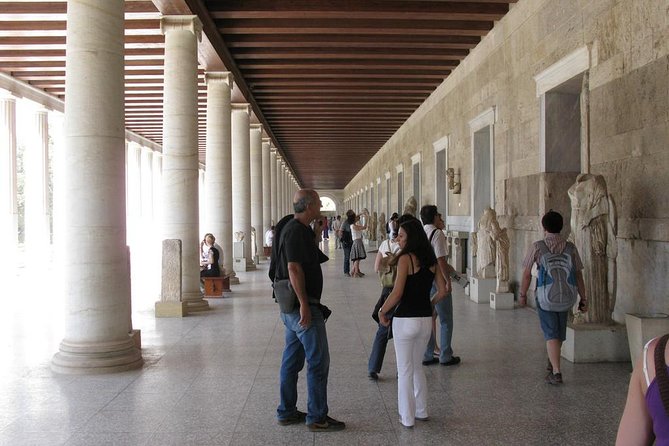
Next comes Monastiraki, the neighborhood of shop-packed lanes and the famous flea-market energy. It’s a fun contrast to the archaeological stops. Here, the city feels lived-in—bites of conversation, small storefronts, and the kind of street life that makes you understand why these areas stayed popular over centuries.
What makes this tour different is that it doesn’t treat the neighborhood like scenery. You’ll pass Ottoman-era landmarks, including the Tzistarakis Mosque and the Fethiye Mosque, and you’ll have your guide explain what you’re looking at as you walk. If you’ve ever wandered Monastiraki and thought you were missing the point, this is how you fix that.
A good way to think of Monastiraki on this route: it’s the hinge between eras. You go from the cathedral’s 1800s presence to the Ottoman buildings, and then you shift again into Plaka and the ancient core.
Plaka’s Old Town maze: Medrese doorway and Hadrian’s Library columns
After Monastiraki, the walk turns into Plaka, Athens’s classic old-town zone. The streets here can feel like a puzzle made of stone steps, small walls, and sudden viewpoints.
Two highlights in this area are easy to remember:
- The Doorway of the Medrese, the entrance to a former Turkish theological school.
- The remaining columns of Hadrian’s Library, built by Emperor Hadrian in 132 AD.
These stops work because they’re not huge, flashy sites that scream for attention from far away. Instead, they reward slow looking. A guide helps you place the pieces: what the structures likely meant in their time, why they survive in fragments, and how that fragment still tells a story.
If you enjoy photography, Plaka is where you’ll naturally find angles—especially when you have someone pacing you so you can stop at the right moments without losing momentum.
Ancient Agora: Athens’s commercial, political, and social heart
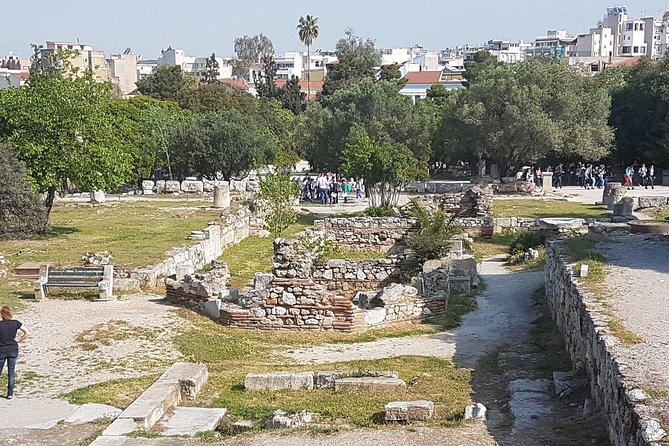
Now the walk turns serious—in the best way. The Ancient Agora of Athens is where the city’s commercial, political, and social life clustered, and your guide explains how the area was developed as far back as the 6th century BC.
This is where the tour earns its keep: you’re not just walking past ruins. You’re learning what this space did day to day. The idea of civic debate ties directly to why people gathered here, and the way your guide connects it all makes the site feel less like a museum of stones and more like a working town square.
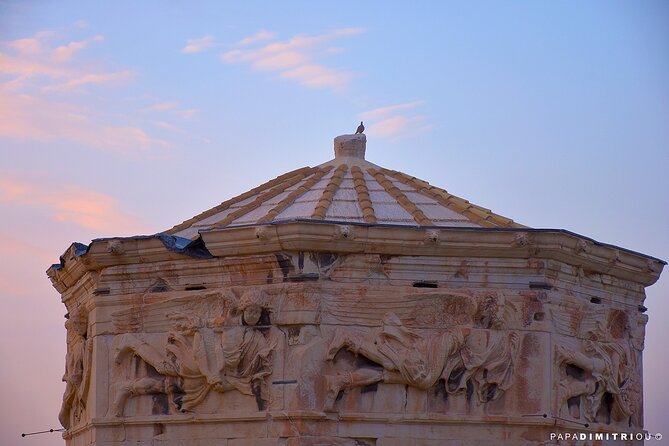
As you explore, you’ll also get time at the Tower of the Winds, a timepiece tied to the forum. It’s one of those Athens details that often gets overlooked when you only rush between major attractions. Here, you slow down enough to make sense of it.
One more practical note: plan for the Ancient Agora admission ticket. It’s listed as €20 per person and isn’t included in the tour price, so check your budget before you go.
You can also read our reviews of more private tours in Athens




Temple of Hephaestus: a stop that steadies the whole route
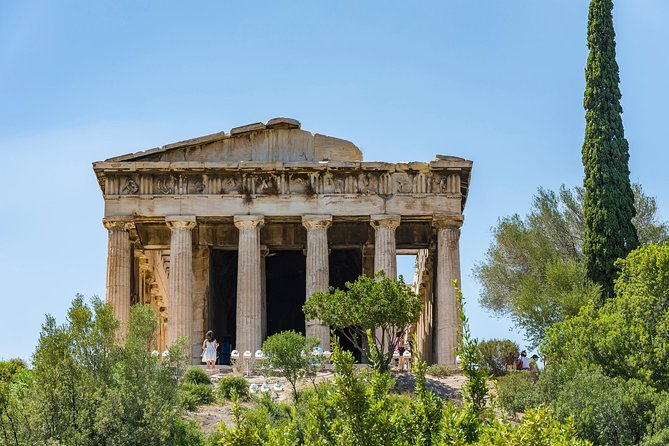
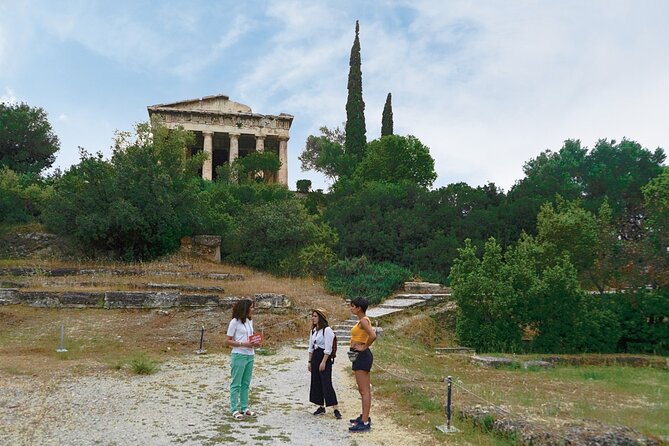
Between the Agora highlights, you’ll see the Temple of Hephaestus. This is a classic Athens landmark, and it’s a good breather point during a walking tour that’s otherwise moving through a lot of architectural styles.
Why it’s useful on this itinerary: after Ottoman and later Greek Orthodox landmarks, you shift back to the classical world in a tangible way. The temple helps your brain reset, so the Agora ruins don’t feel like random blocks of stone.
If you’re the type who likes to understand how buildings relate to each other across time, this stop is a helpful anchor.
Stoa of Attalos and the Agora Museum: daily life, not just big politics
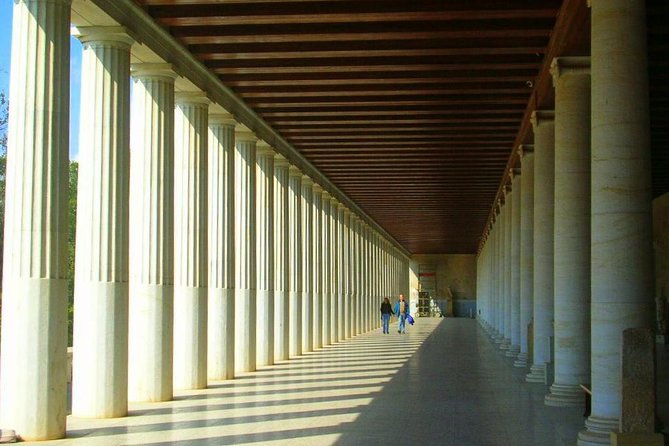
The tour spends time at the Stoa of Attalos, the reconstructed ancient shopping hall. This is where the tour becomes unusually practical. Instead of focusing only on monuments and major events, you’ll see a collection of artifacts used in daily life.
If you’ve ever visited ancient sites and felt stuck in the generalities—kings, empires, wars—this museum helps shift the focus to how people actually lived. Even with short museum time, it gives your walk a stronger payoff because it adds texture to what you’ve been looking at outside.
You’ll also likely spend time looking around the surrounding area as part of the Agora complex, which helps the museum feel connected rather than like a separate task.
Avyssinias Square and Athinas Street: aromas close out the story
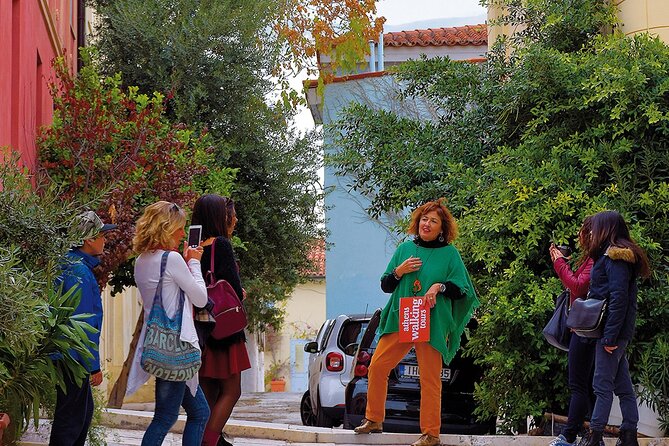
After the museum area, the final segment turns toward the senses. You make your way through Avyssinias Square to Athinas Street, where food and spice markets fill the air with color and smell.
This ending is more than a convenient finish. It’s your “real Athens” moment: the city’s layers aren’t just in ruins. They’re in what people buy, cook, and carry home.
The tour ends when you say goodbye to your guide, with you then free to keep exploring on your own. The route’s design—ancient center to Ottoman-era neighborhoods to modern market streets—helps you leave with a clearer map of where Athens’s past shows up in daily life.
Price and value: what $319.39 buys you (and what it doesn’t)
The price is $319.39 per person for a private 3-hour walk in English, with a local guide included. That’s not cheap. But for a private tour, you’re paying for something hard to fake: time with a guide who can tailor explanations to your pace and interests, and who can connect multiple eras in one route without you getting lost in the details.
Here’s the value angle I’d focus on:
- You get continuity: Ottoman sites, Ottoman neighborhood streets, and classical Agora landmarks all fit into one story.
- You get a better use of time: the tour includes multiple major stops plus structured museum time at the reconstructed Stoa.
- You reduce decision fatigue: you don’t have to figure out which small fragments matter (like the Medrese doorway or Hadrian’s Library columns).
What’s not included is also important:
- Entrance fee for Ancient Agora is extra (listed at €20 per person).
- Food and drinks aren’t included unless specified, so treat it as a walking tour you can fuel before or after.
If you’re traveling in a small group that wants a shared pace, or you want the kind of guided attention that helps kids/teens stay interested, this price can feel more reasonable than a half-day of trying to self-navigate. And if you’re solo but want someone to do the heavy lifting of context, it can also be worth it.
Who should book this tour, and who might skip it
This fits best if you want:
- A private guide who can explain how Ottoman, Roman, and classical Athens connect.
- A route that includes Monastiraki and Plaka without turning them into random wandering.
- Time at the Agora museum inside the Stoa of Attalos, not just quick photo stops.
I’d consider skipping it if:
- You hate walking and prefer a purely indoor plan.
- You’re only interested in one era (for example, you want purely ancient Athens with no Ottoman stops).
- You don’t want to handle any extra admission costs.
A quick checklist to make your walk smoother
- Wear comfortable shoes for uneven sidewalks and stone lanes.
- Bring sun protection and plan for changing weather (3 hours outdoors adds up).
- If the market area is part of your plan, consider timing so you’re not too full when you reach Avyssinias Square and Athinas Street.
- Budget for the Ancient Agora entrance fee ahead of time.
Should you book this private Athens walk?
If you want Athens in layers—classical Athens, Ottoman Athens, and the city’s living market energy—this is a strong choice. The standout is the way the guide turns landmarks into understanding, especially at the Ancient Agora and the Stoa of Attalos, where daily-life context makes the ruins hit harder. And the private format matters: a guide like Kostas has clearly earned praise for making the tour enjoyable even when the group includes teens.
Book it if you like stories that connect eras and you’re okay with a little extra entrance cost. Pass if your ideal Athens is fast, distant-glance sightseeing with minimal walking.
FAQ
Where do I meet the guide?
You meet near Syntagma Square (Pl. Sintagmatos, Athina 105 63) in central Athens.
How long is the tour?
It’s about 3 hours walking, roughly.
Is this tour private?
Yes. It’s a private tour/activity, meaning only your group participates.
What language is the tour offered in?
The tour is offered in English.
What’s included in the price?
The tour includes a local guide and the private tour itself.
Is the Ancient Agora entrance fee included?
No. Ancient Agora of Athens entrance is €20 per person and is not included.
Does the tour include food and drinks?
Food and drinks are not included, unless specified.
Where does the tour end?
After visiting the Stoa of Attalos museum, your guide departs. The tour ends at the Ancient Agora area (Athens 105 55).
Can I cancel for a refund?
Yes. You can cancel for a full refund if you cancel at least 24 hours before the experience’s start time.



More Walking Tours in Athens


More Tours in Athens



More Tour Reviews in Athens
- All Day Cruise -3 Islands to Agistri,Moni, Aegina with lunch and drinks included
★ 5.0 · 4,958 reviews