REVIEW · ATHENS
Greek Mythology Storytelling Walk
Book on GetYourGuide →Operated by Alternative Athens · Bookable on GetYourGuide
Gods and drama, on foot in Athens. This Greek Mythology Storytelling Walk uses professional live storytellers to turn famous Athens spots into a clear myth route: Zeus in Plaka, Dionysus on the pedestrian theater stretch, and Athena on Pnyx. I especially like the way the stories connect to what you can see nearby, and I like that it’s an easy, 2-hour stroll that doesn’t feel like homework. One consideration: there’s no food or drinks included, so plan to eat before or after, and it’s not suitable for people with mobility impairments or hearing issues.
The format is simple: you walk, you listen, you look up at the right moment. Starting in Plaka around Nikis & Kidathineon, you’ll pass souvenir streets but also find corners that feel close to everyday local Athens. The best part is the tone—fun, theatrical, and human—so the myths don’t land like a lecture.
A big plus for flexibility is how often this kind of story walk can run smaller than expected. When only a few people sign up for a time slot, it can feel more like a private performance than a group shuffle. Just bring comfortable shoes, expect a real walking pace, and keep your expectations on the storytelling side, not the museum side.
In This Review
- Key things to know before you go
- Zeus first: Plaka’s myth streets around Nikis & Kidathineon
- From souvenir lanes to meaningful corners
- Odeon of Herodes Atticus: where Dionysus meets the theater street
- Pnyx: Athena, the contest with Poseidon, and a close look at the Propylaea
- The 2-hour format: how the pace really works
- Price and value: is $53 worth it?
- Tips to get the most from the storyteller and the stops
- Who should book this myth walk (and who might pass)
- Should you book Alternative Athens’ Greek Mythology Storytelling Walk?
- FAQ
- Where is the meeting point for the tour?
- How long is the Greek Mythology Storytelling Walk?
- Is the tour guided in English?
- What’s included in the price?
- Are food or drinks included?
- Is the tour suitable for children?
- Is the tour accessible for people with mobility impairments?
- Is the tour suitable for hearing-impaired people?
- Can I reserve now and pay later?
- Should You Know: quick practical checklist
Key things to know before you go
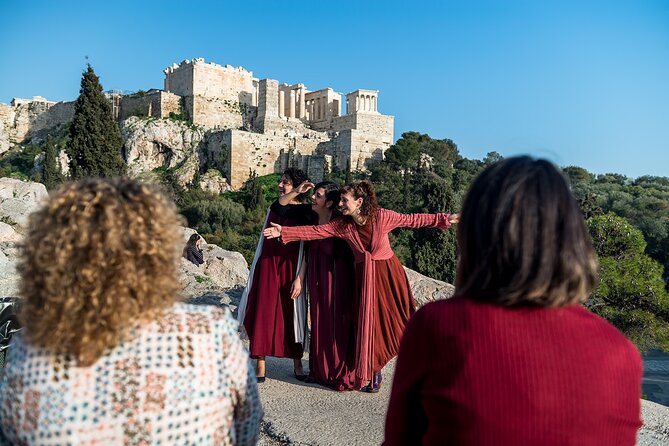
- Live myth storytelling in real Athens locations (Plaka, the theater-area street around the Acropolis, and Pnyx)
- Three god themes, one continuous walking arc: Zeus, Dionysus, then Athena
- Professional storytellers and a guided structure so you don’t miss the thread
- Short time on each stop keeps the pacing lively over the full 2 hours
- Smaller-group possibilities make it feel less like a “tour bus experience”
- Bring your walking shoes because you’ll be on your feet for the whole session
Zeus first: Plaka’s myth streets around Nikis & Kidathineon
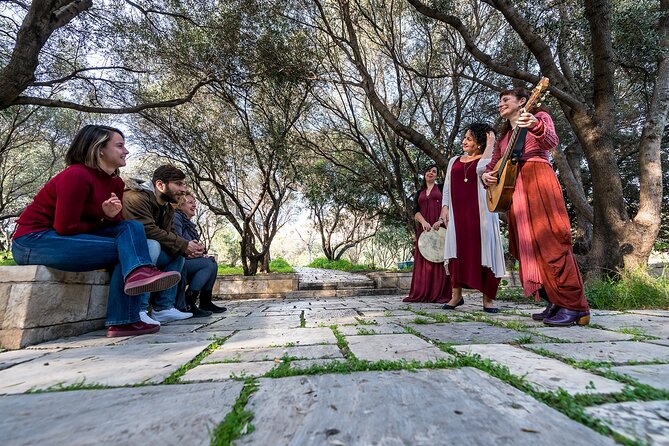
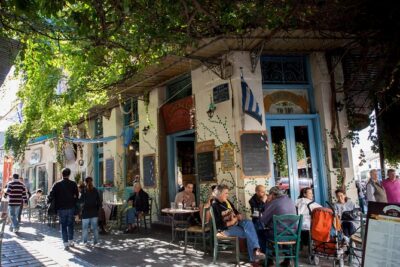
The tour starts where Athens feels like a neighborhood, not a postcard. Meet at the corner of Nikis & Kidathineon in Plaka, where you’ll spot your guide holding an Alternative Athens sign. It’s a great setup because Plaka is exactly where you want your imagination to warm up: narrow streets, old-city mood, and those constant reminders that Athens has layered on top of itself for centuries.
In Plaka, Zeus comes first. You’ll hear about his birth, his rise to power over his gruesome father, and the love affair with Europa. That last piece matters more than you might think. It’s not just a dramatic romance—it’s a story that connects mythology to the way people name the world, which is why it feels foundational even if you’re not a “myth person.”
What I like here is the contrast. Plaka can be packed with souvenir shops, but the tour steers you a little off the main push. That balance helps you avoid the trap of treating Plaka like only a shopping street. You get story context in between the storefronts, so you’re not just buying magnets—you’re learning how Greeks used myth to explain power, relationships, and identity.
A practical note: this is not a sit-down show. You’ll be walking, so if you tend to get tired quickly in older streets, plan for a slow-and-steady pace and bring shoes you trust.
You can also read our reviews of more walking tours in Athens

From souvenir lanes to meaningful corners
Plaka’s appeal is partly its chaos—lots of pedestrians, lots of browsing, lots of noise. The tour uses that energy as a backdrop rather than a distraction. You’re not just passing by famous names. You’re being guided through how myths can map onto the spaces where you’re standing.
The Zeus segment is long enough to make the story stick, but short enough to stay fun. You’ll start with the dramatic backstory and then move into the idea of Zeus as ruler—mad love, political power, and the kind of family conflict that makes Greek myth feel painfully human. Even if you’ve only heard “Zeus and thunderbolts” before, you’ll get the full arc as it’s told out loud.
And this matters for your future Athens experience. Once you hear the myths in the right places, you start seeing Athens differently on your own time. You’ll recognize the “why” behind a name or a view instead of just snapping photos and moving on.
Odeon of Herodes Atticus: where Dionysus meets the theater street
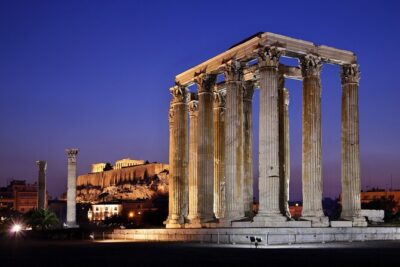
After Plaka, the tour heads toward the area around the Acropolis where you can feel the city turning into a stage. You’ll make your way to the vicinity of the Odeon of Herodes Atticus and then spend time in the pedestrian street of Dionysiou Areopagitou. This is the walk-in-between moments that make a storytelling route better than a museum route: you get to shift perspective as the city changes around you.
Here, the focus turns to Dionysus—the god of wine and the theatrical arts. The story is not shy about excess. Dionysus is popular in Greece and early Rome, and the tour explains how his rites and reputation later clashed with Roman tastes, which frowned on the excesses tied to celebration. If you’ve ever wondered why theater and myth get tangled together so tightly in the Mediterranean, this is the “why” in story form.
I like this stop because it teaches you to connect “art” and “belief.” Dionysus isn’t only about partying; he’s about performance, public emotion, and the cultural need for stories that loosen reality a bit. You don’t have to agree with the mythology to enjoy the human logic behind it.
There’s also a sensory aspect to this stretch. You’ll be in a pedestrian area around ancient theaters, which means you’re not guessing what the tour is pointing at—you can look around and understand the setting. That visual anchor keeps the story from floating off into abstract trivia.
The one drawback is that if you’re sensitive to crowds or sound, this area can feel busier than the side streets. Still, the storytelling structure helps—your attention is guided, not overwhelmed.
Pnyx: Athena, the contest with Poseidon, and a close look at the Propylaea
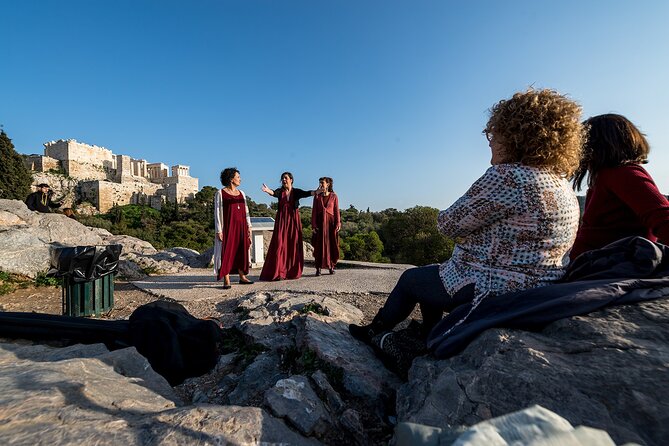
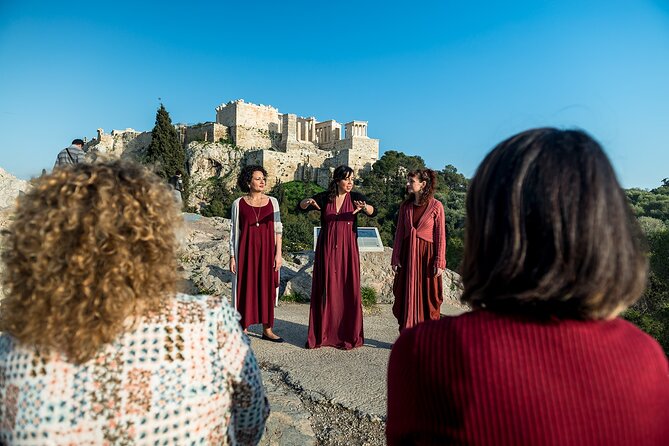
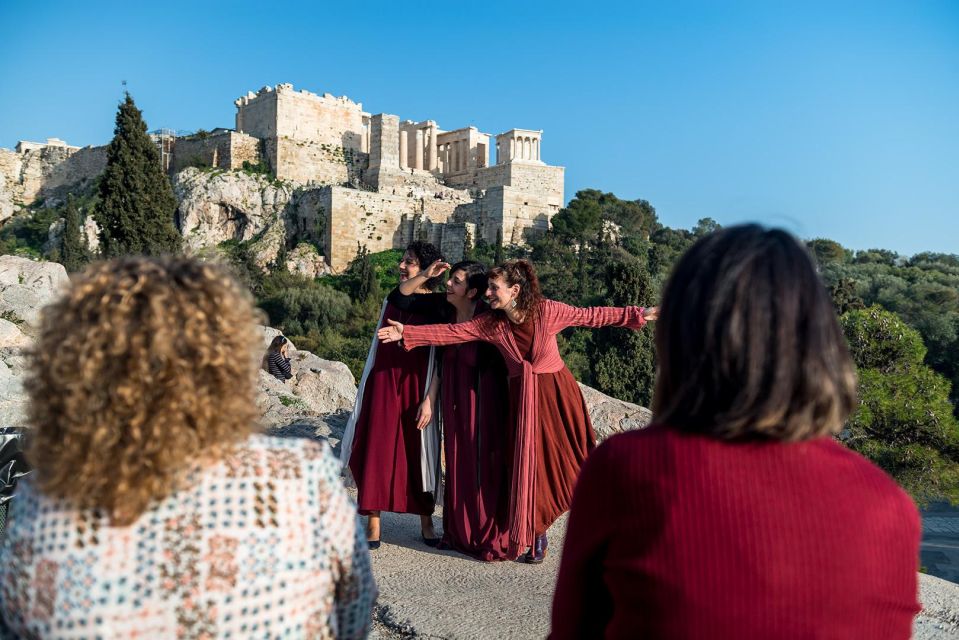
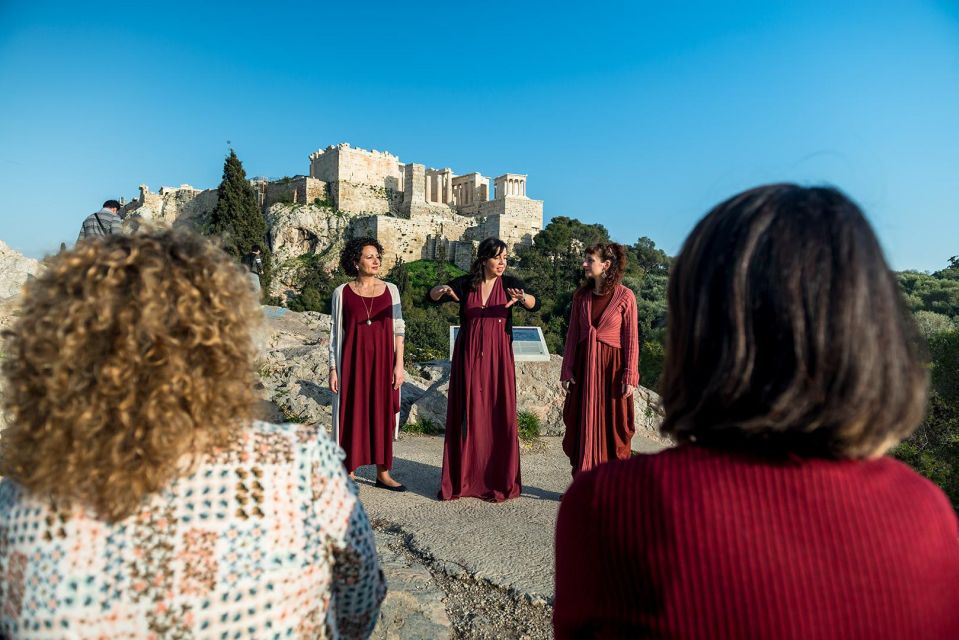
The finale is at Pnyx, a place that’s ideal for finishing a myth walk. You get an outstanding close-up view of the Propylaea of the Acropolis, described as the gateway to the Sacred Rock. Ending here feels right because Athena’s story is all about city-making—wisdom, patronage, and deciding who gets to represent a place.
At Pnyx, you’ll hear about Athena’s birth and the contest between Athena and her uncle, the god Poseidon. The story line links directly to why Athens bears Athena’s name: she wins the patronage contest, and that outcome reshapes the city’s identity. Hearing it at Pnyx makes the “place” part of the story land harder, because you’re literally facing the entry point to what became the city’s sacred center.
This is also a good moment to slow down. The tour gives you time to settle at the viewpoint and follow the storyteller’s pacing. If you’re the type who likes to look first and understand second, Pnyx lets you do both without rushing off.
And yes, this is where the tour’s title promise really pays off: gods are not just characters here. They’re competing forces tied to how Athens sees itself. Athena is presented as wisdom with real consequences, not just a symbol you read about on a plaque.
The 2-hour format: how the pace really works
This experience runs about 2 hours total and stays in an efficient loop around central Athens landmarks. The stops are chunked into focused segments—enough time to follow the story, not enough time to get bored or stuck in one place too long.
That structure is helpful if you’re planning a busy day. You can pair it with other Acropolis-area time without it turning into a half-day commitment. It’s also a good choice if you want more than “see the ruins” but less than “spend hours in galleries.”
The route is walk-based, so the main thing you should manage is your comfort. Bring comfortable shoes and comfortable clothes, and give yourself a little buffer if your feet feel sensitive on stone sidewalks. The walk is straightforward, but you are still moving.
Also, it’s an all-ages tour. That doesn’t mean it’s watered down. It means the storytelling style is built to work across ages, which is a real advantage if you’re traveling with a mixed group.
One more reality check: the tour is not suitable for hearing-impaired people, and it’s not for children under 3. If you’re traveling with someone who needs different accommodations, you’ll want to look for another format.
- All Day Cruise -3 Islands to Agistri,Moni, Aegina with lunch and drinks included
★ 5.0 · 4,958 reviews





Price and value: is $53 worth it?
At $53 per person for a 2-hour guided storytelling walk, you’re paying for three things: professional storytelling performance, a structured route with a tour leader, and the convenience of having myth explained in context while you’re already near the sights.
If you’re the type who reads placards and still walks out feeling like nothing “clicked,” this is a strong value. You’re not buying access to an exhibit—you’re buying interpretation and momentum. The storyteller’s job is to connect plot and place so you leave with clearer mental pictures.
If you’re on a super tight budget, you could spend the same time wandering on your own and just reading street-level signage. But you’ll miss the thread that makes the route memorable: Zeus first, Dionysus in the theater area, and Athena at Pnyx with the Propylaea close-up.
I’d also consider how small-group or private-leaning moments can affect value. In some time slots, the group can be tiny, which makes the storytelling feel more personal rather than “broadcast.” If that happens to you, the price suddenly feels like a bargain.
Tips to get the most from the storyteller and the stops
Here’s how to make the whole experience click fast.
1) Wear shoes you won’t regret. You’ll be on your feet throughout the 2 hours, including around older stone areas.
2) Use the viewpoints. When you reach Pnyx and you’re facing the Propylaea, slow your pace just enough to watch the setting in your own eyes before you listen. Then the story lands better.
3) Treat the myths like a timeline. Zeus in Plaka gives you the ruler-and-relationships energy. Dionysus shifts to art and ritual. Athena brings it home to city identity. If you track the “plot motion,” you’ll remember more without trying.
4) Don’t expect food included. Plan a snack or meal around the tour time. This walk is designed for storytelling, not dining breaks.
5) If you’re traveling with kids, it’s a plus. It’s made for all ages, so it can work when you want something shared rather than separate activities.
Who should book this myth walk (and who might pass)
This is a great fit if you want Athens to feel alive. You like walking tours but don’t want the usual “we’re standing near a monument” pattern. You also like mythology as story—power struggles, family drama, love, art, and public identity—told by a professional.
It’s also a smart choice for people who are short on time. Two hours can give you a meaningful narrative framework you can carry into the rest of your trip.
You might pass if any of these apply: you need accessibility accommodations for mobility impairments, you’re hearing-impaired, you strongly prefer self-guided sightseeing only, or you’re looking for a food-and-drinks experience.
Should you book Alternative Athens’ Greek Mythology Storytelling Walk?
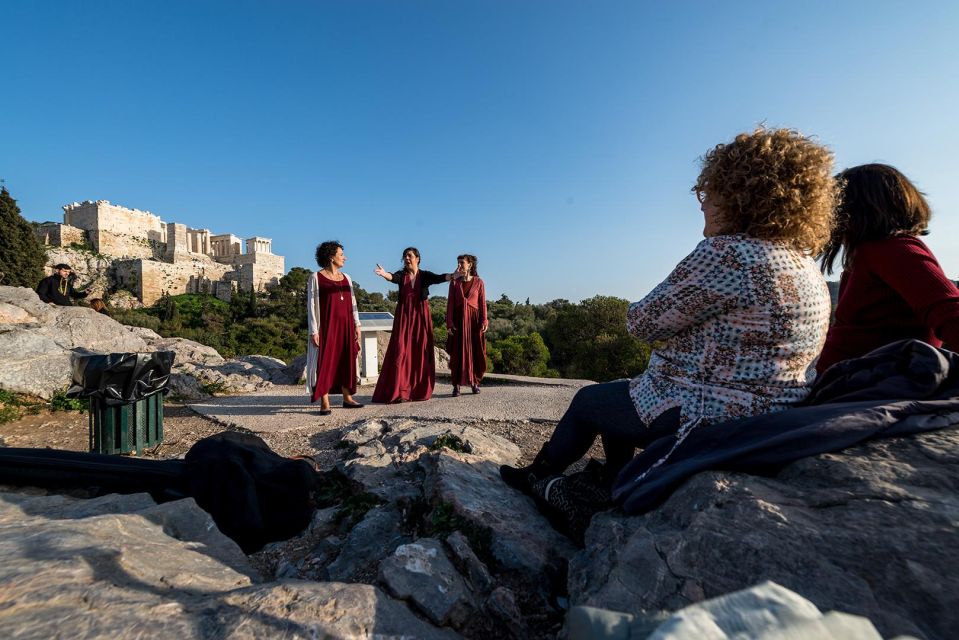
If you want a tour that’s more than sightseeing and less than a long lecture, I think this is a clear yes. The value sits in the combination: professional storytelling plus a route that uses the Acropolis area and Plaka context to make the myths understandable, not just famous.
Book it if you’ll enjoy being guided through Zeus, Dionysus, and Athena in the places where their stories feel relevant. Skip it if you need mobility support, hearing accessibility, or built-in stops for food.
It’s not about collecting facts—it’s about catching the feeling of Greek myth and using Athens itself as the storybook.
FAQ
Where is the meeting point for the tour?
The meeting point is at the corner of Nikis and Kidathineon street in Plaka. Your guide will be there holding an Alternative Athens sign.
How long is the Greek Mythology Storytelling Walk?
The tour lasts about 2 hours.
Is the tour guided in English?
Yes, the live tour guide provides the experience in English.
What’s included in the price?
The price includes the storytelling performance, professional storytellers, and a professional tour leader.
Are food or drinks included?
No. Food and drinks are not included.
Is the tour suitable for children?
It’s an all-ages tour, but it’s not suitable for children under 3 years old.
Is the tour accessible for people with mobility impairments?
No, it is not suitable for people with mobility impairments.
Is the tour suitable for hearing-impaired people?
No, it’s not suitable for hearing-impaired people.
Can I reserve now and pay later?
Yes. You can reserve now and pay later.
Should You Know: quick practical checklist
Bring comfortable shoes and comfortable clothes. Wear what you’d choose for a real walk, not just a photo stop. And plan to grab food outside the tour since nothing is included.


More Walking Tours in Athens


More Tour Reviews in Athens
- All Day Cruise -3 Islands to Agistri,Moni, Aegina with lunch and drinks included
★ 5.0 · 4,958 reviews