REVIEW · ATHENS
The Acropolis Walking Tour with a French Guide
Book on Viator →Operated by Athens Walks Tour Company · Bookable on Viator
One hill. One giant history lesson. The Acropolis Walking Tour with a French guide turns stone ruins into a clear story, with skip-the-line tickets and a French archaeologist-style explanation that helps you understand how the complex fits together. I love that the pacing hits the big monuments without turning into a rushed checklist, and I especially like the way guides connect what you’re seeing to broader ideas like the origins of theater. One drawback to plan for: it’s an outdoor walk, and the sun can feel intense, so bring water and shade options if kids are tagging along.
This is also a good value way to see more than just the Parthenon. The route is about two hours and keeps the group small (up to 20), which makes it easier to hear the details and ask questions when the guide has space. If you’re sensitive to long lectures or very warm conditions, consider an off-peak time and pack for comfort.
In This Review
- Key takeaways before you go
- Why a French-led Acropolis tour feels different than a self-guided visit
- Skip-the-line tickets and the real value of $80.64
- Meeting at Porinou 5, starting near the south entrance, and ending at Areopagus
- Stop 1: The Acropolis citadel basics (and the stories behind the stones)
- Stop 2: Parthenon time—Athena, 447 BC, and missing marbles
- Stop 3: Propylaea gateway—how you enter the story
- Stop 4: Temple of Athena Nike—earliest fully Ionic temple on the hill
- Extra monuments and themes you can expect along the way
- Practical advice: shoes, water, listening aids, and the heat factor
- Who this Acropolis French walking tour is best for
- Should you book this Acropolis tour?
- FAQ
- How long is the Acropolis Walking Tour with a French Guide?
- Is the entrance ticket included?
- Where does the tour start and where does it end?
- What language is the guide?
- How large is the group?
- Is the tour suitable for people who prefer a relaxed pace?
- Do I get free entry if I’m an EU citizen under 25?
- Will the tour run in bad weather?
- Is it easy to reach the meeting point using public transportation?
- Can I cancel for free?
Key takeaways before you go
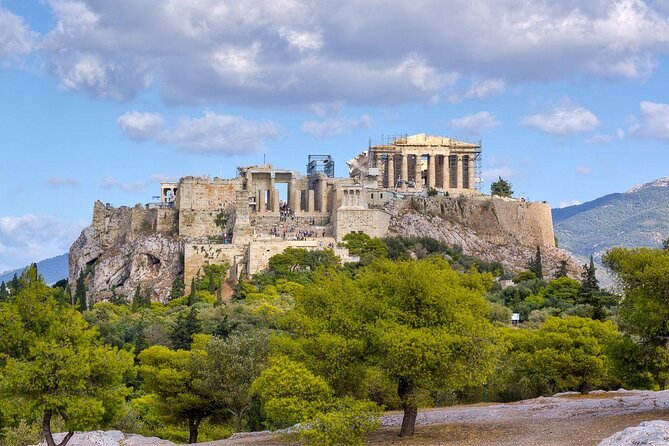
- Skip-the-line entry means less time waiting and more time learning on the hill
- French-speaking guide focuses on why each building matters, not just what it looks like
- Small group size (max 20) helps keep the visit manageable and easier to follow
- You’ll see multiple landmarks including the Parthenon, Propylaea, and Temple of Athena Nike
- Sun and walking comfort matter because it’s an outdoor route with limited shade
Why a French-led Acropolis tour feels different than a self-guided visit
The Acropolis is one of those places where you can stand in front of famous ruins all day and still miss the plot. A good guide fixes that. With this tour, you’re not just reading labels—you’re getting a narrative in French that explains the purpose and timing of what you see, from the citadel itself to the temples on top.
I like that the learning is built around real structure: the Acropolis isn’t random, and the tour treats it like a system. Expect stories that connect parts of the site to themes such as religion, politics, and culture—plus specific points like the origins of theater associated with the Theatre of Dionysus.
The other big plus is that you’re guided by a licensed French-speaking professional. One guide named Anna, for example, earned praise for being funny and detailed, and for taking time to photograph people at the Parthenon. That kind of attention to pacing and group experience is exactly what makes a tour worth it.
You can also read our reviews of more walking tours in Athens

Skip-the-line tickets and the real value of $80.64
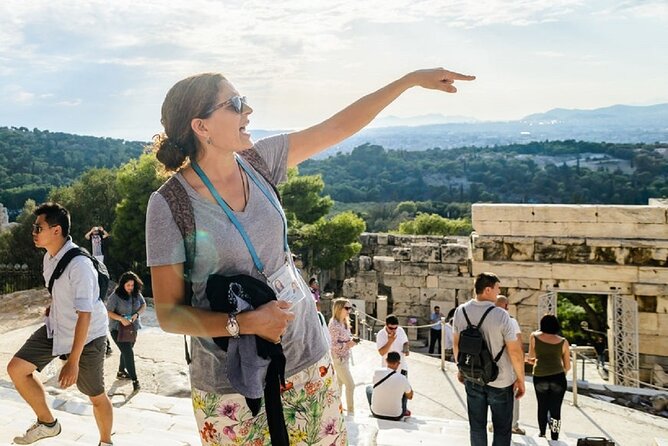
At about $80.64 per person, the price makes sense because it bundles two things that usually cost extra separately: a guided visit and entrance tickets. On the Acropolis, time is money, and skip-the-line access is the practical part of the deal. You’ll spend your energy looking at stones, not staring at a line.
This also reduces guesswork. If you’re trying to DIY, you’ll spend time figuring out routes, entry windows, and which buildings are worth prioritizing. Here, the order is already set around the main areas you’d want to see anyway: the Acropolis area first, then the Parthenon, then the gateway Propylaea, and finally Temple of Athena Nike.
One more value point: the group stays small (maximum 20). That can matter for listening and for photo stops, especially if you’re the kind of person who likes to linger when the view is good and the details are interesting.
Meeting at Porinou 5, starting near the south entrance, and ending at Areopagus
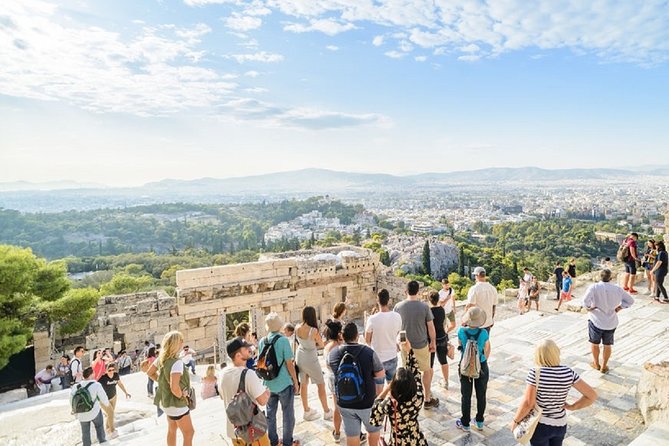
The tour starts at Porinou 5, Athina 117 42, and finishes at Areopagus, Athens 105 55. That end location is useful because it helps you avoid backtracking across the hill after your visit.
The start point is described as near public transportation, which matters in Athens where timing and walking distances can be a little unpredictable. You’ll want to arrive with a calm buffer so you’re not late to the group—especially on a site that draws crowds and has a very set flow.
Duration is about two hours, so plan to keep your next stop flexible. This is not a “snack-and-sprint” walk. Even at 2 hours, the Acropolis takes time because the guide will point things out you’d otherwise miss, and you’ll naturally pause for photos at the main moments.
Stop 1: The Acropolis citadel basics (and the stories behind the stones)
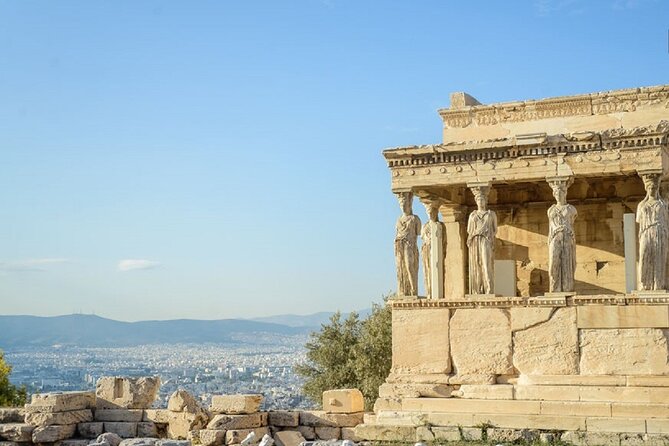
The visit begins at the Acropolis itself, where you get the essential orientation. The tour treats the Acropolis as a citadel on a rocky outcrop above Athens, and it starts with the meaning of the word: ἄκρον (highest point) and πόλις (city). That etymology isn’t just trivia—it gives you a mental map for what you’re standing on.
You’ll spend about one hour at this first segment, and that’s where a good guide earns their fee. The Acropolis can feel like one famous building after another, but the guide helps you see relationships between parts of the complex and explains how multiple sites work together.
A standout theme tied to this area is culture and performance. You should hear about the origins of theater connected to the Theatre of Dionysus. If you like history that connects to daily human life—stories, rituals, entertainment—that kind of detail turns ruins into something you can actually picture.
One practical consideration: this first stop is outdoors on open slopes. If you’re visiting in hot weather, you can’t count on shade. Bring water and consider sun protection early, not halfway through.
Stop 2: Parthenon time—Athena, 447 BC, and missing marbles

After the citadel orientation, the tour moves to the Parthenon, where you’re given a focused look at the site’s star. The Parthenon was dedicated to Athena, Athens’ patron goddess, and construction began in 447 BC during Athenian power at its peak.
You’ll spend about 45 minutes at the Parthenon, and this is where the guide’s approach matters most. The Parthenon is iconic, but it can be visually overwhelming if you don’t know what to look for. With a French guide, you should get explanations that help you interpret what you’re seeing and understand why it was built in that specific moment.
Another highlight that often changes how people experience the Parthenon: the tour includes discussion of missing marbles. Even if you’ve seen photos before, learning what’s missing—and why—can shift your attention from the perfect postcard image to the real, historical object in front of you.
If your photography style is slow and careful, you’ll probably appreciate that some guides take time to photograph individuals and groups. That can be a real quality-of-life benefit when the best “everyone in frame” spots are limited.
You can also read our reviews of more guided tours in Athens



Stop 3: Propylaea gateway—how you enter the story
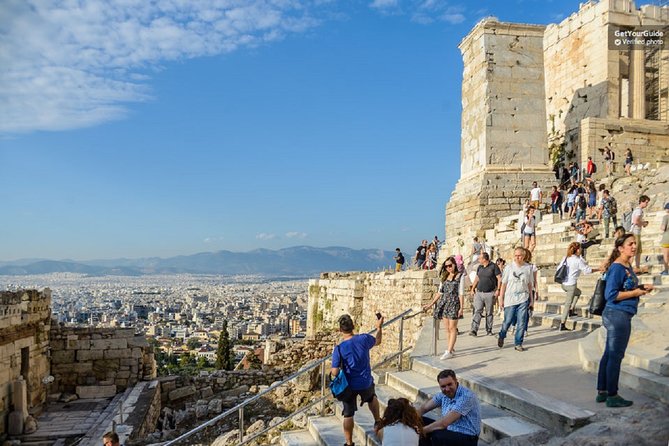
Next comes Propylaea, a monumental gateway that functions as the entrance to the Acropolis. The tour frames it with the architectural definition you’ll hear called a propylaea/propylea/propylaia, meaning basically the grand entry.
This stop is short—about 15 minutes—but it’s not filler. The gateway is the transition point between the modern city world below and the sacred precinct up top. Walking through or near it with context can make the Acropolis feel less like a museum and more like a place with ceremony and movement.
Because it’s a gateway, it’s also a good moment for you to reset your senses. After the intense focus of the Parthenon, Propylaea gives you a “breathing” architectural moment where you can take photos and let your brain regroup.
Stop 4: Temple of Athena Nike—earliest fully Ionic temple on the hill
The final major stop is the Temple of Athena Nike. This small-but-important temple is dedicated to Athena Nike and was built around 420 BC. The tour also highlights a specific architectural fact: it was the earliest fully Ionic temple on the Acropolis.
Spending time here helps balance the visit. The Parthenon grabs attention instantly, but the Temple of Athena Nike is where you can appreciate how styles and details evolved on the same sacred ground. A guide can explain what makes the Ionic style stand out compared to other parts of the site, and that contrast can help your understanding “click.”
Also, this is the kind of stop that tends to reward calm watching. If you slow down and look at proportions and form, you’ll get more out of the visit than if you rush for the next angle.
Extra monuments and themes you can expect along the way
The itinerary you’ll experience is organized around the major stops above, but the tour story isn’t limited to those four points. You should also get explanations that reference other key landmarks in the broader complex, including the Erechtheion and additional context for what the Acropolis represents.
The tour summary also points to themes like how the Theatre of Dionysus connects to the origins of theater, and how the Parthenon’s fame links back to politics and civic identity. If you’re the type of person who wants one unifying thread, this is that kind of tour.
A final note from real group feedback: a few people reported that the French quality can vary depending on the guide. If you’re counting on perfect comprehension, pick a day/time when you can sit close, and don’t be shy about asking for clarification if you’re missing a point.
Practical advice: shoes, water, listening aids, and the heat factor
This walk is described as needing moderate physical fitness. That usually means steady uphill walking and being on your feet for long stretches. Wear good walking shoes with grip. The Acropolis paths can be uneven, and you don’t want to spend your trip thinking about your feet instead of the temples.
Bring water. It’s not optional if it’s warm. Some feedback called out the experience in full sun as harsh for kids, which is a polite way of saying shade is not guaranteed and stopping doesn’t erase heat.
If you can choose timing, a later slot can help. One recommendation was to take the evening time because it can feel a bit less hot and there’s often less crowd pressure. That means you’ll likely have a smoother experience and fewer obstacles while you move between stops.
Listening matters too. One thing I liked reading about: microphones are provided so you can hear the guide more easily. On a windy hill with other groups talking, that small detail can be the difference between enjoying the story and half-missing it.
Who this Acropolis French walking tour is best for
This tour is a strong match if you want a real history guide and you enjoy questions like why something was built when it was built, and what a monument meant to its people. It’s also a good pick if you’re not satisfied by quick photo stops and want the complex explained as a whole.
You’ll probably enjoy it most if:
- You like architecture and want help interpreting what you see
- You’re comfortable walking for about two hours
- You want the Acropolis in French with a licensed guide
It may be less ideal if you prefer short, casual explanations or if you’re traveling with kids who need frequent breaks and shade. In that case, consider bringing extra snacks, planning a cooler time, and setting expectations that it’s an outdoor walking tour with focused narration.
Should you book this Acropolis tour?
I’d book it if you’re going to the Acropolis and you want your visit to feel understandable, not just impressive. The combo of skip-the-line tickets, a licensed French guide, and a focused route that hits Parthenon plus the gateway and Temple of Athena Nike is solid value for the money.
Skip it if you’re only interested in looking at the Parthenon from a distance and you don’t care about explanations. In that case, you could save money and go DIY with a guidebook—but you’ll likely miss the “why” behind the stones.
My final nudge: if French is your comfort zone (or you want to practice), this is one of the cleaner ways to experience the Acropolis beyond a basic checklist. Just show up prepared for heat, wear comfortable shoes, and let the guide’s story do the heavy lifting.
FAQ
How long is the Acropolis Walking Tour with a French Guide?
It lasts about 2 hours.
Is the entrance ticket included?
Yes. Skip-the-line entrance tickets are included.
Where does the tour start and where does it end?
It starts at Porinou 5, Athina 117 42, Greece and ends at Areopagus, Athens 105 55, Greece.
What language is the guide?
The tour includes a licensed French speaking tour guide.
How large is the group?
The tour has a maximum of 20 travelers.
Is the tour suitable for people who prefer a relaxed pace?
It’s designed for a moderate physical fitness level. The route includes walking and time at multiple sites, so comfortable pacing helps.
Do I get free entry if I’m an EU citizen under 25?
Yes. EU citizens under 25 can get free entrance by showing a passport.
Will the tour run in bad weather?
It requires good weather. If it’s canceled due to poor weather, you’ll be offered a different date or a full refund.
Is it easy to reach the meeting point using public transportation?
Yes. The meeting point is near public transportation.
Can I cancel for free?
You can cancel up to 24 hours in advance for a full refund. If you cancel less than 24 hours before the start time, the amount paid is not refunded.


More Walking Tours in Athens


More Tours in Athens


More Tour Reviews in Athens
- All Day Cruise -3 Islands to Agistri,Moni, Aegina with lunch and drinks included
★ 5.0 · 4,958 reviews