REVIEW · ATHENS
Athens: The Mythology Tour of Acropolis & Acropolis Museum
Book on GetYourGuide →Operated by Greeking.me · Bookable on GetYourGuide
Myth hits hard when it sits on real stone. This Acropolis & Acropolis Museum tour turns big-name legends into something you can point at, from the Theater of Dionysus to the Parthenon area. I like the way the guide connects stories to the actual architecture, and I especially like the museum stop where the artifacts explain what you just saw outdoors. One watch-out: entrance fees aren’t included, and the tour is designed so you’ll hit the Acropolis first, then move to the museum.
The best part is the pacing for a private group. You get a full guided visit (about two hours on the Acropolis and two hours in the museum) and the narration is kept at a level that works whether you’re brand-new to Greek myth or you’ve visited before. A drawback to plan around: the experience isn’t suitable for people with mobility impairments, and there’s no food or drinks allowed during the tour.
In This Review
- Key highlights to know before you go
- Finding the start: Acropoli Metro and your first look uphill
- Theater of Dionysus and the Asklepieion: drama and healing on the same hill
- The sacred way: Propylaea and Athena Nike as a message in marble
- Parthenon and Erechtheion: when Athena’s story becomes Athens’ agenda
- Acropolis Museum: the payoff for your photos and your questions
- Price and value: $518 per group for 4 hours (plus tickets)
- Who this Athens mythology tour suits best
- Guides who made the difference: what to look for in the narration
- Should you book this Acropolis & Acropolis Museum mythology tour?
- FAQ
- Where is the meeting point for the Athens Mythology Tour?
- How long is the tour?
- Is the tour guide available in English?
- Are entrance fees included in the price?
- Is this tour private?
- Are food and drinks allowed during the tour?
- Is the tour suitable for people with mobility impairments?
- FAQ
- What is the cancellation policy?
- Does the booking allow pay later?
Key highlights to know before you go
- Theater of Dionysus: where ancient drama is born, not just discussed
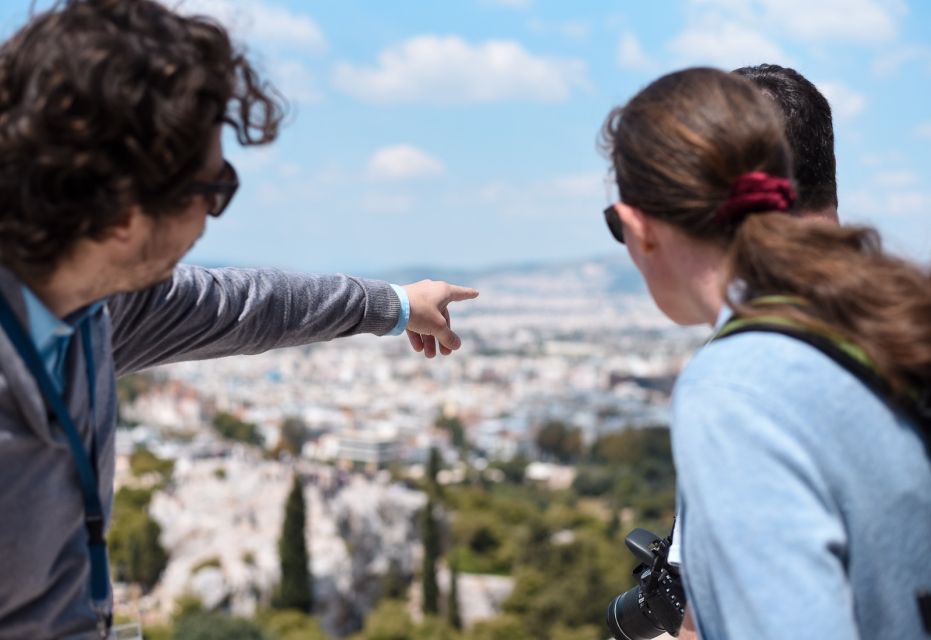
- Asklepieion and Asclepius myths: healing stories tied to a real sacred site
- Propylaea and Athena Nike: monumental gateways and the victory-goddess angle
- Parthenon and Erechtheion: myth used to express Athens values and identity
- Acropolis Museum artifacts: statues and objects that make the stories feel tangible
Finding the start: Acropoli Metro and your first look uphill
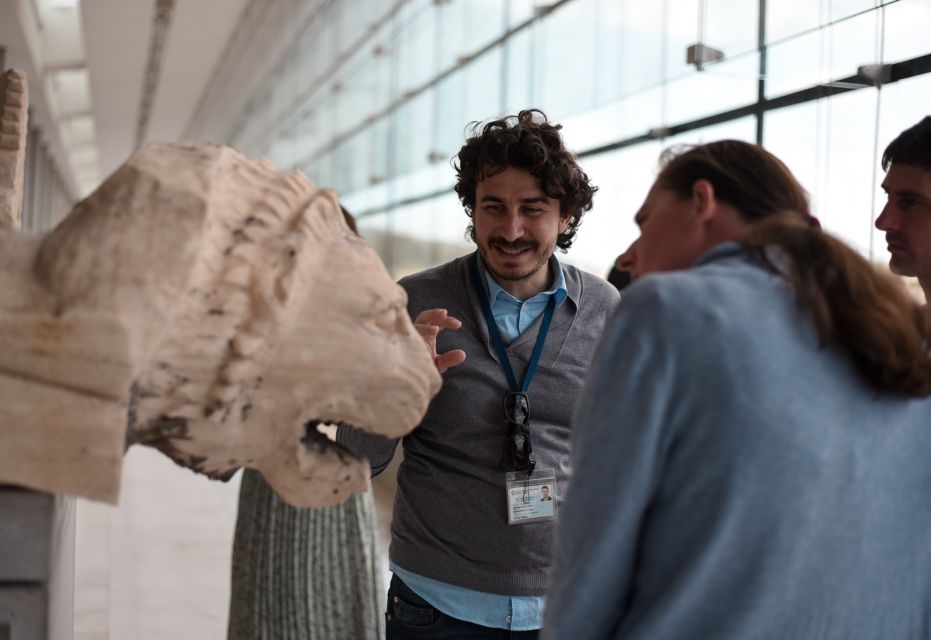
You meet at the entrance of Acropolis Metro Station on Makrygianni Street. It’s a practical setup because you’re starting near the area where most visitors need to funnel anyway. From there, the tour moves up onto the Acropolis slope, so you’ll want to show up ready for a steady walk and plenty of standing.
This is a private group tour for up to 2 people, with a live English-speaking guide. That matters because mythology can turn into either a lecture or a conversation. With a small group, the stories can stay tied to what you’re seeing right now, instead of getting lost in a large crowd.
The tour also has a clear rule: no food and drinks. That doesn’t mean you can’t enjoy the day, but it does mean you should plan your breaks around the tour timing rather than counting on snacks during the visit.
You can also read our reviews of more museum experiences in Athens


Theater of Dionysus and the Asklepieion: drama and healing on the same hill
The first major stop is the Theater of Dionysus, often described as the birthplace of ancient drama—and this is the kind of place where that claim suddenly feels less like a slogan. The guide frames drama as something the Greeks treated seriously: performances weren’t just entertainment, they were part of how a community thought, argued, and made meaning together. When you’re standing where those performances began, it’s easier to connect the dots between myth and public life.
From there, you continue past the Asklepieion. This is where the tour takes a satisfying turn: you go from the gods of arts and civic ritual to the gods of health and healing. You’ll hear the secrets of the Asklepieion and the myths around Asclepius, the mythical physician. The story includes a key drama beat too—Asclepius’ extraordinary powers even stirred jealousy from Zeus. That’s a great example of Greek myth’s emotional logic: even compassion creates tension.
Why I think this section works so well for most people: it prevents mythology from becoming one-note. Dionysus gives you spectacle and performance. Asclepius brings in suffering, hope, and the fear of crossing boundaries. Together, they show how myths helped people talk about real human stuff, using gods as language.
The sacred way: Propylaea and Athena Nike as a message in marble
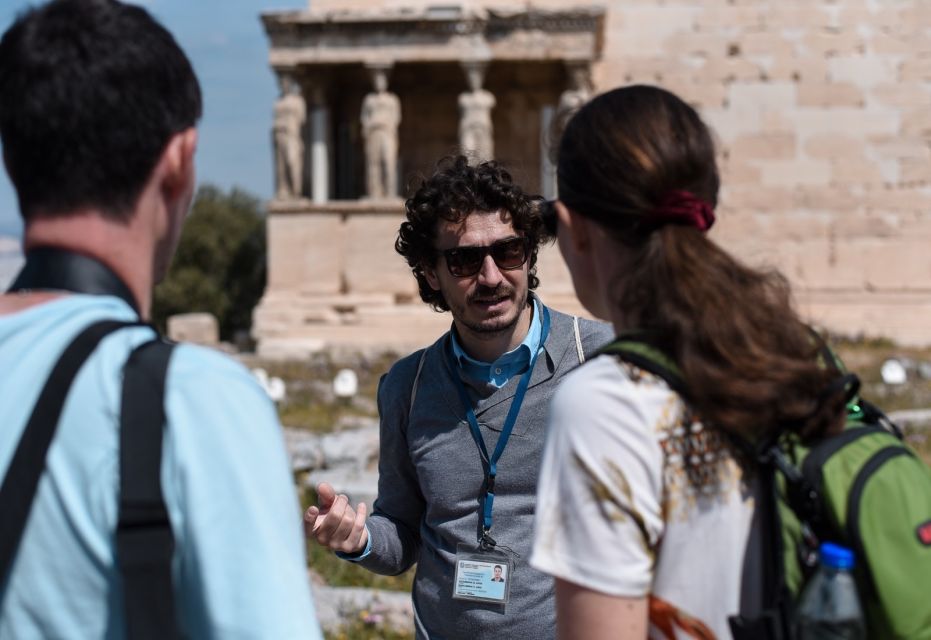
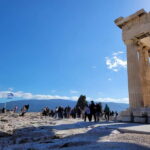
Next comes the sacred way approach, leading you to the Propylaea, the monumental marble gateway to the hill. A gateway might sound like a pause on the way to the big stuff. Here it’s treated like the main event: it sets the tone for how the Acropolis functioned as more than a viewpoint.
The guide explains stories of Athena Nike, the victorious goddess honored by Athenians. Even if you don’t know the myth details yet, the physical setting helps you understand why they built so confidently here. Athena is framed as a protector of civic strength and identity, and Nike gives that message an emotional punch: victory as something earned, celebrated, and remembered.
This part is also your mental warm-up for the Parthenon zone. By the time you reach the architecture that defines classical Greece in the Western imagination, you’re not just seeing columns—you’re seeing an argument. Athens is using myth like branding, politics, and culture all at once.
Parthenon and Erechtheion: when Athena’s story becomes Athens’ agenda
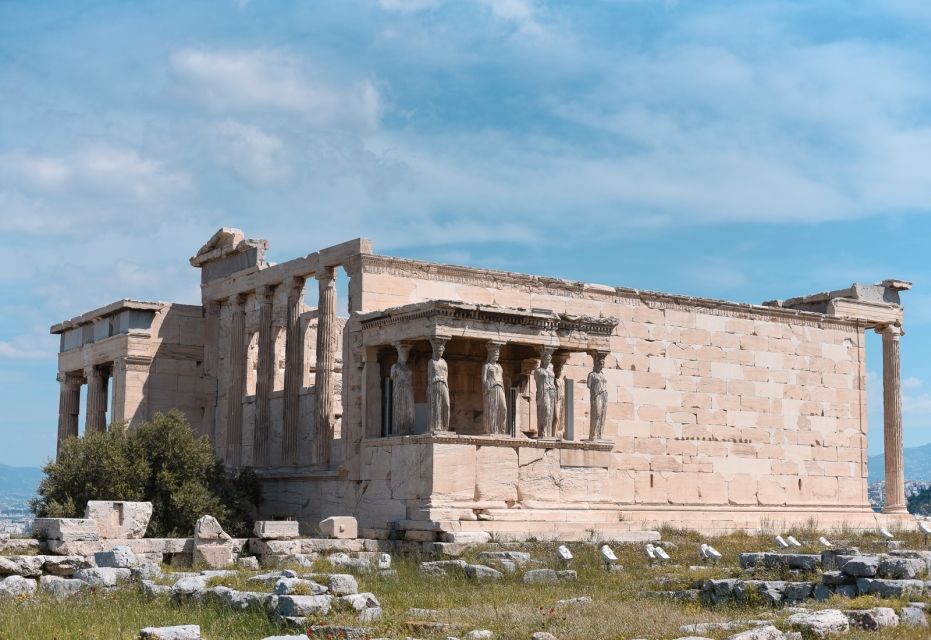
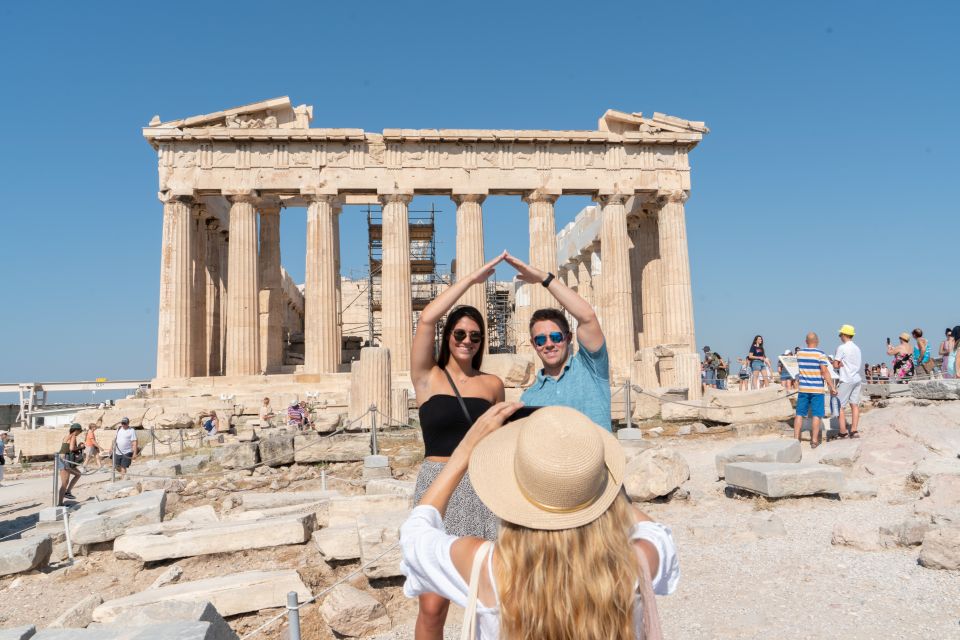
The Parthenon stop is where the tour earns its name. You’ll explore the Parthenon and the surrounding sacred spaces with a guide who helps you understand myth as identity, values, and political vision—not only as storybook characters.
The Parthenon is described as an enduring emblem of Western civilization, and that’s true in the sense that so many people reference it as a symbol of classical ideals. What you might miss if you tour it alone is the specifically Athenian angle: the guide helps you see how myth was woven into their self-image. In other words, Greek myth isn’t sitting in a museum case here. It’s acting like a framework for how people justified power and community purpose.
Then the tour continues to the Erechtheion, a sacred temple tied directly to Athena. This is where myth becomes location-based again. The guide connects the temple to the legendary contest between Athena and Poseidon. That story theme matters because it mirrors what cities argue about—who belongs, what resources matter, and how a community decides its future.
One practical note: this section is more detailed than it sounds in a quick brochure. Expect to spend time standing, turning your head, and letting the guide’s narration stitch the pieces together. If you like explanations that help you see patterns, you’ll love this.
Acropolis Museum: the payoff for your photos and your questions
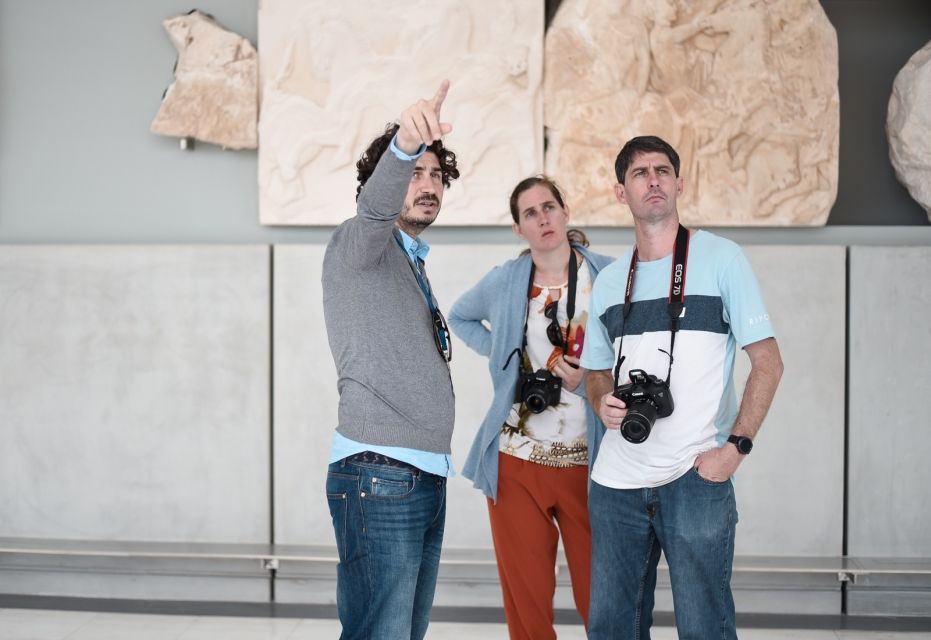
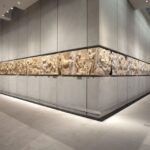
The tour ends at the Acropolis Museum, with a guided visit that continues for about two hours. This is a smart design choice because the museum can fix what outdoor viewing sometimes can’t. On the hill, you’re dealing with angles, distance, and the fact that many things aren’t in their original setting. In the museum, you can focus on objects connected to the myths you just heard.
You’ll see statues and treasures tied to mythology’s most unforgettable tales. The guide brings these items to life, turning what can feel like a pile of stone into a set of recognizable stories. It’s the kind of stop that helps you leave with a stronger mental map: you see the artifact, you remember the myth theme, and suddenly everything clicks into place.
For me, this museum finish is the strongest value piece of the whole tour. Outdoor sights give you scale and emotion. The museum gives you context and detail, without requiring you to do research afterward.
- All Day Cruise -3 Islands to Agistri,Moni, Aegina with lunch and drinks included
★ 5.0 · 4,958 reviews





Price and value: $518 per group for 4 hours (plus tickets)
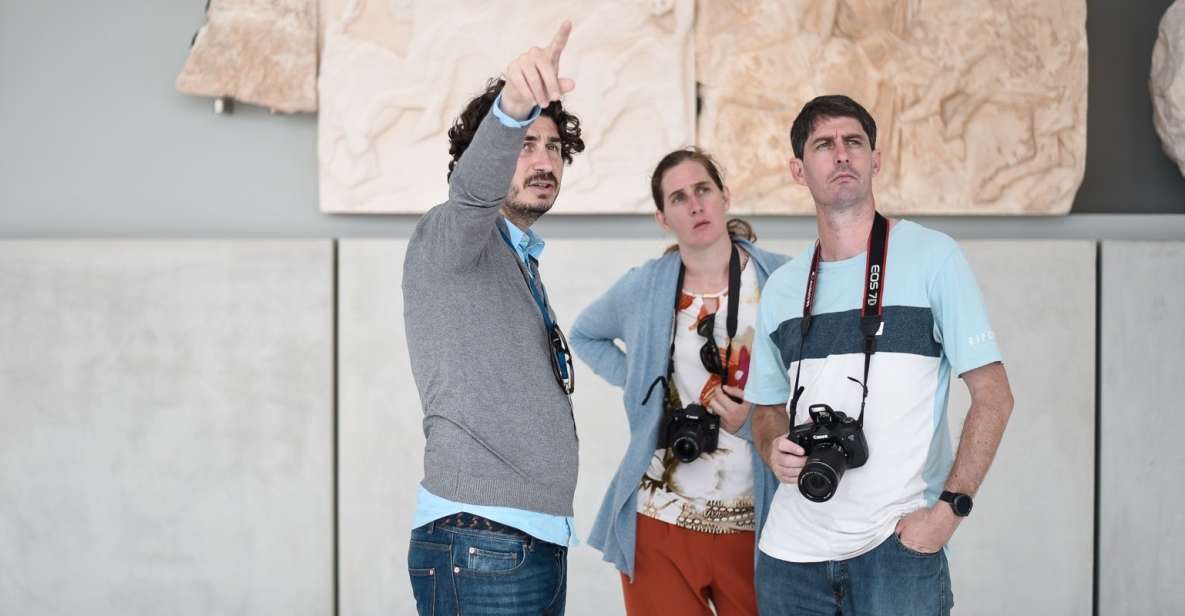
The price is $518 per group up to 2 for a total duration of 4 hours. On paper, that’s not cheap. The value depends on what you want from the Acropolis: a self-guided walk, or a guided, myth-focused explanation that ties together multiple sites in one go.
Here’s the honest math-style thinking. You’re paying for:
- a private, English-speaking guide
- structured time on both the Acropolis and the museum
- mythology storytelling tied to specific landmarks, not generic commentary
But there’s an important cost you need to budget for: entrance fees are not included. One review mentioned that extra entrance costs were not clearly expected up front. Even if that situation isn’t your exact experience, it’s a practical reminder to factor tickets into your total budget before you commit.
If you’re comparing options, think of this as paying to avoid the hassle of planning, juggling stops, and hunting for good explanations once you’re already there. If you’re the type who enjoys guided interpretation—especially for myth—this format can feel worth it.
Who this Athens mythology tour suits best
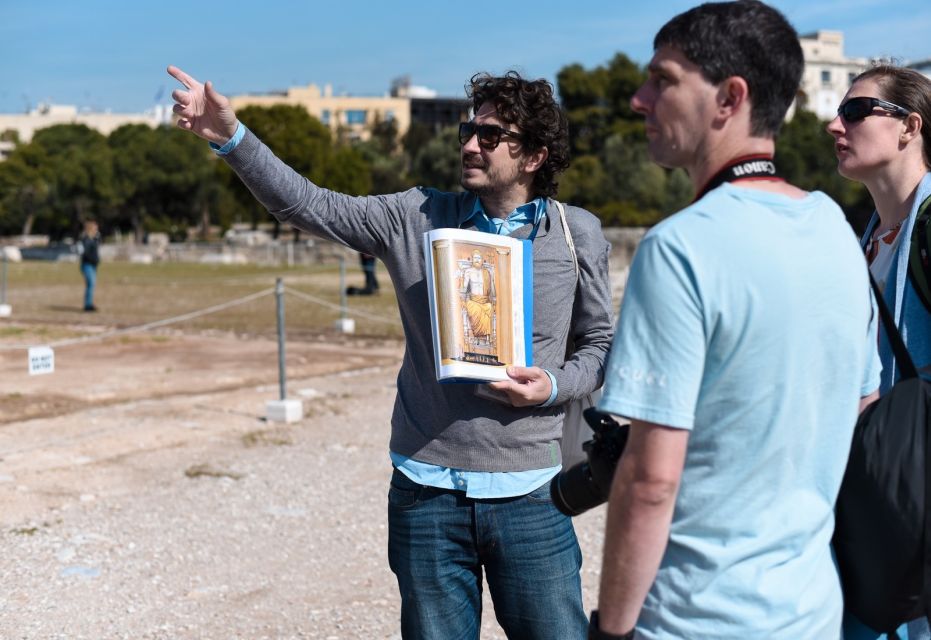
This tour is a strong match if you want Greek mythology explained through real places and real objects. It works especially well if you like your history with characters and motives—Zeus jealous, Asclepius healing, Athena claiming victory, Poseidon contesting her.
It’s also a good fit for mixed experience levels. Multiple comments praised guides for keeping the narration appropriate for different backgrounds, and for making the time feel smooth even across a 4-hour length.
You should skip it if mobility is a concern, since it’s not suitable for people with mobility impairments. Also, if you hate museums, be aware that the tour includes the Acropolis Museum as a major part of the program rather than an optional add-on.
Guides who made the difference: what to look for in the narration
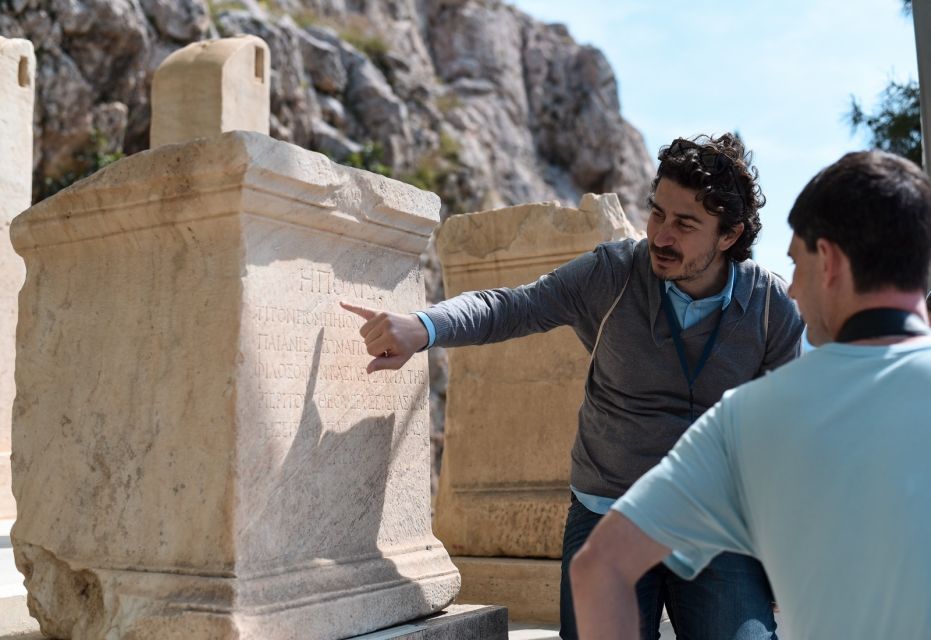
The guide can make or break a mythology tour, and the feedback here is consistently positive about the storytelling approach. Names that came up include Nino Tsavalos and TAVOUTI M. SAPFO, both noted for being engaging and for sharing clear, well-structured information.
What you want to look for in a guide like this is simple: can they connect the myth to the stone, and can they keep it understandable without oversimplifying? Based on the comments, the guides hit that balance. That’s especially helpful at the Theatre of Dionysus and around the Parthenon/Erechtheion zones, where it’s easy for explanations to become vague.
Should you book this Acropolis & Acropolis Museum mythology tour?
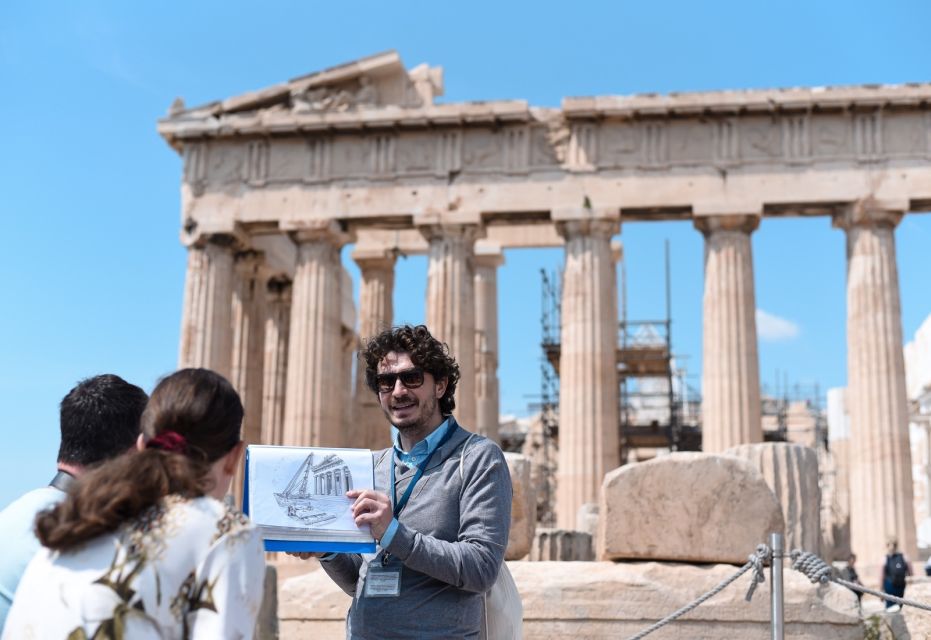
Book it if you want a guided, myth-centered route that links Dionysus, Asclepius, Athena, and the big classic temples in a coherent flow. The Acropolis portion plus the museum finish is a proven pairing for understanding, and the private group setup helps the experience stay focused.
Hold off if entrance fees would be a surprise expense for you or if you’d rather skip the museum altogether. Also, if mobility needs are part of your planning, this one isn’t listed as suitable.
If your goal is to walk away with myth stories that actually connect to landmarks and artifacts, this is the kind of tour that can make Athens feel more readable—one stop at a time.
FAQ
Where is the meeting point for the Athens Mythology Tour?
You meet at the entrance of Acropolis Metro Station on Makrygianni Street.
How long is the tour?
The tour lasts 4 hours total, with a guided visit of about 2 hours on the Acropolis and about 2 hours in the Acropolis Museum.
Is the tour guide available in English?
Yes. The live tour guide is provided in English.
Are entrance fees included in the price?
No. Entrance fees to the sites are not included.
Is this tour private?
Yes. It’s a private group tour.
Are food and drinks allowed during the tour?
No. Food and drinks are not allowed.
Is the tour suitable for people with mobility impairments?
No. It’s not suitable for people with mobility impairments.
FAQ
What is the cancellation policy?
You can cancel up to 24 hours in advance for a full refund.
Does the booking allow pay later?
Yes. You can reserve now and pay later.


More Museum Experiences in Athens
More Tours in Athens

More Tour Reviews in Athens
- All Day Cruise -3 Islands to Agistri,Moni, Aegina with lunch and drinks included
★ 5.0 · 4,958 reviews