REVIEW · ATHENS
St. Paul in Athens half-day private tour 4.5 hours – With Tickets
Book on Viator →Operated by Athens Tours Greece · Bookable on Viator
St. Paul makes Athens feel personal. This private half-day blends major Greek landmarks with the story of Paul preaching in ancient Athens, all wrapped into a practical morning route that’s built for limited time.
I like the early pickup plan. It’s designed to head straight to the Acropolis to reduce time lost to traffic and crowds. I also like that the day isn’t just sightseeing—it ties the message of St. Paul to a real place, the Areopagus, where you can still spot the commemorating plaque.
The main drawback is simple: the Acropolis involves real walking and climbing. If you linger too long on the hill, the rest of the stops turn into quick drive-bys, not relaxed visits, and that’s on the clock.
In This Review
- Key points worth knowing before you go
- Why this St. Paul route makes sense in 4.5 hours
- 8:00 a.m. pickup and the traffic-crowd strategy
- Acropolis time: Propylaea, Parthenon, and the views that cost your legs
- Propylaea: the gate you picture in your head
- Temple of Athena Nike: the edge-of-the-rock feeling
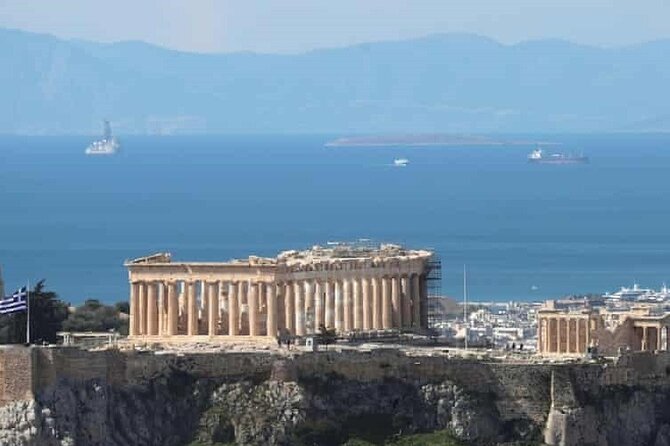
- Parthenon: the main event, with enough time to feel it
- Erechtheion and the Caryatids: the “handsome weird” stop
- The Acropolis drawback, stated clearly
- Areopagus: St. Paul and the Unknown God plaque
- The city stops that show modern Athens next to ancient sites
- Olympieion (sanctuary of Olympian Zeus)
- National Garden: an oasis behind the political center
- Hellenic Parliament, Tomb of the Unknown Soldier, and Syntagma Square
- Kallimarmaro: the marble stadium and Olympic echo
- Athens Metropolitan Cathedral and Panaghia Kapnikarea: faith and architecture in plain sight
- Thissio: a neighborhood shortcut for your next day
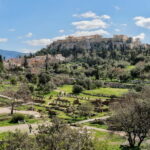
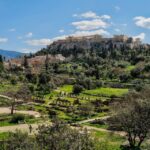
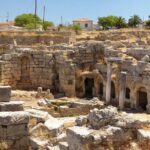
- Ancient Agora: the marketplace that kept getting rebuilt
- Price and value: $275.16 per person, plus what you might add
- Who should book this private St. Paul tour
- Should you book it?
- FAQ
- FAQ
- How long is the St. Paul in Athens private tour?
- What time does the tour start?
- Is pickup included, and where do we meet?
- Are entrance tickets included?
- Is the tour private?
- Do we get a licensed guide included?
- Can I cancel for a full refund?
Key points worth knowing before you go
- Morning timing that targets the Acropolis first, when crowds and traffic can be worse later.
- St. Paul’s sermon link at the Areopagus, with a bronze plaque marking the Unknown God moment.
- Acropolis + Ancient Agora tickets are included, so you start inside the sites rather than hunting for entry.
- A private vehicle with hotel or Airbnb pickup, plus bottled water to keep things smooth.
- Short time at each Acropolis monument, so you’ll see the highlights without a long museum-style day.
- Pacing matters: if you spend 2–3 hours on the Acropolis, the later Athens stops get compressed.
Why this St. Paul route makes sense in 4.5 hours
Athens is huge in the best way, which is exactly why a half-day plan can either work great—or fall apart. This tour focuses on two big anchors: the Acropolis and the Ancient Agora. Those are the places where you can feel how Greek life, politics, and belief shaped the city over thousands of years.
What makes this route different is the Christian history thread. You’re not just walking through ancient stones; you’re walking toward a specific moment: St. Paul preaching after seeing an altar to an Unknown God. That story is connected to the Areopagus hill, right by the Acropolis exit. It gives the day a storyline you can remember later.
The vibe is also practical. You’re picked up in Athens (including Airbnbs and Piraeus port), driven in an air-conditioned vehicle, and dropped back in the same area. You’re free to take photos and ask questions without waiting for a big group rhythm.
You can also read our reviews of more tours and experiences in Athens
8:00 a.m. pickup and the traffic-crowd strategy
The tour starts at 8:00 a.m., and the plan is to head directly to the Acropolis right away. That detail matters more than people think. Athens roads can get slow, and the Acropolis gets busier later in the morning. Starting early helps you spend more time looking up and less time stuck in a van.
Pickup is arranged at your hotel meeting point (main entrance), and you can also get pickup from an Airbnb in Athens. If you’re arriving by cruise, you meet the driver outside the terminal exit door with a sign showing your name. You’ll end by getting dropped off at the same spot you were picked up.
Your driver is an English-speaking professional with history and culture know-how. In at least one set of reported experiences, the guide Demetris stood out for being kind and making the whole day feel welcoming and personal. Another guide, Christos, was described as prompt and helpful with timing—plus he found time for a photo stop—so you’ll likely feel “taken care of,” not rushed in a careless way.
One more small comfort: bottled water is included. It’s not a big headline item, but it helps when you’re moving between viewpoints and climbing the Acropolis steps.
Acropolis time: Propylaea, Parthenon, and the views that cost your legs
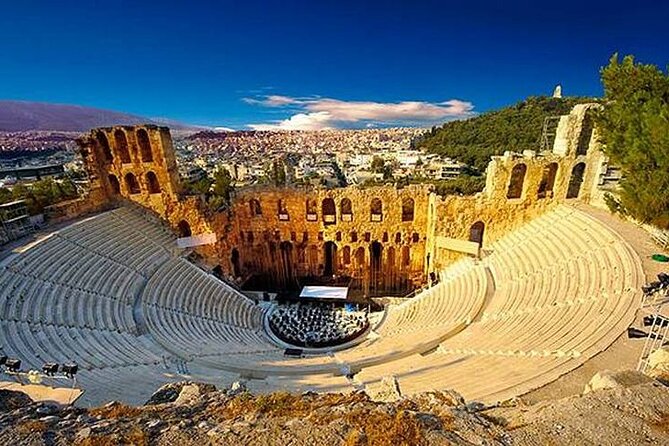
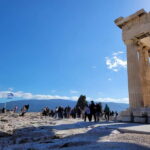
The Acropolis is the core of the day, and the tour gives it the time it deserves. After arriving, you’ll work through several key structures with short visits that keep you moving. The total on-the-hill experience is built around the iconic sights: Propylaea, Temple of Athena Nike, the Parthenon, and the Erechtheion.
Propylaea: the gate you picture in your head
You’ll pause at the Propylaea, the monumental entrance to the sacred precinct. The modern structure is part of the Periclean building program (built roughly in the 5th century BC), and the site sits on the west side of the hill where older fortifications once stood. Even if you don’t know the dates, you’ll feel why this gate is such a visual highlight: it frames the space beyond and signals you’re entering a different world.
Practical note: there are steps and uneven surfaces. Wear shoes you trust. Your calves will thank you later.
Temple of Athena Nike: the edge-of-the-rock feeling
Next is the Temple of Athena Nike, built in the 5th century BC on a bastion at the southeast edge of the rock. The idea is dramatic: you’re near the edge of the Acropolis, with views opening toward the city below. This is one of those moments where the architecture and the perspective click together.
You can also read our reviews of more private tours in Athens



Parthenon: the main event, with enough time to feel it
The Parthenon is where you slow down more. You’re there long enough to really look at the building rather than just wave at it. The tour covers the Parthenon’s role as Athena’s temple, built between roughly 447 and 438 BC as part of the Periclean program. It’s also where the design innovations stand out—double peripteral Doric planning, careful proportions, and sculptural decoration led by Pheidias.
What I like about this approach is timing. The tour doesn’t pretend you can see everything on a single hill visit. Instead, it zooms in on the most important monuments you can’t afford to miss if it’s your first time in Athens.
Erechtheion and the Caryatids: the “handsome weird” stop
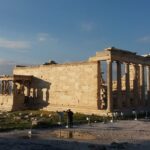
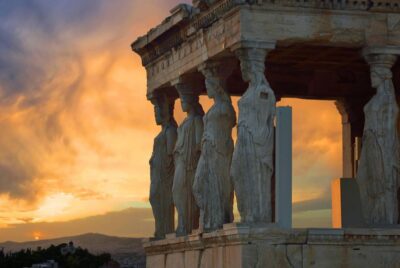
At the Erechtheion, you’ll see the famous Caryatids (female figures used as architectural supports). The building on the north side dates to around 421–406 BC and ties into myths of Athens—Erechtheus, Athena and Poseidon’s dispute, plus the sacred sanctuary setting.
Here’s a cool detail you can use while you’re there: some Caryatid sculptures are no longer on the building itself. The statues are split between places like the Acropolis Museum and the British Museum, while the figures you see on the structure are casts. That helps you understand why the tour can feel “authentic” even when you’re looking at copies in one specific place.
The Acropolis drawback, stated clearly
Expect climbing. Even on a smooth, guided pace, you’ll work for the views. If you love to linger, you’ll need to consciously keep your momentum. One pacing problem described in an earlier experience was spending too much time at the Acropolis, then missing the later planned stops (driving past them instead of entering). That doesn’t mean the tour is bad—it means the schedule is realistic, and the hill sets the pace.
Areopagus: St. Paul and the Unknown God plaque
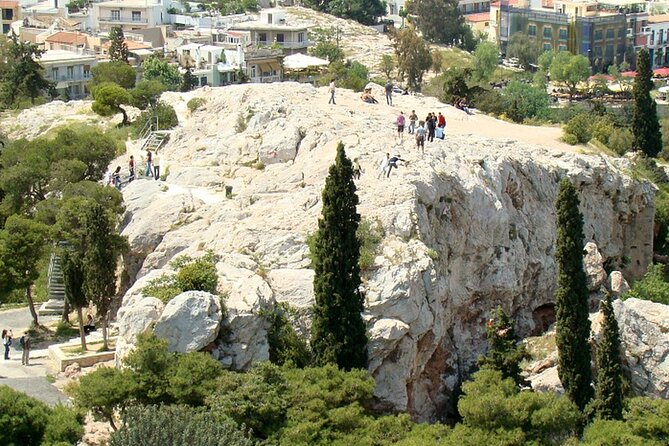
The Areopagus (the Hill of Ares) sits just to the right of the Acropolis exit. This is the part of the day that turns generic ancient Athens into a specific story.
In classical times, the Areopagus was linked with a council of elders and a judicial court for serious cases. In the mythology orbit, it’s connected to trials and disputes. But for this tour, the big anchor is St. Paul’s sermon.
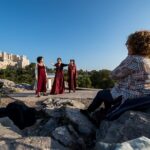
According to the tradition tied to the site, Paul preached the famous sermon about an Unknown God after seeing an altar dedicated to that concept. You can see a bronze plaque at the foot of the rock that commemorates the moment. It’s small, but it gives you something solid to connect to the words you’ve likely heard before.
This stop is short, but it’s the most “meaningful” stop for people who want more than photo ops. If you’re religious, it can feel like a guided history lesson with a spiritual backbone. If you’re not, it still works as a story-of-ideas moment: religions spread through places, and this is one of the places where the meeting of ideas becomes physical.
The city stops that show modern Athens next to ancient sites
After the Acropolis, the tour shifts into a kind of “Athens in motion” day. You’ll see major landmarks around the center, with pauses and viewpoints that help you build context for where things are in the city.
Olympieion (sanctuary of Olympian Zeus)
You’ll visit the Olympeion, the sanctuary of Olympian Zeus. This is one of Athens’ big ancient sites beyond the Acropolis, and it helps you widen the frame. The area includes the temple of Apollo Delphinios and other structures connected to myth and ancient civic life.
Even if you don’t spend a long time here, it’s a reminder that Athens didn’t stop at the Parthenon. It kept expanding its sacred spaces and monumental ambitions.
National Garden: an oasis behind the political center
You’ll pass the National Garden of Athens, behind Parliament and near Syntagma Square. This is a large green space with hundreds of plant types and a history that goes back to royal gardens. It’s not a “must” for everyone, but it’s a nice contrast: after stone, you get shade and breathing room.
Hellenic Parliament, Tomb of the Unknown Soldier, and Syntagma Square
Then it’s right to the modern heart of Athens: Syntagma Square.
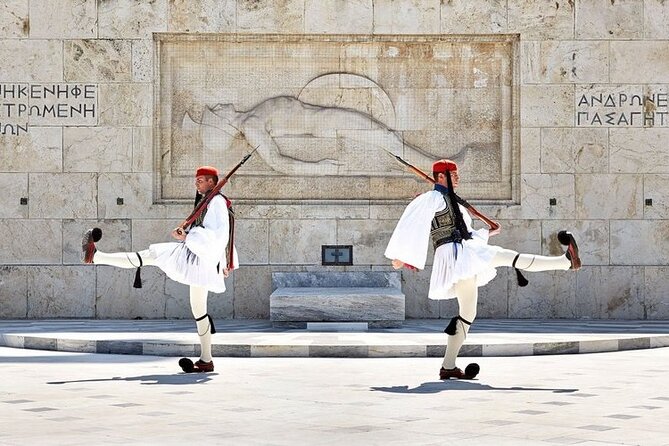
You’ll see the Tomb of the Unknown Soldier, a war memorial sculpted between 1930 and 1932 by Fokion Rok, guarded by the Evzones of the Presidential Guard. It’s one of those sights that feels official and ceremonial, and it makes Syntagma feel like more than just a transportation hub.
You’ll also see the Greek Parliament building. It’s tied to the modern Greek state, starting as a palace for kings Otto and George I and later becoming Parliament and Senate. Even if you don’t go inside, the building’s story helps explain why this area is such a focal point for public events.
Syntagma Square itself means Constitution Square, named in 1843 after an uprising. That’s the kind of detail that turns a quick stop into something you actually remember.
Kallimarmaro: the marble stadium and Olympic echo
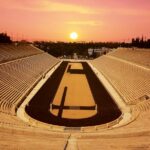
Next up: Kallimarmaro, also known as Panathenaea Stadium, where the first modern Olympic games happened in 1896. It’s called Kallimarmaro because it’s made of marble, specifically Pentelic marble.
Here’s a neat detail that’s worth sticking in your brain while you look: Pentelic marble can change color with daylight, from cooler tones in the morning to a bone-gold feel later in the day. Since major Acropolis and Zeus-temple projects also used this marble, you’re basically seeing the same material story told in two eras.
Athens Metropolitan Cathedral and Panaghia Kapnikarea: faith and architecture in plain sight
You’ll also get a look at the Athens Metropolitan Cathedral, a three-aisled domed basilica dedicated to the Annunciation of the Mother of God. It was built between 1842 and 1862, and it includes design work by architects such as Hansen, Zezos, Boulanger, and Kalkos. The cathedral also has marble shrines holding relics mentioned for Agia Filothei and Patriarch Gregorius V.
After that, the tour heads toward Panaghia Kapnikarea, an 11th-century Byzantine church in the shopping area of Ermou Street. It’s small, cross-in-square in plan, and built on older ruins tied to a female goddess—possibly Athena or Demeter. This is the kind of stop you’ll either love for its contrast (old church squeezed into modern streets) or quickly appreciate and move on.
Thissio: a neighborhood shortcut for your next day
You’ll end up in the Thissio area. It’s near the city center, close to Plaka and Monastiraki, and slightly southwest of Monastiraki. It’s also close enough to the Acropolis for good views. If you’re thinking about where to stay, this is a neighborhood you’ll understand a little better by the time the tour finishes.
Ancient Agora: the marketplace that kept getting rebuilt
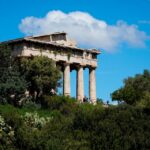
The last major historical anchor (before you’re dropped back) is the Ancient Agora of Athens. You’ll go there after the Acropolis, with about 1.5 hours on site.
This is one of the best time-to-understanding stops on the whole tour. The word “agora” meant an assembly and later became the marketplace idea. In modern Greek, it still means marketplace. The Ancient Agora functioned as a gathering place, commercial center, and residential area over about 5,000 years, which means layers of rebuilding and destruction sit under your feet.
The excavations distill those layers so you can see how the space evolved from Archaic through Greco-Roman and Byzantine times. If you’ve been focusing on monuments up on the hill, the Agora is the counterweight: this is where people actually met, debated, traded, and lived.
The tour includes entry tickets for the Acropolis and Ancient Agora, which is a real time saver. You avoid a lot of “wait, locate, line up” stress and get straight into the sites.
Price and value: $275.16 per person, plus what you might add
At $275.16 per person, this tour is not a budget hop. It’s a private, door-to-door morning plan with a vehicle, history guidance, bottled water, and entry tickets.
Here’s what you’re paying for in practical terms:
- Private pickup and drop-off in Athens (and Piraeus port), so you don’t wrestle transit with a time crunch.
- An air-conditioned vehicle sized for your group.
- Bottled water.
- Entrance tickets for the Acropolis and Ancient Agora.
- A driver who brings history and culture context in English.
There’s one optional cost you should understand up front: an English-speaking licensed tour guide is listed as an additional 269€. The included service calls out a professional English-speaking tour driver with history knowledge. If you want a more official guiding experience at every stop, you may choose to add the licensed guide. If you’re comfortable with a driver-led narration and prefer to spend money on time inside monuments, you might not.
Also, keep your group size in mind. Since it’s priced per person but uses a private vehicle, your per-person value tends to improve when you’re traveling with at least a few people and sharing the “private” part of the experience.
Who should book this private St. Paul tour
This works best if you:
- Want a first-time Athens plan that hits the essentials without turning into a long full-day marathon.
- Like history with a story thread—St. Paul’s Unknown God moment is the connection point.
- Prefer a private vehicle and hotel pickup so you can focus on the sites, not logistics.
- Are okay with the Acropolis requiring real walking and climbing.
It can also suit cruise passengers who need a timed Athens experience with clear meeting instructions. And if you like planning ahead, confirmation is received at booking time, and mobile tickets are offered.
One more useful feature: you can customize within the Athens plan and during a 6-hour window. That gives you flexibility if you already know which sights you care about most.
Should you book it?
Yes—if you want a structured morning with tickets handled and a clear story connecting St. Paul to a real Athens location. The Acropolis and Areopagus pairing is the star here, and the Ancient Agora gives you balance so you don’t leave Athens only thinking about temples and viewpoints.
Hold off if you hate climbing or you know you tend to lose track of time on the Acropolis. This tour is short enough that pacing really matters. If you’re going to linger at the top, plan to trade off some of the later city landmarks.
FAQ
FAQ
How long is the St. Paul in Athens private tour?
It runs about 4 hours 30 minutes.
What time does the tour start?
The start time is 8:00 am.
Is pickup included, and where do we meet?
Yes, private pickup is offered from hotels in Athens and Airbnbs in Athens, and from the Piraeus port. For hotels, you meet at the main entrance; for cruises, you meet outside the terminal exit door where the driver holds a sign with your name.
Are entrance tickets included?
Yes. Entrance tickets for the Acropolis and the Ancient Agora are included. Other listed stops do not show included admission in the tour details.
Is the tour private?
Yes. It’s a private tour/activity, so only your group participates.
Do we get a licensed guide included?
An English-speaking licensed tour guide is not included and is listed as an additional 269€. The included service describes a professional English-speaking tour driver with history knowledge.
Can I cancel for a full refund?
Yes. You can cancel for a full refund if you cancel at least 24 hours before the experience starts. Free cancellation is offered under that rule.


More Tickets in Athens

More Tours in Athens



More Tour Reviews in Athens
- All Day Cruise -3 Islands to Agistri,Moni, Aegina with lunch and drinks included
★ 5.0 · 4,958 reviews