REVIEW · ATHENS
Athens Walking Private Tour – Licensed Tour Guide
Book on Viator →Operated by Olive Sea Travel · Bookable on Viator
Five hours, one hill, and the rest of Athens.
This private, licensed Athens Walking Tour strings together the big-ticket sights without turning your afternoon into a scavenger hunt. You’ll hit the Acropolis, then the Acropolis Museum, and finish with the classic neighborhoods of Plaka and Monastiraki.
I especially like two parts. I love how starting at the Acropolis Museum gives context before you climb and stare at stonework for hours. And I like the fact that you’re guided by a licensed tour guide (with headsets available for larger groups), so you’re not stuck guessing what you’re looking at.
One consideration: the walking includes uphill sections and lots of standing. If you have mobility limits, plan to move slowly and bring comfortable shoes.
In This Review
- Key things to know before you go
- A smart 2:00 pm rhythm for Athens: Museum, then the Acropolis, then streets
- The Acropolis walk: Parthenon views plus the sacred entrance that frames it all
- Propylaea and Athena Nike: how to spot meaning in the stone
- The Parthenon zone: short stop, high impact if you know what to look for
- Odeon of Herodes Atticus and the Theatre of Dionysus: seeing the timeline in one place
- Acropolis Museum: the plexiglass floor trick and why it changes your walk
- Plaka: the village-feel streets for an easy reset after the ruins
- Monastiraki: ruins, shopping chaos, and that late-afternoon Athens energy
- Price and value: what $395.69 per person covers (and what to watch)
- Who this tour is best for (and who might want something else)
- Practical tips to make the afternoon feel easier
- Should you book this Athens Walking Private Tour?
- FAQ
- How long is the Athens Walking Private Tour?
- Is this tour private?
- What time does the tour start, and where does it begin?
- Where does the tour end?
- Is pickup available?
- What language is the tour in?
- Are entrance fees included?
- Are whisper headsets included?
- What kind of fitness level do I need?
Key things to know before you go
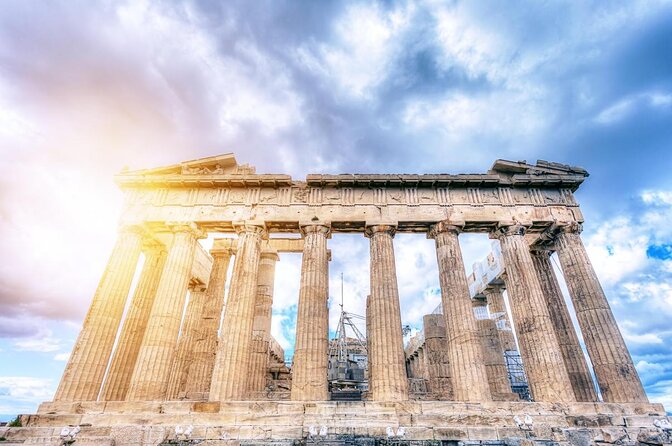
- Museum first, so the Acropolis makes sense faster: you get orientation before you reach the viewpoints and temples
- Licensed guide throughout: you’re not just collecting photos; you’re getting a guided walkthrough
- Whisper headsets when needed: helpful if your group is over 10 people
- A tight 5-hour route: enough time for major sites, with a practical pace
- Plaka then Monastiraki at the end: you finish near a metro stop and real streets for dinner
A smart 2:00 pm rhythm for Athens: Museum, then the Acropolis, then streets
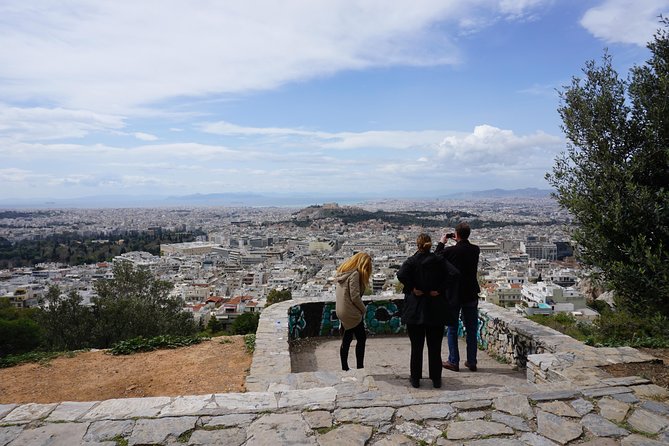
This tour is built for afternoons. The start time is 2:00 pm, which means you avoid some of the most intense morning rush and you still end with daylight on the stones. You begin at Coco-Mat Athens BCFalirou 5 and end in Monastiraki Square near a metro station, so you’re not forced into complicated last-mile logistics.
I like the flow: you’re shown the story at the Acropolis Museum first, then you go see those ideas in the real setting. That order matters. When you walk the hillside afterward, you notice the big shapes, the key buildings, and the way the space was planned. It’s much easier to connect the museum artifacts and reconstructions to what’s still standing outside.
Pickup is offered, and your pick-up time can be adjusted by request. If you’re starting elsewhere, that can save time and reduce stress.
You can also read our reviews of more walking tours in Athens

The Acropolis walk: Parthenon views plus the sacred entrance that frames it all

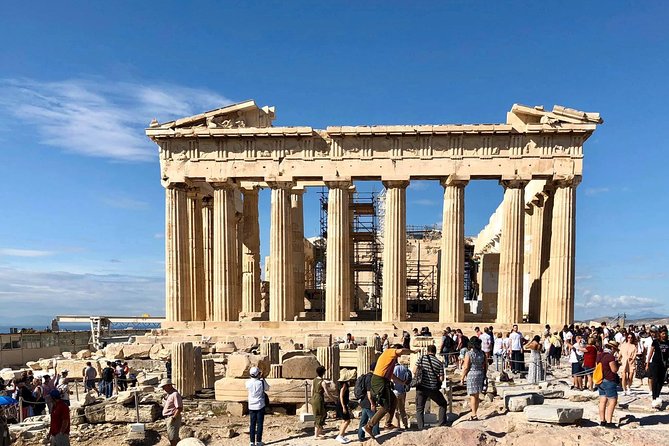
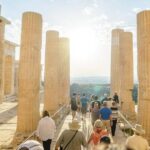
The tour’s first major block is spent on the Acropolis with about 1 hour 30 minutes to explore. This is where Athens does its classic performance: steep paths, dramatic sightlines, and a sense that the city has been reorganized around this hill for thousands of years.
You’ll see the main icons from a guided vantage point. Expect stops and time at places like the Parthenon, the monumental gateway (Propylaea), the Erechtheum, and the Temple of Athena Nike. You’ll also encounter the Odeon of Herodes Atticus, which brings in a Roman-era layer to what people often think of as purely ancient Greek.
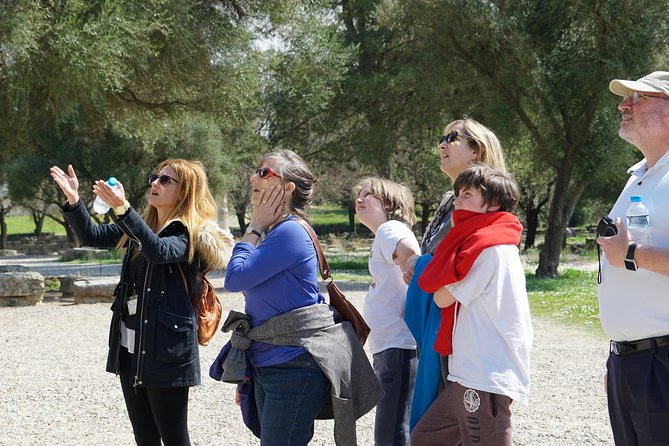
Here’s the practical advantage: the guide doesn’t just point. You’re given clear pointers for what each structure was for, and what details to look for as you move through the site. If you’ve ever stood in front of ruins thinking, Now what am I supposed to notice?, this part solves that.
One thing I found especially useful is the pace. The Acropolis is crowded at peak times, and your time is limited. With a good guide, you spend more time looking and less time stuck.
Propylaea and Athena Nike: how to spot meaning in the stone
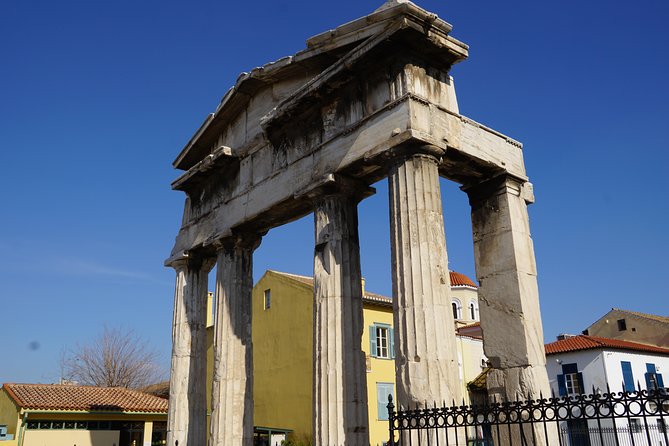
If you want to understand why the Acropolis feels like a designed route instead of a random hill of ruins, pay attention near Propylaea. This is the monumental entrance to the sacred area dedicated to Athena, and it was built using Pentelic marble. The descriptions note the design was avant-garde, and on-site you can feel why: the gateway is all about staging the experience.
You also have a strong chance to notice the connection to Athena Nike, often called the Wingless Victory. The tour includes time around the Ionian temple of Apteros Nike, which sits on a rampart protecting the main entrance. This is a detail most people miss without guidance.
This is also one of those moments where you’ll appreciate how the guide is handling the crowd flow. One example from the experience: Natalia was able to navigate crowds and entry points without long waiting, which can make a huge difference when you’re trying to keep your momentum.
The Parthenon zone: short stop, high impact if you know what to look for
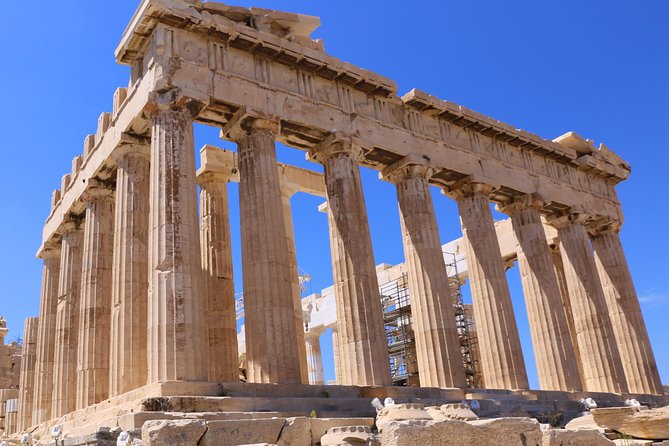
You’ll spend about 10 minutes at the Parthenon area. That might sound brief, but it’s actually realistic for a private walk. The bigger value isn’t time alone; it’s getting oriented quickly, then using your minutes to focus on the essentials.
The Parthenon is described here as the main temple dedicated to the virgin goddess Athena, so your guide should help you connect the building to its religious purpose and the broader Acropolis plan. The route also references nearby sacred spaces tied to Athena and Poseidon, along with key structures like the Temple of Athena Nike and the Theatre of Dionysus Elefthereus.
A quick heads-up: on sites like this, you’ll often be taking in views from angles while other visitors move around you. If you’re sensitive to crowds, earplugs can help, but the headsets (when provided) also make it easier to follow the guide without shouting over the group.
Odeon of Herodes Atticus and the Theatre of Dionysus: seeing the timeline in one place
One reason the Acropolis still feels powerful is that it isn’t only one era. The tour weaves in that timeline.
On the hill, you’ll visit the Odeon of Herodes Atticus, a stone Roman theater structure. The information provided here includes that it was completed in 161 AD and later renovated in 1950. Even if you’ve seen photos of the Odeon before, standing near it helps you understand how different cultures reused the same dramatic hillside stage.
You’ll also see the Theatre of Dionysus Elefthereus, described as a major theatre and considered by many to be the world’s first theatre. It’s built at the foot of the Acropolis. That matters because it anchors the hill not just as a temple complex, but as a cultural center tied to performances and civic life.
This part is a great reminder that Athens isn’t a museum of one moment. It’s a layered city where later builders and audiences kept using the same ground.
You can also read our reviews of more guided tours in Athens



Acropolis Museum: the plexiglass floor trick and why it changes your walk
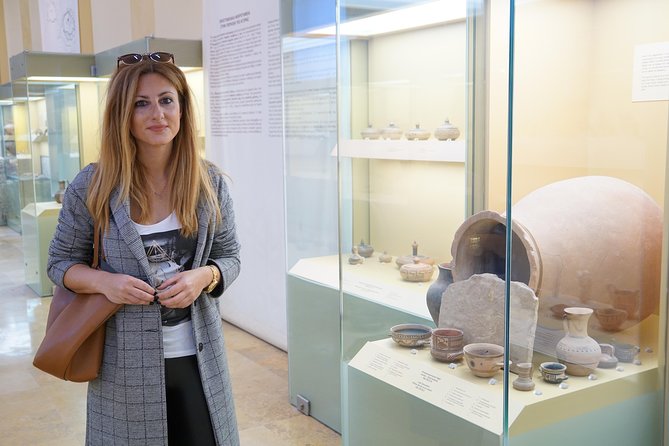
After the climb, you get about 1 hour at the Acropolis Museum. This stop is the payoff for people who like to understand what they’re seeing instead of just checking boxes.
The museum design includes a plexiglass floor that lets you look down at ruins of an ancient neighborhood. That’s not just a cool visual. It helps you picture the Acropolis area as lived space, not only monumental stone. The ruins were uncovered during excavations and then artfully incorporated into the museum.
The museum is described as a modernist building at the foot of the Acropolis’ southern slope. Inside, the collection covers Archaic and Roman periods, but the emphasis is on the Acropolis of the 5th century BCE, often considered the apotheosis of Greece’s artistic achievement. In practical terms, this means you see the strongest visual examples that match what you’re chasing outside.
One more angle: if you’re short on time and worried the Acropolis will feel like a blur, this museum stop gives you a mental reset. You’re not just walking on a hill; you’re learning the why behind the architecture.
Plaka: the village-feel streets for an easy reset after the ruins
Once you leave the big monuments behind, the tour shifts to mood. You’ll spend about 20 minutes in Plaka.
Plaka is described as having a village feel, with narrow cobblestone streets, small shops selling jewelry, clothes, and local ceramics, and sidewalk cafes and family-run tavernas that stay open late. There’s also a mention of Cine Paris showing classic movies al fresco.
The Anafiotika neighborhood nearby adds a specific vibe: whitewashed homes that can feel like a small Greek-island pocket inside the city. Even in just 20 minutes, it’s a nice contrast to the stone scale of the Acropolis.
If you want a practical move, treat Plaka as your warm-up for dinner. Look around, note where you want to sit, and then keep walking with less pressure.
Monastiraki: ruins, shopping chaos, and that late-afternoon Athens energy

Your last stop is Monastiraki, also around 20 minutes. This is where Athens turns into streets, noise, and browsing.
The area is known for landmarks including the ruins of Hadrian’s Library, the Ancient Agora, and the rebuilt Stoa of Attalos with a museum exhibiting Athenian artifacts. You’ll also see the Monastiraki Flea Market, described as a jumble of shops selling artisanal soaps, handmade sandals, and souvenir T-shirts.
Then there are the tavernas and restaurants around the streets, many with Acropolis views. Even if you don’t stop immediately, the timing works. You finish the tour here, and because it ends near a metro station, you can either stay for dinner or head out without extra hassle.
Price and value: what $395.69 per person covers (and what to watch)
At $395.69 per person, this isn’t a budget add-on. It’s priced like a focused private experience. The value comes from a few concrete items:
- Private tour: only your group participates
- Licensed tour guide: you’re paying for interpretation and on-site decision-making
- Entrance fees are listed as included for the Acropolis & Acropolis Museum
- Whisper headsets are provided for groups over 10 people
- Pickup offered (with adjustable time by request)
That said, the stop details also note that some admission tickets are not included for certain monument segments. The most practical approach is to confirm exactly what’s covered for entry at booking, especially if you have any must-see add-ons beyond the main stops.
Also, transportation to and from attractions is not included. If you’re budgeting, plan for taxis, rideshare, or walking between points. The meeting point is clearly set, and the tour ends at Monastiraki Square near a metro station, which helps you plan your next move.
Who this tour is best for (and who might want something else)
This works best if you want a guided “see it properly” route and you don’t want to piece together meaning on your own. You’ll also likely enjoy it if:
- You like learning as you walk, not after the fact
- You want major Acropolis sights plus the museum without spending a whole day
- You’re traveling with a group that can use headsets (if your group size is above 10)
The main reason to reconsider is fitness and pacing. The tour calls for moderate physical fitness. If you struggle with stairs or uneven ground, you may find the Acropolis portion stressful. In that case, you might prefer a more flexible plan with fewer uphill segments.
Practical tips to make the afternoon feel easier
Here’s how to get the most out of this 5-hour format.
Wear shoes you can trust. The Acropolis walk is not like strolling through a flat museum corridor. Bring a small water bottle if it’s warm. The tour includes indoor and outdoor time, so you’ll want to stay comfortable.
Keep your phone charged for photos, but don’t rely on it for context. The value is in the guide’s explanations and the order of stops—museum first, then the hill.
Finally, plan dinner nearby. Since the tour ends in Monastiraki, you’ll have food options within easy reach, and you won’t lose time commuting after the walk.
Should you book this Athens Walking Private Tour?
If you want a smooth first-date-with-Athens plan, I think this is a strong choice. The biggest win is structure: you get Acropolis context in the museum, then you see the buildings outside with guidance, and you finish with Plaka and Monastiraki so the day doesn’t end abruptly.
If you’re the type who loves figuring things out independently, you might not need a guide. But if you want to reduce guesswork and keep your time tight, the licensed guide approach pays off.
Just confirm entry coverage details when you book, since the route notes mention some tickets not included while entrance fees are listed as included for the Acropolis and the Acropolis Museum. Once that’s clear, you’ll be set for an afternoon that feels organized and genuinely memorable.
FAQ
How long is the Athens Walking Private Tour?
It lasts about 5 hours.
Is this tour private?
Yes. It’s a private tour/activity with only your group participating.
What time does the tour start, and where does it begin?
The start time is 2:00 pm. It begins at Coco-Mat Athens BCFalirou 5, Athina 117 42, Greece.
Where does the tour end?
The tour ends at Monastiraki Square in Athens, near a metro station.
Is pickup available?
Pickup is offered, and the pickup time is adjustable upon your request.
What language is the tour in?
The tour is offered in English.
Are entrance fees included?
Entrance fees are listed as included for the Acropolis and Acropolis Museum.
Are whisper headsets included?
Yes. Whisper headsets are included for groups over 10 people.
What kind of fitness level do I need?
The tour suggests a moderate physical fitness level.

More Walking Tours in Athens


More Tours in Athens

More Tour Reviews in Athens
- All Day Cruise -3 Islands to Agistri,Moni, Aegina with lunch and drinks included
★ 5.0 · 4,958 reviews