REVIEW · ATHENS
Small Group Tour: Balkans & Central Europe from Athens to Vienna
Book on Viator →Operated by Choose Balkans · Bookable on Viator
UNESCO days, smoother driving, and real street time. This small-group Athens-to-Vienna trip strings together Greece, Albania, Kosovo, North Macedonia, Montenegro, Bosnia & Herzegovina, Serbia, Hungary, Slovakia, and Austria with a guide who handles the heavy lifting. I like that you’re picked up in Athens, then you follow a clear route from Delphi to Danube cities and end in Vienna without day-to-day guesswork.
What I also like is how often the trip mixes famous sights with lived-in local moments: church view points, castle streets, market breaks, and meals you can actually remember (and repeat at home). One thing to consider: the days add up—there’s plenty of walking on uneven ground and cobblestones, and lunch/dinner aren’t included, so you’ll want to budget for food you’re not expecting.
In This Review
- Quick hits before you commit
- First stop Athens to Delphi: getting your bearings fast
- Meteora sunset time: UNESCO monasteries on rock walls
- Albania starts to hit: Ioannina, Gjirokaster, and the Stone City feeling
- Berat and its 1001 windows: living history inside castle walls
- North Macedonia: St. Naum and Ohrid’s lakeside UNESCO pull
- Tirana food, markets, and Bunk’Art 2
- Kruja and Prizren: medieval resistance, bazaars, and fortress views
- UNESCO monastery time and farm lunch vibes in northern Albania
- Montenegro coast to Bosnia bridges: Budva, Kotor, and Stari Most
- Sarajevo’s layers and Belgrade’s fort view: war memory and city theater
- Serbia’s wine towns and Danube architecture: Karlovci to Subotica
- Budapest, Győr, and Bratislava: classical centers with real evening time
- Vienna finale: hotel drop-off and your first easy day after
- Price and what $7,734.19 really buys you
- Who should book this Athens to Vienna route
- FAQ
- How many travelers are in the group?
- Where does the tour start and end?
- What’s included in the price?
- Are lunch and dinner included?
- Do I get breakfast every day?
- What if I want a single room?
- Can I cancel or change after booking?
- Should you book this tour?
Quick hits before you commit
- Max 10 travelers means less chaos and more time to ask questions.
- Breakfast included 20 times keeps mornings simple, especially after travel days.
- Delphi + Meteora + UNESCO sites on early days gives you that big “this is real” feeling fast.
- Bunk’Art 2 turns Albania’s Cold War story into something you can walk through.
- Sarajevo on both foot and memory: Ottoman and Austria-Hungary parts of town, plus visible reminders of the war.
- Danube finish: Budapest, then Bratislava, then Vienna—classic Central Europe momentum.
First stop Athens to Delphi: getting your bearings fast
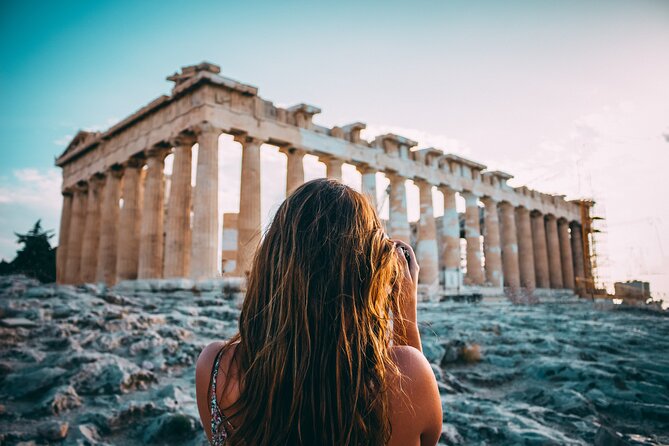
Starting with Athens makes sense. You get hotel pickup, then the tour guide turns day one into a “let’s orient you” day rather than a “figure out transit” day. That matters on a route like this, where you’re hopping countries and borders. You don’t want your first morning eaten by logistics.
The first big anchor is Delphi, a UNESCO site and one of the best-known spiritual and archaeological places in Greece. You’ll be walking through areas linked to the Temple of Apollo, the Treasury of the Athenians, and a few highlights that archaeology-heads get genuinely excited about. The tour notes the Castalian Fountain and the Theater and Stadium, and it also points out the museum pieces, including the Antinoos statue and the Bronze Charioteer (dated 475 B.C.). Even if you’re not an expert, those details help you see what’s actually worth your attention.
Practical tip: give yourself time to slow down here. Delphi rewards lingering—there’s a lot packed into a relatively compact site. If you rush, you’ll miss the small story lines the monuments share with each other.
You can also read our reviews of more tours and experiences in Athens.


Meteora sunset time: UNESCO monasteries on rock walls
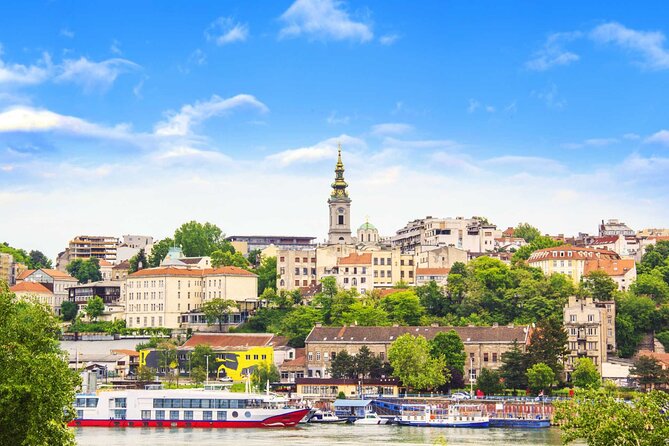
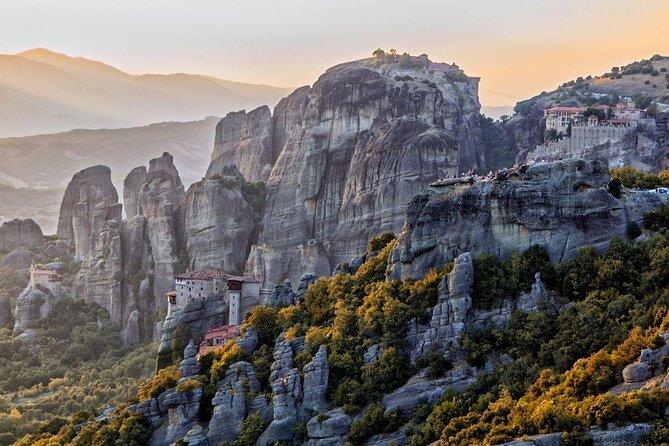
After Delphi you drive toward Meteora, another UNESCO stop. The defining feature is simple: monasteries built on top of massive rock formations. That means you’re not just looking at buildings—you’re looking at a whole geology-and-history combo.
This is the day that tends to feel most cinematic. The itinerary includes extra time for what’s effectively a sunset window. You’ll see the monasteries against changing light as the sky turns into a color show. That’s the kind of moment you can’t fake with photos later.
Possible drawback: Meteora is one of those places where weather and footing matter. Wear shoes you trust for steps and uneven ground. If you’re expecting a totally flat, stroller-easy walk, you might be disappointed.
Albania starts to hit: Ioannina, Gjirokaster, and the Stone City feeling
From Greece you move into the region’s border-crossing culture, starting with Ioannina. I like the structure here: you get old-town atmosphere first, then a “big structure” visit next. Ioannina is described as showing Byzantine and Ottoman eras side-by-side, and you’ll walk cobbled streets where the architecture tells you which century you’re standing in.
Then comes Ioannina Castle. Inside the walls, the tour frames it as a labyrinth of narrow streets and historic buildings. That’s a nice way to keep things active—you’re not just looking out at a view; you’re moving through old spaces.
By day two or three, you’re already in Gjirokaster, Albania’s “Stone City.” Gjirokaster is UNESCO-listed, and the tour emphasizes how the town feels fortified—houses acting like mini fortresses. You’ll also see the medieval bazaar area right before the castle and get a more hands-on feel for crafts. The highlight addition here is the Skenduli House, described as one of the best-preserved houses with original authenticity.
Why I think this works for you: This part of the trip teaches you how the Balkans built defense into daily life. It’s not just castles. It’s the way entire neighborhoods were shaped for survival.
Berat and its 1001 windows: living history inside castle walls
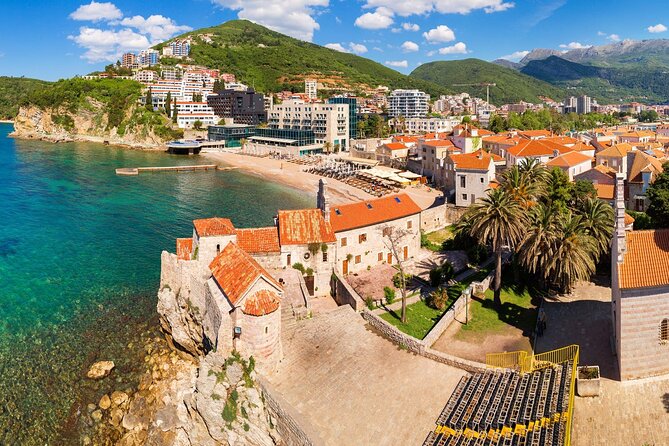
Next up is Berat, UNESCO-listed and known as the town of 1001 windows. That nickname isn’t marketing fluff; it’s basically what you’ll notice as you walk through the narrow stone streets and look up at stacked, overlapping windows on hillside houses.
You also visit Berat Castle, with details like Illyrian roots, the later castle-city period, and the fact that residents still live inside the castle walls today. That last part is important. You’re not visiting a “dead museum town.” You’re visiting a place where people still use the space.
The tour also includes stops tied to art and faith, like the National Iconographic Museum Onufri. It’s built around the painter Onufri and the reddish color associated with his work—small detail, but it helps you understand why certain styles matter in this region.
Consideration: Berat has lots of layers—old, medieval, Ottoman, communist-era remains. If you like a straight line, you may feel a bit “time-jumped.” If you like context, it’s great.
North Macedonia: St. Naum and Ohrid’s lakeside UNESCO pull
Crossing into North Macedonia, the trip slows down in nature and sacred sites before it ramps back up in city time. You stop at the Monastery of St. Naum at the source of the River Crni Drim, in a protected area tied to Lake Ohrid. The setting—clear spring water and the mountain backdrop—is exactly the sort of calm contrast that keeps big itineraries from feeling like nonstop travel.
Then you reach Ohrid. Ohrid Lake and Ohrid are UNESCO-listed, and the itinerary frames the area as one of the oldest human settlements in Europe. You’ll see key religious spots: Church of St. John, Church of St. Nicolas, and Halveti Hayati Tekke, plus a viewpoint experience.
Ohrid’s “365 churches” idea is mentioned in the tour plan. Even if you don’t count them, the point is the density of sacred architecture and the way the city’s identity is tied to Orthodox faith and Byzantine-era influence.
Practical tip: Ohrid is scenic, so build in time for pauses. You’ll enjoy the churches more when you’re not rushing between one photo and the next.
- All Day Cruise -3 Islands to Agistri,Moni, Aegina with lunch and drinks included
★ 5.0 · 4,958 reviews
Tirana food, markets, and Bunk’Art 2
One of the smartest inclusions here is how the trip handles Tirana. You don’t just do a drive-by; you get a structured local experience with food stops and a real museum.
You’ll start with a local companion-style city discovery and a food break focused on Byrek at Tregu Çam. After that, you visit Çam bazaar, connected to the Çam community and the area of Çameria. That’s the kind of historical migration link that makes a bazaar stop more than shopping time.
Then you move into Pazari i Ri for lunch-style tasting: Qofte (meatballs) grilled and paired with bread, with vegetarian options mentioned too. The itinerary also includes tasting Albanian Raki, and the tone is very much “try it and move on”—not a lecture, just a chance to sample.
The final Tirana stop is Bunk’Art 2. It’s a converted nuclear bunker tied to Enver Hoxha. The value isn’t just the Cold War angle—it’s the “walk-through” format and the video exhibition covering daily life during the communist regime. If you want a deeper understanding of Albania beyond seaside photos, this helps.
Possible drawback: Museums like Bunk’Art 2 can be intense. If you’re sensitive to heavy history, take breaks and don’t feel you need to rush every room.
Kruja and Prizren: medieval resistance, bazaars, and fortress views
Kruja enters the story as a symbol of Albanian resistance to Ottoman expansion. The old bazaar stop (Pazari i Vjeter) is timed so you can wander wooden stalls and look for souvenirs that aren’t just mass-produced. Then comes Kruja Castle, described as strategically placed on a rocky hill and connected to escape routes through hidden paths.
After that, you cross into Kosovo and Prizren. Prizren gets framed as the cultural capital, with a mix of religious tolerance and Ottoman/Byzantine-era influence. You’ll walk by the river and bridges, and you get a quick orientation to why the old town can feel like a lived-in patchwork of eras.
You’ll also visit the Sinan Pasha Mosque and then the Kalaja Fortress for a panoramic view. The itinerary even gives you a seasonal context: Dokufest in August, a short film festival hosted in the medieval city. Even if you’re not there in August, it signals that Prizren has a personality beyond monuments.
Tip for you: fortress viewpoints are best when you pace yourself. Don’t just snap and sprint. Stand still for a few minutes and let the town layout make sense.
UNESCO monastery time and farm lunch vibes in northern Albania
The itinerary doesn’t just chase famous cities. It includes protected nature stops and slower food experiences.
There’s a stop at Drilon National Park, described as a tranquil area with spring water forming a small lake and a shoreline lined with weeping willows. It’s a brief pause but helpful on long driving days. Then you move toward St. Naum again earlier in the flow, and later you visit monasteries like Decan.
Decan (UNESCO-listed since 2004) is described as a white monastery where Orthodox monks still inhabit the complex and make organic foods like cheeses. The frescoes are tied to life in the 14th century and the Palaeologan renaissance. That “people still live the tradition” detail is the kind of thing that makes sacred sites feel real rather than staged.
Later, you visit Mrizi i Zanave, a slow food agro-tourism farm. You’ll tour the farm and learn how it preserves and processes regional bio fresh local products, plus how the family business adapted old communist buildings to store products. There’s also time for lunch or buying produce.
Practical consideration: This is the part of the trip where you’re most likely to spend money on food you’ll want to take home (cheese, packaged products). If you travel light, plan luggage capacity.
Montenegro coast to Bosnia bridges: Budva, Kotor, and Stari Most
Once the trip hits the coast, it changes pace again. You’ll stop near Sveti Stefan for photos from a viewpoint, and then arrive in Budva with a split old town/new town feel. The itinerary points out St. Ivan church and St. Mary church, plus the medieval old town. The vibe here is “yes, it’s a tourist place,” but you still get the old center details.
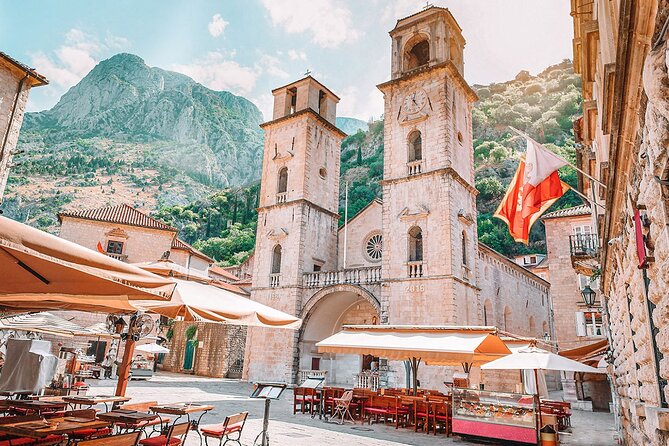
Then comes Kotor, UNESCO-listed, and described as a maze of narrow cobblestone streets in the old town. You’ll also visit Saint Luke’s church, noted for local significance and a theme of unity.
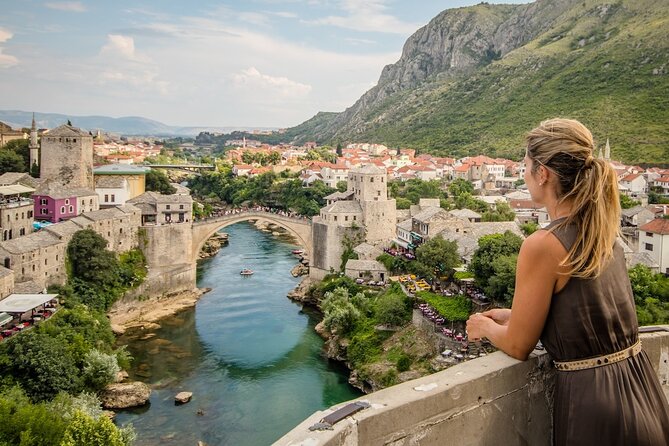
From Montenegro you cross into Bosnia & Herzegovina for Mostar. The centerpiece is the Old Bridge, Stari Most, UNESCO-listed and built in typical Islamic architectural style in the 16th century. You also wander the Old Bazaar with colorful streets and lively atmosphere, plus the “Don’t Forget” stones commemorating the city’s history. The itinerary also includes Blagaj tekija, a monastery near a cliff with blue waters in front.
Why this sequence is good: It’s not just beaches and photos. It’s “here’s how empires, faith, and architecture overlap,” all within walking distance of each other.
Sarajevo’s layers and Belgrade’s fort view: war memory and city theater
Sarajevo is heavy in the best way—context matters here. The itinerary mentions visible reminders of the Yugoslav War, including bullet holes and cannon marks. You’ll walk uneven terrain during the city tour and see Ottoman and Austria-Hungarian parts of Sarajevo, including markets, bazaars, mosques, churches, and synagogues. The tour calls Sarajevo the Real European Jerusalem, and the point is the mix you see on the street.
You’ll also visit the Latin Bridge and connect it to the story of how World War I was triggered. Then you get free time for traditional dishes and dessert in the old town. That’s a smart balance: history first, then food so your brain gets to reset.
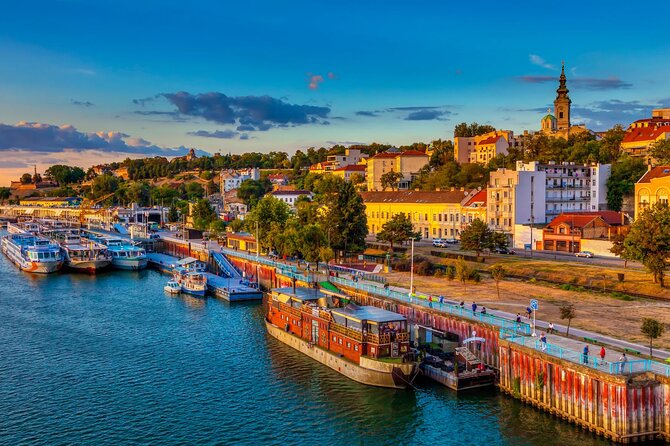
Later you reach Serbia with a stop in Zvornik on the Drina River before heading to Belgrade. In Belgrade you visit Belgrade Fortress and Kalemegdan Park at the confluence of the Sava and Danube. You also cover Knez Mihailova and the walk toward Republic Square. The Pobednik monument is included too, with its history dating back to 1913.
Practical tip: if you like photo angles, Belgrade Fortress delivers, but it’s worth bringing a water bottle. River wind can be sneaky.
Serbia’s wine towns and Danube architecture: Karlovci to Subotica
A key highlight in Serbia is Sremski Karlovci. The itinerary frames it as a museum-town feeling with a Baroque center and strong wine culture. You visit the area and then get time to taste different wine specialties, with vineyard views.
Next you spend time in Novi Sad, focused on its Austro-Hungarian and Ottoman influences and Baroque architecture. The Petrovaradin Fortress is highlighted as the Gibraltar on the Danube, and you’ll walk the pedestrian streets around the old town.
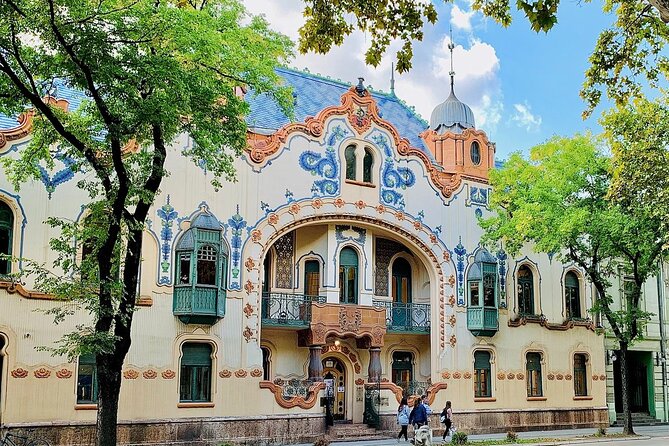
Then it’s Subotica. This is one of the more “architectural” stops in the Serbian portion. The tour emphasizes its Austro-Hungarian-era wealth and the city hall area as the core of the center. There’s also time for cuisine and quality wines.
Consideration: These towns come quick. If you’re tired of sightseeing, keep your energy by choosing one or two “must-do” walks each day instead of chasing every street.
Budapest, Győr, and Bratislava: classical centers with real evening time
Budapest is the star here. You’ll see key sights including Saint Stephen’s Basilica, the Opera, the Parliament building, Heroes’ Square, and Fisherman’s Bastion. The city gets divided into Buda and Pest, and you’ll get that sense as you cross bridges and walk key areas.
The itinerary includes Buda Castle (UNESCO-listed) and then leaves time for a free evening to explore on your own. That free time is valuable because Budapest works best when you can wander without a timetable. You’ll also notice how the city’s architecture mixes Baroque, Neoclassical, and Art Nouveau.
Then you head to Győr, described as a “City of Rivers,” with baroque architecture and Hungarian food. You’ll visit the town hall with its 59-meter tower and green top, and the Cathedral of the Virgin Mary built in Roman style in the 11th century. There’s also a synagogue stop where the architecture is said to have inspired other Central Europe synagogues, plus a walk on a pedestrian street full of cafes and bars. The tour specifically mentions blueberry beer—worth trying if you like oddball local drinks.
In Bratislava you explore the medieval Old Town Hall area, then Michael’s Gate and Bratislava Castle overlooking the city. The itinerary also gives time for Bratislava Old Town and specifically points you toward the café culture and traditional coffee shops.
Practical tip: Central Europe afternoons can turn chilly fast. Bring a light layer so you don’t lose time to comfort issues.
Vienna finale: hotel drop-off and your first easy day after
The tour ends in Vienna with a hotel drop-off. Even though the final day is short on planned stops, it gives you a clean handoff. You can arrive, shower, and immediately pick your own first-steps plan for Vienna without racing to another meeting point.
If you’re using this trip as your “starter course” for the region, Vienna is a great reward: big-city confidence without the nonstop schedule you’ve just been living.
Price and what $7,734.19 really buys you
This is not a budget trip. At $7,734.19 per person, you’re paying for a lot of friction removal. The tour includes private transportation throughout, a professional tour leader, hotel pickup in Athens and hotel drop-off in Vienna, and accommodation with breakfast in 3-star hotels. It also includes tourist taxes and entry tickets for the sites on the plan, plus road and insurance items.
Here’s how to think about value: you’re essentially buying “planning time.” Over 21 days and 10 countries, the effort to coordinate driving, border timing, hotel changes, and multiple ticket reservations can explode. This tour handles it, which matters if you want your vacation brain to stay switched on.
What you need to budget for is mostly personal food time. Lunches, dinners, drinks, snacks, and souvenirs aren’t included. If you’re the type who likes long sit-down meals or wine every night, your final total will climb fast.
Single-room travelers should note the extra charge of 45 euros per night in a 3-star hotel. Also, tipping isn’t required in Albania or the Balkans on the plan, but the tour recommends tipping the tour leader/driver as an international practice for good service.
Who should book this Athens to Vienna route
This tour is a strong fit if you want:
- A small group pace with a real guide.
- A route that mixes UNESCO sites with everyday old towns and bazaars.
- Fewer “what do we do next?” decisions for 3+ weeks.
It may not be perfect if:
- You hate long driving days and constant city-to-city movement.
- You want meals fully included (they aren’t).
- You have mobility limits. The plan includes walking on uneven terrain in Sarajevo, plus lots of steps and cobblestone streets in several cities.
FAQ
How many travelers are in the group?
The tour has a maximum of 10 travelers.
Where does the tour start and end?
It starts with hotel pickup in Athens and ends with hotel drop-off in Vienna.
What’s included in the price?
Private transportation, a professional tour leader, hotel pickup/drop-off (Athens/Vienna), accommodation with breakfast for the overnights, tourist taxes, entry tickets for scheduled sites, and insurance/road items are included.
Are lunch and dinner included?
No. Lunches, dinners, drinks, and snacks are not included.
Do I get breakfast every day?
Breakfast is included for 20 mornings (breakfast for the overnights).
What if I want a single room?
Single room occupancy is possible for an additional 45 euros per night per person in a 3-star hotel.
Can I cancel or change after booking?
No. The experience is non-refundable and cannot be changed for any reason.
Should you book this tour?
If you want a single trip that covers a lot of ground—Albania, Kosovo, Montenegro, Bosnia, Serbia, Hungary, Slovakia, and Austria—without handling logistics yourself, I think this is a smart way to do it. The best part is the balance: UNESCO stops early, then real street scenes, markets, and story-focused museums like Bunk’Art 2.
Book it if you like structure and you want a guide who helps you see and taste the places beyond the postcard view. Skip it if your dream trip is slow, self-directed, and meal-inclusive from start to finish.

More Tours in Athens

More Tour Reviews in Athens
- All Day Cruise -3 Islands to Agistri,Moni, Aegina with lunch and drinks included
★ 5.0 · 4,958 reviews