REVIEW · ATHENS
Acropolis and Acropolis Museum Private Tour with Licensed Expert
Book on Viator →Operated by WARMPENGUIN · Bookable on Viator
Marble comes alive fast. This private Acropolis and Museum experience pairs you with a licensed expert who explains the Parthenon, the Theater of Dionysus, and the museum pieces in clear, story-driven context. You’re not just walking between ruins. You’re learning how the place worked in ancient Athens and why it still matters today.
I also love the pace you control, with a 3-hour split that gives time on the hill and time in the modern Acropolis Museum. Just plan on entrance fees on top of the tour price, since tickets are not included—and the Acropolis involves stairs and uneven ground.
In This Review
- Key highlights to know before you go
- Entering the Acropolis with a licensed expert (not just a walking tour)
- Meeting at Acropoli Metro (Makrygianni 7) so you start in the right place
- Your 80-minute Acropolis game plan: from Dionysus to the Parthenon
- Theater of Dionysus: the oldest stage in the world
- Ascending toward Propylaia: the monumental gateway moment
- Temple of Athena Nike: early Classical, strong views
- The Parthenon: myth + engineering in one stop
- Erechtheion: a temple with complicated devotion
- Odeon of Herodes Atticus: a working theater for 2,000 years
- What the Acropolis Museum adds in 80 minutes
- Price and what you really get for $188.65
- Picking the right option: Acropolis-only, Acropolis+Agora, or a full city tour
- Acropolis-only option: best if you want extra time for photos
- Acropolis + Acropolis Museum: best overall match for first-timers
- Acropolis + Ancient Agora: more Athens, more walking
- City tour by luxury vehicle (5 hours): for seeing more fast
- Timing matters: crowds, heat, and when to chase honey-colored stone
- Who should book this private Acropolis and Museum tour
- My call: should you book?
- FAQ
- Is the entrance ticket included in the tour price?
- Where is the meeting point for the guide?
- How long does the tour take, and how is the time split?
- Does this tour include the Acropolis Museum?
- Is it really private, or is it shared with strangers?
- Do you help with skip-the-line tickets?
Key highlights to know before you go
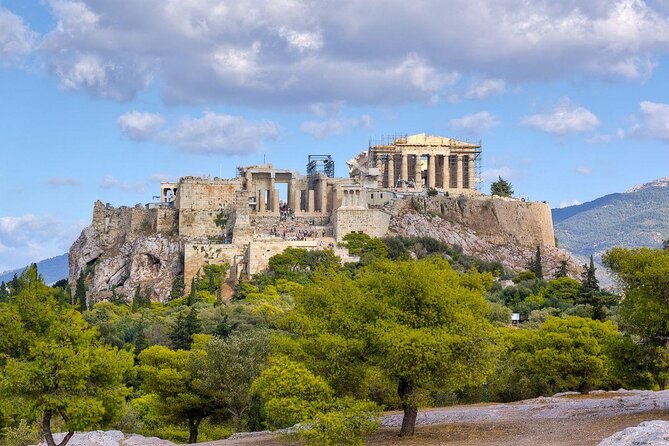
- 80 minutes at the Acropolis focused on the big monuments, plus side stops like the Theater of Dionysus
- 80 minutes in the Acropolis Museum with originals, models, videos, and interactive displays explained for you
- Licensed experts who can guide inside the Acropolis and Museum with you
- Propylaia to the Parthenon: you’ll get the “what you’re seeing and why it’s special” for each stop
- One meeting point that’s easy to find: Acropoli metro (street level), 7 Makrygianni Street, near the museum
- Optional upgrades that can add the Ancient Agora or turn it into a broader Athens city tour by vehicle
Entering the Acropolis with a licensed expert (not just a walking tour)
The Acropolis can feel like a blur if you’re self-guiding. One moment you’re photographing columns, the next moment you’re wondering which temple you’re standing in and what you’re supposed to care about. This tour fixes that by putting a licensed guide with you—someone allowed to lead you through the Acropolis and the museum with the right access and training.
What makes a real difference is the way the guide connects the stones to the ideas. You’ll hear myth tied to architecture, and architecture tied to how ceremonies and worship shaped daily life in ancient Athens. Guides come through with different styles, but you’ll often hear the same theme: the best stops are the ones where you understand what you’re looking at.
And it’s not only about big names like the Parthenon. You also get context for the smaller moments that make the site feel human. When you’re shown the Theatre of Dionysus and told how many famous Greek plays began there, the hill stops being a “viewpoint” and becomes a stage.
You can also read our reviews of more private tours in Athens



Meeting at Acropoli Metro (Makrygianni 7) so you start in the right place
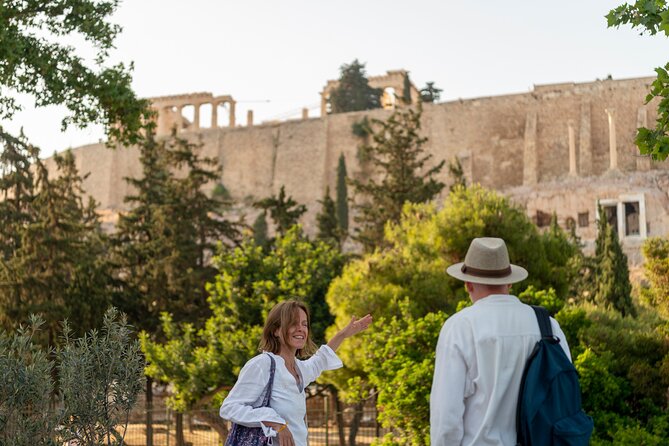
Your tour begins at the Acropoli metro station at street level, at 7 Makrygianni Street, close to the Acropolis Museum. That location is a win. It keeps the start simple and means you’re positioned well for what comes next—especially if you end at the museum later.
The guide’s starting setup matters. From this meeting area, you can get a good perspective on the surrounding Acropolis wall built by earlier Mycenean civilization, and that quick orientation helps you frame the rest of the climb.
Practical tip: aim to show up a bit early. The tour is private, so you don’t want to be the person holding up the group at the first stop.
Your 80-minute Acropolis game plan: from Dionysus to the Parthenon

The Acropolis portion runs about 80 minutes. That’s long enough to see the major monuments without feeling like you’re sprinting, but short enough that the guide can keep you focused.
Theater of Dionysus: the oldest stage in the world
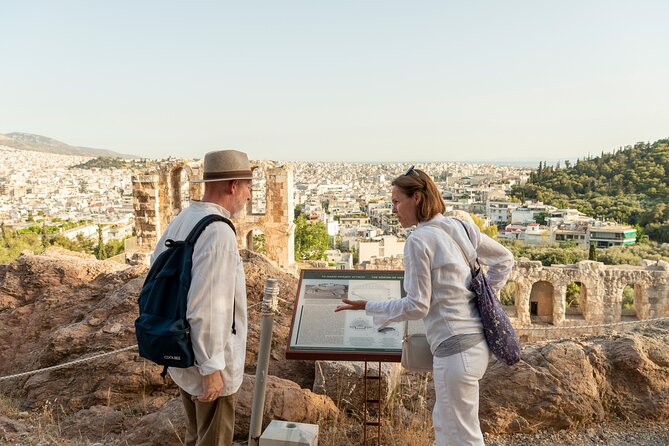
One of the first stops is the Ancient Theatre of Dionysus. It sits in a natural amphitheater on the Acropolis slopes, built in the 4th–5th century BC, with an estimated capacity of about 25,000. It’s often described as the world’s oldest theater, and that fact lands better when you hear it with the actual space in front of you.
Here’s what you should look for: the way the theater hugs the slope, and how the seating layout turns the hillside into a kind of built-in audience. Once you picture thousands of people filling those seats for performances, the Acropolis feels less like a museum and more like a living cultural center.
Ascending toward Propylaia: the monumental gateway moment
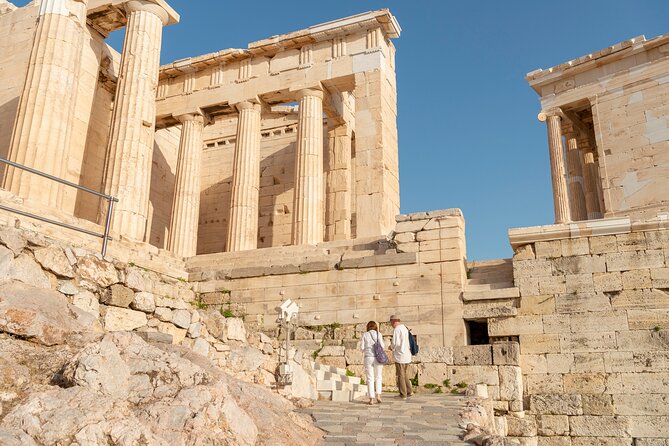
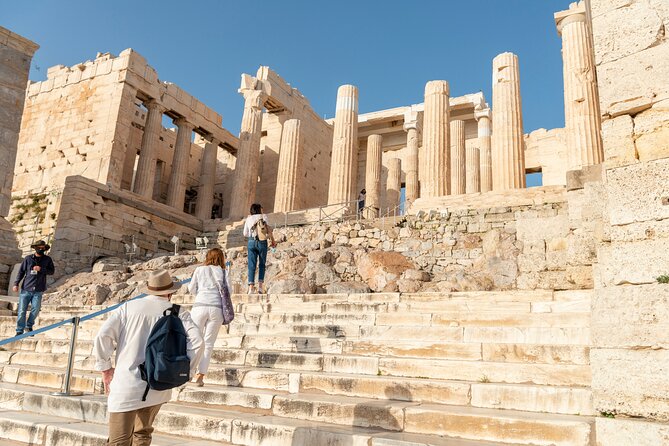
Next, you’ll move toward the Propylaia (monumental gateway) and the entrance into the Acropolis proper. This is the “threshold” moment. You’re transitioning from the world of the city to the world of temples and ceremonies.
The guide will also bring in a classic story: a huge decorated bronze statue of Athena was said to greet incoming visitors, with the tip of her spear visible from ships in sunlight. Even if you treat the story as legend, it helps you understand how the Greeks used visibility, symbolism, and perspective to announce sacred space.
You can also read our reviews of more museum experiences in Athens




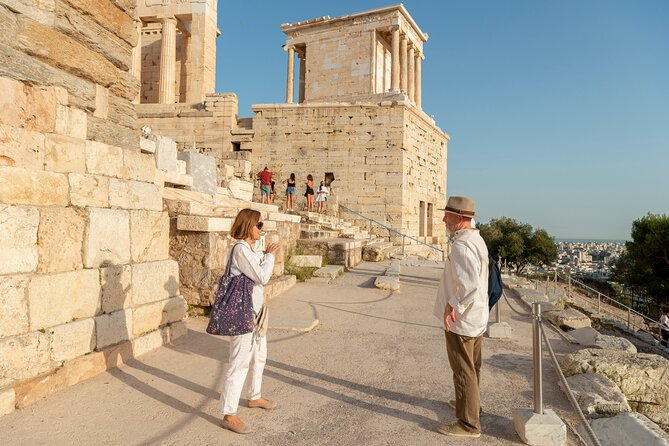
Temple of Athena Nike: early Classical, strong views
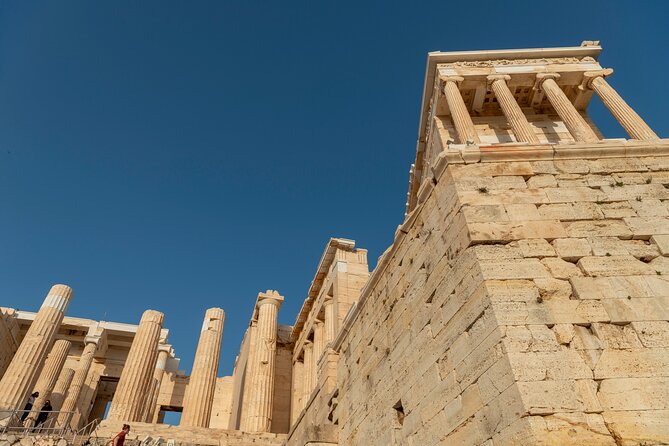
One of the temples you’ll see is the Temple of Athena Nike. It was built around 420 BC and is an early Classical Ionic temple dedicated to Athena, with a prominent position overlooking the city. Much of it is largely restored, so it’s a good stop for understanding both the original design and what restoration can (and can’t) tell you.
Look at proportions and placement. You’re not only viewing a building—you’re reading how it was meant to command attention.
The Parthenon: myth + engineering in one stop
The Parthenon is the centerpiece, and you’ll spend meaningful time here. The guide will explain it as the height of the “Golden Age” of Classical Greece—an artistic, architectural, and engineering masterwork tied to ceremony and worship in Athens.
What I find useful is the way the guide turns the Parthenon from a postcard into a specific system: how it’s structured, what myths connect to it, and why it became the symbol that it is today. If you only remember one thing from this tour, let it be this: the Parthenon isn’t just famous because it’s old. It’s famous because it was designed to do something—visually, politically, spiritually.
Erechtheion: a temple with complicated devotion
You’ll also see the Erechtheion, dedicated to both Zeus and Athena. It’s the second largest temple of the Acropolis, and the guide will point out its major features and the mythology connected to it. This is a great counterbalance to the Parthenon because it reminds you that the Acropolis wasn’t one single story—it was many stories layered in one sacred zone.
Odeon of Herodes Atticus: a working theater for 2,000 years
Finally, you’ll encounter the Odeon of Herodes Atticus, built in AD 161 in memory of his wife. It’s a marble amphitheater that still functions as a working theater today.
When you stand there, it’s easier to understand continuity: yes, the ancient world is gone, but the idea of performance and gathering persists. That mix of old and living is one reason the Acropolis hits harder with a guide. You learn how to see past the “ruin” label.
What the Acropolis Museum adds in 80 minutes
After the hill, you get about 80 minutes at the Acropolis Museum, which is a smart pairing. The museum is where you stop guessing and start confirming.
Instead of only viewing fragments in their outdoor context, you’ll see original masterpieces inside—along with models, videos, and interactive installations. The guide points out what’s most significant and explains the stories behind major pieces.
Here’s the value: the Acropolis and the museum explain each other. Outdoors, you learn placement and scale. Indoors, you learn details and meaning. It’s the difference between seeing a puzzle piece in the wrong box versus seeing the completed picture in a study room.
Also, the museum is usually a relief—especially in summer. Even if you’re fast-walking the Acropolis, your body appreciates the transition to indoor air-conditioning while your brain keeps working.
A useful tip: if you care about photos, prioritize your Acropolis time first. Then let the museum be about details and explanations, not about trying to “cover everything” in camera mode.
Price and what you really get for $188.65
At $188.65 per person for about 3 hours, this is not a budget “see it and go” outing. But it’s also not just paying for a person holding a flag. You’re paying for:
- A private format (only your group)
- Licensed expert access inside the Acropolis and the museum
- A timed structure: about 80 minutes on the hill plus 80 minutes in the museum
- Optional upgrades that can add more Athens sights or extend the experience with a vehicle
Important budget note: entrance fees are not included. The data you’ll need is clear:
- Acropolis admission: 30 Euro per person
- Acropolis Museum admission: 20 Euro per person
- Ancient Agora admission (if added): 20 Euro per person
So for the Acropolis + museum option, you should mentally add about 50 Euro for admissions on top of the tour price. That doesn’t make the tour “expensive.” It just means the total cost is a two-part equation: tour service + site tickets.
One more practical detail: the operator may contact you after booking about skip-the-line ticket needs so your guide can have everything ready. If you want to reduce waiting time, respond promptly when they message.
Picking the right option: Acropolis-only, Acropolis+Agora, or a full city tour
This experience comes in a few different configurations, and the right choice depends on your energy level and your priorities.
Acropolis-only option: best if you want extra time for photos
If you choose Acropolis only, the tour is shorter (about 90 minutes in the included version described), and the tour ends inside the Acropolis so you can stay for additional photos and city views.
This can be a good move if you’re the type who wants time to linger on viewpoints and keep exploring after the guide’s highlights.
Acropolis + Acropolis Museum: best overall match for first-timers
The Acropolis + Museum option is the core pairing and the one I’d recommend most often. You get the outdoor scale of the temples and the indoor explanations of the originals. The tour structure also helps you avoid the common problem of spending too long in one place and feeling under-informed in the other.
Acropolis + Ancient Agora: more Athens, more walking
If you add the Ancient Agora (a 3-hour option), the guide brings another slice of ancient civic life into the mix. But there’s a caution: there’s some walking distance with rough cobbles, so it’s not recommended for anyone with limited mobility. The tour also ends at the Agora.
If you love Athens beyond the big scenic hits, this option can feel more complete. If you’re sensitive to uneven ground, you may prefer the Acropolis + Museum focus.
City tour by luxury vehicle (5 hours): for seeing more fast
For a broader itinerary, the 5-hour luxury vehicle option adds major Athens stops beyond the Acropolis and museum. It includes return transfers and a licensed guide at both major sites, plus city highlights like:
- Temple of Zeus
- Hadrian’s Arch
- Olympic Stadium
- Athens Trilogy
- Syntagma Square & Guards
This is best when you want the Acropolis experience but also want a fuller “Athens sampler” without coordinating multiple rides.
Timing matters: crowds, heat, and when to chase honey-colored stone
The Acropolis is famous, which means timing is not optional. Your guide may recommend crowd-smart planning based on the day and season.
If you’re booking Acropolis only, the tour information specifically suggests choosing a time after lunch for a crowd-free experience and the chance to catch golden light and honey-colored hues on the temples.
At the same time, summer strategy is real. The hill can heat up fast, and the museum is cooler. If you’re visiting in high season, going early can keep the Acropolis experience more manageable before the midday surge.
My practical advice: wear sunscreen, bring water, and plan for slow steps. This isn’t a “power walk” site unless you’ve trained for Athens stairs.
Who should book this private Acropolis and Museum tour
This is a strong fit if you want:
- A first-class guided introduction to the Parthenon and the major monuments
- A setup where myths, symbolism, and architecture are explained in plain language
- A pace that stays private, so you can ask follow-up questions without fighting through a crowd
- A museum stop that actually helps you understand what you just saw
It’s also ideal for groups that appreciate a quieter format. There’s a whisper communication system for groups of 6 or more, which helps you hear your guide when the site is packed.
If you’re traveling with kids, the guide’s storytelling approach can turn the site into something active rather than just “look at old rocks.” If mobility is limited, be extra careful with options that add the Agora because of cobbles and extra walking.
My call: should you book?
If you’re choosing between self-guided and guided, I’d pick this kind of private tour almost every time—because the Acropolis rewards understanding. Paying for a licensed expert means you don’t waste your limited time trying to decode monuments on your own.
Book it when:
- You want the Acropolis and Museum paired cleanly in one half-day
- You care about how the buildings connect to Greek myth and civic life
- You want flexibility to ask questions and move at your own comfort level
Skip it (or switch options) if:
- You’re strictly on a tight budget that can’t handle 50 Euro+ in site admissions on top of the tour
- You don’t want guided explanations and prefer wandering freely without a structure
- You have mobility concerns that make rough cobbles and extra walking a problem, especially on options that include the Agora
FAQ
Is the entrance ticket included in the tour price?
No. Entrance fees are not included. The Acropolis is listed at 30 Euro per person and the Acropolis Museum at 20 Euro per person. The Ancient Agora fee is listed as 20 Euro per person if you choose that option.
Where is the meeting point for the guide?
The guide waits at the Acropoli metro station at street level at 7 Makrygianni Street, close to the Acropolis Museum.
How long does the tour take, and how is the time split?
The Acropolis and Museum private tour is about 3 hours total, split roughly into 80 minutes on the Acropolis and 80 minutes at the Acropolis Museum.
Does this tour include the Acropolis Museum?
It depends on the option you book. The Acropolis and Museum option includes both sites. The Acropolis-only option includes the hill only, and the Acropolis plus Ancient Agora option replaces the museum with the Agora.
Is it really private, or is it shared with strangers?
It’s a private tour/activity, so only your group participates.
Do you help with skip-the-line tickets?
After booking, the operator contacts you to ask if you want help purchasing skip-the-line tickets so your guide has them ready. If you do not reply, it assumes you have already purchased tickets for the right time slots.




More Private Tours in Athens


More Tours in Athens


More Tour Reviews in Athens
- All Day Cruise -3 Islands to Agistri,Moni, Aegina with lunch and drinks included
★ 5.0 · 4,958 reviews