REVIEW · ATHENS
4 Days Private Tour: Corinth – Mycenae – Nafplio – Olympia- Delphi & Meteora
Book on Viator →Operated by Olive Sea Travel · Bookable on Viator
Monasteries above cliffs, then ancient games in one breath. This is a private 4-day route that links big-ticket sights like Corinth Canal, Olympia, Delphi, and Meteora with drop-off and pick-up right at the entrances so you spend more time looking and less time searching. One drawback: you’ll cover a lot of distance in a short window, so plan for a busy, road-trip feel.
I like that the day-by-day plan mixes famous ruins with a few calmer breaks—especially in Nafplio and the Thermopylae stop. You get professional driving help, plus time to walk, test acoustics, and take in views that buses can’t usually reach as easily. If you want a “see everything” trip without stress, this style of private touring works well.
In This Review
- Key Highlights Worth Your Time
- The Big Idea: A Private Athens-to-Meteora Road Trip
- How the Private Transportation Really Helps (and Where It Doesn’t)
- Day 1: Corinth Canal, Epidaurus Theater Acoustics, and Mycenae’s City of Gold
- Corinth Canal: A Quick Walk With Big Views
- Sanctuary of Asklepios and Epidaurus Theater: Healing and Hearing
- Mycenae: Homer’s World and the Lion Gate
- Nafplio: Your First Taste of Neo-Classical and Venetian Views
- Day 2: Ancient Olympia’s Stadium Energy and Delphi’s Oracle Setting
- Olympia: The Games, Zeus, and the Museum You’ll Want to Slow Down For
- Nafpaktos Old Port: A Free Pause in a Sea-Town Setting
- Delphi Arrival: Setting the Stage for Oracle Country
- Day 3: Delphi in Two Layers, Then the Scenic Ride to Meteora Country
- Delphi Archaeological Museum: Charioteer and Gold-Ivory Highlights
- The Ride to Kalabaka: Real Greece Beyond the Highway
- Day 4: Great Meteoron, Agios Stefanos or Roussanou, Then Thermopylae and Kamena Vourla
- Great Meteoron Monastery: The Big One on the Cliffs
- Agios Stefanos or Roussanou: Two Ways to See the Same Cliffs
- Thermopylae: Spartans, a 3D Movie, and the Leonidas Monument
- Kamena Vourla Lunch by the Sea and Return Toward Athens
- Price and Value: Is $1,483.31 Per Person a Good Deal?
- Who This Tour Fits Best (and Who Might Want a Different Style)
- Should You Book This 4-Day Private Route?
- FAQ
- Is pickup included, and where can it happen?
- What language is the tour in?
- Are entrance fees included in the price?
- Do I get a licensed guide inside museums and sites?
- How long is the tour?
- What happens if I cancel?
Key Highlights Worth Your Time
- Private transportation throughout four days with door-to-door pickup and drop-off
- Ancient Greece hits in a smart order: Mycenae and Epidaurus, then Olympia, then Delphi
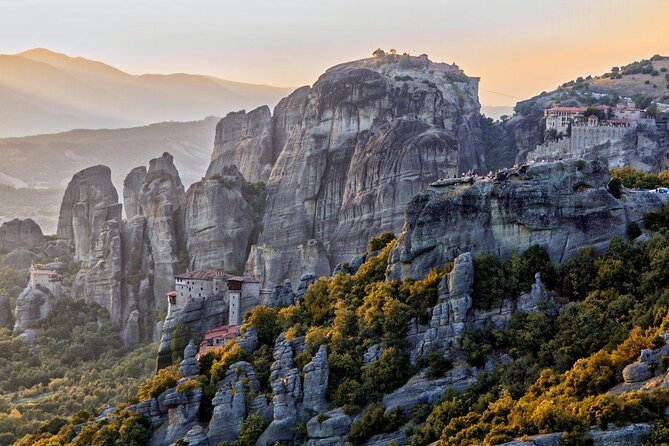
- Meteora monasteries on holy rocks with time at Great Meteoron and a second monastery option
- Olympic context, not just stones—stadium and museum stops are built in
- Long-drive comfort perks like bottled water and hotel/port pickup support
The Big Idea: A Private Athens-to-Meteora Road Trip
This tour is built around one simple advantage: you don’t waste vacation hours figuring out timing and logistics across the Peloponnese and mainland interior. In four days you’ll go from Corinth to the Argolid (Mycenae and Epidaurus area), then up to Olympia, over to Delphi, and finally into Meteora’s dramatic cliff country—before heading back toward Athens with Thermopylae and a coastal lunch stop.
The route is ambitious, but the private format makes it more manageable. You can linger where the site clicks for you, and you can skip the “photo-and-go” vibe that often happens on crowded group tours. In past experiences with drivers like Terry and George, the pattern has been consistent: quick, close drop-offs, then a pick-up once you’re done.
You can also read our reviews of more private tours in Athens

How the Private Transportation Really Helps (and Where It Doesn’t)
You’re getting professional drivers with deep historical background, but they are not licensed guides inside museums or sites. That’s an important detail. It means the tour works best if you’re comfortable with self-guided exploring (using the site explanations on walls and in your phone), or if you arrange a licensed guide where you want extra context.
What you do get, though, is real convenience:
- You avoid driving stress on unfamiliar roads and parking.
- You can adjust pacing at many stops without turning your day into a constant scramble.
- Your driver can explain what you’re seeing along the way, including practical bits about Greek life and culture.
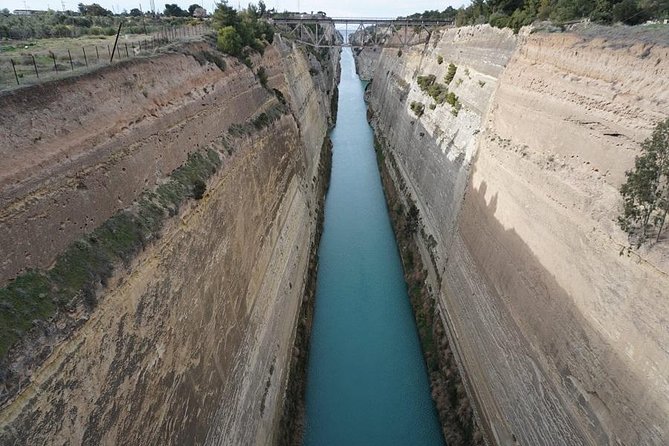
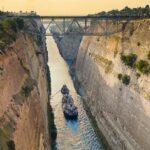
One more practical note: some stops are short by design. Corinth Canal is about 20 minutes. The big wins there are timing and placement—standing on the pedestrian bridge for a closer look and then moving on. If you’re the type who hates being rushed, just know this itinerary keeps a brisk pace.
Day 1: Corinth Canal, Epidaurus Theater Acoustics, and Mycenae’s City of Gold
Day 1 is a heavy-hitter day—architecture, medicine, theater, and a Bronze Age powerhouse—wrapped in seaside scenery.
Corinth Canal: A Quick Walk With Big Views
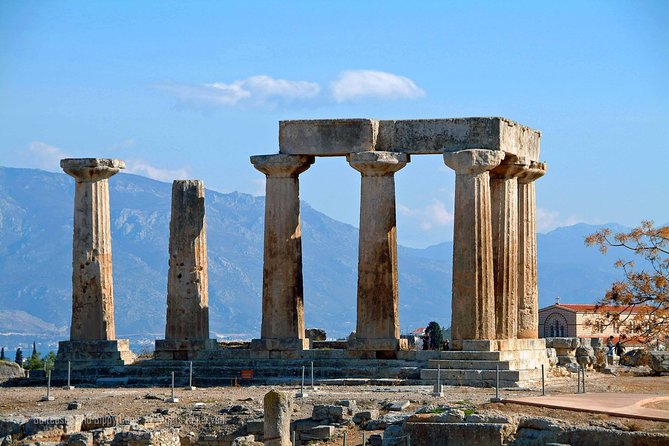
You start by heading toward the Corinth Canal, following the coast and getting views of Greek seaside villages and even the island of Salamis, tied to the 480 BCE naval battle between Athenians and Persians. Then you reach the canal itself.
The Corinth Canal was opened in 1892 and it slices the Peloponnese from the rest of Greece, linking the Saronic Gulf to the Corinthian Sea. You’ll have time to walk onto the pedestrian bridge to admire the canal more closely. There’s also the mention of bungee jumping on certain days if that’s your thing—more adrenaline than ancient Greece, but it’s a fun local option.
Sanctuary of Asklepios and Epidaurus Theater: Healing and Hearing
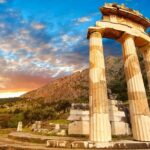
Next is the Sanctuary of Asklepios, devoted to Asclepius, the ancient Greek god of healing and medicine. The setting is part of the experience: peaceful, hilly, and spread out.
Then you move to the Ancient Theatre of Epidaurus, often considered the best-preserved ancient Greek theater. The practical magic here is the acoustics. You can climb up toward the upper seats, close your eyes, and test how sound carries—something that turns a site visit into a small personal moment, not just a checklist stop.
Both of these places are on the list as stops where you’ll enjoy the atmosphere, but entrance fees are not included. Build extra time if you want to read more than the quick highlights.
You can also read our reviews of more tours and experiences in Athens
Mycenae: Homer’s World and the Lion Gate
Mycenae is where the day shifts from quiet spirituality to legendary power. You’ll see archaeological remains tied to the stories associated with Achilles, Agamemnon, and Helen of Troy—exactly the kind of connection that makes this region feel alive.
At the site you’ll cover:
- The major palace-area context and the broader archaeological zone
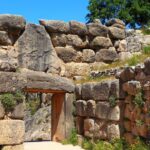
- The famous Lion Gate, described as the oldest architectural sculpture in Europe
- Cyclopean walls and the burial circle A
- The remains of Agamemnon’s Palace
You’ll also have a visit to the Archaeological Museum of Ancient Mycenae, which houses finds from Mycenae’s so-called City of Gold era. After that, you’ll make a small stop at the Treasury of Atreus, a well-preserved Tholos tomb and one of the finest examples of Mycenaean architecture.
Nafplio: Your First Taste of Neo-Classical and Venetian Views
By late day you switch to more modern Greece in Nafplio, often described as the most scenic city in the area. Nafplio was a capital until 1834, and the old town shows a mix of Venetian, neoclassical, and eastern influences. It’s also a great place to reset after ancient stone—open harbor views, colorful streets, and castles on the edges.
You’ll get time to walk the old city, then stop for lunch at a traditional tavern by the sea (plan to pay for your meal). Afterward you drive up to Acronafplia for panoramic views over the city.
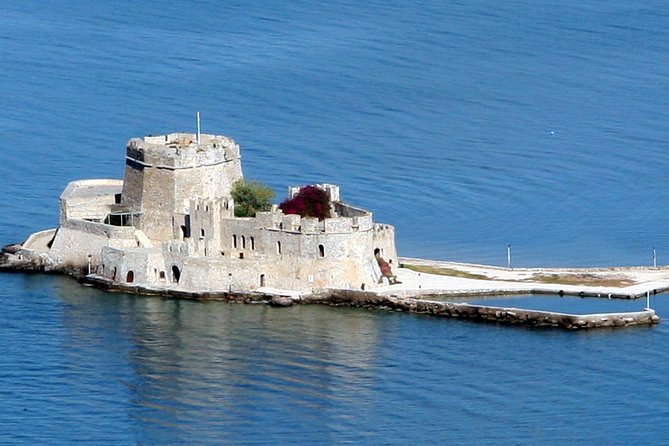
There’s also mention of Bourtzi, a small islet fortress in the harbor opened to the Aegean Sea. Even if you’re not planning a boat trip, the fortress is one of those visual anchors that makes the harbor feel cinematic.
Night 1 ends with an overnight near the birthplace of the Olympic Games area—setting you up for an Olympia day with less rushing.
Day 2: Ancient Olympia’s Stadium Energy and Delphi’s Oracle Setting
Day 2 is classic Greece in two parts: Olympia’s athletic legacy in the morning, then Delphi’s spiritual and political centrality later.
Olympia: The Games, Zeus, and the Museum You’ll Want to Slow Down For
At the Archaeological Site of Olympia and its museum area, you’ll pass key spots such as the Gymnasium, Palaistra, workshop of Phidias, the Temple of Zeus, and the Stadium. The Stadium stop is the emotional core: the Greeks competed every four years here for glory and spiritual elevation, honoring their cities.
Then the museum side of Olympia brings details forward. You’ll encounter the famous statue Hermes of Praxiteles and context around tools attributed to Phidias. The goal is to connect the ruins you’re walking through to the artistry and belief systems that shaped them.
There’s also a separate Museum of the Olympic Games, with 463 ancient works spanning a long timeline from the 2nd millennium BC to the 5th century AD. If you care about how long-running traditions actually evolve, this museum stop matters.
Nafpaktos Old Port: A Free Pause in a Sea-Town Setting
Before heading to Delphi, you’ll stop at Nafpaktos Old Port. Nafpaktos sits on the north shore of the Corinthian Gulf and has a long beach plus an impressive Venetian castle and a fortified harbor. It was important in the Peloponnesian War, and the Venetians called it Lepanto.
This is a good buffer stop. You get a chance to stand by the water and break up a long day of archaeology.
Delphi Arrival: Setting the Stage for Oracle Country
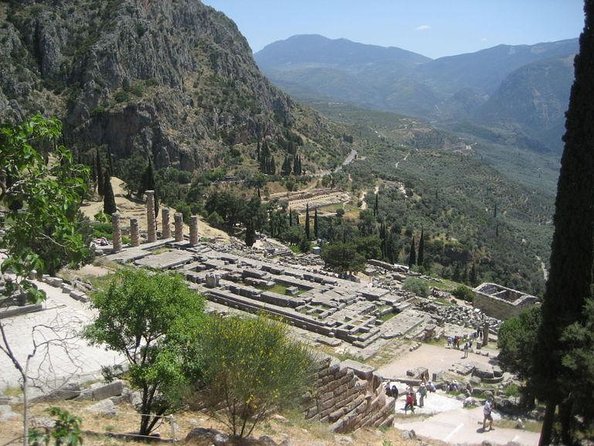
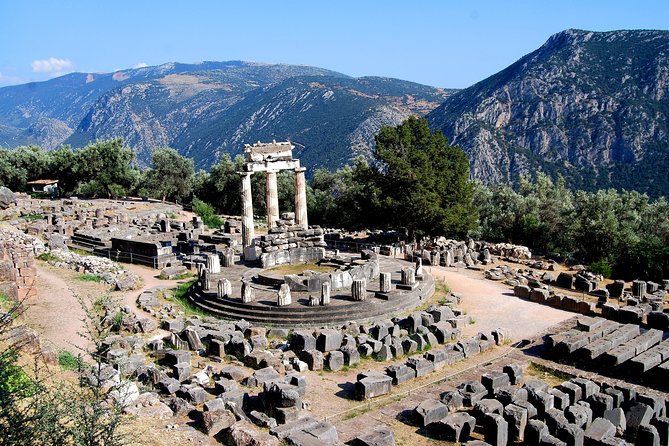
After Nafpaktos you’ll drive to Delphi, a Pan-Hellenic sanctuary dedicated to Apollo. Delphi was known for the Oracle and was treated like a central point in the ancient Greek world. On the way, the scenic mountain setting comes into play, plus references to the Gymnasium and Athena Pronea area.
Entrance fees are not included, so plan for that cost on the spots you choose to prioritize most.
Day 3: Delphi in Two Layers, Then the Scenic Ride to Meteora Country

Day 3 is about Delphi from two angles: museum + temple area. Then you transition to Kalabaka, the base for Meteora visits.
Delphi Archaeological Museum: Charioteer and Gold-Ivory Highlights
You’ll start with the Delphi Archaeological Museum. This is where you see key statues connected to the site, including the famous charioteer and gold-ivory statues. The museum also helps you understand the sanctuary as a living, important place—not just a hillside of ruins.
Then you’ll go to Temple of Apollo and related highlights including the theater and stadium. You’ll also hear about Pytheia, the Oracle who spoke to Apollo here, which gives the site a human voice instead of pure stone.
After the archaeological portion, lunch is planned in the modern village of Delphi with views of the mountains of Fokis. Meals cost extra, but the setting is often worth slowing down for.
The Ride to Kalabaka: Real Greece Beyond the Highway
After Delphi you’ll drive through mountains and smaller towns, not taking the national highway. The route passes Lamia, Trikala, and Karditsa before reaching Kalabaka, a small city dominated by Meteora.
You’ll have time for an evening walk and a local dinner after you settle into the hotel. This is a nice pacing choice. Even if you feel “behind” on sleep, you’ll at least arrive in Meteora country with your legs less tense than if you were rushing straight into a full monastery day.
Day 4: Great Meteoron, Agios Stefanos or Roussanou, Then Thermopylae and Kamena Vourla
Day 4 is split between two unforgettable themes: Meteora’s living monasteries and Thermopylae’s Spartan-era story. Then you end with a seaside reset before heading back toward Athens.
Great Meteoron Monastery: The Big One on the Cliffs
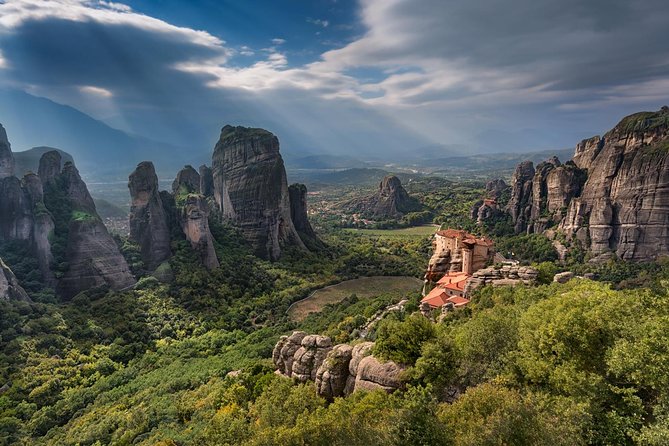
Meteora means suspended in the air, and the experience starts with you looking up at the holy rocks before you even reach the monasteries. You’ll visit monasteries with a closer look at the cliffs and the monastery complex.
Great Meteoron is the biggest and most impressive. Even with no specialized religious background, you’ll feel the scale: steep rock faces, monastery buildings shaped by survival and devotion, and wide views that make the place feel both remote and somehow reachable.
Agios Stefanos or Roussanou: Two Ways to See the Same Cliffs
Next comes Agios Stefanos or Roussanou nunneries. Agios Stefanos is one of the few female monasteries of Meteora. Construction dates are not clearly established, but evidence suggests it was built in the 15th century. You’ll also have the chance to see wall-paintings in the Catholicon, executed in 1560.
If you choose Roussanou, the angle and cliff framing differ. There’s also mention of a pathway from the monastery area to an off-the-road panoramic viewpoint, where you can walk on bear rocks—small adventure, but clearly framed as time to get a better look.
Thermopylae: Spartans, a 3D Movie, and the Leonidas Monument
Then the tour adds a powerful historical stop: the Battlefield of Thermopylae. You’ll see the place where about ten years after the Battle of Marathon, King Leonidas and the 300 Spartans faced the Persian army.
You’ll also visit the Kainotomiko Kentro Istorikis Enimerosis Thermopylon, with a 3D movie that aims to put you in the presence of those who sacrificed their freedom. After that you’ll see the Leonidas Monument opposite Kolonos Hill, tied to where the Spartans left their last breath.
Entrance fees are not included for these stops, but several are marked free in the plan, so you’ll have a mix.
Kamena Vourla Lunch by the Sea and Return Toward Athens
On the return, you stop at Kamena Vourla, a coastal town for a relaxing traditional Greek lunch by the sea. Afterward the drive brings you back to Athens safe and sound.
If you’re trying to keep the end of the trip from feeling like a final sprint, this last food-and-water break helps.
Price and Value: Is $1,483.31 Per Person a Good Deal?
At $1,483.31 per person, this isn’t an economy option. It’s paying for four things:
- Private transportation across long distances
- Driver support with historical context
- Hotel/AirBnb or port pickup and drop-off
- Accommodation with breakfast based on your booking
What can change the final value is entrance fees and optional licensed guides. Entrance fees are specifically not included, and many of the major sites (Epidaurus area, Mycenae, museums, Delphi, Meteora monasteries) typically add up. If you want a fully guided deep explanation at each place, you’ll likely pay extra for licensed guides on request.
In other words: the base price covers comfort and logistics. You still control the depth. If you’re the kind of traveler who enjoys reading site signs and using your phone for context, you may spend less than someone who books licensed guides at multiple stops.
Who This Tour Fits Best (and Who Might Want a Different Style)
This private route fits well if you:
- Want to see Corinth, Mycenae, Olympia, Delphi, and Meteora without juggling rental cars
- Prefer close drop-offs and the ability to adjust time at stops
- Like big contrasts: ancient ruins, seaside cities, mountainous interior views, then monastery cliffs
You might want a different approach if you:
- Hate long drives or want more free time that isn’t tied to scheduled stops
- Expect a fully licensed guide inside every museum and site (that’s optional and costs extra)
- Are traveling with mobility constraints that make stairs and uphill paths hard; some stops like theaters and archaeological zones involve climbing and uneven ground (the plan suggests most travelers can participate, but the terrain is what it is)
Should You Book This 4-Day Private Route?
I’d book it if your main goal is a stress-free, high-impact inland Greece circuit with private transport and smart pacing between major ancient sites and Meteora’s cliff monasteries. The route is packed, but the private format makes it feel like a custom trip rather than a moving checklist.
If you’re unsure, use this decision rule: if you’d rather pay for convenience than spend energy on car logistics, planning, and timing, this is a strong match. If you’re ultra-sensitive to driving time or want museum-level guided narration at every stop, budget for entrance fees and consider adding licensed guides where you care most.
FAQ
Is pickup included, and where can it happen?
Yes. The tour includes hotel/AirBnb/port pickup and drop-off. Pickup time is adjustable upon request.
What language is the tour in?
It is offered in English.
Are entrance fees included in the price?
No. Entrance tickets/fees are not included for the sites listed.
Do I get a licensed guide inside museums and sites?
A licensed tour guide is not included by default. On request, you can hire a licensed guide at an additional cost. Drivers are not licensed to accompany you inside sites or museums.
How long is the tour?
The duration is approximately 4 days, depending on the time of day and traffic.
What happens if I cancel?
You can cancel up to 3 days in advance for a full refund. If you cancel less than 3 full days before the start time, the amount paid is not refunded.

More Private Tours in Athens


More Tours in Athens



More Tour Reviews in Athens
- All Day Cruise -3 Islands to Agistri,Moni, Aegina with lunch and drinks included
★ 5.0 · 4,958 reviews