REVIEW · ATHENS
4day Spanish tour in Epidaurus Mycenae Olympia Delphi and Meteora
Book on Viator →Operated by ArtyTours · Bookable on Viator
Five ancient stops in four days, in Spanish. This tour stitches together Greece’s best-known archaeological highlights—Corinth, Mycenae, Epidaurus, Olympia, Delphi, and Meteora—using a professional guide and headsets so you won’t miss the explanations. It’s a busy route, but the mix of temples, theaters, museums, and big scenery makes it feel like a greatest-hits playlist of classical Greece.
What I really like is the Spanish-only guiding. Even when you’re moving fast between sites, the headsets help you stay connected to the story. I also like that the day plans include museum time, including Olympia’s treasures and Delphi’s collection with the famous bronze figure of the Auriga de Delphi.
The trade-off is simple: it’s not a slow, wandering pace. You should expect long bus days and daily location changes, so if you’re sensitive to motion or you hate tight schedules, this may feel like a lot.
In This Review
- Key highlights from this 4-day route
- The big idea: one trip, five regions of Greece
- Day 1: Corinth Canal photo time, then Mycenae and Epidaurus
- Day 2: Olympia’s sacred grounds, then Delphi through Rio–Antirrio
- Day 3: Temple of Apollo, the Via Sacra, and the Auriga de Delphi
- Day 4: Meteora’s monasteries, Thermopylae’s Leonidas, back to Athens
- Price and what you actually get for $728.56
- Logistics that matter: timing, buses, and comfort
- Who this tour fits best (and who should consider another plan)
- Should you book this 4-day Spanish circuit?
- FAQ
- What time does the tour start, and where is the meeting point?
- How long is the tour?
- What sites are included across the four days?
- Is the guide Spanish-only?
- What group size should I expect?
- What’s included in the price?
- What’s not included?
- Is lunch provided?
- Does the tour depend on weather?
- What is the cancellation window for a full refund?
- Are accessibility needs addressed in the info?
Key highlights from this 4-day route
- Spanish guide with headsets so you keep up through lectures and transfers
- Skip-the-line access at major sites to save time
- Olympia and Delphi museums paired with the archaeological areas, not just quick exterior stops
- Epidaurus theater acoustics—a standout classic for anyone who likes details
- UNESCO Meteora monasteries with Byzantine art focus
- Rio–Antirrio bridge crossing adds a modern engineering moment between ancient stops
The big idea: one trip, five regions of Greece
This is a classic guided circuit that starts in Athens and then stretches out across the mainland—Peloponnese, central Greece, and Thessaly—so you get contrast in both history and terrain. It’s built around “must-see” ancient sites, but with enough museum time to help you understand what you’re looking at, not just where to stand for photos.
The group is capped at 55, which is important on crowded days. Smaller groups tend to move cleaner from coach to entrance to seating area, and your Spanish guide can keep everyone together.
The overall feel? Expect a structured day with early starts, set photo breaks, and short windows at each stop. If you like order and clear timing, you’ll be happy. If you want free time to wander solo for hours, you’ll need to manage your expectations.
You can also read our reviews of more tours and experiences in Athens
Day 1: Corinth Canal photo time, then Mycenae and Epidaurus
You begin with a morning photo stop at the Corinth Canal, a quick 20 minutes to take in the view where the Saronic Gulf meets the Corinthian Gulf. It’s brief, but it helps set the “you’re traveling across a key corridor” mood right away.
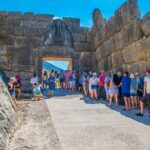
Next comes Mycenae, one of Greece’s power centers from the Bronze Age. You’ll visit the Gate of the Lions, the Cyclopean walls, the Royal Tombs, and the Treasure of Atreus (the royal tomb of Agamemnon). The local museum is included, and that matters because Mycenae can feel like “big stone ruins” until you connect it to artifacts and context.
Then you move to the Ancient Theatre of Epidaurus. This is the stop people often bring up because it’s famous for harmony and splendid acoustics. You’re not just looking at a theater; you’re experiencing why it held its place in Greek culture. One hour here is tight, but it’s enough to see the structure and take in the setting.
You’ll end the day traveling from Epidaurus toward Olympia, with an overnight stay there. One thing to know: this route front-loads serious ruins and museums, so your first day can feel dense. If you’re the type who likes to read everything on every panel, bring patience and use your guide’s focus points to choose what to pay attention to.
Day 2: Olympia’s sacred grounds, then Delphi through Rio–Antirrio
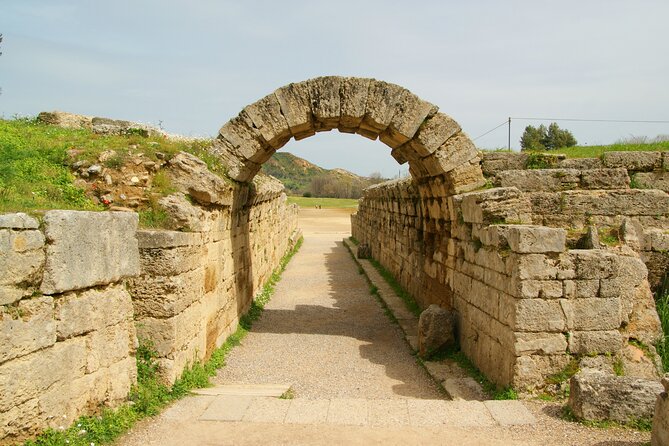
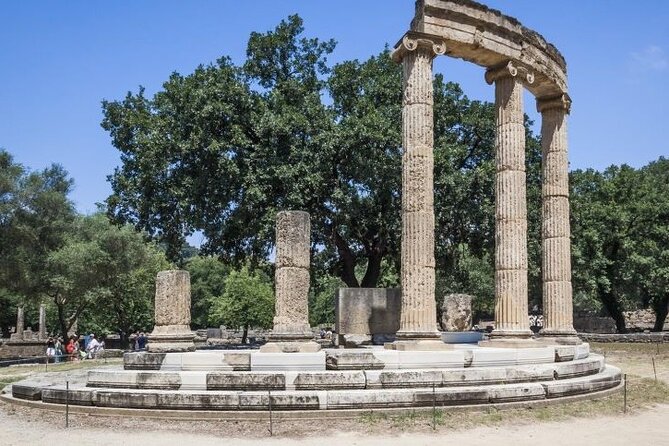
Day two starts in Olympia, with a morning tour of the archaeological site and its museum. Olympia isn’t only about “ancient sports”—it’s a sacred complex where you can see how religious ritual and athletic competition were braided together. You’ll also have museum time included, including the statue of Hermes by Praxiteles. Having the museum right after the site is a smart pairing because it gives your eyes a guide for what mattered most.
After Olympia, you drive bound for Delphi. One of the few non-archaeology moments on this circuit is the crossing of the Rio–Antirrio bridge, which connects the Peloponnese with the Greek mainland through the Corinth Strait. It’s a long bridge (2,883 meters) and the stop is mainly about the experience and the engineering story—not stretching your legs for hours.
You arrive in Delphi by the end of the day, which sets up a full day at one of Greece’s most dramatic historical landscapes. (And yes, Delphi is steep. Comfortable shoes help.)
Day 3: Temple of Apollo, the Via Sacra, and the Auriga de Delphi
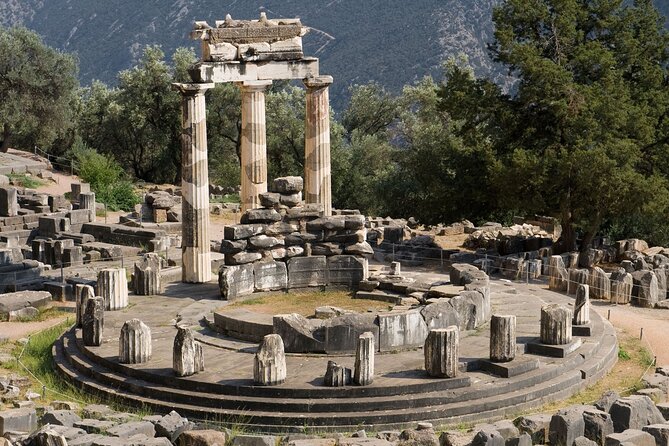
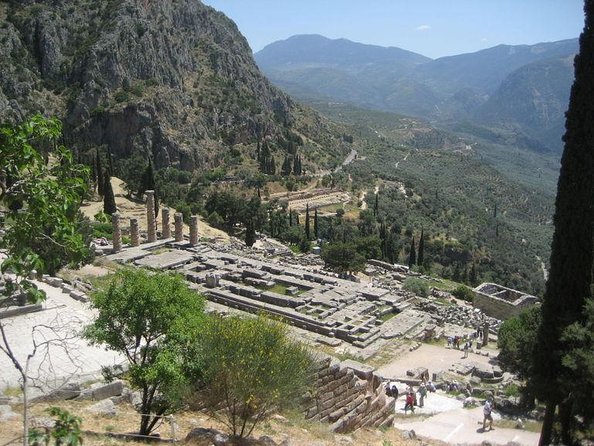
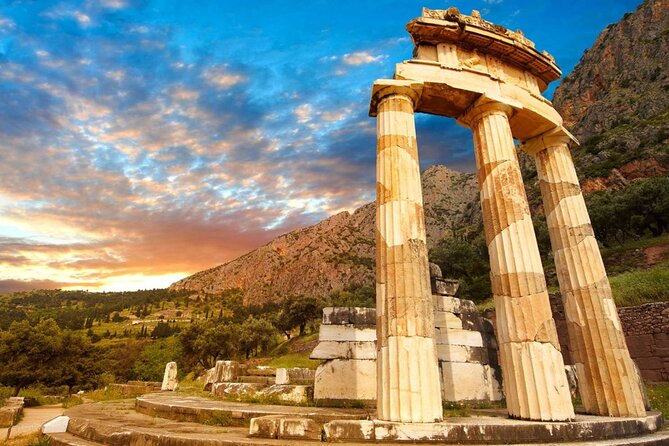
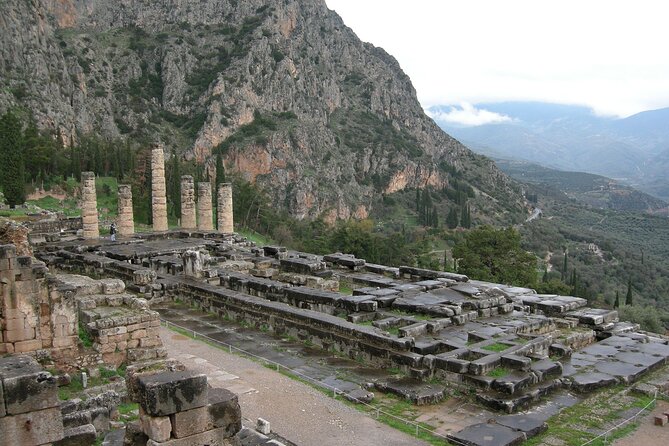
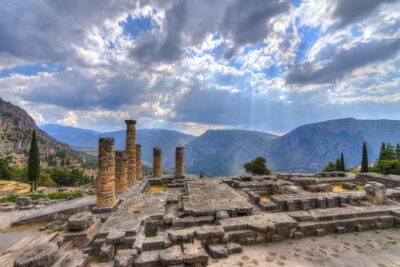
Delphi is the heart of day three. You start with the Temple of Apollo area and a tour that includes the Via Sacra, the Treasury of Athens, and views from up near the local theater. This is where the site becomes more than a set of ruins—it starts to feel like a designed experience, with processional routes and viewpoints that change how you understand the space.
Then you get museum time at the Delphi Archaeological Museum, where the bronze figure called the “Auriga de Delphi” is a highlight. You’ll also spend time on the museum’s broader collection, which helps you see how Delphi’s importance extended beyond one single monument.
Later you’ll pass by Arachova, known for local crafts. This is a quick stop, and the point is less shopping time and more a chance to see how the modern town sits near the older world you’ve been visiting all day. If you want souvenirs, make this your moment. If you’re trying to keep your budget tight, treat it as a browse-and-sniff stop, not a mandatory haul.
You then continue to Kalambaka, your base for the final day at Meteora. By this point, the itinerary is moving fast enough that your best strategy is to rest your feet, not just your mind. Hydrate, tighten up your bag, and you’ll be ready for the monastery day ahead.
Day 4: Meteora’s monasteries, Thermopylae’s Leonidas, back to Athens
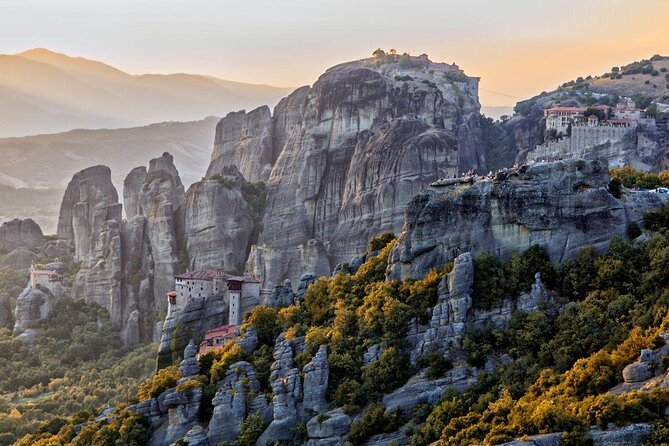
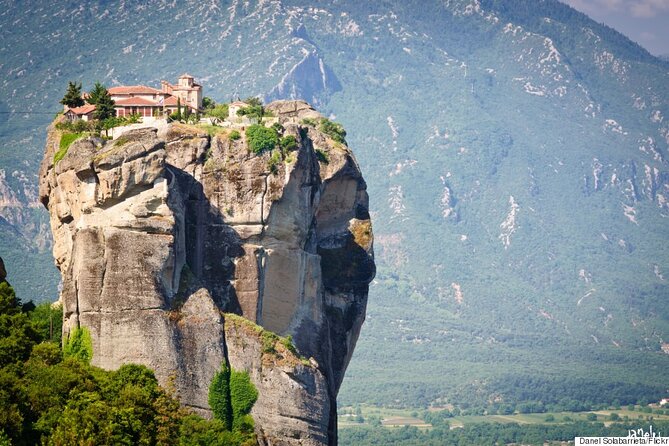
The final morning is reserved for Meteora, with a visit to two monasteries. These rock-top monasteries are UNESCO-listed since 1988, and the visit is dedicated to Byzantine art. That’s important because Meteora isn’t only about the “wow” factor of the setting—your guide should help you connect the churches and artwork to the traditions that shaped these communities.
Plan for stairs and uneven surfaces. Even if you’re in good shape, Meteora’s steps and viewpoints are physical. Comfort matters more than style here.
After Meteora, you make a brief stop at the Leonidas Monument in Thermopylae, tied to the famous battle in 480 BC. This is short, but it’s a good historical bridge between the monasteries and the wider Greek story you’ve been following through temples and museums.
Finally, you return toward Athens. Ending back at the meeting point keeps things simple. Your last day is about memory-making, not ticking one more museum box.
- All Day Cruise -3 Islands to Agistri,Moni, Aegina with lunch and drinks included
★ 5.0 · 4,958 reviews



Price and what you actually get for $728.56
At $728.56 per person, this tour sits in the “serious value, serious schedule” category. You’re paying for more than transportation and entrances—you’re paying for coordination: hotel selection, timed visits, a guide who stays with you across multiple major sites, and a route that packs in five heavy hitters without making you plan everything yourself.
Here’s what’s included that affects real value:
- Accommodation with breakfast and dinner (3 breakfasts and 3 dinners, since the tour runs 4 days with 3 nights implied by the included meals)
- Entrance fees to places of interest
- A professional Spanish guide exclusively for the tour, plus headsets
- Luxury A/C coaches and onboard WiFi
- Skip-the-line access at key stops
What’s not included is also worth factoring in:
- Lunch and drinks
- Tips
- Personal expenses
- A hotel fee per room per night (season-dependent: for 3-star hotels, winter 1.5€ and summer 3€; for 4-star hotels, winter 3€ and summer 7€)
So the “math” is: you’ll spend extra on lunch and drinks anyway, but you’re not stuck covering most entrances and dinners out of pocket. If you compare this to booking sites independently plus multiple hotels, the savings usually show up fast—especially with Spanish guiding and skip-the-line time.
Logistics that matter: timing, buses, and comfort
This tour starts at 8:00 am at the Melina Mercouri Monument (Leof. Vasilisis Amalias 54, Athina 105 58). Because the itinerary is scheduled, you don’t get to sleep in and “catch up later.” You also shouldn’t plan on late breakfasts.
The upside of the guided format is that you always know what’s next. The downside is that downtime is limited. Expect time on the coach. If you’re imagining ancient Greece as a slow stroll, adjust that picture now.
Two practical prep tips:
- Bring good walking shoes and something for sun and wind. Delphi and Meteora can feel exposed.
- If you’re prone to motion sickness, pack what works for you. Long bus days are part of the deal here.
One more reality check: the Meteora visit depends on weather. The tour requires good conditions, and if conditions aren’t right, you might be offered an alternative date. That’s not unusual for Meteora, but it can affect your planning.
Who this tour fits best (and who should consider another plan)
This is a strong choice if:
- You want a first big sweep of ancient Greece—Mycenae, Epidaurus, Olympia, Delphi, and Meteora—without building the itinerary yourself
- You prefer a Spanish-speaking guide to translate the symbols and stories behind what you’re seeing
- You like structure: defined stops, museum pairings, and clear timing
It may be less ideal if:
- You want lots of free time to wander without a schedule
- You struggle with long coach transfers and frequent hotel changes
- You need a slower pace for your knees and ankles
If you’re a “one region only” traveler, you might do better with a shorter base-based trip (Athens plus day trips, or Peloponnese only). But if you want classical Greece at full throttle, this circuit is built for you.
Should you book this 4-day Spanish circuit?
I’d book it if you want a guided, high-effort sampler of Greece’s most famous archaeological sites and you’re happy to trade relaxed pacing for big results. The Spanish-only guide, headsets, and skip-the-line access make it feel efficient, and the pairing of archaeological sites with museums (especially Olympia and Delphi) helps the whole story click.
I would pause before booking if you hate bus time, dislike packed days, or need maximum flexibility for weather. In that case, pick fewer sites and let them breathe.
If you’re comfortable with a structured route and you want to see the classics in four days, this is the kind of trip that leaves you with a list of places you’ll still be talking about weeks later.
FAQ
What time does the tour start, and where is the meeting point?
The tour starts at 8:00 am at the Melina Mercouri Monument, Leof. Vasilisis Amalias 54, Athina 105 58, Greece.
How long is the tour?
It’s listed as 4 days (approx.).
What sites are included across the four days?
You’ll visit Corinth Canal, Mycenae, Epidaurus, Olympia, Delphi, Meteora, and you also make a brief stop at the Leonidas Monument in Thermopylae. You pass by Arachova and cross the Rio–Antirrio bridge.
Is the guide Spanish-only?
Yes. The tour includes a professional guide exclusively in Spanish, and you also get headsets to hear the guide.
What group size should I expect?
The tour has a maximum of 55 travelers.
What’s included in the price?
Included are entrance fees, accommodation in 3 or 4 star hotels with breakfast and dinner, transportation with luxury A/C coaches, WiFi on board, headsets, skip-the-line access, and dinner (3) plus breakfast (3).
What’s not included?
Lunch and drinks, tips, and personal expenses are not included. You should also plan for a hotel fee per room per night depending on season and hotel category.
Is lunch provided?
No. Lunch isn’t included.
Does the tour depend on weather?
Yes. The experience requires good weather, and if it’s canceled due to poor weather you’ll be offered a different date or a full refund.
What is the cancellation window for a full refund?
You can cancel up to 3 days in advance for a full refund, based on the experience’s local time.
Are accessibility needs addressed in the info?
It says most travelers can participate, but the tour includes walking at archaeological sites and stairs at monasteries, so you’ll want to consider your own mobility before booking.

More 4-Day Experiences in Athens
More Tours in Athens


More Tour Reviews in Athens
- All Day Cruise -3 Islands to Agistri,Moni, Aegina with lunch and drinks included
★ 5.0 · 4,958 reviews