REVIEW · ATHENS
Argolis Olympia Delphi & Meteora 4-Day Tour
Book on Viator →Operated by H.P.Tours - Hellenic Private Tours · Bookable on Viator
Ancient Greece, but with room to breathe. This private 4-day Argolis–Olympia–Delphi–Meteora route strings together some of the country’s most important ruins, starting with the Corinth Canal and ending with three Meteora monasteries on UNESCO rock towers. I like that the driving is handled for you, yet you still get real time at each site instead of feeling herded.
I especially like the care that shows up in the details: a clean, comfortable van with air-conditioning, WiFi onboard, and bottled water, plus pickup from Athens Hotel or Piraeus Port. I also like that you’re not stuck with only canned explanations—drivers such as Kyriakos, Panos, Tassos, and Jimmy share history in the car and help you time breaks and photo stops.
One thing to consider: this is a full itinerary with a lot of driving between regions, and hotel rooms can vary in size. If you’re sensitive to long days or want lots of creature comforts without stairs or uneven ground, plan accordingly.
In This Review
- Key highlights to know before you go
- Day 1: Corinth Canal, Ancient Corinth, Epidaurus, and Mycenae on the way to Olympia
- Day 2: Olympia in depth, then a Gulf crossing and Delphi by sunset-time planning
- Day 3: Delphi sanctuaries, the Delphi Museum, and Arachova before Kalambaka
- Day 4: Meteora monasteries and the Thermopylae Museum stop that adds meaning
- Price and value: what $3,329.71 buys, and what you still pay for
- Who this private Argolis–Olympia–Delphi–Meteora tour fits best
- Should you book it? My honest take
- FAQ
- How big is the group for this private tour?
- Where do you get picked up and dropped off?
- Is the tour in English?
- Are meals included?
- Do entrance fees cost extra?
- Can I add licensed tour guides for the sites?
Key highlights to know before you go
- Private tour for up to 2 people, no unknown passengers joining
- Driver-led history plus optional licensed site guides for the ruins
- All four anchors of mainland Greece: Corinth/Argolis, Olympia, Delphi, Meteora
- Practical comfort built in: AC vehicle, WiFi, and bottled water
- Timing that helps with crowds, including sunset time near Meteora
- Meals and entrance fees are separate, so you can budget your total trip
Day 1: Corinth Canal, Ancient Corinth, Epidaurus, and Mycenae on the way to Olympia
This first day sets the tone: you’ll see big “wow” geography, then shift quickly into myth and real archaeology. The pacing is meant to keep you moving without making you sprint.
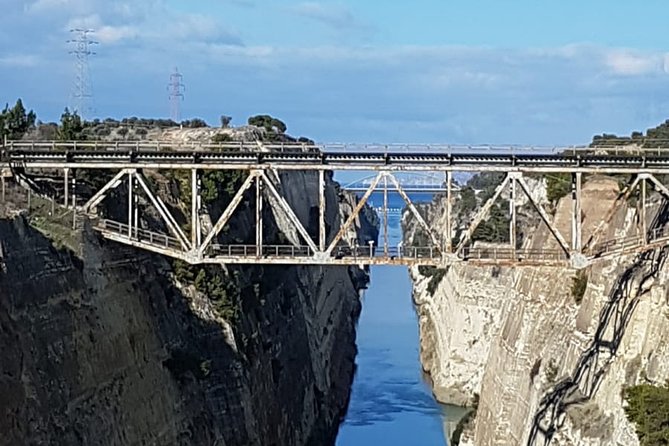
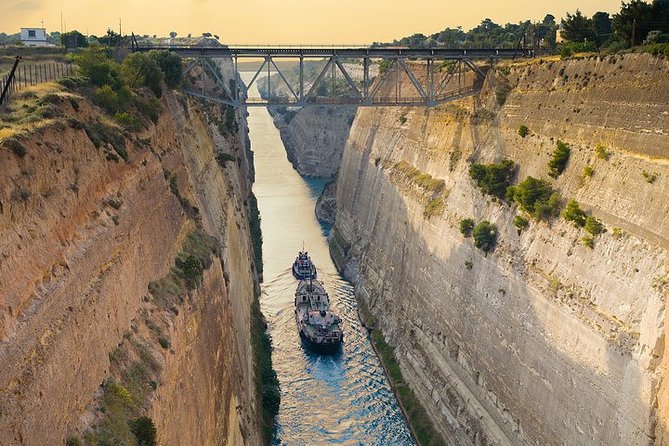
Corinth Canal is a short stop, but it’s a good one. Even if you already know the canal concept, it helps to stand at the edge and understand what it means for separating the Peloponnese from Greece’s mainland—so much of Greece’s history and travel routes make more sense after that perspective. It’s also the kind of stop that’s easy to appreciate without needing long museum time.
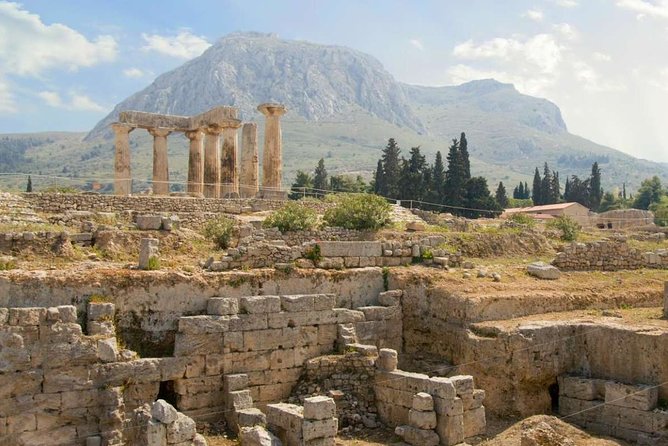
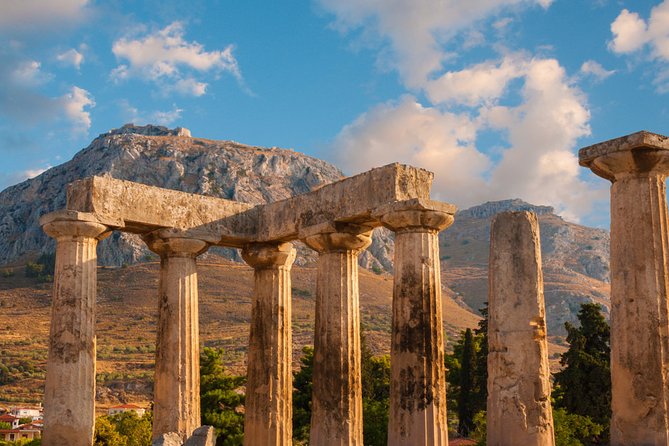
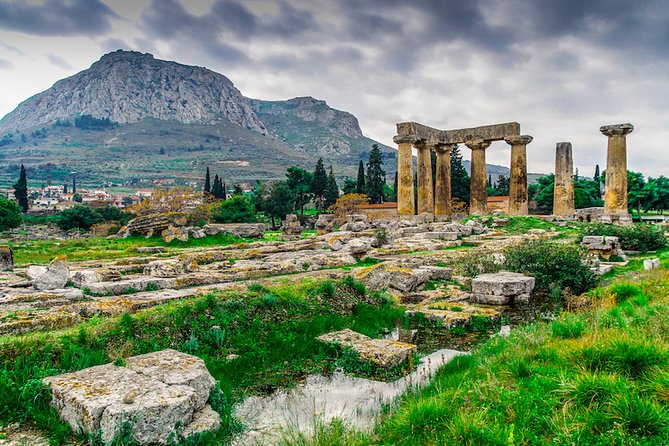
Next comes Ancient Corinth (Archaia Korinthos), where you get a concentrated hit of classical Corinth. The Temple of Apollo is the star here, an early Doric temple dating to around 560 B.C. It’s not just a “pretty ruin.” The placement on a rocky hill makes it feel like it belonged to a growing, powerful city, not a distant memory. Then there’s the Bema area tied to St. Paul’s trial tradition. That mix—Greek civic space turned Christian later—adds a real layer beyond ancient dates.
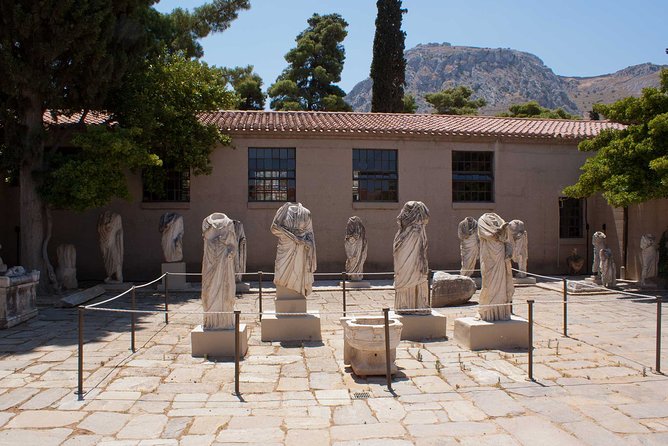
After that, you can keep the momentum at the Archaeological Museum of Corinth. Even when a museum doesn’t look huge from the outside, the subject matter adds up: prehistoric finds, geometric through Hellenistic periods, Roman/Byzantine/Frankish layers, plus material connected to the Asklepios sanctuary and early Christian cemetery. If you like seeing how many time periods overlap in one region, this stop is worth your time.
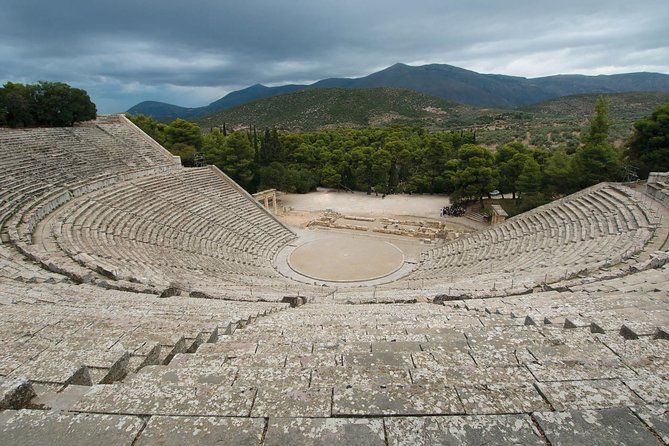
The day turns emotional at Epidaurus’ Ancient Theatre, tied to the Sanctuary of Aesculapius. The big draw is the theatre’s unusual acoustics and how much of the circular orchestra area still reflects the original design. Even if you don’t attend a performance, you’ll feel why this mattered to a society that mixed healing with culture.
Then you hit the coastal break: Tolon for lunch at a family-run restaurant with views over the Saronic Gulf. This is a smart reset. A long day of ruins usually needs one moment where you slow down and eat like a human. From there it’s on to Nafplion, a historic seaport city perched around the Argolic Gulf with a long chain of rulers, and a big role in modern Greek history too.
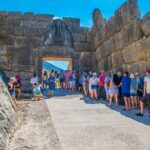
Finally, Mycenae brings you face-to-face with Late Bronze Age power—Cyclopean walls, the Lion Gates, and the climb toward the Palace associated with Agamemnon’s story. The route continues to the Treasury of Atreus (also called the Tomb of Agamemnon), which is a strong finish for people who love monumental scale. You’ll reach Olympia by evening and stay overnight there.
Possible drawback for Day 1: by the time you’re done with Mycenae, you’ll likely want a low-effort evening. Because meals and entrance fees aren’t included, you’ll be thinking about budgeting and where to eat, especially after long driving stretches.
You can also read our reviews of more tours and experiences in Athens
Day 2: Olympia in depth, then a Gulf crossing and Delphi by sunset-time planning
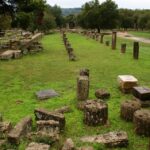
Olympia is the kind of site where you don’t just look at stones—you look for meaning. You start the day at the Archaeological Site of Olympia with the Temple of Zeus and the Temple of Hera inside the sacred precinct.
Here’s what makes this stop feel real:
- Temple of Zeus dominates the area and gives you a sense of Doric architecture at its most confident.
- Temple of Hera is where the Olympic Flame tradition is rooted every four years.
- The workshop of Phedias helps you connect the site to the sculptor who crafted the famous Zeus statue (chryselephantine) for the ancient world.
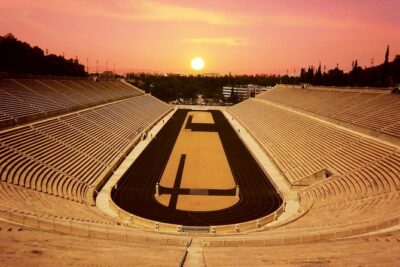
- The Ancient Stadium of Olympia ties everything back to events: the Olympic Games and the Heraia women’s games.
If you enjoy when a guide explains what you’re actually standing inside, this is a great day for that. The itinerary does allow for strong driver storytelling, and it’s also one of the places where adding a licensed local guide can be especially satisfying because you’re surrounded by major landmarks.
After the site, you’ll also have the option of time at the Olympia Archaeological Museum. The museum is one of Greece’s important ones for this theme, and it focuses on the long history of the sanctuary. The collection highlights include sculpture and notable bronze pieces, plus large terracottas. If you felt the ruins were impressive but wanted more context, this museum is the place to make those stones click.
Then you move toward Delphi. The route includes a planned photo-style stop at Charilaos Trikoupis bridge, a major multi-span cable-stayed bridge over the Gulf of Corinth. It’s useful because it links you to a modern “Olympics” story too—this bridge was opened just before the Athens 2004 Summer Olympics and was used for the Olympic Flame transport.
Along the way you’ll pause in seaside towns:
- Nafpaktos Old Port for a quick coffee-by-the-sea moment
- Galaxidi for a look at narrow cobblestone lanes and old shipbuilding connections
- A stop near Itea, a resort and port area tied to the region’s name and mining exports
By evening you reach Delphi and stay overnight. If you’re wondering whether Delphi after a long day works, it does—because you’ll have Day 3 to explore the site properly.
Day 3: Delphi sanctuaries, the Delphi Museum, and Arachova before Kalambaka
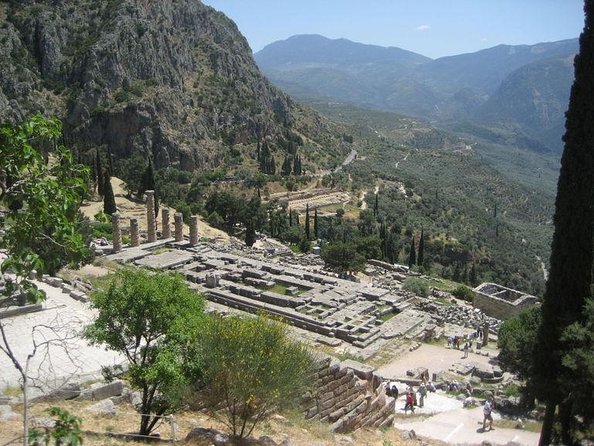
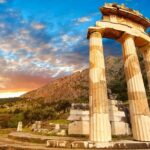
Day 3 is where Delphi becomes more than a place name. You’ll start in the morning at the Castalia spring and then move through the Sanctuary of Apollo area.
You’ll see the Treasury of the Athenians, the ancient stadium, the ancient theatre, the famous bronze Charioteer, the Temple of Athena Pronea, and the Gymnasium. The Charioteer is a highlight because it’s one of those objects that makes the site feel populated, not just excavated.
The pattern you’ll notice at Delphi is how everything is arranged to support the idea of the sanctuary—religion, politics, art, and civic life all tied into one space. Even if you’re not a deep myth reader, you’ll still understand why so many people invested in this place.
After the site, you shift indoors to the Delphi Archaeological Museum. It’s a good match because it doesn’t just repeat the ruins. It explains what was found and why it mattered to the sanctuary’s long run—from early centuries on through later decline. The museum includes architectural sculpture and statues, with objects tied to religious and political activity.
Then there’s a shorter, local culture break: Arachova, a traditional town about 10 km from Delphi. It’s a simple stop, but it helps reset your brain before you head into the Meteora region. The itinerary also gives you time later around Kalambaka, and if weather cooperates you’ll have a chance to watch the sunset from a rock of Meteora.
Possible drawback for Day 3: Delphi and its museum can take energy, and Arachova is brief. If you want lots of wandering and shopping in Arachova, you may feel a little time-crunched.
Day 4: Meteora monasteries and the Thermopylae Museum stop that adds meaning
You finish with two places that change your perspective.
First: Meteora. You visit three of the six suspended monasteries, built on natural sandstone pillars with roots going back to the 11th century. These monasteries aren’t just scenic viewpoints; they’re evidence of how people solved practical and spiritual problems in dramatic terrain. UNESCO status makes sense here.
One extra reason Meteora works well on a private schedule: you’re not trapped behind big bus groups. The car-to-monastery rhythm and the ability to choose pacing helped people get great photos with fewer crowds, especially around quieter timing like sunset and early visits.
Second: Thermopylae Museum. This is a shorter stop, but it matters because it brings the famous story—the battle of Greek forces including the 300 Spartans and King Leonidas—into a context tied to commemoration. Even without a long museum session, the purpose of the stop is clear: this isn’t only about drama; it’s about the idea of sacrifice and national memory.
Then the tour ends. Depending on your overall Greece plan, this pairing works well if you’re heading next toward Athens or another region with a bit of rest time.
Price and value: what $3,329.71 buys, and what you still pay for
This tour price is $3,329.71 per group (up to 2) for the 4-day itinerary. For a private Greece mainland circuit, that’s a real value proposition if your alternative is piecing together drivers, hotels, and transfers on your own.
Here’s where the money shows up:
- Private transportation with pickup and drop-off from an Athens hotel or Piraeus Port, plus a professionally handled drive schedule
- Comfort: air-conditioned vehicle, WiFi onboard, and bottled water
- Time efficiency: you’re not wasting half-days figuring out logistics between regions
- Language option: the tour is offered in English
- Mobile ticket use is included, which cuts friction on arrival
What’s not included matters for your budget:
- Meals are not included
- Entrance fees are listed as €116.00 per person
- Hotel accommodation is not included as a line item in the package summary here (the tour does arrange overnight stays at local hotels as part of the program)
- Optional four local licensed tour guides upon request can be added for an additional cost of 1100 Euros, depending on availability
One practical note: the drivers are described as professional, but they are not licensed to accompany you inside sites. That’s why the licensed-guide add-on can feel worth it. When someone hires the guides, you get deeper explanations at the ruins instead of relying only on in-vehicle context.
Still, it’s also true that some people skip the add-on and get enough from a driver plus smart timing. If you like to learn while you walk and you’re good with your own pace, you might not need the licensed guides at every stop. If you want the sites to fully speak to you, especially in Olympia and Delphi, it’s the safer bet.
- All Day Cruise -3 Islands to Agistri,Moni, Aegina with lunch and drinks included
★ 5.0 · 4,958 reviews



Who this private Argolis–Olympia–Delphi–Meteora tour fits best
Book this if you want:
- A private group experience (up to 2) with no blending into strangers
- A single plan that ties together the big anchors: Corinth/Argolis, Olympia, Delphi, Meteora
- Room for comfort stops, because the schedule includes breaks like coffee-by-the-sea and lunch in Tolon
- The option to add licensed guides when you want extra depth
Consider a different style of trip if:
- You prefer only one or two “big” ruins and lots of free time in between
- You’re not comfortable with moderate physical effort around ancient sites, uneven ground, and steps
Should you book it? My honest take
I think this tour is a strong choice for people who want a focused route across mainland Greece without juggling transportation math. It’s especially good when you value timing and comfort as much as sightseeing—clean vehicle, bottled water, air-conditioning, WiFi, plus drivers who help you make each stop count.
If you’re the type who loves hearing the story behind a place while you’re standing in it, adding the licensed guides at major sites is the move. If you’re more flexible and happy with driver explanations, you can still get a satisfying learning experience—especially with drivers like Panos, Jimmy, Tassos, or Kyriakos guiding your day with practical suggestions.
The one decision you’ll want to make early is budgeting for entrances and meals, and deciding whether you want the licensed guides add-on. If you do that, you’ll spend your time doing the fun part: walking the ruins and looking up at the views that inspired people thousands of years ago.
FAQ
How big is the group for this private tour?
The tour is private and sold as a group of up to 2 people, with no unknown passengers added.
Where do you get picked up and dropped off?
Pickup and drop-off are included between an Athens hotel and the Piraeus Port. Airport pickup is also available on request, and port pickup depends on which terminal your ship docks at.
Is the tour in English?
Yes. The tour is offered in English.
Are meals included?
No. All meals are not included.
Do entrance fees cost extra?
Yes. Entrance fees are not included, and the listed amount is €116.00 per person.
Can I add licensed tour guides for the sites?
Yes. Four local licensed tour guides are available upon request, with an additional cost of 1100 Euros depending on availability.
More 4-Day Experiences in Athens
More Tours in Athens


More Tour Reviews in Athens
- All Day Cruise -3 Islands to Agistri,Moni, Aegina with lunch and drinks included
★ 5.0 · 4,958 reviews