REVIEW · ATHENS
4 Days Classical Private Tour/ Corinth,Mycenae,Nafplio,Sparta,Olympia,Delphi
Book on Viator →Operated by GREECE TAXI · Bookable on Viator
Four days of ancient Greece feel oddly doable. This private tour strings together major Classical and Mycenaean stops at a calm pace, with hotel pickup and drop-off included. You also get onboard Wi-Fi for the long road legs, plus direct logistics so your day doesn’t dissolve into bus-board confusion.
I especially love the mix of sites that explain how Greece changed over time: Bronze Age strongholds, Spartan discipline, Venetian/Byzantine layers, then the big religious gravity of Delphi. I also like the private-group approach—if you’re on this kind of trip, you want your schedule to move with your interests, not someone else’s.
The main drawback to plan for is time and tickets. You’ll cover a lot of ground, and most archaeological admission is extra, plus you may want to hire an archaeologist guide at select sites if you want deeper explanations.
In This Review
- Key things that make this tour worth your attention
- Private Classical Greece: a smoother way to see the Peloponnese
- Getting from Athens with real comfort (and Wi-Fi)
- Day 1: Corinth Canal, Ancient Corinth, and the Temple Hill view
- Mycenae’s walls and the Tomb of Agamemnon name game
- Palamidi Castle and Nafplio: Venetian fortifications meet sea views
- Day 2: Venetian Nauplion museum, Sparta’s artifacts, then Mystras’ medieval drama
- Olympia and the Olympic world: not just stadiums
- Rio–Antirrio Bridge and the north-coast stops before Parnassus
- Day 4: Delphi’s oracle grounds and the Athena Pronaia tholos
- Price and value: what $1,376 really buys you
- Practical tips so the big sites feel fun, not stressful
- Who this tour is best for (and who should rethink it)
- Should you book this private 4-day classical tour?
- FAQ
- How long is the tour?
- Where do you get picked up and dropped off?
- Does the tour include Wi-Fi?
- Is accommodation included?
- What about admission tickets for archaeological sites and museums?
- Do I need an archaeological guide for each site?
- Are there any days when museums are closed?
- What vehicle options are available?
Key things that make this tour worth your attention
- Hotel pickup and direct drop-offs in Athens-side locations save real time and stress
- Onboard Wi-Fi helps make long drives feel faster
- UNESCO-hit route: Mycenae, Mystras, Olympia, Delphi are all on the plan
- Nafplio and Olympia overnights keep you from rushing through too many places in one day
- Rio–Antirrio crossing with a ferry ride plus bridge views near Patras
- Optional archaeologist guides if you want site-level storytelling beyond the driver
Private Classical Greece: a smoother way to see the Peloponnese

This isn’t the kind of trip where you’re sprinting between crowds. It’s a private route built around the idea that you’ll spend more of your day seeing things and less of it figuring out transportation. Starting at 8:00 am from Athens (or Piraeus), you get ahead of peak traffic and maximize daylight for outdoor sites.
The big value for me is the combination of direct logistics and custom pacing. Your driver/leader handles the driving, parking, and day flow, while you and your group can decide when to linger—especially helpful at places that reward slow looking, like Mycenae’s walls or Delphi’s terraces.
One more detail I like: a private tour just for your group means you’re not stuck waiting on the slowest person in someone else’s party. And since Wi-Fi is included on board, those long Peloponnese drives don’t feel like wasted time.
You can also read our reviews of more private tours in Athens

Getting from Athens with real comfort (and Wi-Fi)

You’ll ride in an air-conditioned vehicle with high cleanliness, and the tour runs with private transportation that includes fuels, toll roads, parking fees, and the ferry portion. Meeting points are flexible: pickup and drop-off are offered from your hotel/apartment in Athens or Piraeus, or even the airport if needed.
This matters because driving in Greece can be slower than you expect, especially around archaeological zones and city centers. When the trip is private, you don’t lose time coordinating transfers or searching for your next bus stop.
If you’re choosing between vehicle types, you can opt for sedan/SUV (up to 3 adults or family of 4), minivan (1 to 7 persons), or minibus (1 to 14 persons). That flexibility is practical if you’re traveling with family or friends and want everyone together.
Day 1: Corinth Canal, Ancient Corinth, and the Temple Hill view
Day one has a “big wow” opener: the Corinth Canal. This is a man-made cut linking the Aegean and Ionian seas, and the viewpoint is the fun part. You’ll stop for photos, walk across a pedestrian bridge, then admire the canal from about 80 meters high. Best of all, that stop is free.
Next comes Ancient Corinth, one of the region’s major ancient cities, with Roman destruction in 146 BC and a rebuilt provincial center later on. There’s also a strong New Testament connection through Saint Paul’s letters to the Corinthians. The site is walkable, and the story layers make the ruins feel less like random stones.
You’ll also get Temple of Apollo on a rocky hill. Built around 550 BC in the Doric style, it’s one of the earliest Doric temples in the Peloponnese, made from local limestone. Even without climbing too much, you can feel why it became an emblem of Corinth’s growth and prosperity.
Then the day shifts from “outdoor ruins” to context. The Archaeological Museum of Corinth is free and quick—around 30 minutes—and it’s a solid primer on the periods represented at the site.
Mycenae’s walls and the Tomb of Agamemnon name game
After Corinth, the tour turns into a more myth-meets-history kind of day. Citadel and Treasury of Atreus is the famous tholos tomb (circa 1250 BC) often linked to Agamemnon’s legend. Here’s the key nuance: archaeologists believe the tomb’s dating doesn’t match the later myth, but the name stuck after Heinrich Schliemann’s finds. That tension is actually part of the fun—Greece’s mythology often travels with the archaeology.
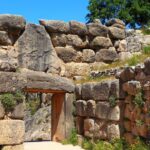
From there, you move into the Archaeological Site of Mycenae. This is the Acropolis controlling the Argolid Plain, and it’s strongly tied to the Mycenaean civilization story. You’ll see major elements still visible: massive defensive walls, corbelled tholos tombs, and the Lions Gate. The atmosphere at Mycenae comes from scale and strategy—this place was built to hold ground.
Right next to it, the Museum of Ancient Mycenae helps you make sense of the excavation finds. The tour also notes that the most important Mycenaean artifacts sit in Athens, but the local museum adds real context for what you’ve just seen outside.
Palamidi Castle and Nafplio: Venetian fortifications meet sea views

Later in day one, you’ll roll into Nafplio, described as one of the most picturesque mainland towns. The reason you’ll like it is simple: it blends harbor charm with hillside history. You also get time built in to slow down, since the plan includes an overnight there.
Before you settle, there’s Palamidi Castle, a preserved Venetian fortification. Expect a climb with payoff. The route notes 913 steps (locals often say “999 steps”), and the fortress also carried a dark use as a prison. The reward is the view: Argolic Gulf, the city, and surrounding country stretching out below.
If you don’t love stairs, plan your effort. This is one of those stops where you’ll feel your legs by the time you reach the top, but you’ll also feel why people come here for sunsets.
You can also read our reviews of more tours and experiences in Athens


Day 2: Venetian Nauplion museum, Sparta’s artifacts, then Mystras’ medieval drama
Day two starts with the Archaeological Museum of Nauplion, housed in a Venetian stone building from 1713. This is one of those museums that makes architecture part of the experience—you’re basically standing in history while you browse. A highlight noted in the tour is the Bronze Suit Armor from Dendra, which is displayed with tools and related equipment.
Then you’ll visit Acronafplia Fortress, Nafplio’s oldest castle zone. The thick walls create a strong backdrop for city views, and the east parts are especially worth exploring. This stop works well because it’s not about ticking boxes; it’s about seeing Nafplio from above and connecting the old town to the coast.
Next you head toward Sparta, starting with the Archaeological Museum of Sparta in a neoclassical building from the late 1800s. The museum is compact (about 30 minutes), and the point is mainly to set you up for what comes next.
After that, you’ll walk the Acropolis and Ancient Theater area and see how Sparta’s reputation for military power shaped its identity. Even the framing here is stark: Sparta was powerful even if it didn’t leave behind a landscape of grand temples.
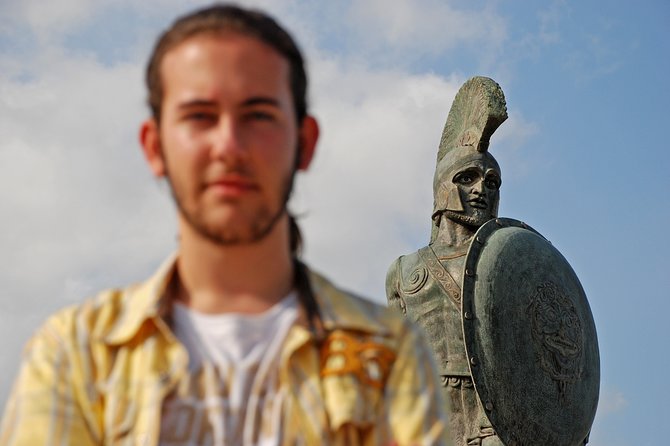
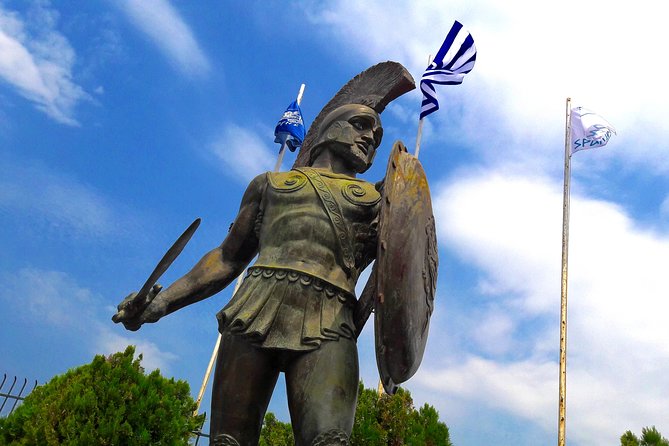
Then there’s the Leonidas Monument area. The statue faces a stadium, and the stop connects to the Thermopylae story—Molon labe, the famous comeback phrase. Nearby, an excavated limestone structure dating to the 5th century BC is believed to be the tomb of Leonidas, tied to Pausanias’ account.
The emotional pivot comes at Mystras. This UNESCO site is a medieval city built around a fortress and layered through Byzantines, Turks, and Venetians before being abandoned in 1832. If you like ruins that feel lived-in, Mystras delivers. You’ll spend about 2 hours here, and the hillside setting makes the structures feel like they’re still part of daily life.
Olympia and the Olympic world: not just stadiums

Day three begins at Olympia’s archaeological site, one of Greece’s most influential sanctuaries in antiquity. It’s located in a valley near the rivers Alpheios and Kladeos. The major story is the Olympics every four years starting in 776 BCE, but the real payoff is seeing the spread of ruins and the stadium area.
Olympia is also a multi-era space: Bronze Age through Byzantine remains are mentioned in the plan. That broad timeline keeps you from treating it like a single moment in time.
Next is the Archaeological Museum of Olympia. The tour highlights famous statues and finds like the Hermes of Praxiteles, the Nike of Paionios, and helmets connected to Zeus dedications. If you care about how ancient sculptors and athletes were celebrated, this museum is often the “wait, this is why we came” stop.
There’s also the Museum of the Olympic Games, focused on the history and rules of the events, plus why women were prohibited from watching. The displays are more explanatory than statue-driven, and that balance is useful on a long day.
Rio–Antirrio Bridge and the north-coast stops before Parnassus
Then you get a modern contrast: Rio–Antirrio Bridge viewing by ferry ride. The trip includes crossing by ferry from Rio to Antirrio (around 20 minutes), and you’ll admire the bridge from the water.
The bridge opened on 12 August 2004, one day before the Athens Olympics began, and it was used for transporting the Olympic Flame. That detail helps you frame it as more than infrastructure—it’s tied to Greece’s modern sporting identity.
After that, the plan includes Nafpaktos (known historically as Lepanto) and Galaxidi, a small port on a natural double harbor. These stops are shorter, but they break up the heavy archaeology with coastal atmosphere.
Finally, you drive via Mount Parnassus, with scenic views above Delphi’s region. Parnassus is sacred to Dionysus and Apollo in mythology, and it’s linked with the Muses. The plan also includes an overnight on the slopes in a traditional village setting, which is a nice way to end the journey before Delphi.
Day 4: Delphi’s oracle grounds and the Athena Pronaia tholos
Day four is Delphi, and it’s hard to describe Delphi without sounding dramatic—so I’ll keep it practical. Delphi is the ancient sanctuary that grew rich from being the seat of the Pythia, the oracle consulted by key figures across the classical world. The site is on a slope of Mount Parnassus, overlooking the coastal plain and Phocis valley.
The ticket includes the site and museum, with prices listed as summer 20€ / reduced winter 10€ (as part of the plan). You’ll spend around 1.5 hours in the main archaeological zone, where the idea of Delphi as the religious center of the ancient Greek world feels real when you’re standing among monuments from major city-states.
You’ll also visit the Delphi Archaeological Museum, free in the plan, which is one of Greece’s more important collections. It focuses on the sanctuary’s history and includes architectural sculpture, statues, and smaller objects tied to religious, political, and artistic activity from around the 8th century BC onward.
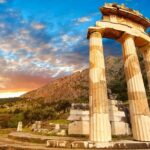
Then you’ll stop at the Tholos of Athena Pronaia, a circular structure built between 380 and 360 BC with Doric columns externally. It’s short, about 30 minutes, but it’s a neat counterpoint to the bigger Delphi ruins because it’s specific and architectural.
After Delphi, the itinerary includes Livadia and the Archaeological Museum of Thebes. Livadia is noted as connected to the oracle of Trophonius, which remained consulted into later periods. The Thebes museum covers excavations across Boeotia with exhibits from Paleolithic through Post Byzantine periods. This final museum stop can help you connect Delphi’s myth-oracle world to the broader regional story beyond one sanctuary.
Price and value: what $1,376 really buys you
At about $1,376.08 per person, this tour sits in the “private, high-touch” category, and that’s the right way to judge it. You’re paying for a driver/leader, a private vehicle, and the included transportation costs that add up fast: fuel, toll roads, parking, plus ferry tickets. You also get onboard Wi-Fi and pick-up/drop-off to your Athens accommodation or nearby start point.
The part to understand is what isn’t included: accommodation and site/museum admissions add on top. Accommodation is listed as an additional cost starting around 160€ per double room per night (with weekend-holiday pricing higher). Admission fees depend on season, and the plan gives a clear rule of thumb: 10€ per person in winter and 20€ per person in summer, plus there are multiple sites.
So if you want the best value, you’ll benefit from sharing the room cost. If you’re traveling solo, your effective cost per day can climb because the accommodation is per double room pricing.
Also, consider the “guide depth” decision. The driver isn’t a licensed archaeologist guide for site walks. If you want that extra explanation at specific stops, there’s an additional archaeologist guide cost listed at 180€ per booking.
Practical tips so the big sites feel fun, not stressful
This route rewards early starts and good shoes. The plan includes steep areas like Palamidi’s stair climbs, and Delphi is on a slope. Bring comfortable walking shoes and water, and don’t treat any single stop like it’s “just a quick photo.”
Museum and site hours matter. The plan notes closures on Tuesdays (for museums only), plus major holiday closures like Dec 25–26, Jan 1, Mar 25, Easter Day, and May 1. If your dates land on a closure day, expect fewer indoor stops.
Also, admission is the one “surprise” most people forget to budget. Even when some stops are listed as free in the plan, you’ll still pay multiple-site admissions depending on season. If you’re traveling in high summer, those 20€ per person add up quickly—so set aside money early.
Who this tour is best for (and who should rethink it)
This works best if you want a private experience that hits the headline archaeological sites without turning the trip into a logistics scavenger hunt. It’s ideal for couples, families, and small groups who care about context but don’t need every minute guided by a professional archaeologist.
You might reconsider if you’re traveling with limited energy for long driving days and multiple stops in one itinerary block. The route is packed with major anchors—Corinth to Mycenae, Sparta to Mystras, then Olympia to Delphi—so pacing is crucial.
It’s also a good match if you like discussion. One recent highlight from a named driver in the tour feedback is Nikolaos, described as thoughtful, patient, and passionate, with a talent for taking scenic, less-crowded roads. If you get a similar style of driver/leader, you’ll likely get better flow between stops.
Should you book this private 4-day classical tour?
If you want Greece’s classical pillars—Corinth/Mycenae, Sparta/Mystras, Olympia, and Delphi—organized into a single private flow with pickup and hotel drop-offs, this is a strong pick. The Wi-Fi, the direct logistics, and the built-in overnights at key regions help you enjoy the trip instead of managing it.
I’d book it if you can budget for extra admissions and want the flexibility of a private group. I’d hesitate if your dates fall on museum-closure days or if you prefer a slower, less-stop approach with fewer transfers. Either way, if you plan your ticket budget and wear shoes you can trust, you’ll get a memorable tour of Greece’s major eras in one coherent arc.
FAQ
How long is the tour?
The tour runs for about 4 days.
Where do you get picked up and dropped off?
Pickup and drop-off are offered from/to your hotel or apartment in Athens or Piraeus. You can also request another pickup location.
Does the tour include Wi-Fi?
Yes. Onboard Wi-Fi is included to help pass the time during longer drives.
Is accommodation included?
No. Accommodation in selected 4* boutique hotels is an additional cost per double room per night (and a driver’s room is complimentary). The plan also mentions the option for you to handle your own hotel reservation, with an extra driver room.
What about admission tickets for archaeological sites and museums?
Admission fees are not included. The plan states winter (Nov 1 to Mar 31) is 10€ per person and summer (Apr 1 to Oct 30) is 20€ per person, covering multiple sites/museums. Some individual stops are listed as free in the plan.
Do I need an archaeological guide for each site?
You don’t have to hire one, but the driver/leader is not a licensed tour guide for walks inside archaeological sites or museums. If you want an archaeologist guide for sites, it can be arranged for an additional 180€ per booking.
Are there any days when museums are closed?
Yes. Museums are closed on Tuesdays (museums only), plus several specific holiday dates listed in the plan.
What vehicle options are available?
The tour offers sedan/SUV (up to 3 adults or family of 4), minivan (1 to 7 persons), and minibus (up to 14 persons). Kids up to 10 years old are noted as free for vehicle capacity limits. Price varies by group size and vehicle type.


More Private Tours in Athens


More Tours in Athens



More Tour Reviews in Athens
- All Day Cruise -3 Islands to Agistri,Moni, Aegina with lunch and drinks included
★ 5.0 · 4,958 reviews