REVIEW · ATHENS
Medieval Athens Walking Tour with Late Lunch and Wine
Book on Viator →Operated by Athens Walks Tour Company · Bookable on Viator
A medieval Athens tour after lunch is a smart switch from the usual route. You’ll get medieval gems in walking distance, then end with a 3-course Greek lunch and a glass of local wine—less planning, more time seeing. One thing to consider: the Byzantine and Christian Museum can be partly closed on Sundays, which may change what you get to see.
I really like how the tour leans into places most people skip, especially Petraki Monastery, which is still active and still used by monks. And with a guide like Ephtimia, the history lands fast and sticks, with clear explanations you can actually use while you’re looking at the stones.
In This Review
- Medieval Athens by foot, with a real meal built in
- What the tour gets right (and where to temper expectations)
- The meeting point and the pace: 4 hours that don’t feel rushed
- Petraki Monastery: a 1,000-year place still used today
- The Byzantine and Christian Museum: 25,000+ artifacts in one focused visit
- Plaka after the museum: a slower neighborhood walk with purpose
- Fethiye Mosque: Ottoman-era Athens, seen respectfully
- Church of Kapnikarea: 11th-century Athens still standing
- Late lunch at the museum: 3 courses with a wine glass included
- Price and value: what $243.10 covers (and why it’s not just sightseeing)
- Who this tour fits best in Athens
- Should you book this medieval Athens walking tour?
- FAQ
- How long is the Medieval Athens walking tour?
- When does the tour start?
- Where is the meeting point?
- What does the tour include?
- Is the Byzantine and Christian Museum ticket included?
- Are lunches and wine included, and what’s the meal like?
- Is it a private tour?
- Do you need hotel pickup or drop-off?
- Is admission included for places like the Church of Kapnikarea and Fethiye Mosque?
- Can I use an electronic voucher?
Medieval Athens by foot, with a real meal built in
This is a half-day, about 4 hours, set up to do two things well: show you medieval Athens you won’t find just by following crowds, and then feed you so you’re not spending the afternoon hunting for lunch.
The tour starts at Pl. Monastirakiou 6 in central Athens (12:30 pm). You’ll finish back at the meeting point, which matters because Athens has plenty of ways to get turned around. You’ll also have a mobile ticket for the included museum stop, and it’s a private tour in the sense that only your group participates.
Why that matters for value: when you’re spending this much time in the city center, the best tours save you from decision fatigue. Here, the late lunch is part of the plan—so you can keep your energy for the walking and museum time, instead of squeezing in a separate plan.
What the tour gets right (and where to temper expectations)
Here’s what I’d put at the top of your list before you book:
- You see medieval-era sites that sit off the main tourist map, including Petraki Monastery, the Church of Kapnikarea, and the Ottoman-era Fethiye Mosque.
- You tour the Byzantine and Christian Museum—a space full of Christian and Byzantine art and artifacts, plus a serious collection of Coptic Christian paintings and mosaics.
The one practical drawback is timing and open hours. On Sundays, the Byzantine and Christian Museum has been partly closed at least at times, so your museum coverage may be shorter or more limited. If you’re set on a Sunday, I’d treat the tour as still worthwhile, but go in ready to accept that not every gallery may be running.
Also, note that some entrances (like Kapnikarea and Fethiye Mosque) are not included, so you should budget a bit for those if you want to go inside.
You can also read our reviews of more walking tours in Athens

The meeting point and the pace: 4 hours that don’t feel rushed
The tour begins at 12:30 pm at Pl. Monastirakiou 6. That late-morning-to-afternoon slot is usually great in Athens because you can sleep in a bit, then still get a full cultural block before early evening.
You’re not doing a marathon. The walking tour is designed as a sequence of shorter stops—monastery, museum, then Plaka and church/mosque exteriors and quick visits. If you’re choosing between a long day of hop-on/hop-off sightseeing and a focused cultural walk, this one fits the focused category.
My practical advice: wear comfortable shoes and bring water. Even if the walking is manageable, Athens heat and stone streets are real. And because you’re inside churches and museum spaces, dress to be respectful—light layers help.
Petraki Monastery: a 1,000-year place still used today
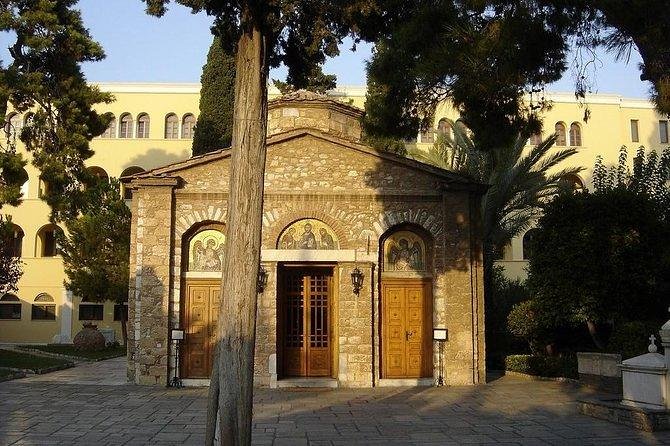
The first big “wait, why doesn’t everyone talk about this?” stop is Petraki Monastery. You’ll step into its church and hear how it has a 1,000-year history and still has monks living there.
The church inside is described as Byzantine-style, and it’s considered one of the best examples in southern Greece. That phrase matters because Byzantine architecture isn’t one-size-fits-all—you can see distinct regional differences. If you’re the kind of person who enjoys looking at details (church layout, icon and fresco styles, stonework), you’ll likely spend extra time here just looking.
The frescoes are a highlight. The 18th-century paintings are thought to be connected to hagiographer Georgios Markou. Even if you don’t memorize names, you’ll recognize the style shift between medieval contexts and later religious painting.
A real bonus: this stop gives you context before the museum. You’ll see how living religious spaces connect to the wider Byzantine and Christian story.
The Byzantine and Christian Museum: 25,000+ artifacts in one focused visit
Next comes the Byzantine and Christian Museum, and it’s one of those Athens stops that rewards your attention. The museum is housed in the former palace of a Greek duchess, which means you’re not just walking through a collection—you’re moving through the bones of an older building.
The museum visit is about 1 hour, and you’ll get a guided tour rather than a vague “look around and hope” experience. The museum’s scope is huge: it holds more than 25,000 artifacts from Byzantine Greece, covering a broad span from 600 BC to the mid-15th century (so you’ll move across centuries, not just one narrow era).
You’ll specifically spend time with:
- religious artifacts and Christian-themed items
- paintings, including a striking collection of Coptic Christian paintings
- mosaics
This is where I think the guide makes the biggest difference. Without context, a museum like this can feel like a series of impressive objects. With a guide, you start connecting how beliefs, politics, and everyday life left physical traces—icons, textiles, religious art styles, and preserved objects.
One Sunday note: if you’re going on a Sunday, keep in mind the museum may be partly closed, which could reduce what you see in your 1-hour slot.
Plaka after the museum: a slower neighborhood walk with purpose
After the museum, the tour shifts into Plaka, the historic neighborhood that surrounds many major Athens sights. Here, it’s not about checking boxes. It’s about walking the streets with the medieval and Ottoman context now in your head.
You’ll spend about 2 hours in Plaka with your guide. This is a good length: long enough to feel like you walked a neighborhood, not so long that you lose the thread.
What you should look for: street layout, building styles, and the way small changes in elevation and street width can hint at older city planning. Plaka is busy at peak times, but because your focus is medieval context, you’ll notice more than just storefronts.
If you’re photo-focused, this is also a friendlier window than the first museum stop. Light often works better in the afternoon for streets and facades than it does for interiors.
You can also read our reviews of more wine tours in Athens






Fethiye Mosque: Ottoman-era Athens, seen respectfully
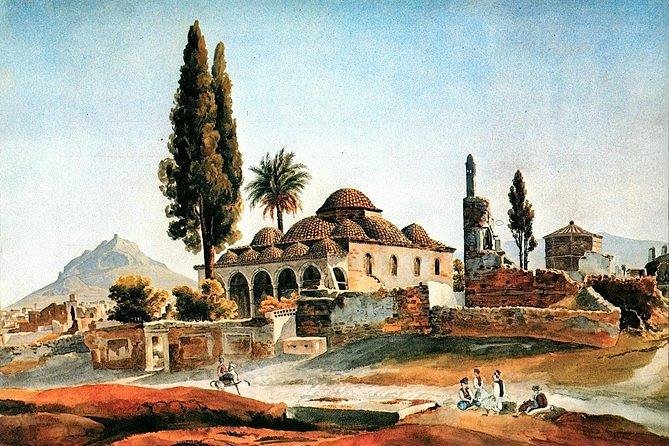
Next is the Fethiye Mosque, described as the most important mosque of the Ottoman era. This stop is shorter—about 30 minutes—and it’s primarily about learning what you’re looking at and why it matters in Athens’ layered story.
Even when a stop is brief, I like it when a tour doesn’t treat religious buildings like photo props. The point here isn’t just to say Ottoman-era—it’s to help you see the city as a sequence of empires and beliefs that left architecture behind.
Since admission is not included, you’ll want to be clear whether you’re doing a quick exterior view only or if you plan to pay to enter. Your guide can steer you based on what’s available at the time.
Church of Kapnikarea: 11th-century Athens still standing
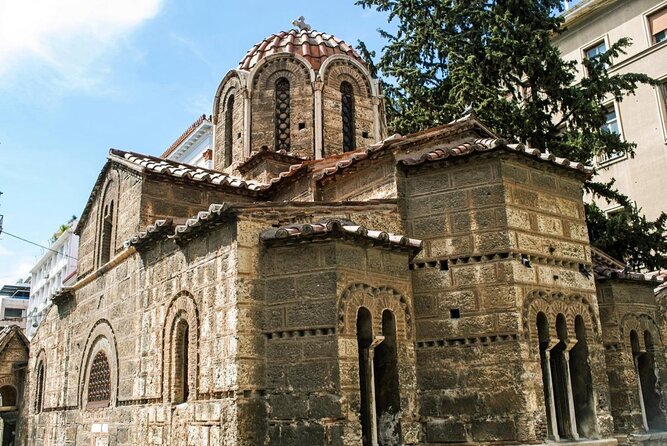
You’ll finish with the Church of Kapnikarea, a medieval church dating to the 11th century. It’s a short stop, about 20 minutes, and that’s likely on purpose—so you can get the meaning without spending so long you burn out at the end.
The best way to experience Kapnikarea on a tight schedule is to treat it like a “final chapter” stop. By then you’ve already seen:
- Petraki Monastery and Byzantine-style church space
- a museum full of Byzantine and Christian art
- Plaka’s older neighborhood setting
- the Ottoman footprint with Fethiye Mosque
So the church becomes more than a pretty building. It turns into a time marker: a real 11th-century piece inside a city that keeps rebuilding around its past.
As with Kapnikarea’s admission, entry is not included, so confirm whether you want to go inside based on your interests and any costs you may encounter on-site.
Late lunch at the museum: 3 courses with a wine glass included
The payoff is the meal at the museum’s acclaimed restaurant, finished as the end of the morning / mid-afternoon block (the tour runs from 12:30 pm). This is one of those “small detail, big benefit” choices that makes the whole experience feel less like work.
You get a 3-course lunch with a Medieval Greek theme. The meal includes:
- a starter
- a main dish
- shared salads
- a shared dessert platter
- and a glass of fine local wine
Why this is good value: if you had to plan lunch yourself, you’d likely spend time searching, then deal with variable quality, and then still try to time it around museum hours. Here, lunch is built into the flow. You also get to eat near a place you just learned about, which keeps the theme going rather than breaking it.
My practical pick: pace yourself through lunch so you still have energy for the walking section afterward. It’s tempting to go full-speed on the wine glass, but you’ll enjoy the Plaka and final church/mosque moments more if you stay comfortable.
Price and value: what $243.10 covers (and why it’s not just sightseeing)
The price is $243.10 per person. That number looks high until you break down what’s included.
You’re paying for:
- a local guide for the whole walking sequence
- museum admission for the Byzantine and Christian Museum
- a full 3-course meal with a glass of wine
Those three items alone can cost a lot when booked separately in Athens. Then you add that you’re not just “walking around”—you’re getting guided context at multiple stops, including interpretation around Christian art and Byzantine-era objects.
There’s also group discounts, and it’s scheduled as a private tour/activity for your group. Private doesn’t always mean better, but it usually means you’re not stuck behind a larger herd, and the guide can keep the pace aligned with your group’s questions.
One thing to consider: some entries aren’t included (like Kapnikarea and Fethiye Mosque). So if you plan to enter everything, your total may be higher than the advertised price.
Who this tour fits best in Athens
This is a great fit if you:
- want medieval Athens without spending your whole day in the biggest-name sites
- enjoy churches, monasteries, and religious art, not just ancient ruins
- prefer a plan that includes lunch and doesn’t require constant decisions
- like guided explanations that help you see what you’re looking at
It also works well if you’re traveling with someone who wants variety: one part architecture and art, one part neighborhood streets, one part food and wine.
If you’re the type who only cares about ancient Greece (classical temples and statues), you might find the Byzantine and Christian angle less urgent. But if you want the Athens that came after the marble age—and still shapes what you see today—this tour makes sense.
Should you book this medieval Athens walking tour?
Book it if you want a smart, guided half-day that connects Byzantine and medieval churches to the wider city around Plaka, then rewards you with a real lunch and wine. The best-case outcome is exactly what you want in Athens: you leave feeling you understood the places, not just photographed them.
I’d think twice if:
- you’re going on a Sunday and the museum being partly closed would seriously affect your plan
- you hate walking or you want zero guided context and pure freedom
If your ideal trip is part culture, part food, and part “I didn’t know Athens had this side,” then yes—this is a solid choice.
FAQ
How long is the Medieval Athens walking tour?
It runs for about 4 hours.
When does the tour start?
The start time is 12:30 pm.
Where is the meeting point?
The meeting point is Pl. Monastirakiou 6, Athina 105 55, Greece.
What does the tour include?
It includes a 3-course meal with a glass of wine, entry to the Byzantine & Christian Museum, and a local guide.
Is the Byzantine and Christian Museum ticket included?
Yes, admission to the Byzantine and Christian Museum is included.
Are lunches and wine included, and what’s the meal like?
Yes. You’ll have a 3-course lunch with a glass of fine local wine, including a starter, a main dish, shared salads, and a shared dessert platter.
Is it a private tour?
Yes. Only your group participates.
Do you need hotel pickup or drop-off?
No. Hotel pickup and drop-off are not included.
Is admission included for places like the Church of Kapnikarea and Fethiye Mosque?
No. Entry/admission for the Church of Kapnikarea and Fethiye Mosque is not included.
Can I use an electronic voucher?
Yes, you can present either a paper or an electronic voucher.


More Walking Tours in Athens

More Tours in Athens


More Tour Reviews in Athens
- All Day Cruise -3 Islands to Agistri,Moni, Aegina with lunch and drinks included
★ 5.0 · 4,958 reviews