REVIEW · ATHENS
Athens: Food Market Visit and Cooking Class with Wine
Book on GetYourGuide →Operated by Endless Events IKE · Bookable on GetYourGuide
Greek cooking starts at the market. This 4-hour class turns Athens Central Market shopping into a real cooking lesson, then you end by eating what you made with wine and a digestive shot.
I especially like the way the cook teaches the why, not just the what. In standout sessions, instructors such as Vasia, Thanasis, and Despina have pointed out ingredient origins on wall maps and even shared family stories, including one about rolling phyllo dough. Second, the meal is the point: you cook a full spread of Greek favorites and sit down for a proper finish with drinks.
One consideration: plan on about 30 minutes of walking, and the kitchen seating can be a bit stiff if you are sensitive to long standing or hard stools. Also, the experience is not suitable for wheelchair users.
In This Review
- Key things to know before you go
- Varvakios Agora: your ingredients come from real Athens
- The Greek Kitchen studio: where you reset and start cooking
- The menu: five dishes that teach core Greek flavors
- Dolmades (vine leaves wrapped around herb-infused rice)
- Spanakopita (spinach pie with feta in pastry)
- Imam Baildi (roasted eggplant with rich sauce and feta)
- Tzatziki (yogurt, cucumber, and garlic)
- Portokalopita (orange and cinnamon phyllo dessert)
- Optional support for dietary needs
- How the class works in real time: teaching, participation, and energy
- Market walk to cooking class: what can feel slow, and what keeps it moving
- The meal at the end: wine included, dishes actually made by you
- Price and value: is $81 worth it in Athens
- Who this cooking class suits best
- Tips so your 4 hours go smoothly
- Should you book this Athens market and cooking class?
- FAQ
- How long is the Athens cooking class experience?
- Where do I meet for the class?
- What dishes are included in the cooking lesson?
- Is wine included?
- Can the class accommodate dietary restrictions?
- Is this experience suitable for wheelchair users?
Key things to know before you go
- Varvakios Agora shopping walk: you stroll with your cook and meet traders, but it is not a scripted “tour of every stall.”
- Hands-on teamwork at your table: you cook multiple dishes together, with the group often split across two tables.
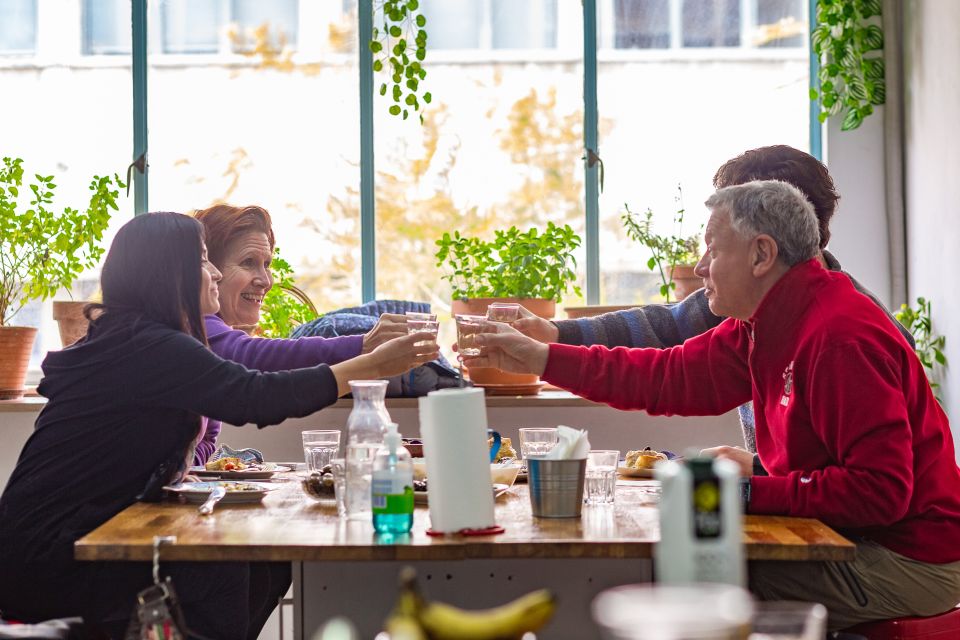
- A meal that includes your wine and your digestif: local organic wine plus a shot of Greek liquor are part of the experience.
- Dietary needs are handled when you tell them early: vegetarian and gluten-free requests have been supported, with celiac care described as careful.
- English (and Greek) instruction: you can ask questions while you cook, not just listen.
- You leave with recipes: it is built for you to cook these dishes again at home.
Varvakios Agora: your ingredients come from real Athens
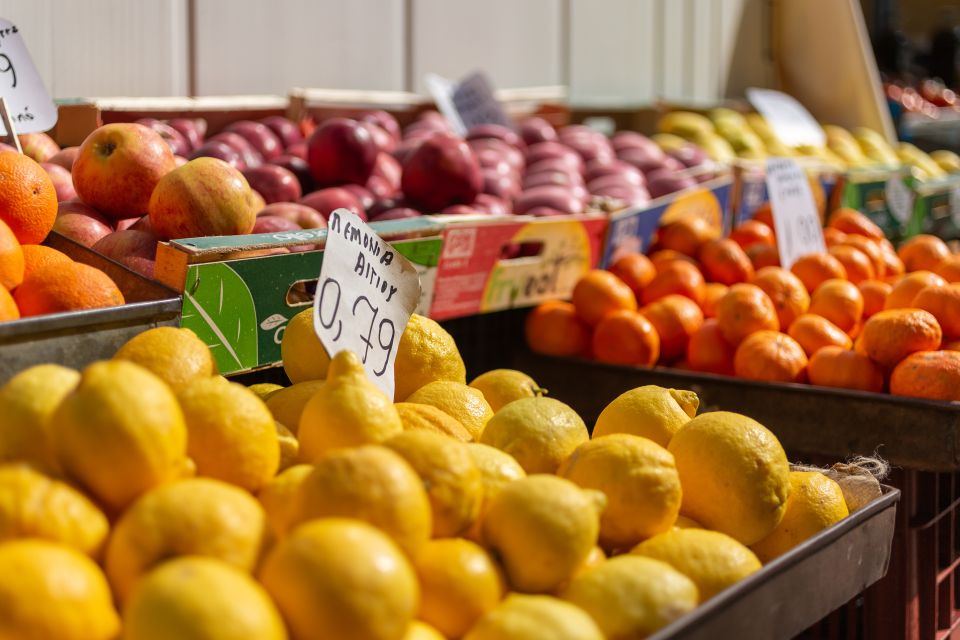
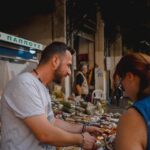
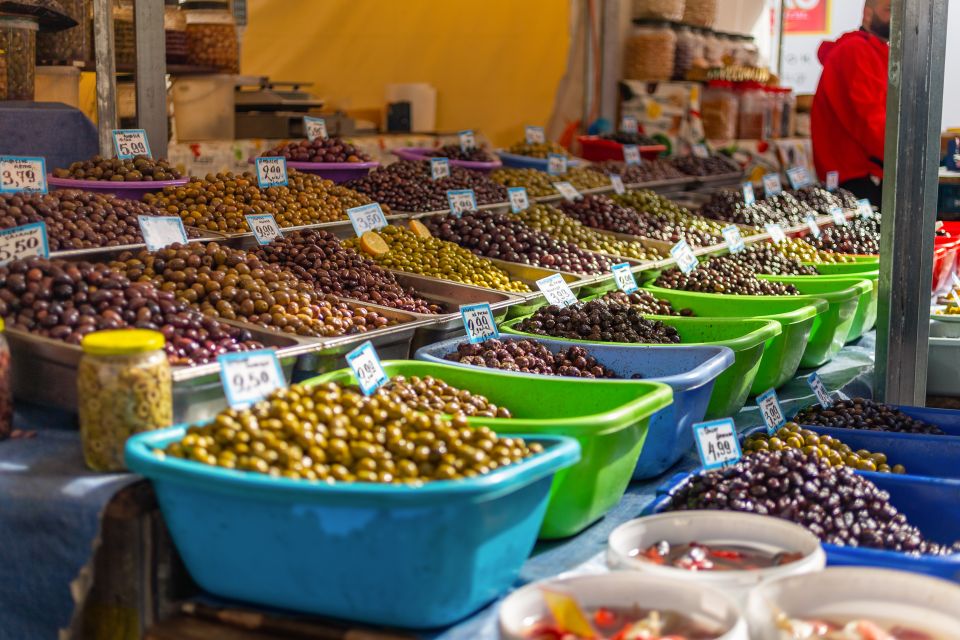
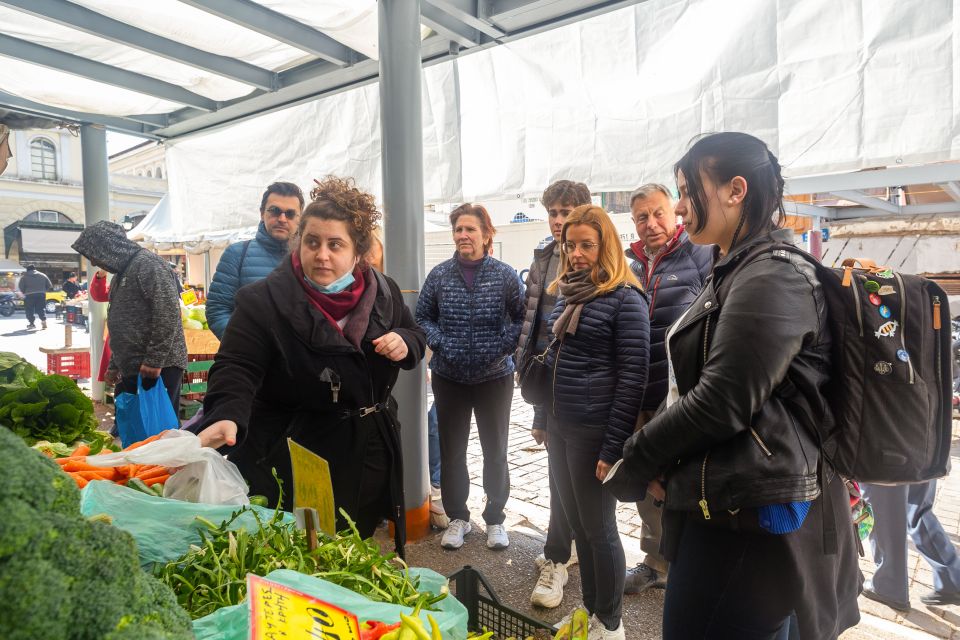
If you like eating your way through a city, this is a smart setup. You start at The Greek Kitchen, then head to Varvakios Agora, the central produce market where local cooks do their shopping.
This part is worth it because you see the raw materials that shape Greek cooking. It is not only about buying; it’s about learning what to look for and why certain ingredients matter. The walk includes about 30 minutes of walking, so wear comfortable shoes and dress for the weather.
You might also notice that the market area can include meat and fish stalls. One vegetarian guest said the early meat/fish portion was the only part they did not love, even though the rest of the experience worked well and accommodations were in place. If you are vegetarian or have strong preferences, message your needs as soon as possible so they can plan ahead.
You can also read our reviews of more food & drink experiences in Athens


The Greek Kitchen studio: where you reset and start cooking
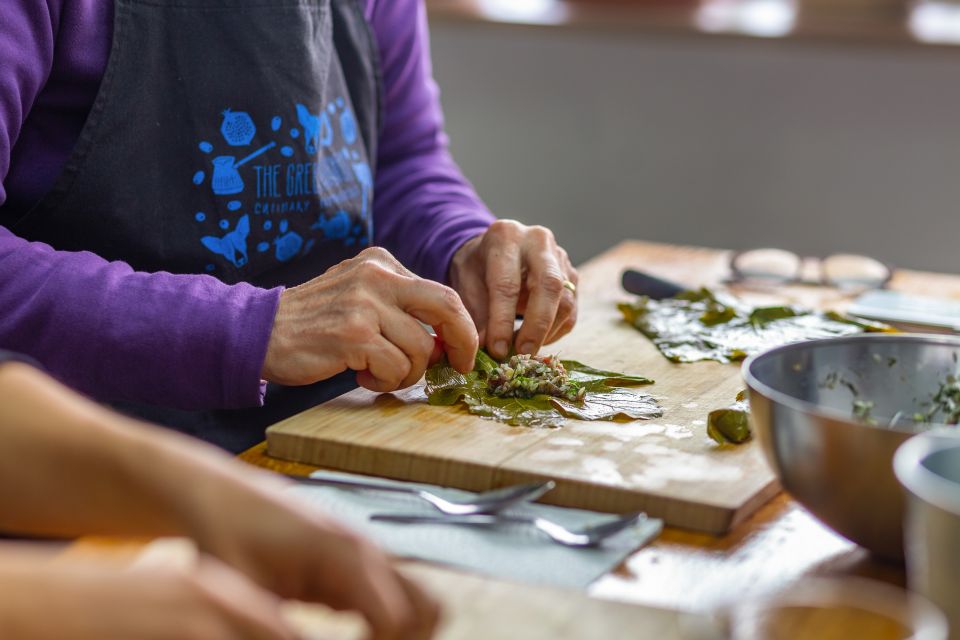
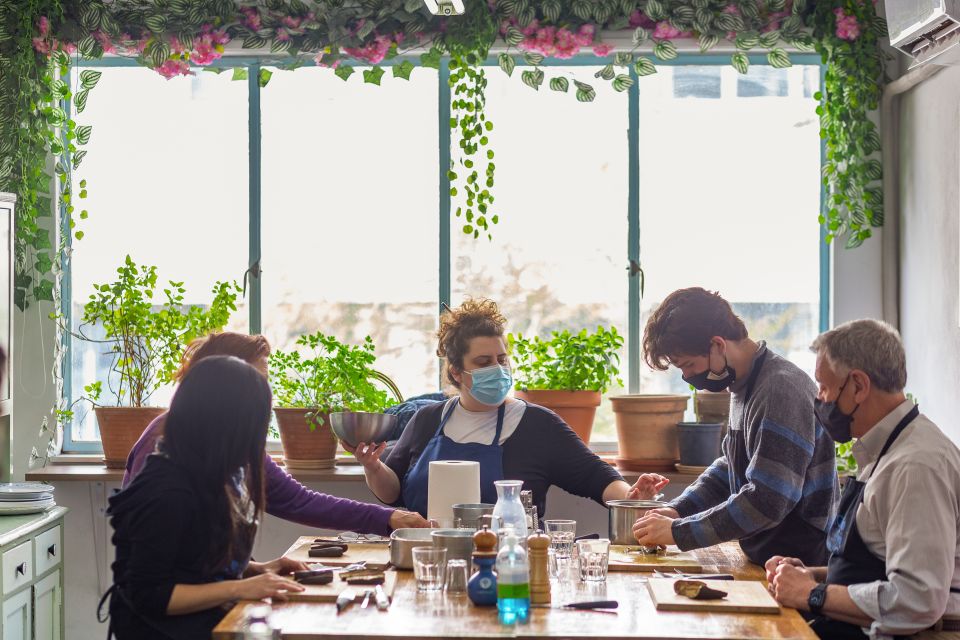
Before you hit the market, you begin at The Greek Kitchen, the cooking school located at Athinas 36 on the 1st floor. This is where you can leave anything you do not want to carry around during shopping, which makes the market walk much easier.
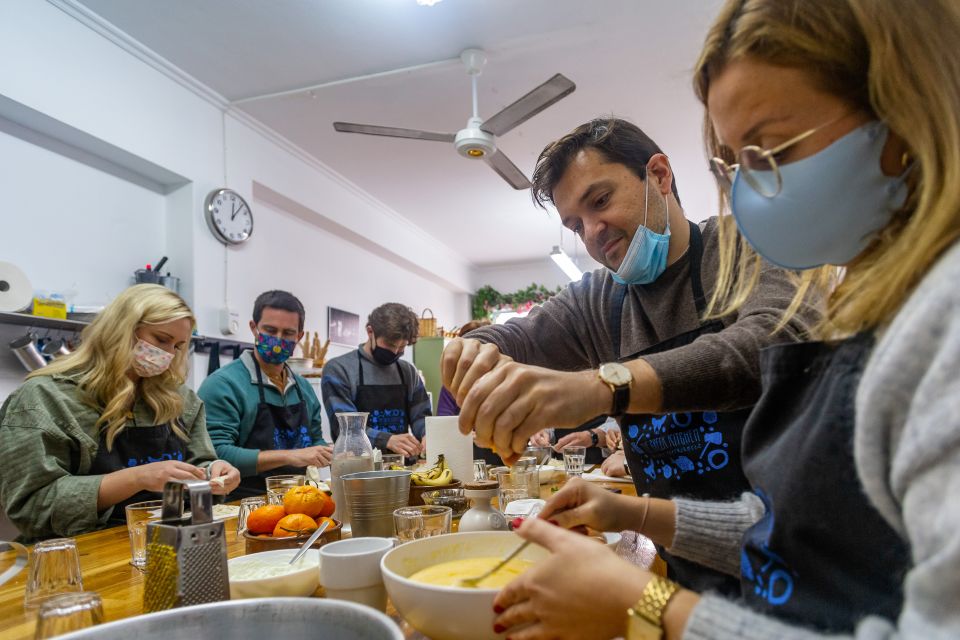
Back at the studio, you shift from browsing to doing. The format is hands-on, with you working during prep and cooking rather than watching from a distance. Across reviews, the pacing is described as relaxed, and instructors have a way of keeping people participating, whether you are a confident cook or someone who usually burns toast.
The instructors are comfortable working with mixed groups and different cooking levels. In one review, a group of about 13–15 people was split between two tables, which helps everyone stay involved and not feel like a spectator.
The menu: five dishes that teach core Greek flavors
You cook a set menu designed to cover both savory mains, a classic sauce, and dessert. It’s not just variety for variety’s sake; each dish teaches a Greek flavor profile you will recognize on restaurant menus back home.
Dolmades (vine leaves wrapped around herb-infused rice)
Dolmades are one of the most teachable dishes because they combine herbs, rice, and patience. Your class version includes vine leaves wrapped around rice with herbs infused into the filling, and there is an optional beef addition if you want it. Even if you do not add meat, you still get the core technique and the taste.
Spanakopita (spinach pie with feta in pastry)
Spanakopita is the comfort food that shows how Greek cooking balances salty cheese with tender greens. You make spinach pies with a touch of creamy, salty feta wrapped in pastry. This is the dish that tends to impress people because it looks like “serious baking,” but the class format makes it feel doable.
You can also read our reviews of more tours and experiences in Athens





Imam Baildi (roasted eggplant with rich sauce and feta)
Imam baildi is eggplant at its best, and it’s a great counterpoint to stereotypes that say eggplant is bland. You will learn the method for roasted eggplant topped with a rich sauce and feta cheese. One guest specifically said they learned that eggplant can be tasty compared with what they had experienced elsewhere.
Tzatziki (yogurt, cucumber, and garlic)
Tzatziki is simple, but it is also where Greek cooking shines. You combine Greek yogurt with cucumber and garlic, and you end up with a sauce that can anchor a whole meal. It is also the kind of dish you can repeat easily at home, because the ingredients are straightforward.
Portokalopita (orange and cinnamon phyllo dessert)
Dessert is not an afterthought here. Portokalopita is an orange-and-cinnamon phyllo-based dessert known for being sticky and soft. You make it with oranges and cinnamon, and it’s the kind of recipe that makes people say they will start making it for guests.
Optional support for dietary needs
The experience is set up to cater to dietary needs, but the key is timing. The instructions say you should contact them using the messaging feature as soon as possible, since they cannot guarantee last-minute changes.
Reviews back that up with real examples: one guest described a gluten-free friend being made comfortable, and another mentioned a celiac guest and careful steps to prevent cross contamination by preparing separate dishes.
How the class works in real time: teaching, participation, and energy
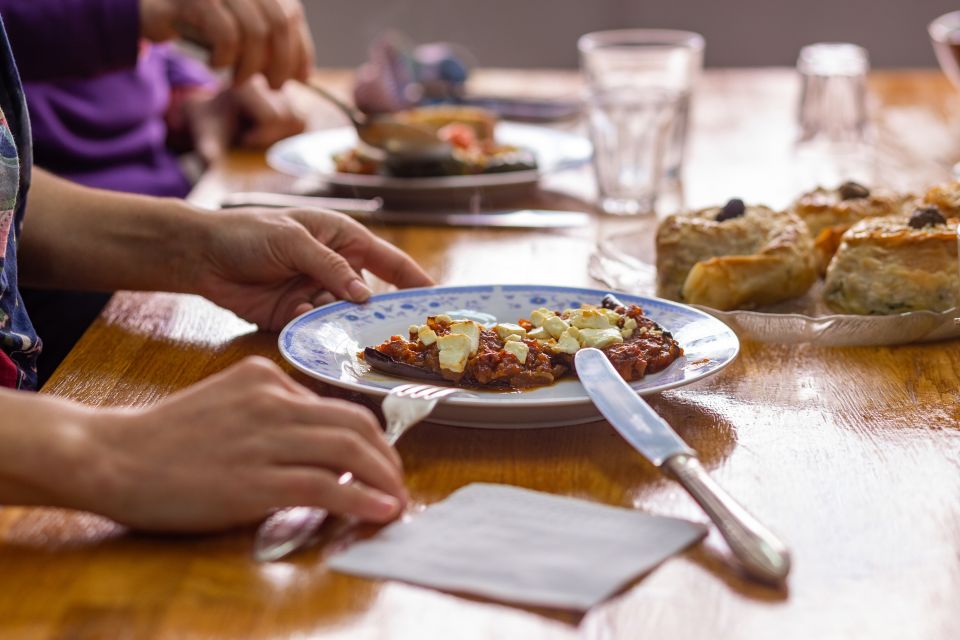
The group dynamic is one of the strongest parts of this experience. The cooking school keeps the atmosphere friendly and social, and instructors often involve everyone so you are doing something during each stage.
If you enjoy talking while you cook, you will like this format. One guest highlighted that meeting people from all over the world came with the cooking, and that conversation turned into Athens recommendations. That matters because Athens is easy to explore, but local tips about food spots and what to order can save you time.
In past sessions, cooks like Vasia (spelled VASIA), Thanasis, and Despina were praised for energy and humor, and the teaching style seems built around making it clear what to do next. One review even mentioned an instructor using a photo of a family member holding a stick used for rolling phyllo dough, which is the kind of personal cultural touch that makes the lesson feel more grounded than a standard recipe class.
Market walk to cooking class: what can feel slow, and what keeps it moving
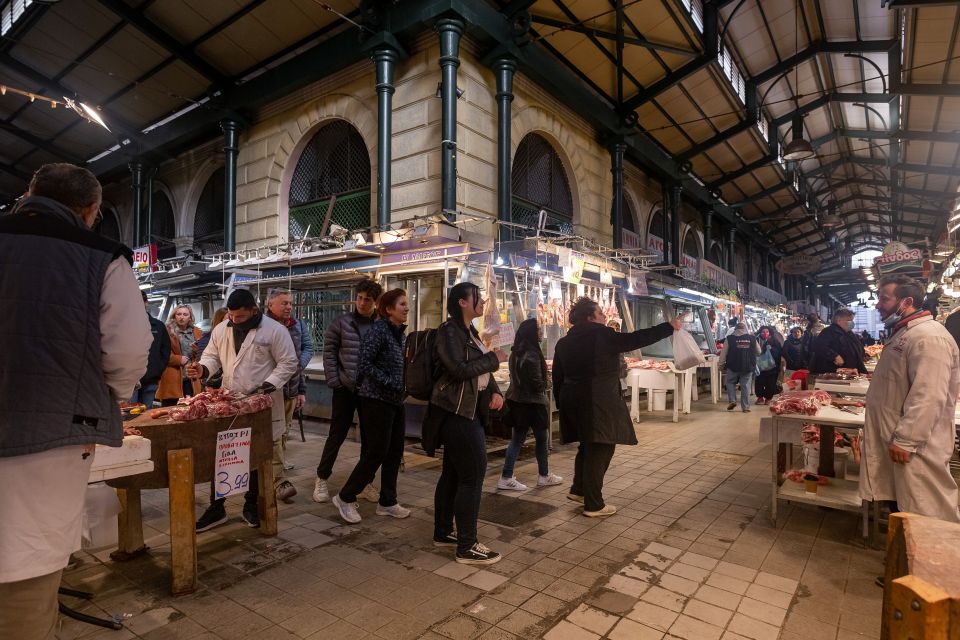
This is not a rushed “see everything, eat nothing” stop. It has two main phases: market shopping and kitchen cooking, then a shared meal at the end.
The market portion works best when you lean into it. You will not get a full market checklist, but you do get a walk with your cook and time to meet traders and understand ingredients. If you are expecting a huge sightseeing tour, temper that.
In the kitchen, the experience tends to be balanced for mixed skill levels. Reviews mention dishes being “easy” and classmates working as a team at their tables. The downside is the seating: one guest found the stools uncomfortable after more than an hour and ended up standing more. If that is you, plan to stand when needed and bring layers if you get cold easily.
The meal at the end: wine included, dishes actually made by you
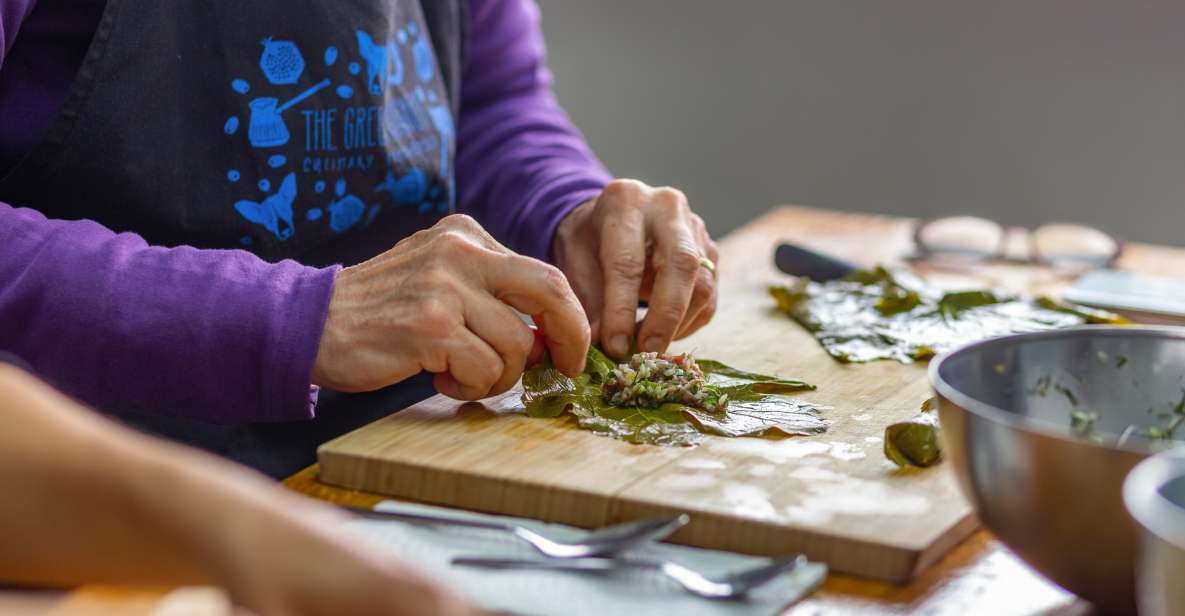
This is where the experience earns its keep. You do not just taste; you eat the food you prepared. Expect a full-course meal with water, wine, and soft drinks during the experience.
Two drink highlights are included:
- local organic wine with your meal
- a complimentary shot of Greek digestive liquor
That digestif detail matters because it is part of how Greeks finish a meal, not a random add-on. People also mention enjoying the relaxed end of class where the staff takes care of the dishes while you wind down with your group.
And yes, birthdays can happen. One review described a candle placed on dessert when it was a father’s birthday, which signals that the hosts pay attention to the moment, not just the recipe steps.
Price and value: is $81 worth it in Athens
At $81 per person for about 4 hours, you are paying for three things at once: guided market shopping, a guided cooking session with ingredients provided, and a full meal with drinks.
If you price it out in the Athens reality check way, the value is solid:
- You get the market experience without having to navigate it alone.
- You get multiple dishes taught and prepared with help and recipes.
- You also get the meal and drinks included, including wine and a digestive shot.
This is not the cheapest option in Athens, but it is not overpriced either for what you receive. You walk away with food you made, not just food you ate, and you get recipes so the class can keep paying you back after the trip.
Who this cooking class suits best
This works especially well if you want:
- a hands-on food activity that still feels social
- a way to learn Greek cooking basics you can repeat
- a market connection, not just a kitchen demo
It also suits couples and solo travelers well because you meet people and cook together. Several reviews highlight the group mix and the easy conversations that happen while cooking.
Skip it or choose carefully if:
- you need wheelchair accessibility (it is not suitable for wheelchair users)
- you are strongly sensitive to hard seating or long standing
- you know you will struggle with any meat/fish market exposure early on (vegetarian accommodations are possible, but the market environment may still show that side)
Tips so your 4 hours go smoothly
- Bring comfortable shoes. You will walk for about 30 minutes.
- Bring a refillable water bottle. You can fill it at the studio.
- Message dietary needs early, not at the last minute. The class can cater, but changes depend on time.
- Wear weather-appropriate clothing. The market portion includes time outdoors.
- If you expect to stay seated most of the time, plan for it. One review mentioned stools being uncomfortable after long sitting.
Should you book this Athens market and cooking class?
Yes, if you want a practical Athens food experience that ends with real payoff: you shop, you cook, then you eat what you made with wine and a digestif. It’s especially good for people who learn best by doing, not by reading a recipe later.
Book it even if you are not a “kitchen person.” Reviews include guests who normally do not like their cooking, yet felt impressed because the dishes turned out well and were learnable at home. Just go in knowing you will do some walking, the format is shared with a group, and you should send dietary needs early if they matter to you.
FAQ
How long is the Athens cooking class experience?
It lasts about 4 hours.
Where do I meet for the class?
You meet at the local partner’s cooking school at Athinas 36, Athens, on the 1st floor.
What dishes are included in the cooking lesson?
The menu includes dolmades, spanakopita, imam baildi, portokalopita, and tzatziki (plus optional beef for dolmades if you want it).
Is wine included?
Yes. The meal includes water, wine, and soft drinks, and you also get a complimentary shot of Greek digestive liquor.
Can the class accommodate dietary restrictions?
They say they are happy to cater to dietary needs, but you should contact them using the messaging feature as soon as possible so they can plan ahead.
Is this experience suitable for wheelchair users?
No, it is not suitable for wheelchair users.



More Food Experiences in Athens
More Food & Drink Experiences in Athens
More Tour Reviews in Athens
- All Day Cruise -3 Islands to Agistri,Moni, Aegina with lunch and drinks included
★ 5.0 · 4,958 reviews