Athens can feel like a pile of stones until someone connects the dots. This 2-hour walk does that by pairing major monuments with myths, practical sights, and local food ideas—so you leave with a clear map in your head. You’ll cover 15+ monuments around the Acropolis area and beyond, then end in a restaurant-and-café stretch near the metro.
I especially like two things: the guide’s archaeology focus (facts plus stories that actually help you remember what you’re seeing), and the way the tour points you toward places to eat and drink like a local, not just more temples to stare at. If you’re the type who wants context, not just photo stops, this format fits well.
One caution: a 2-hour walking tour can’t go deep at every point. If your guide’s energy is low, you may feel like the group moved fast and the details weren’t fully there—so you’ll get the best experience when your guide engages and keeps the myth-and-history thread going.
In This Review
- Key things to know before you go
- Starting at Makrigianni: your easy, practical tour launch
- Dionyssiou Areopagitou street: where the “big names” line up
- Areopagus Hill climb: ancient court vibes and real photo value
- Ancient Agora to Roman forum: seeing Athens change over time
- Monastiraki and Plaka: turning ruins into a neighborhood map
- Makrygiani Street finale: turning your tour into a food and museum plan
- Price and time value: is $43 for 2 hours worth it?
- What the best guides do right (and how your experience can vary)
- Who this tour suits best
- Practical tips to get the most from a tight walking loop
- Should you book this Athens walking tour?
- FAQ
- How long is the Athens walking tour?
- What does the tour cost?
- Where is the meeting point?
- What language is the tour guide?
- Is the tour wheelchair accessible?
- What is the main route and area covered?
- What are the main highlights?
- What does the tour include?
- Are there tips for food, museums, and sightseeing?
- What is the cancellation policy?
Key things to know before you go
- Dionyssiou Areopagitou street is the backbone of the walk, with major monuments lining one of Athens’ most important thoroughfares
- Areopagus Hill is built into the route, including the “ancient law court” angle and photo-worthy views
- Ancient Agora plus Roman forum helps you see how Athens shifted over time, not just one era
- Monastiraki and Plaka show you where the city feels alive now, after the ruins
- Makrygiani Street is a smart finish point, close to the Acropolis metro and packed with food options
Starting at Makrigianni: your easy, practical tour launch
The tour meets outside the Acropolis metro station on Makrigianni street. That matters because you’re starting right in the middle of where you’ll want to be later—near cafés, restaurants, and the flow of people moving through the area.
The meeting spot is also on a pedestrianized road, so you’re not spending your time dodging traffic just to get to the first viewpoint. It’s a small thing, but it keeps the pace feeling calm from the beginning.
Because it’s an English live guided walking tour that’s wheelchair accessible, I’d expect the guide to keep the route manageable and the stops frequent enough to stay oriented.
You can also read our reviews of more walking tours in Athens

Dionyssiou Areopagitou street: where the “big names” line up
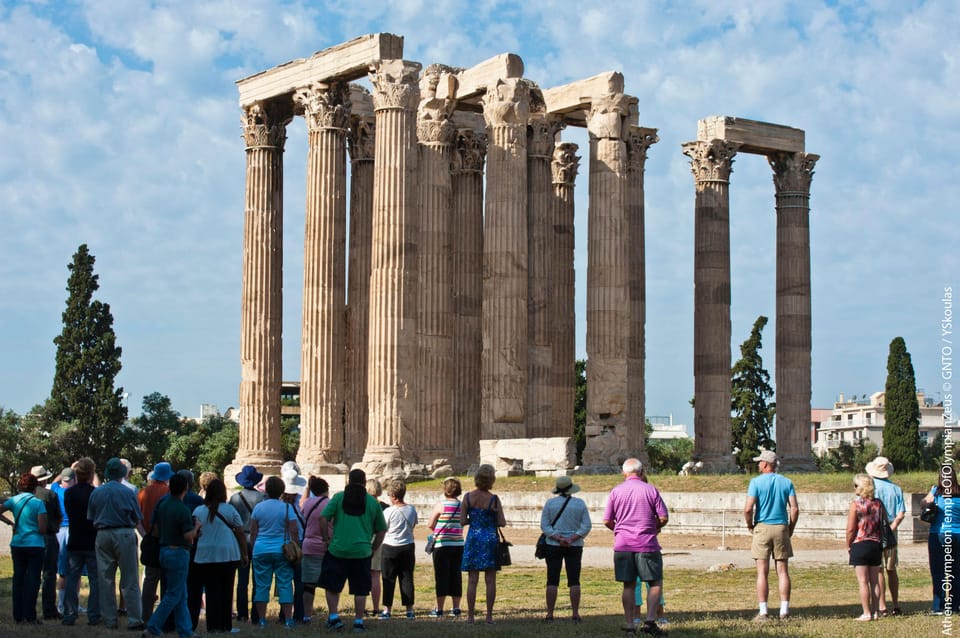
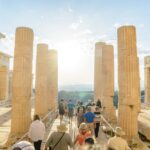
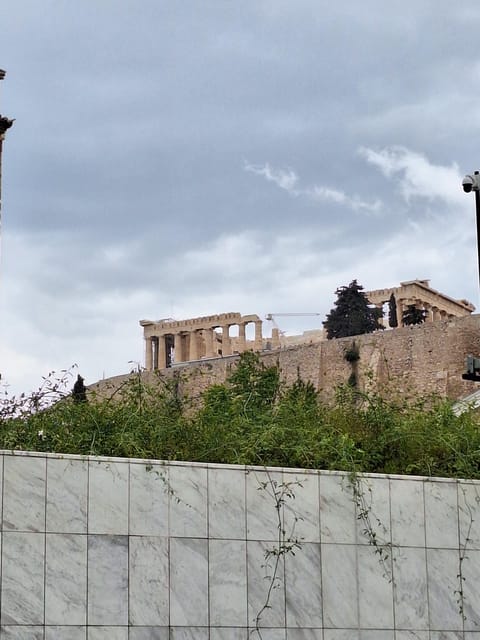
The walk’s main spine is Dionyssiou Areopagitou street, one of those Athens streets where monumental archaeology and city life overlap. You’ll see why this corridor is so important: it’s described as hosting some of the most significant archaeological sites and museums, with the Parthenon itself in the orbit of the route.
What I like about starting here is that you get quick visual grounding. When you later climb toward higher ground and then move into the Agora area, the sights feel connected rather than scattered.
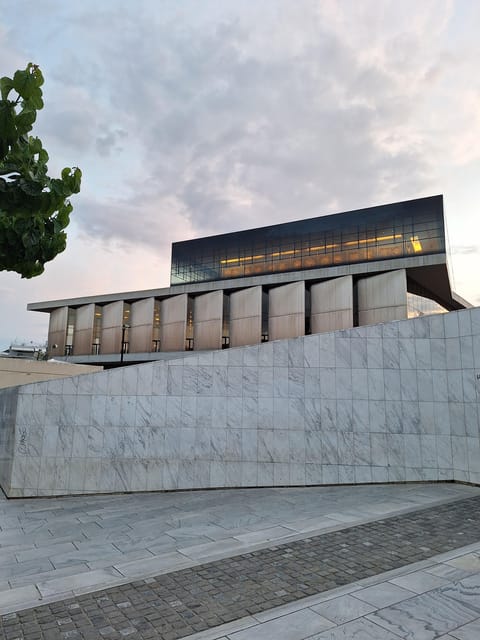
Along the way, the guide also points out institutions and landmarks such as the new Acropolis Museum and the Odeion of Herodes Atticus. Even if you don’t plan to enter all of them, it helps to know what they are and why they’re placed where they are. That knowledge turns your own later browsing into something more intentional.
And because the tour blends archaeology with myths, you’re not just looking at stone and dates. You’re learning stories that Greeks used to explain their world, then seeing how those stories attach to real places.
Areopagus Hill climb: ancient court vibes and real photo value
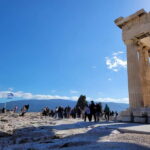
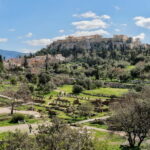
Next comes the climb to Areopagus Hill, presented as the most ancient law court in the world. That’s not just a fun fact—thinking of this spot as a judicial stage changes how you view the hill and the surrounding views.
From up there, you get breathtaking views and a straightforward opportunity for great photos. I also like that the hill stop tends to give you a mental reset. You’re moving from monument streets into a viewpoint where Athens opens up, and suddenly you can picture the city’s geography instead of treating it like a collection of ruins.
One practical consideration: if you’re traveling with limited mobility (even with accessibility options), the hill climb may still feel like the hardest part of the route. It’s worth planning your energy for that segment so you enjoy it rather than rush through it.
Ancient Agora to Roman forum: seeing Athens change over time
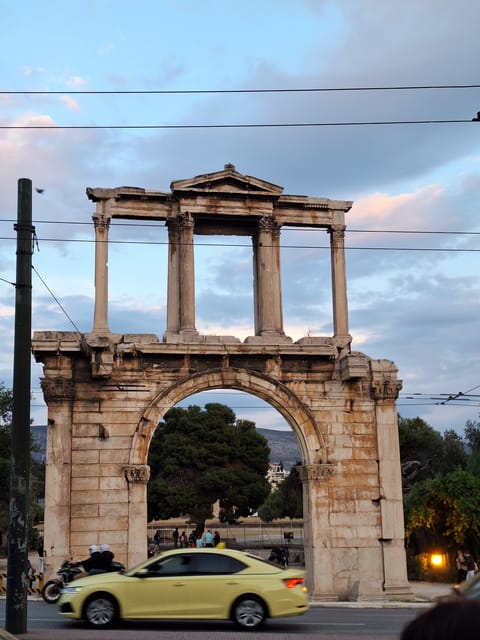
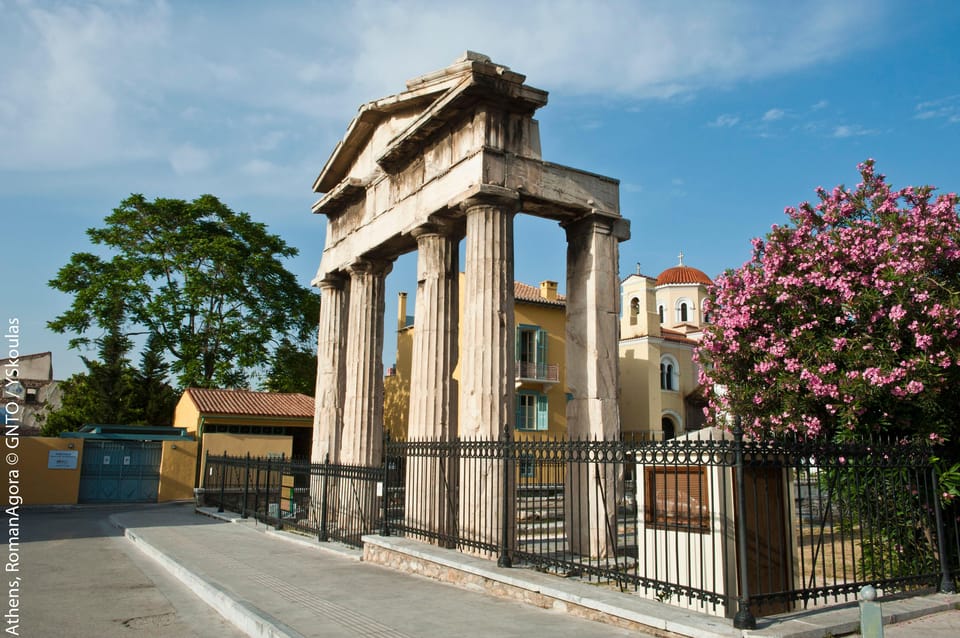
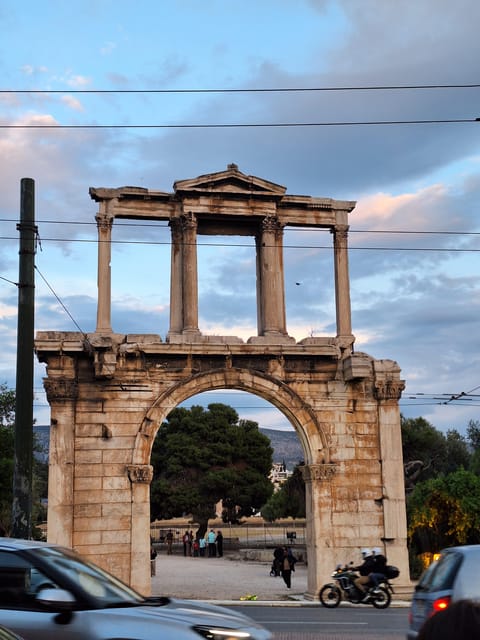
After the hill, the tour shifts to the ancient Agora and the Roman forum. This is where the tour’s archaeology angle pays off, because you’re not only learning about “what was built,” you’re learning about how the city’s public spaces evolved.
The Agora was a key civic zone in ancient Athens, so it helps to understand that you’re walking through a place meant for public life. Then the Roman forum adds another layer, showing how later rulers and societies used—and reshaped—the bones of the city.
I like this pairing because it keeps your brain busy in the best way. You’re constantly asking: what’s older here, what changed, and why would people keep returning to this location for public meaning?
The guide’s myth-and-fact approach also helps at this stage. When you can connect a story to a physical area, you’re less likely to forget the sequence of stops afterward.
Monastiraki and Plaka: turning ruins into a neighborhood map

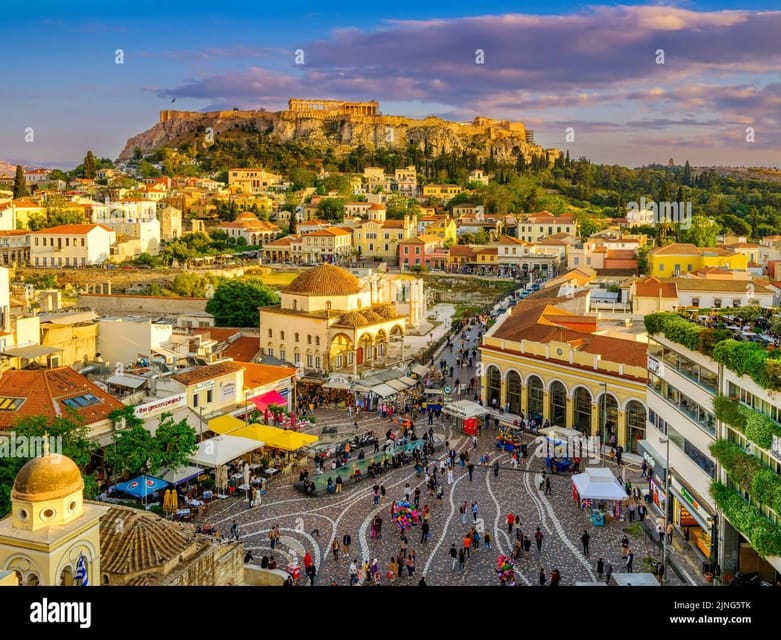
Once you’ve worked through the major archaeological zones, the tour moves into the Monastiraki square area and the Plaka neighborhood, described as the neighborhood of Gods. This is a smart shift in tone. Instead of treating Athens like a museum, you’re learning where people actually hang out now.
I like that the tour doesn’t end with the last ruin. It tells you how to re-enter daily Athens: where the energy is, what the neighborhood feels like at street level, and how to keep walking afterward without getting lost in guesswork.
The guide also covers city trends and practical suggestions for what to do next—this matters in Plaka because the streets are charming, but they can also tempt you into the same tourist rhythm over and over. A local-style map helps you avoid that.
- All Day Cruise -3 Islands to Agistri,Moni, Aegina with lunch and drinks included
★ 5.0 · 4,958 reviews




Makrygiani Street finale: turning your tour into a food and museum plan
The tour wraps up near the Acropolis metro station on Makrygiani Street, close to lots of familiar restaurants and cafés. I really like finishes like this because your momentum doesn’t collapse. You can keep the day going immediately with a place to eat, not a long scramble to find your bearings.
The tour also promises recommendations for sightseeing, museums, food, bars, and more. That’s the value of having a guide who’s connecting dots across the day. You leave with a shortlist you can trust rather than trying to reinvent your itinerary on the spot.
For me, the best part of a finish near transit is flexibility. If you decide you want one more museum stop, you have options. If you’re tired, you can just eat and recharge. Either way, you’re not stuck far from your next move.
Price and time value: is $43 for 2 hours worth it?
At $43 per person for a 2-hour walking tour, the price makes sense if you’re the kind of visitor who benefits from interpretation. You’re paying for more than standing near monuments—you’re paying for someone to explain what you’re seeing, share myths, and give you next-step ideas.
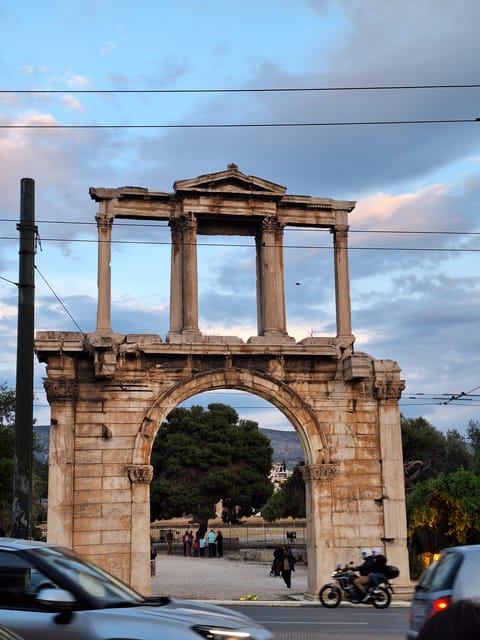
The route does a lot in a short time: 15+ monuments, the Areopagus Hill viewpoint, the Agora, the Roman forum, plus neighborhood time in Monastiraki and Plaka. That’s a big coverage area for a guided walk, especially if you’d otherwise spend time figuring out where to go first.
If your main goal is purely photos and you’re comfortable reading signs on your own, you might not extract full value. But if you want the stories and a practical Athens game plan, the format is strong for the time you’re spending.
What the best guides do right (and how your experience can vary)

The strongest praise centers on guide quality and communication. One review highlights a guide who was friendly and professional, and another focuses on a guide named Matina, described as very relaxed with a child in the group. That same feedback also says Matina is well educated and made it enjoyable to listen.
That’s a big clue about what works: calm energy, good explanation, and the ability to keep a group moving while still giving meaningful details.
At the same time, there’s one lower score that complains about a lack of engagement and a lack of details, with the impression that the tour simply walked around and finished without much “wow.” You can’t control a guide’s style, but you can control your expectations. Go in wanting stories and tips, and if the guide is talk-light, treat it as a route + orientation walk and plan to follow up on your own.
Who this tour suits best
This is a solid fit if you fall into one of these buckets:
- You want archaeology context with myths attached to real locations
- You’d like a fast way to connect major sites around the Acropolis with the neighborhoods nearby
- You care about where to eat and drink after you finish seeing monuments, not just during them
It can also work well for families, since one of the positive experiences specifically mentioned enjoying the tour with a child and a guide (Matina) who handled that situation with a relaxed approach.
If you’re already an Athens history specialist who knows the architecture deeply, you might find the 2-hour format too tight. For everyone else, it’s a good “orientation plus meaning” option.
Practical tips to get the most from a tight walking loop
This tour is built around walking and viewpoints, so comfort matters. Wear shoes you trust on uneven ground and bring sun protection since you’ll be outside for the hill and several stops.
Bring your phone camera, but also plan your time on Areopagus Hill for more than one photo. The real win is using the view to place what you saw earlier and what you’ll see next in your mental map.
Also, take notes or save voice memos. The guide’s myths and archaeology explanations are the kind of stuff that gets fuzzy once you’re back in the crowd. Quick notes help you remember which story belongs to which spot.
Should you book this Athens walking tour?
I’d book it if you want a guided route that connects monuments to meaning, plus a local-style plan for what to do next in Athens. The combination of major archaeological sites, Areopagus Hill views, and then Monastiraki/Plaka neighborhood guidance is exactly what you want when you only have limited time.
I’d think twice if you’re expecting a slow, ultra-detailed lecture for every stop. This is a 2-hour walk. You’ll cover a lot, and your satisfaction will partly depend on the guide’s engagement level—something reflected in the mixed feedback.
If that trade-off sounds fair, the tour is a strong value at $43 because you’re not just moving from A to B. You’re leaving with a clearer Athens and better decisions for your next hour.
FAQ
How long is the Athens walking tour?
It lasts 2 hours.
What does the tour cost?
The price is $43 per person.
Where is the meeting point?
You meet outside the Acropolis metro station on Makrigianni street.
What language is the tour guide?
The tour is in English.
Is the tour wheelchair accessible?
Yes, it’s wheelchair accessible.
What is the main route and area covered?
The walk includes Dionyssiou Areopagitou street, a climb to Areopagus Hill, stops at the ancient Agora and Roman forum, and time around Monastiraki square and Plaka, finishing on Makrygiani Street near the Acropolis metro station.
What are the main highlights?
Expect Dionyssiou Areopagitou street with major monuments, the Areopagus Hill viewpoint for photos, the ancient Agora and Roman forum, and a neighborhood finish with food and drink recommendations.
What does the tour include?
It includes a guide and the walking tour.
Are there tips for food, museums, and sightseeing?
Yes. The tour includes useful recommendations for sightseeing, museums, food, and bars.
What is the cancellation policy?
You can cancel up to 24 hours in advance for a full refund.
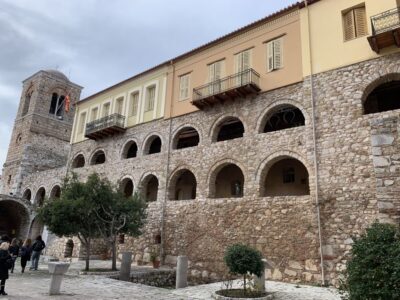

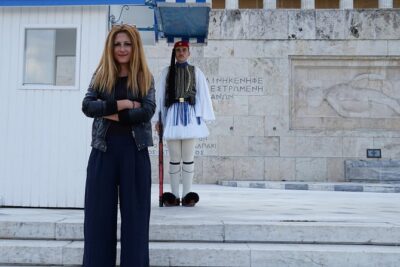
More Walking Tours in Athens


More Tours in Athens


More Tour Reviews in Athens
- All Day Cruise -3 Islands to Agistri,Moni, Aegina with lunch and drinks included
★ 5.0 · 4,958 reviews