REVIEW · ATHENS
Athens Mythological Tour: Boudoir of the Gods
Book on Viator →Operated by Truevoyagers · Bookable on Viator
Greek gods on a city walk can be surprisingly fun. This one pairs myth storytelling with a tight loop of Athens landmarks, so you’re not just reading about legends—you’re seeing where the stories echo in stone. I especially like the way the guide ties big-god drama to specific stops, and how the narration stays clear even if you’re starting from zero. One thing to plan for: it’s a walk in the sun with lots of pavement, so comfy shoes and water matter.
You’ll start in the academic-streets zone and gradually work toward Plaka, passing statues of gods in major squares and turning a museum visit into a story about warriors. The guide talent really shows too—Penelope’s storytelling is repeatedly praised for keeping people engaged, and Christina is another guide name that comes up for clear myth family-tree explanations. If you’re the type who likes to ask questions, this format makes it easy to do so.
In This Review
- Key Things I’d Watch For
- Mythology Walks: Why Athens Works So Well
- The 2-Hour Route That Moves Fast (In a Good Way)
- Panepistimiou to the Academy: Zeus in the City Grid
- Numismatic Museum Stop: Amazons With Real Story Weight
- Syntagma District: Statues, Gods, and a Square Full of Life
- Mitropoleos Street: Where Present Life Meets Old Sacred Space
- Plaka: The Neighborhood of the Gods at Human Speed
- Guide Energy Matters: Penelope, Christina, and the Question-Friendly Pace
- Price and Value: What You’re Paying For (and What You’re Not)
- Practical Tips That Make the Walk Much Easier
- Should You Book This Athens Mythological Tour?
- FAQ
- How long is the Athens Mythological Tour: Boudoir of the Gods?
- What language is the tour offered in?
- Do I need to bring a printed ticket?
- Where do I meet, and where does the tour end?
- What is included in the tour price?
- Is there an admission fee for the stops?
Key Things I’d Watch For
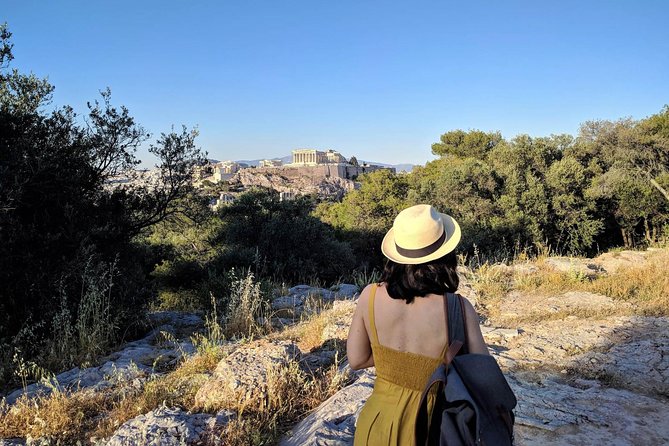
- Zeus drama tied to place: You’ll hear the Father of the Gods fury story linked to the area around the Temple of Olympian Zeus.
- Plaka as the myth neighborhood: The walk ends in Plaka, often described as the neighborhood of the Gods for a reason.
- Amazons at the Numismatic Museum: You’ll connect legendary warrior women to what you see inside the museum.
- Statues in everyday Athens: In Syntagma, you’re not stuck in a lecture room—you’re watching the city move around you.
- Small group, question-friendly: It’s capped at 15 travelers, and the guide can adjust pacing when needed.
- Mostly free to enter at each stop: The stops listed here are “admission ticket free,” which helps keep the experience good value.
Mythology Walks: Why Athens Works So Well
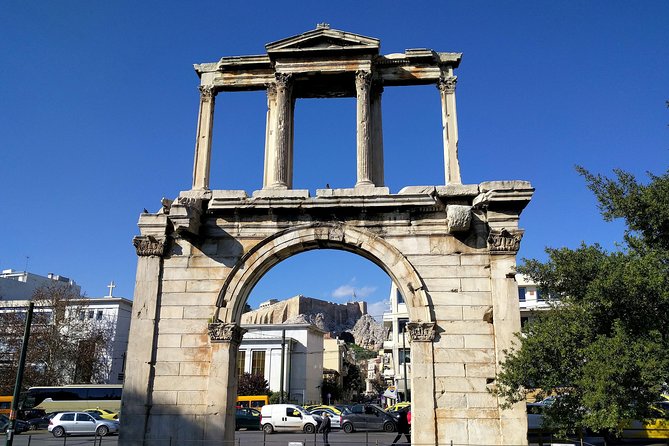
Athens is a myth machine. You step out onto streets with classical names, then you notice how statues, squares, and building facades keep repeating the same themes: gods, power, fate, and revenge. This tour leans into that reality instead of treating mythology like a separate classroom thing.
What makes it click is the story approach. The narration isn’t just facts. It’s cause-and-effect myth drama, linked to what you’re looking at right then. One review described the guide as making twisted history easy to follow, and that’s exactly the job here. Greek mythology can sprawl. A strong guide turns it into a sequence you can track without your brain going offline.
You can also read our reviews of more tours and experiences in Athens.


The 2-Hour Route That Moves Fast (In a Good Way)
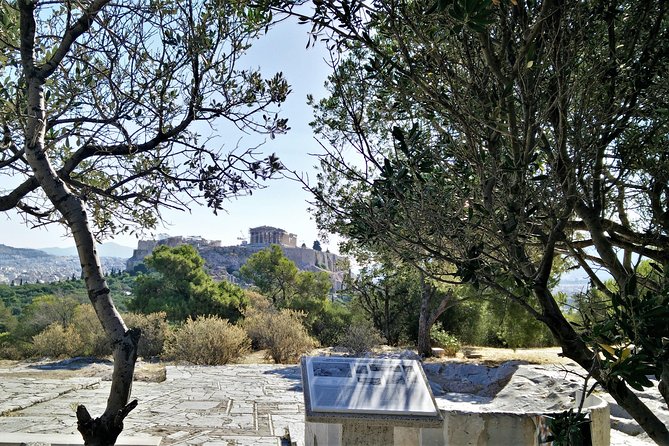
This runs about two hours, and you’ll cover multiple central Athens areas on foot. Each stop is short, so you don’t get stuck waiting around. The tradeoff is simple: you’ll walk. If you’re traveling with limited mobility, bring realistic expectations. The format also means you should plan to dress for heat, because Athens heat can be blunt.
The tour uses a mobile ticket, and the stops listed are free admission. That’s a big deal for value. You’re paying for the story-telling and the route, not for a stack of entrances.
It also ends in a different part of town than it starts. You meet at Korai 4 (Athina 105 64) in front of Starbucks, near Panepistimio metro and the Panepistimio street area, and you finish in Monastiraki. That’s handy if you want to keep exploring after the tour without retracing your steps.
Panepistimiou to the Academy: Zeus in the City Grid
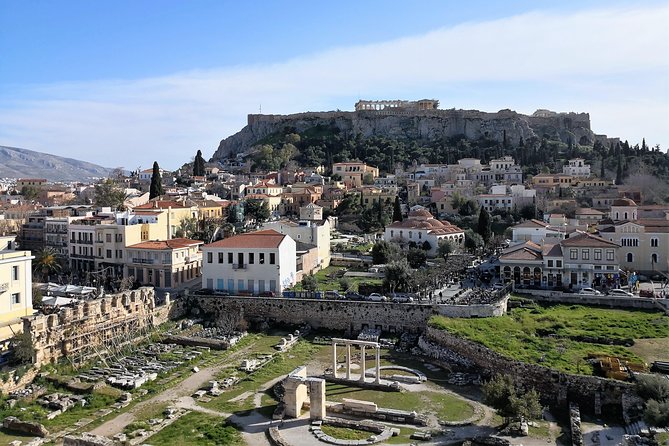
The tour kicks off around Panepistimiou, then heads to Akadimia (the Academy). This is a great first move because it puts you in a “big idea” zone—neoclassical Athens architecture—before you start collecting details like statues and legends.
At the Academy, you get a visual handshake between the modern city and the older myths. The landmark is decorated with statues connected to Greek gods and philosophers. That matters because it gives you context for how mythology lived alongside education and public life. It wasn’t only bedtime reading. It was part of the city’s idea of wisdom and order.
If you like “myth meets street” experiences, this opening sets the tone. You’ll hear the story logic early, so later stops land harder. There’s also a practical advantage: early on, you’re in a more structured walking pattern, which helps you get your bearings fast.
Numismatic Museum Stop: Amazons With Real Story Weight
Next comes the Numismatic Museum of Athens, and this is where the tour gets extra specific. It’s a museum stop, but it’s framed as story delivery, not a standalone sightseeing detour.
The key theme here is the mythical Amazons and their fighting skills. That’s a smart choice because Amazons are dramatic, physical myths. You can connect that energy to what you’re seeing in a museum setting where symbols and objects often carry meaning.
If you’re thinking about whether mythology tours can feel too abstract, this stop helps. Even if you don’t know the Amazon legends, you’re given a storyline that makes the concept feel grounded and repeatable. It’s one of the reasons this route earns high marks for being fun and engaging—there’s momentum.
Syntagma District: Statues, Gods, and a Square Full of Life
After the museum, you shift to the Syntagma district area. This stop centers on the main square feeling and the way statues of gods can show up in places you might otherwise treat like just another stop on a city trip.
Syntagma is useful for another reason: it’s a “real Athens” moment. People move through the square for daily reasons, while your guide points out how mythology sits inside that everyday flow. That contrast is part of the experience. You aren’t only walking through history—you’re watching modern city life coexist with myth imagery.
This is also a good moment in the tour for questions. If you’re the type who wants to connect Zeus family drama to other myths—who’s related to who, who started what feud—Syntagma is where the guide can keep the threads straight. Many of the glowing comments highlight patient answering and keeping the talk organized, and that’s especially important here where you’ll likely see multiple figures and references close together.
- All Day Cruise -3 Islands to Agistri,Moni, Aegina with lunch and drinks included
★ 5.0 · 4,958 reviews




Mitropoleos Street: Where Present Life Meets Old Sacred Space
Then you head to Mitropoleos Street, one of those Athens corridors where the present doesn’t wipe out the past. Here, you’re shown how the city mixes ancient ruins, churches, and hidden temples in the same general walk zone.
This stop is valuable because it changes your mental picture of mythology. Instead of thinking myths only belong to temples that are totally gone, you start seeing how religious and cultural layers overlap. It’s a reminder that Athens has kept reusing sacred ideas in new forms over time.
Also, Mitropoleos tends to be a “watch and listen” zone. You’ll likely slow down to notice details, not just march forward. If you’re a casual photographer, this is also a practical stretch: the mix of architecture gives you multiple angles without needing extra tickets.
Plaka: The Neighborhood of the Gods at Human Speed
The tour ends in Plaka, often described as the neighborhood of the Gods. This final stop works because it’s not only about myth references—it’s about atmosphere.
Plaka’s vibe is perfect for wrapping up a story-based walk. The streets are narrow, the light hits differently, and the overall feel encourages wandering. So even though the tour itself is only about two hours, you can extend the experience right after by continuing into the area at your own pace.
This is also a good place to mentally consolidate what you learned. When you walk away from Plaka with a clearer sense of Zeus, warrior myths like the Amazons, and the way gods show up in public symbols, the tour earns its keep.
Guide Energy Matters: Penelope, Christina, and the Question-Friendly Pace
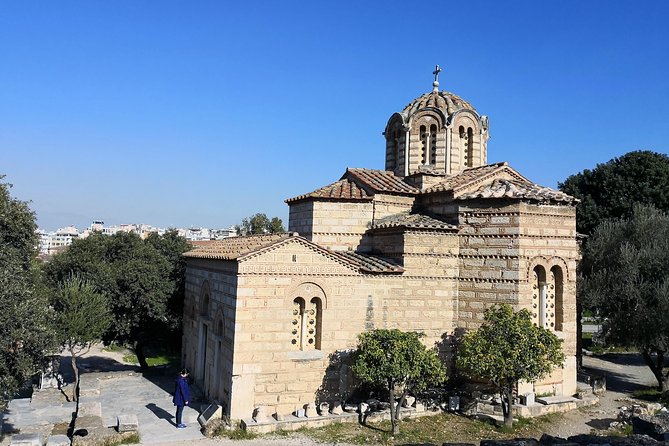
This tour lives or dies by the guide, and the names that show up most often are Penelope and Christina. Penelope is praised for making myth come alive and for being engaging and patient. Christina is noted for knowledge on the history and the beginnings of Greek mythology of the gods and their family relationships.
What I like in this format is that the guide isn’t treating the tour as a one-way lecture. People mention being able to ask questions and get thoughtful answers, and that’s a big quality signal. It means you can steer the conversation a bit—maybe you want more on Zeus and the Olympian line, or maybe you want the Amazon story clarified without wading through a big lecture.
Pacing matters too. One helpful theme in the feedback is that the guide tries to keep the group comfortable—out of direct sun when possible and with rest if someone needs it. That doesn’t mean the tour becomes slow and aimless. It just means you’re less likely to feel cooked after 90 minutes in a city built for sturdy feet.
Price and Value: What You’re Paying For (and What You’re Not)
At $48.01 per person for about two hours, this is priced like a guided city story experience. The value is strongest if you want someone to connect the dots for you—between god figures, locations, and why certain myths show up in public art and institutions.
Here’s what helps justify the price:
- Expert narration focused on mythology storytelling.
- Multiple major Athens areas you can’t fully appreciate just by walking on your own.
- Stops with free admission at the listed points.
Here’s what it does not include:
- Hotel pickup and drop-off, so you’ll need to make your own way to the start.
- Access to archaeological sites, meaning you shouldn’t expect it to act like an excavation-focused tour or include entries tied to archaeological complexes.
For many visitors, that’s fine. You’re paying for myth context and a tight city route, not for a ticket-heavy museum binge.
Practical Tips That Make the Walk Much Easier
A few common-sense things will keep this tour enjoyable instead of sweaty and grumpy.
- Wear comfortable shoes. This is a walking tour with several short segments. Good grip matters.
- Bring water, plus a hat and sun cream, especially in summer months.
- Plan for heat breaks. The guide may help keep you out of harsh sun when possible.
- Meet at Korai 4 in front of Starbucks. It’s specific, so don’t treat it like a vague neighborhood meetup.
- Use public transportation if you can. The meeting point is near a metro station area.
- Most travelers can participate, and service animals are allowed.
One more thought: if you’re someone who likes mythology but feels overwhelmed by names, this is one of the better formats to start with. The guide structure helps keep relationships and story arcs from tangling.
Should You Book This Athens Mythological Tour?
Book it if you want a guided Athens walk that turns myths into something you can picture—Zeus drama, gods in public spaces, and a museum stop about Amazons. It’s especially worth it if you don’t want to spend your trip flipping between guidebooks. This keeps the story moving and gives you a route you can later build on.
Skip it (or adjust expectations) if:
- You hate walking in heat and don’t plan for it.
- You’re looking for archaeology ticket access or a site-entry-heavy itinerary.
- You prefer self-guided experiences where you control every stop without a storyteller.
If you’re in the middle—curious, open, and ready to learn—this is a strong value way to see central Athens while understanding how the city frames its myth world.
FAQ
How long is the Athens Mythological Tour: Boudoir of the Gods?
The tour lasts about 2 hours (approx.).
What language is the tour offered in?
The tour is offered in English.
Do I need to bring a printed ticket?
No. You get a mobile ticket.
Where do I meet, and where does the tour end?
You meet at Korai 4, Athina 105 64, Greece in front of Starbucks. The tour ends in Monastiraki, Athina, Greece.
What is included in the tour price?
The tour includes mythology story-telling narration by an expert and seeing some of the major attractions of Athens.
Is there an admission fee for the stops?
Each listed stop has admission ticket free noted, but the tour does not include access to archaeological sites.
More Tours in Athens


More Tour Reviews in Athens
- All Day Cruise -3 Islands to Agistri,Moni, Aegina with lunch and drinks included
★ 5.0 · 4,958 reviews