REVIEW · ATHENS
Athens: The Acropolis Museum Guided Tour
Book on GetYourGuide →Operated by ATHENS WALKING TOURS · Bookable on GetYourGuide
One hour and change, and Athens clicks. This Acropolis Museum guided tour helps you make sense of the Parthenon world, with artifacts, excavations under glass, and that museum architecture built to line up with the views. Acropolis Museum highlights feel connected instead of random, especially when a licensed local guide steers you through the key rooms and objects.
I love the way the guide brings the collection to life, not as isolated items but as evidence of how people in the 5th century BC lived, believed, and created. I also like the glass floors and natural light in the Archaic Gallery, because they turn the building itself into a learning tool.
One drawback to plan for: 75 minutes can feel quick if you want to linger, and some schedules can start late when this museum visit is tied to a longer Acropolis-and-museum plan.
In This Review
- Key takeaways before you go
- Why this Acropolis Museum tour feels different than just wandering
- Meeting point on Dionysiou Areopagitou and getting in without friction
- Inside the museum: the 75-minute rhythm that hits the key rooms
- Archaic Gallery: natural light does the heavy lifting
- Glass floors and visible excavations: history under your feet
- Votive offerings to Athena: seeing religion as culture
- Caryatids and the museum’s vertical storytelling
- Parthenon alignment: why the glass atrium matters more than photos
- What you’ll actually learn from a good guide (and why it helps)
- Price and value: what $41 gets you (and what you still pay separately)
- Who this tour suits best in Athens
- Small watch-outs: start times and the 75-minute trade-off
- Should you book the Acropolis Museum guided tour?
- FAQ
- How long is the Acropolis Museum guided tour?
- Is there a live guide?
- Does the price include museum entrance fees?
- What does skip-the-ticket line service mean here?
- Where is the meeting point?
- Do I need to bring ID or passport?
- What should I wear or bring for the tour?
- Is the tour wheelchair accessible?
- Is luggage allowed?
- What’s the weather plan?
Key takeaways before you go
- Skip-the-ticket line keeps your museum time focused on the exhibits, not the queue
- Glass floors show excavations of an ancient Athenian neighborhood right where you’re standing
- Athena votives and Caryatids give you the story behind the Parthenon-era mindset
- Parthenon alignment inside the glass atrium helps you orient your eyes to what you’ll see above
- Modernist design by Bernard Tschumi and Michael Photiadis makes the museum part of the experience
- 75 minutes with a live English guide is a strong format if you want the highlights fast
Why this Acropolis Museum tour feels different than just wandering
The Acropolis Museum does one job better than almost any museum I know: it helps you understand what the Acropolis meant in real life. Not just the monument. The people around it. Their workshops, their rituals, their celebrations, their daily routines.
The collection is anchored in the 5th century BC, right when Athens hit a creative peak. And this matters for you because it changes how you read the big sites later. When you finally look at the Acropolis ruins outside, the museum gives your brain the labels it needs—so you can spot patterns instead of only seeing stone.
I also like that the museum isn’t stuck in one time period. It pulls together objects that were once held elsewhere, stored, or returned from foreign collections. That makes it feel like a working story, not a static display case. A good guide helps connect the dots quickly, which is ideal if your time in Athens is limited or you’re trying to avoid museum fatigue.
You can also read our reviews of more guided tours in Athens



Meeting point on Dionysiou Areopagitou and getting in without friction

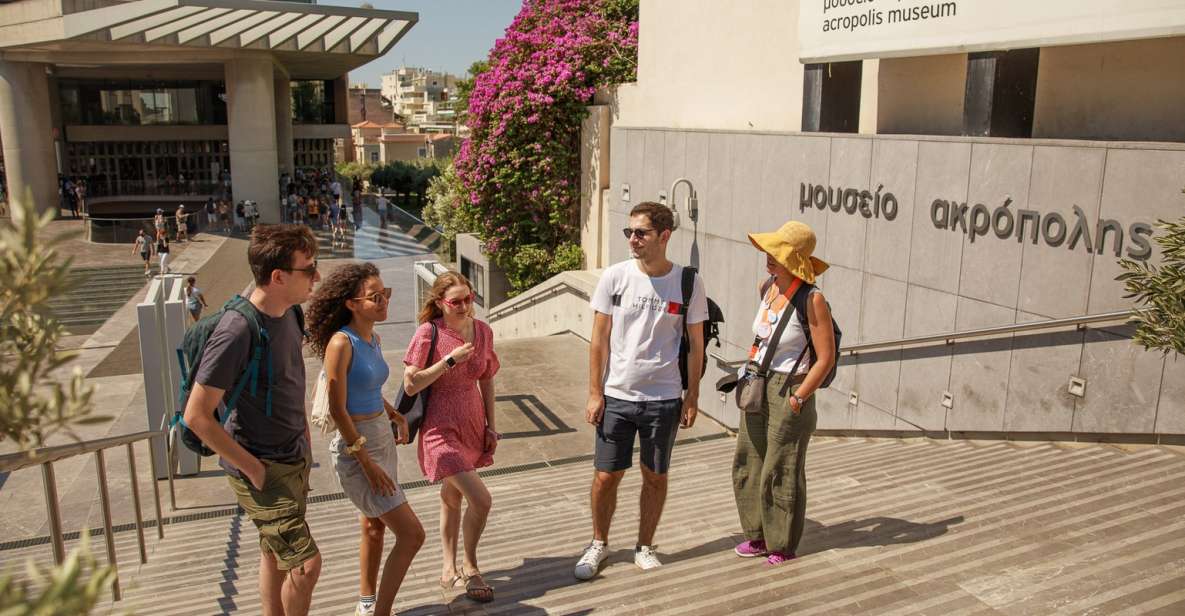
You meet at 3, Dionysiou Areopagitou St., at the Lukumades & Pilino stores. The staff will be holding an orange Athens Walking Tours sign. This is at the start of the pedestrian walkway that links the area by Hadrian’s Arch (on Syngrou Avenue / Siggrou) toward the Acropolis.
That meeting point detail matters. If you show up late, you can lose time before you even reach the museum doors. And since the tour length is about 75 minutes, those minutes add up.
The tour includes skip-the-ticket line service, which helps you get inside faster. Still, you’ll want to budget for entrance fees (about €20 per adult) because they’re not included. So your “skip” is really about time management, not free admission.
One more practical note: no luggage or large bags are allowed. Bring only what you need for a museum visit—your phone, ID or passport, and a water bottle if you plan to stop nearby afterward.
Inside the museum: the 75-minute rhythm that hits the key rooms

This tour is built to move at a museum-friendly pace. You’ll focus on highlights with a live English guide. The biggest value isn’t that you see more objects. It’s that you see the right objects first, with context that makes them click.
Archaic Gallery: natural light does the heavy lifting
The stop that sets the tone is the 1st floor Archaic Gallery, known for its natural light. When you’re inside, the lighting isn’t just atmospheric—it helps you see scale, surfaces, and the overall design choices of the pieces. It’s the kind of space where a guide can point out what you’d otherwise miss in a quick glance.
This is also where the tour’s theme shows up: Athens at a high point of creativity, right before the classical era becomes the thing people remember most. You’re not just looking at old things. You’re learning how artistic choices reflected beliefs and civic pride.
Glass floors and visible excavations: history under your feet
Next, you’ll encounter excavations presented through stunning glass floors. This is one of the most memorable parts because you’re literally standing above remains from an ancient Athenian neighborhood.
There’s an added layer too: the tour uses 3D exhibits and a plexiglass floor to help you picture the neighborhood layout. That makes the museum feel like a time machine you can interpret, not only a collection of artifacts behind glass.
If you’re the type who struggles with museums because you want a bigger story, this portion is built for you. It connects artifacts to space, and space to daily life.
You can also read our reviews of more museum experiences in Athens




Votive offerings to Athena: seeing religion as culture
The guided route includes votive offerings to Athena. These aren’t random trinkets. They’re clues about what mattered to people and how they expressed gratitude, hope, and identity through ritual objects.
A solid guide can help you read these offerings as part of a broader worldview—one where religion overlaps with civic values. You’re not just hearing mythology as entertainment. You’re learning how Athens used faith to shape public life.
Caryatids and the museum’s vertical storytelling
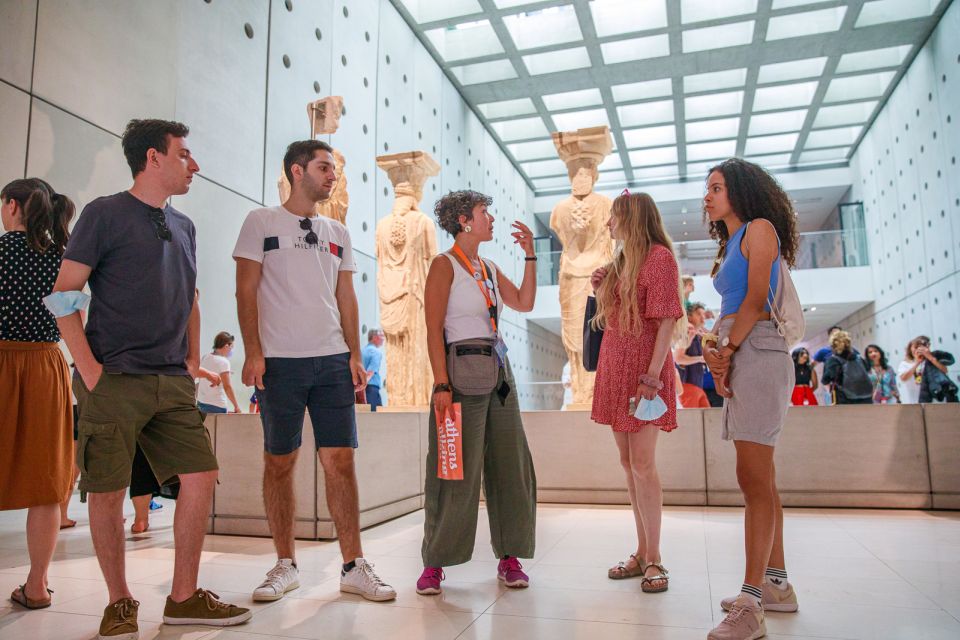
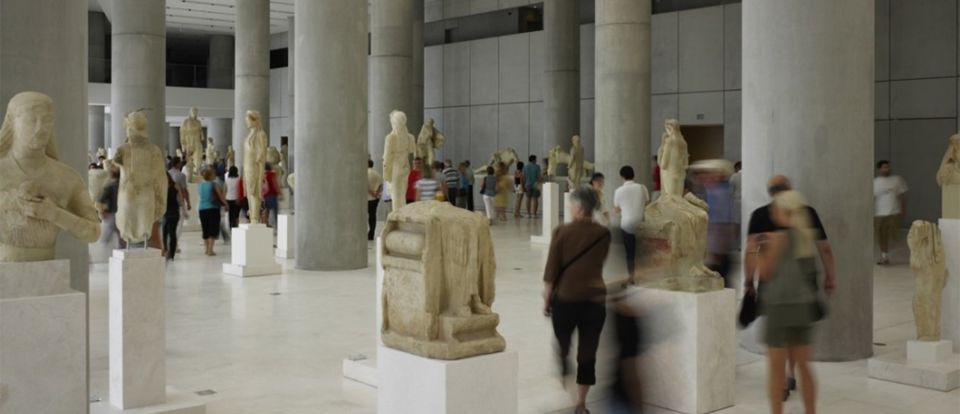
You’ll also admire the Caryatid statues. These are iconic figures, but in a guide-led format, you learn how they function visually and symbolically. They help you connect what you’ve seen upstairs in the Acropolis world to the craftsmanship displayed below.
This is where the tour earns its “highlights” label. You see the objects, yes. But you also learn what they’re doing in the larger design language of the era.
Parthenon alignment: why the glass atrium matters more than photos
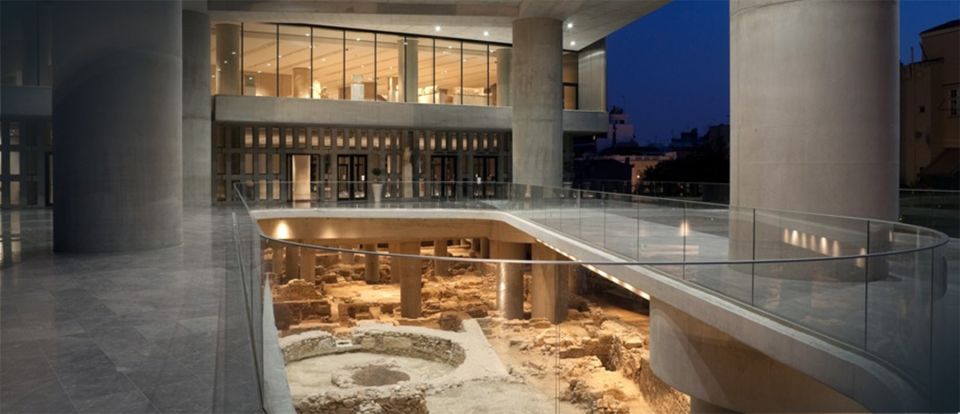
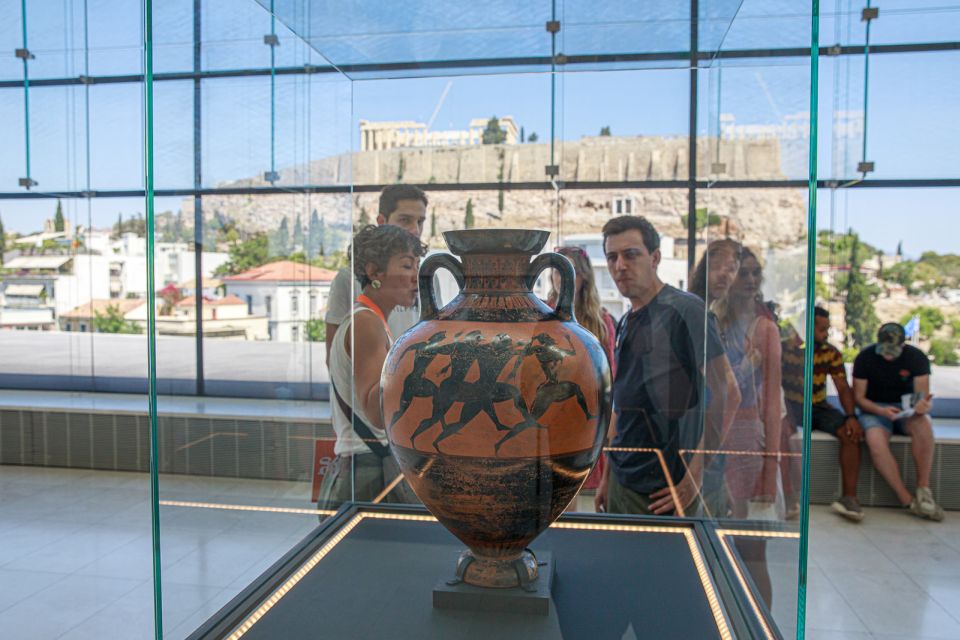
One of the strongest reasons to book a guided visit here is the museum architecture. The glass atrium is built in alignment with the Parthenon, and that alignment affects what you understand while you’re inside.
Instead of treating the Parthenon as a distant skyline photo, you start relating interior sightlines to exterior monuments. That’s not a small thing. It’s orientation. It’s why the museum often feels like a bridge between object and site.
The tour also includes panoramic views of the ruins of the Acropolis. Even if you’ve already seen pictures, the combo of interior context plus exterior glimpses is powerful. Your eyes learn how to frame the monument again—this time with meaning attached.
And then there’s the building itself. The museum is a modernist structure by Bernard Tschumi and Michael Photiadis. It’s worth paying attention because it’s not “just a museum shell.” The design supports the idea that artifacts deserve a setting that helps you understand their original environment.
What you’ll actually learn from a good guide (and why it helps)

This kind of museum works best when someone gives you the mental map. That’s where the live guide earns their place.
In past experiences with guides for this activity, the strongest praise usually points to three things: clarity, good storytelling energy, and the ability to answer questions without turning the visit into a lecture. I’ve also seen guides use humor to keep the group awake and moving, which sounds silly until you’ve tried to watch people politely drift off during a long explanation.
You’ll get big-picture framing too—how different parts of Greek culture connected. One example from the guide approach is explaining how religion, science, theatre, and art connect in how Athenians understood the world. That kind of synthesis helps you remember details because they attach to ideas.
Also, timing matters. A 75-minute format won’t turn you into an archaeologist. Instead, it gives you enough context to make your own independent exploration later more productive.
Price and value: what $41 gets you (and what you still pay separately)
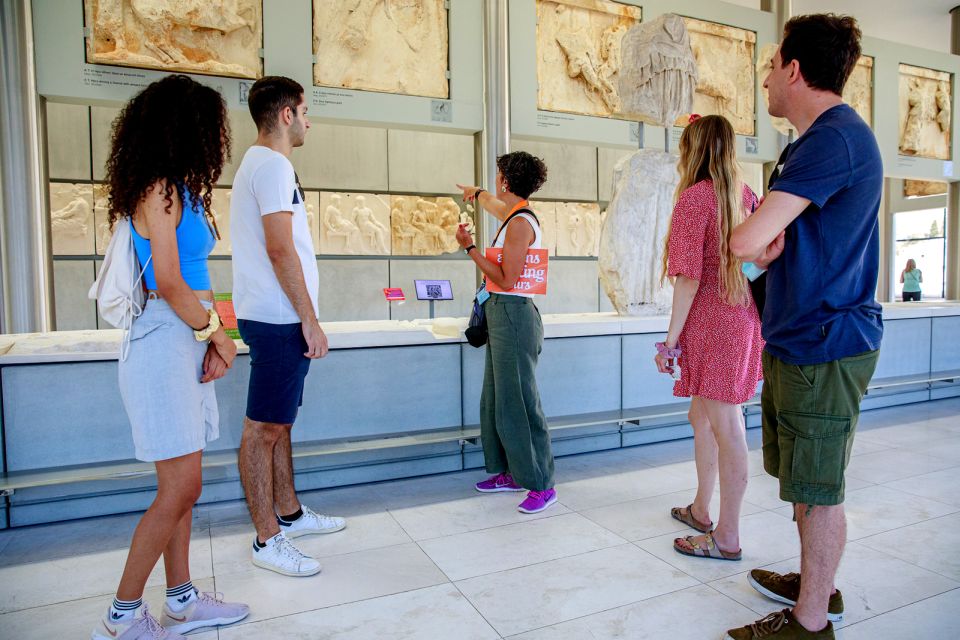
At $41 per person, you’re paying for two main inclusions: a local licensed guide and skip-the-ticket line service.
The entrance fee is not included and is listed at about €20 per adult. So your real total will be closer to the combined amount of both. Still, the value is often good because you’re not wasting your museum time in line.
Think of it like this: you’re buying direction. Without a guide, it’s easy to stand in front of a sculpture or votive and wonder what you’re looking at and why it matters. With a guide, you get context fast enough that it changes how you look at the next room.
This is especially worth it if you’re visiting in peak season or have a packed day. Athens can be walk-heavy, and museums are only fun if they don’t drag.
Who this tour suits best in Athens
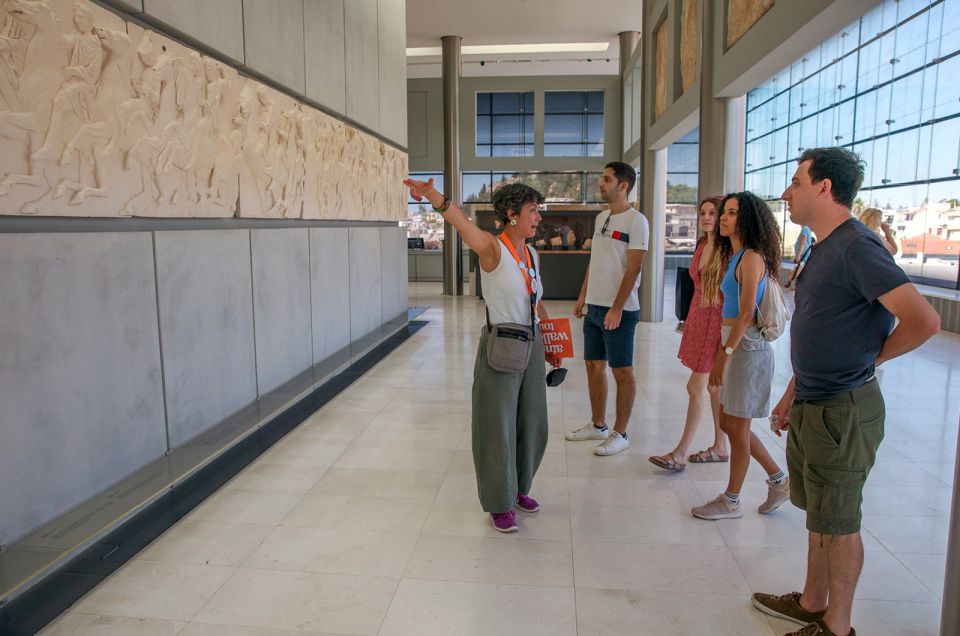
This is a strong match if you’re any of these:
- You want the highlights in a fixed window and don’t want to plan a museum route yourself
- You’re not sure you love museums, but you do want to leave with understanding
- You’re planning to visit the Acropolis afterward (or you’re pairing it with it) and want the museum as preparation
- You’re traveling with kids and want someone to keep the attention moving through the important scenes
- You need an English-language guide and appreciate a structured approach
It’s also listed as wheelchair accessible, which is a big plus for travelers who want a museum visit designed with access in mind.
Small watch-outs: start times and the 75-minute trade-off
The biggest “be careful” issue is the time pressure. A 75-minute tour is perfect for highlights. It’s not built for deep, slow reading.
Some tours are part of a longer plan that includes the Acropolis. When that first part runs long or starts late, the museum portion may end up delayed too. That can feel annoying if you have another appointment after. I’d plan your day with some cushion.
Another practical point: the meeting location is at the start of a pedestrian walkway heading from Hadrian’s Arch toward the Acropolis area. It’s not far in a typical walking sense, but it’s not right in front of the museum entrance either. If you like to minimize walking, do yourself a favor and arrive early.
Finally, there’s the ticket detail. Because entrance fees aren’t included, you’ll want to have a ticket plan before you arrive. The skip-the-ticket-line service helps, but having your ducks in a row reduces stress.
Should you book the Acropolis Museum guided tour?
I’d book it if you want Athens to make sense quickly—especially if this is your first time at the museum or you’re short on time. The guide format is the difference between seeing objects and understanding why they matter.
Skip it only if you’re the kind of visitor who needs hours alone with every display, or you already know the museum content well and you’re confident you won’t miss the key design and sightline story. Even then, the museum’s glass floors and Parthenon alignment are easier to appreciate with someone pointing them out in the moment.
If you’re trying to get value per hour in Athens, this one is hard to beat.
FAQ
How long is the Acropolis Museum guided tour?
It lasts about 75 minutes.
Is there a live guide?
Yes, the tour includes a live tour guide in English.
Does the price include museum entrance fees?
No. Entrance fees are approximately €20 per adult and are not included in the $41 price.
What does skip-the-ticket line service mean here?
It’s included, so you can avoid the ticket line and get into the museum faster.
Where is the meeting point?
You meet at 3, Dionysiou Areopagitou St., at the Lukumades & Pilino stores, where staff holding an orange Athens Walking Tours sign will be waiting.
Do I need to bring ID or passport?
Yes. Bring a passport or ID card.
What should I wear or bring for the tour?
Wear comfortable shoes.
Is the tour wheelchair accessible?
Yes, it’s listed as wheelchair accessible.
Is luggage allowed?
No luggage or large bags are allowed.
What’s the weather plan?
Tours operate in all weather conditions, rain or shine.




More Guided Tours in Athens

More Tours in Athens



More Tour Reviews in Athens
- All Day Cruise -3 Islands to Agistri,Moni, Aegina with lunch and drinks included
★ 5.0 · 4,958 reviews