REVIEW · ATHENS
Athens: Acropolis and Ancient Agora Guided Walking Tour
Book on GetYourGuide →Operated by Athens Walks Tour Company · Bookable on GetYourGuide
The Acropolis is better when explained. This Athens Walks tour pairs the big-name sites—Parthenon and Ancient Agora—with a licensed guide who keeps the story clear as you walk.
I especially like the wireless hearing devices, which make it easy to catch every detail without craning your neck or falling behind.
What I love next is the time-saver: you get skip-the-line entry at both the Acropolis and the Agora. You’ll also take a less crowded, scenic approach up the South Slopes, so the climb feels more like a guided journey than a cattle line.
One thing to consider: you’re doing a moderate amount of walking with climbs and uneven stone, so comfortable shoes and water matter.
In This Review
- Quick reasons this tour earns strong marks
- A Licensed Guide and Wireless Headsets: hearing every story
- Porinou 5 to the Acropolis area: a smart way to start
- From Theatre of Dionysus to Odeon of Herodes: the stage before the summit
- South Slopes route: calmer entry and better views as you climb
- Propylaea and Temple of Athena Nike: gateways and victory
- Erechtheion and the Caryatids: where architecture turns into character
- Parthenon focus: the democracy story you can actually picture
- Ancient Agora: Athens’s public life at street level
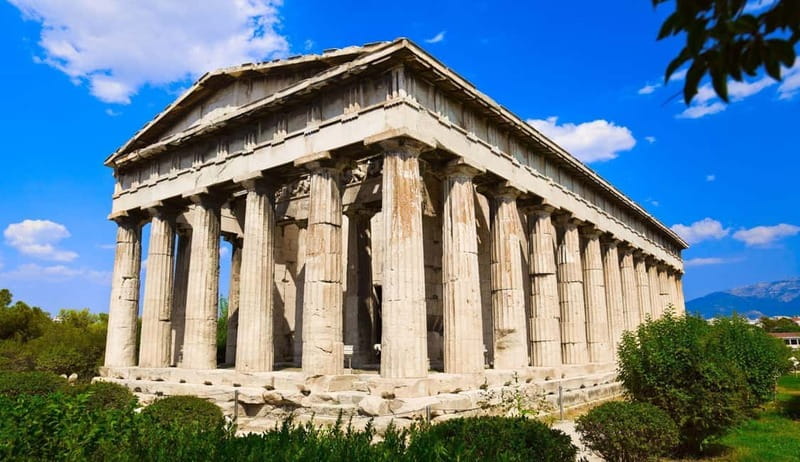
- Temple of Hephaestus and the best-preserved feel of the Agora
- Price and value: is $102 a fair deal?
- Who this tour is for (and who should rethink it)
- What to bring and how to plan your day
- Should you book the Acropolis and Ancient Agora walking tour?
- FAQ
- How long is the Athens Acropolis and Ancient Agora guided walking tour?
- Where does the tour start, and how do I find it?
- What major sites are included?
- Are entry tickets included?
- Do I get skip-the-line access?
- Is the tour guide in English?
- Do I need to bring anything?
- Is flash photography allowed?
- Is this tour suitable for children or people with mobility impairments?
Quick reasons this tour earns strong marks
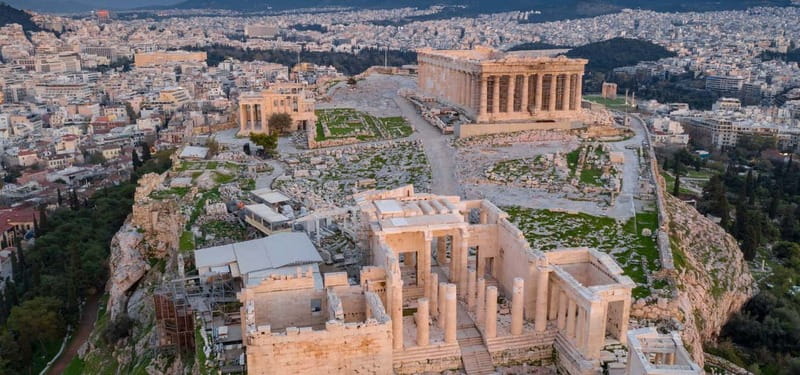
- Skip-the-line entry at both the Acropolis and Ancient Agora keeps the day moving
- Wireless hearing devices help you hear the guide clearly on stairs and in crowds
- South Slopes route means better views as you climb, plus a calmer start
- Parthenon, Erechtheion, and Athena Nike get focused explanations, not just a quick stop
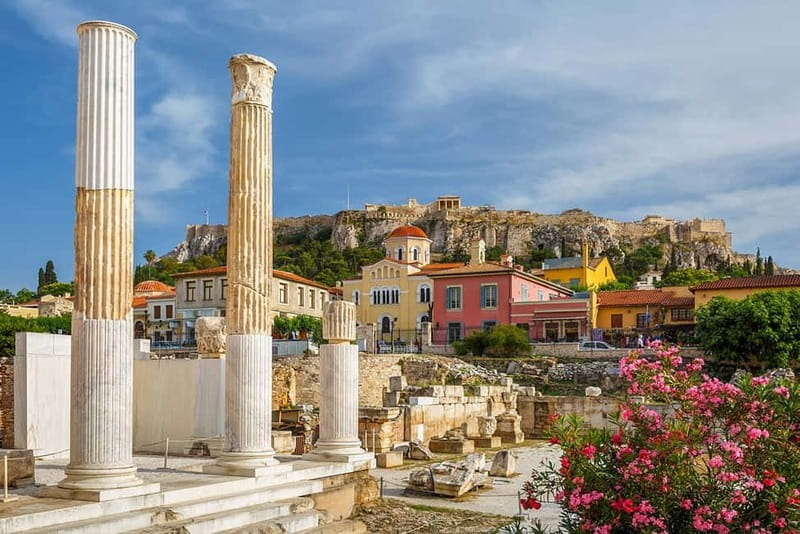
- Ancient Agora sights include the Stoa of Attalos and the Temple of Hephaestus
- Organized, friendly guides (people have referenced guides like Anastasia, Yanis, and John) help the tour flow smoothly
A Licensed Guide and Wireless Headsets: hearing every story
This is the kind of Athens tour where the guide’s job is more than pointing. You’re walking from landmark to landmark—then you get context for what you’re looking at and why it mattered. And because you’re given wireless hearing devices, you can stay present instead of doing the usual listen-and-lose routine that happens in busy sites.
I also like that the tour is in English and run by a licensed guide. When you’re standing in front of structures like the Parthenon, small wording choices really matter. A good guide helps you connect architecture to the civic life that built it.
You can also read our reviews of more walking tours in Athens

Porinou 5 to the Acropolis area: a smart way to start
Your tour begins at Porinou 5, outside the Office of Athens Walks. The meeting point is just a short walk—about two minutes—from the Acropolis metro station area, which makes it easy to get there without a long detour through the city.
Plan to arrive about 15 minutes early. Athens can be quick to change with street traffic, and you don’t want to start late when the first stops are scheduled to keep you moving uphill.
From Theatre of Dionysus to Odeon of Herodes: the stage before the summit
Before you reach the Acropolis proper, you start with a set-up that makes the whole area feel like one big cultural complex. First comes the Theatre of Dionysus. You’ll get a guided explanation there for about 15 minutes—long enough to understand how performance, civic identity, and religion braided together in ancient Athens.
Then you walk to the Odeon of Herodes Atticus (about 15 minutes walking time included). This isn’t just a “look and go” moment. The point is to help you see the Acropolis region as more than temples—there were public spaces and events tied into the same idea of shared community.
If you like tours that build momentum instead of dumping facts at the top, this start style is a big plus.
South Slopes route: calmer entry and better views as you climb
One of the best parts is the route up. You enter through a less crowded, scenic approach along the South Slopes of the Acropolis. Expect a steady climb with good chances for views as you gain height.
As you go up, the guide points out plants and archaeological features along the slopes. You don’t just hear about stones—you start to notice the environment around them. That helps the Acropolis feel like a lived place, not only a museum.
This is also where you’ll get explanations tied to ancient religious life and activities that took place on the slopes. You’ll see why the hill mattered, and how it helped define Greek identity. You’ll likely take photos here too—bring your camera and keep an eye on the changing city views as you climb.
Propylaea and Temple of Athena Nike: gateways and victory
Once you’re inside the Acropolis area, the tour moves through the key entry points and temples in a logical order. You pass Propylaea (the main gateway) with a guided stop of about 10 minutes. Think of this as your visual transition from the everyday city up to the ceremonial core.
A short walk brings you to the Temple of Athena Nike (about 5 minutes). Even though it’s smaller than the Parthenon, it gets real attention. The guide focuses on its theme—Athena as a goddess of victory—and that framing helps you appreciate why a compact temple could matter so much.
This part is especially good if you like when guides slow down at the details people usually rush past.
You can also read our reviews of more guided tours in Athens



Erechtheion and the Caryatids: where architecture turns into character
Next up is the Erechtheion with about 15 minutes of guided time. You’ll hear about its unique architecture and the famous Caryatids—sculpted female figures that have become one of Athens’s most recognized sculptural motifs.
This is where the tour shifts from general overview to “look closely.” The guide’s explanations help you understand the artistic and cultural choices behind the forms, not just the names of the structures. It’s also a good moment to pause with your camera—without flash, since flash photography isn’t allowed here.
If you’ve ever seen Caryatids in photos, seeing them in person changes the feel. The scale and craftsmanship sink in quickly, and the guided context makes it more than a pretty landmark.
Parthenon focus: the democracy story you can actually picture
The tour’s centerpiece is the Parthenon, with about 30 minutes of guided time. This isn’t just a quick circuit for a panoramic photo. You’re given a construction and significance narrative that ties the temple to Greek democracy and culture.
What I like about this setup is that the Parthenon becomes understandable in layers. You’re not only learning what it is; you’re also learning why it represents civic pride, religious purpose, and artistic ambition at the same time. When you stand there after listening to that framing, the building stops being a random landmark and becomes a statement.
You’ll also have a short break after the Parthenon and Acropolis area (around 15 minutes). Use it to drink water, rest your legs, and pick your next viewpoint. The guide’s pacing through the monuments means this break feels earned rather than rushed.
Ancient Agora: Athens’s public life at street level
After the Acropolis, the mood shifts from high ceremonial ground to the daily heart of the city. You head to the Ancient Agora of Athens, guided for about 30 minutes. This is where the tour earns its second half.
The guide explains how the Agora functioned as a hub for political, social, and commercial life. That’s a key difference from many “temples only” tours: you’re learning how decisions got made and how people gathered, argued, and traded. You walk through ruins while the stories make the spaces feel active again.
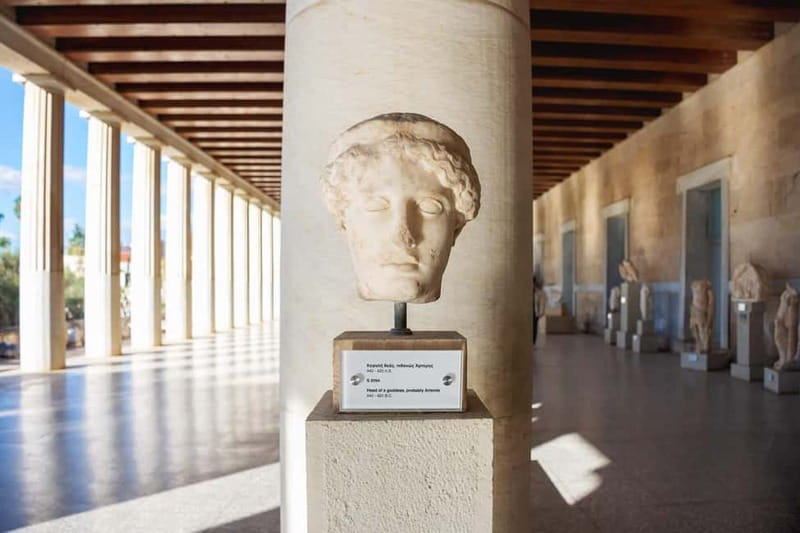
One of the practical highlights here is the inclusion of the Stoa of Attalos. This well-preserved structure now houses a museum with artifacts from the site. Even if you don’t spend extra time inside beyond what the tour covers, you’ll leave with a better sense of what was housed and displayed there.
Temple of Hephaestus and the best-preserved feel of the Agora
Near the end, you get to the Temple of Hephaestus, with about 10 minutes of walking time included to reach and view it. It’s one of the best-preserved ancient temples in Athens, and the guide explains its dedication to Hephaestus, the god of craftsmanship.
I like ending here because the Agora stories land better when you see a temple that still reads so clearly in your eye. You can more easily connect the civic life around it to the religious purpose attached to daily spaces.
At the finish, you’ll get guidance on local cafés and restaurants so you can continue your Athens day after the monuments. That “what’s next” help is surprisingly useful when you don’t want to wander hungry.
Price and value: is $102 a fair deal?
At $102 per person for a roughly 4-hour tour, you’re paying for three things that are hard to recreate on your own without stress: a licensed guide, timed site coverage, and convenience extras.
Here’s the value math that matters in Athens:
- Entry tickets are included for the Acropolis and the Ancient Agora, so you’re not juggling extra purchases mid-day.
- Skip-the-line access at both sites can save real time, especially at the Acropolis where crowds spike.
- Wireless hearing devices reduce the “can’t hear you” frustration and let you get the full benefit of the explanations.
If your goal is to walk smart and understand what you’re seeing—this price can feel reasonable. If you’d rather wander slowly with a guidebook and no pressure, you might choose to self-tour and spend less. But for most first-timers, the guided pacing is the point.
Who this tour is for (and who should rethink it)
This works best for adults and older kids who want structure and context. It’s not a sit-down lecture; you’re walking from area to area and climbing parts of the Acropolis.
It’s also explicitly not suitable for:
- children under 6
- people with mobility impairments
- wheelchair users
If you’re in that group, you’ll need a different format that matches your pace and accessibility needs.
For everyone else, it’s a strong pick if you like:
- learning as you go, not only at a single museum stop
- seeing the Parthenon and Agora with focused attention
- getting city views from the South Slopes route
One more practical point: Athens heat can catch you off guard. The tour asks you to bring a hat and sunscreen, plus a water bottle.
What to bring and how to plan your day
You’ll be walking on uneven stone, climbing at points, and spending time looking up at architecture. Pack comfortable shoes, water, sunscreen, and a hat. Bring your camera too, but remember: flash photography is not allowed.
Weather matters. Check the forecast and dress for sun and warmth. Even if it looks mild, the combination of stairs and open stone surfaces can feel intense.
Also arrive early at the meeting point so you start with the group at the correct time.
Should you book the Acropolis and Ancient Agora walking tour?
Yes, if you want your Acropolis day to feel organized and explanatory rather than confusing. This tour gives you a clear route up the South Slopes, structured time at the Parthenon and major temples, then a shift into the Agora’s political and everyday life. The wireless hearing devices are a quality-of-life upgrade that makes the experience easier to enjoy.
I’d especially recommend it if you’re traveling with limited time in Athens and want the best blend of iconic monuments plus the public-life setting of the Ancient Agora. If you know you need a low-walking or wheelchair-friendly option, skip this one and look for an accessibility-focused alternative.
FAQ
How long is the Athens Acropolis and Ancient Agora guided walking tour?
The tour lasts about 4 hours.
Where does the tour start, and how do I find it?
It starts at Porinou 5, at the Office of Athens Walks. The meeting point is about a two-minute walk from the Acropolis metro station.
What major sites are included?
You’ll visit the Acropolis monuments (including the Parthenon, Erechtheion, and Temple of Athena Nike) and the Ancient Agora area (including Stoa of Attalos and Temple of Hephaestus).
Are entry tickets included?
Yes. Entry tickets to both the Acropolis and the Ancient Agora are included.
Do I get skip-the-line access?
Yes. The tour includes skip-the-line entry through a separate entrance at both the Acropolis and the Agora.
Is the tour guide in English?
Yes, the tour is offered in English with a live licensed guide.
Do I need to bring anything?
You should bring comfortable walking shoes, a hat, sunscreen, a camera, and water.
Is flash photography allowed?
No. Flash photography isn’t allowed.
Is this tour suitable for children or people with mobility impairments?
It is not suitable for children under 6 years and it’s not suitable for people with mobility impairments or wheelchair users.



More Walking Tours in Athens


More Tours in Athens


More Tour Reviews in Athens
- All Day Cruise -3 Islands to Agistri,Moni, Aegina with lunch and drinks included
★ 5.0 · 4,958 reviews