REVIEW · ATHENS
Full Day Biblical Ancient Corinth Canal Mycenae Epidauvro Nafplio
Book on Viator →Operated by Yomadic.Tours & Transfers · Bookable on Viator
One day can feel like three different textbooks. You’ll glide from the Corinth Canal to Mycenae and finish with Nafplio’s cliff-hugging viewpoints, guided by an English-speaking driver in a comfortable Mercedes or Skoda. I love the door-to-door pickup setup and the way drivers like Chris or Michael turn quick stops into clear stories you can actually remember. The one thing to plan for is the pace: it’s a long 9–10 hour day, some major sites have separate entrance fees, and Palamidi is no joke with its 999-step climb.
What makes this route especially fun is that it mixes big-name ancient sites with biblical touchpoints, not just “look and move on.” You’ll also get a very practical rhythm—short site time, then back into the car with WiFi/A-C and bottled water—so you’re not stuck waiting around. Just keep in mind that there isn’t a separate licensed guide walking you through the museums, so you’ll rely on the driver for the explanations at each stop.
In This Review
- Key highlights you’ll care about
- Corinth Canal first: the shortcut that changed sea travel
- Ancient Corinth, the Bema, and the Temple of Apollo
- Museum time at Corinth: what the archaeology display helps you see
- Acrocorinth’s fortress views: history written in stone and elevation
- Mycenae: the Lion Gate and the scale you can’t fake
- Treasury of Atreus: the beehive tomb that makes math feel real
- Palamidi’s 999 steps: the climb, the payoff, and the reality check
- Nafplio Old Town: Venetian neoclassical charm plus practical wandering
- Bourtzi and Akronafplia: postcard fuel and the oldest fortifications
- The Lion of the Bavarians: a big rock story in modern Nafplio
- Price and logistics: what $277.09 buys you (and what it doesn’t)
- Who this tour suits best, and who should think twice
- Should you book this Peloponnese day trip?
- FAQ
- How long is the full-day tour?
- Is pickup from Athens included?
- Are entrance fees included?
- Is lunch included in Nafplio?
- Will I have a licensed guide inside archaeological sites?
- What language is offered?
- How is transportation handled for different group sizes?
- What if weather is bad?
Key highlights you’ll care about
- Corinth Canal’s 2,000-year dream: why ships once had to sail around the Peloponnese
- Paul’s trial connection at Corinth: the Bema tradition and the church it became later
- Cyclopean-scale Mycenae: Lion Gate, massive walls, and the Tomb of Agamemnon area
- Treasury of Atreus engineering: the beehive tomb and its enormous lintel
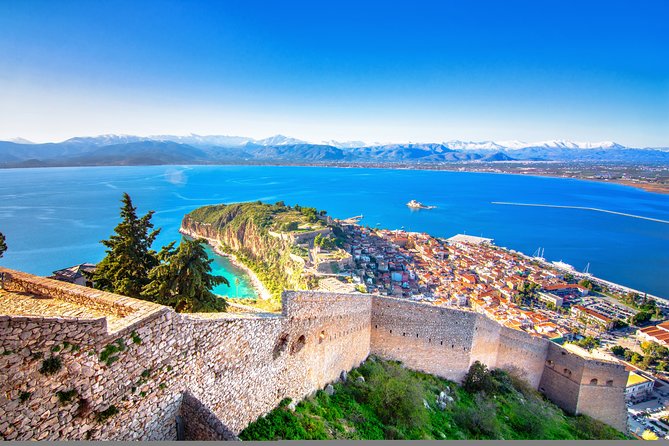
- Palamidi’s viewpoints: 999 steps to a panorama over Nafplio and the Argolic Gulf
- Nafplio after dark-ish: Old Town wandering plus a sunset-friendly stop at Bourtzi
Corinth Canal first: the shortcut that changed sea travel
The day starts with the Corinth Canal, a narrow waterway cutting across the isthmus of Corinth. It’s basically the hinge between the Greek mainland and the Peloponnese—so even before you reach the ancient ruins, you’re getting the geography that shaped everything.
Here’s the context I think you’ll enjoy: the idea wasn’t new. People dreamed of connecting the Gulf of Corinth to the Saronic Gulf for centuries. Periander, the tyrant of Corinth, is traditionally linked with the earliest “plan,” and the earlier solution was the diolkos—a stone road system that let ships be pulled overland. That means you’re not just seeing a canal; you’re seeing the long version of a transportation problem Greece kept trying to solve.
Practical note: the canal stop is short (about 15 minutes). Don’t expect a deep photo session here. It’s a “get the idea and move” stop, which is fine because the rest of the day is where the real time lives.
You can also read our reviews of more tours and experiences in Athens
- All Day Cruise -3 Islands to Agistri,Moni, Aegina with lunch and drinks included
★ 5.0 · 4,958 reviews

Ancient Corinth, the Bema, and the Temple of Apollo
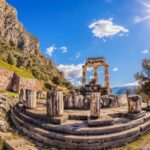
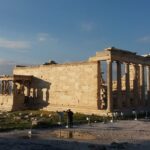
Ancient Corinth is where this tour gets its biblical-meets-archaeology edge. You’ll move through a cluster of stops tied to the Roman and early Christian world, including the Bema area tradition linked with Paul and Gallio.
At the core is the Bema—an elevated rostrum in the heart of the Roman forum where officials addressed the public. According to the tradition you’ll hear about, Paul’s appearance before the proconsul Gallio is connected to this setting, and later the Bema was transformed into a Christian church during Byzantine times. That layering matters. It turns the site from “cool ruins” into a timeline you can picture.
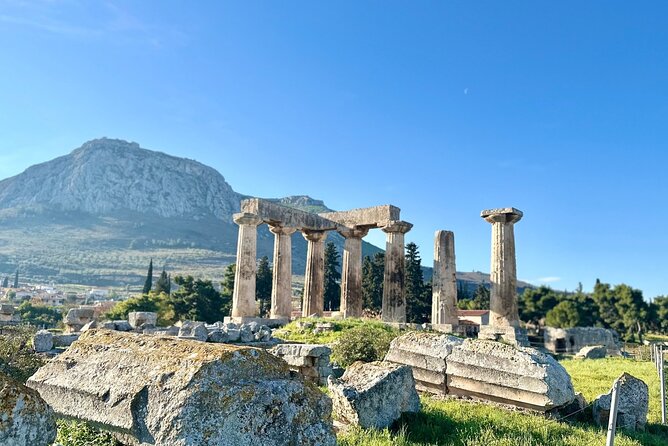
Then you’ll hit the Temple of Apollo, built around 550 BC. Corinth’s Apollo temple is one of the earlier Doric temples in the Peloponnese and Greek mainland. The detail worth clocking is the mention of monolithic columns—big, single-piece columns that were rare in the ancient world. Even a quick look helps you understand why Greeks and Romans kept building the same “type” of temple but upgraded it with their own engineering tricks.
What I like about how this tour handles Corinth: you get a variety of viewpoints in a single block—forum-level context (Bema), then temple-level “big statement” architecture (Apollo), then higher ground at Acrocorinth. The drawback is that most stops are timed tightly, so you’ll want to keep your camera ready and decide early where you want your longer glance.
Museum time at Corinth: what the archaeology display helps you see
You also stop at the Archaeological Museum of Ancient Corinth, a museum built in the early 1930s to showcase excavations from the site. The value of a museum stop on a day like this is simple: it turns “I saw stones” into “I know what those stones were for.”
Even with limited time (about 30 minutes), a museum visit can help you connect what you saw outside—roads, civic spaces, fountains, and other structures—to artifacts and excavation findings. It’s also a good reset when the weather gets hot. In a 9–10 hour day, that breather matters.
One caution: the entrance fee isn’t included here, so plan on paying separately for some sites and museums. Also, because there’s no licensed guide included to escort you into every site, you’ll get best results if you ask the driver questions on the spot—what you should notice, what mattered most, and how the layout works.
Acrocorinth’s fortress views: history written in stone and elevation
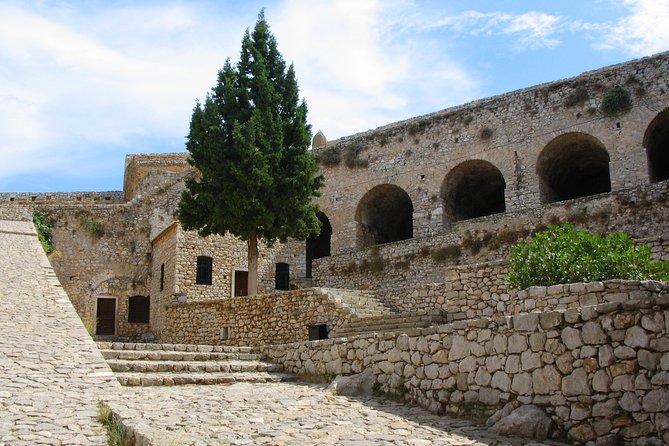
Acrocorinth, the “Upper Corinth,” is the acropolis on a monolithic rock above the city. Fortress sites like this can feel like a payoff at the end of a long drive—and this one is. Acrocorinth’s defensive position, plus the secure water supply, helped it function as a last line of defense in southern Greece.
From a traveler perspective, this stop is less about collecting detailed architecture and more about understanding why people cared. When you’re up high, you can see the strategic angle—the terrain that either blocks or invites an enemy. You also get that “you’re standing where decisions happened” feeling.
Timing is short here (about 15 minutes). If you want extra time, ask the driver right away so they can adjust within the day.
Mycenae: the Lion Gate and the scale you can’t fake
Then you head into Mycenae, the fortified citadel tied to the mythical and powerful King Agamemnon. Mycenae is one of those places where you can feel the Bronze Age muscle just by looking at the walls.
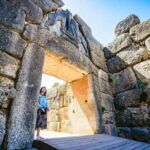
You’ll see the Cyclopean walls, the Lion Gate, and other key areas connected to the citadel’s peak period. The Lion Gate itself is a standout: two lionesses (or lions, depending on how you interpret the heraldic relief) sit above the main entrance, with the gate being dated to around the 13th century BC.
Here’s what I think you’ll find satisfying: the Lion Gate is not just a pretty carving. It’s described as the sole surviving monumental piece of Mycenaean sculpture, and it’s the largest prehistoric sculptural relief in the prehistoric Aegean. In plain terms, this is one of the few times you get a major “icon” from the era that still shows its face.
Time note: the Mycenae experience is spread across multiple stops, including free time at the site and an additional museum stop. Some of it is brief, so keep expectations realistic. This isn’t a week-long excavation tour. It’s a highlights-and-context day.
- All Day Cruise -3 Islands to Agistri,Moni, Aegina with lunch and drinks included
★ 5.0 · 4,958 reviews



Treasury of Atreus: the beehive tomb that makes math feel real
One of the most memorable moments on this route is the Treasury of Atreus—the Tomb of Agamemnon area. It’s a tholos (beehive) tomb built around 1250 BC, and the description of its lintel gives you a sense of the effort: a stone lintel above the doorway weighing about 120 tons.
That detail isn’t there just for trivia. It helps you understand why ancient structures can still feel overwhelming. Even if you don’t get inside for long, you’ll look at the scale and think about logistics—how they moved and placed those stones without modern tools.
This is also a good place to slow down for a minute and do the “why here?” question. With tombs like this, placement isn’t random. It’s tied to power, memory, and how the living wanted the dead to be seen.
Palamidi’s 999 steps: the climb, the payoff, and the reality check
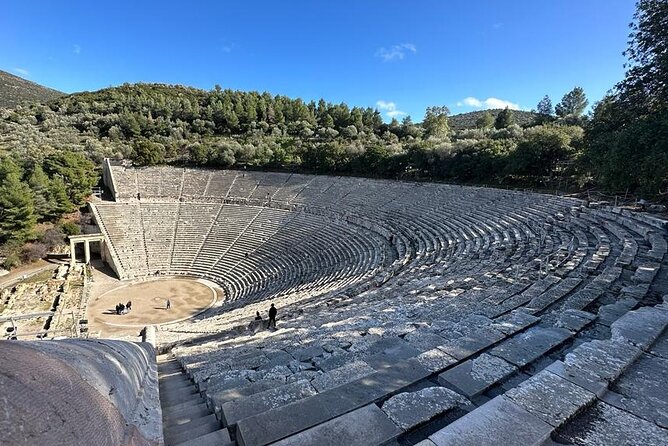
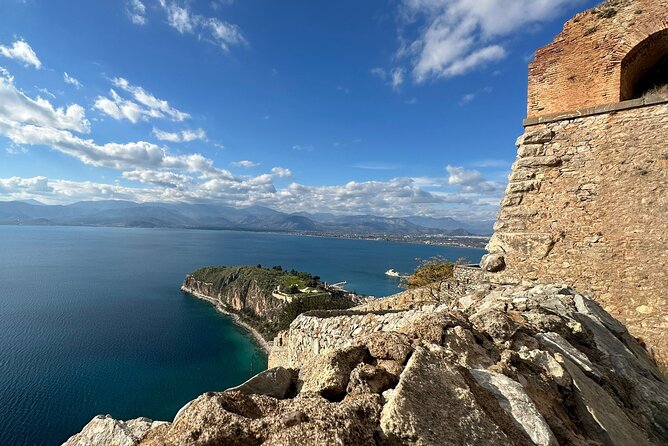
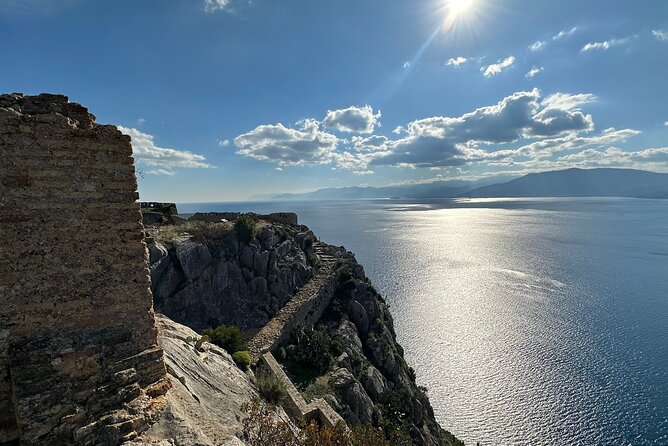
After Mycenae, you shift toward Nafplio—and this is where the physical part enters. Palamidi Castle is built on a 216-meter hill and was constructed by the Venetians during their second occupation (1686–1715). And yes: locals say there are 999 steps to reach the top, even though the winding stairway is described as 913 steps and the route to the fortress top is over a thousand.
The payoff is the view. Palamidi looks over Nafplio, the Argolic Gulf, and the surrounding coastline. Loopholes, stone passages, and that high vantage point turn the castle into an observatory.
Possible drawback: if you’re sensitive to stairs or you hate climbing in the sun, this stop can be stressful. The fix is simple—go early, wear grippy shoes, and if you’re winded, don’t “push through.” Ask for a pause. A short, steady pace wins.
Nafplio Old Town: Venetian neoclassical charm plus practical wandering
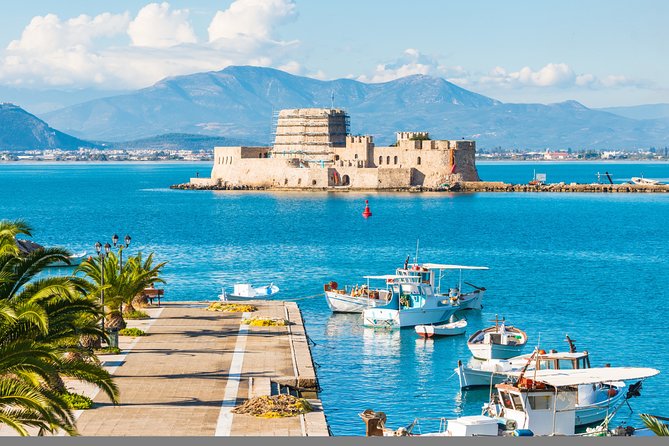
Nafplio is often the part people want to linger in. You’ll walk the Old Town’s cobbled streets with flowered balconies and stone steps that pop up every few minutes. This city is described as scenic and layered, with Venetian, neoclassical, and oriental elements mixed into the architecture.
You’ll start from the central area around Syntagma Square, often treated as the zero point of the Old Town. Syntagma Square also ties into the city’s later Greek history, including mention of the Parliament of the newly formed Greek state built during Kapodistrias’s reign, and the Municipal Gallery on the ground floor.
And there’s a lunch moment: lunch is scheduled at a traditional tavern by the sea, but the meal cost isn’t included. This is a good time to slow your pace, hydrate, and decide how much energy you have for Bourtzi and the fortress complex later.
Bourtzi and Akronafplia: postcard fuel and the oldest fortifications
You’ll also see Bourtzi, the small fortress on an islet called Agioi Theodoroi. The Venetians built it in 1473, and it’s said the Ottomans later referred to it as a fortress, leaving the name Bourtzi. Today, it’s known as a classic sunset photo spot, and you can get there in under 10 minutes by boat from Nafplio.
If you’re short on time, treat this stop like a quick scenic mission: take the photos, enjoy the setting, then move.
Then comes Akronafplia Fortress, the oldest part of Nafplio, once its own town until the 13th century. Venetians and Franks later folded it into broader fortifications. Part of it was used as a prison, but the area was also redeveloped with a hotel complex—so you’ll notice the modern footprint sitting over ancient defensive ground. It’s a neat example of how cities keep building on top of themselves.
The Lion of the Bavarians: a big rock story in modern Nafplio
To round out the afternoon, you’ll visit the Lion of the Bavarians, carved into the rock above Michael Iatrou Street. It’s credited to the German sculptor Christian Ziegel, commissioned by King Louis in memory of Bavarian soldiers of Otto’s dynasty who died in Nafplio in 1833 from a typhoid epidemic.
Locals also have an unofficial story tied to the soldiers’ fate—something about bitter foods. Whether you like the official explanation or the local one, it’s a great stop because it connects Nafplio not just to ancient legends, but to 19th-century trauma that shaped the city.
This one is also practical: it’s a short stop (about 30 minutes), easy to tack onto the end of a long day without demanding too much movement.
Price and logistics: what $277.09 buys you (and what it doesn’t)
At $277.09 per person, the real value here is that you’re buying convenience plus interpretation. You’re not arranging transport between scattered sites, and you’re not driving yourself on a day that can easily run 9–10 hours.
You get:
- pickup and drop-off (Athens hotel, Airbnb residence, or port)
- a modern first-class private vehicle with WiFi, A/C, and bottled water
- an English-speaking driver with extensive historical knowledge
- flexibility for your pickup time and the ability to customize the program (within reason)
What you should expect to pay extra for:
- entrance fees for attractions (some stops are free, many are not included)
- lunch cost in Nafplio
- no licensed guide escort inside sites, so you’ll rely on the driver for commentary at each location
My take: this price makes sense if you want comfort and fewer moving parts. If you’re the type who loves going at your own pace and doesn’t mind figuring out buses and parking, you could spend less—but you’ll also spend more time on logistics.
One last “be smart” point: because this is sold as private, clarify the vehicle setup for your exact group size and departure time. A long day works best when you’re not unexpectedly sharing time or space with other schedules.
Who this tour suits best, and who should think twice
This fits best if you want:
- a highlights-first day across Corinth, Mycenae, and Nafplio
- biblical connections paired with major archaeological sites
- door-to-door pickup so you can start relaxed, not stressed
It might not fit as well if you:
- want lots of time inside museums and ruins without time pressure
- need a low-stair itinerary, because Palamidi’s climb is a core part of the experience
- hate paying separate entrance fees (they’re not included across the board)
If you’re traveling with older kids, history-curious adults, or anyone who likes stories tied to places, this is a strong match.
Should you book this Peloponnese day trip?
Book it if you want one efficient day that covers Corinth’s forum and temples, Mycenae’s monumental entrances and tomb areas, and Nafplio’s views from Palamidi plus Old Town wandering. The comfort setup (A/C, WiFi, water) and the driver storytelling from people like Chris, Yiannes, Costas, Ioannis, Dimitrios, and Michael make a real difference on a day this packed.
Skip or modify if stairs and quick stop times don’t work for you. If you care most about one place—Corinth or Mycenae—you might be happier with a shorter, more focused route so you can linger.
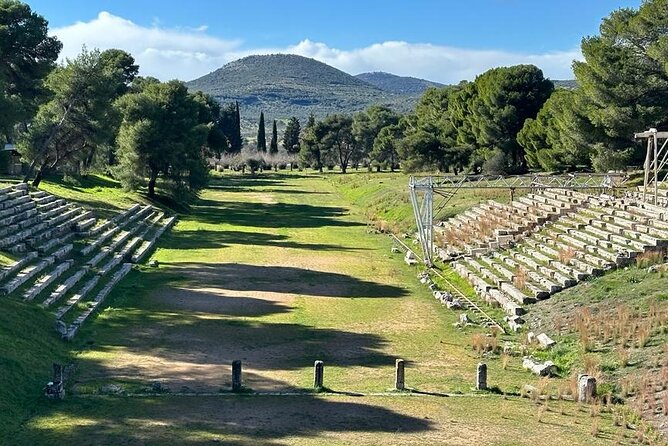
One more thing: this schedule, as provided, doesn’t explicitly list Epidauvro as a stop. If Epidauvro is a must for you, ask before booking so your day matches what you’re hoping to see.
FAQ
How long is the full-day tour?
It runs about 9 to 10 hours.
Is pickup from Athens included?
Yes. Pickup and drop-off are included from Athens Hotel, Airbnb residence, or the port. Pickup time can be adjusted.
Are entrance fees included?
No. Entrance fees for the attractions are not included.
Is lunch included in Nafplio?
Lunch is not included, but lunch is scheduled at a traditional tavern by the sea.
Will I have a licensed guide inside archaeological sites?
No. A licensed guide is not included; the driver provides the historical commentary in English.
What language is offered?
The tour is offered in English.
How is transportation handled for different group sizes?
Groups of 1 to 3 ride in a luxury sedan; groups of 4 to 7 ride in comfortable mini vans. Vehicles have WiFi, A/C, and bottled water.
What if weather is bad?
This experience requires good weather. If it’s canceled due to poor weather, you’ll be offered a different date or a full refund.
If you want, tell me your group size and whether Palamidi steps are a concern. I can suggest a smart way to structure your priorities within this 9–10 hour window.


More Full-Day in Athens
- All Day Cruise -3 Islands to Agistri,Moni, Aegina with lunch and drinks included
★ 5.0 · 4,958 reviews

More Tour Reviews in Athens
- All Day Cruise -3 Islands to Agistri,Moni, Aegina with lunch and drinks included
★ 5.0 · 4,958 reviews