REVIEW · ATHENS
2 Days Private Tour: Delphi & Meteora
Book on Viator →Operated by Olive Sea Travel · Bookable on Viator
Two days, two UNESCO sights, and a calmer pace. What I like about this tour is the private pacing (you’re not squeezed into a coach rhythm) and the overnight in Kalambaka so you get time at Meteora beyond a quick drive-by.
You’ll spend a lot of time on the road, and a few major places require extra tickets (for example, the Temple of Apollo and the Delphi Archaeological Museum are listed as not included). It’s still a great fit if you enjoy long days with scenic breaks.
One more practical note: you’ll have a professional driver with history know-how, but they’re not licensed to guide inside sites. If you want full commentary inside museums and churches, ask for a licensed guide add-on.
In This Review
- Key points before you go
- Why Delphi and Meteora belong together
- Day 1 north: Delphi, Arachova mountain views, and your Kalambaka night
- Delphi’s sacred ground: Apollo, the theater, and the museum highlights
- Meteora morning: monastery visits with viewpoint time that actually matters
- Thermopylae and Leonidas: closing the loop with real battle-site context
- Price and logistics: what you get for $712 and what costs extra
- Comfort tips: walking, photos, and a smarter packing list
- Should you book this private Delphi and Meteora tour?
- FAQ
- How long is the Delphi and Meteora tour?
- What’s included in the tour price?
- Are entrance fees included?
- Will I have a licensed guide inside the sites?
- Is the tour private or shared?
- Do you pick up from Athens hotels and other locations?
- What language is the tour in?
- Can I cancel for a refund?
Key points before you go
- True private transport from Athens with pickup time adjustable to your request
- Overnight base in Kalambaka, putting Meteora within easy reach for golden-hour viewing
- Delphi first, then off-the-highway countryside, including Arachova and mountain roads into Fokis
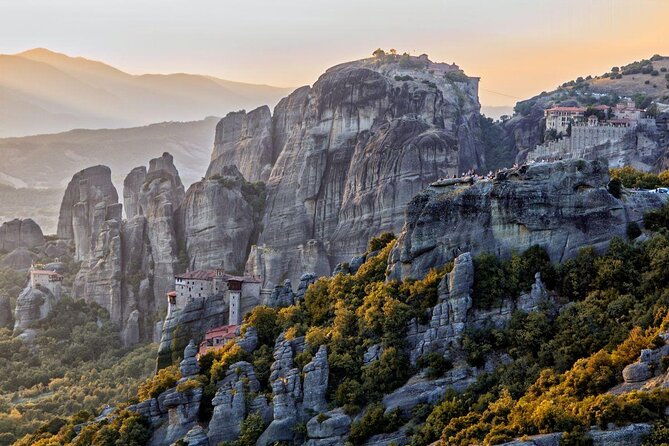
- Meteora monastery variety (Roussanou, Agios Stefanos, Great Meteoron) plus viewpoints beyond the usual stops
- Thermopylae on the way back, including the Leonidas Monument and an optional-feeling time-compression 3D presentation area
Why Delphi and Meteora belong together
Delphi and Meteora feel like two sides of Greece’s “where the past meets the sky” coin. Delphi is the ancient sacred center linked to Apollo, where people came to ask questions of the oracle and to treat the sanctuary as something bigger than local politics. Meteora flips the mood: you’re looking up at monasteries perched on rock pillars, still active in the Eastern Orthodox tradition, with a landscape that constantly changes as clouds drift.
Doing both in one trip is smart because the drive is basically the same corridor—so you’re not wasting time “going out of your way” twice. You also get the advantage of timing. Delphi is usually easiest to enjoy earlier in the day (when the air is clearer and the site feels less chaotic), while Meteora often rewards late-day light, when those cliffs look almost unreal.
This particular tour is designed around that idea: you’re not just checking monuments off. You’re getting a smooth Athens-to-north transfer, time at the Delphi sanctuary and its museum, a real sleep in Kalambaka, then monastery visits the next morning—plus the history thread continues on Day 2 with Thermopylae.
If you’re a history person, you’ll like how the tour moves from oracle myths (Delphi) to lived religious practice (Meteora), then to a moment of ancient political-military storytelling (Thermopylae). If you’re more “I just want jaw-dropping views,” Meteora will probably do most of the heavy lifting—especially if you arrive with a camera ready and the willingness to walk a bit.
You can also read our reviews of more private tours in Athens
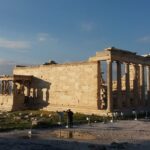

Day 1 north: Delphi, Arachova mountain views, and your Kalambaka night
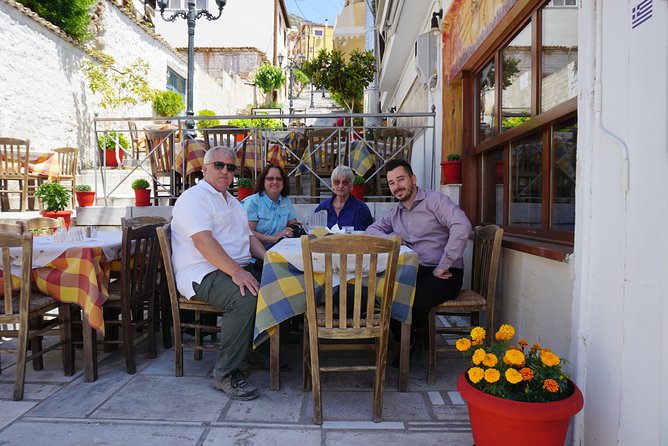
Your day starts with an Athens pickup (the operator offers hotel/Airbnb/port pickup and drop-off) and a private vehicle heading north. Along the way, you’ll pass through towns and viewpoints that give you a sense of the real Greek countryside—one reason this works better than a simple day trip. The route includes a section where you can see the plane of Thieves and the city of Levadia, and then you push up toward Mount Parnassus before arriving at Delphi.
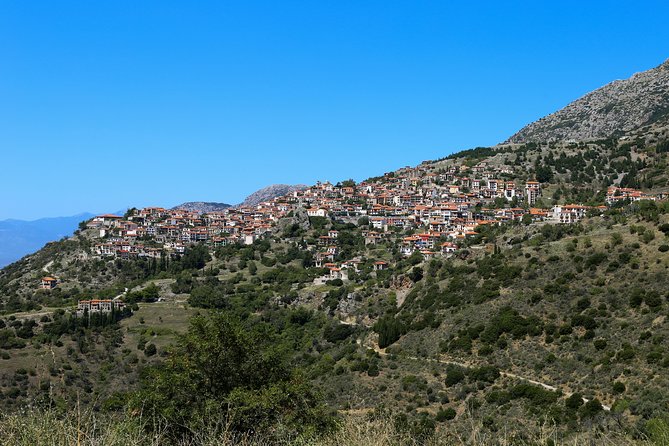
Before Delphi, you’ll also spend time in the Arachova area (a mountain village known for views over the valleys). That matters because it softens the day. You’re not jumping straight from city life into dense ruins—you get a scenic buffer first.
At Delphi, the experience is built around a proper visit: time at the sanctuary area, then the Temple of Apollo area, and then an option to continue on to lunch in the nearby Delphi village area. The day ends with the drive onward to Kalambaka, a town at the foot of the Meteora cliffs. Once you’re checked in, you’ll have time for an evening walk and a local dinner.
This is one of the best value moves in the plan: by sleeping in Kalambaka, you’re not rushing the Meteora part at the same pace as a day bus tour. You can also adjust your evening if weather turns or you simply want more time outside. In the past, guides on this kind of setup have helped people catch sunset moments from the Meteora side even when the schedule needed a tweak.
Delphi’s sacred ground: Apollo, the theater, and the museum highlights
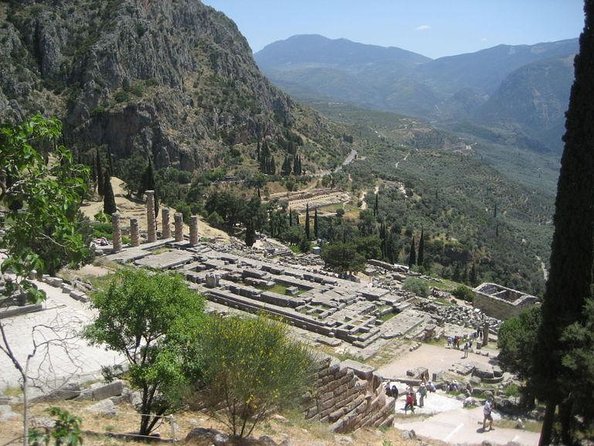
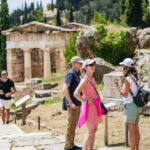
Delphi isn’t just “a ruin.” It’s a sanctuary with deep symbolism: it was dedicated to Apollo and connected to the idea of a Panhellenic center—something like a cultural focal point for the Greek world. You’ll start at the main ancient site area, where the views over Mount Parnassus give you perspective for why this place was considered meaningful.
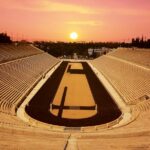
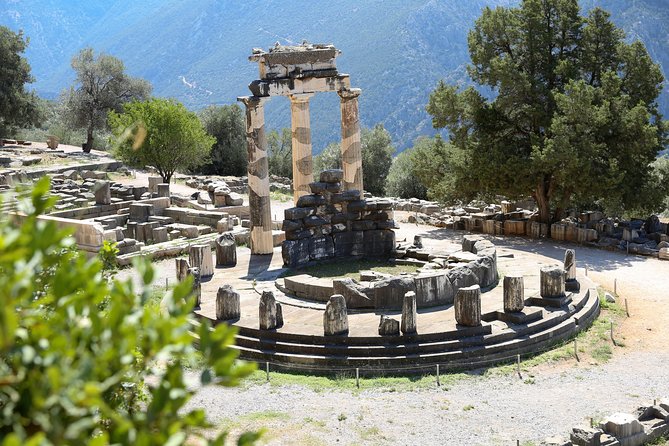
At the Temple of Apollo, you’ll be in the heart of the oracle tradition. The tour specifically calls out the area where Pytheia spoke, plus the ancient theater and the stadium. That combination is useful: you don’t just see stones—you see the space where performances and civic events would have shaped life around the sacred purpose.
One practical thing: the Temple of Apollo is listed as not included for admission fees, and the Delphi Archaeological Museum is also not included. So while some parts of the Delphi area are marked as free-entry, you should budget extra for the ticketed sections that you’ll likely want most. If you’re the type who hates paying twice, plan for it now.
Speaking of museum time, the Delphi Archaeological Museum is worth knowing about before you go. The tour highlights recognizable treasures like the Charioteer and the Gold-Ivory statue. If you’ve seen photos of Delphi’s famous art, this is where you connect the image to the real scale and material. Even if you’re not a hardcore museum person, those objects tend to be the “oh, that’s what I’ve been looking at online” moment.
Finally, lunch is built into the day, with time set aside in the Delphi village area while you look back toward the Fokis mountains. This is exactly where you want a slower pace: you’ve been walking among sacred structures, and now you’re switching to mountain air and practical food breaks.
Meteora morning: monastery visits with viewpoint time that actually matters
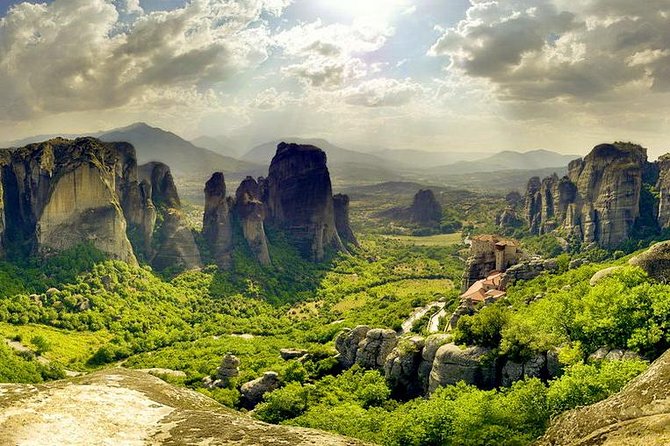
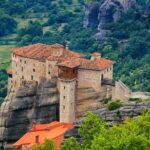
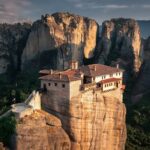
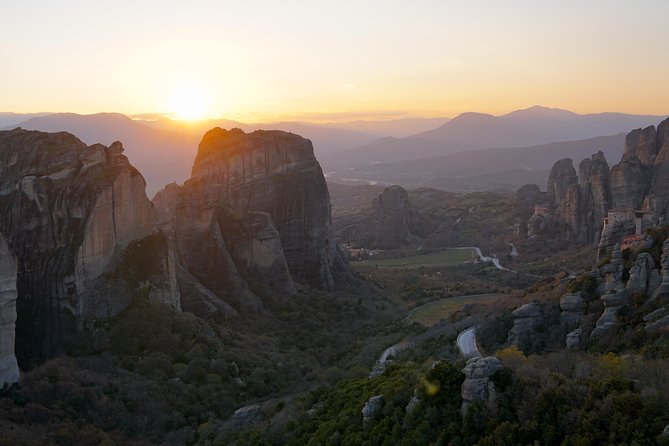
Meteora has one job: make you look up. The monasteries sit on rock formations that look suspended in the air—Meteora literally means that “suspended” idea. The tour frames the visits around Eastern Orthodox monastic complexes still in use, so it’s not only sightseeing. You’ll feel the place as living religious heritage.
The schedule starts in the morning for monastery exploration, and it’s structured so you see multiple monasteries rather than only the most famous one. The stops include:
- Roussanou Monastery (with a different angle on the cliffs)
- Agios Stefanos, one of the few female monasteries of Meteora, with wall paintings mentioned as executed in 1560
- Great Meteoron, described as devoted to the Transfiguration and the biggest and most famous of the complexes
What I like is that the plan doesn’t stop at the main church doors. At Roussanou, the tour mentions a pathway that leads toward an upper main road and a panoramic viewpoint spot that lets you walk on rocky terrain close to the cliffs. That’s the kind of time that helps Meteora sink in.
Timing is also practical here. Each monastery stop is given a focused duration, so you’re not trapped in one place for hours. At the same time, you’re not rushed through everything like a checklist. Many guides in private formats help you shift the walking tempo based on your comfort level, which matters because some church steps and cliff-side paths are uneven.
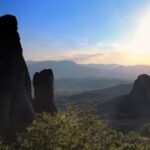
If sunset is important to you, the advantage of staying in Kalambaka (instead of turning it into a day trip) is that you’re in position for dusk views. People tend to remember the sky moments here most—especially when clouds roll in and the rocks change color.
Thermopylae and Leonidas: closing the loop with real battle-site context
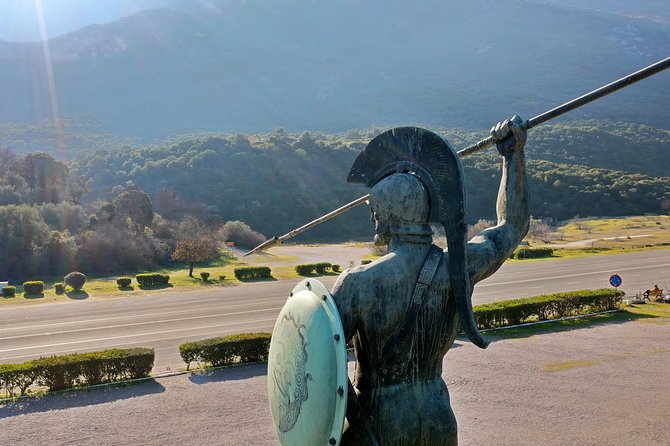
On the ride back toward Athens, the tour includes a stop at Thermopylae, the place where King Leonidas and the 300 Spartans faced the Persian army about a decade after the Battle of Marathon. It’s a short stop compared with the UNESCO-heavy days, but it’s well-chosen because it connects the myth and history chain.
The tour lists admission as free for the battlefield viewing and includes the Leonidas Monument plus a nearby presentation area: Kainotomiko Kentro Istorikis Enimerosis Thermopylon, where you can take in a 3D movie experience about the period. This can be useful if you want something between a guided lecture and reading a plaque—especially if you learn best when images do part of the heavy lifting.
The Leonidas Monument is described as standing opposite Kolonos Hill, where the tour notes the Spartans left their last breath. Even without a guide-led story, that location framing helps the site feel more human and less abstract.
After two intense days—Delphi’s oracle aura and Meteora’s cliff monasteries—this is a calmer, reflective history landing before the long return drive.
You can also read our reviews of more tours and experiences in Athens

Price and logistics: what you get for $712 and what costs extra
The price is listed at $712.03 per person for a private 2-day experience. That’s not cheap, but you’re paying for a few value drivers that matter in Greece’s long-distance travel:
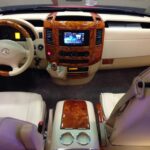
- Private vehicle for round-trip transit from Athens
- Pickup and drop-off from your lodging area (hotel/Airbnb/port)
- Accommodation and breakfast in Kalambaka (based on your booking)
- Bottled water and a professional driver for the road
Compared to joining a shared coach, the private setup usually means you can move at your pace. You’re also less stuck waiting for a big group schedule when you want a few extra minutes for photos or when you want to slow down on a staircase section.
Now the trade-offs: entrance fees are not included. Even within the Delphi and Meteora areas, some parts are marked free while others are ticketed. The Temple of Apollo and the Delphi Archaeological Museum are ticketed (not included), and for Meteora the itinerary lists Roussanou, Agios Stefanos, and Great Meteoron as not included for admissions.
So you’ll want to budget for tickets and any optional museum time. If you’re trying to minimize surprise costs, check which stops are free-entry for your exact date and which aren’t.
Also, remember the guide detail: the driver is described as having history expertise, but they’re not licensed to accompany you inside sites and museums. If your ideal trip includes indoor commentary, the tour data says you can hire a licensed tour guide on request for an additional cost. That’s the cleanest way to get context without sacrificing the privacy of the driver-led transport.
Comfort tips: walking, photos, and a smarter packing list
Meteora and Delphi both involve walking on uneven ground and stairs. The tour is still manageable for most people, but you’ll enjoy it more if you come prepared. Based on practical guidance from people who’ve done this route, I recommend packing:
- Water (you’ll get bottled water from the tour, but bring extra if you run hot)
- A camera and a charged phone for cliff-side light changes
- Binoculars if you like reading details from viewpoints
- Hiking poles if your knees aren’t thrilled about stone steps and rock paths
- Comfortable shoes with grip
One small strategy: plan to move slowly at Delphi on the way to the theater and stadium areas, then treat Meteora as a series of short stair-and-stare sessions. That mental shift helps you stop feeling like you have to “power through” every step.
Finally, build a little flexibility into your expectations. Meteora weather can change fast, and cloud cover can improve the view—or ruin it. The private format makes it easier to adjust. If storms roll in, you’re generally better off than with fixed coach schedules.
Should you book this private Delphi and Meteora tour?
Book it if you want two UNESCO hits without the stress of handling transport, timing, and driving yourself up a mountain corridor. The overnight base in Kalambaka is a big reason to choose this format, and the private vehicle plus pickup/drop-off setup makes the whole trip feel like a smooth package rather than a logistics puzzle.
Skip it (or consider a different option) if you’re strictly trying to keep costs down on admissions, since entrance fees for key spots are listed as not included. Also, if you expect a fully licensed guide to talk inside every museum and monastery, plan for the licensed-guide add-on rather than assuming the driver will cover that inside level.
If you’re the kind of traveler who wants space to photograph, pause, and take in views from different angles—this is a very strong choice.
FAQ
How long is the Delphi and Meteora tour?
It’s listed as a 2-day private tour (approx.) covering travel from Athens, visits in Delphi and Meteora, and a stop at Thermopylae on the way back.
What’s included in the tour price?
Included items listed are accommodation and breakfast (according to your booking), transport by private vehicle, bottled water, and hotel/Airbnb/port pickup and drop-off, plus professional drivers with history knowledge.
Are entrance fees included?
No. Entrance fees are listed as not included. Some parts of the tour are marked free in the schedule, while others (like the Temple of Apollo and the Delphi Archaeological Museum) are marked as not included.
Will I have a licensed guide inside the sites?
The tour notes that the drivers are not licensed to accompany you inside any site or museum. If you require a licensed guide to tour sites with you, you need to hire one additionally.
Is the tour private or shared?
This is a private tour/activity. Only your group will participate.
Do you pick up from Athens hotels and other locations?
Yes. Pickup is offered, and the tour lists hotel/Airbnb/port pick up & drop-off. Pick-up time is adjustable upon request.
What language is the tour in?
It’s listed as offered in English.
Can I cancel for a refund?
Yes. The policy states free cancellation up to 24 hours in advance for a full refund. If you cancel less than 24 hours before the start time, the amount you paid will not be refunded.

More Private Tours in Athens

More Tours in Athens


More Tour Reviews in Athens
- All Day Cruise -3 Islands to Agistri,Moni, Aegina with lunch and drinks included
★ 5.0 · 4,958 reviews