REVIEW · ATHENS
6 Day Tour Ancient Greece & Corfu to Explore History and Beauty
Book on Viator →Operated by Private Tours Greece · Bookable on Viator
Six days, two islands, one big history hit. This private route stitches together UNESCO sites like Delphi and Meteora, then adds two nights of slower sea-air in Corfu Old Town. You also get door-to-door private transfers from your Athens hotel or Piraeus port, plus the ferry tickets handled for you—so you’re sightseeing, not scheduling.
My favorite part is how the plan makes the big names feel connected: Delphi’s oracle world, Meteora’s cliff-top monasteries, then the Peloponnese ruins and theaters that shaped ancient Greek life. Second, I really like the practical support baked in—English-speaking driver, private vehicle, and an included Meteora sunset tour that helps you see those rock towers in the best light.
One thing to keep in mind: entrance fees aren’t included, and the day-to-day walking can add up (fortresses, theaters, and a lot of steps). If you like your travel calm, you’ll want good shoes and a flexible pace.
In This Review
- Key highlights you’ll actually care about
- A 6-Day Greece and Corfu Route That Keeps Logistics From Eating Your Time
- First Stop: Delphi’s Oracle World (Not Just Columns and Crumbs)
- Possible drawback in Delphi
- Meteora Monasteries: “Suspended in the Air” Views and Sunset Timing
- What to know before you go
- Igoumenitsa Ferry to Corfu: The “Travel Day” That Feels Like Part of the Trip
- A smart tip for Corfu Old Town
- Corfu by Day: Mon Repos, Kanoni, Achilleion, and the Paleokastritsa Climb
- The only real “watch-outs” for this day
- Old Fortress Corfu and the Spianada Square Before Heading Back to the Mainland
- Ancient Olympia: Where the Games Began and Zeus Took Center Stage
- After Olympia: Nafplio for Sea Views and Old Street Strolls
- Nafplio’s Harbor and Castle: Bourtzi and the 999 Steps
- Consideration
- Mycenae, Epidaurus, and Ancient Corinth: The Big Three for Myth, Theater, and Travel-Route History
- Price and Value: What You’re Paying For (and What You’ll Still Need to Budget)
- Who This Tour Is Best For (and Who Might Want a Different Plan)
- Should You Book This Ancient Greece and Corfu Tour?
- FAQ
- What’s included in the tour price?
- Are entrance fees included?
- Where do pickups happen?
- What kind of lodging can I choose?
- How long is the tour?
- Is this a private group tour?
- What if I need to cancel?
Key highlights you’ll actually care about
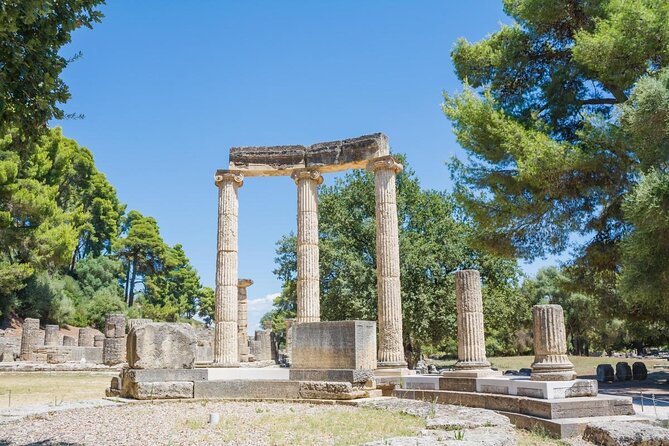
- UNESCO hit list in six days: Delphi, Meteora, Ancient Olympia, Epidaurus, Mycenae, plus major stops like Nafplio and Corinth.
- Two nights in Corfu Old Town area: Venetian-style streets, churches everywhere, and waterfront views.
- Private transfers from Athens or Piraeus and ferry tickets from Igoumenitsa to Corfu.
- Sunset time in Meteora with included evening touring around the rocks.
- Accommodation options: you can choose 3-star or 4-star to match your budget.
- You pay site entrance fees yourself: plan for museums and ruin tickets on the go.
A 6-Day Greece and Corfu Route That Keeps Logistics From Eating Your Time
This tour is basically a guided route-mapping exercise done for you. You start early (meeting time is 8:30am), and from there the trip keeps moving: private car, ferry, and city-to-city transfers. It’s the kind of plan that works best when you want a strong “greatest hits” overview without spending days piecing together transport.
The pacing is not slow, but it’s not chaos either. Each day is built around a few fixed anchors—major archaeological sites and standout viewpoints—then you get a little breathing room for meals or town wandering, especially in Corfu and Nafplio. The trade-off is you’ll be doing real walking: ruins with uneven ground, monastery slopes, and old-city steps.
If you hate travel admin, you’ll feel instantly calmer here. You also get breakfast every morning (6 breakfasts total), which helps when you’re starting a day full of sites and don’t want to hunt for food at dawn.
You can also read our reviews of more historical tours in Athens

First Stop: Delphi’s Oracle World (Not Just Columns and Crumbs)
Delphi is where this tour gets serious. You’ll drive from Athens-side regions passing the plain of Boeotia and the area linked to Thebes, then arrive at Delphi—a religious center the ancient Greeks treated like the symbolic heart of their world.
At Delphi, the best part is that you’re not just looking at the biggest ruin. You’re moving through the key pieces that explain how the place worked:
- The tholos of the sanctuary of Athena Pronaia
- The Ancient theatre of Delphi
- The Treasury of the Athenians
- The Ancient gymnasium
- The sacred Castalian Spring fountain (important in the cult and oracle procedures)
- And the temple of Apollo, tied to the idea of Delphi as the center of the earth
One detail I love is how the oracle is explained in plain terms. You’ll hear how Pythia was the priestess, and how Apollo was considered the seer while Pythia acted as the vessel. Even if you’ve visited other ruins before, Delphi lands differently because it’s a story place: ritual, belief, and power—not only architecture.
After the site, you’ll have time at the Delphi Archaeological Museum. That’s where you see artifacts from the Delphic sanctuary’s history in a way that ruins alone can’t always do. (It also makes your next stops easier—suddenly you recognize themes across Greece.)
Then there’s a stop in Arachova, a traditional village where lunch is an option in the Delphi area or at Arachova. This is one of those “practical breaks” that keeps the day from turning into a nonstop museum sprint.
Possible drawback in Delphi
Delphi is outdoors and spread out. If you’re prone to knee fatigue, plan to move slowly and expect uneven terrain.
Meteora Monasteries: “Suspended in the Air” Views and Sunset Timing
Next comes Meteora, and this is the one stop that tends to feel cinematic even if you’re not the dramatic type. Meteora’s Byzantine monasteries sit atop towering rock formations—hence the idea of monasteries built “suspended in the air,” because the rock rises so dramatically beneath them.
You visit two major monasteries:
- Holy Monastery of Great Meteoro (described as the biggest and oldest)
- Monastery of St. Stephan, which sits on the plain (less cliff exposure than the tallest rock sites), with church decoration described for the 1500s era
Timing matters here. The tour includes a sunset tour in Meteora, which is huge for two reasons: the rocks turn gorgeous as the light changes, and crowds tend to feel more manageable than mid-day.
You’ll also have a traditional Greek lunch in the Kalambaka area. That matters more than it sounds. Kalambaka is your base for this portion, and food here becomes your reset button before the long travel day continues later toward the ferry.
What to know before you go
Meteora can involve walking on uneven ground and stairs between viewpoints. If you like steady footing, I’d bring shoes with solid grip and dress in layers for the hill air.
You can also read our reviews of more tours and experiences in Athens

Igoumenitsa Ferry to Corfu: The “Travel Day” That Feels Like Part of the Trip
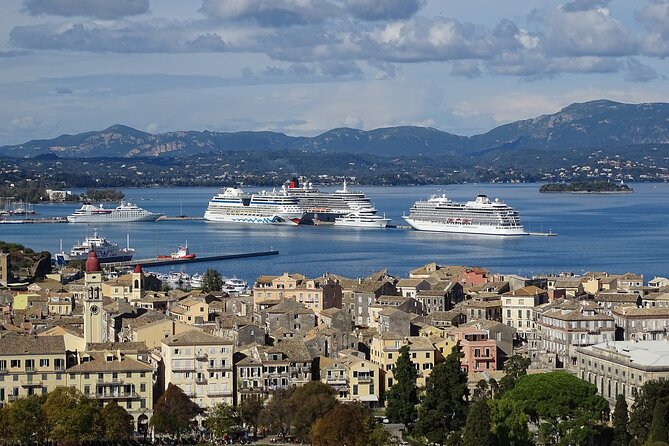
After Meteora, the tour shifts gears to the coast. You’ll reach Igoumenitsa port to catch the ferry to Corfu. The plan includes ferry tickets, so you’re not trying to interpret departure boards while your brain is still processing monasteries.
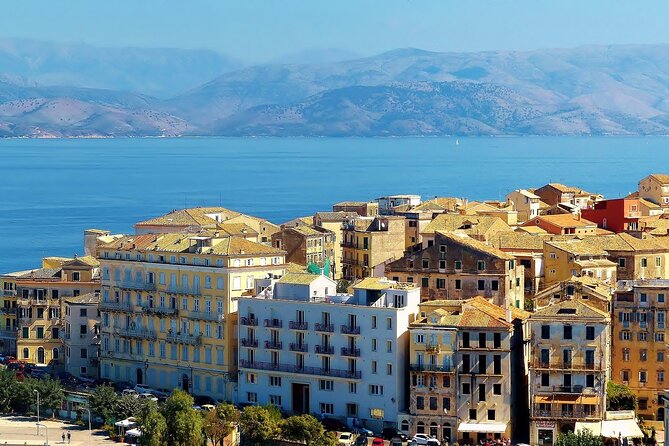
Once you check in, you get free time to explore Corfu town, and that’s where the tour pays off. Corfu isn’t only about one landmark; it’s about atmosphere.
You’ll spend evening time around:
- Corfu Old Town, a UNESCO World Heritage Site
- The narrow cobbled lanes called kantounia
- The Liston area, known for its elegant feel
- Lots of small churches around corners
- Venetian-style street layout and architecture
This is the moment when the tour becomes “vacation-ish.” You can shop, pick a local restaurant, or stop for a coffee. If you’re the sort who likes wandering without a checklist, Corfu Old Town is built for that.
A smart tip for Corfu Old Town
Even with free time, set a loose plan: pick one “must” (like Liston or a church you notice from the street) and let the rest happen by chance. That’s how Corfu feels most authentic.
Corfu by Day: Mon Repos, Kanoni, Achilleion, and the Paleokastritsa Climb
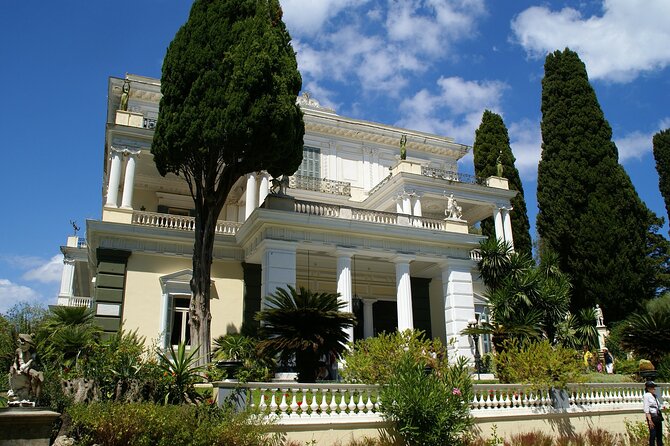
Day 3 is Corfu in full scenic mode, with stops spread across a mix of palace, viewpoints, and a bay area.
Mon Repos Palace first: a neoclassical building from 1830 with a sea-view setting. It’s also described as transformed into a museum, and the grounds are ideal for shaded walks among old trees.
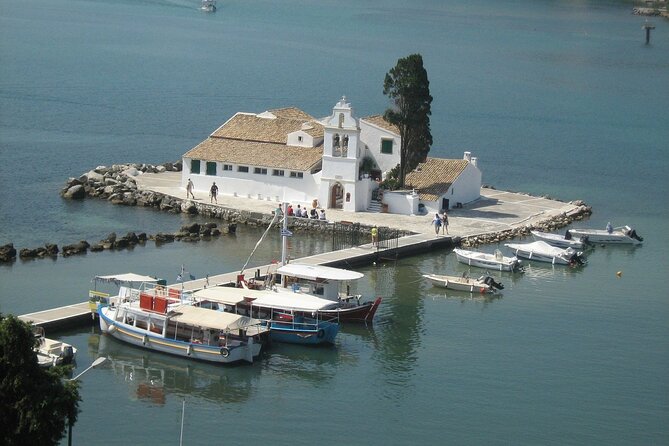
Next is Kanoni / Panagia Vlacherna & Mouse Island (Pontikonissi). This is one of those places with an instant visual payoff:
- A chapel with an impressive wooden-carved iconostasis
- Frescoes inside
- And the 13th-century church of Pantokrator in the middle of the Mouse Island area
Then you’ll head to Achilleion Palace, built in 1890 by Empress Elizabeth of Austria (Sissy). It’s a quick change of mood—Corfu’s identity is not only ancient or Venetian here; you also see the imprint of later European visitors.
After that: Paleokastritsa, described as the Capri of Greece. You’ll reach the bay area, then go to a hilltop Byzantine monastery still inhabited by monks. The walk up is noted as roughly 400 meters uphill, and the reward is a view plus the chance to see religious icons and a small museum/church space.
Finally, you pass through traditional villages and reach Lakones, also called God’s Balcony for the panoramic look over Paleokastritsa Bay and the hills. You end back in Corfu town.
The only real “watch-outs” for this day
This is a day with multiple drive-to-viewpoint segments and some uphill effort. Pace yourself. If you don’t want to feel rushed, take your time at the bays and don’t try to photograph everything from the first possible spot.
Old Fortress Corfu and the Spianada Square Before Heading Back to the Mainland
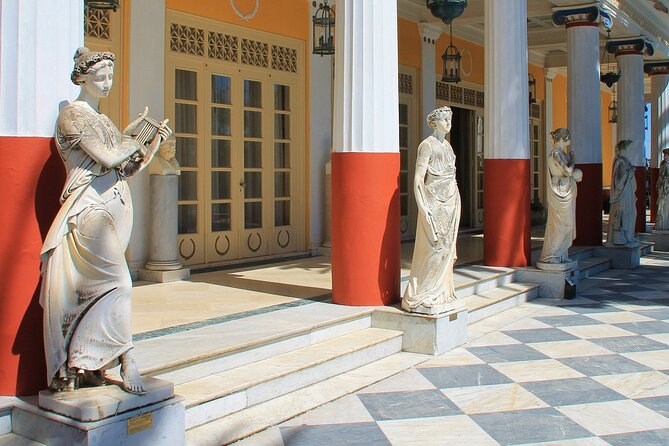
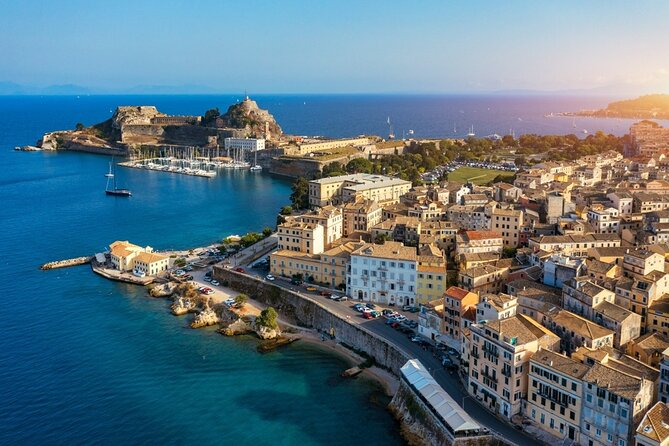
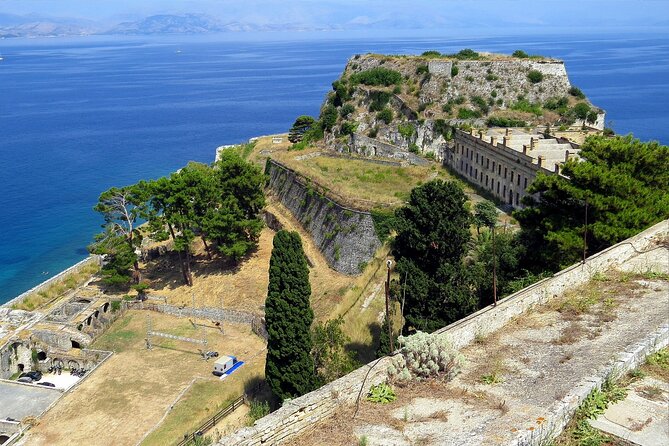
On Day 4, you start with the Old Venetian Fortress in Corfu. It’s described as a 15th-century stronghold designed to protect the town from enemies, and it’s also one of the best places for panoramic views. Then you walk down on foot toward Spianada, described as the second largest square in Europe, with a Venetian-symbol arch carved in marble.
After that, it’s back to the practical side: you head to Igoumenitsa port for the ferry again. This time you arrive in Patra, where you spend the night.
It’s a lot of changing scenery in one day, but that’s also why it works. You get Corfu’s best visuals in the morning, then the trip re-centers on ancient sites on the mainland.
Ancient Olympia: Where the Games Began and Zeus Took Center Stage
The tour’s first major mainland “anchor day” after Corfu is Ancient Olympia. You’ll leave Patra for Olympia, starting with breakfast so you’re ready for the site day.
Olympia isn’t just impressive; it’s foundational. It’s where the first Olympic Games were held in 776 B.C. Here you’ll see:
- The temple of Zeus, described as the most celebrated sanctuary of ancient Greece and linked to one of the Seven Wonders
- The temple of Hera
- The shrine of Pelops
- The Council house where athletes took the Olympic oath
- Treasury houses
- The Gymnasium and Palestra, linked to training before the Games
If you’ve ever watched Olympic history unfold on television, Olympia helps you visualize the earlier world behind the modern event. You’re standing in a place built for ritual competition—something far more political and religious than just sports.
After Olympia: Nafplio for Sea Views and Old Street Strolls
From Olympia you continue to Nafplio, a seaside town with old streets full of shops and restaurants. You get time to stroll the old city on arrival, then you sleep there for the next part of the route.
Nafplio is a nice contrast to ruins. It gives your feet a break from walking in ancient stone fields, and it gives your eyes a break from hard sun and dry rock.
Nafplio’s Harbor and Castle: Bourtzi and the 999 Steps
Nafplio gets its own full exploration day section. You’ll view the small island of Bourtzi and the fort in the harbor—one of those scenes that looks like it belongs in a painting. You can also enjoy the seaside promenade and stop for coffee.
Then comes the “literal workout” piece: the Castle of the Town with 999 steps. The views from the top are the point. This stop is less about artifacts and more about the feeling of the place—how the sea wraps around the city and how the fortifications connect to the old trade-and-defense story.
Consideration
If your legs don’t love stairs, you can still enjoy Nafplio from lower viewpoints, but the castle stop is the classic payoff.
Mycenae, Epidaurus, and Ancient Corinth: The Big Three for Myth, Theater, and Travel-Route History
Day 6 is a packed finale—three major cultural stops plus the Corinth Canal photo moment.
Archaeological Site of Mycenae comes first. This is described as the center of Greek civilization and linked to the mythical Agamemnon. You’ll see:
- The Cyclopean Walls
- Lion’s Gate
- The Atreus King Tomb
Mycenae is the kind of site where you can feel the scale even when details are broken or worn down. It’s heavy, real, and slightly eerie in the right light.
Next: Ancient Theatre of Epidaurus. This is the theater stop you’ll remember. It seats about 15,000 and is famous for its breathtaking acoustics. The design turns the site into an experience, not only a structure—especially if you can imagine the voices carrying.
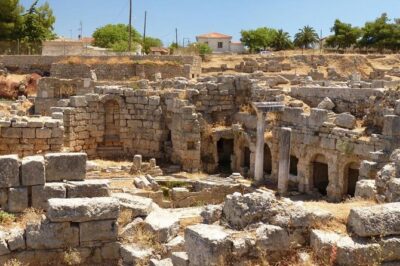
Finally: Ancient Corinth (Archaia Korinthos) and then the Corinth Canal. Ancient Corinth is linked in the tour description to the same paths that Apostle Paul walked, which adds a human anchor to the stones. The Corinth Canal is a short stop for photos, described as 6 km long and 80 m high—big engineering energy, perfect for a quick break before heading to Athens.
Price and Value: What You’re Paying For (and What You’ll Still Need to Budget)
At $3,816.74 per person for a 6-day, private format, this is not a budget trip. The value comes from the fact that it bundles the stuff that usually costs time and stress when you plan it yourself:
- 5 nights accommodation with breakfast
- Ferry tickets between Igoumenitsa and Corfu
- Private vehicle with an English-speaking driver
- Private transfers from Athens hotel or Piraeus port
- The included Meteora sunset tour
You’re paying for the coordination muscle: hotel stays, timing between major stops, and the transport handoffs.
What’s not included is also clear: entrance fees are at your own expense. That can vary based on how many museums and sites you personally prioritize inside each stop. It’s smart to budget extra rather than assume everything is covered.
If you’re traveling with someone who enjoys being driven from place to place, this kind of “everything handled” approach can feel like a bargain. If you prefer independent pacing and want to chase fewer stops, you may find better value elsewhere.
Who This Tour Is Best For (and Who Might Want a Different Plan)
This trip fits best if you want:
- A structured, private route through the major UNESCO names
- Real time in Corfu Old Town
- A guide/driver who handles transport so you can focus on sites and scenery
- Hotels already chosen and breakfast included
It’s also a strong option for couples or small groups who don’t want to deal with the headache of ferries plus multi-city logistics.
It may be less ideal if you:
- Have limited mobility or hate stairs and uphill walks
- Want lots of unstructured time in each town
- Prefer to pick and choose sites on your own each day
Should You Book This Ancient Greece and Corfu Tour?
If your goal is to see Delphi, Meteora, Olympia, Epidaurus, Mycenae, and Corinth while also getting a genuine island break in Corfu, then yes, this tour makes a lot of sense. The included ferries and private transfers remove the biggest friction points, and Meteora’s sunset timing is the kind of detail that turns a “ruins day” into a memory.
I’d only hesitate if your budget is tight or if you know you’ll feel trapped by a schedule. In that case, you might do better with a longer stay in fewer places. But if you want the highlights without the planning burden, this is a well-stitched route that saves you mental energy—and gives you plenty to talk about at dinner.
FAQ
What’s included in the tour price?
The tour includes 5 nights accommodation, breakfast (6), ferry tickets from/to Igoumenitsa port and Corfu port, a private vehicle with an English-speaking driver, and a sunset tour in Meteora. Entrance fees to archaeological sites are not included.
Are entrance fees included?
No. Entrance fees are at your own expense. The museum and site admissions you see during the itinerary are listed as not included.
Where do pickups happen?
You can get private transfers from your Athens hotel or Piraeus port.
What kind of lodging can I choose?
You can choose between 3-star and 4-star accommodation based on your budget. City taxes are paid at the hotel.
How long is the tour?
It runs for about 6 days.
Is this a private group tour?
Yes. It’s described as a private tour/activity, meaning only your group participates.
What if I need to cancel?
You can cancel for free up to 24 hours in advance of the experience’s start time for a full refund.


More Historical Tours in Athens


More Tours in Athens



More Tour Reviews in Athens
- All Day Cruise -3 Islands to Agistri,Moni, Aegina with lunch and drinks included
★ 5.0 · 4,958 reviews