REVIEW · ATHENS
Athens: Early Morning Guided Tour to Acropolis and Museum
Book on GetYourGuide →Operated by Key Tours · Bookable on GetYourGuide
Morning at the Acropolis changes everything. This early start combines guided storytelling with skip-the-stress access, so you’re not just looking at stones—you’re getting the meaning behind them. You’ll also hear it delivered by real-world professionals, with names like Irene, Petros, Eirini, and Margarita showing up as standout guides.
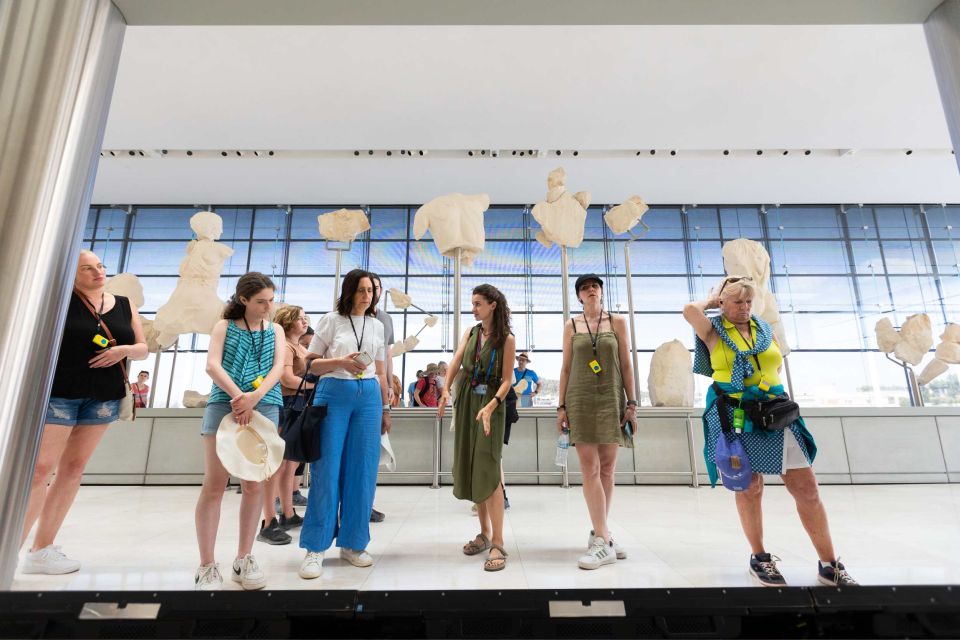
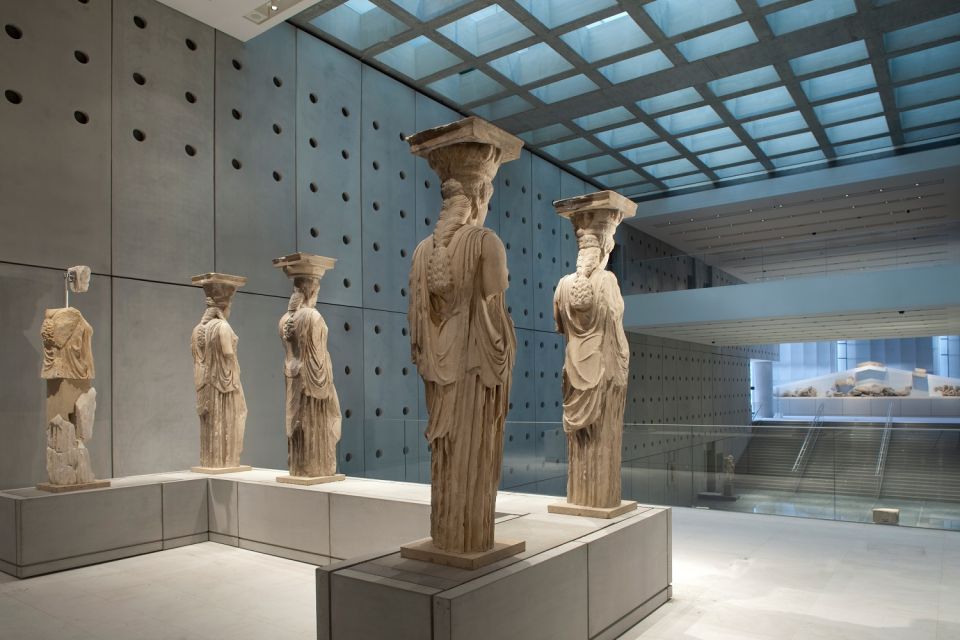
What I like most is how the tour pairs the ruins with the museum. The Acropolis Museum helps you connect what you see on the hill to the objects recovered from the slopes, with original pieces shown using natural light and excavation areas visible under glass.
One caution: the walk is not for everyone. This is a moderate-difficulty climb with uneven, sometimes slippery marble, and it’s not suitable for wheelchairs or people with mobility impairments.
In This Review
- Key things I’d bookmark before you go
- Early Morning Start: Why the first light matters at the Acropolis
- Meeting Point and Early Access: Getting inside without losing your day
- Climbing the Hill: Arch of Hadrian to Theatre of Dionysus
- Propylaea and Temple of Athena Nike: The entrance you should not rush
- Parthenon and Erechtheion: What to look for in the 30-minute centerpiece
- Time for photos and a breather: Making the free 30 minutes work
- Walking down toward the Acropolis Museum via Dionysiou Areopagitou
- Acropolis Museum: How the objects make the ruins click
- Price and value: Is $35 a fair deal for Acropolis + museum?
- What you’ll actually experience: pacing, group feel, and the meaning of stops
- Who should book this early morning Acropolis + museum tour
- Should you book this tour? My practical take
- FAQ
- What’s the duration of the tour?
- Does this include the Acropolis Museum?
- Is there an option that includes entrance fees and skipping the ticket line?
- What language is the tour offered in?
- What should I bring?
- Is it suitable for people with mobility impairments?
Key things I’d bookmark before you go
- First-light entry means cooler temperatures and less crowd pressure on the stairs
- Licensed, professional guidance turns myths and architecture into something you can actually picture
- Parthenon, Propylaea, and Temple of Athena Nike get focused attention instead of being rushed past
- Museum galleries + natural light help you see surviving masterpieces in a more meaningful way
- Audio devices are included, so you can keep up even when the group is moving
- Wear grip-friendly shoes—the hill is steep and the stone can be slick
Early Morning Start: Why the first light matters at the Acropolis
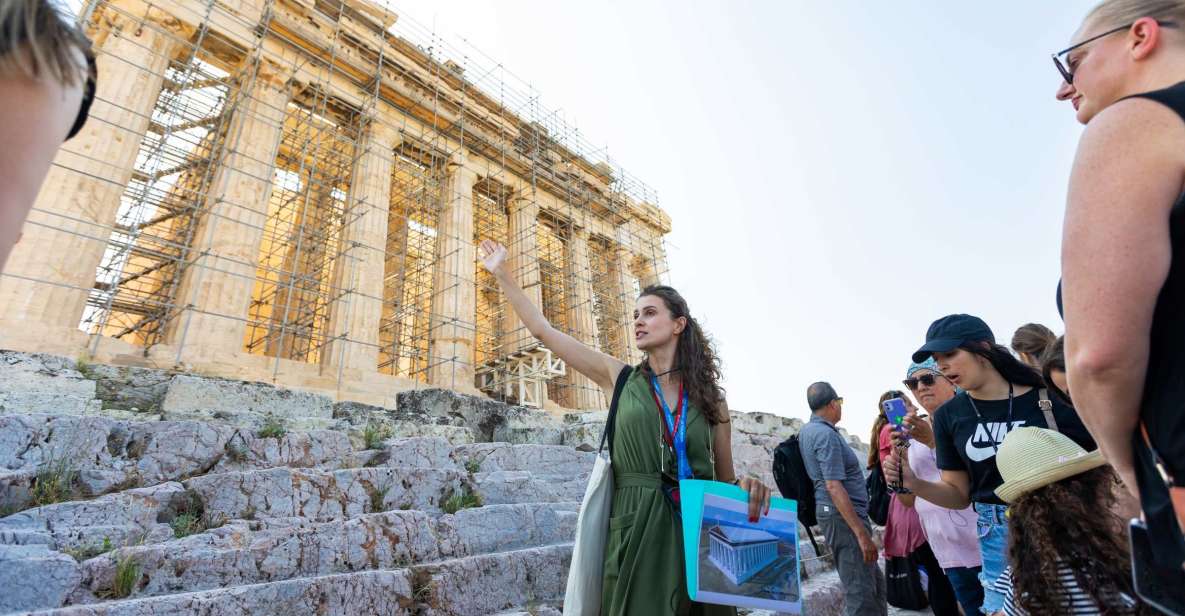
The Acropolis hits different before the city fully wakes up. You’ll feel it the moment you start climbing: the light is softer, the heat hasn’t turned Athens into a pressure cooker yet, and the crowds are still thinning out. The result is simple—more time to look up at the Parthenon details and actually absorb the scale.
This is also where a guided approach earns its keep. At sunrise-ish hours, the sites can look confusing if you don’t have context. The guide’s job is to put everything in order: where you are, what you’re seeing, and how the story connects across centuries.
If you love photos, this timing helps a lot. You’ll get panoramic city views from the top, plus chances for camera stops without feeling like you’re constantly dodging other groups.
You can also read our reviews of more guided tours in Athens


Meeting Point and Early Access: Getting inside without losing your day
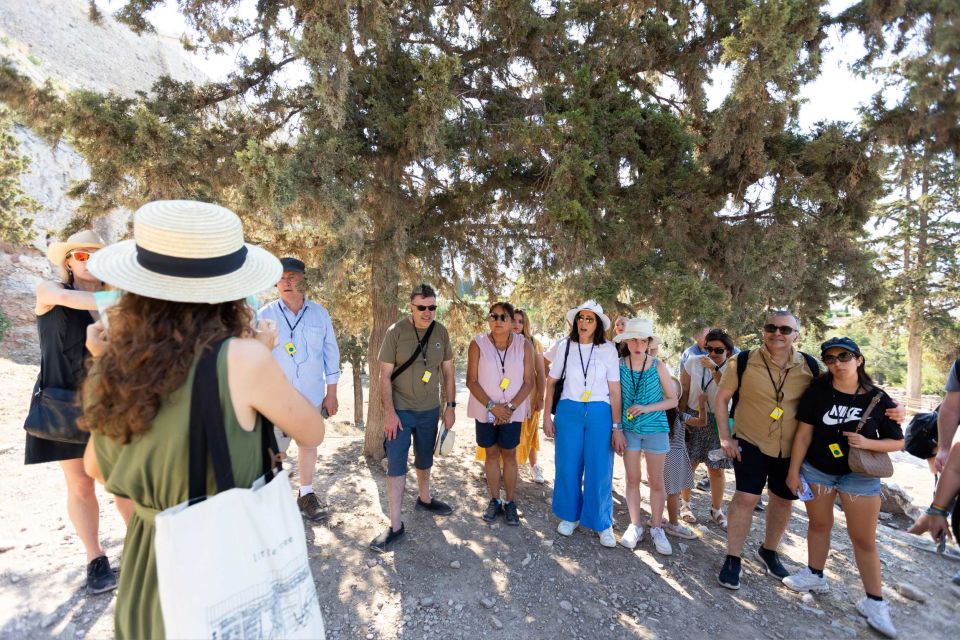
The tour meets at a location that can vary by option, so plan to double-check where you’re directed when you book. There’s no hotel pick-up/drop-off, which matters in Athens—getting yourself there early and on time is part of the experience.
Here’s the practical upside: the activity includes early morning access to both the Acropolis and the Acropolis Museum. If you choose the option that includes it, you may also get skip-the-ticket-office-line access, which helps you avoid wasting minutes standing around.
You should also know the tour runs about 210 minutes (around 4 hours). That sounds short until you factor in steep walking, stops, and museum time. This schedule is built to hit key highlights without turning the day into a full marathon.
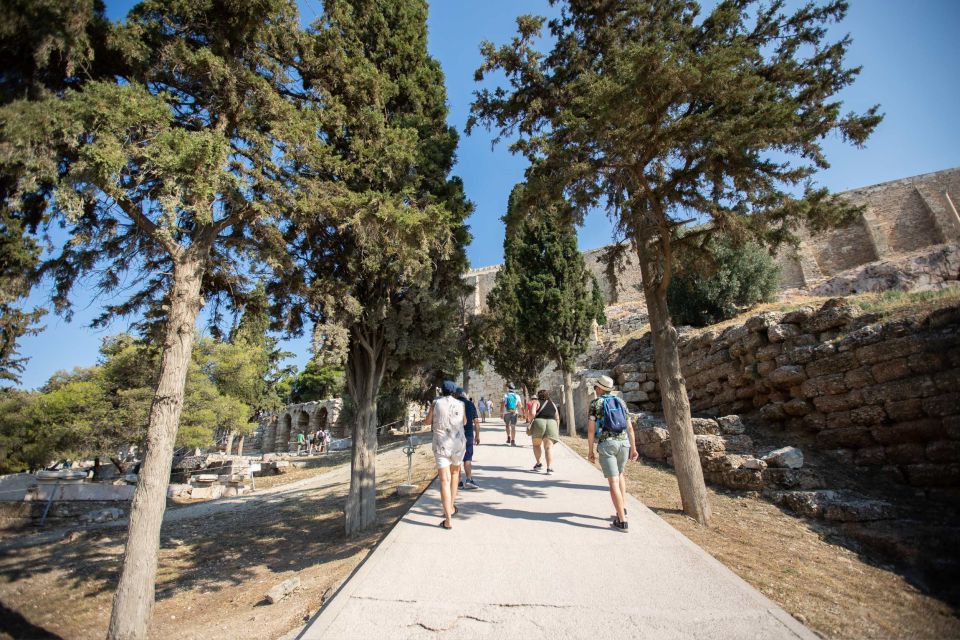
Climbing the Hill: Arch of Hadrian to Theatre of Dionysus
Your route starts with a quick stop at the Arch of Hadrian—a short, guided sightseeing moment that sets you up for what’s ahead. Then you’ll move into the theatrical side of ancient Athens at the Theatre of Dionysus.
This stop is more than a name on a map. You’ll learn about the Dionysus Sanctuary and Theatre and how they connect to ancient drama. That matters because it gives the Acropolis more than one identity. Yes, it’s a major religious and political site—but it’s also tied to performance, storytelling, and public life.
Next comes the Odeon of Herodes Atticus. You’ll get guided commentary while walking through, which helps you notice why certain structures were built where they were. Even when you only spend around 10 minutes at each named stop, the guide’s explanations make those minutes count.
In real terms, this part of the tour helps you start “reading” the hill. Instead of seeing scattered ruins, you start noticing patterns: where civic life, worship, and spectacle overlap.
Propylaea and Temple of Athena Nike: The entrance you should not rush
As you reach the upper part of the hill, your attention naturally sharpens. The tour brings you to the Propylaea, described as the impressive marble gate that frames the entrance to the Acropolis.
That framing is the point. You’re not just moving from lower Athens to the citadel—you’re crossing a symbolic threshold. The guide’s storytelling here helps you understand why the entrance and sequence of viewpoints mattered to people in antiquity.
Right after that, you’ll visit the Temple of Athena Nike, dedicated to the goddess of wisdom and war. This is one of those stops where the guide’s myth-and-meaning approach can really change your experience. The architecture becomes easier to appreciate when you know what it was meant to honor.
And since you’ll be stopping for photo opportunities, you’ll also be able to take in how the Parthenon sits in relation to everything around it. That’s hard to appreciate if you only look at one monument at a time.
Parthenon and Erechtheion: What to look for in the 30-minute centerpiece
The Parthenon is the headline, and you’ll get about 30 minutes here with guided time. What makes that time valuable is the way the tour treats it like a system: dedication to Athena, the role of the temple, and why this site became so iconic.
Instead of treating it like a static postcard, you’ll be encouraged to notice relationships—between structures, viewpoints, and the hill itself. Even if you’re not an architecture expert, the guide’s explanations help you see why the Parthenon feels so carefully positioned.
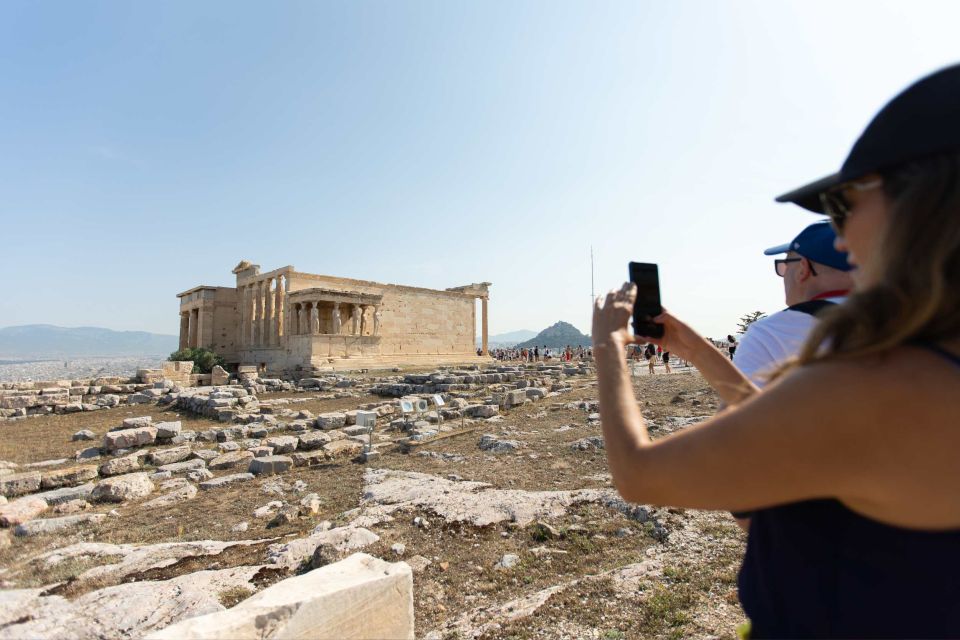
After the Parthenon, you’ll visit the Erechtheion. The tour includes guided time (about 10 minutes), which is enough to understand why it’s important and how it fits into the broader Acropolis story—even if you don’t have hours to spend on every corner.
One more thing: the terrain can be a workout. People who are short on stamina still tend to manage better when the group moves steadily with frequent explanation stops rather than nonstop hiking. If you’re prone to sore feet, pack for it—comfortable shoes with good grip are not optional here.
You can also read our reviews of more museum experiences in Athens



Time for photos and a breather: Making the free 30 minutes work
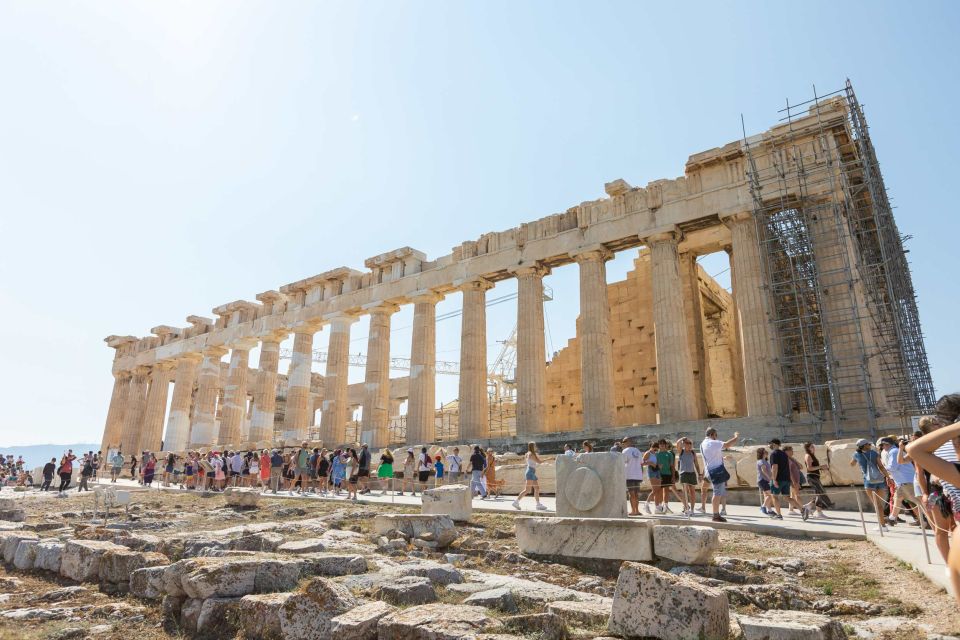
After hitting the biggest structures, the tour builds in a break time / free time segment with photo stops and some personal wandering (about 30 minutes). This is where you decide what you want most:
- Take a second round of photos from the places the guide points out
- Spend time simply looking at the city spread out below
- Revisit the view lines you liked most earlier
I find that free time is only useful if you’ve already gotten context. Since the guide spends the earlier portion explaining myths and how the monuments connect, you’re not staring at random ruins—you’re spotting relationships.
Also, expect the hill to feel longer if you’re sensitive to heat. The early start helps, but you’ll still want water on hand and a hat if the sun comes out.
Walking down toward the Acropolis Museum via Dionysiou Areopagitou
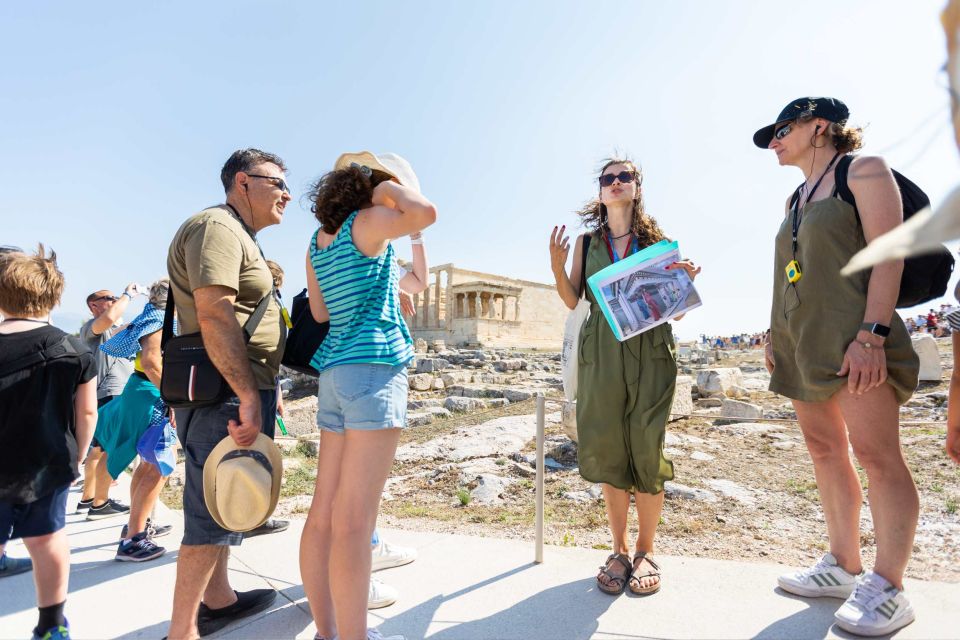
Then comes the transition: a walk along Dionysiou Areopagitou with sightseeing time and guided commentary (about 15 minutes). This section matters more than it sounds.
It gives your legs a small reset and helps your brain switch from outdoor “ruins mode” to indoor “objects mode.” If you go from stones to museum artifacts without that mental shift, the museum can feel like information overload.
The route also helps you understand how the Acropolis sits above the city. You start linking streets and viewpoints to the monuments rather than treating everything as separate stops.
Acropolis Museum: How the objects make the ruins click
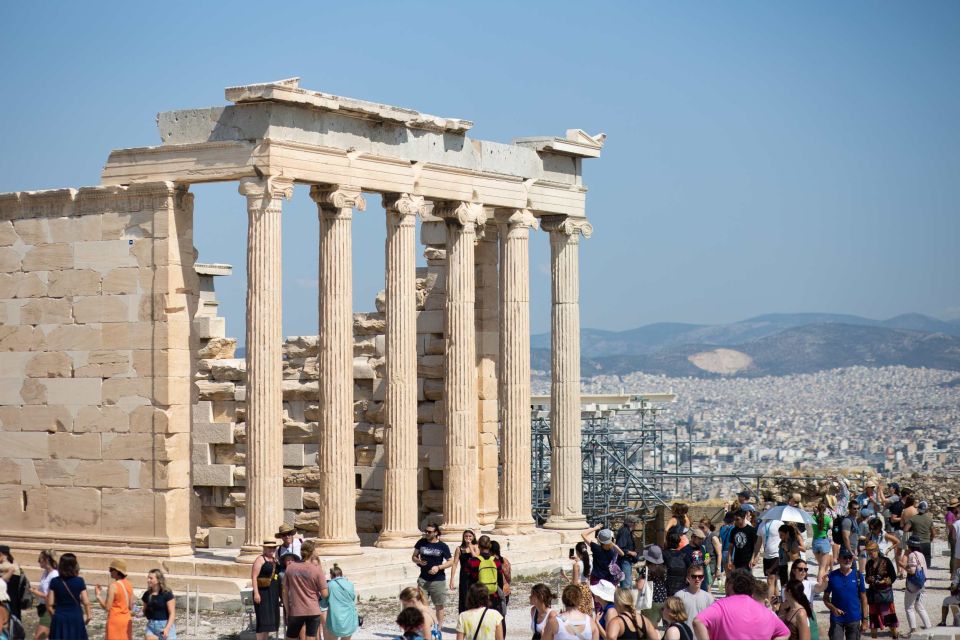
This tour’s museum portion is the payoff for a lot of people. You’ll spend about 1.5 hours with guided access to the Acropolis Museum, and you’ll move through several galleries rather than just rushing through the highlights.
A few things make the museum especially useful here:
1) Artifacts retrieved from the slopes
You’ll see archaeological treasures that can run from pre-historic times, which makes the Acropolis feel like a living site over time rather than one moment in history.
2) Original surviving masterpieces displayed with natural light
This is a big deal. Lighting changes how surfaces and details read. When pieces are shown in a way that matches how light would naturally fall, you tend to understand them better.
3) Excavations visible under glass floors and walkways
This gives you that rare bonus: you’re not only looking at recovered objects. You’re also seeing traces of what was found and where.
If you care about the story behind the restoration and the recovery work, this is where it becomes real. It’s also helpful if you’ve ever visited a ruin and wondered what the original version looked like—this museum helps you form that mental picture.
One caution to keep in mind: museum access can depend on the ticket option you choose. Some people have reported disappointment when a specific area they expected to see wasn’t accessible without an additional ticket. So, if a particular museum area matters to you, confirm what your booking includes.
Price and value: Is $35 a fair deal for Acropolis + museum?
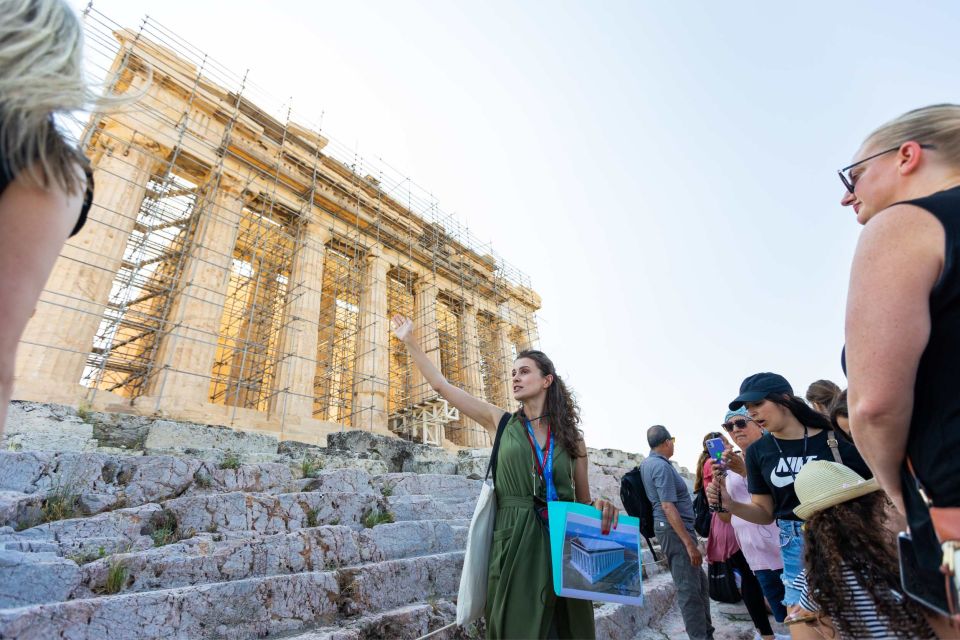
At $35 per person for roughly 4 hours, this tour is priced like a solid “high-impact” activity rather than a luxury add-on. The value isn’t just the price tag—it’s what you get for it.
You’re paying for:
- Professional, licensed guide time on both the hill and inside the museum
- Early access so you’re not stuck in peak-hour lines and heat
- Walking tour structure that connects viewpoints and monuments
- An audio device so you can keep up without crowding the guide’s shoulder
If you were to do this on your own, you’d still need museum time, timed entry planning, and a way to understand what you’re seeing. Most people end up spending more than they expected once they start buying multiple tickets and doing trial-and-error around entry times.
The biggest “value lever” is timing. Doing this early means fewer headaches: less crowd pushing, better comfort, and more ability to pause for photos and explanations.
Just remember: food and drinks aren’t included. Bring water and plan to eat after.
What you’ll actually experience: pacing, group feel, and the meaning of stops
The tour is built around stops that balance history with movement. Many of the site visits are shorter, like 5–15 minutes each, then you get longer centerpiece time at the Parthenon and the museum.
That pacing helps you avoid the common Athens problem: you spend energy walking uphill without gaining clarity. Here, you’re getting context as you go—especially around the main landmarks:
- Propylaea as the entrance frame
- Temple of Athena Nike tied to wisdom and war
- Parthenon as the major dedication to Athena
- Erechtheion as the next anchor point
Group size can vary, but you’re typically in a small enough cluster to move together. If you’re the kind of traveler who likes to ask questions, the guided format usually works better than trying to interpret everything solo while everyone else queues behind you.
Also, the guide will be managing the group on steps and uneven stone. In practice, that means you’ll get reminders to watch footing and keep the group moving safely—something you’ll appreciate once you’re on the marble.
Who should book this early morning Acropolis + museum tour
This tour fits best if you want:
- A first-time Athens experience with must-see highlights
- Story-driven explanations that connect myths, architecture, and objects
- An efficient plan that includes both the hill and the museum
It may be less ideal if you:
- Need wheelchair-friendly routes (this is not suitable for wheelchairs)
- Have mobility limitations that make steep ascents hard
- Want a fully self-paced wandering visit with zero structure
If you’re traveling solo, this kind of guided structure can be reassuring. You’re not left to figure out every jump in interpretation, and you can focus on enjoying the places instead of managing logistics.
Should you book this tour? My practical take
Book it if you can handle a steep, moderate walk and you want the Acropolis to make sense fast. The early start is the difference between a painful slog and a rewarding morning, and pairing the hill with the museum is a smart way to understand what you’re seeing.
Skip or switch to a different format if you need fully accessible terrain or if you dislike guided tours on principle. Also, if you’re very specific about which museum areas you want to see, double-check what’s included with your ticket option so you don’t end up disappointed about an area that requires separate access.
Overall, at $35 for a guided, timed-entry-style Acropolis morning plus museum time, this is a strong value way to experience one of UNESCO’s biggest legends—without wasting your limited energy.
FAQ
What’s the duration of the tour?
It runs about 210 minutes, roughly 4 hours, including time at the Acropolis and the Acropolis Museum.
Does this include the Acropolis Museum?
Yes. The activity includes early morning access to the Acropolis and the Acropolis Museum, plus a guided tour at the museum for about 1.5 hours.
Is there an option that includes entrance fees and skipping the ticket line?
Some booking options may include skip-the-ticket-office line access and entrance fees to the Acropolis. If you choose an option without entrance tickets, you’ll need to purchase tickets before entering with your group.
What language is the tour offered in?
The live guided tour is available in English and Spanish.
What should I bring?
Bring your passport or ID card, comfortable shoes, a sun hat, and water.
Is it suitable for people with mobility impairments?
No. The tour is not suitable for wheelchair users or people with mobility impairments due to the steep, demanding climb and uneven terrain.




More Guided Tours in Athens

More Tours in Athens



More Tour Reviews in Athens
- All Day Cruise -3 Islands to Agistri,Moni, Aegina with lunch and drinks included
★ 5.0 · 4,958 reviews