REVIEW · ATHENS
6 Day Religious & Classical Tour of Thermopylae, Meteora, Delphi, Olympia, Mycenae, Nafplio, Epidaurus, ancient Corinth From Athens
Book on Viator →Operated by Ancient Greece Tours & Transfers · Bookable on Viator
History moves fast when you stop getting lost. This 6-day religious and classical circuit is built around big-name sites—Thermopylae, the oracle at Delphi, and the ruins of Olympia—without the stress of juggling buses or drivers yourself. I like the comfort and timing of a private luxury vehicle with hotel pickup, and I also like the practical promise of skip-the-line tickets on request so you spend more time looking and less time waiting. One drawback to plan around: entrances, museums, and licensed on-site guiding are not included, so you’ll want to budget for site tickets and bring gear for the dress code (no shorts or sleeveless tops in worship places).
What makes this tour feel especially workable is the hands-on driver approach. The tour is private, so the plan doesn’t have to feel rigid, and the company’s messaging emphasizes quick answers and real flexibility. In fact, one guide mentioned by name—Tas—was highlighted for adjusting to interests and even handling small surprises for a birthday, which tells you the trip is being run by people who pay attention, not a script that has to be followed no matter what.
If you like your Greece with meaning and good pacing—religious sites, classical archaeology, and a few real town breaks—this route is a strong match.
In This Review
- Key things to know before you go
- Thermopylae: Leonidas, the museum, and why the springs matter
- Meteora monasteries from Kalambaka and Kastraki: two days of hanging stone
- Delphi: Apollo, the oracle complex, and the view over Itea
- Olympia: Zeus, Hera, and museums that explain why the Olympics began
- Nafplio after the ruins: Palamidi views, fortresses, and a waterfront reset
- Epidaurus theatre acoustics + Mycenae’s gold-age scale
- Ancient Corinth, Acrocorinth, and the canal: faith routes and trade routes
- Price and value: what $2,358.13 gets you (and what you should budget)
- Who this tour suits best (and who might want a different style)
- Should you book this Athens-to-Corinth classical tour?
- FAQ
- Is this tour private or shared?
- Do you get hotel pickup and drop-off in Athens?
- Is accommodation included in the price?
- Are entrance fees included for museums and archaeological sites?
- Are skip-the-line tickets included?
- Do I need a licensed guide inside the sites?
- What about WiFi and water on the road?
- What is the dress code for worship places and selected museums?
- What is the cancellation policy?
Key things to know before you go

- Thermopylae + the museum + the hot springs: you get the battle story and the healing-spa angle in the same day, which is a rare combo.
- Meteora by monasteries, not just views: you’re scheduled for multiple Hanging Monasteries over two days, plus a Meteora sunset moment.
- Delphi hits your senses: oracle mythology, the Sanctuary of Apollo, and the museum’s masterpieces in one flow.
- Olympia is more than ruins: you also get museums that explain the Olympic idea, not just stones.
- Nafplio is the palate cleanser: castles, squares, and waterfront wandering after long days in archaeological sites.
- Ancient Corinth connects theology to engineering: Apostle Paul locations plus the Corinth Canal as a 19th-century trade workaround.
Thermopylae: Leonidas, the museum, and why the springs matter
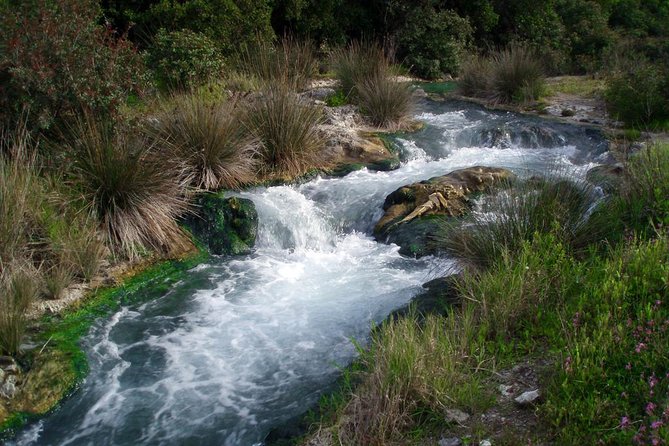
Thermopylae is one of those places where the scale feels human. You’re not trying to cover an entire city—this is about a narrow passage, a fight that became legend, and the kind of strategic geography that still makes sense when you stand there.
The tour’s stops here are smartly chosen:
- You start with the Battle of Thermopylae context and the mythology layer around the Gates of Fire, tied to hot sulphur springs and the ancient idea of gateways to the underworld.
- Then you hit the Leonidas monument made in 1955, including that brass Spartan king sculpture with spear and shield. It’s the kind of modern tribute that makes you pause and think about how persistent these stories are.
- Next is the Thermopylae museum, described as innovative and focused on the 480 BC battle that shifted Greek and Western history.
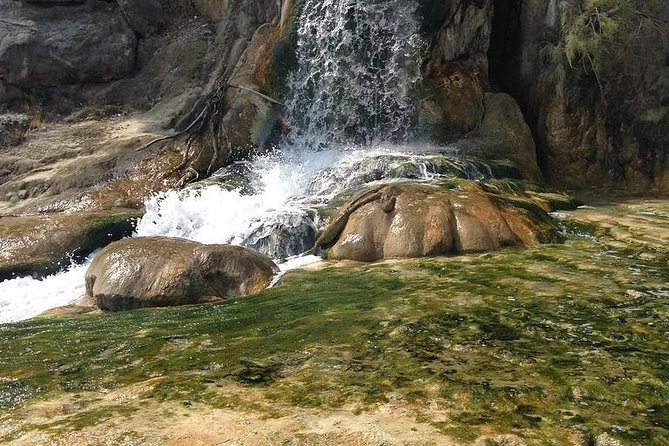
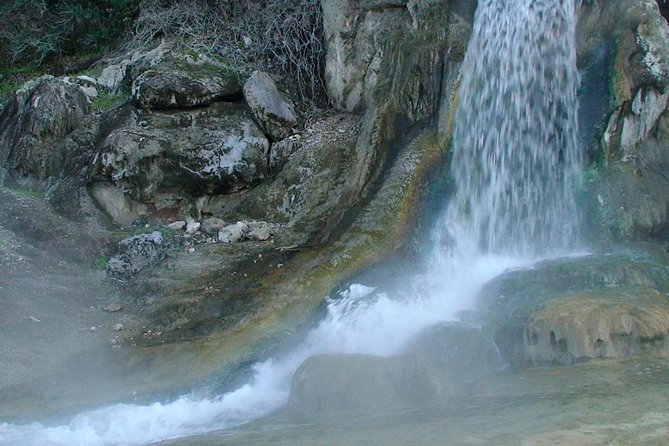
Then comes the most unusual part for a classical-focused day: the hotsprings. The tour frames it as a healing-spa style stop with hydrotherapy facilities centered on balneotherapy, plus a detail that 34 springs have been officially recognized out of 60 pending. If you’re the type who likes your “serious history” to include a recovery break, this day is built for you.
Practical note: the tour requires covered knees and shoulders at places of worship and selected museums. Bring something you can throw on quickly.
You can also read our reviews of more tours and experiences in Athens

Meteora monasteries from Kalambaka and Kastraki: two days of hanging stone
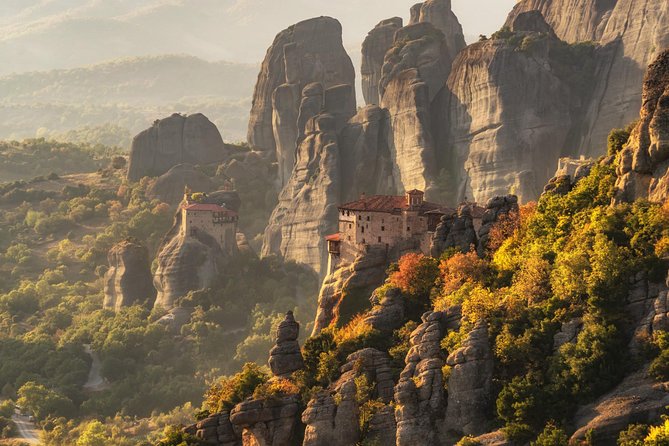
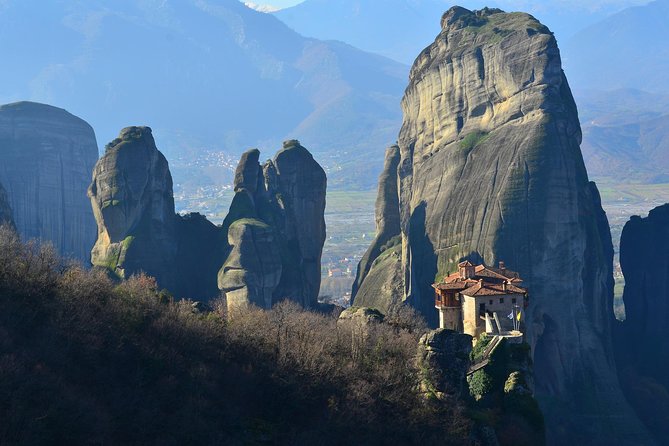
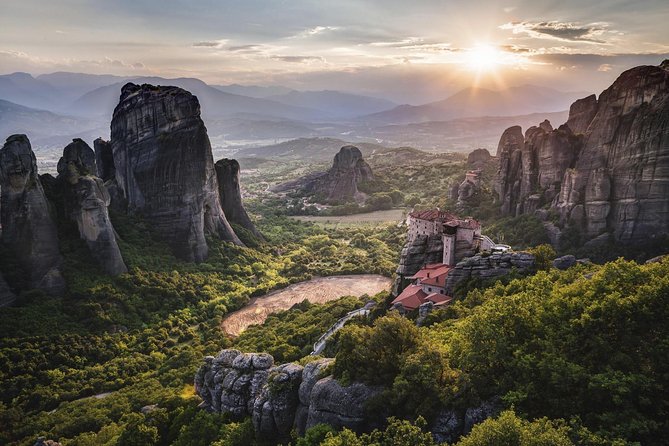
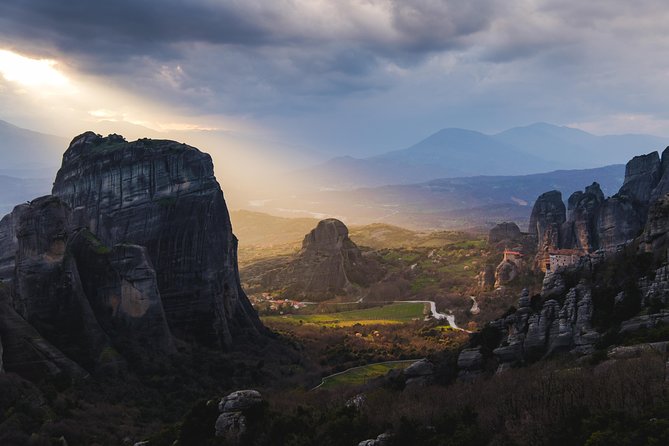
Meteora is the kind of place that can look like a postcard from the road. But what makes it more satisfying on this tour is that you’re not treating it like a single viewpoint stop. You’re scheduled for multiple monasteries across two days, which is how you avoid feeling like you only got one angle of the same view.
Day 1 focuses on the “Hanging Monasteries” experience with 1 to 2 monasteries, plus time for town wandering in Kalambaka and Kastraki. You also get a Meteora sunset moment. Sunset here isn’t just a nice-to-have; it changes the color of stone and sky fast, and your brain locks in the scale.
Day 2 expands the monastery list. The tour includes visits to monasteries such as:
- St Nicolaos
- Rousanou
- Varlaam
- Metamorphosis Sotiros (Grand Monastery)
- St Trinity
- St Stefanos
You’ll also have lunch in a traditional taverna in Kalambaka or Kastraki.
What I like about this plan: you’re given enough time to move through the route without turning Meteora into an all-day sprint. What to consider: Meteora days can be physically demanding because monasteries are on rugged terrain and require walking (and sometimes stairs). If you’re traveling with mobility limits, it’s worth asking about the exact monasteries and the walking involved before you finalize.
Delphi: Apollo, the oracle complex, and the view over Itea
Delphi is where Greece stops being just pretty ruins and starts feeling like a full belief system. This stop is built around the ancient sanctuary that made important decisions through the Pythia (oracle). The tour also calls out Delphi as the navel or center of the world, anchored by the Omphalos.
You’ll spend time at:
- The Delphi archaeological site (UNESCO World Heritage), including the Temple of Apollo, the Ancient Theater, the Stadium, the Athenian Treasury, the Gymnasium, and the Sanctuary of Athena Pronaia.
- The Delphi Archaeological Museum, where many key artifacts are collected.
The museum details matter here. You’re guided toward some iconic pieces like:
- The Naxian Sphinx (dated to 560 BC).
- Metopes of the Athenian Treasury, with scenes involving Theseus, the Minotaur, Heracles, and other mythic battles.
- The Omphalos concept.
- Kleobis and Biton (kouros-type statues).
- The Charioteer complex.
- Statue of Antinoos, tied to Roman-era taste revived in the 2nd century AD.
You’ll also have time for lunch with a view—described as enjoying lunch on the caldera overlooking Itea and Amfissa.
A realistic drawback: Delphi is popular, and museums and sites require timed attention even with skip-the-line tickets on request. If you hate museum crowds, plan to go slow inside and take breaks when you can.
Olympia: Zeus, Hera, and museums that explain why the Olympics began
Olympia is one of the few archaeological areas where you feel the theme instantly: sports, ritual, and a culture that turned athletics into civic identity. The tour frames it around the original Olympic Games founded in the 8th century BC, and then walks you through the ruins with a clear narrative.
Key stops include:
- Temple of Zeus (a Doric temple, 2nd quarter of the 5th century BC).
- Temple of Hera (Heraion), dating to around 590 BC.
- The Philippeion, a circular structure dedicated to Zeus by Philip II after Chaironeia, with completion tied to Alexander the Great.
- Athletic structures like the Hippodrome and later Stadium areas.
- The Palaestra (part of the gymnasium complex).
You also get the artistry side through the Workshop of Pheidias, associated with the gigantic chryselephantine statue of Zeus—listed as one of the Seven Wonders of the ancient world.
Then the tour makes Olympia more useful for modern visitors: the museums. You’re offered time at:
- The Archaeological Museum of Olympia.
- The Museum of the History of the Olympic Games in Antiquity (since 2004).
- The Museum of Archimedes, focused on replicas and interactive elements tied to his inventions.
That last museum can surprise people. If you’re thinking this tour is only about temples and stone, Archimedes adds a “science brain” break that still fits the ancient Greece theme.
There’s also an optional dinner stop in Olympia—La Belle Helene, described as home cooked Greek meals and a meeting with Konstantina. If you want one meal to feel like a local rhythm rather than another restaurant hunt, it’s a nice option.
Nafplio after the ruins: Palamidi views, fortresses, and a waterfront reset
After several heavy historical stops, Nafplio works like a reset button. The tour drops you into a seaside town with small cobblestone streets, a dramatic waterfront, and fortresses that make you understand why people wanted control of this harbor.
You’re given several main highlights:
- Palamidi Castle on a hill with a commanding view (noted as 999 steps).
- Bourtzi, the water fortress in the harbor.
- Freedom Square, tied to the War of Independence and French support.
- Constitution Square and the First Hellenic Parliament site in a historic area near Syntagma Square.
- Churches and old-town scenes like Anastasios of Nafplia and St. Spyridon (with the assassination of Ioannis Kapodistrias mentioned as taking place outside the church).
You’ll have time for lunch at traditional tavernas and for snacks you can’t really beat in Greece:
- Antica Gelateria di Roma for gelato and Italian treats.
- Pergamonto for loukoumades (honey or chocolate puff balls with nuts).
What I like here: the tour doesn’t just “pass through” Nafplio. You get enough time to feel like a person in a town, not a person in a shuttle.
- All Day Cruise -3 Islands to Agistri,Moni, Aegina with lunch and drinks included
★ 5.0 · 4,958 reviews




Epidaurus theatre acoustics + Mycenae’s gold-age scale
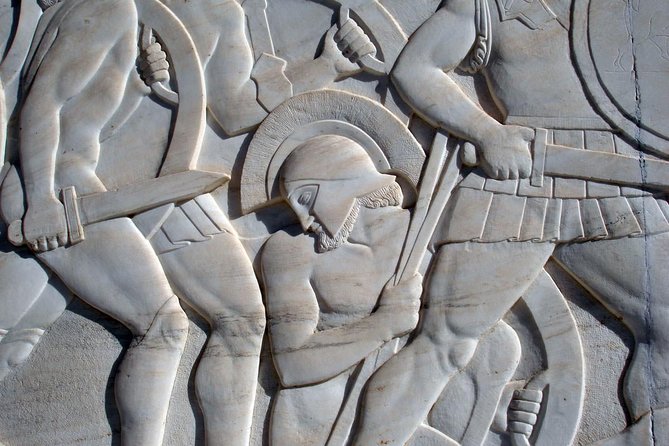
This is where the tour shifts from “Greek religion and myth” into “Greek power and culture.” It’s a great double header because Epidaurus and Mycenae feel very different.
Epidaurus starts with the amphitheatre, famous for classic construction and astounding acoustics. You get the chance to think about what it meant to stage tragedies and comedies in a space built for voice carry. The tour lists performers tied to the era: Euripides, Sophocles, Aristophanes, Aeschylus.
You also have the Epidaurus Archaeological Museum, known for reconstructions and columns with inscriptions. Then there’s the sanctuary side:
- Asclepius, described as a medical retreat dedicated to the demi-god of medicine.
If you like the way the Greeks blended religion, healing, and public life, Asclepius fits your theme.
Then you head to Mycenae, a site tied to the world behind Homer’s epics. Mycenae is described as rich in gold and central to the late Bronze Age, and the tour’s stop list reflects that:
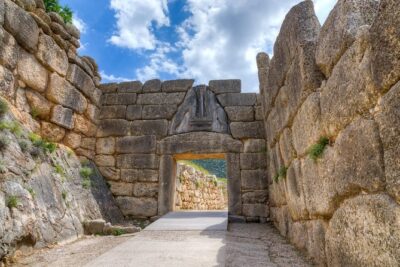
- Lions Gate (main entrance of the citadel).
- Grave Circles A and B (royal cemeteries).
- Cyclopean walls made of huge limestone boulders.
- The Royal Palace, including the Throne Room, Grand Staircase, and official areas.
- The Treasury of Atreus (a tholos or beehive tomb).
- The Tomb of Clytemnestra.
- The Mycenean Archaeological Museum with gold grave goods, burial masks, jewelry, weapons, idols, and frescoes.
A consideration: Mycenae can feel like a lot of walls and tombs back-to-back. Build in a slow pace and pick one or two spots to really study—the gate and one tomb are enough to get the “scale shock” without burning out.
Ancient Corinth, Acrocorinth, and the canal: faith routes and trade routes
This last stretch blends sacred sites, apostolic history, and modern engineering—so your brain gets to switch gears.
You start with Acrocorinth, the acropolis of ancient Corinth. The tour frames it as a monolithic rock over the ancient city, with a complex wall system and views. Stops include:
- Circuit walls and towers.
- Peirene Spring, located within the walls.
- Traces of a Temple of Aphrodite on the higher peak.
- The Frankish Tower, with remains of churches, mosques, houses, fountains, and cisterns.
- Views of Geraneia Mountain and the Corinthian gulf.
Then you move down to ancient Corinth, where the tour includes:
- The Hadgimoustafa spring (Ottoman-era fountain).
- The Ancient Corinth Archaeological Museum.
- The Temple of Apollo (built around 560 BC, with monolithic columns described as rare in the ancient world).
- The Agora, with shops, small temples, altars, and the Bema, where Apostle Paul addressed Corinthians in 52 AD.
- Roman buildings.
- Theatre and Odeon / Asklepieion.
- The Lechaion road toward the port.
You also visit the St. Paul’s church, with a mosaic mural describing Saul’s vision as he traveled to Damascus.
After all that history, you get a hard pivot to engineering with the Corinth Canal, described as a major 19th-century project that played a role in Mediterranean trade.
Finally, you head to Kechries Port tracing St Paul’s footsteps, plus a lunch option by the Saronic sea at the Baths of Helen of Troy village. Then you return to Athens.
If you want a single word for why this ending works: variety. If you want a single practical note: wear shoes that handle uneven ancient ground.
Price and value: what $2,358.13 gets you (and what you should budget)
At $2,358.13 per person for an approximately 6-day private tour, the big value is the structure: private transportation, pickup and drop-off, and a driver with in-depth Greek history commentary.
Included value you’ll feel right away:
- Fully private multi-day setup (only your group).
- Professional tour drivers with in-depth knowledge.
- Hotel pickup and return in Athens.
- Private luxury vehicle with WiFi, bottled water, refreshing wipes, and even fresh handmade Greek biscuits.
- Skip-the-line tickets on request.
What you should budget separately:
- 5 nights of accommodation (the tour offers hotel reservation upon request, but lodging is not included in the price).
- Entrance fees to sites and museums.
- Food and drinks.
- A licensed tour guide who accompanies you into sites and museums is also additional cost on request.
So is it worth it? For me, it’s worth considering if you want:
- A smooth, private route without rental car headaches.
- Someone else handling drive logistics between major regions.
- Flexibility baked in, rather than a pack-and-go group bus.
If you’re traveling as a family or a small group and you’ll actually use the private time well, this kind of pricing starts to make more sense than it sounds on the first read.
Who this tour suits best (and who might want a different style)
This fits best if you:
- Want religious and classical Greece in one coherent loop: Thermopylae → Meteora → Delphi → Olympia → Nafplio/fortress life → Epidaurus/Mycenae → Corinth.
- Like having a driver who explains what you’re seeing and keeps your day moving.
- Prefer comfortable transport and fewer logistics chores.
- Want real town breaks like Nafplio, not only ruins.
You might want to think twice if you:
- Hate paying extra for site entrances and want everything bundled.
- Have a hard time with walking, stairs, and uneven ancient terrain (especially at Acrocorinth and some Meteora approaches).
- Want a full licensed archaeologist inside every museum and site without extra costs. (That option is available, but it’s not automatically included.)
Good news: you’ll have guidance on dress code—covered knees and shoulders at worship and selected museums. Also, pets are allowed and service animals are allowed.
Should you book this Athens-to-Corinth classical tour?
If your ideal Greece trip mixes meaning and variety, I’d book it. You’re getting the big pillars—Thermopylae, Delphi, Olympia—plus the “myth-meets-people” detours in Meteora and Nafplio. The private logistics and driver-led storytelling are the core reasons this feels worth your time.
I’d only hesitate if you want fully inclusive pricing (lodging, meals, entrances, and licensed site guiding all included) or if you don’t plan to bring suitable clothing for worship spaces. If you can handle those practicalities, this is the kind of itinerary that feels like you actually learned the place, not just drove past it.
FAQ
Is this tour private or shared?
It’s a private tour/activity. Only your group participates, and it uses a private luxury vehicle.
Do you get hotel pickup and drop-off in Athens?
Yes. Your driver/guide picks you up at your chosen Athens hotel lobby and returns you to your hotel at the end. If you’re staying in an AirBnb, the driver contacts you to meet at the building entrance.
Is accommodation included in the price?
No. The price does not include 5 nights of accommodation. The provider offers an option to help reserve hotels upon request.
Are entrance fees included for museums and archaeological sites?
No. Entrance fees to sites and museums are not included.
Are skip-the-line tickets included?
Skip-the-line tickets are available on request, but they are not guaranteed as part of the base inclusions.
Do I need a licensed guide inside the sites?
A licensed tour guide to accompany you into sites and museums is not included. You can request it for an additional cost.
What about WiFi and water on the road?
WiFi is available on board, and you’ll also get bottled water and refreshing wipes.
What is the dress code for worship places and selected museums?
A dress code is required: no shorts or sleeveless tops. Knees and shoulders must be covered for both men and women, or you may risk refused entry.
What is the cancellation policy?
You can cancel for free up to 24 hours in advance of the experience start time for a full refund. Changes made less than 24 hours before are not accepted.
More 6-Day Experiences in Athens
More Tours in Athens


More Tour Reviews in Athens
- All Day Cruise -3 Islands to Agistri,Moni, Aegina with lunch and drinks included
★ 5.0 · 4,958 reviews