REVIEW · ATHENS
Stargazing & Mythology of Paros Night Sky: Private Experience
Book on Viator →Operated by Andromeda Retreats & Travel G · Bookable on Viator
When the lights go down, Paros shows off stars. This private night sky session pairs Paros’s dark skies with Kay’s myth-and-science storytelling, plus wine and nibbles that keep the whole thing relaxed. The one catch is that your view depends on weather and moon phase, so plan for the possibility of patchier visibility.
I like that it is not just science talk from a distance. You get real explanation you can follow while you look up, and the vibe stays mellow outdoors rather than stiff or rushed. Start time is late, so it helps if your trip schedule can handle a 10:00 pm evening.
For this kind of stargazing, a little prep goes a long way. Bring your own binoculars, and if you want night photos, plan on a DSLR with a tripod. You’ll also want warm layers, because Paros evenings can cool off fast once the sun is gone.
In This Review
- Key things to know before you go
- Paros at 10:00 pm: why the night sky actually works
- Kay’s myth-and-science sky talk (with wine and nibbles)
- A look at Cyclades Paros skies: how the viewing session usually unfolds
- Bring binoculars, and use them the right way
- If you want night photos: DSLR + tripod and moon reality checks
- What makes this private tour feel different
- Price and value: is $299.82 per person fair for Paros stargazing?
- Weather, rain, and how to handle uncertainty
- Who this Paros night-sky tour suits best
- Should you book Stargazing & Mythology of Paros Night Sky?
- FAQ
- Where does the tour start?
- What time does the stargazing start?
- How long does the experience last?
- Is this a private tour?
- What is included in the experience?
- Do I need to bring binoculars?
- If I want night photos, what should I bring?
- What happens if it rains?
Key things to know before you go
- Paros light pollution is low, making stars and constellations easier to pick out
- Kay teaches with myth and modern science, tying northern hemisphere constellations to stories you may already know
- Wine and nibbles are included, so it feels like an evening outing, not a lecture
- Bring binoculars for the best viewing payoff
- Camera tips matter: DSLR + tripod helps if conditions cooperate
- Rain plans are built in, with full refund if the experience is canceled due to rain or rain forecast
Paros at 10:00 pm: why the night sky actually works
The magic here is simple: Paros gives you darker skies than most places around Athens and the big mainland towns. Less stray light means stars look sharper and fainter objects become easier to notice, even without advanced gear. That is why an expert guide matters too—if you know what you are looking at, you can find the patterns faster.
This experience starts at 10:00 pm and runs about 2 hours. That timing is practical because you get proper darkness, not that twilight haze when your eyes still struggle. You will also be out long enough to see how constellations shift as the night goes on, but not so long that you freeze or lose patience.
One practical note: moon phase can change everything. A bright moon can wash out the faintest stars, even in a good location. Your guide will still teach you the sky, but if your goal is photo-ready star fields, you’ll want conditions that leave the darkness intact.
You can also read our reviews of more private tours in Athens

Kay’s myth-and-science sky talk (with wine and nibbles)
What makes this stand out is the blend: Greek mythology on one side, contemporary science on the other. You are not forced to choose. You hear how ancient Greeks used stories to make sense of the heavens, then you connect that to what modern astronomy tells us about those same constellations.
Kay (yes, that name comes up for a reason) is the kind of guide who keeps the night flowing instead of feeling like a classroom. You get guidance on what is up there, why it matters, and how to interpret the sky in a way that feels doable. If your group includes people who are new to stargazing, this structure helps—someone can follow the stories while another person focuses on the star facts.
And then there are the extras that make the whole evening feel human: wine and nibbles. Food and a drink are not just a nice add-on here. They help you stay comfortable through the slower parts of stargazing, when you are waiting for your eyes to adjust and taking your time finding the next constellation.
A look at Cyclades Paros skies: how the viewing session usually unfolds
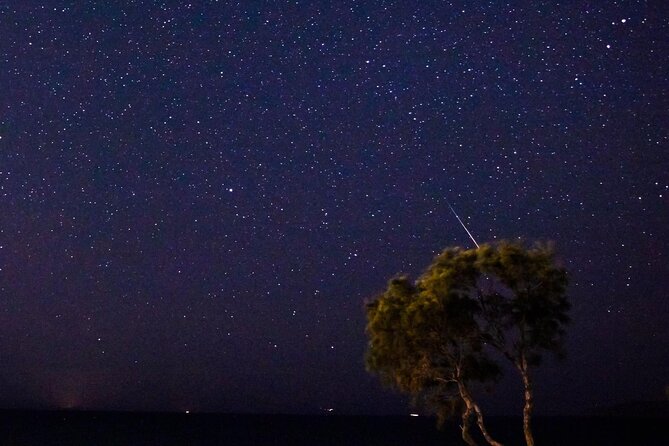
There is one core viewing block during the session—time spent at a serene spot on Paros with unspoiled sky conditions. That matters because stargazing works best when you are not switching locations every few minutes. You want your body settled, your eyes adjusted, and a stable vantage point to work through the night.
Expect the guide to lead you through the northern hemisphere sky. The point is not to memorize a map. It is to understand what you are seeing: how constellations act like sky signposts, how to locate them, and how mythology gives them a cultural layer you can remember later.
If clouds or visibility are less than ideal, the value still holds. Even when you cannot see everything clearly, the guide’s explanations keep the experience from feeling wasted. You may not get the perfect view of faint stars, but you can still learn the sky patterns and the story connections.
Bring binoculars, and use them the right way
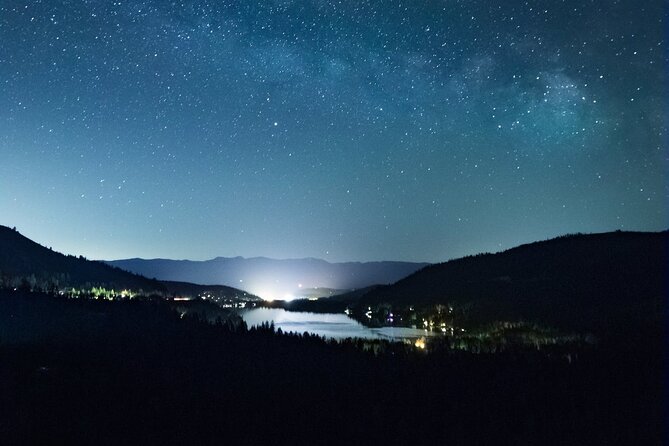
Binoculars are strongly encouraged, and for good reason. With dark skies, binoculars let you turn a vague smudge into an identifiable object. The experience is paced so you can look up, listen, and then check what you learned with your own eyes.
To get the most from binoculars, keep them ready rather than packed away. Staring at the sky works in cycles: look with your unaided eyes to catch the big pattern, then use binoculars to confirm details. When your eyes get used to the dark, the whole sky starts to look more organized.
If you do not have binoculars, you can still participate, but you are giving yourself a harder job. This is the kind of tour where one small piece of gear helps you feel successful fast.
If you want night photos: DSLR + tripod and moon reality checks
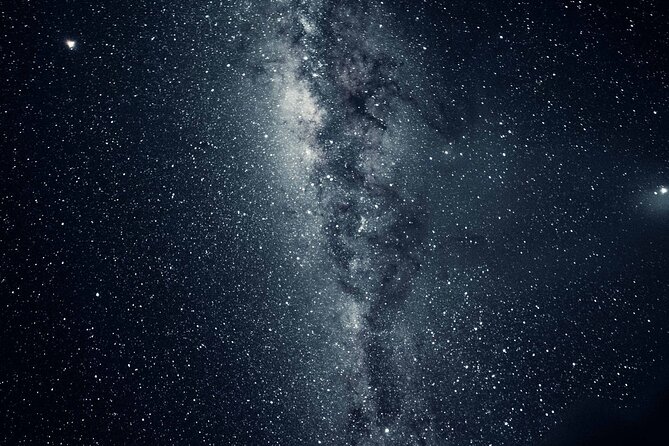
If your goal includes night pictures, you will want a DSLR camera and a tripod. The guidance here is practical: night photography depends on stable support, and even small camera shake can ruin a long exposure.
Also, be honest about conditions. Weather and moon phase can affect what you capture. A bright moon can make the stars less dramatic in your photos, while thin cloud cover can smear light sources and reduce contrast.
The best approach is to treat photos as a bonus, not the only purpose. Even if your images are not perfect, you will still take home the constellations and mythology connections that make the evening memorable.
You can also read our reviews of more evening experiences in Athens

What makes this private tour feel different
This is a private experience for your group. That changes the tone. You are not competing for attention, and you can ask questions without worrying about cutting into a shared itinerary. For stargazing, that matters because people learn at different speeds—some want the science first, others want the story hook.
The format also helps with comfort. Stargazing outdoors can mean long minutes of stillness. In a private setting, you can move at a pace that feels natural for your group, whether that is lingering over one constellation or asking for extra help finding your way.
You will start and end at the same meeting point: Anoussakis Market on an unnamed road near Drios, 844 00, Greece. The activity ends back where you started, which keeps logistics simple after a late-night event.
Price and value: is $299.82 per person fair for Paros stargazing?
At $299.82 per person for a roughly 2-hour private experience, the price is not low. But you are not just paying for someone to point at stars. You are paying for a guide who connects astronomy to Greek mythology, plus wine and nibbles, plus a dark-sky location setup.
The value is strongest if:
- you want a private format rather than a larger group
- your group includes both beginners and people who enjoy details
- you care about the story layer of Greek culture, not only the technical sky facts
It becomes less of a deal if you are mainly chasing star photos and you already have the gear and know the sky. In that case, you might use public viewing spots on your own. Still, even for experienced stargazers, the myth-and-science interpretation can add something personal you will not get from a phone app alone.
One more practical point: the tour is often booked about 95 days in advance on average. If your travel dates are fixed, it is smart to lock it in earlier rather than waiting.
Weather, rain, and how to handle uncertainty
This experience requires good weather. If rain shows up or rain is forecast, it can affect visibility. The good news: there is a built-in recovery plan. You get a full refund if the experience is canceled due to rain or a rain forecast.
That said, you should still prepare like you are going to the outdoors event you booked. Bring layers and something that handles damp air. Even if the night stays clear, Paros can feel cooler once the sun disappears and you settle in to watch.
If you are considering booking, I recommend you keep one backup mindset. Stargazing is weather dependent by nature. The guide can teach the sky in imperfect conditions, but visibility is what makes the stars look their best.
Who this Paros night-sky tour suits best
This fits you if you want an evening that blends culture and science. It is especially good for couples and small groups who want a calm, not-too-chaotic night with a guide who knows how to explain what you are seeing.
It also works well if your group has a mix of interests. The mythology angle gives context and emotion, while the science angle helps you understand what you are looking at in a grounded way.
Because service animals are allowed and most travelers can participate, it is broadly accessible for people who can stand outdoors and handle a late start. If you are sensitive to cold, just plan your clothing.
Should you book Stargazing & Mythology of Paros Night Sky?
Book it if you want a guided night sky experience that feels like a real evening out: dark skies on Paros, Kay’s myth-and-science explanations, and wine and nibbles included. You get structure, context, and a pace that helps you actually learn the constellations instead of just watching for a few minutes.
Skip it or think twice if your trip is inflexible and you cannot handle the weather reality. Moon phase and clouds can reduce what you can see, and late-night starts require a schedule that can handle it. Also, if you are expecting a cheap, casual activity, the private price will feel steep.
Still, for $299.82 per person, the combination of private attention, guided constellations, and a more cultural take on astronomy is where the value lives.
FAQ
Where does the tour start?
The tour starts at Anoussakis Market, Unnamed Road, Drios 844 00, Greece.
What time does the stargazing start?
The start time is 10:00 pm.
How long does the experience last?
It lasts about 2 hours.
Is this a private tour?
Yes. It is a private tour/activity, and only your group will participate.
What is included in the experience?
Your guide provides wine and nibbles, and they will talk you through the night sky.
Do I need to bring binoculars?
Yes. You are asked to bring your own binoculars for the best stargazing experience.
If I want night photos, what should I bring?
If you want to take night pictures, a DSLR camera with a tripod is recommended. Weather and moon phase can affect results.
What happens if it rains?
The experience requires good weather. If it is canceled due to poor weather or a rain forecast, you will be offered a different date or a full refund.
More Evening Experiences in Athens
More Private Tours in Athens
More Tour Reviews in Athens
- All Day Cruise -3 Islands to Agistri,Moni, Aegina with lunch and drinks included
★ 5.0 · 4,958 reviews