REVIEW · ATHENS
7-Day Grand Tour: Olympia, Delphi, Meteora, Thessaloniki
Book on Viator →Operated by CHAT Tours · Bookable on Viator
Classical Greece can feel spread out. This one-week route strings together major ancient sites and Meteora monasteries with hotels and meals handled for you. I like that the tour is built for history-and-myth fans who want results fast, and I also like that you get a proper professional guide with serious on-site context. The one drawback to watch: the days are long and some parts can feel a bit packed, with limited independent time at certain stops.
In practical terms, you’ll start from central Athens at Amalia Hotel, meet at 8:30 am, and ride in an air-conditioned bus with up to 40 travelers. You’re not just seeing ruins—you’re moving between Corinth Canal, Mycenae, Olympia, Delphi, and then up toward Thessaloniki and Macedonia-side highlights. If you’re hoping for a slow, flexible pace, this isn’t that kind of trip.
One more consideration: you’ll deal with a dress code at places of worship and selected museums (no shorts or sleeveless tops; knees and shoulders covered). It’s the easiest “bring the right clothes” checklist you’ll ever make, and it helps you avoid being turned away.
In This Review
- Key Things That Make This Tour Worth Your Time
- What You’re Really Paying For (And What You’re Not)
- Corinth Canal, Mycenae, and Epidaurus: The Start That Sets the Tone
- Olympia Stadium to Museum Time: Where the Olympics Actually Began
- Delphi and Its Museum: Apollo’s Site Plus Bronze Details
- Meteora: Two Monasteries and a Bus Change Toward Thessaloniki
- Thessaloniki Core Stops: Rotunda, Waterfalls, and Macedonia’s Layers
- Dion, Pella, and Thermopylae: The Ending With Big Names
- Hotels, Meals, and the Pace You Must Expect
- Guides and the Human Side: When Explanations Make or Break It
- Who This Tour Fits Best (And Who Should Skip It)
- Should You Book This Grand Tour of Olympia, Delphi, Meteora, and Thessaloniki?
- FAQ
- What is the tour price and duration?
- Where does the tour start and when?
- Does the tour include meals?
- Is hotel pickup offered?
- What kind of transportation is used?
- Are there dress code rules?
- Is there an environmental fee?
- What is the cancellation window for a full refund?
Key Things That Make This Tour Worth Your Time
- A full classical circuit in 7 days: you connect Greece’s signature myth-and-history stops without renting cars or figuring bus transfers.
- Two guided styles you’ll notice: some guides are described as archaeologists (Effie), and that level of explanation can change how much you get out of each site.
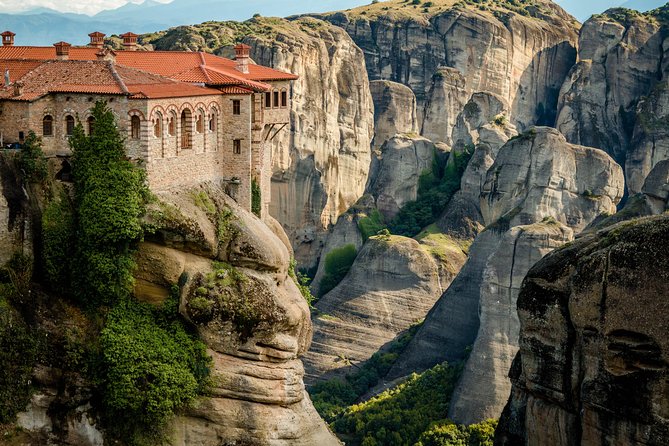
- Meteora gets real focus: you visit two monasteries, not just a quick viewpoint.
- Included breakfast and dinner: you get 6 breakfasts and 6 dinners, which helps control daily costs when lunch isn’t included.
- Northern Greece added on purpose: Thessaloniki and Macedonia-area stops make the trip feel bigger than just “Athens plus the classics.”
- Limited free time is a real tradeoff: several stops are timeboxed, so you’ll need to be comfortable moving on quickly.
What You’re Really Paying For (And What You’re Not)
The headline price is $1,479.60 per person for about a week. What makes that number feel reasonable—or not—comes down to what’s included: 6 nights of accommodation, a professional guide, air-conditioned transport, and breakfast and dinner every travel day (6 each). If you were pricing those items separately, a guided, multi-region loop with meals tends to add up fast.
What’s not included is lunch, plus there’s a possible environmental fee of 10€ per room per night starting 1/4/2025, paid directly to the hotel. That fee is small, but it’s worth mentally budgeting so it doesn’t surprise you after you’ve already committed.
The tour also runs in English, uses a mobile ticket, and includes hotel pickup and drop-off for selected hotels. If your hotel is outside that zone, you might still be close to transit, but pickup details won’t cover everything—so confirm what your exact pickup point is before you go.
You can also read our reviews of more tours and experiences in Athens

Corinth Canal, Mycenae, and Epidaurus: The Start That Sets the Tone
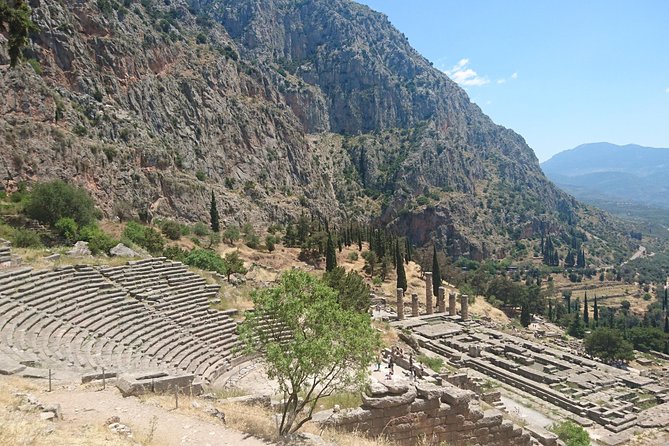
The trip begins with a classic road-trip moment: a stop at the Corinth Canal, with a quick look at the bridge area where Attica and the Peloponnese effectively “meet.” This isn’t a long museum stop. It’s a sight that helps you get your bearings and understand the geography Greece keeps throwing at you.
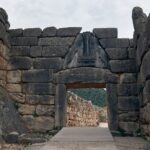
Then you hit Mycenae, where the focus is on power and myth—Lion Gate, parts of the Cyclopean walls, and ruins connected to the Agamemnon palace area, plus the tomb of Agamemnon. You’ll spend about 1.5 hours here, which is just enough time to catch the key structures without turning it into a memory marathon.
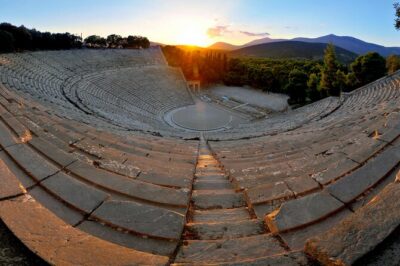
After that comes Epidaurus, including the Ancient Theatre, famous for its acoustics. You’ll have around 1 hour, and this stop is one of the reasons I like structured tours for first-time classical visitors: you can’t “self-tour” acoustics. Even if you’re not a Greek-theatre specialist, standing in a place designed for sound will click in a way photos rarely do.
Possible drawback: Day 1 can feel like momentum-heavy history. If you’re the type who needs unstructured wandering time to process what you’re seeing, you may want to slow down mentally as you move between sites.
Olympia Stadium to Museum Time: Where the Olympics Actually Began
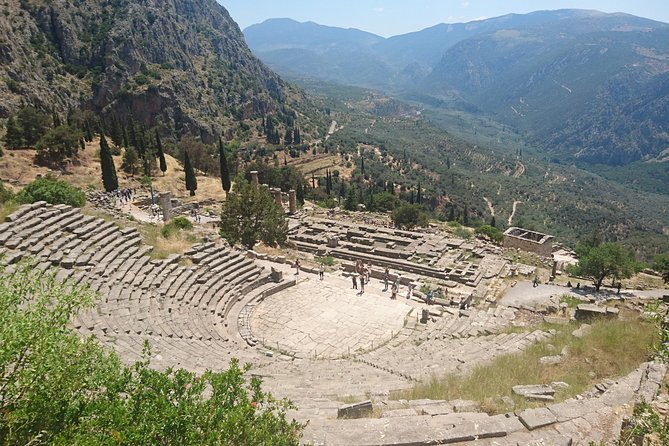
Next you head to Olympia, spending about 1 hour at the archaeological site, with time at the core structures—especially the stadium linked to the ancient Olympics. Olympia works best when you let it be more than “sports history.” This is a place where ritual, competition, and sacred space were braided together.
You’ll also stop at the Archaeological Museum of Olympia for about 1 hour. This is a smart pairing. Ruins are powerful, but the museum helps you see what these places were like when they weren’t just stones.
The best value here is pacing. With a site plus museum combo, you don’t leave feeling like you saw only half the story. If you’re trying to understand how the ancient Greeks built meaning into everyday public events, Olympia does that quickly.
Consideration: The schedule is tight. If you want extra time to read everything slowly, you’ll need to accept that you’re touring a highlight list rather than building a deep, day-long relationship with one area.
Delphi and Its Museum: Apollo’s Site Plus Bronze Details
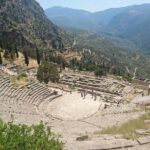
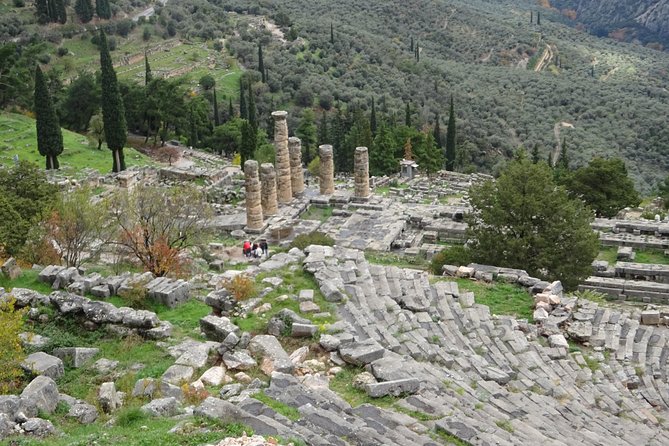
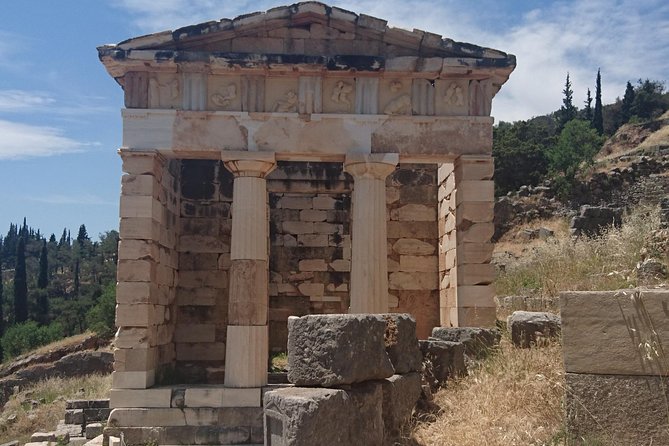
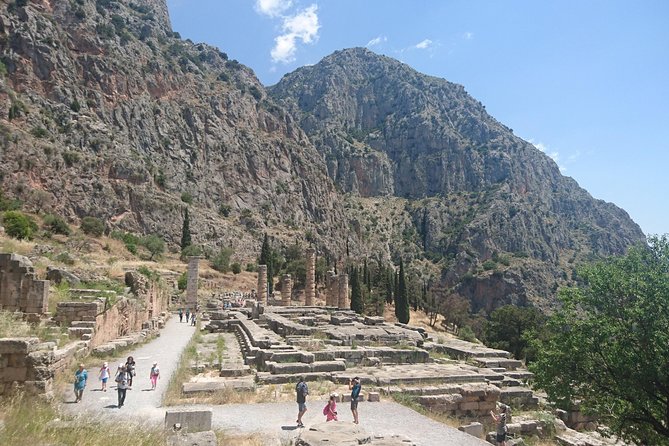
Day 3 brings Delphi, which is where many people suddenly go from “I’m seeing ruins” to “I’m thinking about the myths.” You start with Tholos of Athena Pronaia (about 30 minutes), then move to the Temple of Apollo archaeological area for about 1.5 hours.
Then comes the Delphi Archaeological Museum for about 1 hour, including attention to a famous bronze statue called the Iniochos. That museum hour can be the difference between forgettable ruins and actual understanding. A lot of the power of Delphi isn’t just the setting—it’s what’s preserved and what the artifacts show about religious life and status.
One review noted that the free time in Delphi felt limited. That’s believable because Delphi is big and the group has to keep moving. If you love to stroll at your own tempo, don’t count on a long, relaxed wander.
My practical tip: Wear shoes you can stand in for museum time plus outdoor walking. Delphi’s combination of uneven paths and stairs can wear down your legs faster than you’d expect.
Meteora: Two Monasteries and a Bus Change Toward Thessaloniki
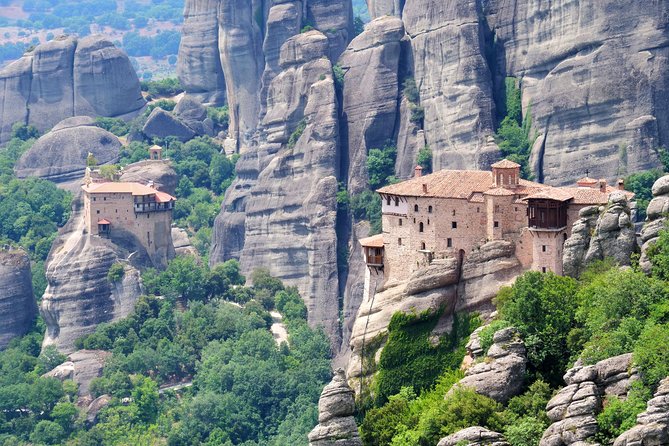
Meteora is one of those places that needs less talking and more you-time. Here you’ll visit two Meteora monasteries—and you’ll get about 2.5 hours for the whole stop. That’s a nice amount for seeing the major parts without the visit turning into a full half-day grind.
A bus change follows, transferring you toward Thessaloniki. Even if you usually like “smooth transitions,” this is the kind of day where you should be mentally ready for shift-in-transport timing. One concern from a past experience was a mid-tour change of bus/operator, which created confusion around lunch timing. While that may not happen on every run, Meteora-and-northern-Greece days do tend to be where logistics matter most.
Dress code matters here too, since monasteries and churches are active worship spaces. Bring clothing that covers knees and shoulders and you’ll feel much more relaxed once you arrive.
- All Day Cruise -3 Islands to Agistri,Moni, Aegina with lunch and drinks included
★ 5.0 · 4,958 reviews



Thessaloniki Core Stops: Rotunda, Waterfalls, and Macedonia’s Layers
In Thessaloniki, you get Rotunda, described as built as a temple and later transformed into a church, with Early-Christian mosaics. The stop is very short—about 1 minute—so what you’re really doing is passing the highlight quickly and keeping the schedule intact. Don’t expect long reading time here.
After that, the tour adds a wider northern stretch with a mix of landmarks and history:
- Edessa and its waterfalls (about 1 hour). Free air, moving water, and a reset from archaeology-only days.
- Museum of the Royal Tombs of Aigai (Vergina) (about 1 hour) focused on tombs of the Macedonian royal family.
- Naoussa to see Aristotle’s School area (about 1 hour free time for the stop itself).
- Veroia, including St. Paul’s Berma and a stroll through the old Jewish neighborhood and market area (about 1 hour).
This set of stops is valuable because it doesn’t treat Macedonia as just “background to Alexander.” It shows different time layers—Roman/Christian art in Thessaloniki side, then royal Macedonian history, and then religious history in Veroia. If you like seeing how regions evolve rather than staying frozen in one era, this day gives you that.
Possible drawback: Time allocation can feel uneven. Some stops are explicitly short, and you may end up wanting more time in the ones you liked most.
Dion, Pella, and Thermopylae: The Ending With Big Names
Your final day leans on famous Greek markers:
- Dion Archaeological Park, described as a sacred Macedonian town (about 1 hour).
- Archaeological Museum of Pella, focused on Pella, connected to Alexander the Great’s capital (about 1 hour).
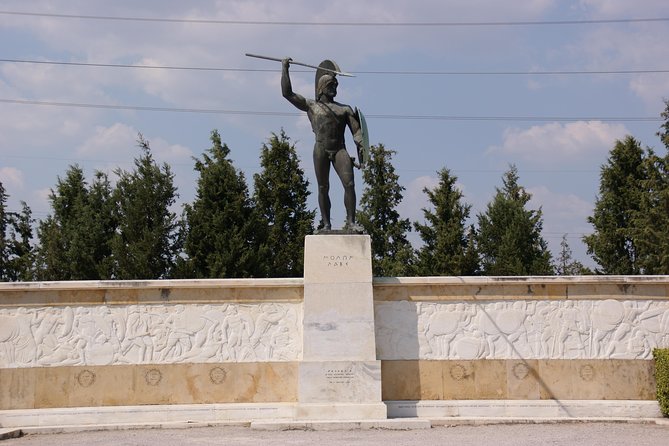
- Thermopylae, where you’ll see Leonida’s monument (about 10 minutes).
This combination works as a closing hit. You move from sacred Macedonian context (Dion), to the political center associated with Alexander (Pella), and then to the heroic story symbolized by Thermopylae. It’s a classic “finish strong” approach.
Still, that Thermopylae time is brief. If you want more time to read, take photos, or sit with the story, don’t plan on it here. This last day is mostly about completing key names before returning to Athens.
Hotels, Meals, and the Pace You Must Expect
The tour includes 6 nights accommodation, plus breakfast (6) and dinner (6). That matters because dinner is often where you’d spend money and time on your own. Having meals included can also help you keep energy for long days—especially in a week this packed.
You should know that hotel quality can vary. One critique mentioned stained carpets and limited nearby places to buy incidentals like water. Another part of the same feedback complained about buffet food and room amenities (like no water in the room). On the other side, other reviews called hotels good and even praised a 5-star stay in Thessaloniki.
So how do you handle that as a smart reader? Assume you’ll get a solid baseline, but don’t expect every hotel to match the top end. If you can, pack a small habit: refillable bottle plus a backup plan for buying water nearby when your room doesn’t provide it.
Pace warning: Several experiences described the trip as long and jam packed. That doesn’t make it bad—it just means you’ll likely remember the names and the feeling of motion more than you’ll remember hours of slow wandering. If you’re okay with that, you’ll enjoy the value.
Guides and the Human Side: When Explanations Make or Break It
A tour like this lives and dies by the guide’s rhythm. You’ll find praise for guides who take the material seriously. One named guide, Effie, was described as an archaeologist and praised for being extremely knowledgeable and making the sites interesting. Another guide, George, was praised as professional early on.
There’s also a caution from a less pleasant experience with a guide named Xenia. That report described a stressful mid-stream situation related to a luggage misunderstanding and a rough changeover between operators, including a strong emotional reaction in public. The key takeaway for you isn’t “it will happen,” but that when tours rely on multiple operators, timing and communication can sometimes go sideways.
My advice: Keep your personal essentials together for transfer days. Also, when lunch timing changes happen, ask for clarity calmly and quickly. In a group setting, clarity prevents stress from snowballing.
Who This Tour Fits Best (And Who Should Skip It)
This tour fits best if you want a single week that hits the major anchors of Greek antiquity plus northern Greece. It’s ideal for history and mythology fans who don’t want to stitch together transportation between regions.
It’s also a good option if you’re traveling solo or in a small group and you like the structure of a professional guide. The English-only setup helps a lot too.
Skip it if you:
- Want lots of free time at each site
- Hate short stops where you rush through a highlight
- Need a very calm pace and lots of downtime between places
- Are sensitive to schedule changes during transfers
Should You Book This Grand Tour of Olympia, Delphi, Meteora, and Thessaloniki?
I’d book it if your goal is to cover a lot of ground with fewer decisions. The included hotels, guide, air-conditioned transport, and most meals make it a practical value play for first-timers who want to leave with a map in their head and names they can pronounce.
I’d hesitate if you strongly prefer independent exploration, because the week is built around seeing many places rather than hanging out at one. And because there have been mentions of operator changes and last-day rushing, I’d also book it with the mindset that logistics are part of the experience—even when everyone tries to keep it smooth.
If you go in prepared—dress code sorted, shoes ready for standing, and expectations set for a fast pace—you’ll likely come away feeling like you genuinely “did Greece,” not just skimmed it.
FAQ
What is the tour price and duration?
The price is $1,479.60 per person and the duration is about 7 days.
Where does the tour start and when?
It starts at Amalia Hotel Athens (Leof. Vasilisis Amalias 10, Athina 105 57, Greece) with a start time of 8:30 am.
Does the tour include meals?
Yes. Breakfast is included for 6 days and dinner is included for 6 days. Lunch is not included.
Is hotel pickup offered?
Pickup is offered for selected city center hotels. Pickup from city center hotels starts about one hour before the tour departure.
What kind of transportation is used?
You travel by an air-conditioned vehicle.
Are there dress code rules?
Yes. A dress code is required for places of worship and selected museums: no shorts or sleeveless tops, and knees and shoulders must be covered for both men and women.
Is there an environmental fee?
An environmental fee of 10€ per room per night is mentioned, starting from 1/4/2025, and it is paid directly to the hotel.
What is the cancellation window for a full refund?
You can cancel up to 3 days in advance for a full refund, and cancellation must be at least 3 full days before the experience’s start time.
More 7-Day Experiences in Athens
More Tours in Athens

More Tour Reviews in Athens
- All Day Cruise -3 Islands to Agistri,Moni, Aegina with lunch and drinks included
★ 5.0 · 4,958 reviews