REVIEW · ATHENS
Mythology Tour of Athens & the Acropolis with a Private Expert Licensed Guide
Book on Viator →Operated by WARMPENGUIN · Bookable on Viator
Athens turns into a storybook on this tour. You start at Zeus territory, hear the myths that match what you’re looking at, then walk into the Acropolis with a licensed expert explaining the “why” behind the stones. Two things I like a lot are the clear myth-to-ruins storytelling and the fact that you get a guide who can pace the visit to your group. The one drawback to consider: you still need your archaeological site tickets set up for your exact time slot, and they are not included.
I also like how this stays focused. In about two hours, you hit the biggest hits without feeling like you’re sprinting through history. Your tour ends at the Acropolis, so you can keep going at your own speed after the guide drops you at the viewpoints.
At $186.93 per person, it’s not the cheapest way to do Athens. But if you’re the kind of traveler who wants to understand what you’re seeing (not just pose for photos), a private licensed guide can be a smart use of time—especially when crowds are heavy.
In This Review
- Key highlights worth your attention
- Why this Zeus-to-Acropolis flow feels smarter than starting “at the top”
- Temple of Olympian Zeus: the myths behind the scale
- Acropolis focus: Parthenon myths tied to what you see
- Erechtheion: the Poseidon vs. Athena story you can’t unsee
- Ending at the Acropolis viewpoints: plan your “after the guide” time
- Optional 3-hour mythology add-on: Agora, Museum, Plaka, or Zeus return
- Golden-hour 90-minute option: when sunlight makes the stones talk
- Price and value: what $186.93 buys you in real time
- What I’d do on the ground to make this tour feel effortless
- The guides: storytelling plus crowd-smart pacing
- Who should book this private mythology tour
- Should you book it?
- FAQ
- Are archaeological site entrance tickets included?
- Where does the tour start and where does it end?
- How long is the private tour?
- What does the 3-hour tailored option add?
- Does the tour include guided entry to the Acropolis?
- What’s the admission ticket situation at Temple of Olympian Zeus?
- Is this tour private?
- Is the tour family friendly?
- Can I cancel and get a full refund?
- What happens if the weather is bad?
Key highlights worth your attention
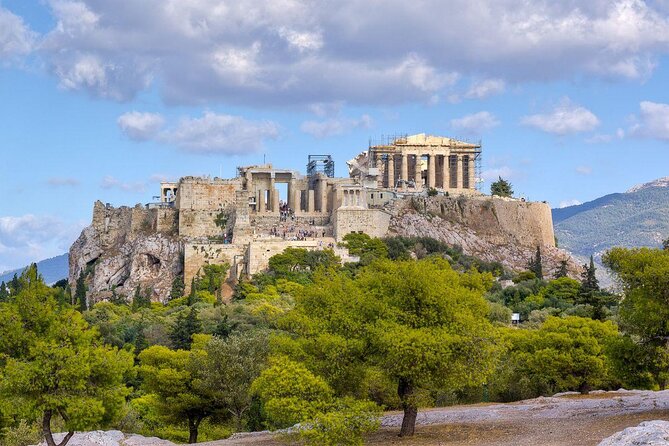
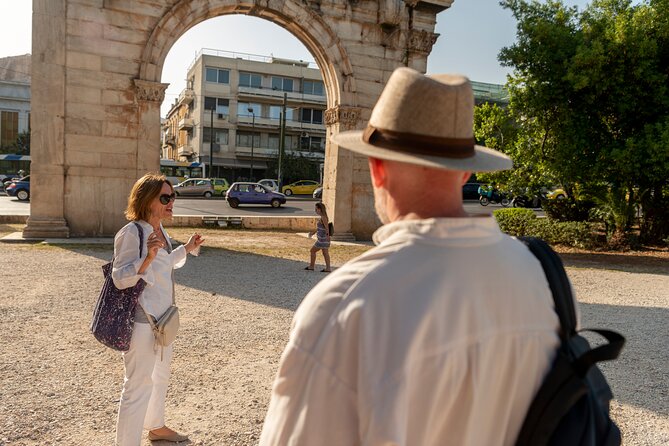
Start at the Arch of Hadrian and Temple of Olympian Zeus so the Acropolis isn’t your whole story.
Myths explained in place—the Parthenon and Athena themes connect to the architecture you see.
Erechtheion with the Poseidon–Athena rivalry gives you a second angle on the Acropolis religious drama.
Optional add-ons for different interests: Ancient Agora, Acropolis Museum, or Plaka/food time.
Golden-hour option if you want the light effects and a shorter, calmer visit.
Licensed guide access with you—they can enter the Acropolis with your group.
Why this Zeus-to-Acropolis flow feels smarter than starting “at the top”
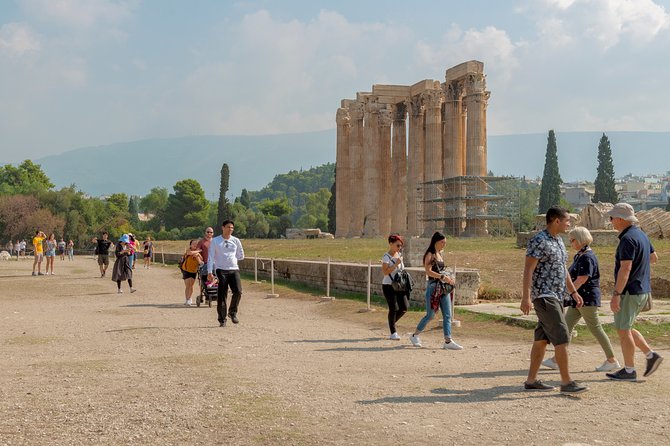
Athens can feel like a museum of ruins… until someone gives you the map inside your head. This tour does that by starting with Zeus first, not after. When you begin at the Temple of Olympian Zeus and move up toward the Acropolis, the city’s religious power centers start to make sense as part of one long story.
You’ll also get a practical benefit: the guide isn’t just adding trivia. They’re helping you interpret what you’re looking at right where it sits—so the Parthenon doesn’t read like an impressive building you can’t explain. You’re learning the logic of the place.
And because it’s private, you’re not stuck in the “everyone listen at once” rhythm. If you want to slow down at a detail, ask a question, or just step aside for a breather, that’s usually doable.
You can also read our reviews of more guided tours in Athens


Temple of Olympian Zeus: the myths behind the scale
Your first stop is the Temple of Olympian Zeus, opposite the meeting location. This site is famous for size and for the fact that it predates the Acropolis. That time gap matters. It helps you see Athens as a city that built big, changed big ideas, and kept reusing sacred meaning.
What makes this stop genuinely interesting is how the guide connects the legend to the visual experience. Zeus wasn’t just a name. The stories you’ll hear connect to the idea of a towering, gold-and-ivory divine statue and the “theater” of worship—something meant to overwhelm people in the old world, the way stagecraft does today.
A detail the tour focuses on is the way an olive oil reservoir at the statue’s base helped reflections create the effect of movement—so the god seemed to rise from the temple space. Even if you don’t remember every element later, it’s the kind of imagination-trigger the Acropolis also depends on: these were not quiet monuments.
This stop is short—about 15 minutes—and the admission ticket for this part is free. So it works well as a warm-up. You get context, then you move on before your legs fully complain.
Acropolis focus: Parthenon myths tied to what you see
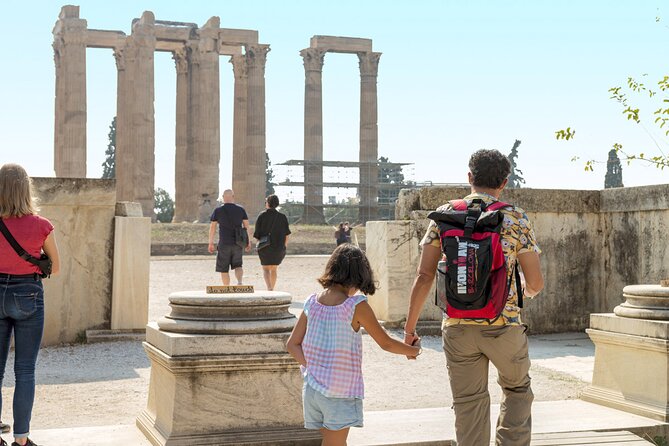
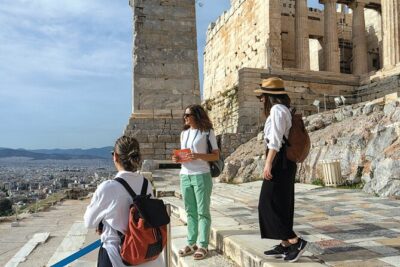
The main event is the Acropolis, with extra time at the Parthenon area. Your guide’s job here is to translate symbols into ordinary language and then show you how those symbols were meant to land.
The Parthenon is treated as more than architecture. You’ll hear about it as the pinnacle of Classical Greece and as a temple tied to major celebrations for Athena. The stories are not random. They’re designed to give you a way to interpret things you can actually point at: carved themes, the sense of order in the design, and the way the site works as a statement of civic pride.
You’ll also get “riddles” explained—ideas that help you read the monument like a text instead of a sculpture garden. That’s the big value of a licensed guide here: you don’t have to guess what you’re looking at, and you don’t lose time standing in front of a view thinking, What am I supposed to notice?
One practical note: your Acropolis time is about 1 hour 30 minutes, and the admission ticket is not included. Expect some walking and steps. If your knees are sensitive, don’t white-knuckle it. A guide who can route you and slow down where needed can make this day feel doable instead of exhausting.
Erechtheion: the Poseidon vs. Athena story you can’t unsee
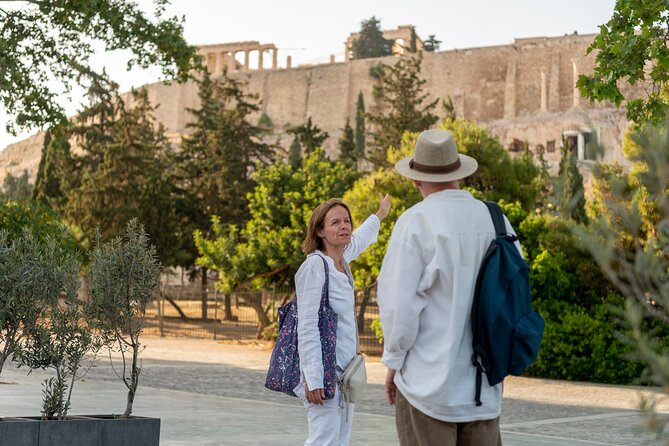
A short distance from the Parthenon is the Erechtheion, linked to both Poseidon and Athena. This is a key stop because it adds conflict to the story. The Acropolis isn’t just one deity and one celebration. It’s a sacred civic stage where myth served as the explanation for why Athens mattered.
The tour’s mythology angle pays off here. When you learn the background of the rivalry—who gets to be patron and why—the Erechtheion stops feeling like another temple you passed. It starts feeling like the physical record of a decision mythologized for generations.
This is also one of the places where private guiding is especially useful. Crowds can push you into a one-second glance. With a guide, you’re more likely to get time to understand before you rush on.
Ending at the Acropolis viewpoints: plan your “after the guide” time
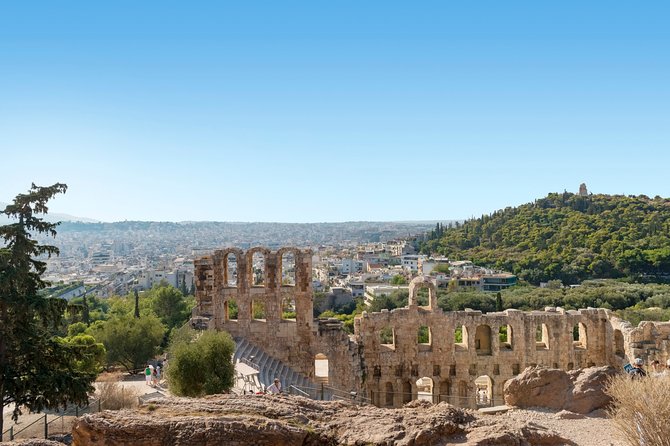
Your tour ends at the Acropolis. That’s not a throwaway detail. It means you finish right where your photos, views, and “I want one more look” moments live.
If you want to linger, you can. If you’d rather cool down and grab a drink nearby, you can do that too. The tour format is built for flexibility at the end.
If you choose an add-on that ends at another area (like Plaka), then your timing and wandering will shift. In that case, you’re trading the Acropolis rooftop time for a second chunk of Athens meaning.
You can also read our reviews of more private tours in Athens




Optional 3-hour mythology add-on: Agora, Museum, Plaka, or Zeus return
There’s a tailored option that extends the experience to about 3 hours total, keeping the Acropolis and adding one additional site of your choice:
- Ancient Agora Archaeological Site: the city’s meeting-and-trade hub, tied to politics and everyday civic life.
- Temple of Olympian Zeus again, if you want deeper focus on Zeus at full scale.
- Acropolis Museum: a modern museum designed to house key finds from the nearby Acropolis, with models and interactive-style displays mentioned in the tour description.
- Plaka neighborhood: a mix of old and new Athens, including Byzantine churches and local markets, plus a food-friendly direction.
Here’s how I’d choose among them.
If you want the Athens “how it worked” story, pick the Ancient Agora. If you want objects and context you can study more calmly, pick the Acropolis Museum. If you want atmosphere and a slower walk with food and browsing, Plaka is the better match. If you feel underwhelmed by the Zeus warm-up and want him to be the chapter, choose the Zeus option.
One caution: the museum option adds time, but it’s not the same thing as giving yourself a full self-guided museum afternoon. If you love museums, you might still want longer on your own afterward.
Golden-hour 90-minute option: when sunlight makes the stones talk
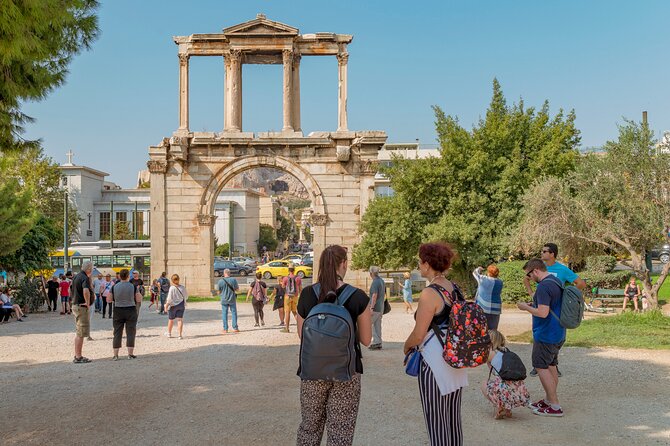
If you’re short on time—or you want the Acropolis in softer light—there’s an Acropolis “Golden-hour” option around 90 minutes. The selling point here is simple: you’re focusing on the special sunlight effects on the Acropolis in the afternoon hours.
A shorter tour can be a win if you’re traveling with kids, if you’re recovering from a long flight, or if you’ve already read a bit about the site and mainly want a guided walk with good light.
Downside: you’ll have less time for the broader mythology and fewer chances to pause at details. So if you tend to ask lots of questions, the longer option may feel more satisfying.
Price and value: what $186.93 buys you in real time
At $186.93 per person for an approximately 2-hour private tour, you’re paying for four things:
- A licensed official expert who can enter the Acropolis with you.
- Time efficiency: you see the key places without getting lost in “what matters?”
- Myth translated to visuals, not just recited as a lecture.
- Private pacing, which matters on a steep, crowded site.
Admission tickets for archaeological sites are not included, and that’s a big piece of the budgeting puzzle. You also have to get timed entry sorted, because tickets may sell out and need a specific date/time slot.
So the real value question is this: do you want to spend your limited Athens hours trying to figure out what you’re seeing? If not, paying for a guide that handles interpretation and the flow through the ruins can be worth it.
Also, the tour notes that group discounts may apply, and the average booking window is around 59 days in advance. Translation: it’s smart to book early if your dates are fixed.
What I’d do on the ground to make this tour feel effortless
Even with a great guide, you’ll get more out of it if you show up ready.
- Wear comfortable shoes. This is still an Acropolis climb day.
- Bring water, especially if you’re going in warmer months. The route includes real sun exposure.
- Think about what you want most: Parthenon storytelling, the Poseidon–Athena angle, or museum/object time.
- If you care about photos, ask your guide to point out the best spots while you’re still moving. You’ll get better results than waiting until you’re tired.
One more practical detail that matters for groups: a whisper communication system is included for groups of 6 or more. Even if you’re not in that size group, it signals that the company thinks about how to keep groups together on busy ruins.
The guides: storytelling plus crowd-smart pacing
The guide experience is a major part of why this tour works. Several guides linked to this experience are described as fun storytellers and strong at weaving mythology with the real features in front of you.
You might meet guides with names like Vicky, Elina, Christina, Irina, Ria, Natalie, or Christina—and the common theme is that the tour aims to make the Acropolis feel alive, not just recited. People also mention that guides know how to keep the pace manageable and help with ways to make the climb easier.
There is also one caution to keep you realistic: not every style of storytelling will satisfy every person equally. If you want more straight architecture focus on the Parthenon and less “myth recap,” tell your guide early. Good guides adjust.
Who should book this private mythology tour
This is a strong fit if you’re:
- A first-time visitor to Athens who wants the mythology behind the monuments
- Someone who values a guide’s interpretation more than wandering alone with a map
- Traveling with family—this tour is described as family friendly, with guides experienced with multigenerational groups and kids
- A couple or small group that wants private pacing instead of a big-group scramble
If you’re traveling solo and trying to stretch budget, you might find this pricey. But if you’re time-limited or you hate guesswork at major sites, it can still be a smart use of money.
If you prefer fully self-guided museum time or you already know a lot of mythology, you may want to consider the shorter golden-hour option—or pair this with your own extra time later.
Should you book it?
I’d book this if you want Athens to make sense fast. The combination of starting at Zeus, then moving into the Acropolis with a licensed guide, is built for understanding—not just checking boxes.
Book the 2-hour version if you want the biggest highlights and you’re okay with a short, high-impact visit. Choose the 3-hour tailored option if you want to add real depth in one direction—Agora for civic life, the Museum for objects, or Plaka for atmosphere and food. Pick Golden-hour (90 minutes) if the weather and timing are right and you want the lighter, shorter experience.
One final deciding tip: before your tour starts, decide what you’ll do if you run out of time. Because the tickets are time-slot dependent and the Acropolis can be crowded, your best strategy is to book early and commit to your preferred start time so you can enjoy the guide instead of stress about entry.
If that sounds like your style of trip, this one is a very practical choice.
FAQ
Are archaeological site entrance tickets included?
No. Archaeological site entrance tickets are not included in the tour price. The tour team can organize tickets on request after booking, and they may need you to choose a time slot.
Where does the tour start and where does it end?
It starts at the Arch of Hadrian (Leof. Vasilisis Amalias 50, Athina 105 58, Greece) and ends at the Acropolis. If you add a Plaka option or another site, the tour can end at that location.
How long is the private tour?
The standard mythology tour is about 2 hours. There is also a 3-hour tailored option and a 90-minute golden-hour option.
What does the 3-hour tailored option add?
The 3-hour version keeps the Acropolis and adds one additional site: Ancient Agora, Temple of Olympian Zeus, the Acropolis Museum, or Plaka (with a food-friendly direction noted).
Does the tour include guided entry to the Acropolis?
Yes. Your guides are licensed official experts and can enter the Acropolis with you.
What’s the admission ticket situation at Temple of Olympian Zeus?
The Temple of Olympian Zeus stop is described as having a free admission ticket for that part of the experience.
Is this tour private?
Yes. It is a private tour/activity, and only your group participates.
Is the tour family friendly?
Yes. The tour is described as family friendly, with guides experienced with all ages and multigenerational groups.
Can I cancel and get a full refund?
Yes, free cancellation is available up to 24 hours in advance for a full refund. If you cancel less than 24 hours before the start time, the amount paid is not refunded.
What happens if the weather is bad?
This experience requires good weather. If it’s canceled due to poor weather, you’ll be offered a different date or a full refund.


More Guided Tours in Athens


More Tours in Athens


More Tour Reviews in Athens
- All Day Cruise -3 Islands to Agistri,Moni, Aegina with lunch and drinks included
★ 5.0 · 4,958 reviews