REVIEW · ATHENS
Small-Group Women History in Ancient Greece Walking Tour
Book on Viator →Operated by Culture Hunters · Bookable on Viator
Women’s stories in Athens change everything you notice. This is a tight, small-group walk that focuses on women in ancient Greece through myth, daily life, and public rules. I like that it covers the kinds of details most standard Athens walks skip, and it does it with a guide who keeps the storytelling clear and human. One thing to consider: it’s a fast-paced 2-hour route with lots of short stops, so if you need slow breaks or step-free access, this may not be the best match.
I’m also a fan of how the tour blends well-known figures with lesser-cited names, so you don’t just hear a repeat of the classics. If your guide is Maelle from Culture Hunters, her approach comes through in the way she connects stories to what you can actually see around you. Expect plenty of questions and discussion, but don’t expect museum-style ticket time at each stop—this is built for walking and looking.
In This Review
- Key things you’ll notice on this women-in-ancient-Greece Athens walk
- Why this women-focused walk changes how you see Athens
- Price and pacing: $44.71 for a 2-hour story walk
- Small group dynamics with a guide like Maelle
- Monastiraki to Philopappos Hill: what each stop adds
- Stop 1: Monastiraki Square — start with the city’s energy
- Stop 2: Hadrian’s Library — education for girls and women
- Stop 3: The Church of the All-Great Taxiarchs and the Virgin Mary Gregorousa — marriage, love, and power
- Stop 4: Gate of Athena Archegetis — Athena myths and married life
- Stop 5: Dioskouron — a festival dedicated to women
- Stop 6: Ancient Agora of Athens (viewed from outside) — who could enter public life
- Stop 7: Areopago — trials, justice, and the cost of change
- Stop 8: Pnyx — democracy begins, women’s voices don’t
- Stop 9: Philopappos Hill — Hill of the Muses and a view to close the loop
- The tour’s big themes: myth and daily life in the same conversation
- Agora, Pnyx, and Areopagus: where the “rules” get real
- Practical tips so you get the most out of the 2 hours
- Should you book this women in ancient Greece tour?
- FAQ
- How long is the Small-Group Women History in Ancient Greece Walking Tour?
- What is the group size for this tour?
- Where do you meet, and where do you end?
- Do I need paid admission tickets for the stops?
- What topics and historical figures does the tour cover?
- Is this tour recommended for travelers with mobility issues?
- What kind of ticket do I receive?
- Are service animals allowed?
- What happens if the weather is bad or I cancel?
Key things you’ll notice on this women-in-ancient-Greece Athens walk

- A women-only lens on Athens myth and society, with Penelope, Pandora, Sappho, Aspasia, and Agnodice woven into real places
- Small group, max 12, which means you’re not just shuffled along
- Quick, meaningful stop rhythm: short walks, focused stories, and context you can carry to the rest of your trip
- Agora and Pnyx themes: who could vote, who could speak, and what “public life” meant
- A final Acropolis-feeling finish from Philopappos Hill, with views that put the whole story in perspective
Why this women-focused walk changes how you see Athens

Most Athens itineraries look like a greatest-hits tour: temples, big names, big dates. This one flips the lens. You still pass major landmarks, but you’re using them like chapter titles for women’s lives—what they learned, how they married, what they were allowed to do in public, and which rules people tried to enforce.
The payoff is in the mental shift. When you walk past a site like Hadrian’s Library or the Gate of Athena Archegetis, you start asking different questions. Not just What happened here? but Who benefited, who was restricted, and what stories survived because someone kept telling them?
You can also read our reviews of more walking tours in Athens


Price and pacing: $44.71 for a 2-hour story walk
At $44.71 per person, you’re paying for two things: a focused route and a guide who can explain why each location matters. The duration is about 2 hours, and the structure is built around short, efficient stops—perfect if you want a strong orientation to Athens without committing to a half-day.
The pacing is also the trade-off. You’ll spend most of the time walking between points and listening at each stop for brief stretches (often around 10–15 minutes). If you prefer long museum sessions or want to linger at archaeological areas, you may wish you’d pair this with another activity later.
Small group dynamics with a guide like Maelle
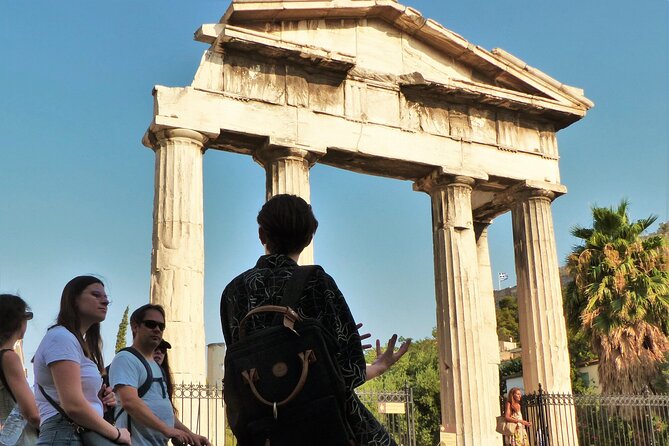
This tour runs with a maximum of 12 travelers, which is key for a tour like this. Women’s history in ancient Greece isn’t just “facts on a page.” It’s full of contradictions—myth vs. legal reality, public ideals vs. private constraints. A small group helps the guide keep those threads clear and still answer your questions without rushing you.
The guide’s tone matters too. Reviews point to Maelle’s mix of kindness, humor, and curiosity, plus a narrative style that makes it easier to see how themes from antiquity show up in modern discussions. You don’t just hear that restrictions existed; you get help understanding what those restrictions would have meant day to day.
Monastiraki to Philopappos Hill: what each stop adds

The route moves from Monastiraki into the city’s historic core and then up toward a classic viewpoint. You’ll meet in the Monastiraki area and finish at Philopappos Hill (a strong end point because you can look back over the Acropolis).
Stop 1: Monastiraki Square — start with the city’s energy
You meet your guide at Monastiraki Square, a landmark-feeling place in Athens where locals and visitors mingle. It’s a good start point because it sets the tone: you’re about to walk through a city that still functions, not just a set of ruins.
This first stop is short, so treat it as the opening scene—how the guide frames women’s roles before you start collecting examples.
You can also read our reviews of more historical tours in Athens






Stop 2: Hadrian’s Library — education for girls and women
Next comes Hadrian’s Library, one of the settings that helps explain what learning could look like for women in ancient Athens. The tour uses this stop to talk about education—what opportunities existed and what limits remained.
Even if you’re not entering anything here, the location gives the talk a real anchor. A practical note: Athens can be hot and sunny, so this is a good stop to keep hydration in mind.
Stop 3: The Church of the All-Great Taxiarchs and the Virgin Mary Gregorousa — marriage, love, and power
This is a surprising pivot point. You’ll be at a church, but the story moves back to ancient meanings of marriage in Athens and Sparta and how EROS—passionate love—showed up in how people talked about relationships.
It’s an interesting method: using later monuments to guide your attention to older themes. If you’re someone who likes explanations that connect religion, culture, and private life, this stop will work well.
Stop 4: Gate of Athena Archegetis — Athena myths and married life
At the Gate of Athena Archegetis, the tour turns to mythology and married life. Athena is more than a mascot here; she becomes part of the narrative the guide uses to explain how women were imagined, honored, and judged through myth.
If you’ve ever walked past Athena references without knowing why they mattered, this is where the connections start to click.
Stop 5: Dioskouron — a festival dedicated to women
The Dioskouron stop focuses on a festival dedicated exclusively to women. This is one of those “wait, really?” topics that makes the whole route feel fresh. It’s also a good reminder that ancient life wasn’t only public politics—it included ritual worlds where women had specific roles.
Because the stop is brief, the story lands quickly. But that’s part of the tour style: you get the idea fast and then carry it with you.
Stop 6: Ancient Agora of Athens (viewed from outside) — who could enter public life
Now you reach the heart of public life: the Ancient Agora of Athens. You won’t have entrance to the archaeological site itself, but you’ll see it from outside while the guide explains how women interacted with the marketplace and public spaces—plus the realities of female slaves and courtesans.
This is a big “context stop.” It helps you separate how society talked about women from how it controlled women’s movement. If you’re trying to understand Athens beyond marble and speeches, this stop is a must-pay-attention moment.
Stop 7: Areopago — trials, justice, and the cost of change
At Areopago, the guide brings in the idea of trials and punishment for serious wrongdoing. Then the story shifts to an inspiring element: the mention of a woman who risked a death sentence to change women’s rights.
Even without a deep legal lesson, this stop pushes the tour from daily life into conflict and consequence. It’s not just about what women were allowed to do; it’s about what it cost to challenge the rules.
Stop 8: Pnyx — democracy begins, women’s voices don’t
The Pnyx area is where you’ll connect women’s history with the story of democracy. The key point here is the uncomfortable one: only male citizens used to vote. The tour then adds a counterweight—how a woman influenced politics during Athens’ Golden Age.
This stop makes the logic of the tour feel complete. You see the place where civic power was defined, then you hear what was excluded, and how some women still managed influence through other routes.
Stop 9: Philopappos Hill — Hill of the Muses and a view to close the loop
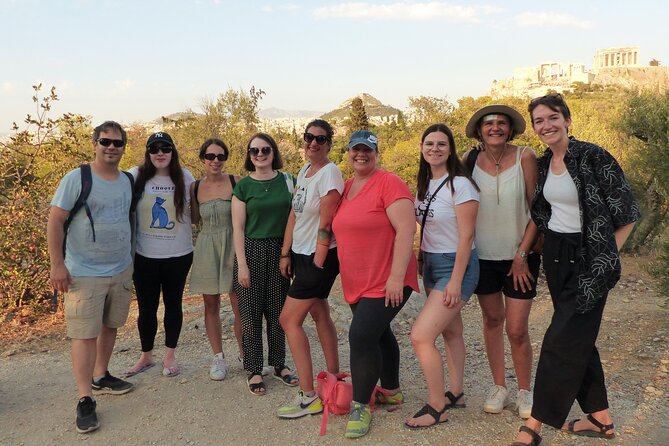
Finally, you end at Philopappos Hill, tied to the Hill of the Muses. It’s a strong finishing move because it gives you space to look out at the Acropolis and think about how myth, power, education, and daily life all fit together in one city.
Reviews highlight the end feel—walking finishes near trees with a view that makes the whole story feel physical, not abstract.
The tour’s big themes: myth and daily life in the same conversation

What makes this experience more than a list of women’s names is the way it connects stories across categories.
Mythological figures like Athena, Penelope, and Pandora aren’t treated as trivia. They act like cultural mirrors. When you hear how these myths shaped ideas of roles and expectations, you can better understand why real women’s freedom was so tightly bounded.
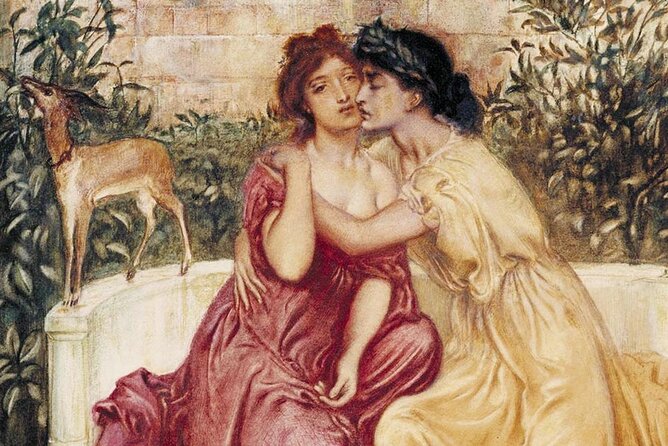
Then the guide adds people from the fringes of what you may expect from ancient Greece: Sappho, Aspasia, and Agnodice—figures described as pushing against societal expectations, with roles linked to leadership, philosophy, medicine, and poetry. You start to see women not as a footnote, but as actors in cultural life even when legal power was limited.
Agora, Pnyx, and Areopagus: where the “rules” get real
Two stops in particular help you grasp the tour’s practical value: the Agora and the Pnyx. The Agora gives you the everyday texture of public space and who could access it. The Pnyx gives you the political texture—who could participate, and who couldn’t.
Areopago brings the emotional punch. It’s about punishment and trial, then about a woman whose life was placed at risk for change. That combination makes the tour stick, because it shows that women’s history wasn’t only “hidden”—it was also contested.
Practical tips so you get the most out of the 2 hours
This is a walking tour in Athens, and it’s scheduled for good weather. To make it smooth:
- Wear comfortable shoes you trust. You’ll be on city streets and uneven ground at multiple points.
- Bring water and sunscreen. Athens sun can be relentless, especially during the hours you’ll likely be out for a short 2-hour walk.
- Come with a couple of questions. With a max group size of 12, you can usually get real answers, not just a quick nod from the guide.
- If you want to keep exploring after, note the areas you want to revisit. The tour gives you a map of themes, so you’ll know what to look for next.
Should you book this women in ancient Greece tour?
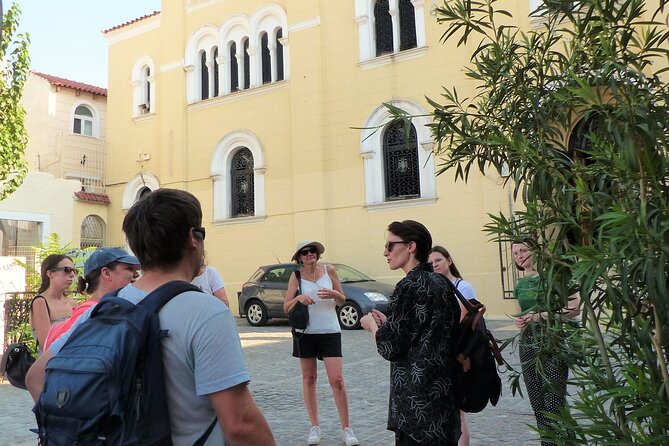
I think it’s a strong book if you want a different Athens perspective fast. The price is reasonable for a guided, story-led walk, and the small-group size makes it feel personal rather than like a conveyor belt.
Book it if:
- You already plan to visit the classics and you want a missing “women’s angle.”
- You like mythology, but you want it tied to real social expectations.
- You want an efficient first or second tour that helps you see Athens with better questions.
Skip it if:
- You need mobility-friendly pacing or step-free routes, because it’s not recommended for travelers with mobility issues.
- You’re looking for lots of on-site time inside archaeological areas, since key parts are seen from outside and the tour moves quickly.
FAQ
How long is the Small-Group Women History in Ancient Greece Walking Tour?
It runs for about 2 hours.
What is the group size for this tour?
The tour has a maximum of 12 travelers.
Where do you meet, and where do you end?
You meet at Pl. Monastirakiou 2, Athina 105 55, Greece, and you end at Philopappos Hill (Φυλής 215, Athina 117 41, Greece).
Do I need paid admission tickets for the stops?
The stops listed are marked as Admission Ticket Free, and at least one key area (the Ancient Agora) is viewed from outside, not entered.
What topics and historical figures does the tour cover?
It focuses on daily life and roles for women in ancient Greece, with stories tied to figures such as Athena, Penelope, Pandora, Sappho, Aspasia, and Agnodice, plus themes like marriage, EROS, festivals for women, and women’s public influence.
Is this tour recommended for travelers with mobility issues?
No, it’s not recommended for travelers with mobility issues.
What kind of ticket do I receive?
You receive a mobile ticket.
Are service animals allowed?
Yes, service animals are allowed.
What happens if the weather is bad or I cancel?
The tour requires good weather. If it’s canceled due to poor weather, you’ll be offered a different date or a full refund. You can cancel for a full refund up to 24 hours in advance.




More Walking Tours in Athens



More Tours in Athens




More Tour Reviews in Athens
- All Day Cruise -3 Islands to Agistri,Moni, Aegina with lunch and drinks included
★ 5.0 · 4,958 reviews