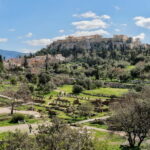
Athens hits different when you walk it with a guide. This private 6-hour Athens route connects the Acropolis and Ancient Agora to today’s streets in Psiri, Monastiraki, and Plaka, with food stops along the way. It’s also designed to keep you oriented fast: where to look, what mattered then, and why it still matters now.
What I really like here is the mix of big monuments and lived-in neighborhoods. You’ll see famous ruins like the Parthenon and Erectheion, then switch gears to the central-market area for Greek food tastings and a more everyday view of Athens. The other thing I love is the private format with hotel pickup for many centrally located stays, so you’re not stuck waiting on slow group logistics.
One consideration: this is still a walking day. Plan on 6–7 miles on your feet, and the Acropolis area has rules like no big backpacks, plus Athens heat can turn a “short stop” into a sweaty one if you’re not prepared.
In This Review
- Quick takes: what makes this Athens tour work
- Ancient Athens meets today’s neighborhoods in one 6-hour walk
- Price and what you get for $475.16 per person
- Meeting point, pickup rules, and how to plan your day
- Acropolis: orienting yourself at the top of Athens
- Herodion, Erectheion, Propylaea: quick stops, big payoffs
- Ancient Agora: where Athens felt civic, not just dramatic
- Psiri and the central market area: food tastings with a real Athens vibe
- Monastiraki and Plaka: neoclassical charm meets walking comfort
- Temple of Athena Nike: a short finale with a view payoff
- Why the guide matters more than the checklist
- What to pack and what to skip (so the Acropolis doesn’t ruin your day)
- Should you book this Athens ancient-and-modern walking tour?
Quick takes: what makes this Athens tour work
- Private guide, full-day focus: you move through ancient sites and modern streets in one continuous story.
- Acropolis plus Agora, not just photos: short, targeted stops help you spot key details.
- Psiri food tastings: you get small bites and local-style breaks without committing to a full lunch.
- Plaka and Monastiraki are built into the plan: you see the “pretty streets” and also the modern city around them.
- Hotel pickup for many central hotels: helps you start with less fuss and more time on the route.
- Bring the right gear: sturdy shoes, light clothing, and a plan for the Acropolis bag limits.
Ancient Athens meets today’s neighborhoods in one 6-hour walk
This tour is all about linking eras. You start at the top of the story with the Acropolis, then work your way down through places that shaped public life at the Ancient Agora, and finally shift into Athens as it is now—streets, shops, and food around Psiri and Plaka.
I like that the day isn’t built like a checklist. You’re not just “seeing famous things.” You’re getting help putting them in context—what each site was for, what it meant to people back then, and what echoes you can still notice in modern Athens.
You can also read our reviews of more walking tours in Athens

Price and what you get for $475.16 per person
At $475.16 per person, this isn’t a budget tour. The value comes from three practical items: you’re getting a private guide for about 6 hours, pickup/drop-off if you’re staying close enough, and food tastings during the walk.
Entrance fees are a separate line item. The tour says entrance fees to archaeological sites aren’t included, but they can be prepurchased for you, which is useful if you hate last-minute ticket stress. Also, lunch isn’t included, so think of the tastings as a snack-and-sample break, not a full meal replacement.
If you’re traveling as a small group and want everyone to move at the same pace—more questions, fewer “where are we going next?” moments—private pricing starts to make more sense.
Meeting point, pickup rules, and how to plan your day
The tour starts at the Arch of Hadrian (Leof. Vasilisis Amalias 50) and ends at Syntagma Square. If your hotel is in the city center and about a 10-minute walk from that starting point, your guide will meet you there at your hotel. Otherwise, you’ll arrange a more convenient meeting point.
Two planning tips make the day smoother:
- Wear comfortable, sturdy shoes. This is a walking tour and you should expect a solid amount of time on foot.
- Bring water and something to manage heat. One practical recommendation that comes up a lot is to pack a hat and a small towel for sweat.
Also note the Acropolis bag rule: backpacks and big bags aren’t allowed there, so travel light for the day.
Acropolis: orienting yourself at the top of Athens
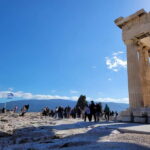
The Acropolis stop is about 1 hour, and it’s the anchor of the whole tour. This is where you learn the layout: what you’re looking at, why the buildings were placed where they are, and how the space works when you’re standing in it instead of staring at a postcard.
You should also plan for the reality of site access. Entrance fees for archaeological sites aren’t included, so you’ll want to make sure tickets are handled in advance (the operator can help prepurchase). Once you’re inside, the time feels focused rather than rushed, especially because you’ll get nearby context instead of spending the whole hour just searching for the right viewpoint.
Finally: the Acropolis rules matter. If you’ve got a big backpack, don’t count on leaving it in the way you normally would in other countries. Instead, plan to carry what you truly need for a few hours.
Herodion, Erectheion, Propylaea: quick stops, big payoffs
After the main Acropolis orientation, the tour includes three short, targeted looks—each only around 10 minutes.
- Herod Atticus Odeon (Herodion): a quick stop here helps you connect the “monument museum” feeling to real-world function. It’s a reminder these places weren’t built only to be stared at.
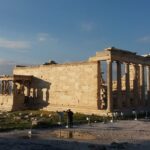
- Erectheion: even in a short visit, this is a site where the guide’s eye really matters. You’ll learn what makes it distinctive and what to notice beyond the headline names.
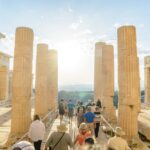
- Propylaea: this is one of those parts of the complex where your understanding improves fast when you know what you’re looking for. A guide can help you see it as an entrance/transition rather than just a backdrop.
These short segments are useful because they keep your energy for the longer stops—especially the Agora and the neighborhood wander after.
You can also read our reviews of more private tours in Athens



Ancient Agora: where Athens felt civic, not just dramatic
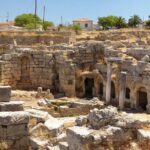
The Ancient Agora stop is about 1 hour, and it’s one of the best “shift” moments in the day. The Acropolis is power and symbolism; the Agora is where daily civic life happened. Even if you only see a few stones up close, the guide helps you connect the dots: public space, debate, identity, and how the city organized itself.
If you’re the type who likes your photos to have meaning, this is your payoff stop. You’ll walk through the area with a sense of direction and purpose, rather than feeling like you’re wandering ruins and guessing.
One practical note: like the Acropolis, entrance fees can apply for archaeological sites. Since the tour says they can prepurchase entrance tickets for you, it’s worth asking what’s needed before you arrive so the day runs smoothly.
Psiri and the central market area: food tastings with a real Athens vibe
You’ll spend about 30 minutes in Psiri, which is where the tour starts to feel less like a museum route. Instead of chasing viewpoints, you’re now in a neighborhood where modern Athens shows through—shops, street life, and places people actually choose.
The big win is the food tastings. You’ll get small samples rather than a full lunch, which keeps the schedule light and lets you keep moving. One of the tour’s popular moments is that snack-and-coffee break, sometimes followed by something like a classic Greek street-style bite such as gyros, depending on the guide’s plan.
If you’re worried about hunger during a long day, this stop helps. It’s also a good time to ask your guide how modern Athens works—rent, neighborhoods, daily life—because you’re out among people, not only among monuments.
Monastiraki and Plaka: neoclassical charm meets walking comfort
Next you’ll do a brief Monastiraki stop (about 10 minutes), then spend 1 hour in Plaka. This is the “pretty streets” part of Athens, but with a guide it’s more than scenery.
Monastiraki is often a fast orientation point—useful for understanding the city’s layers and seeing how ancient sites sit near modern movement. Then Plaka gives you time to enjoy the area at a human pace, with neoclassical architecture and old-town streets that feel made for slow wandering.
Plaka is also where you can slow down and reset. You’ve covered enough stones already; now it’s about atmosphere. If your feet need a breather, this is usually the stop where you’ll feel grateful the day isn’t all uphill.
Temple of Athena Nike: a short finale with a view payoff
The Temple of Athena Nike stop is about 10 minutes. It’s quick, but it’s a smart capstone because it connects the story of the Acropolis complex to the viewpoint you’re already thinking about all day.
This is the kind of stop that becomes more interesting once you understand the surrounding spaces. A good guide helps you see why this spot matters—how it fits into the wider sacred area and what you can notice from your position.
From here, you finish back in the city near Syntagma Square, which is convenient if you want to grab dinner or hop on other transit afterward.
Why the guide matters more than the checklist
In a private tour, the guide is the product. You’re not just buying access to sights—you’re buying interpretation, pacing, and the ability to ask questions without feeling rushed.
The guide approach for this experience is repeatedly praised for being both patient and engaging. Names that have shown up with high marks include Andreas, Sofia, Danae, Lina, Tania, Nikos, Katerina, and Maroussa—each associated with a style that ties ancient sites to modern Athens, sometimes even touching on philosophy and what it means to be an Athenian across time.
You’ll also want a guide who can handle heat and energy levels. A day like this can go long, and the best guides know when to slow down for a deeper answer and when to keep you moving so you still enjoy the neighborhoods.
What to pack and what to skip (so the Acropolis doesn’t ruin your day)
For this tour, the simple packing list matters:
- Comfortable shoes for hours of walking.
- Light, breathable clothing for warm weather.
- A hat and water, especially in summer.
And the one rule you can’t ignore:
- No backpacks or big bags at the Acropolis.
If you want a smooth day, plan to carry only essentials—phone, charger if you need it, water bottle, and maybe a small towel. Larger bags can turn into a stress headache right when you’re trying to enjoy the views.
Should you book this Athens ancient-and-modern walking tour?
Book it if you want Athens in one day but don’t want a “hit the highlights” scramble. This tour is a strong fit when you:
- Like understanding context, not just collecting photos.
- Want a private guide who can tailor the pace and your level of detail.
- Enjoy walking neighborhoods as much as archaeological sites.
- Appreciate food tastings built into the route rather than treating lunch as an afterthought.
Skip (or choose a shorter option) if you know you won’t handle 6-plus hours of walking, or if you strongly prefer minimal time at the Acropolis due to bag rules and stairs.
If your goal is to leave Athens with a clear mental map—ancient power at the top, civic life below, and modern streets around you—this is a smart way to get there.




More Walking Tours in Athens


More Tours in Athens



More Tour Reviews in Athens
- All Day Cruise -3 Islands to Agistri,Moni, Aegina with lunch and drinks included
★ 5.0 · 4,958 reviews