REVIEW · ATHENS
Kerameikos: Self-Guided Audio Tour on Your Android/iOS Phone
Book on GetYourGuide →Operated by Clio Muse Tours · Bookable on GetYourGuide
Kerameikos is just stones until your phone explains them. This self-guided audio tour turns the ancient site into a walkable story, with offline text, audio narration, and maps you can use without worrying about roaming. I also like how the route feels clear and easy to follow, so you spend your time looking at the monuments instead of searching for what to do next.
The main thing to keep in mind is the tech side: you need a compatible Android/iOS phone and enough storage (about 100–150 MB) before you start. If your battery is weak or your download fails, the experience can feel like a great site with no guide.
In This Review
- Key points at a glance
- Kerameikos on your phone: a smarter way to walk the site
- Getting there from Athens: Thiseion and Kerameikos metro stops
- Starting at the entrance and the small panorama hill
- Sacred Gate and the opening act of the story
- Grave Stele of Dexileos, tomb of Dionysios, Grave Stele of Hegeso
- Lacedaemonians Tombs and the Tritopatreion area
- Archaeological Museum of Kerameikos: making sense of artifacts
- Skip-the-line entry ticket: a small cost for less waiting
- Offline audio, languages, and that 100–150 MB storage reality
- Price and value: why $11.28 can be a bargain here
- Who this self-guided Kerameikos tour fits best
- Should you book Kerameikos Self-Guided Audio on your phone?
Key points at a glance
- Offline narration, text, maps: keep listening even if your signal drops
- Panoramic start point: begin with views from a small hill near the entrance
- Don’t miss key stops: Sacred Gate, Pompeion, major tombs, and grave stelae
- Museum time included: the Archaeological Museum of Kerameikos ties artifacts to what you see outside
- Optional skip-the-line ticket: choose it up front for smoother entry
Kerameikos on your phone: a smarter way to walk the site
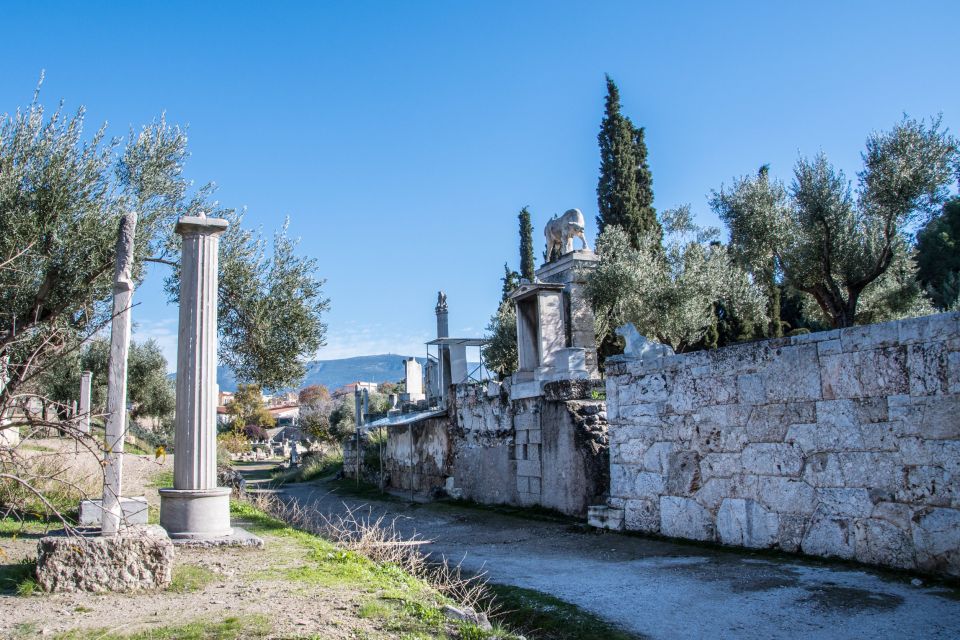
Kerameikos is one of Athens’ places where you really benefit from context. The ruins aren’t trying to perform for you. They just sit there—gate, tombs, markers, and museum objects—waiting for you to understand what you’re looking at. With this self-guided audio tour, your phone becomes the interpreter.
What makes this format work is control. You can pause, resume, and linger at the Sacred Gate area or slow down around the tombs and grave markers without feeling guilty about holding a group together. That matters here because Kerameikos is best enjoyed at walking speed, not power-walk speed.
The audio is built around an award-winning storytelling concept and comes in several languages (English, Greek, German, Italian, French, Spanish). So if you’re traveling with someone who prefers a different language, you don’t have to force the whole day into one mode.
I also like the way the tour is structured around named highlights. When an audio tour tells you to look for a specific place—like the Grave Stele of Dexileos or the Grave Stele of Hegeso—you know you’re on track. It’s one of those small things that makes the whole visit feel less stressful.
You can also read our reviews of more guided tours in Athens



Getting there from Athens: Thiseion and Kerameikos metro stops
The tour starts at the entrance of the Kerameikos archaeological site, and you’ll end back at the same meeting point. The easiest public transit approach is simple: take the train (green line) to Thiseion station or the metro (blue line) to Kerameikos station.
If you plan your day around other Athens sights, this is also useful. You can treat Kerameikos like a focused stop rather than a giant detour. It’s just far enough outside the core tourist churn that arriving with a plan helps, and this self-guided format gives you that plan.
Tip: pack your headphones before you leave home. At Kerameikos, you’ll want to start listening right at the entrance so the first orientation moment lands before you start moving downhill and around the site.
Starting at the entrance and the small panorama hill
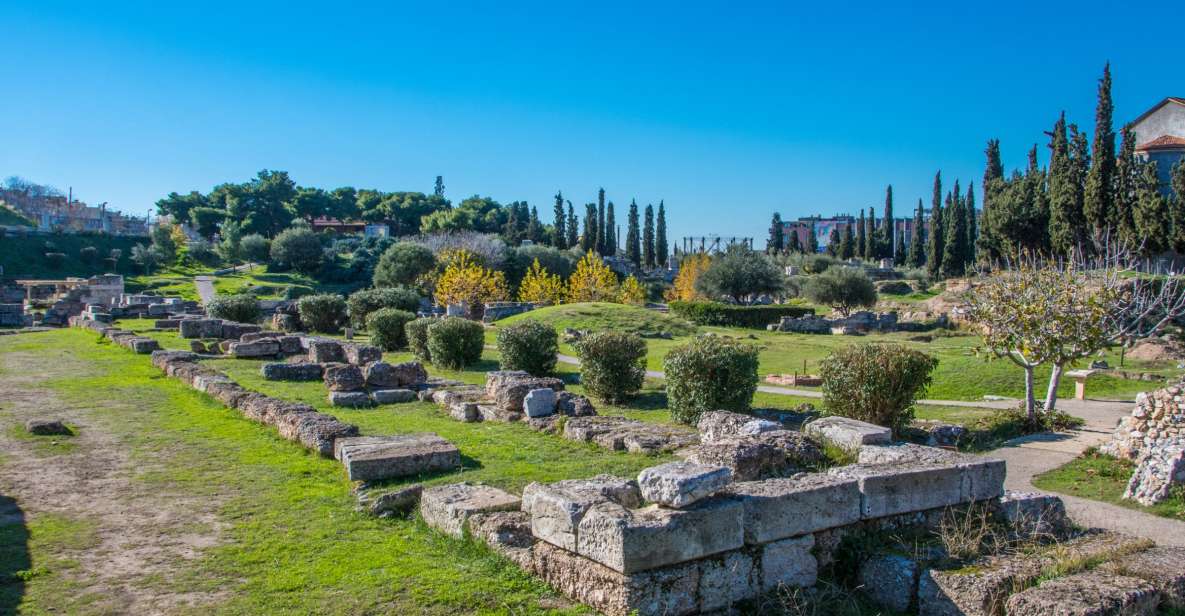
The tour’s kickoff is designed to get your bearings fast. You begin at the entrance of the archaeological site and then head to a small hill that offers a panoramic view of Kerameikos.
This “see it first” start is a real value. When you get a wider view early on, the later details make more sense. Tombs and markers stop feeling random. They start feeling like parts of a bigger story you can follow through the walk.
Also, because this is offline-friendly, you’re not rushing to find a signal before the audio starts. Download and launch using the instructions in your confirmation voucher link, then press play when you arrive. If you wait for perfect conditions, you’ll just lose daylight and patience.
Sacred Gate and the opening act of the story

Once you’re oriented, you’ll move into the highlights the audio guide calls out. One of the big early anchors is the Sacred Gate.
Even if you’ve never studied Greek archaeology before, the narration helps you slow down and read the site. The gate is the kind of landmark that gives the whole area a “start here” feeling. It helps you understand that you’re not wandering—you’re moving through a place with purpose and meaning.
After that, you’ll also hear about the Pompeion. The payoff here is not just learning a name. It’s learning how that structure fits into the rest of what you see as you walk deeper into the site. In an outdoor setting, that kind of connection is what keeps the experience from turning into a photo session where you forget what everything is.
Practical note: at each stop, keep an eye on where you are relative to the feature the audio mentions. The tour is built around a route with specific named points, so you’ll get better results if you don’t drift too far away from the exact area being described.
Grave Stele of Dexileos, tomb of Dionysios, Grave Stele of Hegeso
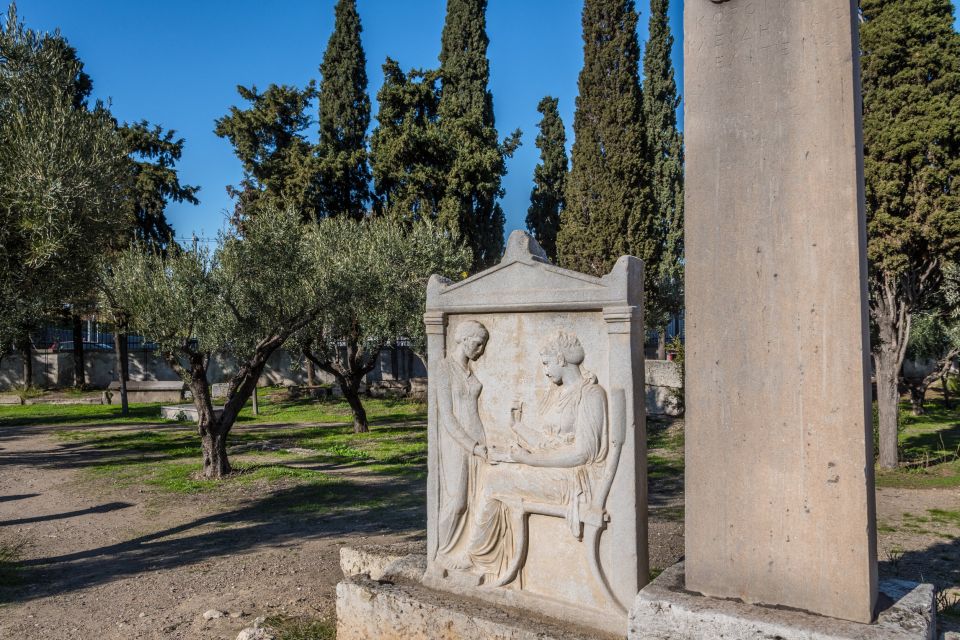
This is where Kerameikos gets emotionally and visually powerful. The self-guided audio tour is designed to guide you through multiple named memorials: the Grave Stele of Dexileos, the tomb of Dionysios, and the Grave Stele of Hegeso.
Here’s what I think you’ll enjoy most: you’re not just passing objects. You’re hearing what those memorials represent while you’re standing near them. That pairing—object in front of you, story in your ears—makes the architecture and stone carvings feel more legible.
A grave stele or tomb marker is small compared to bigger monuments. Without context, it can be easy to shrug and move on. With the audio guide, you have a reason to stop: you’re given time to notice details and understand why the guide is calling that spot out.
And because it’s self-guided, you can match your pace to your energy. Want to spend extra time at one memorial? Do it. Want to skim ahead because you’re tired? You can. That freedom is a major reason this works better than a fast group tour.
You can also read our reviews of more tours and experiences in Athens






Lacedaemonians Tombs and the Tritopatreion area
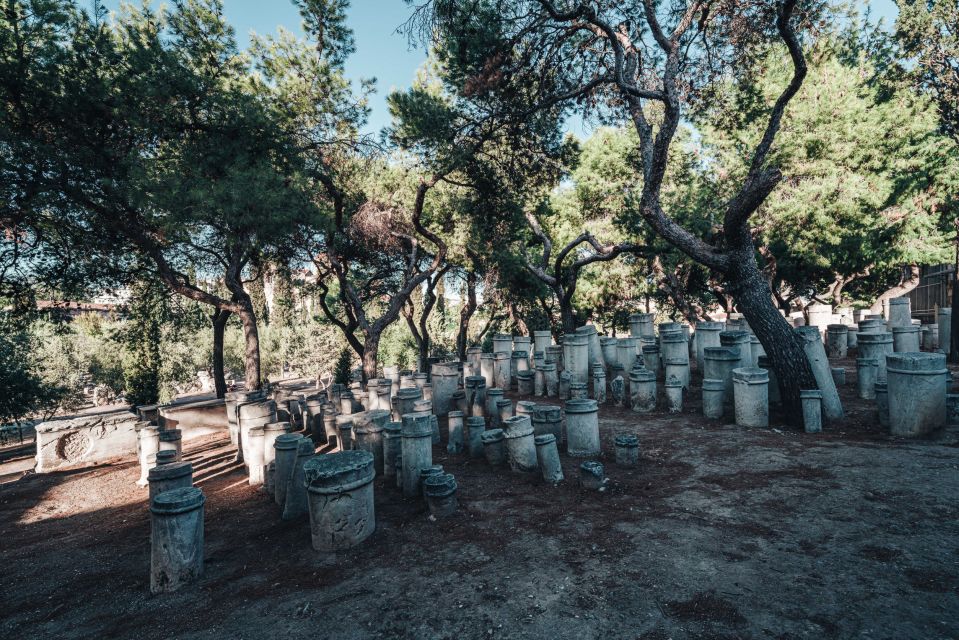
As you continue, the tour moves you toward the Lacedaemonians Tombs and the Tritopatreion, plus the broader set of grave markers spread through the site.
If you’ve ever felt awkward standing in a cemetery-like space and wondering what you’re supposed to do, this section helps. The audio tour’s job is to keep you oriented—what you’re looking at, why it’s grouped, and how the pieces relate to the broader setting.
The Lacedaemonians Tombs give you a clearer sense of the site’s function as a place of remembrance. Then the narration helps you connect that idea to smaller grave markers and the Tritopatreion area, where the scale may change but the theme remains: people, memory, and stone markers that survive long after names and stories are harder to hold onto.
One practical tip: bring comfortable shoes. This part of the walk is the kind where you start to notice the ground underfoot. You’ll want stable footing so you can focus on the audio and the objects, not on balancing.
Archaeological Museum of Kerameikos: making sense of artifacts
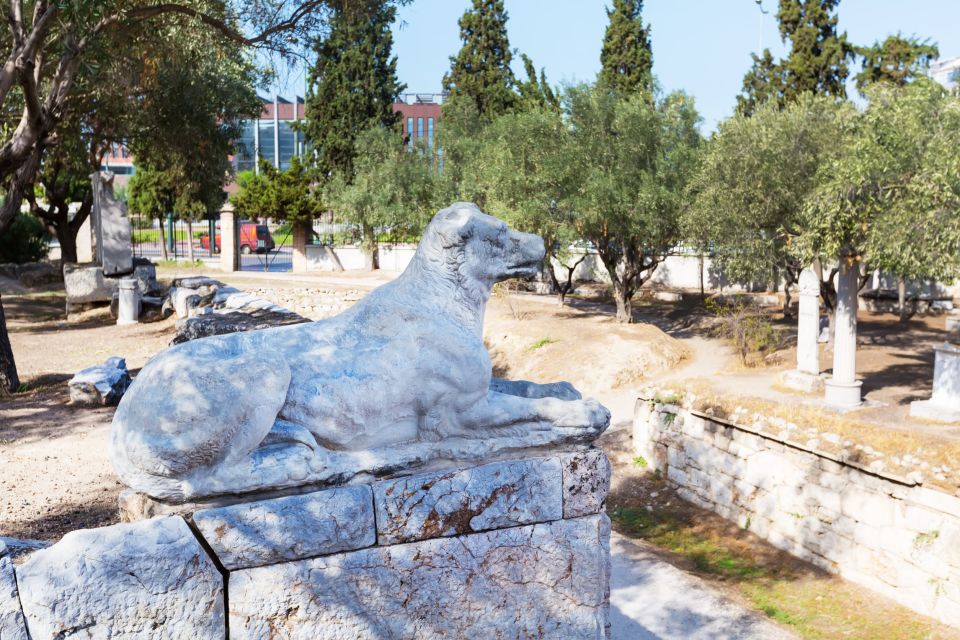
After the outdoor route, you shift to the Archaeological Museum of Kerameikos, which displays objects and artifacts found at the site.
This is an important pairing. Outdoor ruins can feel fragmentary. Museums can feel like a pile of things until you know what they came from. Doing both in one continuous experience helps you connect the “where” with the “what.”
The audio tour keeps you in story mode even here. You’re not just walking past vitrines. You’re likely to recognize the categories of objects the narration connects to the highlights you saw outside—grave markers and memorial context, plus the broader set of artifacts tied to Kerameikos.
If you’re the type who likes to keep your momentum, you’ll appreciate that the tour doesn’t force you into a strict schedule. You can spend a little longer with museum pieces that catch your eye, and skip what you’re not interested in without feeling like you’re breaking rules.
Skip-the-line entry ticket: a small cost for less waiting
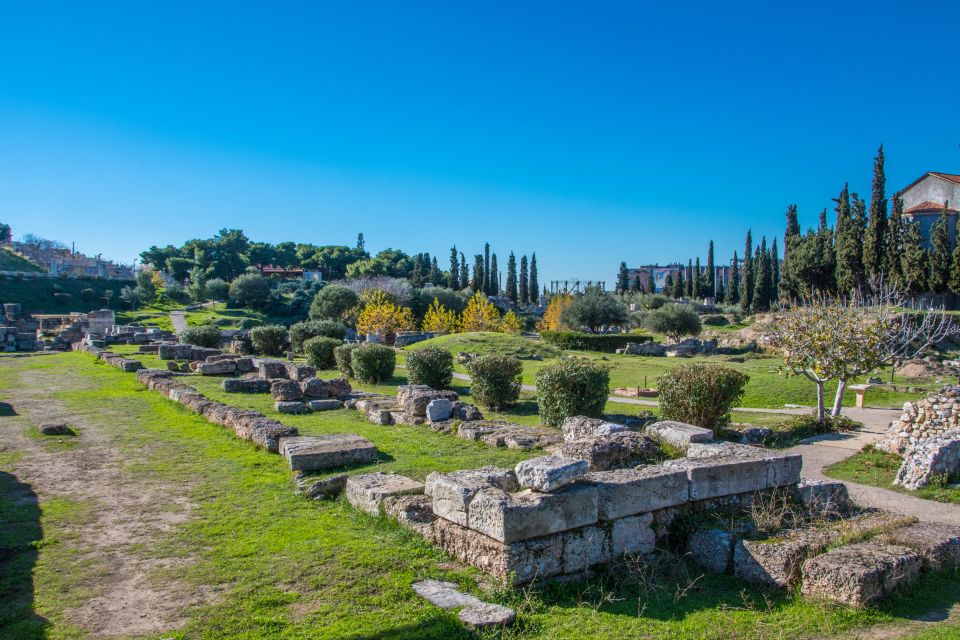
This tour includes an optional entry ticket if you select that add-on when you book. If you don’t choose the ticket option, you’ll need to purchase entry separately before you go.
So is it worth it? Usually, it’s most valuable when you’d rather not gamble on short lines or you want to start your audio visit on your own timetable without delay. Skip-the-line access can also feel like a psychological win: fewer interruptions from people and time pressure, more time to settle in with your headphones and start listening.
I’d choose the skip-the-line option if:
- you’re visiting during busier hours
- you want to keep your schedule tight
- you don’t want your audio start time derailed
If you’re arriving at a quieter time and you don’t mind a wait, you may be fine buying a ticket on your own. Either way, confirm what you’ve selected so you’re not scrambling when you arrive.
Offline audio, languages, and that 100–150 MB storage reality
This tour is designed for real-world phone use. It includes offline content: text, audio narration, and maps. That means you avoid roaming charges and can keep listening even if data coverage is spotty.
Still, you have to do one prep step right: make sure you have storage on your phone. You’ll need about 100–150 MB. If your phone is already tight on space, this can be the make-or-break detail that decides whether you get a smooth visit or a glitchy one.
You’re also booking per device, not per participant. That’s a big deal if you’re traveling as a family or group and you thought you could buy once and share across phones. Plan so each phone that needs the audio has its own booking.
Language support is strong, with English and Greek plus German, Italian, French, and Spanish. If your party has different language needs, you’ll likely be able to find the right narration without switching tools mid-day.
And remember: you bring the smartphone and headphones. I’d also recommend bringing a charged phone cable if you have one, even though the tour doesn’t promise extra charging options. Running out of battery at an archaeological site is the kind of problem no audio guide can fix.
Price and value: why $11.28 can be a bargain here
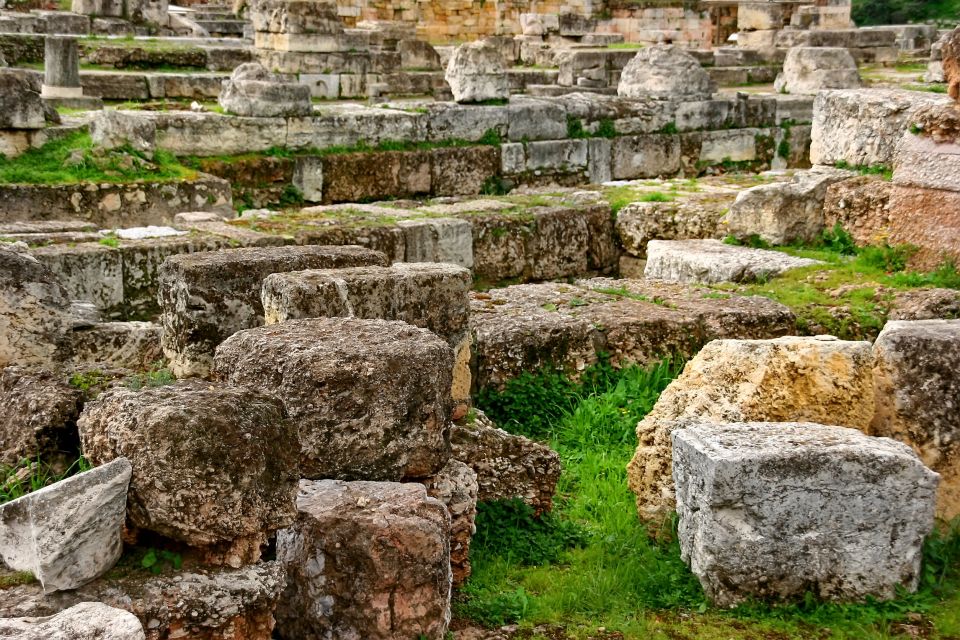
At $11.28 per person, this is priced like an activity you add to your day without heavy planning. The real value comes from what you get for that price: a structured route, offline storytelling, and a self-paced museum connection, all without hiring a live guide.
You’re not paying for someone to walk with you and talk continuously. You’re paying for a system that lets you control your time. For many people, that’s the best kind of value in Athens: you get depth without getting locked into someone else’s pace.
The tour’s validity runs for 365 days from first activation. That’s useful if you’re unsure when you’ll fit Kerameikos in during your trip. You can activate it, download content, and use it whenever you schedule the visit within that year.
Also, the included wheel-chair accessibility is worth noting. If you need that support, you’ll be glad the experience is designed with access in mind.
Who this self-guided Kerameikos tour fits best
This is a great match if you like:
- independent travel and self-paced sightseeing
- listening to stories through headphones
- using offline maps and narration so you’re not hunting for Wi-Fi
- hitting multiple named stops without paying for a live guide
It’s also a smart choice for families or couples because you can linger at the exact spot that interests you most—then move on when you’re ready.
Who might not love it?
- If you don’t like using your phone as part of your tour
- If you often run into low battery issues
- If your device is old or not on the compatible list (Windows phones aren’t supported, and several older iPhone/iPad models are not compatible)
And one more note: luggage or large bags aren’t allowed, so pack light and keep your day simple.
Should you book Kerameikos Self-Guided Audio on your phone?
Book it if you want a clear, story-led route through the Sacred Gate, Pompeion, tombs and grave stelae, then into the Archaeological Museum of Kerameikos—without timing pressure. The offline content is the big practical win, and the audio quality is exactly what you want in a place where you need help noticing details.
Skip the idea if your phone isn’t reliable for offline downloads, storage is tight, or you prefer a live guide’s interactive format. In those cases, a guide-led option may feel more comfortable.
If your setup is solid, this tour is a very good way to experience Kerameikos: calm walking, strong structure, and clear audio that keeps you oriented from the entrance to the museum.




More Guided Tours in Athens

More Tours in Athens



More Tour Reviews in Athens
- All Day Cruise -3 Islands to Agistri,Moni, Aegina with lunch and drinks included
★ 5.0 · 4,958 reviews