REVIEW · ATHENS
Hydra Island & Mythical Full Peloponnese Private 9-Day Tour
Book on Viator →Operated by EUDAIMONIA Private Tours · Bookable on Viator
Hydra Island delivers the calm you can feel. This private trip strings together big-name classics like Epidaurus and car-free Hydra, with real character stops across the Peloponnese, all led by a driver/guide. I like the fact that you’re not sharing the route with strangers, so your timing can feel smoother. The one thing to plan for: the big attractions and rides (Hydra boat, cave entries, train tickets, and most site admissions) are not included, so your final cost will be higher than the base price.
What also makes it work is the comfort layer: you get brand-new vehicles (2020 to 2022), bottled water, and an in-car booklet that helps you get your bearings fast before each stop. You should also be ready for a moderate physical pace, including stairs like the 999 steps at Palamidi Castle. If you want a relaxed vacation with lots of free time, this schedule is packed, but it’s packed with purpose.
In This Review
- Key highlights to know before you go
- Athens to Corinth and Nafplio: the ancient warm-up that sets the tone
- Hydra with no cars: the island day that actually feels like a reset
- Coast road, mountain villages, and Monemvasia’s medieval walls
- Mani Peninsula and Diros Caves: dramatic scenery with real logistics
- Mystra, Sparta’s shadow, and olive culture in one day
- Messene and Apollo Epikourios: big ruins without the crowd pressure
- Olympia plus the Olympia Museum: where the stories turn into objects
- Arcadia villages, water power, and a cliff-hanging monastery
- Kastria Cave of the Lakes and the Kalavryta railway ride: a strong final day
- What the private setup really changes (and where it can cost you)
- Who this tour fits best
- Service quality: the human factor behind the scenes
- Should you book this Peloponnese plus Hydra private tour?
- FAQ
- How many people is this private tour for?
- Is pickup offered, and what time does the tour start?
- Are meals included?
- What’s not included in the price?
- Do I need a certain fitness level?
- What if I need to cancel?
Key highlights to know before you go
- Car-free Hydra town time so you walk the lanes without engine noise
- Epidaurus’ theater with the kind of acoustics people actually talk about
- Mycenae and Corinth for the Peloponnese’s ancient power centers
- Diros Cave boat ride with guided formations and lighting
- Monemvasia Castle carved into a medieval sea-rock setting
- Kastria Cave of the Lakes for a cave experience that’s not just another show cave
Athens to Corinth and Nafplio: the ancient warm-up that sets the tone
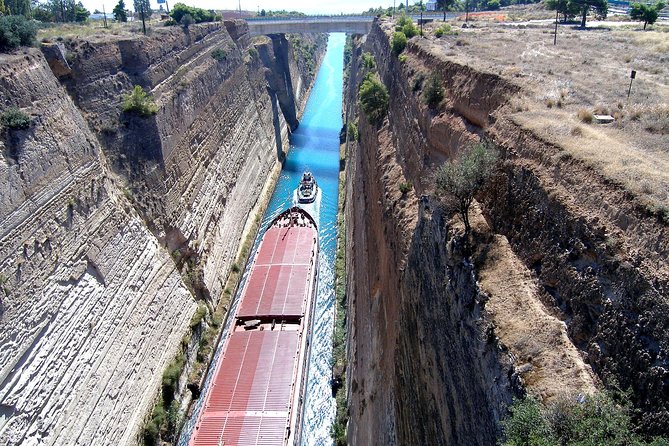
Day 1 starts with a quick hit of the Corinth Canal. You’ll stop for photos, then move into the story of why this place matters. The canal slices through the narrow Isthmus of Corinth and separates the Peloponnese from mainland Greece in a very literal way. Even if you’ve seen it on maps, it lands differently when you’re standing nearby.
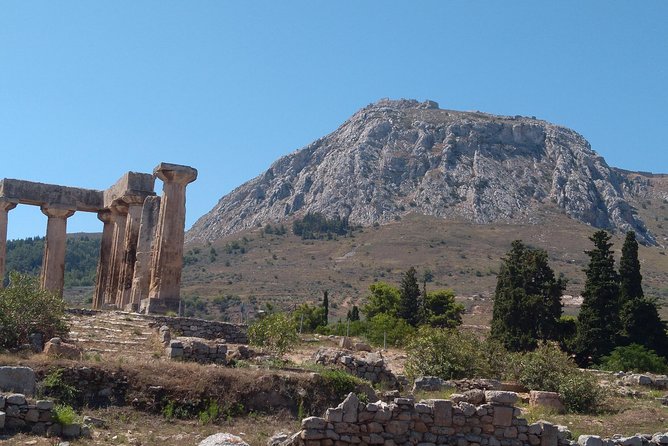
From there, you’ll get to Ancient Corinth (Archaia Korinthos). It’s one of those sites where time layers overlap: it was inhabited long ago, but the big growth comes later. The city-state location on the isthmus gave it a strategic advantage, and your guide will help connect that geography to the archaeology you’re seeing on the ground.
Next stop: Mycenae, a UNESCO World Heritage site tied to the Mycenean civilization and stories like King Agamemnon. Two hours gives you enough time to wander the main archaeological area and then shift into the museum atmosphere. In a day like this, I like that the ruins and the museum get paired. Ruins alone can feel a bit like a puzzle with missing pieces; museum time helps you connect what you’re walking through.
Then you shift to a softer pace in Nafplio, one of the prettiest towns in the Argolis region and a former capital. You’ll have about two hours here, plus an option to explore again in the evening near the port and Old Town. This is smart programming: after heavy archaeology, you get color, waterfront energy, and a place where you can just slow down.
The cultural payoff continues at the Ancient Theatre of Epidaurus. This is the oldest theater people commonly point to, and the real draw is the preservation plus the famous acoustics. Even if you don’t plan on sitting for a full performance, I’d still suggest taking a few minutes to test the space in your mind—standing where you’d listen, imagining what it would be like for a voice to travel.
After Epidaurus, you’re back in Nafplio territory with Palamidi Castle, including time to walk through the Venetian fortifications and down the famous 999 steps. That staircase matters. It’s iconic, yes, but also physical. If your knees are sensitive, you’ll want to talk with your guide about timing and pacing so it doesn’t turn into a hassle.
You can also read our reviews of more private tours in Athens

Hydra with no cars: the island day that actually feels like a reset
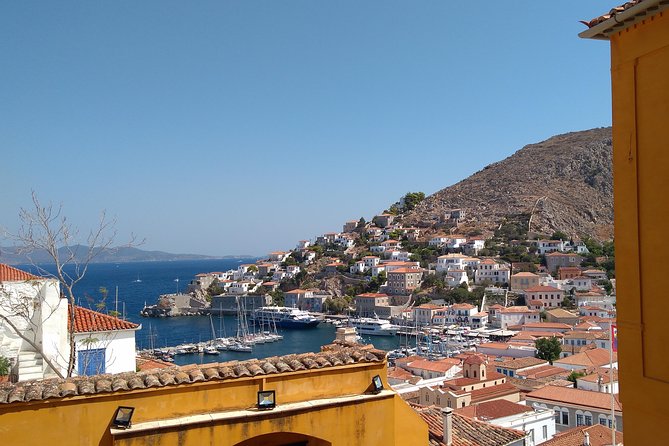
Day 2 is the car-free break you’ve been waiting for. You’ll start in Hydra Town, with about five hours to explore on foot. Hydra’s reputation as a hiding place for wealthy families, famous people, and artists makes sense the minute you arrive. There’s no car traffic in town, and that instantly changes the volume level of your day. You feel like you’re walking inside a quieter rhythm.
Your time here focuses on viewpoints and wandering rather than rushing through a checklist. It’s also a very practical choice for a private tour: if you want to pause for photos, duck into a small museum, or take your time with a café stop, you can.
Hydra also includes a visit to the Lazaros Koundouriotis Historical Mansion (National Historical Museum). The house dates to 1750, and it’s a good window into upper-class island life when shipping families shaped Hydra’s power. Expect family heirlooms, personal items, and exhibits tied to folklore and local history. Even if you’re not the type who loves house museums, it’s worth it here because the setting helps explain why Hydra developed the way it did.
The logistics detail that makes this work is the mainland connection. You’ll head from the Nafplio area to the Ermioni/Metochi pier, then take the boat to Hydra and return. The boat time is short—about 25 minutes each way—so you don’t lose your whole day to transportation. The boat admission is not included, so budget for that in advance.
Coast road, mountain villages, and Monemvasia’s medieval walls
Day 3 moves from Nafplio into a coastline route and then up toward the Parnon mountain range. Instead of taking the fastest road, you’ll enjoy coastal scenery after leaving town, with time for coffee by the water and lunch at a mountain village. This is the kind of pacing that keeps the drive from feeling like a transfer.
Your first stop is Tyros, where you’ll pause for Greek coffee and then climb into the Parnon range. From there you’ll reach Leonidio, set between red-rock country and the Dafonas Gorge. Leonidio is known in Greece for its eggplant/aubergine, and it’s the kind of small-town stop where your guide can help you connect local food with the region’s growing traditions.
Next is a quick viewpoint at Monastery Panagias Elonis, a cliff-hanging monastery with big views over the red rocks and mountain shapes. Short stop, big payoff.
Then come the smaller mountain village moments that make the Peloponnese feel lived-in. You’ll visit Kosmas for an authentic lunch under huge plane trees in the village square. The temperature change is part of the appeal: it sits high enough that it can feel noticeably cooler than nearby places, which matters in shoulder seasons.
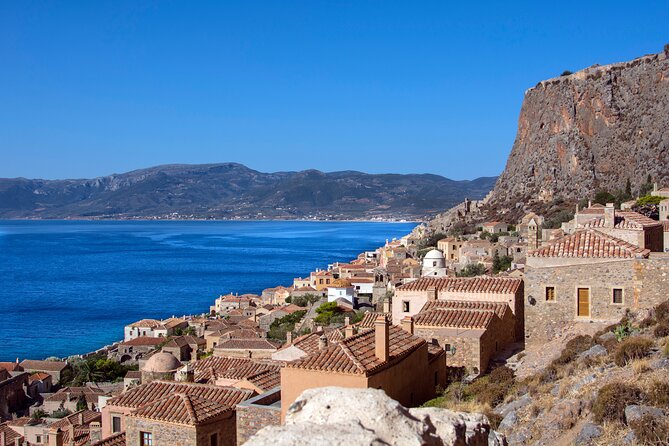
Your day’s grand finale is Monemvasia Castle. This is a place you can’t fully appreciate from a distance. The castle town is carved on the back side of a sea rock, and that medieval geography makes the whole area feel like a fortress and a settlement at the same time. You’ll arrive early enough to explore as much as you can. If you’re the kind of traveler who likes finding side streets and letting the town slow you down, Monemvasia is where you’ll do it.
Mani Peninsula and Diros Caves: dramatic scenery with real logistics
Day 4 is dedicated to the Mani Peninsula, one of Greece’s wilder corners, built from stone towns and rugged coastlines. You’ll have around an hour there, enough for a first look and photos—but also enough time to feel why people keep coming back.
Then you head to Caves of Diros, where you’ll experience the cave system by boat. The ride is guided, and the formations plus lighting are designed to help you see the cave’s age and shapes, like stalactites and stalagmites that show up in different layers. This is the kind of stop that’s worth the planning because caves are always weather-friendly. If you end up dealing with heat or a passing rain, it’s still a satisfying day component.
From there, you’ll see more Mani towns: Areopoli for stone-built streets shaped by a history where pirates were a constant threat, and then Vathia, one of the most photographed places on the peninsula. Vathia is an abandoned village today, but those views are the point. It’s also a reminder that this region has an edge—beautiful, but not polished for mass tourism.
Mystra, Sparta’s shadow, and olive culture in one day
Day 5 takes you to Mystra, the famous Byzantine castletown with wide views toward Sparta and the Laconic olive groves. You’ll have about two hours. Mystra rewards slow walking: archways, slopes, and layered ruins. It’s also a place where your guide’s explanation of Byzantine influence helps the stones feel less random.
After Mystra, there’s the Leonidas Monument. It’s short, but it connects directly to Thermopylae and the famous story response associated with Leonidas. If your group likes myth and history overlap, this stop hits a nerve quickly.
Then you have the option of the Museum of the Olive and Greek Olive Oil in Sparta. It’s not required, but it’s a nice counterpoint to the ruins. Olive culture is part science, part technology, part daily life story. Even a brief stop can help you understand why olive trees shape the Peloponnese economy and identity for generations.
- All Day Cruise -3 Islands to Agistri,Moni, Aegina with lunch and drinks included
★ 5.0 · 4,958 reviews




Messene and Apollo Epikourios: big ruins without the crowd pressure
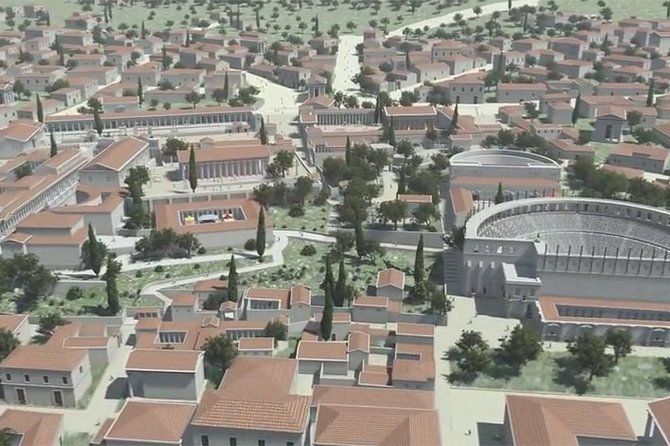
Day 6 leans toward the quieter, more archaeological side of the Peloponnese. You’ll visit Messene, another UNESCO-listed kind of stop in the way it’s described: huge in scale, with impressive preservation. It includes religious and public buildings, fortifications, houses, and tombs—so it reads like a full city rather than a few scattered stones. Two hours is a good window here because you’ll want time to walk the fortifications and still see the internal layouts.
Next is Temple of Apollo Epikourios, with about an hour. The data doesn’t list more details, but the practical value of this stop is that it breaks your day into two distinct ancient flavors: Messene’s civic and defensive complex, then Apollo’s sacred focus.
Olympia plus the Olympia Museum: where the stories turn into objects
Day 7 starts with Archaeological Site of Olympia, the ancient home of the Olympic Games. You’ll have around 1.5 hours. The stadium, training areas, and temples dedicated to Hera and Zeus are what you came for, but what I like here is the way a guided narrative helps you move around with intention. Olympia can feel spread out, so having time with a guide helps you focus on what matters.
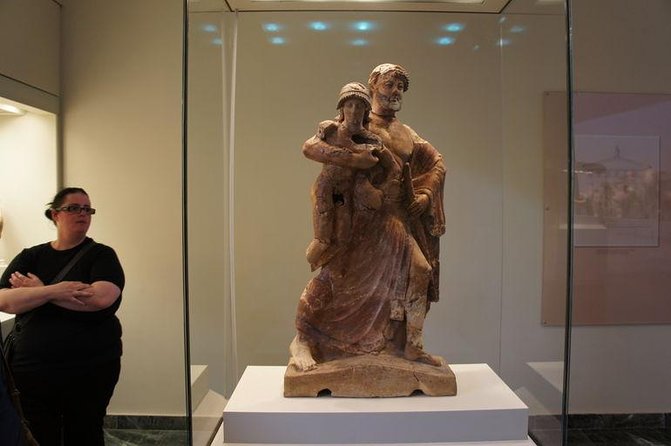
Then you go to the Olympia Museum for about 30 minutes. That short window is still meaningful because it’s where sculptures and artifacts become tangible. The museum is described as world-famous, and it includes highlights like marble temple decoration connected to the Temple of Zeus and a famous Hermes sculpture by ancient sculptor Praxiteles. Even if you’re not a hardcore art fan, seeing originals or major fragments shifts your understanding of what you walked past outside.
After Olympia, you head to Arcadia for the overnight. You’ll also get about 1.5 hours in Arcadia mountain stone-built villages—enough time to understand why this region shows up again and again in Greek poetry and pastoral imagination, without turning it into a theme park stop.
Arcadia villages, water power, and a cliff-hanging monastery
Day 8 is a mix of village time, a small museum option, and a hike-to-monastery moment. You start in Dimitsana, one of the most beautiful stone-built villages in central Peloponnese. You’ll have about 30 minutes—short, but enough for a walk through the feel of the place. It’s known for being popular year-round, including among Greeks.
Then there’s an option for the Open air Hydrokinesis (water power) Museum, focused on traditional water energy uses, including a reconstructed watermill plus tannery and gunpowder mill examples. If you like practical history, this stop can be a satisfying change from castles and temples.
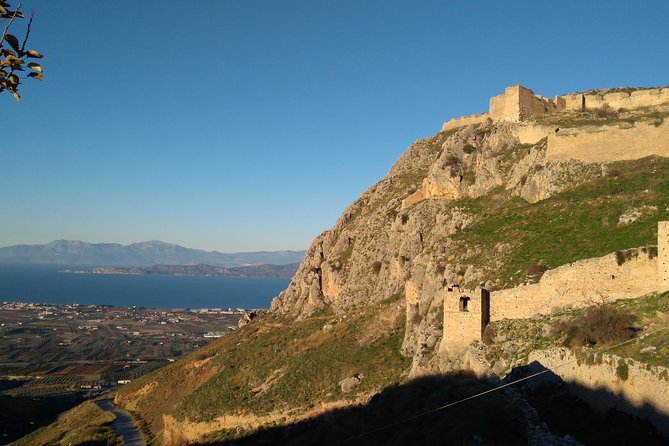
Next is Moni Agiou Ioanni Prodromou, visited after about a 20-minute hike through the forest, with around 1.5 hours on site. “Cliff-hanging monastery” means views and a sense of exposure; it’s the kind of stop that feels special partly because you had to walk into it.
After that, you’ll reach Stemnitsa for about an hour, including time for lunch. It’s a mountain village popular with Greeks and known for jewelry making. This is another place where your guide can help you interpret the small details—what you see, and what it likely meant to locals.
Kastria Cave of the Lakes and the Kalavryta railway ride: a strong final day
Day 9 begins with Kastria Cave of the Lakes, a mythical cave experience described as uniquely different from other well-known caves. You’ll have about an hour, which is just right for a guided cave visit where timing matters and footing matters. The highlight here is the “mysterious galleries” and unusual stalactite formations that create a specific kind of atmosphere.
Then you go to Kalavrita for lunch. Kalavrita is a town at the foot of Mt. Chelmos, known to Athenians in winter for its ski center, but also prized for stone-built houses, small squares, alleys, and tavernas under plane trees. The idea is to end your tour on a gentler, human scale rather than more ruins.
After lunch comes a ride on the Diakopto–Kalavryta railway. You’ll take about an hour trip through Vouraikos Gorge. This is one of those experiences where you don’t need historical context to enjoy it—you just need a window seat and patience for scenic stretches. Train tickets are not included, so check in advance so there’s no scramble.
Then you wrap back in Ancient Corinth for an optional shorter visit, about 45 minutes, plus a quick photo stop logic if you want a final look. Finally, the day ends back in Athens at Syntagma Square, or you can optionally be dropped near the port of Piraeus or airport.
What the private setup really changes (and where it can cost you)
The biggest value driver here is the private format. You’re traveling in a group of 1–7 related people only, with pickup offered and your own local driver/guide leading the way. That changes the experience in three practical ways: you can move at the pace of your group, you’re not stuck waiting for strangers, and the route can be guided by the kind of attention you want at each stop.
Comfort matters too. Brand new vehicles (2020–2022) plus bottled water and an in-car information booklet reduce stress on long driving days. When you’re moving across multiple regions, the booklet helps you understand why you’re stopping, so you spend more time looking at the place and less time Googling.
Now the careful part: ticket costs add up. Site admissions, the Hydra boat, Diros cave admission, the Kalavryta railway tickets, and other cave or museum entries aren’t included. You’ll also likely choose optional items like the Museum of the Olive and Greek Olive Oil, which can change your daily spending. If you want predictable budgeting, plan a separate fund for these entries.
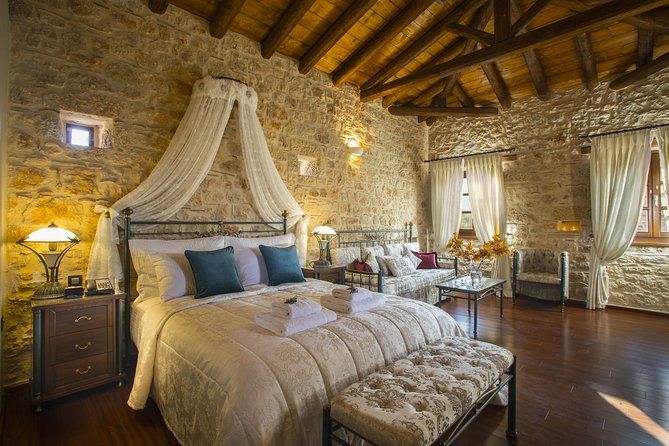
One more note: the tour includes only two nights of accommodation. The rest of the nights are on you, so consider how you’ll handle lodging across the full trip length. The included breakfasts and lunches help, but sleeping arrangements still matter for total comfort.
Who this tour fits best
This works especially well if you want a structured, guided route that still gives you breathing room at key towns like Nafplio and Hydra. It also fits couples and families who prefer private travel over buses and large groups.
It’s also a good match if you enjoy variety: ancient sites (Mycenae, Epidaurus, Olympia), medieval places (Monemvasia), dramatic nature (Mani and caves), and practical culture stops (olive museum option, water-power museum option). You’ll feel like you got a wide slice of the Peloponnese rather than repeating the same style of site every day.
If you’re someone who hates driving days or wants long free afternoons, you might find the schedule intense. In that case, you could still enjoy it, but you’d want to manage expectations about pacing and rest.
Service quality: the human factor behind the scenes
The tour’s success isn’t only about sites. The planning and communication matter, and this is where Nikos shows up in the feedback: calm, detailed communication during logistics planning months ahead, and flexibility that helps tailor what you need for a smoother trip. Theo is also mentioned as part of the team, and the dynamic described is that one person handles the driving and another leans into the interpretive side of the experience, with Theo sometimes described as an archaeologist within the group.
That matters because private touring lives or dies by guidance. When you’re hopping between UNESCO sites, caves, and medieval towns, the difference between a pass-through and a meaningful stop is often the explanation you get right on the spot.
Should you book this Peloponnese plus Hydra private tour?
I’d book it if you want a private, guide-led route that hits the Peloponnese’s biggest ancient and medieval highlights plus Hydra’s car-free island mood. The mix of ruins, towns, and nature is the main draw, and the included transportation comfort (new vehicle, water, booklet) helps you handle long days without feeling wrecked.
I’d pause before booking if your main priority is strict cost control. The base price is high, and the exclusions—especially site admissions plus the Hydra boat and the Kalavryta railway—can noticeably change your total. Also, the schedule requires moderate fitness and accepts that some days include stair walking and hikes.
If you’re comfortable budgeting for admissions and you like a well-paced route built around real stops, this is a strong choice for a first serious Peloponnese trip.
FAQ
How many people is this private tour for?
It’s a private tour for 1–7 related people only. If you have more than 7 people, you’re asked to contact the provider.
Is pickup offered, and what time does the tour start?
Pickup is offered, and the start time is 8:00 am. The tour returns you to Athens at Syntagma Square, with optional drop-off at Piraeus port or the airport.
Are meals included?
Yes. Breakfast and lunch are included (8 breakfasts and 8 lunches listed). Bottled water is also included.
What’s not included in the price?
Not included are approximate costs for sites, the boat to Hydra, and train tickets. Shopping stops and gratitudes are also not included, and a professional/licensed guide is listed as optional.
Do I need a certain fitness level?
You should have moderate physical fitness. The route includes activities like stairs (for example, the 999-step walk at Palamidi Castle) and a hike for a monastery visit.
What if I need to cancel?
You can cancel up to 6 days in advance for a full refund. If you cancel 2–6 days before, the refund is 50%. Less than 2 days before doesn’t get a refund.
If you tell me your travel month and whether you care more about ancient sites or scenery, I can suggest a realistic budgeting plan for the excluded tickets so there are no surprises.

More Private Tours in Athens


More Tours in Athens


More Tour Reviews in Athens
- All Day Cruise -3 Islands to Agistri,Moni, Aegina with lunch and drinks included
★ 5.0 · 4,958 reviews