REVIEW · ATHENS
2 Days Herodotus Tour – Marathon, Thermopylae, Delphi, Thebes, Plataea, Salamis
Book on Viator →Operated by GREECE TAXI · Bookable on Viator
Two days, battle stories you can actually see. This route follows the Greco-Persian Wars as you move from Marathon to Plataea, with private transport and an on-the-road audio documentary that gives context while you’re rolling. I like the fact that you can keep a comfortable rhythm instead of racing a big bus, and I also like the mix of battlefield stops and museums so the names from Herodotus’ Histories become places you recognize. One thing to plan for: several key museum/site tickets are not included, and the driver is not a licensed guide inside archaeological sites.
You’ll start at 8:00 am and spend your days hopping between coastal plains and mountain roads, with built-in time to pause for photos and look around at your pace. It’s a practical way to do these famous names in just two days—especially if you’re staying in Athens and want logistics handled.
In This Review
- Key things to know before you go
- How this 2-day Herodotus route makes the wars click
- Marathon Tomb, Schinias, and the Athenians’ sea-to-land story
- Thermopylae: the pass, the Hot Gates, and a museum you can choose
- Driving to Parnassus: where you’ll reset for Delphi
- Delphi: museum-first, then the oracle sanctuary
- Tholos of Athena Pronaia: a quick architectural stop that pays off
- Thebes’ museum and why you shouldn’t skip it
- Plataea and the Kithaeron drive: the war’s wider geography
- Ending at Perama and the Salamis ferry line
- Price and value: what $694.56 covers and what to budget
- Who this tour suits best (and where it might not fit)
- Should you book this 2-day Herodotus tour?
- FAQ
- What time does the tour start?
- How long is the experience?
- Does the tour include pickup and drop-off?
- Is this a private tour?
- Is mobile ticketing included?
- What languages are used for the driver’s commentary?
- Are site and museum tickets included?
- Do you need to pay for the Thermopylae museum?
- Can the tour arrange an overnight stay near Mount Parnassus?
- Does the driver act as a licensed guide inside archaeological sites?
- What is the cancellation window for a full refund?
Key things to know before you go
- Private car pace: you’re not tied to a fast group schedule.
- Audio history during driving: you get context as the landscape changes.
- Marathon + Delphi + Plataea in one run: the “big ticket” sites are covered fast but not frantic.
- Some admissions are included, others aren’t: you’ll want a small budget for tickets.
- A driver, not an on-site docent: you’ll walk through museums on your own (or hire an archaeologist guide).
How this 2-day Herodotus route makes the wars click
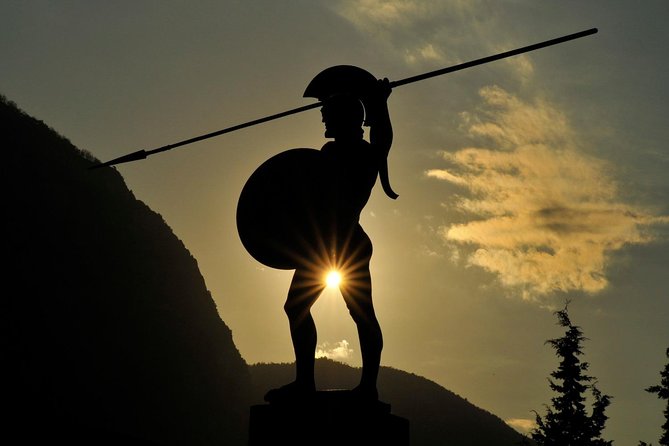
The best thing about this tour is that it treats history like a route, not a lecture. You drive between places where you can still sense the strategy—coasts for movement, narrow passes for control, and sacred sites where decisions were made. That’s where the audio documentary helps: it turns those road transfers into part of the story.
For me, the value is in the balance. You get enough museum time to understand what you’re seeing, but you also get battlefield access where you can read the terrain with your own eyes. If you’ve ever felt lost at big archaeological sites because you didn’t know what mattered first, this kind of structured route can help you get your bearings fast.
The tradeoff is also clear: you’ll spend time walking through sites without a licensed guide walking beside you inside the monuments. If you love deep, artifact-by-artifact explanations, you might want to add an expert guide for the main sites.
You can also read our reviews of more tours and experiences in Athens


Marathon Tomb, Schinias, and the Athenians’ sea-to-land story
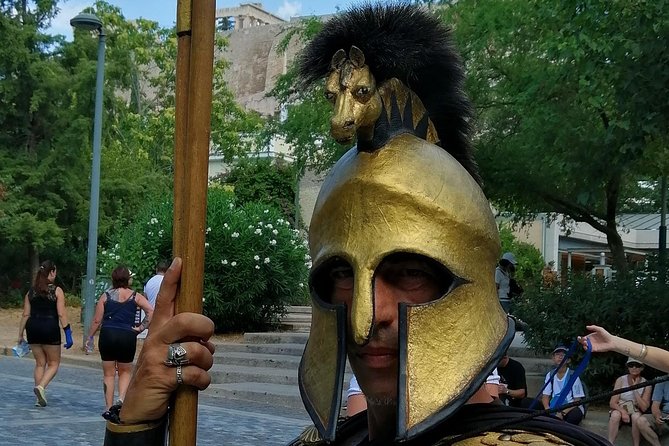
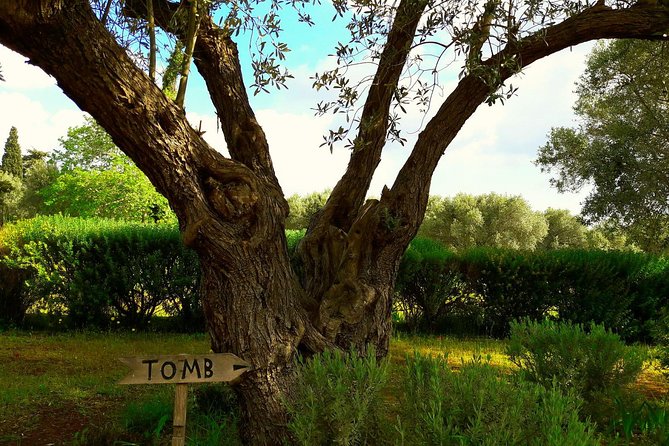
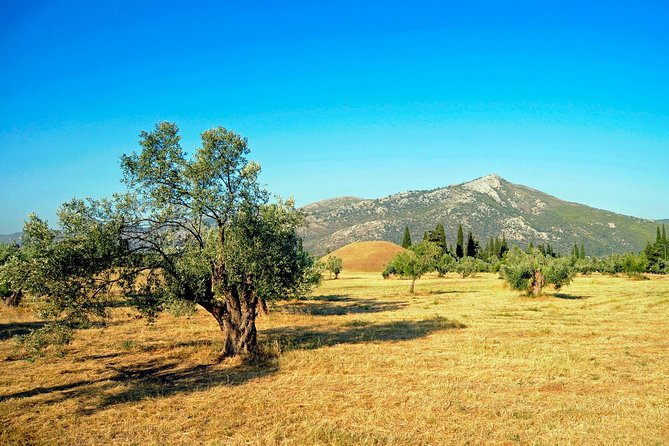
Your day starts with Marathon, and right away you’re anchored in place. The Marathon Tomb is a 10-meter burial mound about 1 km west of Marathon beach. Even if you’re not a “mound person,” it’s a strong starting point because it gives the battle a physical center—this is where memory is planted in the landscape.
Next you’ll head toward Schinias, a popular coastal resort area about 40 km northeast of Athens. This stop is short, but it’s smart: it lets you picture the coast that mattered for movement and defense, not just the monument photo.
From there, the Archaeological Museum of Marathon is a focused, useful stop because it displays local discoveries across periods—not just one narrow moment. You get about 30 minutes here, and the museum admission is included, which is a nice cost saver. You’ll also see finds tied to the Tomb of the Athenians and even Neolithic pottery from the Cave of Pan, which helps you remember that Marathon wasn’t only a one-day event in 490 BCE.
Then the tour adds a modern layer with Leoforos Marathonos, a quick stop tied to the modern Athens Marathon route. It’s free and brief, but it’s the kind of detail that makes this area feel alive: the same coastline and town geography still shapes movement today.
A small note on logistics: there’s also a stop connected to Lake Marathon, a reservoir that supplied Athens from 1931 to 1959. It’s not the headline attraction, but it’s one more example of how the landscape keeps getting repurposed for the needs of the era.
Thermopylae: the pass, the Hot Gates, and a museum you can choose
Thermopylae is why people sign up for this kind of trip, because the geography is the star. You’ll spend about an hour at the Battlefield of Thermopylae, where Greek forces—including the Spartans—faced the invading Persian forces in 480 BCE. You’ll also encounter the famous Simonides epitaph message on-site, but you’ll read it in context rather than as a standalone quote.
The Thermopylae Museum is right next to the Leonidas monument, and it costs 3€ if you want it. I like having this as an optional add-on. If you’re museum-leaning, you’ll likely enjoy the dedicated focus on the 480 BCE battle; if you’re more terrain-focused, you can save time and energy for the surrounding stops.
After that, you’ll head to Loutra Thermopilon (the Hot Gates area). It’s a short stop, about 30 minutes, and admission is free. Even if you don’t plan a long walk, the site gives you a myth-and-landscape connection—this pass isn’t only a military bottleneck; it’s also loaded with Greek mythology about the entrances to the Underworld.
A practical tip: Thermopylae involves walking on uneven ground in places, so bring shoes you’re happy in for short distances. When you’re comparing passes and viewpoints, comfort matters.
Driving to Parnassus: where you’ll reset for Delphi
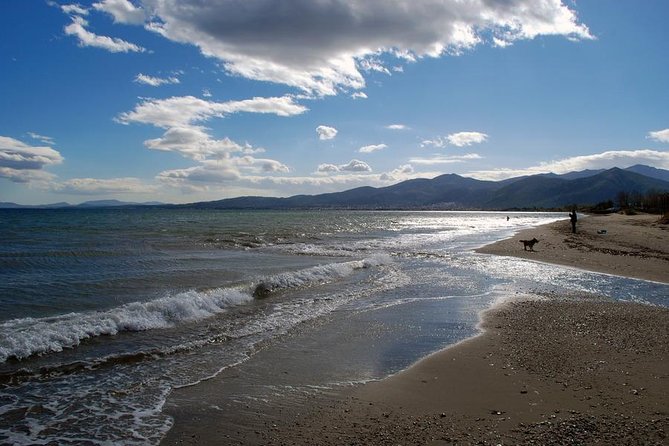
One of the reasons this tour can cover so much in two days is that it uses driving time intelligently. After Thermopylae, you’ll drive via Mount Parnassus, and you’ll get scenic views over olive groves and countryside as you move toward Delphi.
Mount Parnassus is described as sacred in Greek mythology, associated with Dionysus and Apollo, and linked to the Muses. You’ll also learn that Parnassus is one of the larger mountainous regions of mainland Greece and among the higher mountains. It’s a reminder that Delphi wasn’t placed randomly—it was wrapped in a mountain setting that carried meaning.
The tour includes an overnight option on the slopes of Mount Parnassus in a traditional village setting. You can arrange accommodation for yourself with the provider’s help, using selected boutique hotels A’class or 3/4 hotels with breakfast (extra cost per double room, with weekend rates noted as higher). The driver’s room is complimentary—this matters because it keeps the itinerary smooth.
If you’re sensitive to long days, this overnight is the smart buffer. Without it, Delphi in a same-day sprint from Athens would be exhausting.
Delphi: museum-first, then the oracle sanctuary
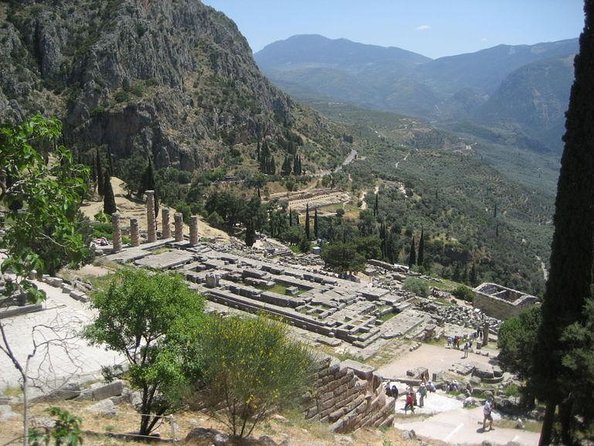
Day two begins at the Delphi Archaeological Museum, one of Greece’s key museum stops. You’ll get about one hour, and admission is not included. This museum focuses on the sanctuary story and the oracle—plus architectural sculpture, statues, and smaller objects connected to Delphi’s religious and political life.
I like starting with the museum because it gives your eyes a map. Then when you step onto the larger site, you’re not guessing which parts matter. You already know what you’re looking for: the sanctuary’s role, its monuments, and its long arc from early centuries to later decline.
Then you’ll explore Delphi Ancient Town (the archaeological site). Admission varies by season: summer is 20€ and reduced is 10€ in the listing’s winter pricing. You’ll get about 1 hour 30 minutes. You’ll also hear the “center of the world” idea: Delphi was seen as the omphalos point, and you’ll see the stone marker called the omphalos.
The site sits on the southwestern slope of Mount Parnassus, overlooking the coastal plain and the valley of Phocis. That’s useful information because it explains why Delphi feels dramatic—even when you’re just standing still. UNESCO recognition comes from Delphi’s influence across the ancient Greek world and the monuments built there by many city-states, showing shared Hellenic identity.
A quick practical caution: archaeological sites can mean steps and uneven ground. Plan for comfortable walking and water.
- All Day Cruise -3 Islands to Agistri,Moni, Aegina with lunch and drinks included
★ 5.0 · 4,958 reviews




Tholos of Athena Pronaia: a quick architectural stop that pays off
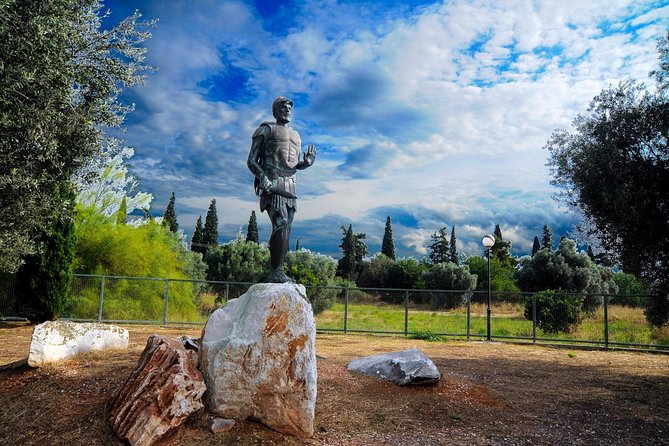
After Delphi Ancient Town, you’ll visit the Tholos of Athena Pronaia. This is a smaller time commitment—about 30 minutes—and admission is included in the tour.
This circular building dates to between 380 and 360 BC, with 20 Doric columns on the exterior and an interior using Corinthian order. It’s tall—about 13.5 meters at the center—with an exterior diameter of about 14.76 meters. You don’t need to be an architecture nerd to appreciate it. A stop like this breaks up the day and gives you a tangible example of how the sanctuary was built with style and purpose, not just temples and statues.
Thebes’ museum and why you shouldn’t skip it
Next comes Thebes, and specifically the Archaeological Museum of Thebes. Admission is not included, and the ticket pricing is listed as 6€ general and 3€ reduced in winter pricing.
This museum is useful because it spans a very broad time range—from Paleolithic through Post Byzantine periods. That breadth can surprise people who expect a one-period war museum. But it’s a good reminder: even when you’re focused on the Greco-Persian Wars, the broader region kept changing, and the finds reflect that long continuity.
I also like that the museum is based on excavations around Boeotia, so it stays tied to local context rather than feeling like imported objects in a display case.
Plataea and the Kithaeron drive: the war’s wider geography
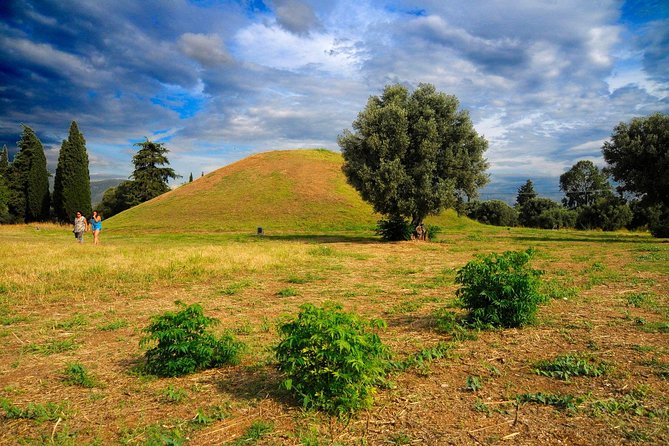
Plataea is where the tour brings you back to the 479 BCE battle outcome, and it’s structured as a battlefield stop followed by scenic driving.
You’ll see Gargathia spring, described as the beginning point of the battle, and then you’ll drive via Mount Kithaeron toward the coastal area of Elefsina and eventually onward toward Piraeus using the coastal road. The Kithaeron route matters because mountain-to-coast geography is often the difference between theory and understanding.
There’s also a stop connected to Eleutherai and the old Athens–Thebes route area, with notes about Dionysus Eleuthereus and the strategic placement along the borderline of Athenian territory. Even if you don’t memorize the cult details, the stop gives you a sense of why borders mattered to ancient powers.
Ending at Perama and the Salamis ferry line
You’ll finish with Perama, which is described as a port city within the Athens urban area and Piraeus regional unit. The name Perama comes from a word meaning passage, which fits nicely with the tour theme: movement through chokepoints, whether those chokepoints are land passes or sea crossings.
This stop is short, about 30 minutes, and admission is free. It also gives you a visual end-cap: after all the mountain and battlefield terrain, the Saronic Gulf setting brings the Greco-Persian Wars into a maritime context.
If you’re thinking of stretching your evening, Perama and the broader Piraeus area can be a practical place to connect to ferry schedules or dinner plans.
Price and value: what $694.56 covers and what to budget
The published price is $694.56 per person for an approximately 2-day experience with private transport. That number feels high until you break it down the way you would with any private car day tour in Greece: you’re paying for pickup/drop-off, an air-conditioned vehicle, fuel/tolls/parking, and a professional English-speaking driver for two full days.
Your biggest variable is admissions. The tour explicitly says several admissions are not included, including Marathon, Thermopylae, Delphi, and Thebes. Some site fees are listed in the notes:
- Marathon Tomb: 6€ (reduced 3€), and it includes Marathon Museum in the listing notes.
- Thermopylae Museum: 3€ (not included).
- Delphi Ancient Town: 20€ in summer, reduced 10€ in winter pricing.
- Tholos of Athena Pronaia: admission is included.
- Thebes Museum: 6€ general, 3€ reduced in winter pricing.
There are also free stops sprinkled in, like Schinias, Leoforos Marathonos, Lake Marathon, Battlefield of Thermopylae, and Loutra Thermopilon, plus several others. That mix helps keep your out-of-pocket cost from feeling like every hour equals another ticket.
Then there’s gratuity, listed as from 1€ per person. That’s small, but it’s still a planning item.
If you want a simple budgeting mindset, assume the car portion is paid for, and plan on adding a ticket budget on top for the museums and major sites that are not included.
Who this tour suits best (and where it might not fit)
This is a strong fit if you want a private, flexible, history-forward route without the stress of renting a car or stitching together bus schedules. It also works well if you care about seeing multiple battle sites and sacred sites in a short timeframe from Athens.
You’ll also like it if you enjoy learning while you go. The audio documentary during driving is built to keep you oriented while the scenery changes.
Where it might not fit: if you need an expert archaeologist doing guided interpretation inside every major site, the driver can’t replace that. The tour notes specifically say the driver is not a licensed tourist guide for walking or inside museums/archaeological sites. You can still enjoy the places on your own, but if you want deeper narration inside the ruins, hire an archaeologist tourist guide in advance.
Should you book this 2-day Herodotus tour?
I’d book it if your priority is a clean, well-paced route through Marathon → Thermopylae → Delphi → Thebes → Plataea → Salamis with private transportation and on-the-road historical context. The overnight option near Mount Parnassus also makes this feel doable, not rushed.
Skip it (or consider a different format) if you already know you want a full licensed guide inside each museum site and you’re not interested in doing self-guided walking through the ruins. In that case, you’d likely spend extra to hire specialists anyway.
If you’re on the fence, ask yourself one question: do you want your time to be spent seeing and absorbing the terrain, with explanations coming from audio and quick museum stops? If yes, this route is a very practical way to turn ancient battles into real, walkable places.
FAQ
What time does the tour start?
The start time is 8:00 am.
How long is the experience?
It’s listed as approximately 2 days.
Does the tour include pickup and drop-off?
Yes. Pickup and drop-off are offered from/to your hotel or apartment in Athens or Piraeus, and you can request another location.
Is this a private tour?
Yes. It’s private, with only your group participating.
Is mobile ticketing included?
Yes. Mobile ticket is listed as a feature.
What languages are used for the driver’s commentary?
The driver is described as a professional English-speaking tour driver, and there is also an informative audio documentary during travel.
Are site and museum tickets included?
Some are included and others are not. For example, admission to the Archaeological Museum of Marathon is included, and the Tholos of Athena Pronaia is included. Admission for Marathon, Thermopylae (including the Thermopylae Museum), Delphi (site and museum), and Thebes is listed as not included.
Do you need to pay for the Thermopylae museum?
Yes. The Thermopylae Museum is listed with a 3€ ticket and is not included.
Can the tour arrange an overnight stay near Mount Parnassus?
Yes. Accommodation can be arranged in selected boutique hotels or 3/4 hotels with breakfast, with extra cost per double room. The driver’s room is complimentary.
Does the driver act as a licensed guide inside archaeological sites?
No. The driver is not a licensed tourist guide for walking at Delphi or inside archaeological sites and museums. If you need a licensed archaeologist guide, you must hire one separately in advance.
What is the cancellation window for a full refund?
You can cancel up to 6 days in advance of the experience for a full refund. Less than 6 full days before start time is not accepted for a full refund.


More 2-Day Experiences in Athens



More Tours in Athens


More Tour Reviews in Athens
- All Day Cruise -3 Islands to Agistri,Moni, Aegina with lunch and drinks included
★ 5.0 · 4,958 reviews