REVIEW · ATHENS
Ancient Athens tour: Acropolis, Parthenon and Acropolis Museum
Book on Viator →Operated by Athens Walks Tour Company · Bookable on Viator
Ancient Athens hits fast and hard. This guided loop around the Acropolis makes the ruins feel readable, and the included stop at the Acropolis Museum ties the story together with artifacts you can actually see.
I love how the walk connects major monuments in a logical order, from the gates up top to the famous Caryatids at the Erectheion. I also love that the museum is designed around what’s on the rock above it, so you’re not just looking at objects in a vacuum.
One thing to plan for: the climb is short but steep, and some parts can be slippery, especially in busy conditions. Also, tickets cost extra unless you pick the add-on option for entrance fees.
In This Review
- Key highlights to look for
- Entering Ancient Athens: Why This Tour Works
- Meeting at Porinou 5 and Beating the Sun
- Propylaea to Erectheion: The Acropolis Walk That Feels Like a Map
- Parthenon Time: More Than a 10-Minute Photo Stop
- Theatre of Dionysus and Herod Atticus Odeon: Greek Performance History in Plain Sight
- How the Guide Keeps the Day Comfortable (Even When It’s Busy)
- New Acropolis Museum: The Stop That Changes What You Think You Saw
- Tickets and the Real Value of the Price
- Practical Tips for a Hot, Steep Morning
- Who This Tour Best Fits
- Should You Book This Acropolis and Acropolis Museum Tour?
- FAQ
- What’s the duration of the tour?
- What time does the tour start?
- Where does the tour meet?
- Are entrance tickets included?
- How much are the entrance fees?
- How big is the group?
- Do I need an ID if I’m under 25?
Key highlights to look for

- Licensed guide for the full story, not just a pointing tour
- New Acropolis Museum links what you see on the hill with real artifacts
- Small group (max 20) helps you keep your bearings and hear your guide
- Water provided and a practical pace that works in the sun
- Photo-friendly stopping points, without turning it into a race
Entering Ancient Athens: Why This Tour Works
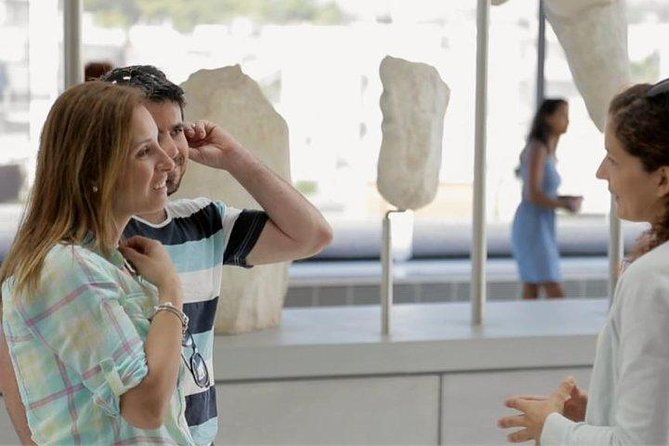
The Acropolis is one of those places where first-time impressions are great but also messy. Yes, the Parthenon grabs you from the start. But without context, you’re mostly collecting screenshots and feeling like you missed the point.
This tour is built to fix that. A licensed guide helps you connect what you’re seeing to who built it, why it mattered, and how different parts of the site relate to each other. The New Acropolis Museum then seals the deal by showing you the artifacts that explain the carvings, styles, and daily meaning behind the monuments.
And the pacing matters. You’re not stuck in a long line of people staring at stone from a distance. Instead, you get time to regroup, look closely at details, and move before the heat fully takes over.
You can also read our reviews of more museum experiences in Athens


Meeting at Porinou 5 and Beating the Sun
You start at Porinou 5 in Athens, with the tour running about 4 hours total. The morning start (9:00 am) is a smart move here, because the sun ramps up quickly and the stone walk only gets tougher as the day warms.
This also helps with crowd flow. Even with an early start, the Acropolis area can be busy, so having a guide who knows where to pause and when to move makes a real difference. I’ve seen guides like Giannas and Selena praised for keeping groups comfortable and on-track, including finding spots to gather for explanations and photos.
You’ll also have practical support for the conditions. Bottled drinking water is provided, and guides tend to build in comfort stops so you don’t feel like you’re being dragged uphill on a timer.
Propylaea to Erectheion: The Acropolis Walk That Feels Like a Map
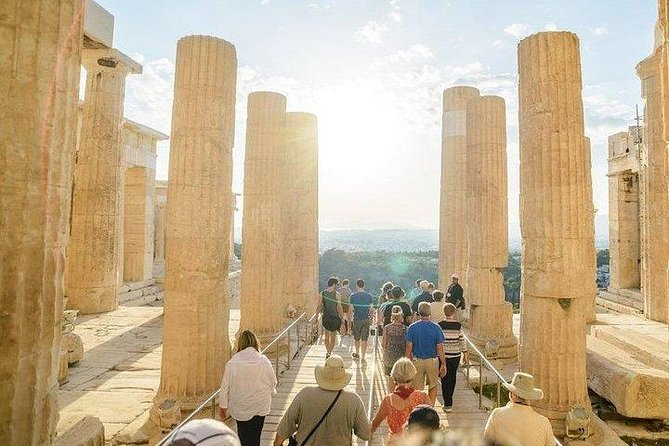
Once you’re on the hill, the tour essentially turns the Acropolis into a walkable diagram. You don’t just “see the highlights.” You get the sense of how you’re moving through the site and why each landmark is placed where it is.
You begin with the Acropolis itself, including time to explore at a leisure pace. That matters because the Acropolis isn’t one monument—it’s a whole set of structures, viewpoints, and layers of meaning. A couple extra minutes in the right spot can help you understand what you’re looking at later.
Then you pass through Propylaea, the gate that frames the transition from the approach into the sacred space. Propylaea is more than an entrance. It’s the architectural statement that you’re moving into a different world—one built for ceremony and civic identity.
From there, you hit the Temple of Athena area and the Erectheion stop, where the famous Caryatids come into play. Those carved female figures are hard to forget once you see them. With a guide’s framing, they stop being just “statues” and start feeling like part of a larger visual language—one that was meant to be seen up close and at eye level.
Parthenon Time: More Than a 10-Minute Photo Stop

The Parthenon is the star, but the key is how you approach it. A quick stop can still be worthwhile if you’re getting the right context, and this tour is designed that way.
You’ll reach the top area where the Parthenon stands, and you get time built around looking, not only snapping. Since you’re moving with a group, you’ll likely be guided toward photo spots that line up with what you’re learning, instead of wandering around randomly.
One reason this works is that it’s not treated as a stand-alone monument. Your guide connects the Parthenon to the broader Acropolis story—so when you look at columns, sculptural details, and the overall layout, your brain starts organizing the scene.
Also, the reality check: the stone can be slippery in spots. One solid piece of advice from recent experiences is to slow down on tricky patches. Wear grippy shoes, and don’t assume the walkway is always stable. It’s manageable, but it’s not a casual stroll.
Theatre of Dionysus and Herod Atticus Odeon: Greek Performance History in Plain Sight
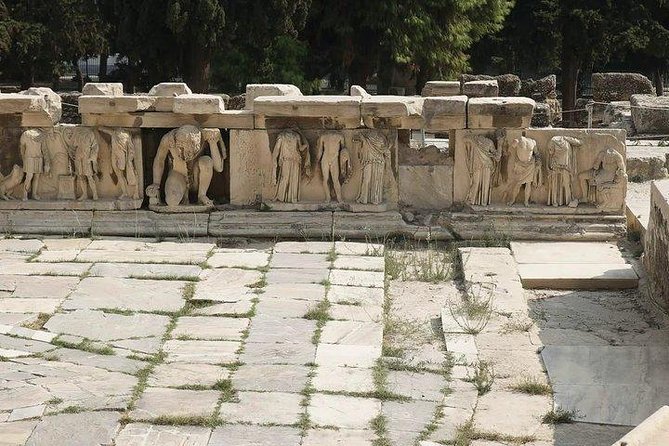
After the Parthenon zone, you move into the theatre area of the Acropolis complex. The Theatre of Dionysus is one of the most important ancient theatres, and the tour gives you short, focused time there.
Even if you’re not a theatre fanatic, this stop is a great “aha” moment. Greek culture wasn’t only about temples and politics. It also revolved around performances, storytelling, and public festivals. Watching how the space works—where people sat, where sound would travel, and what the stage area implies—helps make the ancient city feel human.
You also spend time around Herod Atticus Odeon, a structure that still functions. That’s a powerful contrast: the Acropolis can feel like a museum, but here it’s also a working piece of architecture. It’s the kind of detail that makes you look twice at the stone and imagine the noise, movement, and crowds that once filled it.
The tour even includes multiple time windows in this theatre zone, which is useful when the site is crowded. It gives you a couple chances to settle in and see the layout from more than one angle.
- All Day Cruise -3 Islands to Agistri,Moni, Aegina with lunch and drinks included
★ 5.0 · 4,958 reviews






How the Guide Keeps the Day Comfortable (Even When It’s Busy)

A small group makes a big difference at the Acropolis. This tour caps at 20 people, which helps you avoid the “follow the back of someone’s backpack” experience.
It also helps with listening. Some guides use audio support like ear pieces or microphone devices, which can be a lifesaver in packed areas. You’re not constantly yelling over other groups, and your guide can keep explaining without losing the class.
You’ll feel the difference in how guides handle crowd pressure. Guides such as Bernardos and Michael G have been praised for patient pacing and engaging storytelling, which matters because the Acropolis can overwhelm you fast. If you’re lucky, you’ll also get humour and clear mental hooks. Those small moments are what turn a list of monuments into an actual walk through ideas.
There’s also attention to comfort. Multiple guides are noted for providing shade pauses and hydration breaks, especially on sunny days. In practical terms, that can be the difference between enjoying the last third of the tour or counting the minutes until it’s over.
New Acropolis Museum: The Stop That Changes What You Think You Saw
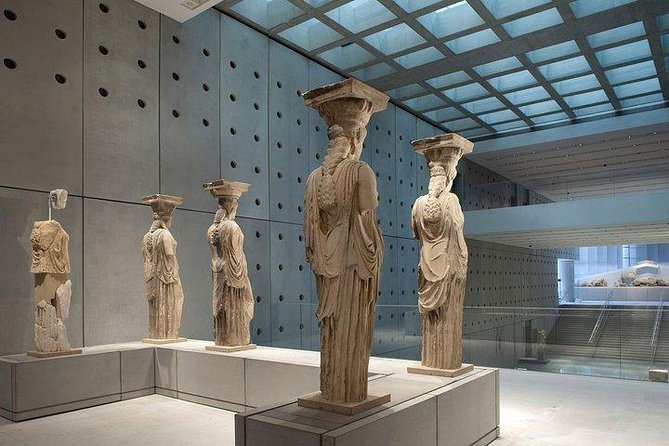
If I had to pick the secret weapon of this tour, it’s the New Acropolis Museum. The Acropolis hill gives you the setting. The museum gives you the evidence.
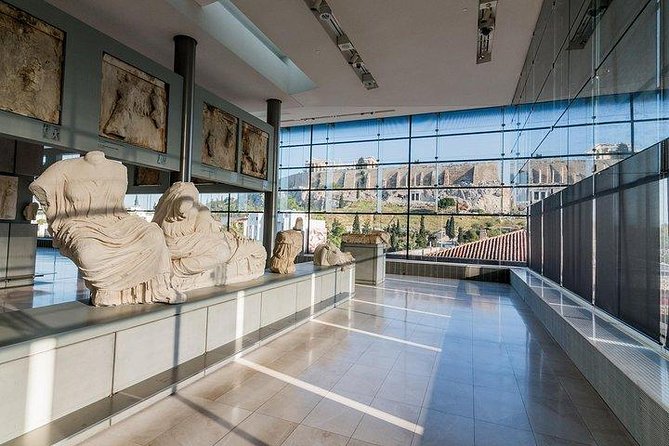
The museum focuses on findings from the Acropolis site—artifacts from the Greek Bronze Age through Roman and Byzantine Greece. You’re not just seeing a few statues. You’re seeing a timeline of what people left behind as styles changed, powers shifted, and cultures layered over time.
And it’s not only about objects in cases. The museum is built over ruins of Roman and early Byzantine Athens. That means the building itself continues the story of continuity and change. You’re walking through a modern space designed to hold material from multiple eras while sitting above traces of later occupation.
A practical bonus: after the guide-led portion, you can continue on your own. That’s ideal because museum viewing is personal. Some people want carvings and sculptural details. Others want layout and “how did they build it” questions. You get enough structure to understand what matters, then flexibility to spend time your way.
Tickets and the Real Value of the Price
The base price is $72.59 per person for the guided experience, roughly 4 hours. That’s the part you’re really paying for: a licensed guide, organized timing, and the flow that makes the Acropolis readable instead of chaotic.
Entrance fees are separate unless you choose the option that includes them. Expect to budget €30 for Acropolis entry and €20 for Acropolis Museum entry if you don’t pre-select the ticket add-on. In other words, your total cost can jump if you show up without tickets ready.
Here’s how I judge value in a tour like this:
- If you want a guided walk with context, not a random self-guided sprint, the guide fee is worth paying.
- If you’re the type who usually tours museums slowly, the included museum time will likely save you time and confusion.
- If you already have tickets and don’t need help navigating, then your “extra value” mostly comes down to whether you like the guide and pacing.
Either way, plan ahead so you don’t get stuck juggling payment at the meeting point. Bring a plan for the entrance fees and keep your focus on enjoying the day.
Practical Tips for a Hot, Steep Morning
This is a moderate-physical-fitness walk. It’s not a long hike, but it’s uphill and you’ll spend time on uneven stone. If your legs aren’t great with stairs, go slow and take the pauses your guide offers.
Bring what the day demands:
- Water and sunscreen (water is provided, but sunscreen is on you)
- Grippy footwear for slippery patches
- A hat and something light to shade your neck
Hearing can also be a factor. One practical suggestion: if you have your own wired headphones, bring them along. In crowded areas, you might prefer them for clarity, especially if you’re sensitive to audio quality.
If you’re under 25, you may need your physical passport or ID to help access reduced pricing where applicable. Don’t count on your phone for this one.
Finally, use the early start. One reason people love morning slots is simple: you get better energy for the walk, and you’re not fighting the full heat peak.
Who This Tour Best Fits
This works well for first-timers to Athens who want the big icons with more meaning. It’s also great if you prefer a guide to handle logistics while you concentrate on seeing and understanding.
It’s less ideal if you hate walking in the sun, struggle with steep stone, or want hours of free roaming with no structure. This is a focused experience, not an all-day wandering pass.
If you want a tour where the museum stop isn’t optional, and you want the Acropolis explained rather than just gazed at, this fits nicely.
Should You Book This Acropolis and Acropolis Museum Tour?
Yes, if your goal is to understand what you’re looking at and not just check boxes. The combination of the Acropolis walk with the New Acropolis Museum is the reason this tour earns its strong ratings.
Before you book, do two things: budget the entrance fees if you’re not selecting the ticket option, and wear shoes that can handle slick stone. If you do those, you’ll spend your time looking at the Parthenon, Caryatids, theatre spaces, and artifacts in a way that feels connected.
If you’re on the fence, choose this tour over a self-guided day. The guide’s pace and context help you get more out of every step.
FAQ
What’s the duration of the tour?
The tour lasts about 4 hours.
What time does the tour start?
The start time is 9:00 am.
Where does the tour meet?
The meeting point is Porinou 5, Athina 117 42, Greece.
Are entrance tickets included?
Entrance fees are not included unless you booked an option with entrance tickets. If you did not, you buy them cash from your guide at the meeting point.
How much are the entrance fees?
Acropolis entry is €30 per person, and Acropolis Museum entry is €20 per person, unless you booked the entrance-ticket option.
How big is the group?
The tour has a maximum of 20 travelers.
Do I need an ID if I’m under 25?
Yes. If you are under 25, you will need your physical passport or ID.




More Museum Experiences in Athens



More Tours in Athens

More Tour Reviews in Athens
- All Day Cruise -3 Islands to Agistri,Moni, Aegina with lunch and drinks included
★ 5.0 · 4,958 reviews