Ancient Athens, explained on real sidewalks. This tour stitches together the Acropolis and the Temple of Olympian Zeus with slower, more human stops in between—so you see why the city works the way it does. I like that it’s small-group (up to 12), which means fewer bottlenecks and more time to ask questions. I also like that the tour is set up to skip long lines, so you spend energy on views instead of waiting.
One thing to plan for: expect uphill walking and some uneven streets. If you’re sensitive to heat or steep grades, wear good shoes, take water breaks when you can, and don’t treat this as an easy stroll.
In This Review
- Key highlights at a glance
- Syntagma Square to the Tomb of the Unknown Soldier: start with Athens right now
- Quick consideration
- A cut through gardens and old ruins: where Athens hides layers
- The 1896 Olympic connection: more than a fun fact
- Panathenaic Stadium: a stadium that feels like a landmark
- Tip for your pacing
- Temple of Olympian Zeus and the walk toward the Acropolis
- Mars Hill views: the payoff for walking uphill
- Practical note
- Finishing in Monastiraki: market life, souvenirs, and a Greek sweet
- End point you can actually use
- Price and value: is $90.93 worth 2.5 hours?
- Who this tour suits best
- A note on guides and the “feel” of the tour
- Should you book this Athens walking tour?
- FAQ
- What’s the meeting point for the tour?
- How long is the Athens walking tour?
- Is the tour offered in English?
- Is food included?
- Does the tour include line skipping?
- Is there a dress code?
- What group size should I expect?
- Can kids join?
- FAQ
- Is the tour refundable if I cancel?
- Are refunds available if I miss the tour due to late or non-arrival of a cruise ship?
- Is this tour wheelchair-friendly or fully accessible?
- Are service animals allowed?
Key highlights at a glance
- Syntagma Square start with context on modern Athens and the Tomb of the Unknown Soldier
- Change-of-the-guard moments plus a quick, quieter route before the busiest areas
- Olympic-era landmarks including the Ceremonial Center (1896) and the Panathenaic Stadium
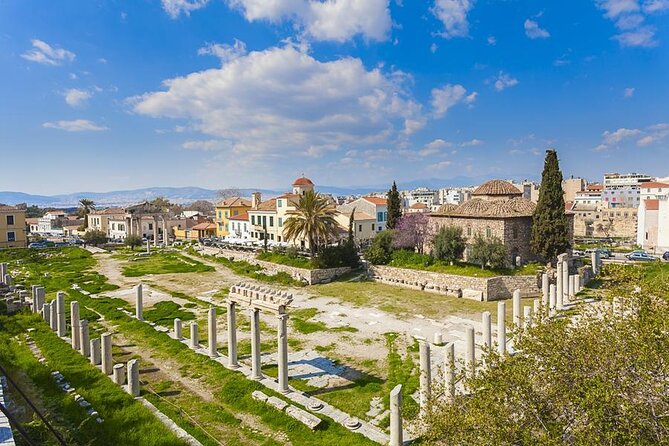
- Major ruins without the rush: Zeus, Mars Hill views, and the walk through Plaka
- Local breaks for shopping and a Greek sweet before you finish in Monastiraki
Syntagma Square to the Tomb of the Unknown Soldier: start with Athens right now
The tour begins at Plateia Syntagmatos (Syntagma Square), the modern heart of Athens. The guide frames what you’re about to see in a simple way: where the city’s current politics and daily life meet ancient symbolism. It’s a smart opener because the rest of the walk keeps cross-referencing ideas—power, memory, and public space.
A big early payoff is the Tomb of the Unknown Soldier. You’ll have a chance to take in the National Guard spectacle, the kind of moment that’s easy to miss when you’re just passing through. You also learn what the monument represents, which changes your perspective once you’re standing there. This portion is usually the best “pause and look up” moment of the entire outing.
If you’re arriving by foot, this is also a practical starting point. Syntagma is well connected, and it’s an easy place to orient yourself for the rest of the day.
You can also read our reviews of more walking tours in Athens

Quick consideration
This start is city-paced, so you’ll likely be on your feet right away. If your energy is limited, this is still manageable—but it’s not a start-with-coffee, sit-down kind of tour.
A cut through gardens and old ruins: where Athens hides layers

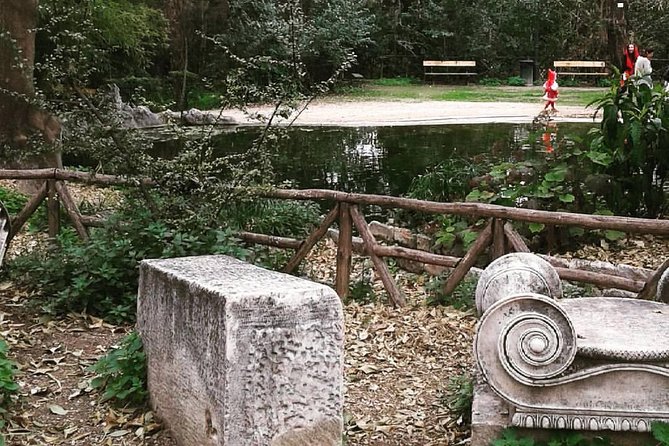
After the monument area, the route moves toward the National Garden, a welcome shift from street noise. Even if you don’t consider yourself a “garden person,” this stop works because it creates breathing room. Athens can feel intense when you’re moving fast from one highlight to the next, and this segment gives you a calmer rhythm.
Then the walk points out the ruins of the Ancient city in and around the area. You start seeing Athens as a place built on top of itself, not as a museum you visit in one straight line. This is one of the reasons I like this tour’s style: it uses the city’s geography to explain history, instead of turning every stop into a lecture.
The 1896 Olympic connection: more than a fun fact
One of the most interesting “why is this here?” moments is the Neoclassical Ceremonial Center for the first modern Olympic Games in 1896. Athens loves its Olympic branding, but this stop helps you understand the event as a message. The modern Olympics weren’t just sports—they were identity, history-making, and a statement about Greece’s place in the world.
From a touring perspective, this section breaks up the heavy hitters. You’ll still be heading toward major sites, but you’re not walking straight from Zeus to Acropolis like a conveyor belt. Instead, you get a logical progression: cultural memory → public spectacle → the stadium setting → bigger monuments.
Panathenaic Stadium: a stadium that feels like a landmark

Next comes the Panathenaic Stadium, famous because it’s tied to the earliest Olympic revival story and built with a sense of ceremony. It’s also the kind of place where a guide’s framing matters. Without that context, it’s just a structure you pass through for photos.
With context, you notice details: scale, the feeling of standing in an arena built for civic pride, and how the city uses sports spaces as public stages.
- All Day Cruise -3 Islands to Agistri,Moni, Aegina with lunch and drinks included
★ 5.0 · 4,958 reviews




Tip for your pacing
This portion is often less crowded than the Acropolis itself, so it’s a great time to slow down, take a breath, and collect your thoughts before the higher-traffic ruins.
Temple of Olympian Zeus and the walk toward the Acropolis
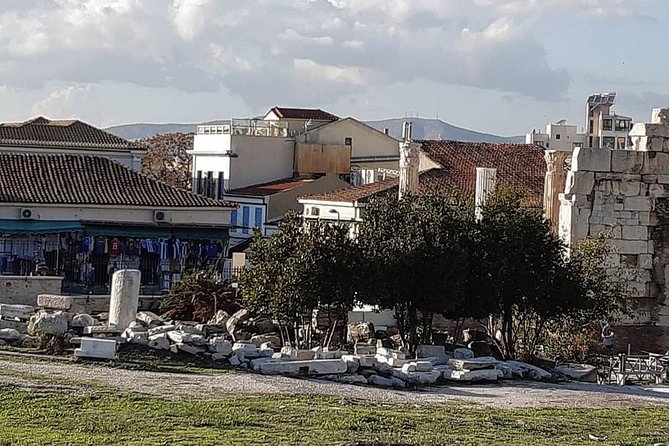
Then you hit the Temple of Olympian Zeus. It’s one of those locations where your first reaction is visual—huge space, big remains, that “how old is this really?” feeling. The second reaction is understanding. The guide’s job here is to connect what you’re seeing to how power worked in ancient Athens: grand building as a public message.
From there, the route shifts toward the Acropolis area and the neighborhoods around it. You’ll also get time to walk around Plaka, the old-meets-new district that many people only skim during short visits. Here it works because you’re walking with purpose. You’re not hunting photos—you’re learning how the city’s maze-like streets sit beside its monuments.
Mars Hill views: the payoff for walking uphill
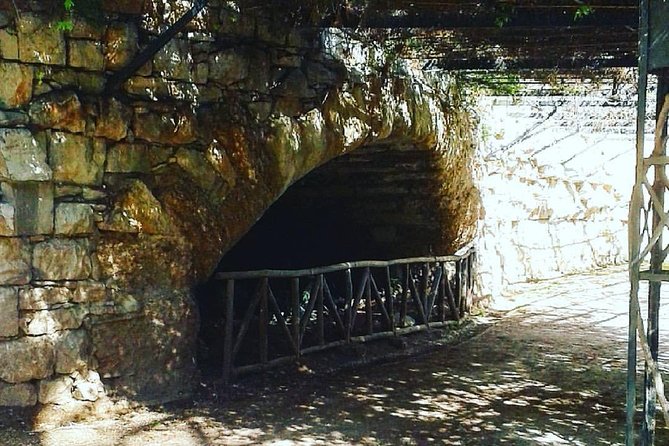
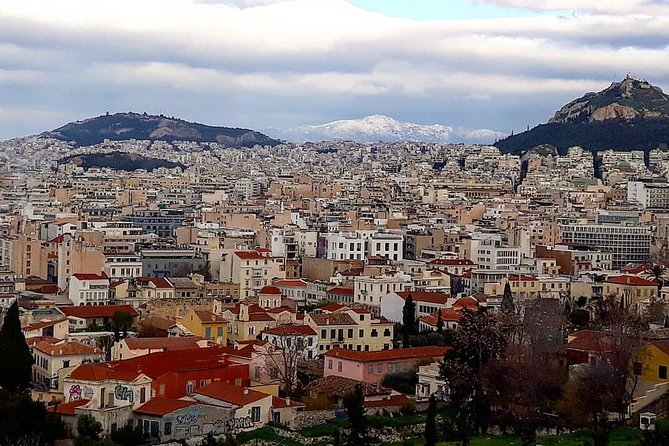
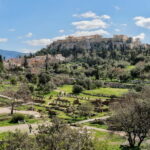
At some point you’ll get a view from Mars Hill, described in a poetic way as a kind of hidden island of Athens. I’m not saying you’ll feel like you discovered the city’s secret heart—but you will likely understand why people keep coming back for perspectives like this. It’s the moment where the entire walk clicks.
From that viewpoint, you can trace how the modern city spreads and how the ancient sites anchor the landscape. It helps you look at the Acropolis differently too: less as one isolated landmark and more as part of a system.
Practical note
This is where the “bring comfortable shoes” advice becomes real. Streets can be steep, and the surface may not always be smooth. If you arrive with comfy footwear, you’ll enjoy this section instead of dreading it.
Finishing in Monastiraki: market life, souvenirs, and a Greek sweet
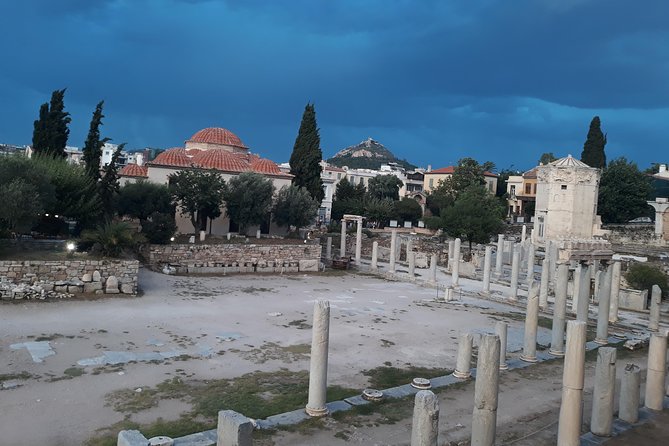
The last stretch turns toward everyday Athens. You’ll see a market with more than a thousand years of use, which is one of those facts that means more when you’re standing in the flow of street life. The market isn’t just a backdrop—it’s a living rhythm that still sells, still trades, still matters.
You’ll also have time for artisan souvenir shops. This isn’t about rushing through stores. It’s more about learning what to look for so you don’t end up with the same mass-market junk you see everywhere.
And yes, you should plan your taste buds for the break: the tour includes a traditional Greek sweet at a café favored by locals. It’s a nice mid-to-late walk reset, especially since the itinerary is built to take you away from the strongest daytime heat before you end.
End point you can actually use
You finish near Monastiraki, specifically at Monastiraki Square and close to the metro area. That makes it easy to continue exploring, head back to your hotel, or switch to another part of Athens without having to backtrack.
Price and value: is $90.93 worth 2.5 hours?
At about $90.93 per person for roughly 2 hours 30 minutes, the value comes from three things: focus, time savings, and pacing. First, this is limited to a small group of up to 12, which matters in places like Acropolis approach routes and the Tomb of the Unknown Soldier area where crowds can get dense fast. Second, you’re getting local guidance plus guaranteed skipping of long lines at key moments, which can be the difference between enjoying the site and watching the clock. Third, you’re not only doing “postcard Athens”—you’re also getting practical neighborhood time in Plaka and the Monastiraki market zone.
Also, this tour is offered in English and uses a mobile ticket, which helps keep logistics simple. If you’re the type who likes to understand what you’re looking at (even if you’re not a walking encyclopedia), the structure gives you that context without eating up your day.
Who this tour suits best
This walk is a strong fit if you want major sights plus meaningful context, but you prefer not to fight crowds with a huge bus-tour group. It’s also ideal if you like your Athens in layers: modern squares, ancient temples, Olympic-era symbolism, and then real street life.
It may feel like a tougher fit if you:
- hate uphill walking
- need very short walking segments
- are traveling with limited mobility (the tour says most travelers can participate, but it does not claim it’s step-free)
A note on guides and the “feel” of the tour
The tour is run by Urban Athens Collective, and guide style seems to be a real part of the appeal. In past groups, you may encounter guides such as Dionysis, Alice, or Elena. The common thread is that they don’t just name places—they explain what you’re seeing and keep you moving at a pace that works for questions. If you enjoy stopping for clarifications, this format tends to reward that curiosity.
Should you book this Athens walking tour?
If your goal is to cover the top classics—Acropolis, Zeus, Panathenaic Stadium—without spending most of your day in lines, this is a solid choice. The small-group size plus the line-skipping benefit make it more efficient than self-guided hopping. And the mix of Plaka, a long-used market, artisan shops, and a Greek sweet makes it feel more like you’re traveling through the city than checking off a list.
I’d skip it only if you know you’ll struggle with uphill stretches or you’re mainly interested in a purely lightweight, flat “see-and-go” walk. Otherwise, it’s a good value way to learn Athens fast and still enjoy the walk.
FAQ
What’s the meeting point for the tour?
You’ll meet at Leof. Vasilisis Amalias 2, Athina 105 57, Greece. The tour ends at Monastiraki Square (Apollonos 21, Athina 105 57, Greece).
How long is the Athens walking tour?
It’s about 2 hours 30 minutes (approx.).
Is the tour offered in English?
Yes. The tour is offered in English.
Is food included?
The tour includes a Greek sweet at a café. Drinks and lunch are not included, and alcoholic drinks are available to purchase.
Does the tour include line skipping?
Yes. It includes guaranteed to skip the long lines.
Is there a dress code?
Dress is casual, but you should also plan for walking.
What group size should I expect?
It’s a small-group tour limited to 12 people, and it’s described as private for your group only.
Can kids join?
Children must be accompanied by an adult.
FAQ
Is the tour refundable if I cancel?
Yes—free cancellation is available, with a full refund if you cancel at least 24 hours in advance.
Are refunds available if I miss the tour due to late or non-arrival of a cruise ship?
No. Refunds will not be issued if the tour is missed due to late or non-arrival of a cruise ship.
Is this tour wheelchair-friendly or fully accessible?
The info says most travelers can participate, but it does not claim full accessibility. If you have mobility concerns, you’ll want to consider the walking and uphill portions.
Are service animals allowed?
Yes. Service animals are allowed.


More Walking Tours in Athens


More Tours in Athens



More Tour Reviews in Athens
- All Day Cruise -3 Islands to Agistri,Moni, Aegina with lunch and drinks included
★ 5.0 · 4,958 reviews