REVIEW · ATHENS
Semi-Private Tour Athens to Tirana; Greece, Albania & N.Macedonia
Book on Viator →Operated by Choose Balkans · Bookable on Viator
Stone monasteries to lakeside churches, in a week. This semi-private route strings together major UNESCO sites across Greece, Albania, and North Macedonia, with a small group capped at 10 travelers, plus the convenience of pickup in Athens and drop-off in Tirana. It’s the kind of plan that saves you from hunting down ticket lines and route connections when your time is short.
I like how tightly the first day connects ancient Greece to the Meteora rock monasteries. Delphi delivers big, readable ruins with the Apollo complex, a theater, stadium, and museum pieces like the Charioteer. Meteora sunset is built into the day, so you’re not just checking a postcard off your list.
One thing to consider: there’s plenty of time on the road, including border crossing days, so this is best if you’re comfortable with driving time as part of the deal.
In This Review
- Key reasons to book this Athens to Tirana route
- Athens to Delphi: start smart, then let the day drive
- Delphi’s best hits: Apollo, treasuries, theater, and the museum
- Meteora at the right hour: monasteries on rock, sunset in your lap
- Ioannina’s old town and castle: Greece’s slower side before Albania
- Gjirokaster, the Stone City: a fortress of houses and stories
- Berat’s 1001 windows: living in the castle walls
- Driloni National Park, then St. Naum: a nature break with monastery timing
- Ohrid Lake and the city churches: UNESCO layers in plain view
- Tirana’s food-and-history day: byrek, coffee, Qofte, then Bunk’Art 2
- Price and what it really covers for $2,636.15 per person
- Who this tour fits best (and who should look elsewhere)
- Practical notes that keep the week smooth
- Should you book this Athens to Tirana tour?
- FAQ
- Where does the tour start and end?
- What time does the tour begin on the first day?
- How long is the tour?
- How many travelers are in the group?
- What is included in the price?
- Are meals besides breakfast included?
- Is tipping required?
- Do I need my own travel insurance?
- Can the booking be refunded if my plans change?
Key reasons to book this Athens to Tirana route
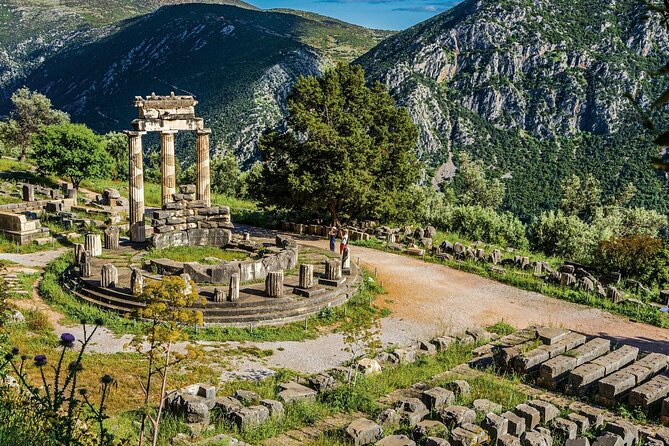
- UNESCO highlights in a logical line: Delphi, Meteora, Gjirokaster, Berat, Ohrid
- Small group setup (max 10) for better questions and calmer sightseeing
- Pickup in Athens and drop-off in Tirana keeps the trip simple
- Meteora monasteries timed for sunset on those dramatic rock formations
- Ohrid Lake and St. Naum paired for views plus a real monastery setting
- Tirana with a local food focus: byrek breakfast, Qofte lunch, Albanian coffee, raki
Athens to Delphi: start smart, then let the day drive
This tour works well if you want to arrive in Athens under your own steam and only start the guided portion when it matters. Day 1 begins with hotel pickup in Athens, so you’re not spending the morning guessing buses or taxi math.
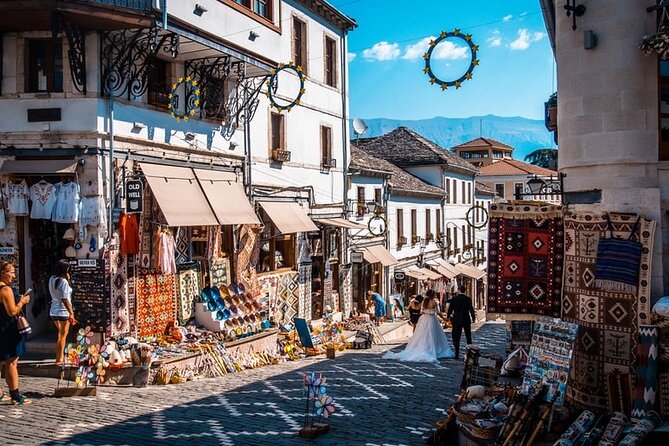
Then the road heads to Delphi, an easy choice for first-week West Balkans travel because it feels like a full stop in history: temple remains, treasuries, and public buildings all in one area. You get about an hour here, which is short, but Delphi is dense. With a guide, you can prioritize the elements that tell the story instead of wandering and trying to remember which ruin is which.
Practical note: the schedule is designed to move you along quickly. Wear shoes you can walk in for uneven stone paths, and keep water handy during the ride days.
You can also read our reviews of more private tours in Athens

Delphi’s best hits: Apollo, treasuries, theater, and the museum
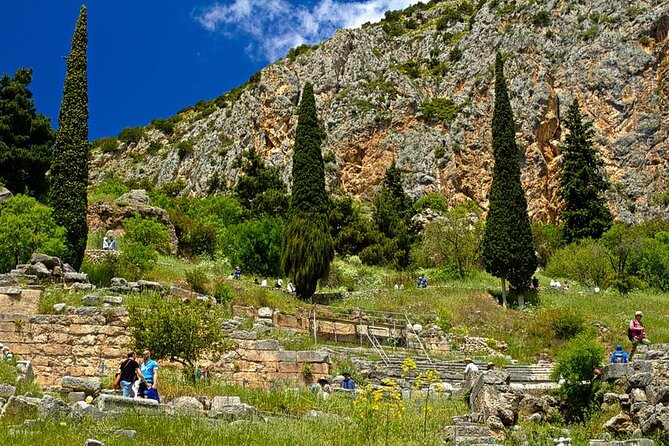
Delphi’s appeal is how much variety sits in one UNESCO zone. You’re looking at more than one “thing to see.” The plan highlights multiple monument groups, including the Temple of Apollo and the Castalian Fountain, plus features like the Large Sphynx of Naxos.
What I especially like about building Delphi into a larger circuit is that it sets the tone. You’re going from sacred space to dramatic terrain, then onward to Meteora’s monastery skyline. That contrast keeps the week from feeling like the same kind of sight, repeated.
The included stop at the museum matters too. Delphi’s museum coverage (with notable statues such as Antinoos and the bronze Charioteer dating to 475 B.C) gives you more context than the rocks alone. Even if you’re not a hard-core history person, the museum helps you understand why Delphi mattered.
Meteora at the right hour: monasteries on rock, sunset in your lap
Meteora is where this route turns from “very good touring” into “wow, that’s different.” The monasteries sit on top of steep rock formations, part of a UNESCO site described here as dating from the 14th–15th centuries. The effect is immediate. Even from lower viewpoints, the shapes look otherworldly.
The schedule gives you around two hours at Meteora, and the day includes time to catch that sunset. This is a big deal because it changes the mood fast: bright stone becomes darker, shadows stretch, and the monastery silhouette looks sharper against the sky. If you care about photos, this is the time you’ll want to be ready—then you can relax.
Potential drawback: Meteora is outdoors. If weather turns, it can dull visibility. The itinerary is flexible in the sense that it may adapt due to external forces, but you should be realistic that mountain weather can be temperamental.
Ioannina’s old town and castle: Greece’s slower side before Albania
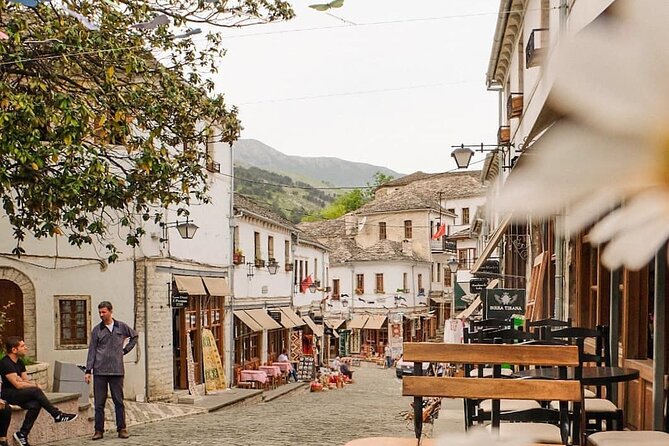
After Meteora, the plan shifts gears to Ioannina in northern Greece. This stop is built for walking. The old town has cobbled streets, and you can spot Byzantine and Ottoman influences in the architecture, including ancient walls and charming houses.
The castle portion is a highlight on its own. You’ll spend time inside Ioannina Castle, with narrow, labyrinth-like streets and historic buildings. There’s also free time after the main touring component, which I like. It gives you breathing room to pick a café, eat something Greek, and just reset before the bigger change to Albania.
Then you travel on toward Gjirokaster. The transition is part of why the trip feels efficient: you don’t spend your whole day stuck in transit without any payoff. The schedule gives you a moment to connect to the next “chapter” of the route.
Gjirokaster, the Stone City: a fortress of houses and stories
Gjirokaster is one of those places that travel plans usually promise but don’t always deliver. Here, the focus is on what makes it special: a fortified city shape where houses feel like small forts.
The route includes a UNESCO stop at Gjirokaster and focuses on the castle area and old-town structure. The description notes the castle origin dating back to the IV century A.D., and the overall feel is that of a place built to defend itself. That context helps you appreciate why the town looks the way it does.
You’ll also pass through the medieval bazaar right before entering the castle area. This is useful because it’s not only about shopping. It’s part of the old-city flow—stone streets, old commerce, and handmade crafts from local artisans. You get about two hours here.
Finally, the schedule includes a visit to Skenduli House, presented as one of the best-preserved houses in Gjirokaster with original and authentic elements. For me, that’s where the “architecture as culture” idea becomes real. You can look at the town from the outside all day, but stepping inside a preserved home teaches you how people actually lived in a stronghold city.
- All Day Cruise -3 Islands to Agistri,Moni, Aegina with lunch and drinks included
★ 5.0 · 4,958 reviews



Berat’s 1001 windows: living in the castle walls
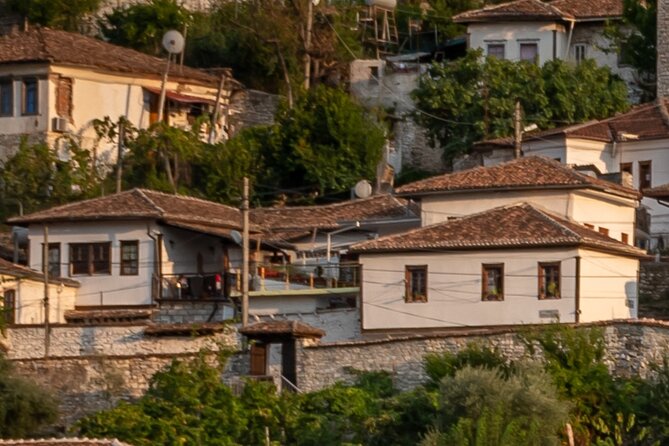
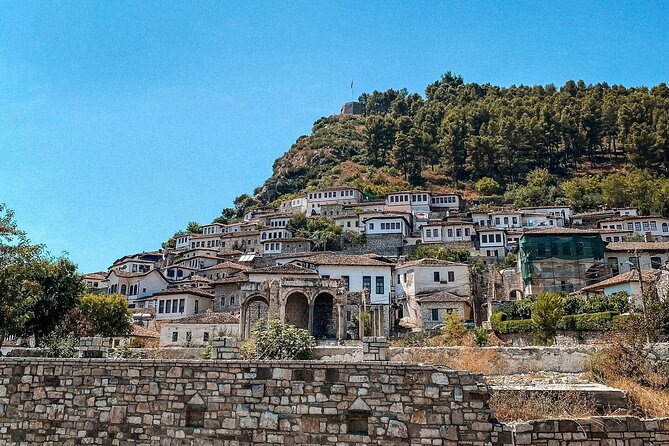
Berat is UNESCO for a reason, and the tour makes sure you get more than one viewpoint. The town is known as the town of 1001 windows, which captures the look of medieval old houses stacked on steep hillsides. Walking those narrow streets gives you the “layered city” perspective immediately.
The description also notes that residents still live inside the castle walls. That detail matters. Berat doesn’t feel like a theme set. It reads as a living town where old architecture is part of everyday life.
The tour includes time for Berat Castle, plus stops tied to different eras and interests: churches and mosques, a lively lower town, museums, and even remains from the communist era. Then you add the National Iconographic Museum Onufri, where the focus is on painter Onufri and a distinctive reddish color used in churches across the Balkans.
The plan also includes Gorica Bridge and the Gorica neighborhood. That’s a good balance after the more “monument-heavy” castle block. A bridge stop is often underrated, because it slows you down and gives you a breather between major sights.
Driloni National Park, then St. Naum: a nature break with monastery timing
Day 5 includes two ideas that work well together: a nature stop and a monastery stop right at the water.
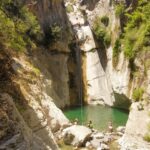
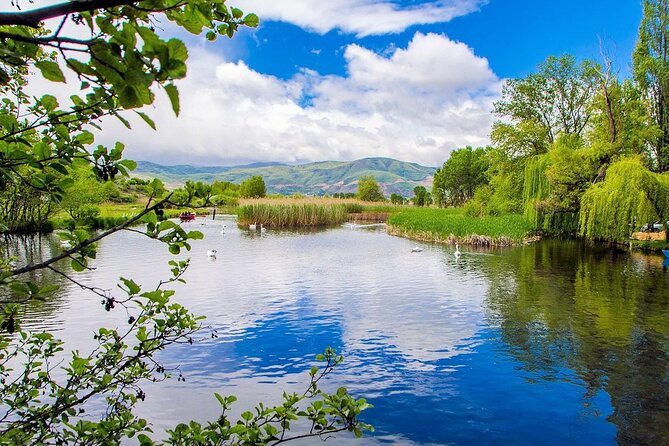
First is Driloni National Park, where spring waters form a small lake surrounded by greenery. The itinerary calls out weeping willow trees along the shoreline, which suggests a calm, almost pocket-park feeling. This is a smart break before the bigger cultural focus of North Macedonia.
Then you stop in Tushemisht, described as a place with natural beauty, cultural heritage, and warm hospitality. The itinerary doesn’t give more specifics, so your best approach here is to treat it as a short reset: stretch your legs, soak up the local atmosphere, then keep moving.
After that, you cross border toward North Macedonia and head to the Monastery of Saint Naum. The location is part of the draw: it’s at the source of the River Crni Drim, which flows through Lake Ohrid. You’ll also be in a strictly protected area within the National Park Galicica. Even if you’re not a “monastery person,” this setting helps. The view and the water context give St. Naum a quieter kind of drama than the rock monasteries of Meteora.
Ohrid Lake and the city churches: UNESCO layers in plain view
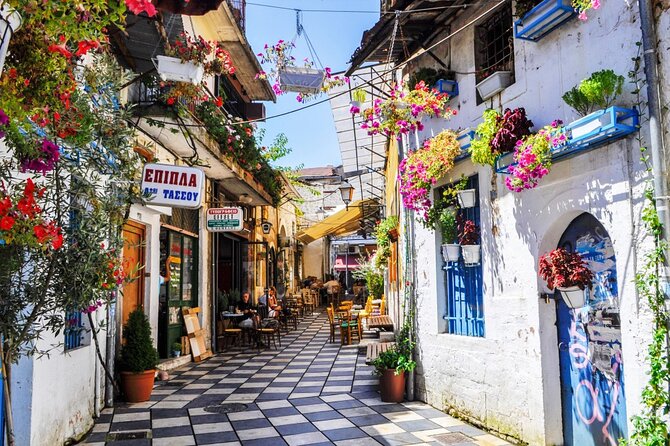
Ohrid is one of the most satisfying UNESCO stops on this route because it combines city life with a lake setting. The itinerary notes that Ohrid city and Ohrid Lake are UNESCO World Heritage since 1980, with very old settlement history.
The guided highlights include a viewpoint at the Church of St. John, plus the Church of St. Nicolas and the Halveti Hayati Tekke mosque. That mix matters: Ohrid reads as a crossroads town where different faith traditions left visible marks over time.
The explanation also mentions Byzantine and Ottoman eras shaping the city’s growth, and it includes the famous claim that Ohrid has 365 Orthodox churches—one for each day of the year. Take that as a tradition, not a math project, but it points to a key truth: the city is full of church culture.
You get around three hours here, which I think is a workable amount. It’s enough time to see the main landmarks on foot without turning the day into a marathon. Still, keep your expectations realistic: old towns have stairs, uneven pavement, and short walkways where you can’t always move at your fastest pace.
Tirana’s food-and-history day: byrek, coffee, Qofte, then Bunk’Art 2
The last day is where the trip becomes more about everyday life than ancient ruins.
You start in Tirana with a local companion for a culinary-focused experience. The first food stop is at a small local place aimed at finding what locals actually eat. You’ll try byrek for breakfast. The description calls it dough with fillings like cheese, meat, or spinach, so it’s a simple dish to approach even if you have limited Albanian vocabulary.
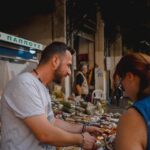
Next, you head to Çam bazaar, connected to the Albanian Çam community from an area called Çameria in today’s North-Western Greece. This adds a meaningful cultural layer beyond the normal souvenir-shopping vibe. The time also gives you a chance to browse and bargain if that’s your style, since the schedule suggests you can negotiate with sellers.
After that, you explore neighborhoods with the local companion, looking for pastry desserts and a coffee culture introduction. The plan explicitly includes tasting Albanian coffee at a cozy café. That’s a small detail, but it’s exactly the kind that makes the end of a packed week feel human and not just checklist-driven.
Lunch is built into the New Bazaar stop: Qofte, grilled meatballs, with freshly baked bread. Vegetarians can have freshly baked bread with Albanian Gjize (cottage cheese). Then you also taste Albanian raki.
Finally, Bunk’Art 2 wraps it up. The museum is housed in a nuclear bunker that was designed to shelter Enver Hoxha and close party members during the Cold War. It stayed hidden from the general public until 2014, when it became a museum centered on the communist army and daily life under the regime. This is a rare “history in a room” ending, and it contrasts well with the morning food stops.
Price and what it really covers for $2,636.15 per person
At $2,636.15 per person for an approximately 7-day semi-private tour, the headline number is not small. The key question is what you’re buying with that money.
Here’s what’s clearly included:
- 3-star hotels with breakfast for all overnights
- Private transportation throughout the route
- A professional tour leader
- Hotel pickup in Athens and drop-off in Tirana
- Entry tickets for the sites on the route, plus tourist taxes
- Road and travel-related insurance items (car insurance, road taxes, petrol)
For many independent travelers, the biggest cost isn’t just hotels and admission fees—it’s the time and stress of logistics across borders. This itinerary covers that planning load for you, and the small group size helps keep the experience from turning into a train-ride-through-history.
Where the price may feel less justified is if you’re a super flexible traveler who enjoys figuring everything out alone, or if you’d rather spend more evenings doing your own dinner research instead of staying on schedule. Still, if you want structure and have limited time, the inclusions go a long way.
Who this tour fits best (and who should look elsewhere)
This works especially well for you if:
- You want a UNESCO-heavy Balkan week without doing the heavy planning
- You like pairing major cities with iconic natural scenery, like Meteora and Ohrid
- You prefer a semi-private group (max 10) with a guide who can explain what you’re seeing
- You’d rather let the day’s order be set for you, then use free time for casual wandering
You might want a different option if:
- You dislike long driving days
- You’re hoping for a trip built around beach time or slow mornings
- You want all meals included. Here, lunches, dinners, drinks, and snacks are not part of the package, so you’ll plan your own evenings and food spending.
Practical notes that keep the week smooth
A few things matter with this specific route.
First, pace: with multiple UNESCO sites, plus border movement, you’ll trade some spontaneity for efficiency. That can be a plus, but it means you should pack for movement—comfortable shoes and a day layer for variable weather.
Second, timing: pickup in Athens happens at 9:00 am, so you’ll start early on the first guided day. Meteora sunset is scheduled, so build in the mindset that you’re there for the light, not just the view.
Third, meals: breakfast is included. Everything else is on you. If you’re picky, use breakfast time and the tour leader’s guidance to steer you toward easy, local options.
Should you book this Athens to Tirana tour?
If your dream Balkan week includes Delphi ruins, Meteora rock monasteries, stone cities like Gjirokaster, UNESCO Berat with its 1001 windows, lakeside Ohrid, and an ending day in Tirana with real food stops and Bunk’Art 2, then this is a strong fit. The structure is tight, the transport is handled, and the included entrances help you get more sightseeing per day.
If you want a slow travel rhythm, or you prefer to build your own routes with no set days, you may find the driving-heavy pace limiting. For most people chasing big sights in a short window, the semi-private size and covered logistics make the price feel more sensible.
FAQ
Where does the tour start and end?
It starts with pickup in Athens and ends with hotel drop-off in Tirana.
What time does the tour begin on the first day?
The start time is listed as 9:00 am.
How long is the tour?
The duration is approximately 7 days.
How many travelers are in the group?
The maximum group size is 10 travelers.
What is included in the price?
The tour includes 3-star hotel accommodation with breakfast for all overnights, private transportation, a professional tour leader, hotel pickup in Athens and drop-off in Tirana, entry tickets for the sites visited, and tourist taxes.
Are meals besides breakfast included?
No. Lunches, dinners, drinks, and snacks are not included.
Is tipping required?
Tips are not a must in the Balkans, but it’s recommended to tip the tour leader and driver as an international practice for good service.
Do I need my own travel insurance?
Yes. You’re responsible for having your own health or travel insurance.
Can the booking be refunded if my plans change?
This experience is non-refundable and cannot be changed for any reason, and the amount paid will not be refunded.

More Private Tours in Athens


More Tours in Athens


More Tour Reviews in Athens
- All Day Cruise -3 Islands to Agistri,Moni, Aegina with lunch and drinks included
★ 5.0 · 4,958 reviews