REVIEW · ATHENS
Awe-inspiring 2-days private tour to Delphi and Olympia
Book on Viator →Operated by Athens Tours Greece · Bookable on Viator
Two UNESCO sites, two days, one easy plan. This private route links Delphi and Olympia into a smooth Athens getaway, with a comfortable car, planned stops, and enough time on-site to actually see what made these places so powerful in ancient Greece. I especially liked the round-trip transfers that handle the logistics for you, and the way the driving route through Central Greece adds context before you even reach the ruins. The main drawback to watch: not every site ticket is included, so you’ll want to plan for paid entries.
I also like that you get an overnight base in Olympia with breakfast, which keeps Day 2 from feeling rushed. You’re traveling with a professional English-speaking driver who can explain history and culture up to the museum and archaeological gates, but licensed guides don’t automatically walk you inside. That can matter if you want deeper commentary inside the museums.
Finally, the walking is moderate, but it’s real. You’ll be on uneven ancient stone and museum floors, and summer sun can hit hard—so bring good shoes, water habits, and sunscreen.
In This Review
- Key highlights and why they matter
- How the private format works from Athens
- Day 1 on the road to Delphi: Central Greece first, ruins second
- Delphi at the foot of Mount Parnassos
- Tholos of Athena Pronaia: the circular building that steals the show
- Temple of Apollo: big energy, possible extra ticket
- Overnight in Olympia: comfort matters more than you think
- Day 2 at Olympia: the stadium, the temples, and the museum logic
- Archaeological site of Olympia (UNESCO)
- Museum time: where the story gets clear
- A helpful mental trick
- Corinth Canal: a quick modern contrast stop
- Price and logistics: is $1,808.71 per group worth it?
- What to expect on the ground: timing, walking, and comfort
- Who this tour suits best
- Should you book this Delphi and Olympia private tour?
- FAQ
- FAQ
- How long is the Delphi and Olympia private tour?
- What does the tour cost and who is it for?
- Do you get pickup from Athens hotels or cruise ports?
- Is transportation private?
- Is an English-speaking guide included?
- Are museum and archaeological site tickets included?
- Is breakfast included?
- How much walking should I expect?
- Are tickets handled by mobile?
- What is the cancellation window for a full refund?
Key highlights and why they matter
- Private Athens-to-site-to-Athens transfers: less stress, more time with the ruins
- UNESCO Delphi and Olympia: two of the biggest anchors of ancient Greek identity
- Tholos of Athena Pronaia: a standout Classical architectural puzzle at Delphi
- Olympia museums near the site: helpful for turning the stadium into a story
- Corinth Canal photo stop: a modern engineering break on the long drive back
- Overnight in Olympia with breakfast: you wake up close to the action
How the private format works from Athens
This isn’t a long day trip where you stare at a clock. The big value here is the pacing: you leave Athens with pickup, you travel by air-conditioned private vehicle, you get time at the major ruins, and you sleep in Olympia so the second day starts with momentum.
A second plus is the driver’s role. You’ll have an English-speaking driver with good history and cultural context, but they won’t be able to accompany you inside archaeological sites and museums. In practice, this means you’ll get the explanation at the right time—right before you enter—so you can walk through the ruins with better bearings fast.
The tour also uses a mobile ticket. That’s handy if you don’t want to keep track of paper on the move, but you should still verify what tickets you need to show at each stop.
You can also read our reviews of more private tours in Athens

Day 1 on the road to Delphi: Central Greece first, ruins second
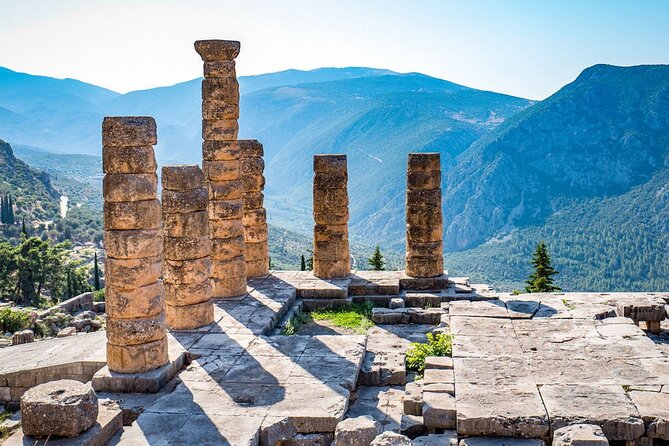
Day 1 starts with the drive through Central Greece, with stops that help you understand the setting behind Delphi. You’ll pass places like Thebes, Livadia, and Arachova, and you’ll also travel through the broader region known as Roúmeli, the eastern half of Central Greece. Even if you don’t spend time in each town, the route gives a sense of why Delphi sits where it does—near mountains, connected enough for pilgrims, but remote enough to feel set apart.
Delphi at the foot of Mount Parnassos
Then you reach Delphi, one of the most important Pan-Hellenic sanctuaries in the Greek world. The ruins are famous for the idea of Delphi as the center of the world, plus the mythic story of Zeus sending out two eagles to find the navel of the earth.
I like Delphi best when I’m not rushing. This tour builds in a solid stretch at the site, and it helps that some parts are listed as admission free in the program. That means you can spend your money where it counts most—like the paid museum time later, or paid entries where the program says they’re not included.
Tip for how to see Delphi well: start high-level in your head. Think sanctuary, not just ruins. If you keep that frame, every terrace and column remnant feels purposeful.
Tholos of Athena Pronaia: the circular building that steals the show
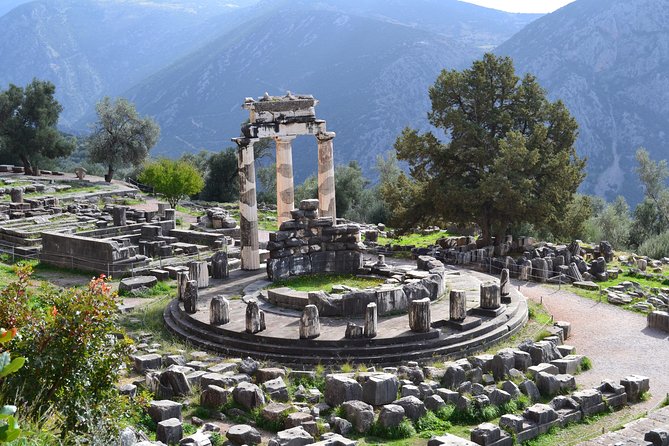
One of the best mid-day stops is the Tholos of Athena Pronaia. From above, it’s striking, and on the ground it’s still one of those ruins that makes you stop and look twice because it doesn’t look like a typical temple.
This circular structure is tied to the later sanctuary of Athena Pronaia, and it’s considered a key monument for Classical architecture. It’s also a “what was it for?” kind of place. The program notes that its purpose is uncertain, with ideas about connections to chthonic cults, and it even mentions that Pausanias didn’t label it as a temple when he saw the ruins centuries later.
From an architecture standpoint, this is the kind of stop that rewards attention:
- a three-stepped podium
- an outer ring of Doric columns
- a Doric frieze with triglyphs and metopes
If you want a quick win in ancient art and engineering, this is it.
Temple of Apollo: big energy, possible extra ticket
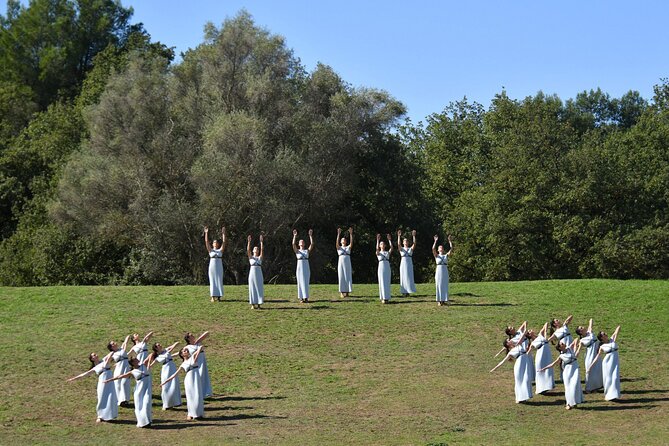
Next up is the Temple of Apollo, the main landmark associated with the oracle. It’s the emotional center of Delphi for many people because Apollo and the Pythia are woven into the stories of Delphi’s power.
The program notes several construction phases over time, including rebuilding after fires and earthquake destruction. That matters because the ruin you see today isn’t a single “snapshot” from one moment—it’s the end result of a long history of rebuilding and collapse.
Here’s the practical part: the Temple of Apollo stop is short and is listed as admission not included in the program. So you’ll want to budget for that if you plan to go in or pay where required. If you pre-purchase admission where possible, you avoid delays that can happen when lines or limited availability show up.
You can also read our reviews of more tours and experiences in Athens




Overnight in Olympia: comfort matters more than you think
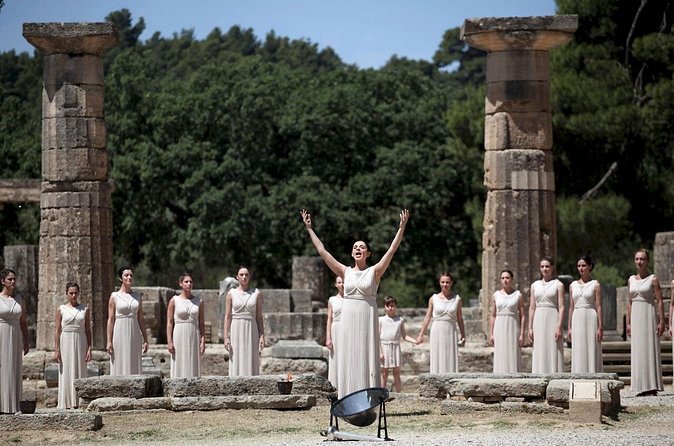
After Delphi, you head to Olympia and spend the night there. The tour includes 3-star accommodation with breakfast, which is a big help when you’re doing two major UNESCO sites back-to-back.
This is also where I’d be a little picky in your expectations. One pattern to watch from feedback is that the hotel experience may not match what you hoped for: things like internet reliability, shower temperature, and breakfast quality can be inconsistent. The good news is that breakfast is included, and that alone helps you start Day 2 with energy.
I’d suggest choosing light packing and staying flexible. If you’re a person who needs perfect bathroom conditions and a strong Wi-Fi signal, this is the area that could feel disappointing compared with a higher-end stay. If you’re mainly there to sleep, reset, and get to ruins early, the base is more likely to work for you.
Day 2 at Olympia: the stadium, the temples, and the museum logic
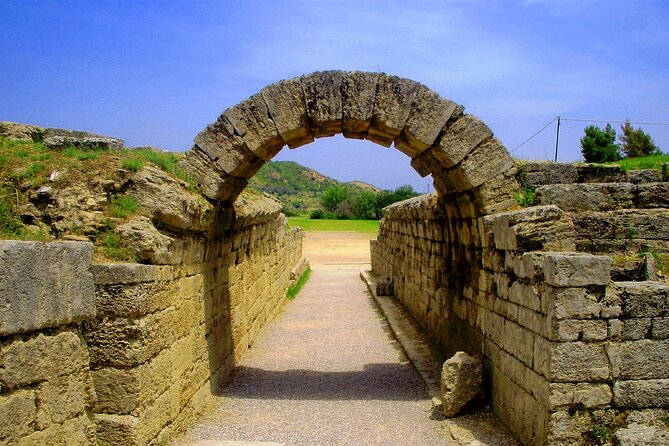
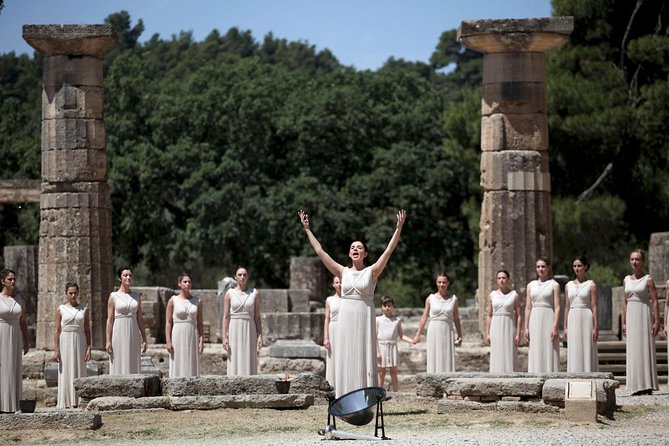
Olympia is often described as the valley of the gods, and the connection to the Olympic Games is the anchor. In ancient Greece, the games were held every four years starting in the 8th century BC, and they were meant to unite Greeks and pause hostilities for the event.
What makes Olympia different from Delphi is how physical it feels. Delphi is about prophecy and sanctuary life. Olympia is about athletes, training grounds, and Zeus-centered worship. The ruins help you picture daily routines: where worship happened, where sports happened, where people gathered.
Archaeological site of Olympia (UNESCO)
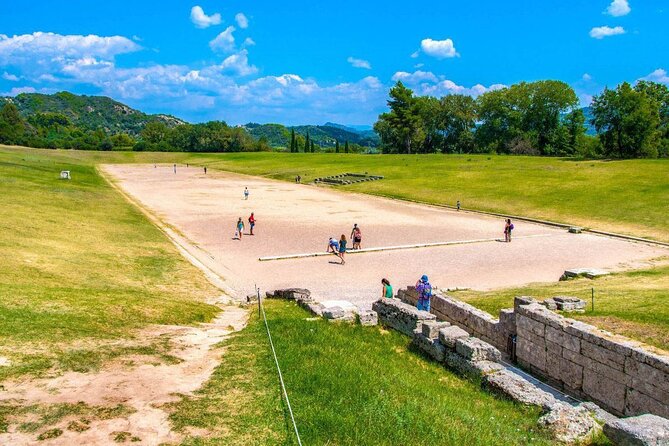
The archaeological site includes training areas, the stadium, and temples dedicated to Hera and Zeus. The program also frames Olympia as set in the lush river valley of the Alpheios, which helps explain why this place functioned as both a sacred center and a practical gathering spot.
You’ll also get the benefit of time allocation that makes sense: about two hours at the site. That’s enough to walk the main areas without feeling like you’re just collecting stamps.
Museum time: where the story gets clear
Olympia’s museum is where the ruins click into focus. The program includes time at the Archaeological Museum of Olympia, and it notes the museum’s importance for sculptures and its collection of ancient Greek bronzes.
The museum schedule matters here. If you go too late, you might feel your attention slipping. If you go at a good pace, you’ll use the museum to understand what the stadium and sanctuaries were really about.
Also, the program lists the Olympia museum admissions as not included. So again, plan ahead for extra paid entries. This is one of those cases where the museum cost can be worth it because it transforms what you saw outside.
A helpful mental trick
When you’re walking the museum halls, try to match objects to locations you saw outside. Even when you’re not an expert, you start recognizing themes: worship, competition, and the kind of art that celebrated both.
Corinth Canal: a quick modern contrast stop
On the drive back toward Athens, there’s a short stop at the Corinth Canal. It’s a modern engineering project connecting the Gulf of Corinth and the Saronic Gulf, cutting through the Isthmus of Corinth.
I like this pause because it breaks the ancient focus and gives your legs a micro reset. It also helps you understand why ancient travel routes were complicated around the Peloponnese—and why people dreamed about a shortcut for centuries.
The program keeps this stop brief (about 15 minutes), so think of it as photos and fresh air, not a deep history lesson.
Price and logistics: is $1,808.71 per group worth it?
Let’s talk value in a practical way.
You’re paying $1,808.71 per group (up to 2) for roughly two days. In return, you’re getting:
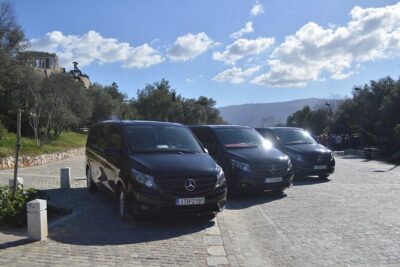
- private transportation by air-conditioned vehicle
- round-trip transfers from Athens hotels and ports
- an overnight in Olympia (3-star) with breakfast
- bottled water included
- a driver who provides English-speaking context up to the sites
- mobile ticketing
For a couple, the price can make sense because two people sharing a private vehicle can feel close to what a semi-private or guided day plan costs once you factor in transfers, overnight lodging, and time at two UNESCO sites. For individuals traveling alone, the per-person value depends heavily on what you’d otherwise pay for a hotel night plus private transport.
The big caution is that admissions aren’t fully included. Some Delphi areas and other stops are listed as free, but key entries—like certain temple access and Olympia museum time—are listed as not included. That’s why I recommend you budget for paid entries early, not as an afterthought.
If you want the cheapest route, this isn’t it. If you want a low-friction way to hit Delphi and Olympia without wrestling schedules, it can be a strong buy.
What to expect on the ground: timing, walking, and comfort
This tour includes a moderate amount of walking. Delphi and Olympia can be uneven, and there are museum floors where you’ll stand and move more than you expect.
Pack for sun even if the forecast looks mild:
- comfortable shoes
- sunscreen and a hat for summer months (the program explicitly flags summer sun)
- a water habit, since bottled water is included but you’ll still want to stay consistent
Also, expect that local traffic and conditions can shift the schedule a bit. The tour notes that duration times are approximate, so don’t plan tight connections immediately after returning.
Who this tour suits best
This works especially well if you:
- want a private plan instead of hopping on a group bus
- care about both Delphi and Olympia, but don’t want to manage driving, parking, and entry timing yourself
- are traveling as a couple who can share the group cost
- like museum time and not just outdoor ruins
If you’re the kind of traveler who wants a state-licensed guide inside every museum room, you may need to add that service. The program notes you can arrange a licensed English-speaking tour guide for an extra cost, subject to availability.
Should you book this Delphi and Olympia private tour?
I’d book it if your priority is a smooth, guided-with-context two-day run that handles transfers and keeps you close to the sites overnight. The combination of Delphi’s sanctuary story and Olympia’s sports-and-worship world is a winning pairing, and the private format means less wasted time.
I wouldn’t book blindly if you’re sensitive to hotel quality details. Since the accommodation is 3-star and breakfast is included, the stay may feel fine for many people—but it’s the part most likely to disappoint if you expected a more polished experience.
If you go in with the right expectations—plan for paid admissions where needed, pack for walking and heat, and use the museums to connect the dots—you’ll likely feel like you got your money’s worth.
FAQ
FAQ
How long is the Delphi and Olympia private tour?
It’s listed as approximately 2 days, with timing that can vary based on local traffic and conditions.
What does the tour cost and who is it for?
The price is $1,808.71 per group (up to 2 people). The tour notes a maximum of 15 travelers.
Do you get pickup from Athens hotels or cruise ports?
Yes. You meet at the main entrance of your hotel (or the cruise terminal exit door), and the driver will be waiting with a sign with your name.
Is transportation private?
Yes. You’ll travel in a private, air-conditioned vehicle appropriate for the group size.
Is an English-speaking guide included?
You’ll have a professional English-speaking driver with good knowledge who will guide you until you enter sites and museums. Licensed tour guides inside the archaeological sites and museums are not automatically included, but you can arrange one for an extra cost.
Are museum and archaeological site tickets included?
Entrance fees are not included in general. In the program, some specific stops are listed as admission ticket free (like Delphi and parts of Delphi), while others are listed as not included (like the Temple of Apollo and Olympia museum).
Is breakfast included?
Yes. Breakfast is included with the Olympia overnight.
How much walking should I expect?
The tour notes a moderate amount of walking. Comfortable shoes are recommended.
Are tickets handled by mobile?
A mobile ticket is offered.
What is the cancellation window for a full refund?
You can cancel up to 6 days in advance for a full refund, based on the experience’s local time.



More Private Tours in Athens


More Tours in Athens



More Tour Reviews in Athens
- All Day Cruise -3 Islands to Agistri,Moni, Aegina with lunch and drinks included
★ 5.0 · 4,958 reviews