REVIEW · ATHENS
Athens: Highlights Walking Tour Tickets Not Included
Book on GetYourGuide →Operated by MTM Experiences · Bookable on GetYourGuide
Athens is at its best when someone else points. This walking tour strings together the Acropolis sights and the everyday streets that lead to them, with site-by-site explanations from an English-speaking guide. I love how the day starts with the changing of the guards near Parliament, then keeps moving through gardens and classic landmarks until you’re climbing toward the big names like the Parthenon and Propylaia.
What I really like is the sheer range packed into about 3 hours plus—everything from the Dionysus sanctuary area and Philopappos views to the Ancient Agora viewpoints is in the mix. One thing to plan for: Acropolis and Acropolis Museum tickets are extra, and access can be affected by closures on certain days, so you may not get every possible interior moment.
In This Review
- Key Points at a Glance
- A Smart Way to See Athens: Street-Level First, Then the Big Hill
- Where the Tour Begins: Parliament and the Changing of the Guards
- National Gardens to Zappeion: A Walk Through Athens’ Layers
- Plaka, Melina Merkouri, and Dionysiou Areopagitou: Nice Walking, Real Vibes
- The Climb to the Acropolis: Views That Matter
- Inside the Acropolis Complex: Parthenon and Friends
- The Parthenon
- Propylaia (The Gate)
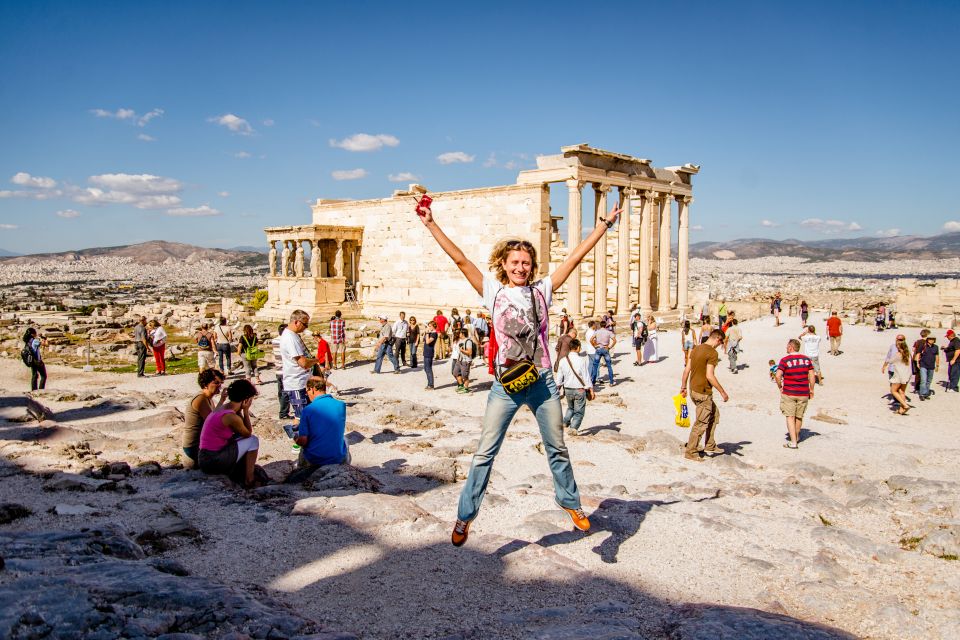
- Erechtheion (Erection)
- Temple of Nike
- Seeing the Wider Ancient Athens: Dionysus, Hilltop Vistas, and the City Below
- What If Things Are Closed? The Real-World Schedule Reality
- Timing, Pace, and Comfort: How to Make the 198 Minutes Work
- Entrance Fees: Budgeting the Real Total for Acropolis Access
- Who This Tour Fits Best
- Should You Book This Athens Highlights Walking Tour?
- FAQ
- How long is the Athens highlights walking tour?
- What’s the price of the tour?
- Is there an English-speaking guide?
- What’s included in the price?
- Are Acropolis entrance tickets included?
- Is the Acropolis Museum ticket included?
- Does the tour include pick-up or drop-off?
- What should I bring?
- Is free cancellation available?
- Can I reserve now and pay later?
Key Points at a Glance

- Changing of the guards start near Parliament gives you a fast Athens orientation
- Acropolis focus with explanations for the Parthenon, Erechtheion, Propylaia, and the Temple of Nike
- Long monument list, one route: Dionysus sanctuary, Mars Hill, Pnyx Hill, Odeon of Herodes Atticus, Ancient Agora
- Street-to-hill pacing: you get the city context on the way up, not just a single-site visit
- English guide included, and you’ll want to bring a willingness to ask questions
A Smart Way to See Athens: Street-Level First, Then the Big Hill
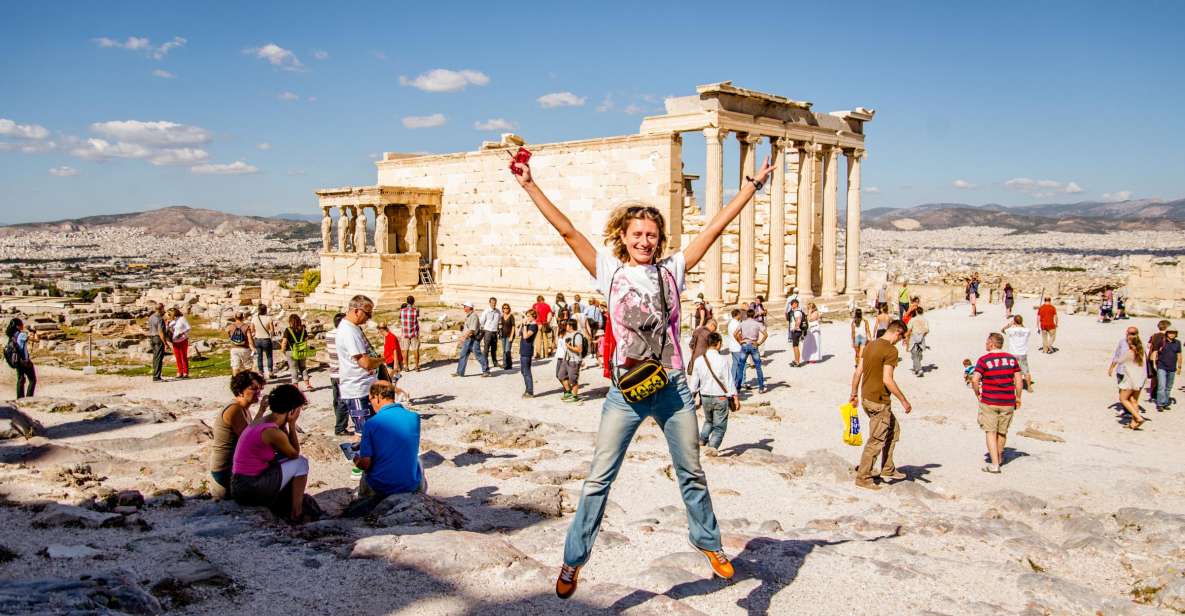
This is the kind of Athens tour that makes the city feel logical. Instead of hopping randomly between famous ruins, you walk from central landmarks toward the Acropolis and the myth-and-power geography that shaped Ancient Athens. You get a real sense of how these sites connect—where people stood, where leaders spoke, and where the views would have mattered.
The other win is how much your guide’s voice matters here. On the Acropolis especially, you’ll notice details you might otherwise miss: why certain structures sit where they do, what each monument’s role was, and how the surrounding hills and sightlines fit together. If you’re even slightly curious about how Greeks built and worshiped, this format helps you connect the dots without turning the day into a textbook.
Price-wise, the tour is positioned as a guided experience rather than a museum-ticket deal. At $49 per person, you’re paying for the walking route and guide time; you’re also paying extra for access to the Acropolis and the Acropolis Museum. If you were going to visit those anyway, the guide can help you make your time there far more productive.
You can also read our reviews of more tours and experiences in Athens
Where the Tour Begins: Parliament and the Changing of the Guards
Your day starts near the Greek House of Parliament and the Monument of the Unknown Soldier, right by the changing of the guards. This is a great opening because it’s modern Athens with high visibility—and it sets a rhythm. You’re not yet sweating up the hill; you’re getting your bearings first.
It also works as a cultural warm-up. The Monument of the Unknown Soldier and the guard ceremony are one of those moments that feel instantly meaningful, even if you only watch briefly. Then you move on to more layers: gardens, churches, and the neoclassical shapes that surround the route toward the Acropolis area.
A practical note: this part is outside and walking-based. Wear comfortable shoes from minute one. You’ll be glad you did when the day transitions from flat city streets to steep climbs.
National Gardens to Zappeion: A Walk Through Athens’ Layers
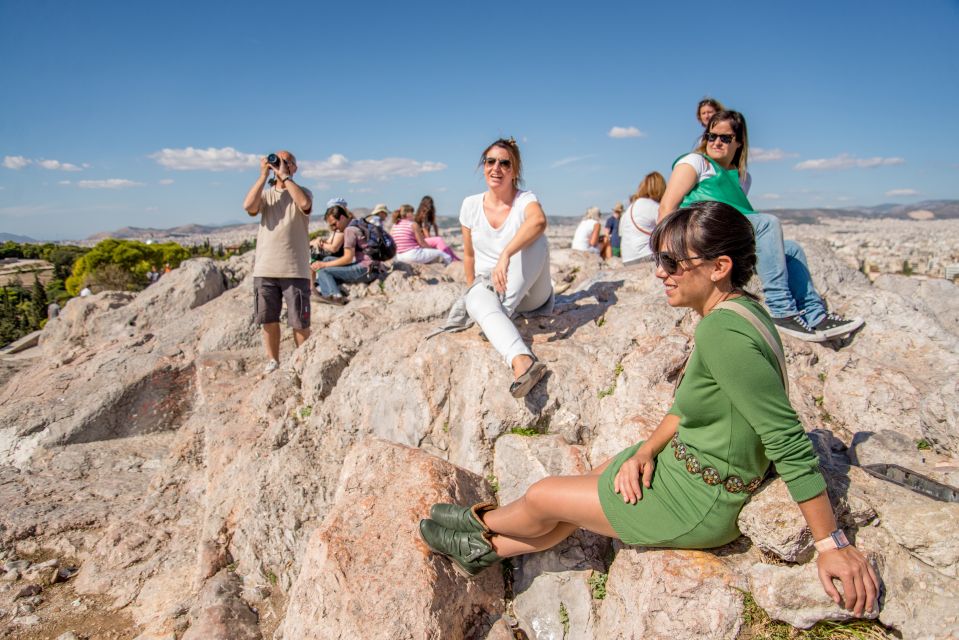
After the guards, the tour continues through the National Gardens. This stretch changes the mood. It gives you greenery and breathing room while still staying close to major sights, which is exactly what you want before you tackle the Acropolis.
Along the way, you pass the Anglican church of St. Paul and move toward Zappeion Hall. Zappeion is one of those neoclassical landmarks that helps bridge the city you see now with the ancient structures you’ll soon be studying. In front of Zappeion, you can also spot surviving columns tied to the Temple of Zeus and Hadrian’s Arch—so you get an early preview of the theme: grand designs, and what time leaves behind.
This section is also valuable because it’s not just “passing by.” Your guide’s job here is to tie the buildings you see with what you’ll later stand near on the Acropolis hill. If you like a tour that explains why you’re seeing something, this is where it starts paying off.
Plaka, Melina Merkouri, and Dionysiou Areopagitou: Nice Walking, Real Vibes
Next you roll into the Plaka district and see a portrait of Melina Merkouri. Plaka is the classic postcard neighborhood in Athens, but on this route it plays a more practical role: it’s the bridge between the modern city and the ancient hill.
Then comes the Dionysiou Areopagitou pedestrian walkway. This is a comfortable kind of walking—less abrupt than the rise that comes later, but still in the thick of Athens life. Even if you’re focused on ruins, this part helps you slow down and absorb the city’s pace. You’re building context for the climb rather than sprinting straight to the first monument.
One more reason to enjoy this segment: it’s a good time to ask questions. If your guide is the type who answers patiently—guides like Mrs Nelly have been praised for being attentive and even trying to accommodate questions in additional languages—you’ll likely get useful explanations before the day gets physically tougher.
The Climb to the Acropolis: Views That Matter
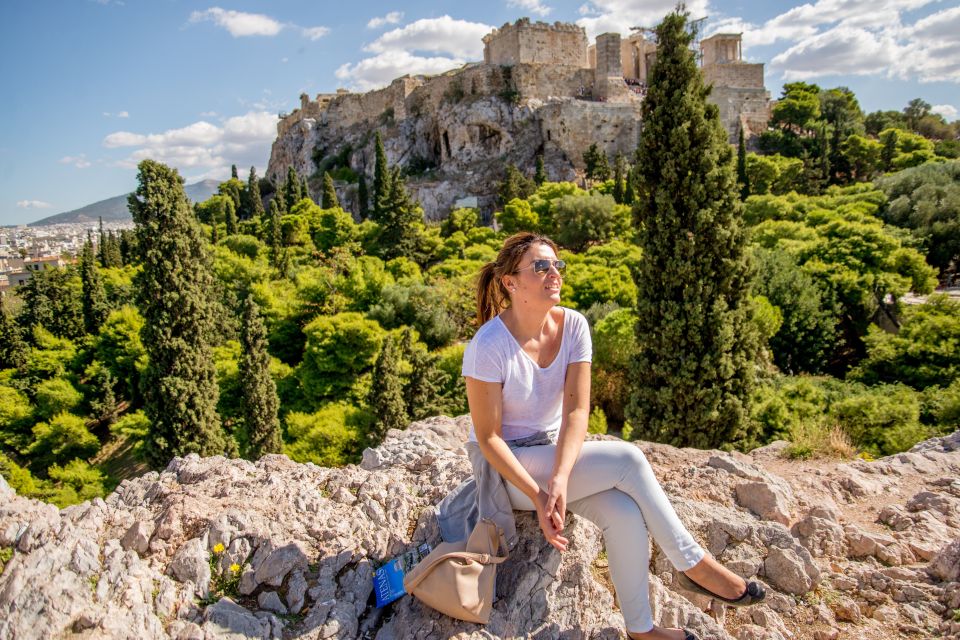
From Dionysiou Areopagitou, the tour begins its climb to the Acropolis. It’s not subtle: you’re going up, and you’ll feel it. That’s normal here, but it’s worth planning for with water and solid shoes.
The payoff is the views. As you climb, you get city-on-both-sides sightlines that make the Acropolis feel less like a single stop and more like a strategic viewpoint. Your guide can point out how various hills and monuments line up with the way ancient Athens worked—where people gathered, where speeches happened, and how visibility shaped power.
If you hate “tour fatigue,” take it as a signal to pace yourself. This is an outing that’s best enjoyed when you walk steadily and let the viewpoints roll in rather than trying to keep up at a sprint.
You can also read our reviews of more walking tours in Athens



Inside the Acropolis Complex: Parthenon and Friends
Once on the Acropolis, your guide will focus on the monuments that make this place famous: the Parthenon, the Erechtheion (listed here as the Erection), the Propylaia, and the Temple of Nike.
Here’s what I think makes this part worth paying attention to: these are not just big names. They each represent a different kind of Athens ambition—religious, civic, and architectural. A good guide can make you stop seeing them as separate photos and start seeing them as a planned system.
The Parthenon
You’ll spend time with the Parthenon as the centerpiece. Even if you’ve seen pictures for years, standing near it is different. The scale and layout are what hit you first. With a guide explaining what you’re looking at, it’s easier to understand why it became a symbol rather than just a ruin.
Propylaia (The Gate)
The Propylaia matters because it’s the threshold. You’re going to feel that as you move around—this isn’t only an object, it’s part of the movement into the sacred space. Your guide’s explanations help you connect the route you’re walking with the meaning of the space.
Erechtheion (Erection)
The Erechtheion is where the story turns more complicated and interesting. Your guide should explain why it’s special and how its elements relate to the myths and worship associated with the Acropolis hill. If you prefer monuments with personality over monuments that look “important but generic,” this is often a highlight.
Temple of Nike
The Temple of Nike is smaller than the Parthenon but powerful in detail. The guide’s interpretation helps you see why Nike’s temple belongs here—this is Athens expressing identity through religion and architecture.
Seeing the Wider Ancient Athens: Dionysus, Hilltop Vistas, and the City Below
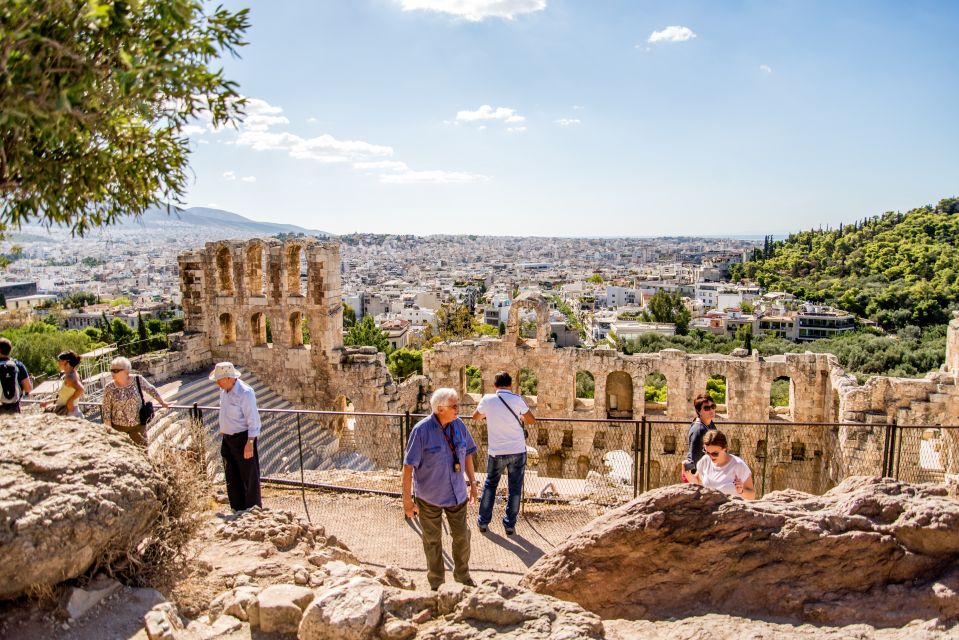
One of the strongest reasons to book a guided Acropolis walking tour is what happens around the main monuments. On this route, you also get discussion of surrounding areas and sightlines: the Dionysus sanctuary, Philopappos Hill, Mars Hill, the Observatory (as listed), Pnyx Hill, the Odeon of Herodes Atticus, and the Ancient Agora.
Even when you’re not walking to every single spot like a separate expedition, these are the places your guide helps you locate on your mental map. That’s the difference between leaving with photos and leaving with understanding.
- Dionysus sanctuary: helpful for understanding the religious side of Athens and why performances and worship mattered.
- Philopappos Hill and Mars Hill: viewpoints that connect the Acropolis to the city’s older meeting-and-decision spaces.
- Pnyx Hill: tied to civic gatherings, where political life becomes part of the landscape.
- Odeon of Herodes Atticus: a reminder that Athens wasn’t only temples and marble—it also hosted public culture.
- Ancient Agora: the civic heartbeat. When you see it referenced from the heights, it clicks into place.
This is where the guide’s performance level really shows. Some guides are the entertaining type—Victor has been singled out for being entertaining and considerate. Others focus more on facts and structure—Laura has been praised as competent and informative. Either style can work, as long as they’re clear and you’re allowed to ask questions.
What If Things Are Closed? The Real-World Schedule Reality
You’re dealing with live heritage sites. That means closures can happen. One guide-day example: the Acropolis was closed on Easter Sunday in one instance, and that affected what the tour could fully do. On another day, there were situations where entrances to the Zeus Temple area and the Acropolis were not entered, even though explanations happened outside.
So here’s my practical advice: be flexible in your expectations. This isn’t a guarantee of every interior moment. It’s a guided walking route with the best possible sighting plan when access is open.
If you’re the kind of traveler who only enjoys ruins when you’re standing inside them, take that into account. If you enjoy orientation, good explanations, and seeing key monuments from the right angles, you’ll likely still get a satisfying day.
Timing, Pace, and Comfort: How to Make the 198 Minutes Work
The tour runs about 198 minutes, so it’s long enough to feel like a real program, but short enough to fit into an Athens itinerary without eating your whole day. You’ll walk between key points: Parliament area, gardens, Zappeion, Plaka, the pedestrian walkway, then up to the Acropolis.
Your biggest comfort factor is your feet. Bring comfortable shoes and keep water with you. You also want comfortable clothes because the hill climb plus sun exposure can get tiring. A camera is essential, but use it without slowing yourself down too much—views come in moments, not all at once.
Also, plan for the mental pacing. This tour covers a long list of monuments and named sites, so your guide’s job is to keep it coherent. When the guide is clear, it feels like a story. When English is harder to follow, you might miss some connections—one experience reported that a guide’s English was difficult to understand. If language clarity matters to you, it’s worth choosing a time slot and guide that work for your preferences.
Entrance Fees: Budgeting the Real Total for Acropolis Access
The tour price is $49, but the Acropolis entrance fee is EUR 20 per person, and the Acropolis Museum fee is EUR 5 per person—both not included. That means the financial value depends on what you plan to do once you reach the hill.
If you only want the guided explanation and main outdoor Acropolis sights, you still need the Acropolis ticket to access the area. If you also want the Acropolis Museum visit, you’re adding that extra EUR 5. Taxes are included in the tour price, which helps, but entrance tickets are still the main add-on.
I like to think of this as paying for direction. You’re not just buying access to stones—you’re buying someone to translate what you’re looking at, plus a walking route that links the city below to the monuments above. If you were going to do the Acropolis on your own, the guide can help you get more out of the hours you’re already investing.
Who This Tour Fits Best
This walking tour suits you if:
- You want a guided orientation to the Acropolis and central Athens, not a random list of photos
- You enjoy hearing how places connect—Parthenon to surrounding sanctuaries, and the Acropolis to what’s below
- You like structured walking with a clear end goal: the key monuments and city viewpoints
It may be less perfect if:
- You’re strictly looking for lots of time inside every major site
- You’re very sensitive to language clarity, since guide communication quality can vary
- You’re visiting on a day when closures limit interior access
The overall vibe is friendly and question-friendly when the guide is in that mode. One Spanish-speaking effort was noted by a guide named Mrs Nelly, who tried to communicate in Spanish even though the tour was in English. That sort of extra care can make a huge difference.
Should You Book This Athens Highlights Walking Tour?
I’d book it if you want the Acropolis without feeling lost, and if you plan to pay the entrance fees anyway. At $49 plus the Acropolis ticket costs, you’re essentially buying guided navigation and explanations for a full 3+ hours, with stops that connect the city center to the main monuments.
Skip it or rethink if you only care about maximum indoor access time, or if language clarity is a big deal for you. Also, keep a flexible mindset about closures. This isn’t a private escape room of certainty—Athens is a real place with real operating rules.
If you want a day that turns the Acropolis from a photo-famous hill into a readable part of Athens, this tour is a strong fit.
FAQ
How long is the Athens highlights walking tour?
The duration is 198 minutes (about 3 hours and 18 minutes).
What’s the price of the tour?
The price is $49 per person.
Is there an English-speaking guide?
Yes. The tour includes an English-speaking live guide.
What’s included in the price?
The tour includes an English-speaking guide and taxes.
Are Acropolis entrance tickets included?
No. The Acropolis entrance fee (EUR 20 per person) is not included.
Is the Acropolis Museum ticket included?
No. The Acropolis museum entrance fee (EUR 5 per person) is not included.
Does the tour include pick-up or drop-off?
No. Pick up/drop off is not included.
What should I bring?
Bring comfortable shoes, water, comfortable clothes, and a camera.
Is free cancellation available?
Yes. You can cancel up to 24 hours in advance for a full refund.
Can I reserve now and pay later?
Yes. You can reserve now and pay later.


More Tickets in Athens


More Tours in Athens




More Tour Reviews in Athens
- All Day Cruise -3 Islands to Agistri,Moni, Aegina with lunch and drinks included
★ 5.0 · 4,958 reviews