REVIEW · ATHENS
Full Day Private Tour to Monemvasia Medieval Fortress Town and Sparta
Book on Viator →Operated by CRISPY LOCAL MONOPROSOΡΙ Ι.Κ.Ε. · Bookable on Viator
Three stops, one packed Peloponnese day. This private outing is built for busy Athens stays, stringing together Corinth Canal views, Sparta sites, and the medieval fortress town of Monemvasia in one long ride.
I particularly like the personal-touch feel: your driver handles the day with local context and practical timing. I also like that you’re not just rushing through monuments—you’re given real breathing room at Monemvasia to wander the streets, absorb the walls and gates, and pause for a meal by the sea if you want one.
One thing to consider is that it’s a long day mainly driven by road time, so you’ll want comfortable shoes and a snack plan. Also, the driver is not described as a licensed on-site guide inside archaeological areas, and one museum stop (the Olive Museum) has an extra fee.
In This Review
- Key highlights at a glance
- A Ten-Hour Shortcut Through the Peloponnese
- What a Private $276 Day Gets You (and What You Pay Extra)
- Pickup From Athens: Comfort Matters on a Long Loop
- Corinth Canal: A Ten-Minute Geography Hit
- Sparta at Your Pace: Myth, Kings, and a Different Greek World
- Leonidas Monument and the Spartathlon Connection
- Olive Museum in Sparta: Fossils, Replicas, and Everyday Identity
- Monemvasia: The Medieval Fortress Town You Can Actually Walk Through
- Food, Timing, and Your Best Move for This Kind of Day
- Driver Quality: Why This Tour Often Feels Personal
- The One Real Risk: Disruptions Can Change the Mood
- Who This Tour Is Best For
- Should You Book This Private Trip to Monemvasia, Sparta, and Corinth Canal?
- FAQ
- How long is the private tour from Athens to Monemvasia and Sparta?
- What stops are included during the day?
- Is transportation included?
- Do you get pickup from your hotel or Airbnb in Athens?
- Are site admission tickets included?
- Is Monemvasia time long enough to explore?
- Is this a private tour?
- Who provides the explanations during the trip?
- What language is the tour offered in?
- What is the cancellation policy?
Key highlights at a glance
- Corinth Canal photo stop with time for bridge views and quick pictures
- Sparta walking time centered on the ancient city’s major story points
- Olive Museum fossils and replicas (rare fossil leaves and Linear B tablet replicas)
- Leonidas Monument pause with the Spartathlon race context
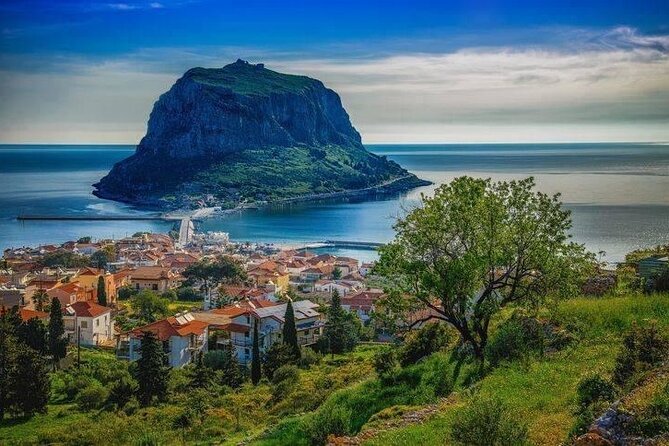
- Monemvasia fortress-town freedom to explore streets, churches, walls, and citadel areas at your pace
A Ten-Hour Shortcut Through the Peloponnese

This trip is designed like a smart day plan, not a slow travel fantasy. You’re based in Athens, then you go out and back in roughly 10 to 11 hours, so it works best when you want big variety without multiple overnights.
The route hits three heavy hitters with different moods. Corinth Canal gives you a dramatic geography moment. Sparta adds a structured sense of ancient power and myth. Monemvasia then switches gears into living medieval atmosphere, with tight lanes and fortress walls you can walk at your own tempo.
It’s also private, meaning just your group rides together. That matters when you want control over bathroom breaks, pacing, and photo stops, especially on a day that’s mostly about getting from place to place.
You can also read our reviews of more private tours in Athens

What a Private $276 Day Gets You (and What You Pay Extra)

At about $276.06 per person, you’re paying for transportation, comfort, and a driver with local knowledge. You also get bottled water, a culinary gift, and air-conditioned car or van time that keeps the day from feeling miserable.
Most site visits are listed as free admission for this itinerary (including stops connected to Corinth Canal, Sparta sites, and Monemvasia town time). The one clear extra you should budget is the Olive Museum in Sparta: admission is not included and is listed as €6.00 per person.
What you don’t get is a certified on-site guide inside each archaeological site or place of interest. Your driver can explain and help with context, but if you’re expecting a licensed guide inside every venue, you should plan for simpler interpretation and rely on what you can read and ask along the way.
Pickup From Athens: Comfort Matters on a Long Loop
The logistics are straightforward in a way that helps you enjoy the day. Pickup is offered from all accommodation in Athens, and you’ll be dropped back at the end. Airport pickup or airport-area pickup is extra, so plan to start from your Athens lodging if you can.
The vehicle is air-conditioned and described as an executive car or van. On a full-day route like this—especially in warmer months—cool comfort is not a luxury. It’s what keeps you awake enough to enjoy the stops instead of counting the minutes until you can sit down.
Your driver is also described as having deep local knowledge but not being licensed to accompany you inside sites. So the best “touring” from them happens during drive time, at viewpoints, and while you’re between stops.
Corinth Canal: A Ten-Minute Geography Hit
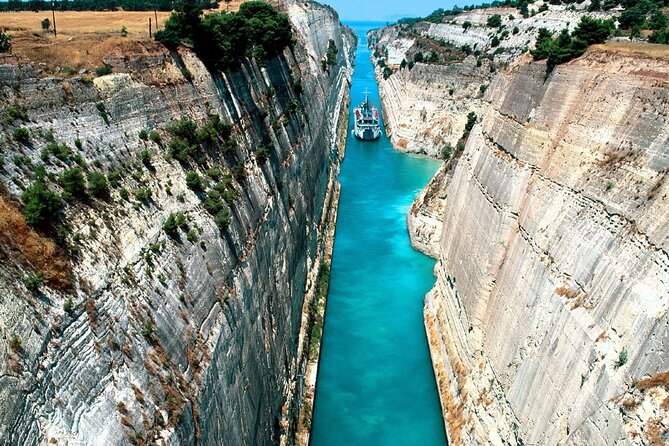
Corinth Canal is your first “wow” moment, and it’s intentionally quick. After roughly an hour out of Athens, you’ll stop and have about 10 minutes to look from the bridge area and grab photos.
Here’s why this stop works even with limited time: you can see the canal’s narrow, engineered cut through the isthmus. It connects the Gulf of Corinth and the Saronic Gulf, and it separates the Peloponnese from mainland Greece in a way that makes the peninsula feel almost like an island.
If you’re prone to rushing, this is still worth it. Ten minutes is enough to get the shot, read the scene, and move on without feeling stuck in a long line or long walk.
Sparta at Your Pace: Myth, Kings, and a Different Greek World
Sparta is where the day starts to feel more “story-driven.” You’ll reach it after about 2.5 hours of driving from Athens, then have around 1 hour at the Archaeological Site of the Acropolis of Sparta.
Sparta’s appeal here isn’t just ruins. It’s the contrast: this was a society organized around military life, with two kings and a world shaped by power and discipline. You’ll also connect the dots between Sparta’s later mythic associations and the historical role it played in Greek identity.
You also get a pass-by moment for the Leonidas Monument later, and that helps tie the Sparta stop into a broader cultural thread. Even without a licensed guide inside every area, the overall narrative is clear: Sparta’s name carries weight, and this stop gives you a chance to feel why.
You can also read our reviews of more tours and experiences in Athens
- All Day Cruise -3 Islands to Agistri,Moni, Aegina with lunch and drinks included
★ 5.0 · 4,958 reviews


Leonidas Monument and the Spartathlon Connection
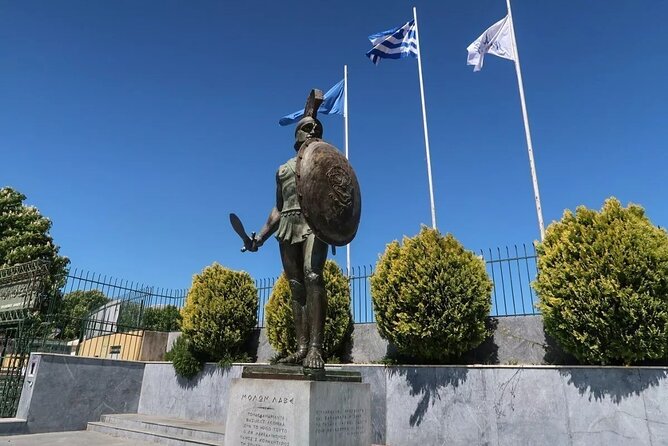
After you move along from Sparta’s main stop, you’ll pass the stadium area where the King Leonidas statue stands. It marks the ending point of the Spartathlon race (Athens–Sparta).
This is not a long stop—about 10 minutes—and that’s okay. It works as a quick orientation moment: you see the monument, you connect it to a modern tradition tied to ancient memory, and you continue.
If you like small “bridge moments” between past and present, this will feel satisfying. If you want more hands-on walking here, remember that time is being saved for Monemvasia, which is the bigger exploration block.
Olive Museum in Sparta: Fossils, Replicas, and Everyday Identity
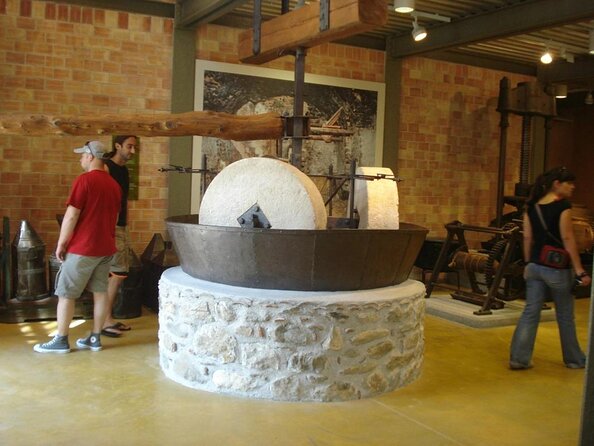
The Olive Museum is your most information-dense stop. You’ll have around 20 minutes, and it’s priced separately, with admission listed as €6.00 per person (not included).
What I like about this museum stop is that it treats olive oil as a full cultural system, not just a tasting or souvenir moment. The museum describes how olive and olive oil connect to identity, economy, nutrition, worship, art, and technology—from prehistoric times into the early 20th century.
You can also see some standout items highlighted in the description:
- very old fossilized olive leaves (50,000–60,000 years old)
- Linear B tablet replicas (from the 14th century BC), presented as early written evidence related to olive and olive oil
That blend of science, language history, and daily-life production is a good change of pace. It turns Sparta from purely myth-and-military into something more grounded: a reminder that food systems build civilizations as surely as armies do.
Monemvasia: The Medieval Fortress Town You Can Actually Walk Through
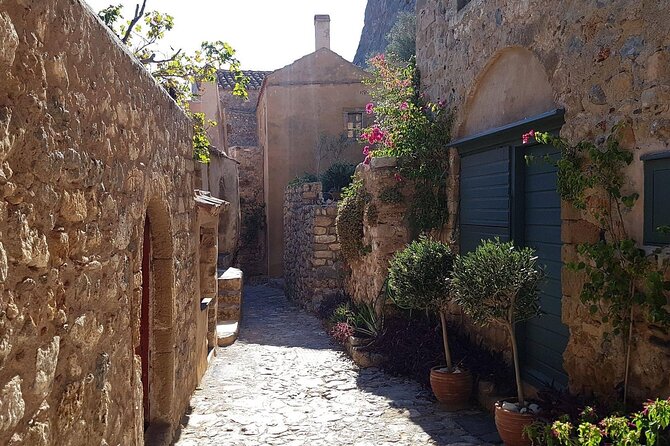
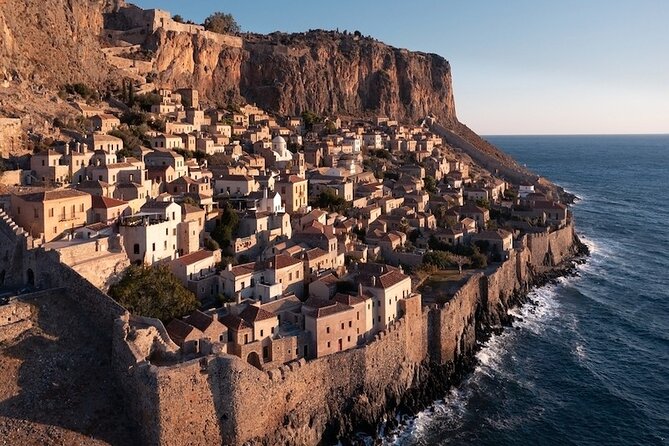
Monemvasia is the main event, and the timing reflects that. After about 1 hour and 30 minutes from Sparta, you’ll arrive and get about 2 hours 30 minutes in the town.
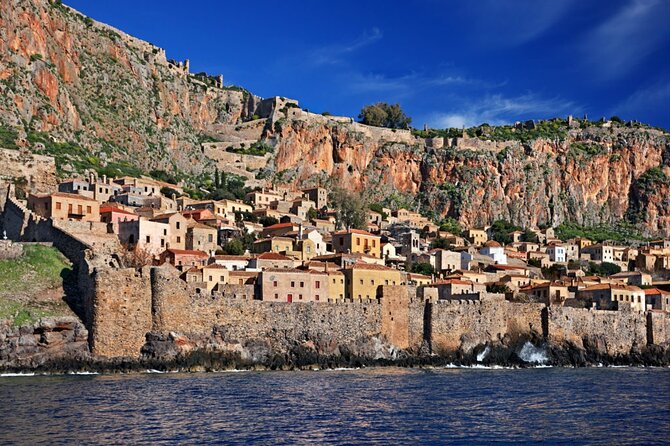
Monemvasia is described as a living medieval city developed on an island connected to the mainland. The fortress and Byzantine-era prosperity are still visible in the surviving narrow streets, mansions, small houses, churches, walls, gate, and citadel. What you’re really buying with this stop is the chance to wander without feeling like someone is herding you.
You’ll also have flexibility for a meal. The description specifically notes lunch by the sea upon the old wall, and in a town like this, that’s exactly the kind of location that turns a sandwich into a scene.
Practical notes that matter in real life:
- Bring comfortable shoes. The terrain inside medieval towns is rarely flat.
- Give yourself time for small discoveries. The value here is in repeated turns and re-views of the fortress walls, not one single photo spot.
- If you’re photo-focused, try to time your walking so you aren’t sprinting when the light changes.
Food, Timing, and Your Best Move for This Kind of Day
This is a “drive-heavy” day. The majority of your time is spent traveling between stops, and the planned stop durations reflect that. Plan to eat strategically because meals are not included.
A good approach is to treat Monemvasia as your meal anchor. Sparta’s Olive Museum time is short, and Corinth Canal is brief. So if you want a real lunch break with a view, Monemvasia is where you should aim your energy.
Bathroom timing also matters. Even though the description doesn’t list restrooms at each stop, you’ll likely want to use breaks during drive segments and at Monemvasia when you have longer time.
Finally, pack for comfort:
- water is included, but you might still want a small snack
- sunglasses and a hat if sun is strong
- shoes that handle uneven stone and lots of walking
Driver Quality: Why This Tour Often Feels Personal
Private tours rise and fall on the human element. In this case, several driver names have shown up in past experiences: Theo is associated with helpful two-page info sheets for each site, and Harry is described as a fantastic guide-driver with endless local history context. Nathaniel is mentioned for being accommodating with time for quick shopping and bathroom breaks.
Even if you don’t get those exact people, the pattern is clear: when the driver explains what you’re seeing (and not just where to stand), the day clicks. It also makes the free-time stops feel smarter—you’re not just walking through places, you’re placing them in context.
Just remember the boundary: your driver is not described as a licensed on-site guide inside archaeological sites. So you’ll get interpretation on the move and while you’re together, but you may still want to read what’s posted or ask questions when you can.
The One Real Risk: Disruptions Can Change the Mood
No one can control traffic jams or outside events, but you should know how this kind of day can behave if roads get blocked. One negative experience described a situation involving farmers strikes and police roadblocks, leading to major delays, with the company showing up and managing the day despite the customer’s request not to proceed.
I’m not saying your day will go that way. Most tours run normally. But for a schedule like this—so many miles, so many fixed stop windows—sudden disruptions can reshape your experience fast.
Your best defense is mindset. If you arrive expecting a smooth, clockwork timeline, you’ll feel stress. If you go in ready for adjustments and keep your priorities flexible, you’ll likely enjoy the content more and suffer the delay less.
Who This Tour Is Best For
This trip is a strong fit for people who want a wide sweep in one day: one canal view, one ancient city stop, and one medieval walking town. It’s also ideal if you’re traveling as a group and want privacy rather than sharing buses with strangers.
It’s less ideal if you:
- want a deep, site-by-site guided lecture inside every venue
- hate long days driven by road time
- are sensitive to schedule shifts caused by road disruptions
If you’re the type who likes planning a highlight loop and then spending the fun part—Monemvasia—on your own feet, you’ll likely feel satisfied.
Should You Book This Private Trip to Monemvasia, Sparta, and Corinth Canal?
I’d book this when your goal is value through variety: a big change of scenes, comfortable transport, mostly free admissions, and enough time at Monemvasia to make the day feel more than a drive-by.
I’d hesitate if you need a licensed guide inside archaeological areas or if you’re very risk-averse about road delays. This is also a long day, so it’s best for travelers who can handle a lot of time on the road and still feel energized once you arrive.
If you do book, make Monemvasia your priority, wear good shoes, and plan your lunch around that longer stop.
FAQ
How long is the private tour from Athens to Monemvasia and Sparta?
It runs about 10 to 11 hours.
What stops are included during the day?
You’ll visit Corinth Canal, Sparta (including the Archaeological Site of the Acropolis of Sparta), the Leonidas Monument area, the Museum of the Olive and Greek Olive Oil, and Monemvasia.
Is transportation included?
Yes. You get private round-trip transportation in an air-conditioned car or van, with bottled water.
Do you get pickup from your hotel or Airbnb in Athens?
Yes. The tour offers pickup from accommodations in Athens. Airport or airport-area pickup/drop-off is extra charge.
Are site admission tickets included?
Most stops are listed as free admission for this experience. The Olive Museum admission is not included and costs €6.00 per person.
Is Monemvasia time long enough to explore?
You get about 2 hours 30 minutes in Monemvasia, which is generally enough time to walk the town and consider lunch nearby.
Is this a private tour?
Yes. Only your group participates.
Who provides the explanations during the trip?
You’ll have a professional local driver with deep local knowledge. However, the driver is not described as being licensed to accompany you inside archaeological sites.
What language is the tour offered in?
English.
What is the cancellation policy?
You can cancel up to 24 hours in advance for a full refund. The experience also requires good weather; if it’s canceled due to poor weather, you’ll be offered a different date or a full refund.


More Private Tours in Athens

More Tours in Athens



More Tour Reviews in Athens
- All Day Cruise -3 Islands to Agistri,Moni, Aegina with lunch and drinks included
★ 5.0 · 4,958 reviews