REVIEW · ATHENS
Athens Highlights: Myths & Philosophers Walking Tour
Book on Viator →Operated by Be a Greek · Bookable on Viator
Athens turns philosophical on a city walk. This private tour strings together myths and ancient Greek thinkers across key landmarks, and it’s built for asking questions as you go. I like how it connects Plato, Socrates, and even pre-Socratics like Thales of Miletus to places you can point at right now.
One thing to plan for: not all sights have included entry (tickets are listed as not included at several stops), and the whole experience depends on good walking weather.
In This Review
- Key highlights worth your attention
- A private Athens walk that turns myths into ideas
- Where you start and how the route finishes on the best note
- From the Academy area to a coin-museum moment
- Hellenic Parliament: the Presidential Guard plus myth timing
- National Garden and the practical science behind democracy and ethics
- Ermou Street and Hermes: a playful myth break that makes sense
- Ancient Agora and the Stoics: where ideas started to act like law
- Tower of the Winds: Aiolos and the science of being human
- Anafiotika and Cynics: the Acropolis footnotes
- Areopagus Hill finale: Olympian myths with a view
- What makes it worth $102.80: guide time, conversation, and real pacing
- Tips so you get the most from the walk
- Who should book this tour (and who might skip it)
- Should you book Athens Highlights: Myths & Philosophers Walking Tour?
- FAQ
- How long is the Athens Highlights: Myths & Philosophers Walking Tour?
- Is this tour private?
- What language is the tour offered in?
- Where does the tour start and where does it end?
- What’s included in the price?
- Are entrance fees included?
- Which stops are marked as free?
- Which stops have admission ticket not included?
- What should I know about weather?
- Can I bring a service animal?
Key highlights worth your attention
- Private pace and Q&A so you can ask what you actually want to know
- Philosophy through Athens geography, from the Academy area to the Ancient Agora
- Presidential Guard watch at the Hellenic Parliament plus myth talk nearby
- Coffee/tea and bottled water included to keep the walk comfortable
- Stops with optional admission like the Academy, Agora, Tower of the Winds, and a coin museum
- Guides such as Bianca, John, Gianni, and Effrosyni bring the ideas to life with real conversation
A private Athens walk that turns myths into ideas
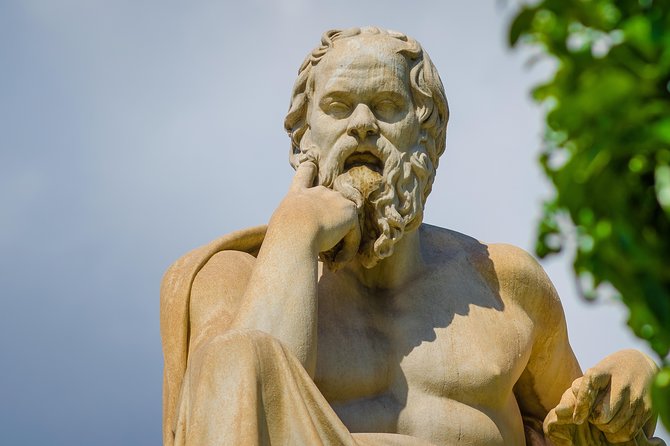
If you want Athens without the info-dump feeling, this is the type of tour that changes the way you look at the city. You’re not just seeing famous buildings. You’re getting the stories and the arguments behind them—then watching how those ideas show up again in everyday life.
What I like for your planning: the tour is structured around famous philosopher-to-myth themes, but it’s also interactive. You can ask questions in the moment. That matters because philosophy is not really about memorizing names. It’s about testing ideas—so a live guide who can respond right away keeps it moving instead of turning into a lecture.
I also like the balance between big-world-famous references (think Socrates and Plato) and less common names and angles. The route touches pre-Socratic thought and Stoic, Cynic, and other streams, so you walk away with more of a map of how ideas developed instead of one tidy timeline.
You can also read our reviews of more walking tours in Athens

Where you start and how the route finishes on the best note
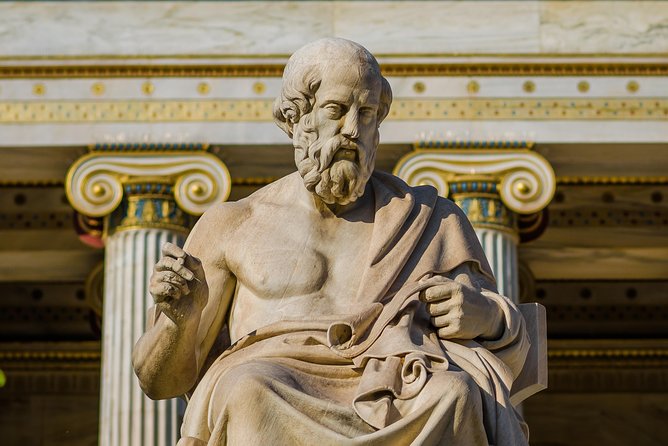
The tour starts near Panepistimio Athens (PanepistimioAthens 106 79). You’ll end on Areopagus Hill (Theorias 21, Athina 105 55). That end point is a big deal because Areopagus puts you above the city sightline, with the Acropolis in view.
In practical terms, that finish helps your day. You’ll spend the middle in streets, gardens, and archaeological areas, then land on a hill for the myth-and-view payoff. It’s a good way to avoid ending on another museum queue or a flat, forgettable street stretch.
Because it’s a private walking tour, the flow can feel smoother than the standard group shuffle. The route is still on foot, so you’ll want decent shoes. You’ll also want to keep an eye on the weather: the experience runs on the assumption that conditions will be workable for walking.
From the Academy area to a coin-museum moment
Your first big stop is the Academy of Athens area, where you’ll see the Trilogy of Athens and get oriented to the philosophical movements linked to the site. This is one of those starts where you get context before you move deeper into the city—like setting the lens you’ll use for the whole day.
There’s also time built in to visit a museum area focused on coins, described as one of the greatest collections of ancient and modern coins in the world. If you love material culture, this quick pause can be surprisingly satisfying. Coins are one of the most direct ways to understand trade, power, and everyday life across eras—perfect for connecting philosophy to real society.
Plan for this part with tickets in mind. The Academy stop is listed with admission ticket not included, and the coin-museum stop is also marked as not included. That doesn’t mean the stops are useless without tickets—it just means you should budget for them if you want full access.
Hellenic Parliament: the Presidential Guard plus myth timing
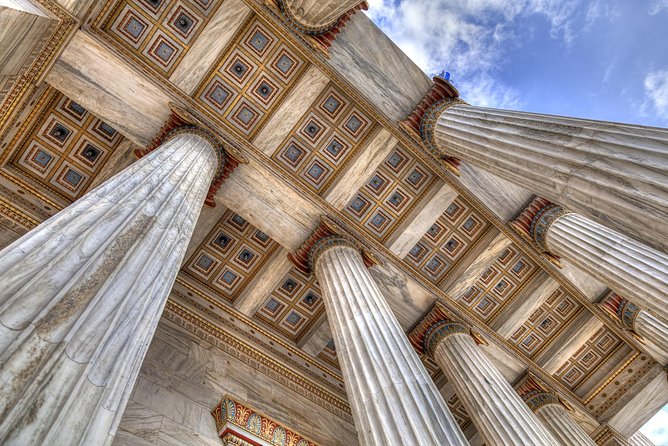
Then you pivot to the Hellenic Parliament, where you’ll stand outside for the Changing of the Presidential Guard. This is listed as a tradition in Greece that you can witness right there on the street, and it’s one of those moments that adds variety to a philosophy-heavy route.
This stop also helps your day rhythm. You get a change of pace: less reading, more watching. And watching is often what makes stories click. Once you’ve seen the ritual in front of you, the guide’s tie-in to gods and Athens life feels less abstract.
The key practical win: this part is free. So you can spend your money on the paid entry points that genuinely matter to you—rather than feeling like the whole tour is nickel-and-diming you.
National Garden and the practical science behind democracy and ethics
In the National Garden, the tour leans into a side of philosophy that’s easy to miss when you only think about quotes and schools. You’ll walk around and connect Greek philosophy to applied sciences—democracy, physics, astronomy, ethics, and other real-life branches.
This is a nice mid-tour move for two reasons. First, it gives you shade and a breather, which matters in Athens heat. Second, it reframes “philosophy” as a toolkit. The idea is not only to ask what is true, but also what helps people live together.
Since this stop is listed as admission free, it’s also a lower-cost confidence boost. You get content without needing extra tickets.
- All Day Cruise -3 Islands to Agistri,Moni, Aegina with lunch and drinks included
★ 5.0 · 4,958 reviews




Ermou Street and Hermes: a playful myth break that makes sense
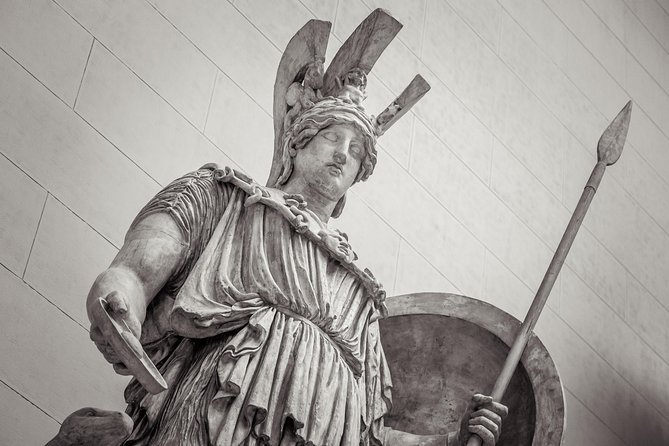
After the garden, the route shifts into street-level Athens. On Ermou Street, you’ll learn about Hermes, the mischievous god tied to travel, messages, and quicksilver change.
This is where the tour can feel especially fun if you like myth as story rather than just names on a chart. Hermes is a character who matches the way you actually move through Athens—fast turns, street-to-street discovery, and little surprises at every corner.
This area also includes a stop description tied to a square named after the Church of the Pantanassa. If your brain likes seeing how modern geography keeps the memory of older places, this kind of detail can be a highlight. It’s small, but it helps you stop thinking of Athens as random ruins between busy streets.
Ancient Agora and the Stoics: where ideas started to act like law
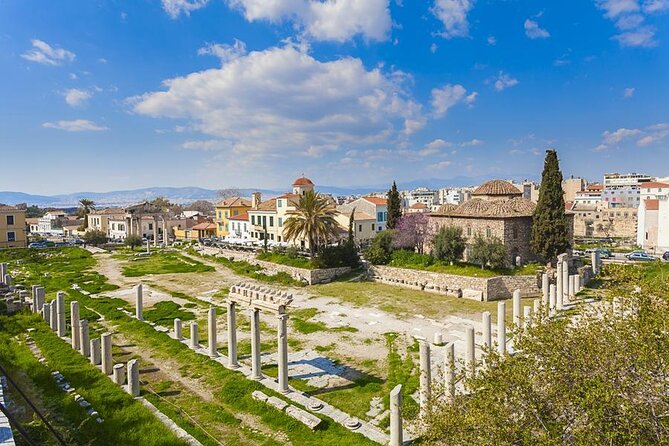
The walk moves to the Ancient Agora of Athens, described as the place where Stoic philosophy was born in the Poikile Stoa. Even if you know the Stoics mainly from modern self-help quotes, this is a helpful correction: Stoicism grew from the lived civic space of Athens, not from a vacuum.
This stop is listed with admission ticket not included, so again, you’ll want to decide whether you want full site entry. Either way, having the reference point matters. The guide can point out what to pay attention to, and the difference between reading about the Stoics and seeing the setting is often huge.
One more practical point: the Agora area can be uneven. If you’re traveling with older family members or you have knee issues, pick a pace that protects you. Since it’s private, you can slow down without feeling like you’re holding up a big group.
Tower of the Winds: Aiolos and the science of being human

Next up is the Tower of the Winds, where you’ll learn about Aiolos, the keeper of the winds. This is a great stop for people who think myth and science must be enemies. Here they overlap—because the ancient world tried to explain natural forces using story, measurement, and observation all at once.
This stop is also listed as admission ticket not included. If you do pay for entry, you’ll likely get more out of the details the guide shares. If you don’t, you can still enjoy the explanation and the landmark itself, but your access to certain spaces may be limited.
What you’ll feel here is the tour’s core theme: ideas do not live only on paper. They show up in architecture, public life, and the way people explain their environment.
Anafiotika and Cynics: the Acropolis footnotes
In Anafiotika, on the foot of the Acropolis, the tour turns to the Cynic philosophers. This is a clever pairing. Anafiotika’s small, distinctive neighborhood vibe can make the Cynics feel closer to real life—provocative, skeptical, and allergic to comfort.
This stop is listed as free, with about 20 minutes. For your planning, that’s enough time for photos and discussion without feeling like the day is dragging. It also lets you step away from the biggest crowds you might hit elsewhere near the Acropolis.
If you’re traveling with teens or young adults, this part often works well because it reads like a story about attitude and behavior—not only a theory. The best guides turn it into conversation.
Areopagus Hill finale: Olympian myths with a view
The tour concludes on Areopagus Hill, with a breathtaking view of the Acropolis and myths about the Olympian gods. Even if you’ve seen the Acropolis before, finishing here adds emotional weight. The guide’s myth layer helps the view feel like more than a photo background.
This stop is admission free and about 15 minutes. It’s also a natural place to end a tour like this: you’ve walked through the city’s intellectual threads, and now you’re looking at the legendary geography that shaped those stories.
If your feet are tired, this finish still gives you value. The view is immediate. The myths are part of the atmosphere, not just a wrap-up speech.
What makes it worth $102.80: guide time, conversation, and real pacing
At $102.80 per person for about 4 hours, this isn’t a “cheap and cheerful” option. It’s priced like a focused experience. For the money, you’re buying three things:
1) Private time with the guide. You’re not competing for attention. You can ask direct questions and follow your own curiosities.
2) A guided theme that actually sticks. Philosophy becomes easier to remember when you attach it to street corners, buildings, and civic places.
3) A built-in break. Coffee and/or tea plus bottled water are included, and you’ll get the drink stop mid-route. In Athens, that matters more than it sounds.
The reviews also point to how guides shape the experience. Many groups highlight Bianca’s passion and how she meets different interest levels—whether someone knows the subject already or is totally new. Other guides mentioned include John, Gianni, and Effrosyni, and the consistent theme is engagement: thoughtful explanations, but also real back-and-forth.
One more value note: the tour can sometimes run longer than the official duration when the conversation stays lively. That’s not something you should count on, but it suggests you’re not just being rushed through a script.
Tips so you get the most from the walk
This is a walking tour with multiple historic areas and hills. You’ll have the best time if you plan smart.
- Wear comfortable walking shoes and expect uneven ground in archaeological zones.
- Bring a bottle of water or plan to sip what’s provided. Bottled water is included.
- If you care about full site access, budget for ticketed entry at the Academy of Athens, Ancient Agora, Tower of the Winds, and the coin-museum stop (all marked as not included).
- If you’re sensitive to heat, aim for a cooler part of the day and take advantage of the garden shade.
- If you want the most from the Q&A, come with 1–2 questions. Even a simple one helps: How did Athenians argue in public? What made Stoicism practical?
Who should book this tour (and who might skip it)
This tour is perfect if you like any of these:
- You’re interested in philosophy and myth and want the stories connected to the city
- You want a slower, more conversational Athens day rather than a checklist
- You’re traveling with teens or young adults and want them talking back, not tuning out
- You’ve visited Athens before and feel ready for a different lens
I’d consider skipping it if you want mostly archaeology-only sightseeing with lots of free roaming, or if you strongly prefer tours where every single admission fee is included. The route includes several sites marked as admission not included, so your final cost depends on what you choose to enter.
Should you book Athens Highlights: Myths & Philosophers Walking Tour?
I’d book it if your goal is to leave Athens thinking differently, not just remembering places. The combination of private Q&A, a route built around major philosophical streams, and a finale on Areopagus Hill gives you more than standard sightseeing.
It’s also a good choice when you want authenticity in the explanation style. The guides named in past experiences—like Bianca, John, Gianni, and Effrosyni—are repeatedly described as story-driven and interactive, which is exactly what you want for philosophy.
Just go in with two practical expectations: you’ll be walking for about four hours, and you may pay entry fees for some stops. If that fits your travel style, this is a smart, high-value way to understand Athens beyond the obvious.
FAQ
How long is the Athens Highlights: Myths & Philosophers Walking Tour?
It runs for approximately 4 hours.
Is this tour private?
Yes. It’s a private walking tour, and only your group participates.
What language is the tour offered in?
The tour is offered in English.
Where does the tour start and where does it end?
It starts at PanepistimioAthens 106 79, Greece and ends at Areopagus Hill, Theorias 21, Athina 105 55.
What’s included in the price?
Coffee and/or tea, and bottled water are included.
Are entrance fees included?
No. Entrance fees are not included for any point of interest that lists admission ticket not included.
Which stops are marked as free?
The Hellenic Parliament (changing of the Presidential Guard), the National Garden, Ermou Street, the square named after the Church of the Pantanassa, Anafiotika, and Areopagus Hill are listed with free admission.
Which stops have admission ticket not included?
The Academy of Athens, the coin museum stop, the Ancient Agora of Athens, and the Tower of the Winds are listed with admission ticket not included.
What should I know about weather?
This experience requires good weather. If it’s canceled due to poor weather, you’ll be offered a different date or a full refund.
Can I bring a service animal?
Service animals are allowed, and the tour is near public transportation with most travelers able to participate.


More Walking Tours in Athens


More Tours in Athens



More Tour Reviews in Athens
- All Day Cruise -3 Islands to Agistri,Moni, Aegina with lunch and drinks included
★ 5.0 · 4,958 reviews