REVIEW · ATHENS
Meteora & Delphi 3 Days Semi Private Tour
Book on Viator →Operated by Visit Meteora · Bookable on Viator
Meteora and Delphi in three days sounds intense, but it’s worth it. This trip strings together Meteora monasteries with Delphi’s archaeological highlights while giving you real time to explore, not just window-shopping. I especially like the small-group feel (max 18) and the built-in smart audio guide that lets you move at your pace. The main drawback: it’s not a fully end-to-end guided day in Delphi, and you’ll also want to budget for Meteora and Delphi entrance fees on top of the tour price.
You start early in Athens, sleep two nights in the Meteora area with breakfast, and then end back in Athens at the Liosion bus terminal. If you want a “transport + plan + key sights” structure, this format makes sense. If you expect a driver or guide to constantly shepherd you through every step, you may find the semi-private setup a little hands-off.
In This Review
- Key Highlights You’ll Care About
- Meteora and Delphi in 3 Days: The Smart Way to Spend Limited Time
- Day 1 at Meteora: Frescoes, Icons, and Early Photo Breathers
- Day 2 at Meteora: More Time in the Big Names
- Day 3: Delphi Before Noon, Museum Time, and Thermopylae on the Way
- Price and Value: What You’re Really Paying For
- Semi-Private Pace: Why Some People Love It, and Others Don’t
- Using the Audio Guide and Free Time Without Stress
- Where You’ll Spend Your Time Each Day (and What Might Feel Short)
- Who This Tour Suits Best (and Who Should Consider Alternatives)
- Should You Book the Meteora & Delphi 3-Day Semi-Private Tour?
- FAQ
- What’s the duration of the Meteora & Delphi tour?
- Where does the tour start and end?
- Is the tour guided in English?
- What’s included in the price?
- Are entrance fees included for Meteora and Delphi?
- Is there a Delphi guide included?
- How many people are in the group?
- What languages are available for the smart audio guide?
- Is lunch or dinner included?
- Can I cancel for a full refund?
Key Highlights You’ll Care About
- Small group size (up to 18) keeps the day from feeling like cattle herding.
- Two nights with breakfast in a 3- or 4-star hotel helps you pace the sightseeing.
- Smart audio guide in many languages helps during museum time and free exploration.
- Meteora monastery viewpoints get you multiple angles, not just one quick stop.
- Thermopylae en route adds a big-history detour without wrecking the schedule.
- Express transfers reduce the stress of long-distance travel between regions.
Meteora and Delphi in 3 Days: The Smart Way to Spend Limited Time

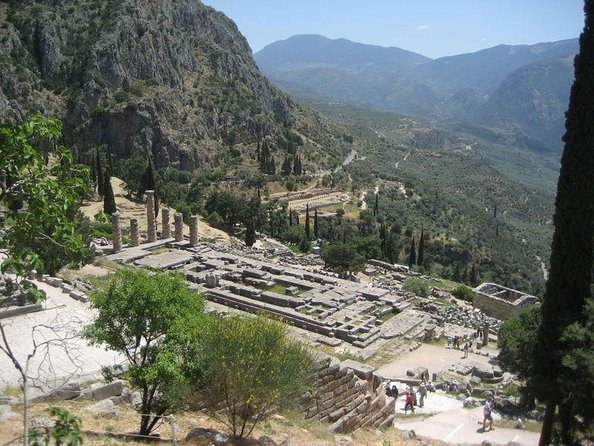
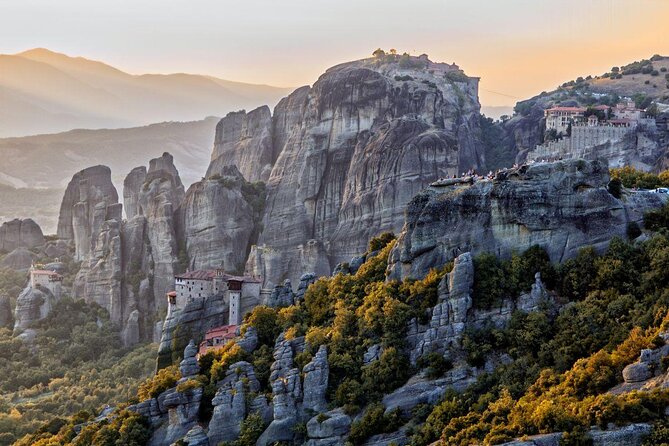
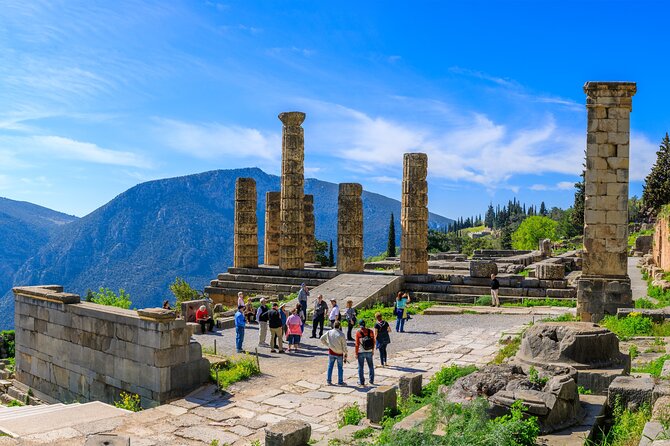
Meteora is one of those places where the scenery and the spirituality fuse into the same experience. You’re looking at monasteries perched on rock pillars, with paths, courtyards, gardens, and fresco-filled interiors that reward slow looking. Delphi, meanwhile, brings you to the center of the ancient Greek world—sanctuary ruins, famous sculptures, and a museum that fills in what the stones can’t explain by themselves.
What makes this combo work is the pacing. Instead of trying to do Meteora in one frantic day, you get two days to visit multiple monasteries and absorb the vibe. Then Delphi gets a full block of time on your own (with audio help), so you can decide how deep to go at the sanctuary and museum.
The semi-private nature is the trade-off. You get transportation, structure, and strong Meteora guiding, but you also get free time where you’re doing more of the navigation. For most independent travelers, that’s a win. For travelers who want constant step-by-step handholding, it may feel like the tour’s support fades at key moments.
You can also read our reviews of more private tours in Athens

Day 1 at Meteora: Frescoes, Icons, and Early Photo Breathers
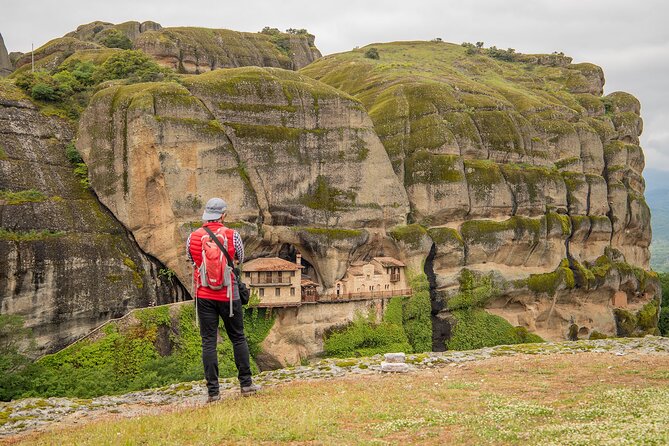
Day 1 starts with a monastery visit that feels calmer and more “human-scale” than the busiest viewpoints. Agios Stefanos (Saint Steven) is timed for about 45 minutes, and you’re set up to enjoy frescoes, a small museum with ancient parchments and portable icons, and gardens. There’s also an accessible balcony view that looks over Kalampaka town, the Pindos range, and the Thessaly plains—good if you don’t want your day to become a stair workout.
Next comes the Byzantine Church of the Assumption of Virgin Mary for about 30 minutes. This is the kind of stop where details matter: 16th-century frescoes, an older carved pulpit, and a mosaic masterpiece from the 5th century. You’ll also see remnants tied to older temple material, plus Orthodox icon symbolism—great if you like art that has meaning, not just beauty.
Then you hit Meteora’s “classic” cluster with short, timed photo windows. There’s a brief outside stop at Great Meteoron designed to get photos with fewer morning crowds and less traffic. After that, you’ll glance from outside at Roussanou (often considered the photogenic one), Holy Trinity (famous because a James Bond movie was filmed here), and Varlaam (for its breathtaking viewpoint). These quick stops are actually useful: you’re triangulating your mental map of which monastery has which look, before you spend longer inside later.
Day 1 ends with Meteora time—about one hour—where you’ll explore more at the pace of your group and your guide’s explanations. The goal here is to move beyond “I saw buildings on rocks” into “I understand what I’m looking at.” It’s also the part where the atmosphere really hits: monastery life, art, and the story of why people chose these precarious perches.
What to watch for on Day 1: entrance fees for Meteora are not included, so you’ll likely pay at least around €12 per person for monastery sites (as listed). Bring cash or a card you’re comfortable using for on-site entry.
Day 2 at Meteora: More Time in the Big Names

Day 2 is when Meteora starts to feel less like a checklist and more like a journey. You return to Great Meteoron first—about 1 hour—with time that’s long enough to notice architecture and art rather than only taking quick snaps. This is described as the oldest and one of the largest monastery complexes, so it sets the tone.
Then you spend time at Varlaam (about 45 minutes). The emphasis here is on view plus interior appreciation. Varlaam’s setting is visually dramatic, and the extra time helps you slow down instead of racing from platform to platform.
Next is Roussanou (about 20 minutes). It’s shorter than Day 1’s other interiors, so go in with a “pick your priorities” mindset: if you love iconography, focus on that first. If you love overlooks, take your time at the viewpoint edges before you move on.
You’ll also see Holy Trinity again for a short stop (about 10 minutes) and Agios Stefanos for about 10 minutes. These repeats can sound odd on paper, but they actually help you compare how the light and crowd levels change from morning to later timing.
Day 2 finishes with another Meteora block (about one hour) where you’ll get more exploration time. By now, the place makes sense. The rock towers stop looking like random cliffs and start reading like a whole system—routes, sightlines, and why certain buildings became key anchors.
Practical tip: wear shoes you can trust on uneven surfaces. Even if your route is manageable, Meteora is still outdoors with stone steps, rock edges, and slopes.
Day 3: Delphi Before Noon, Museum Time, and Thermopylae on the Way

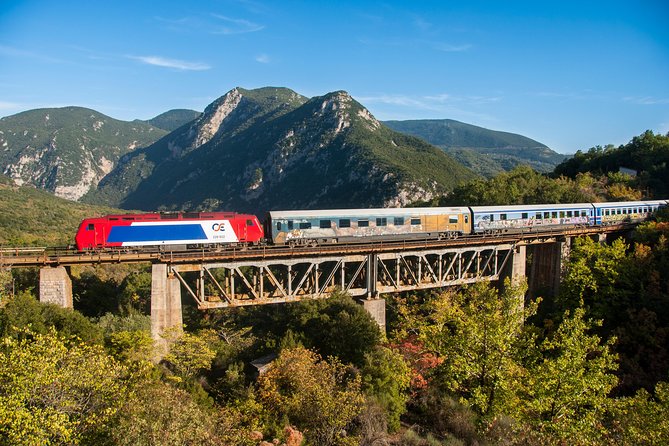
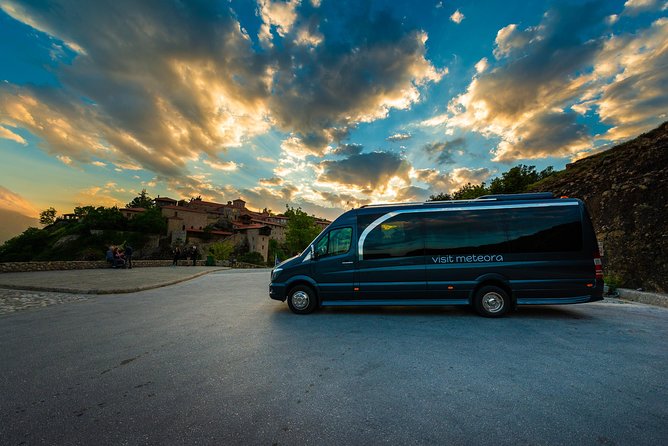
Your Day 3 starts with a transfer from Meteora to Delphi. You’ll ride in an SUV or mini-bus for about 2 hours 30 minutes, with a stop at Thermopylae along the route. The stop is only about 20 minutes, but it’s a memorable history layer: this is the battlefield tied to the 300 Spartans story.
You’re scheduled to arrive in Delphi before noon, then you get about 4 hours of free time. This is where the tour becomes more self-directed. The experience includes a mobile audio guide app to help you interpret what you’re seeing, which is exactly what you need when you’re not being “walked through” every step.
There’s also time for the Delphi Archaeological Museum for about one hour. The museum is listed as free on this experience, and it’s the place where many of Delphi’s stories become clear—how the sanctuary worked, and how the Oracle shaped ancient life. If you’re the type who likes a visual explanation after staring at ruins, the museum hour is a strong use of time.
At 4:00 PM, you start the return journey to Athens via bus (another 2 hours 30 minutes). The ending point is the bus station area at KTEL Liosion (Bus Terminal B) in Athens. Your driver is said to assist you in finding a good place to store luggage near the bus station—so if you’re traveling light, you’ll have an easier time. If you’re traveling with more stuff, keep your valuables on you.
Big reality check for this day: the tour data explicitly lists that a guide at Delphi is not included. So go in expecting audio help and your own exploration time, not a full guided narrative all day long.
Price and Value: What You’re Really Paying For
The price is $349.97 per person for the 3-day experience. That sounds high until you break it down into what’s actually included: two nights in a 3- or 4-star hotel with breakfast, express transportation between regions, and smart audio support for sightseeing.
Here’s the value logic I see:
- You’re paying for transportation across big distances without having to coordinate trains, buses, and car services yourself.
- You’re paying for sleep + breakfast, which removes the “where will I stay tonight?” stress.
- You’re paying for audio guidance in multiple languages, so you’re not stuck guessing at ruins and museum objects.
What’s not included is also important:
- Entrance fees are not included for Delphi (listed as €12 per person) and Meteora (listed as €12 per person).
- Food and drinks aren’t included unless specified.
- There’s also a local accommodation tax (listed as €5 per booking per room per night).
So the true cost depends on how you eat and how quickly you want to buy souvenirs or snacks. But if you plan to visit both Delphi and Meteora fully, the entrance fees are a straightforward add-on. In other words, you’re not paying extra for “surprise” costs; they’re called out.
You can also read our reviews of more tours and experiences in Athens


Semi-Private Pace: Why Some People Love It, and Others Don’t
This tour is built around a semi-private rhythm. In practice, that means:
- You get a guided experience during Meteora portions.
- You get time blocks where you’re exploring more independently (especially Delphi).
Why this can be great: it helps you avoid the “march at my guide’s pace” problem. You can linger where you’re curious, like at fresco areas or museum objects. And because the group is capped at 18 travelers, it’s less chaotic than large bus tours.
Why some travelers get annoyed: when you rely on fixed timing and public transport connections, being late or confused can snowball fast. This is exactly why I’d recommend you read your start instructions carefully and arrive early to any departure point.
Your best move is to treat Delphi like a self-guided day with audio support, not a fully escorted walkthrough. If you want constant narration, you may prefer a different format. If you like autonomy—plus a clear plan and transportation—this one fits.
Using the Audio Guide and Free Time Without Stress
The smart audio guide is listed as available in a long list of languages: Spanish, French, German, Italian, Portuguese, Korean, Polish, Chinese. Even if you’re not in one of those languages, the key idea holds: you’re not alone in understanding what you’re seeing.
Here’s how to use it efficiently in a free-exploration setting:
- Pick one area to enjoy slowly (either the sanctuary grounds or the museum) and use the audio to guide your attention there.
- Take one “quick circle” first to orient yourself, then go back to the most interesting stops.
- Don’t try to see everything. Delphi and Meteora reward focus, not speed.
Also, build in time for small breaks. Delphi’s ruins and museum can be mentally dense. With a 1-hour museum block and a 4-hour free window, you can pace yourself and still feel like you got the core experience.
Where You’ll Spend Your Time Each Day (and What Might Feel Short)
The itinerary is packed, but it isn’t random. Day 1 includes multiple Meteora viewpoint stops plus one longer exploration block. Day 2 repeats some of the signature monasteries but gives more interior time at key sites like Great Meteoron and Varlaam.
Day 3 is where you might feel two competing forces:
- You have enough time to explore Delphi and the museum.
- You don’t have a guide at Delphi in the included list, so you won’t get the same “every step explained” feel.
If you’re the kind of traveler who loves history lectures, plan to lean on the audio guide and museum interpretation. If you’re more of a “show me the art and the views” traveler, you’ll likely feel satisfied without a live guide at every moment.
Who This Tour Suits Best (and Who Should Consider Alternatives)
This tour is a strong fit if you:
- Want Meteora plus Delphi without spending days on transport planning.
- Like a mix of guided moments and free time.
- Enjoy monasteries and archaeological sites, and you’re okay paying entry fees on-site.
It might be less ideal if you:
- Want a fully guided Delphi day.
- Need very hands-on logistics help, especially if traveling with kids or multiple pieces of luggage.
- Are expecting a hotel experience that always feels luxurious. The tour includes 3- or 4-star lodging, but hotel quality can vary by property.
Should You Book the Meteora & Delphi 3-Day Semi-Private Tour?
I’d book this if you want a practical, time-saving way to connect two top-tier regions in Greece. The combination of two Meteora-focused days, a Delphi museum + audio-supported free exploration day, and included hotels makes it a solid deal for many travelers.
My “yes” checklist:
- You’re okay paying €12 entrances (Delphi and Meteora) and buying your own meals.
- You can handle a semi-private rhythm where you’re doing more exploring on your own in Delphi.
- You arrive early and stay sharp with departure times.
My “think twice” checklist:
- You’re the type who wants someone to physically guide you through every step with zero independence.
- You dislike spending time figuring things out during free blocks.
If you can roll with a plan and use the audio help, this is one of those trips that feels like you got far more Greece in three days than you normally would.
FAQ
What’s the duration of the Meteora & Delphi tour?
The tour runs for about 3 days, with the schedule spread across Meteora (two days), then Delphi plus the transfer back to Athens.
Where does the tour start and end?
It starts in Athens at the listed Heathfield Industrial Estate meeting point (KA8, Athina 104 44) at 8:00 am and ends at KTEL Liosion (Bus Terminal B) at Liosion 260, Athina 104 45.
Is the tour guided in English?
Yes. The experience is offered in English, and there is also a smart audio guide.
What’s included in the price?
Included items are hotel stays for 2 nights with breakfast, express transport from Athens to Meteora, transfers from Meteora to Delphi, a direct bus from Delphi to Athens, free Wi-Fi on board, and a smart audio guide.
Are entrance fees included for Meteora and Delphi?
No. Entrance fees are not included: Delphi is listed at €12 per person, and Meteora is also listed at €12 per person.
Is there a Delphi guide included?
No. The Delphi guide is listed as not included, and the Delphi time includes free exploration support using an audio guide app.
How many people are in the group?
The maximum group size is 18 travelers.
What languages are available for the smart audio guide?
The smart audio guide is listed in Spanish, French, German, Italian, Portuguese, Korean, Polish, and Chinese.
Is lunch or dinner included?
Food and drinks are not included unless specified, so you’ll need to plan meals on your own during breaks.
Can I cancel for a full refund?
Yes. You can cancel up to 24 hours in advance for a full refund, based on the experience’s local time.


More Private Tours in Athens


More Tours in Athens



More Tour Reviews in Athens
- All Day Cruise -3 Islands to Agistri,Moni, Aegina with lunch and drinks included
★ 5.0 · 4,958 reviews